Blog Archives
Expectation Underneath the Emotion

In The Reset Self, you help readers understand how early family dynamics, social pressures, and constant performance create resentment, anxiety, and burnout. Why was this an important book for you to write?
I wrote this book because I kept seeing the same pattern over and over again, in myself and in other people. Smart, capable, self-aware individuals who were doing everything “right,” but still felt exhausted, resentful, or quietly disconnected from their own lives.
The common thread wasn’t a lack of effort or insight. It was that they were trying to improve a version of themselves that was never really theirs to begin with.
Most of us are living in roles we learned early on, roles that helped us stay safe, be accepted, or be loved. But those roles don’t disappear when we grow up. They just get more sophisticated. And eventually, they start to cost us.
This book exists because I wanted to offer something different. Not another way to fix yourself, but a way to question who is doing the fixing in the first place.
You make a distinction between the “role-self” and the real person. How did you come to recognize that difference in your own life or work?
It didn’t happen all at once. It was more of a slow realization that the way I was showing up in different areas of my life felt… consistent, but not necessarily true.
I could see how my reactions were patterned. Predictable. Almost scripted. Especially in moments of stress or conflict. And when I looked closer, those patterns always traced back to something learned, not something chosen.
That’s when the distinction became clear. There’s the version of you that was built through conditioning, through expectations, roles, and adaptation. And then there’s something underneath that, something quieter but more stable.
The “role-self” reacts automatically. The real person has choice.
Once you see that difference, even briefly, you can’t unsee it. And that’s where real change starts.
Of all the tools you introduce, which one tends to create the biggest shift for readers when they try it?
The biggest shift usually comes from something very simple: recognizing the expectation underneath the emotion.
Most people think they’re reacting to what happened. But they’re actually reacting to what they believed should have happened.
When someone starts catching that in real time, “What did I expect here?” everything changes. Because suddenly the reaction makes sense. It’s not random. It’s not a personality flaw. It’s a script being broken.
That moment creates space. And once there’s space, there’s choice.
It’s subtle, but it’s one of the most powerful shifts in the entire process.
What is one thing you hope readers take away from The Reset Self?
That they are not broken.
Not in a surface-level, reassuring way, but in a very literal sense. The exhaustion, the anxiety, the resentment, it’s not evidence of something wrong with them. It’s evidence of something learned that no longer fits.
If someone can walk away with that and start questioning the roles they’ve been living inside of instead of trying to perfect them, then the book has done its job.
Because from that point on, they’re no longer trying to fix themselves. They’re starting to come back to themselves.
Author Links: GoodReads | Website | Amazon
You don’t need a better self. You need freedom from the one you were trained to be.
Most people spend their entire lives feeling lost, anxious, overwhelmed, or painfully disconnected from themselves, not because something is wrong with them, but because they’ve been living inside a conditioned identity that never truly belonged to them.
The roles you learned in childhood, the Good One, the High-Achiever, the Strong One, the Fixer, the Peacemaker, helped you survive, but now they keep you stuck in cycles of self-sabotage, people-pleasing, perfectionism, overthinking, emotional trauma patterns, anxiety, and self-doubt. These roles shape your decisions, your relationships, your boundaries, and even your sense of purpose.
The Reset Self introduces a revolutionary perspective: You’re not failing to “find inner peace,” “love yourself again,” or “discover your purpose in life.” You simply can’t build a peaceful life on top of a self that isn’t actually yours.
Inside this book, you’ll learn how to:Recognize the hidden conditioning behind feeling lost in life and not knowing who you really are.
Identify the role-based patterns fueling your anxiety, overthinking, emotional exhaustion, and resentment.
Break cycles of self-sabotage and negative thinking without forcing yourself into toxic positivity.
Heal emotional trauma, including toxic childhood conditioning, through nervous-system based practices that work in real life.
Use the Fingertips Principle to stop trying to control what was never yours to manage.
Run Non-Compliance Experiments that retrain your nervous system to feel safe when you stop over-giving and start choosing yourself.
Untangle your sense of purpose from expectations, guilt, or external validation.
Feel emotions without feeding them or turning them into spirals of overthinking and fear.
And for the first time, this edition includes a new and urgent topic: The Social Media Self — how comparison, unrealistic standards, curated “perfect lives,” and constant performance pressure distort your identity and steal your peace. Learn how to reset the part of you that feels behind, invisible, or never enough.
This book is not another mindset hack, manifestation trick, or habit-building routine. It’s a practical, grounded, psychologically-informed method for stepping out of the identity you were conditioned into, and returning to the person underneath.
Perfect for Readers Who Feel:“I feel lost in life and don’t know who I am anymore.”
“I want to find myself again after years of overthinking, people-pleasing, or burnout.”
“I want to heal emotional trauma, anxiety, or self-doubt without endlessly reliving the past.”
“I want inner peace, but I don’t know how to get there.”
“I’m tired of performing. I want to feel real again.”
The Reset Self is a guide for anyone ready to stop performing a life they never chose, and finally live the one that is actually theirs.
If you’re exhausted from healing, striving, or trying to be “enough,” this book will show you the way home to yourself.
A Different Kind of Awareness

In Compass & Grit, you help readers rebuild their lives using two concepts centered around a clear sense of direction and disciplining themselves to keep showing up even when their confidence wanes. Why was this an important book for you to write?
This book, in many ways, came out of my own experience. There was a point where I felt like I was doing everything I was supposed to be doing. I had goals, I had direction on paper, and I was showing up each day and putting in the work. From the outside, it would have looked like things were moving forward in the right way. But underneath that, there was a different feeling that kept coming up. I couldn’t quite ignore the question of what all of it was for. Not in a dramatic sense, but in a quieter, more persistent way. Why this path, why these goals, and where was it all actually leading? There wasn’t a clear answer, and that was the part that stayed with me. It felt less like a problem to solve and more like something you keep returning to over time. A kind of ongoing search rather than something you figure out once and move on from. The more I sat with that, the more I realized that a lot of men experience something similar, even if they don’t always put it into words. That’s where the idea for the book began. I wanted to write something that could meet a man in that space without overwhelming him. Not with big claims or the idea that he needs to start over, but with something steady and practical. A way to think about direction, and a way to keep moving even when the answers aren’t fully clear yet.
The book speaks directly to men in midlife facing loss or disorientation. Why did you choose to focus on that audience?
It’s a stage of life that doesn’t get talked about much, even though many men quietly go through it. When you’re younger, there’s a sense that everything is about discovery. In your twenties, you feel like you know what you want. You set goals, you move toward them, and there’s a kind of forward momentum that feels clear and natural. But as time goes on, that certainty starts to shift. You begin to realise that some of the things you once thought you wanted don’t quite fit anymore. Priorities change, perspectives change, and the path that once felt obvious becomes less defined. Then midlife brings a different kind of awareness. You start to lose people or things that you love. You start to see change happening around you in a more permanent way. And with that comes a clearer sense that time is not unlimited. That’s usually when the questions become harder to ignore. Not just what you’re doing, but why you’re doing it, and whether it still matters in the way you once thought it did.
What I’ve noticed, both in my own life and in the people around me, is that while we may not always know exactly what we want at this stage, we become very clear on what we don’t want. And for many men, one of those things is the feeling of moving through life without a real sense of purpose. It’s something I’ve seen in friends, in colleagues, and in people I’ve known for years. On the surface, everything can look fine. But underneath that, there’s often a quiet question of whether this is all there is. That’s the space I wanted to write into. Not to provide perfect answers, but to give some structure to that experience, and a way to start making sense of it without feeling lost in it.
You emphasize small, concrete actions over grand reinvention. Why is that approach so effective?
I think most people have big goals at some point. You want to make a certain amount of money, get into great shape, travel more, and build something meaningful. There’s nothing wrong with that. In fact, having something to aim for matters. But the challenge is that those goals are often so big that they feel far away. I remember when I was younger, we had to run 2.4 kilometres for a fitness test. That’s six rounds on a standard track. At the start, you feel fine. You go out strong, your energy is high, and everything feels manageable. Then you hit the third round, and it starts to feel different. By the fourth, you’re not just running anymore, you’re thinking about how much further you still have to go. Each stretch feels longer than it actually is. The distance ahead starts to feel heavier than the distance you’ve already covered. And that’s what big goals can feel like. They’re so far out in front of you that your focus shifts from moving forward to thinking about how far away you still are. Small actions change that. Instead of trying to cover the entire distance in your head, you focus on what’s in front of you right now. The next step, the next rep, the next decision. It’s the same with something like getting in shape. You don’t get there all at once. It comes down to what you do each day. What you choose to eat, what you choose to avoid, how consistently you show up, even when it feels routine. Or even something as simple as saving. A small amount, done consistently, builds over time into something meaningful.
These things seem minor on their own, but they add up. And more importantly, they give you a sense of progress that you can actually feel. You begin to see that you can follow through, that you can build something step by step. That creates a different kind of momentum. It no longer feels like a huge leap that you may or may not reach. It becomes a series of manageable steps that you can continue taking. And that shift matters. It gives you a sense of control and a sense that change is not out of reach. It’s something you’re already in the process of doing. In the end, it really does come back to something simple. You begin with one step, and then you take the next.
What is one thing you hope readers take away from Compass & Grit?
If there’s one thing I hope stays with them, it’s that they don’t need to have everything figured out before they begin moving forward. I think a lot of us, myself included, spend a lot of time looking for certainty. We want to know that the step we’re about to take is the right one. That if we do this, it will lead to exactly what we want. That there’s some kind of guarantee behind our decisions. But the truth is, there isn’t. You can feel sure in a moment, but in reality, none of us fully knows how things will turn out. Life doesn’t really work that way. There are too many variables, too many things outside our control. And at some point, especially in midlife, that becomes very clear. You start to realise that time is finite. Things can change without warning. And that waiting for perfect clarity can keep you stuck longer than you expect. So part of what this book is about is learning to move forward even when things feel uncertain. To rebuild your footing, to find your direction again, and to stay with it, even when it’s uncomfortable. Because uncertainty is uncomfortable. Most people don’t like it. But it’s also part of being alive. There’s a kind of discovery in that, if you’re willing to step into it.
On a personal level, I’ve had my own moments of being knocked down, of not knowing what comes next, of having to start again without a clear answer in front of me. And what I’ve come to understand is that it’s not about avoiding those moments. It’s about how you respond to them. You take the hit, and you keep moving forward. You adjust, you learn, you keep going. That’s where direction starts to come back. That’s where you rebuild your sense of self. So if there’s one thing I hope readers take with them, it’s this. You don’t need perfect clarity to begin. You just need to take the next step and be willing to keep going from there.
Author Links: GoodReads | Instagram | TikTok | Website | Amazon
You keep showing up. You keep going.
But you are no longer certain where you are heading.
If you have been asking what comes next, without a clear answer, this book was written for you.
Compass & Grit is a grounded guide for men in midlife who feel capable but off course. It is not about motivation or fixing yourself. It is about restoring direction when pushing harder no longer works.
Drawing from lived experience and practical frameworks, this book helps you:
Rebuild discipline in a way that is sustainable
Clear mental noise when life feels crowded
Create simple habits that actually hold
Reconnect with purpose in a way that fits your real life
This is not advice from a finish line.
It is written from the middle, where most men actually are.
If you have been carrying a quiet weight, or moving through your days while sensing that something underneath has shifted, you are not alone. Direction does not return all at once. It returns through steady steps, honest reflection, and consistent action.
This book gives you a place to begin.
Compass & Grit


Compass & Grit is a book about rebuilding a life after it has quietly, or catastrophically, fallen apart. Author Wolfgang Nelson frames rebuilding around two linked ideas: “compass,” meaning a clear sense of direction and purpose, and “grit,” meaning the steady, unspectacular discipline to keep showing up even when confidence has collapsed. The book is aimed largely at men in midlife, especially those reeling from divorce, job loss, physical decline, or a more private erosion of self, and it moves from immediate triage into identity repair, habit formation, emotional work, relationships, the body, and finally legacy.
What I liked most was how often the book insists on small, concrete acts over grand reinvention, whether that’s the image of the author sitting numb in his car outside the gym, Greg’s seven-day post-divorce triage of sleep, walking, and one honest text, or the later push toward a modest but meaningful “legacy project” like a mentorship circle for men in midlife.
I appreciated that the book has real emotional sincerity beneath its coaching-manual structure. Nelson writes in a voice that feels authentic, and the strongest parts of the book come from that bruised intimacy. When he describes identity collapse not as melodrama but as a man slowly ceasing to feel useful, legible, or necessary to his own life, the book sharpens. I also liked that he doesn’t romanticize stoicism. The sections on “identity bankruptcy,” shame-driven isolation, and the difference between rewriting your story and merely denying your pain are among the most compelling in the book. His idea of the “compact origin story,” reducing the next step to something as plain as “I lost X, I learned Y, and I will try Z for 90 days,” is simple, yet it has a bracing honesty to it.
I found the book to be persuasive in its practical wisdom. Nelson leans on frameworks, studies, checklists, and coined phrases like “micro-sovereignty,” “body as anchor,” and the warning against “brutalist grit.” He argues that discipline without adaptation can become another form of self-harm, and he ties recovery to sleep, strength training, daily walks, and the unglamorous dignity of keeping promises small enough to keep. The book wants to turn every human struggle into a named model. Even so, I never found it cynical. The ideas are earnest, grounded, and often useful, particularly in the chapters on emotional work and relationships, where he urges men toward tactical journaling, better apologies, trust rebuilt through consistency, and support networks that are neither macho pantomime nor group-therapy parody. The book’s real strength is that it understands recovery as rhythm, not revelation.
I came away feeling that Compass & Grit is a generous and deeply felt book. It has the slightly rough-edged conviction of something written because the author needed it to exist, and that gives it a seriousness I respected. I would recommend it for its steadiness, its compassion, and its refusal to confuse healing with hype. I’d especially recommend it to men in their forties and beyond who feel disoriented after loss, and to readers who want reflective, actionable guidance. It’s a book for someone trying to put themself back together.
Pages: 191 | ASIN : B0GF8MXGQM

The Reset Self


The Reset Self is a self-help book that argues you are not broken, you are over-conditioned, and most of your pain comes from living as a “role-self” instead of as a real person. Seravyna Böhm walks through how early family dynamics, cultural pressure, and constant performance teach you to become the Strong One, the Good Child, the Fixer, or the High-Achiever, then shows how expectation scripts and the nervous-system load of constant over-compliance turn into anxiety, resentment, burnout, and numbness. The heart of the book is a set of simple tools, like Role Naming, Expectation Tracking, the Fingertips Principle, Non-Compliance Experiments, Feeling Without Feeding, and the Daily De-Script, all aimed at helping you step out of old roles in real time and act from choice instead of fear.
I really like the core idea that “you are conditioned, not defective.” It feels kind, and it also feels sharp. The shift from “I need to fix myself” to “I learned this role, and I can unlearn it” has a surprisingly strong emotional impact. I also appreciate how clearly the book names common identities like the Strong One or the Peacemaker and then maps them to concrete patterns in work, family, and healing spaces. The chapter on the “invisible engine of misery” and the expectation–resentment loop hit hard for me, because it turns messy feelings into something you can actually see and work with. The latter material on ethics, choice, and accountability keeps the method from slipping into selfishness. It keeps repeating that understanding conditioning explains behavior and does not excuse harm, and that balance feels very grounded and humane.
I appreciated the writing and structure overall, especially the warm, steady voice that often feels soothing and reassuring. The author takes time with each idea, circling around it in a way that lets the message really sink in, with phrases and examples that come back like friendly reminders. The strong use of metaphor and direct address creates an intimate, conversational feel, which works well. The focus stays almost entirely on lived experience, which keeps the material accessible. What stood out most to me is that the tone remains compassionate, clean, and practical, and the case examples keep the tools grounded in real life.
I would recommend The Reset Self to anyone who feels like the “responsible one,” who is burned out from people-pleasing, or who has done a lot of therapy and self-work and still feels strangely stuck. It’s especially well-suited to high-functioning, over-thinking adults who look fine on the outside and feel empty or angry on the inside. As a clear, gentle guide for unhooking from old roles, easing the nervous-system load, and making everyday choices from something that feels more like your actual self, it is thoughtful, practical, and genuinely encouraging.
Pages: 231 | ASIN : B0GBZWFMRN
Preparation and Perfectionism

Unstuck digs into the everyday mess of self-sabotage and shows how it hides in fear, doubt, old stories, and protective habits that keep us spinning in place, rather than providing readers with practical tools to build new habits. What inspired you to write Unstuck?
Unstuck was inspired by watching capable, self-aware people repeatedly blame themselves for patterns they didn’t choose. I kept seeing the same frustration show up in different forms, like overthinking, hesitation, perfectionism, and a constant sense of starting over. Most of these people weren’t lacking insight or intelligence. They were responding to fear in ways that once made sense but no longer served them. I wrote Unstuck to explain that experience clearly and to offer practical tools that help people move forward without shame, force, or pressure.
You emphasize that self-sabotage is not a personal flaw. Why is that reframe so important?
Because when people see self-sabotage as a flaw, they respond with self-criticism, and self-criticism almost always strengthens the pattern. The behaviors we call self-sabotage are usually protective responses shaped by fear, conditioning, and past experience. Reframing them this way allows people to work with their nervous system instead of fighting it. Once someone understands that their reactions are learned rather than broken, change becomes something they can practice instead of something they feel judged for.
What patterns do you see most often in people who feel “stuck”?
The most common pattern is overthinking as a form of protection. People delay action while searching for certainty, replay decisions to avoid risk, or use preparation and perfectionism as a way to stay safe. I also see avoidance disguised as productivity and a harsh inner dialogue that erodes self-trust over time. These patterns are subtle, which is why awareness and repetition matter more than dramatic insight.
What does “being unstuck” look like long-term, not just in a breakthrough moment?
Long-term change looks quieter than people expect. Being unstuck means noticing fear without letting it decide, responding instead of reacting, and choosing smaller, steadier actions that build trust over time. That’s also why I created the UNSTUCK Workbook as a companion for readers who want help applying the ideas consistently. The goal isn’t a single breakthrough. It’s learning how to practice awareness, regulation, and follow-through in everyday situations so progress holds.
Author Links: GoodReads | Website | Amazon
You may understand your patterns. You may have read the books, tried the advice, and promised yourself you would “do better next time.” And yet the same cycle keeps repeating. Not because you lack discipline or ambition, but because your mind is defaulting to old protective responses that no longer fit the life you are trying to build.
If you have ever asked yourself why you keep getting in your own way, this book offers a clear, compassionate explanation. You are not broken. Your brain is doing what it learned to do under pressure, fear, and uncertainty.
Built around the A.I.R.™ Method, UNSTUCK helps you recognize self-sabotaging habits as conditioned responses rather than personal failures. Instead of forcing motivation or relying on willpower, the book teaches you how to notice patterns early, interrupt anxiety spirals, and respond with steadier, more intentional action.
Inside, you’ll learn how to:
identify hidden forms of self-sabotage like overthinking, avoidance, perfectionism, and harsh self-talk so you can stop repeating them automatically
calm the inner critic and regulate emotional reactions so fear no longer drives your decisions
rebuild confidence through small, repeatable actions so progress feels sustainable instead of exhausting
create emotional safety around change so growth no longer triggers shutdown or self-doubt
move forward consistently even when motivation fades or pressure increases
Rather than chasing breakthroughs, UNSTUCK focuses on progress that holds. Through practical psychology, real-life examples, and guided reflection, the book shows how to shift from self-protection to self-trust without pretending, performing, or becoming someone else.
Readers and editorial reviewers have noted the book is grounded, emotionally intelligent approach, highlighting its focus on awareness, clarity, and steady change rather than pressure-driven transformation.
UNSTUCK is especially well suited for people who:
feel stuck in cycles of overthinking or fear
know what they want but struggle to follow through
are tired of starting over and blaming themselves
want calm, durable confidence instead of temporary motivation
This is not a book about fixing yourself.
It is about removing the internal resistance that has been blocking who you already are.
If you’re ready to stop restarting and start moving forward with clarity, stability, and self-trust, UNSTUCK offers a grounded path forward.
Read today and begin building progress that lasts.
Confidence Transformation

Girl Game: Balls Out is a blend of memoir, psychology, and empowerment, and is a call for women to reclaim their power, stop people-pleasing, and rise unapologetically into their full selves. Why was this an important book for you to write?
In love, I was always had an anxious attachment style, and I genuinely felt like something was medically wrong with me. My insecurities always got the best of me, and I grew up without any confidence or self-esteem. Rejection was my middle name. I was unlucky in love. I had to get to the bottom of this, so I spent 5 years intensively studying attachment theory and childhood emotional neglect, and boy, did my findings revolutionize my life as I know it. That research and my own confidence transformation were the catalyst and backbone of this work.
In Chapter Six, “The Fight of Your Life,” you write about internal battles. How do you personally recognize when you’re in one?
By how I am feeling. All internal states are attached to a feeling, and all feelings are trying to tell us something vital about ourselves.
What do you hope women take away from your message when they’re standing at their own
breaking point?
That they heal “balls out” style. Many people sit in a therapist’s office for years and take medication for decades hoping to numb the pain, but they never really heal HEAD ON. I encourage radical healing through awareness and consciousness, and that requires a full-blown, balls-out exploration of the shadow, or what I call an emotional exorcism, in this book.
You mix faith, psychology, and empowerment in a unique way. How do those three forces coexist in your own healing process?
I am a spiritual person. I do blend faith, spirituality, psychology, and empowerment because of my background in all 3. I refuse to take pills. I don’t go to therapy (but I am a huge fan of it) – I champion healing by facing problems head-on and feeling them fully until healed.
Author Links: GoodReads | X (Twitter) | Facebook | Website | Amazon
With over 100 years of research behind it in human psychology, emotion, healing, attachment and relationships, self-worth and identity, this book provides profound insights concerning the realities that shape our existence when we struggle with low self-esteem. Since our subconscious accepts all suggestions as facts, we are met with demons we didn’t create who plague us as mirrors impacting our closest relationships while making rejection become the norm. This happens because of generational trauma passed down from ancestors and the general negativity felt and experienced in the external world. By embracing self-worth from within, the book emphasizes the transformative power it holds in reshaping personal connections and attracting genuine affection. The text prompts introspection on questions of rejection, societal constraints, and the impact of insecurity on personal growth and fulfillment. Encouraging a shift from seeking external validation to embracing inner worth, GIRL GAME: BALLS OUT advocates for empowerment and taking control of one’s narrative. By fostering self-belief and authenticity, individuals can transcend self-doubt, radiate confidence, and magnetize positive interactions.
You can either overcome or come undone… the POWER is yours.
Are you hiding behind that pretty face…
I Respectfully Disagree
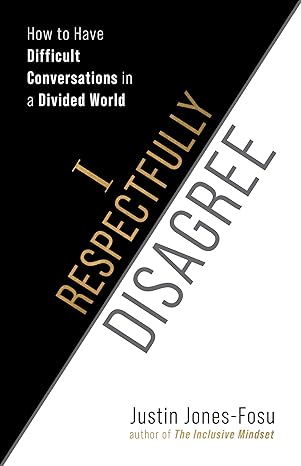
Justin Jones-Fosu’s I Respectfully Disagree delves into the delicate art of navigating tough conversations in an increasingly polarized world. The book introduces practical tools and principles to bridge divides without sacrificing authenticity or relationships. Using relatable anecdotes, Jones-Fosu outlines a five-pillar framework for fostering meaningful and respectful dialogue while challenging readers to see disagreements as opportunities for growth rather than barriers.
What I loved most about this book is how it feels deeply personal yet universally applicable. Jones-Fosu draws on his upbringing and professional experiences to underline the importance of empathy and perspective. The chapter introducing “Golden Respect” particularly stood out to me. It redefines respect not as something earned or transactional but as a fundamental acknowledgment of humanity. I found the comparison between societal respect norms and Golden Respect’s ideals enlightening, especially the principle that respect is more about internal conviction than external behaviors. This notion reframed how I approach disagreements in my life.
The stories Jones-Fosu uses to illustrate his points hit close to home. It’s a reminder that behind every sharp word is a tangled web of past experiences and unmet expectations. Similarly, the chapter on the power dynamics in workplace disagreements gave me pause. The tale of Jonathan, the corporate leader who mistook dissent for disrespect, highlighted how unchecked authority stifles innovation and erodes trust—a cautionary tale for anyone in a leadership role. Another standout is the Tortoise Principle, which emphasizes small, consistent efforts over grand gestures in fostering better communication habits. It’s a comforting idea in a world where instant solutions are often glorified. The book’s refusal to oversimplify the complexities of human interaction is refreshing.
I Respectfully Disagree is a timely, heartfelt, and actionable guide for anyone seeking to engage in deeper, more constructive conversations. It’s ideal for professionals, families, and anyone striving to connect across differences with empathy and respect. If you’ve ever found yourself dreading confrontations or unsure how to disagree without damaging relationships, this book will give you the tools to navigate those challenges with confidence and care. Highly recommended!
Pages: 240 | ASIN : B0CDMYLVFC
Unpacking the Attic
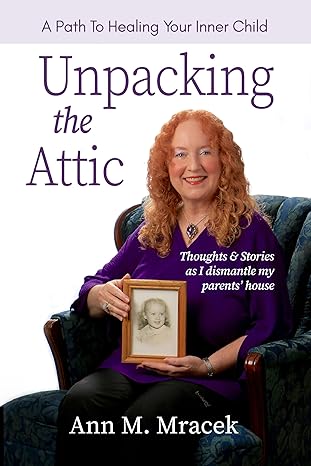
Unpacking the Attic, by Ann M. Mracek, is a heartfelt memoir born from the bittersweet moment of her parents selling the family home after more than 50 years. As she sifted through the furniture, trinkets, and countless memories, Ann unearthed a tapestry of experiences—some joyful, others painful, all deeply human. This book is a tender love letter to her childhood home and the girl she once was, offering readers a journey through her past while inviting them to reflect on their own.
The honesty in this book is what sets it apart. Ann writes with a raw vulnerability that feels as comforting as a chat with an old friend over a cup of coffee on a chilly afternoon. She captures life’s contradictions with grace, moving seamlessly between humor and reflection. One moment, you’ll find yourself chuckling at her playful recollections; the next, you’re grappling with profound questions about forgiveness and the weight of childhood wounds. Through her narrative, Ann reminds us that even those who hurt us often do so out of ignorance, not malice—a powerful lens for healing.
The book is rich with touching vignettes that bring Ann’s past vividly to life. She recalls poignant moments, such as reconnecting with an old piano student now grown into an adult, or the sorrow of losing her childhood dog. Each memory feels alive, like stepping into a photograph infused with emotion. Amid these stories, she asks a question that lingers long after the book is closed: “Did I spark joy in their life?” It’s a deceptively simple inquiry, yet it invites profound introspection. Gratitude for the people who have shaped us and acknowledgment of the light we’ve brought into others’ lives become central themes in this reflective journey.
Unpacking the Attic, by Ann M. Mracek, is not just a memoir; it’s an invitation to explore your own past, reevaluate your relationships, and embrace the beauty of letting go. Ann’s writing is cozy, introspective, and deeply moving—a perfect companion for anyone seeking understanding or closure. Whether you’re revisiting childhood memories or simply looking for a heartfelt read, this book will wrap you in its warmth and leave you richer for the experience. Highly recommended.
Pages: 170 | ASIN : B0DHV4BZKL


