Blog Archives
Why You Felt Crazy


Why You Felt Crazy is a compassionate and steady-handed guide to understanding gaslighting, trauma bonding, leaving an emotionally unsafe relationship, and learning how to live inside your own mind again afterward. Author Quinn Morgan writes from the middle of the experience rather than from some polished, faraway place of total recovery, and that choice gives the book its pulse. The book moves from the first quiet signs of self-erasure, like softening a simple “Where are you?” into something safer, toward the brutal confusion of leaving, going back, wanting to go back, and eventually rebuilding self-trust one small, almost tender decision at a time.
What I appreciated most was how deeply the book delves into the emotional weather of abuse without flattening it into slogans. Morgan doesn’t pretend that leaving is clean or that clarity stays lit once it arrives. The scene at her sister’s house, when a harmless request to make cookies triggers panic about mess, scrutiny, and being watched, stayed with me because it captures something many books only describe clinically. The harm has followed her into safety. It’s in the body, in the reflex to explain, in the way ordinary life suddenly feels booby-trapped. I found that devastating, but also strangely relieving. The book gives language to experiences that are often too slippery to hold, especially the ache of missing someone you know hurt you. Morgan’s insistence that grief isn’t proof you made the wrong choice feels emotionally precise and hard-won.
The writing is intimate and rhythmic. Morgan has a gift for returning to a phrase until it feels less like repetition and more like a hand on your shoulder. At its best, the prose is luminous in a quiet way, especially when she writes about the nervous system seeking closeness from the very person who creates the fear, or about safety feeling unfamiliar before it feels peaceful. The structure can feel soothing in its pattern, with each chapter turning toward reassurance in a similar cadence. This isn’t a book trying to impress the reader with complexity. It’s trying to keep someone company at 2 a.m., when logic has gone thin, and the urge to go back feels enormous. As a result, its repetition often feels intentional.
I came away feeling that the book’s strongest idea is also its most humane one: people don’t stay because they’re foolish. They stay because the good moments were real, because the beginning mattered, and because the cycle trains the body to confuse relief with love. That framing is powerful, and Morgan handles it with care. The practical sections on safety planning, the day of leaving, and the first thirty days are grounded without turning cold, while the later chapters on self-trust and learning what safe feels like give the book a softer landing. Why You Felt Crazy is tender, clear, and painfully recognizable in the best sense. I’d recommend it to readers who are questioning an emotionally manipulative relationship, recovering from one, or trying to understand why someone they love can’t simply walk away.
Pages: 170 | ASIN : B0GGYFWCJD

Shame, Survival, and Silence

Beyond These Walls shares your journey through separation, incarceration, and healing, blending memoir and guidance to show how reclaiming your personal story can transform shame into resilience and open the door to a renewed life. At what point did you realize your story could help others?
What made me realize was how eager I was to help souls who were stuck, depressed, and just in a rut. It then hit me while I was still sitting in the mess alone, grieving, separated from my kids. I remember thinking, If I ever get out of this, I’m going to help someone else through it. At first, it was just journaling to survive the busy, running from self. But as I started to heal, I began to see that my pain had purpose. I didn’t need to be perfect—I needed to be honest. And I realized that being willing to tell the truth about where I’d could give someone else the courage to come back from where they are.
You place strong emphasis on reclaiming and reframing one’s personal story. Why is narrative so central to healing?
Because your story is your identity, and if you don’t own it, it’ll own you. For a long time, I carried a story shaped by shame, survival, and silence. But healing began when I started telling the truth with new language. Not just “I went through this,” but “Here’s what it taught me. Here’s how I grew.” Reclaiming your narrative means you stop being the victim of it and start becoming the author. That’s where freedom is.
You include reflections and exercises throughout the book. How do you hope readers will use them?
This book isn’t meant to be passively read; it’s meant to be worked through. I share reflections and exercises as tools to help readers pause, go inward, and apply what they’re reading. I want them to engage with their own story, not just mine. Whether they journal, cry, pray, or plan, it’s about breaking the cycle of just surviving and beginning to live again with intention.
What does living authentically mean to you now, compared to earlier chapters of your life?
Back then, I thought authenticity was just being tough, showing up strong, and pushing through. I silenced my words to allow others to feel comfortable. Not owning my flaws and allowing myself to trust myself as a neurodivergent, I kept myself safe, like with dyslexia, comprehension, and a busy brain. Now I know authenticity is about showing up real. Your people will find you Just Be. It’s being rooted in truth, even the ugly parts, and not performing for approval. I don’t need to hide the past or sugarcoat the journey. Living authentically today means I lead with integrity, I honor my story, and I no longer shrink to make others comfortable.
Author Links: GoodReads | LinkedIn | Facebook | Website | Amazon
True personal growth takes time. It requires confronting the root causes of our pain, learning to communicate effectively, and, most importantly, healing. Life isn’t designed to be perfect; it’s messy and unpredictable. But within that mess, there’s a chance for renewal and transformation. Please pay attention to your emotions; they often signal areas that still need healing.
I understand how difficult it can be. But know this: you are not defined by your past. You have the power to break free from shame, self-doubt, and negative beliefs and embrace the chance to live authentically. Life’s setbacks don’t happen to us, they happen for us. By changing your perspective on these challenges, you can create a healthier, happier, and more fulfilling life.
Remember, prison isn’t always a physical place—it’s a mindset. And freedom begins when you decide to forgive, heal, and reclaim your story.
As a Wellness Coach, I’ve journeyed down a path similar to yours, and I’m here to assure you that life improves beyond the self-imposed barriers. We’re all on a unique journey; sometimes, detaining ourselves is essential to rediscovering ourselves. Even if it seems daunting, each step is part of our growth. Whether it’s overcoming incarceration, divorce, addiction, or total loss, there are strategies, support networks, and mentors ready to guide us through these obstacles.
“I will share some practical tools for your well-being to guide you through any circumstances. It’s never too late to start again, this time armed with tools to live a fulfilling life. Dare to dream again, unleash your creativity, and free your soul beyond what your eyes can see. You deserve it all. I want you to reinstate yourself at the center of your life, forgive yourself, and rewrite your story. For those who have felt imprisoned by pain and shame, I want to remind you that you are capable of restarting life. I hope you feel motivated, encouraged, and ready to surpass your expectations, limitations, and shame after you read the book. I wish you to thrive; you have not met the part of you waiting to be free. Everyone has an opportunity to live a positive, successful, and peaceful life.
Beyond These Walls

Beyond These Walls tells the story of personal renewal after adversity. It blends memoir and guidance as author Matilde Hernandez reflects on her journey through separation, incarceration, healing, and reintegration. She walks the reader through the power of personal narrative, the weight of shame, the courage of forgiveness, and the long road toward rebuilding a meaningful life. Her chapters mix personal stories with advice, exercises, and reflections that invite readers to look at their own past, release old wounds, and step into a future shaped by resilience rather than regret.
As I read, I was pulled in by the honesty of her voice. The writing has an openhearted simplicity, and I found myself pausing often because something she said hit a little too close. She talks about the moments when you look around and wonder how life shifted under your feet, and that struck me. Her stories feel authentic, not polished for effect. At times, I wanted a bit more tension or texture, but the plainness also made the ideas easy to hold. I appreciated how she talked about reframing your story. It’s such a simple idea, yet the way she describes taking ownership of your narrative made me sit with my own thoughts longer than I expected.
When she writes about separation and the confusion of losing daily life with family, I felt a knot in my chest. She doesn’t dramatize the pain; she just lays it there, and somehow that makes it heavier. I liked the encouragement woven through the book. Her emphasis on self-forgiveness really resonated with me personally. It made me think about how often we wait for permission to move on when she argues you can give that permission to yourself.
By the end, I saw the book less as a step-by-step guide and more as a companion for people rebuilding from something that broke them open. Hernandez speaks to anyone who has lived through shame, confusion, or a hard reset in life. I’d recommend this book to readers who appreciate gentle encouragement, personal faith, and emotional honesty. It’s especially fitting for people navigating re-entry, major life transitions, or periods of deep self-reflection.
Pages: 124 | ASIN : B0DV7Q87MX

Step-By-Step Framework

Mastering Emotions for Men is a direct, honest, and refreshingly human guide to emotional intelligence designed specifically for men who feel stuck, overwhelmed, or just plain numb, that walks readers through reclaiming control over their emotions in a way that feels more like a conversation with a tough-love friend than a clinical self-help manual. Why was this an important book for you to write?
In short, because I lived it. For a long time, I did what so many men do: I pushed through. I kept my emotions on lockdown, focused on success, and told myself that strength meant silence. But underneath the surface, I was burnt out, disconnected, and constantly battling this sense that something was missing. The truth is, no one ever handed us a playbook for emotional resilience. We were told to be strong, but not how to be whole.
Mastering Emotions for Men was born out of that tension, the gap between what we’re taught and what we actually need to thrive. I wrote it because I was tired of seeing good men stuck in patterns that were silently destroying their confidence, their relationships, and their health. And I didn’t want to write another polished, overly academic book that talks about emotions without helping readers do something with them.
This book is personal. It’s raw. It’s direct. But more than anything, it’s practical. I wanted it to feel like the reader is sitting down with someone who won’t let them off the hook…but also won’t let them fall apart. Because we don’t need more theory. We need tools that work in the heat of real life.
Men are craving MORE than survival. We want a deep, honest, and loving connection with others. Purpose. Control over our own minds and emotions. This book gives men permission and a proven path to develop that emotional strength without sacrificing their identity. That’s why it matters. That’s why I had to write it.
What is the RESPONSE method that you have developed, and how does this help men develop emotional intelligence?
The RESPONSE method is a step-by-step framework I created to help men move from emotional reactivity to emotional mastery. For so many of us, emotions either feel like something to avoid or something that hijacks us. We either shut down, blow up, or numb out. RESPONSE gives men a new way to examine what it means to be both masculine and emotional.
Each letter in RESPONSE stands for a key moment in that process:
R – Righting the Societal Wrong
Challenges the outdated narratives that have taught men to suppress emotion. This chapter reframes masculinity and sets the foundation for why emotional intelligence is essential.
E – Emotional Intelligence 101
Introduces the core components of emotional intelligence: self-awareness, self-regulation, empathy, motivation, and social skills. It explores how men can develop and practice them.
S – Science Behind the Emotions
Explores the neuroscience and physiology of emotion, explaining how feelings are formed and why they affect the body and brain the way they do.
P – Pause for Self-Reflection
Equips men with tools to stop reacting on autopilot. It focuses on identifying emotions as they arise and learning to reflect before responding.
O – Overcoming the Urge to React
This is where self-regulation comes into play: learning how to manage intense emotions and avoid impulsive or destructive responses.
N – Navigating Relationships with Empathy
Applies emotional intelligence to interpersonal dynamics, such as how to listen, relate, and respond with empathy to deepen trust and strengthen connection.
S – Self-Care for Stress Relief
Teaches men to protect their emotional bandwidth by building healthy coping strategies: stress management, physical well-being, and emotional replenishment.
E – Effective Communication and Conflict Management
Wraps it all together by guiding men to express emotions clearly, set healthy boundaries, and resolve conflict with strength and clarity.
It’s not therapy jargon. It’s a battle-tested framework built for real life, whether you’re in an argument with your partner, facing pressure at work, or just feeling that vague sense of frustration or numbness you can’t name.
This method trains men to respond instead of react. It creates space between what you feel and what you do. And in that space, you get your power back. You gain clarity. You build self-respect. Over time, you rewire your default settings. So, instead of anger, avoidance, or self-doubt, you respond with strength, awareness, and confidence.
That’s emotional intelligence in action, not just knowing what you feel, but using it in a way that moves your life forward.
What is one thing that people point out after reading your book that surprises you?
One of the most surprising things readers tell me is how much the book feels like a conversation with someone who gets it—not like a lecture or a therapy manual. That wasn’t something I intentionally set out to do at first—but it’s become one of the book’s most powerful strengths.
Men will say things like, “I felt like you were in my head,” or “Finally, someone put words to what I’ve been carrying for years.” And that means a lot to me. Because most guys aren’t walking around saying, “I need more emotional intelligence.” They’re walking around saying, “I’m tired of snapping at the people I love,” or “I don’t know why I feel so numb.” This book speaks to that guy.
Another thing that surprises people—and honestly, it’s one of my favorite reactions—is how the science lands. Guys have told me, “The chapter on how the brain fills in bad data based on perceived threats during emotional stress? That blew my mind.” Once they understand why they react the way they do, the shame starts to lift. And that’s huge. Because when you stop beating yourself up, you finally have the freedom to grow.
But what probably surprises readers most is how doable it feels. They come in expecting a bunch of abstract advice—and what they get is real tools. Quick wins. Micro-habits. Stuff that actually fits into real life. And when they see that even small shifts—like saying their emotions out loud or doing a two-minute check-in—can change how they show up in their relationships, that’s when they start to believe, “Maybe I can do this after all.”
And that? That’s the spark that makes all my research and writing worth it.
What is one thing that you hope readers take away from Mastering Emotions for Men?
I hope they walk away knowing this: you can be emotionally strong without losing your masculinity.
For too long, men have been taught that emotion is the enemy, that strength means silence, and that vulnerability equals weakness. Those lies have cost us our relationships, our health, and our peace of mind.
Emotional intelligence isn’t about becoming soft. It’s about becoming sharp—clear, calm, and in control. It’s about reclaiming your power without letting your emotions drive you off a cliff.
If a man finishes this book and says, “I finally understand what I’m feeling and I know what to do with it,” then I’ve done my job.
This isn’t about perfection. It’s about progress. And if they take that first step then everything can start to change.
Author Links: GoodReads | X (Twitter) | Facebook | Website | Amazon
This is your turning point.
In Mastering Emotions for Men, you’ll discover the key to unlocking the emotional awareness and control you’ve always been capable of. No fluff, no endless psycho-babble—just practical, proven steps to take you from emotionally disconnected to powerfully in-tune with yourself and those around you.
This book equips you with the RESPONSE method, a game-changing approach that transforms emotional reactions into healthy, confident responses. Through clear, actionable guidance and real-world stories, you’ll learn how to break down emotional barriers and step into a new level of personal power and connection. Here’s what awaits you:
From confusion to clarity: Learn to identify and manage your emotions with ease so you can handle stress, frustration, and conflict like a pro.
From isolated to empowered: Rebuild your self-worth and experience a sense of belonging by learning how to trust and express yourself authentically.
From distant to deeply connected: Strengthen your relationships by mastering the art of empathy and assertive communication.
From stalled to unstoppable: Create momentum in your career by applying emotional intelligence to your leadership, decision-making, and problem-solving.
By the end of this book, you’ll go from feeling frustrated and disconnected to being emotionally grounded and thriving, equipped to handle life’s challenges without feeling overwhelmed.
In just a few minutes each day, you’ll discover how to:
Reconnect deeply with the people who matter most, reigniting your relationships.
Handle high-stress situations with emotional intelligence and control.
Turn emotional vulnerability into your greatest strength for lasting success in both personal and professional life.
Ready to transform the way you connect, communicate, and live? Start your journey now—and become the man who not only understands his emotions but turns them into productive tools building the life, relationships, and destiny that you desire.
Mastering Emotions for Men

Jack Wolf’s Mastering Emotions for Men is a direct, honest, and refreshingly human guide to emotional intelligence designed specifically for men who feel stuck, overwhelmed, or just plain numb. Built around a framework called RESPONSE, the book walks you through reclaiming control over your emotions in a way that feels more like a conversation with a tough-love friend than a clinical self-help manual. Each chapter breaks down a different part of the emotional puzzle, from societal pressures to self-awareness, self-regulation, and even how to handle tough conversations without blowing up or shutting down.
What struck me most right away was the voice. Wolf doesn’t mince words. He opens with his own story, admitting he lived most of his life bouncing between “fine, discouraged, or angry.” That resonated with me. I’ve been there. The chapter “Righting the Societal Wrong” dives deep into the emotional straightjacket a lot of men are raised in. The anecdote about Doug—successful on paper, emotionally distant in real life—was painfully relatable. The part where he tries to reconnect with his family but doesn’t know how? Yeah. Been there. It’s not preachy, just real. And that’s what makes the message land.
I appreciated how Wolf balances personal stories with science without ever sounding like a textbook. The “Science Behind Emotions” chapter actually explains why we feel the way we do, not just what we should do about it. He breaks down how your brain predicts threats and how those emotional overreactions are often just misfires from a brain doing its best with bad information. I’ll be honest, this part blew my mind a little. It helped me stop shaming myself for snapping at small things—I understood the why, and that opened the door to changing the how.
But what really hooked me was how actionable the book is. This isn’t a bunch of feel-good fluff. Each chapter ends with reflection questions, “quick wins,” and micro-habits. Stuff you can actually do, like saying your emotions out loud or writing them in a journal. It sounds simple, maybe even cheesy, but I tried it, and I started noticing how often I feel frustrated without knowing why. That little shift in awareness helped me avoid snapping at my partner one night when I was tired and irritable. Small win? Maybe. But for me, that’s progress.
Overall, this book is a great fit for men who are tired of being ruled by emotions they don’t understand or can’t name. If you’ve ever felt like something’s off but didn’t know where to start—or if you’re tired of hearing “man up” as advice—this book might just be the permission slip and toolkit you need. I’d recommend it for any guy who wants to grow but doesn’t want to lose his edge doing it. You’ll come away stronger, not softer.
Pages: 231 | ASIN : B0DS992267
Unbreakable You: Create, Revise, Repair Your Life
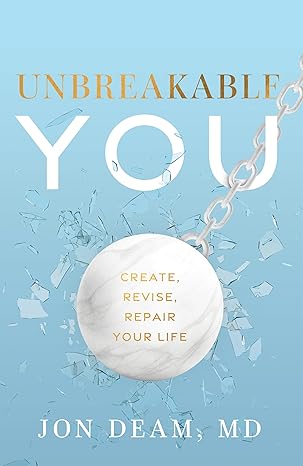
In Unbreakable You, Dr. Jon Deam presents a refreshingly direct and deeply humane take on personal transformation. Structured around six themes—life as iteration, letting go, self-worth, connection, urgency, and resilience—the book uses storytelling, personal insight, and a counselor’s wisdom to deliver bite-sized guidance on how to reframe struggles and begin again, again and again. Each chapter opens with a truism, a short, sometimes humorous saying, and then unpacks it through anecdotes from his practice, cultural metaphors, and practical coaching. The message is clear and simple: your life is not a fixed story. You can shape, reshape, and strengthen it—if you’re brave enough to begin.
What hit me hardest as a counselor—and frankly as a human—was the book’s repeated reminder that perfection is a myth. Deam kicks things off with a powerful metaphor: “You don’t start with the statue; you start with the marble”. So often, clients sit in my office paralyzed by the idea of needing to get life right on the first try. Deam tears that down gently but firmly. He illustrates that we’re all rough stone, being chipped away over time, with grace, frustration, and sometimes a lot of mess. The story of Clark, a man stuck in obsessive fear about his heartbeat, was especially poignant. Deam walks him back from anxiety not with a lecture, but with a practical, almost poetic recalibration—counting the sheer number of times Clark’s heart has beaten without fail. That’s powerful. That’s therapy without jargon.
Another chapter that lingers is “Don’t Be a Spectator in Your Own Life.” In it, Deam shares the story of Barry, a 50-year-old veteran who had never been kissed, never been on a date. The courage it took for Barry to speak that truth and the way that story unfolds with compassion and zero judgment nearly brought me to tears. Deam doesn’t overanalyze Barry’s behavior. He doesn’t offer quick-fix advice. He simply names the pain, the loneliness, and the monster on the hill we all sometimes imagine. He empowers Barry to step onto the field and fumble if he must—but at least play. That message is so needed. I’ve seen too many people frozen by fear of “starting too late” or of not being perfect. This chapter gave me new language I can now use with clients. And that’s the kind of value that sticks.
Chapter 17, “Resilience Isn’t Showing Up When It’s All Green Lights; It’s Showing Up Despite a Lot of Red Ones,” really hit home for me. I spend so much time encouraging others to push through setbacks that I sometimes forget how exhausting it can be to do that myself. This chapter reminded me that resilience isn’t about waiting for perfect conditions—because, honestly, those rarely come. What stuck with me was Deam’s reminder that showing up on the tough days, when everything feels heavy or uncertain, is actually the bravest kind of progress.
This book is honest. Raw in moments, encouraging in others, and filled with metaphors that sneak into your thoughts days later. It isn’t preachy or polished like some self-help bestsellers. It doesn’t rely on flashy neuroscience or overdone motivational speech. What it offers is more human: grounded truths. Short chapters. Real voices. I recommend Unbreakable You to anyone who feels stuck, especially high-functioning professionals, caretakers, or adults in transition who think they “should have figured it out by now.” This book is for the burned out, the overwhelmed, and the quietly hurting. It’s for people who need permission to start over. Or just start. It’s not magic. But it is good medicine.
Pages: 126 | ASIN : B0DYX3SH15


