Blog Archives
Talisman: Subterfuge
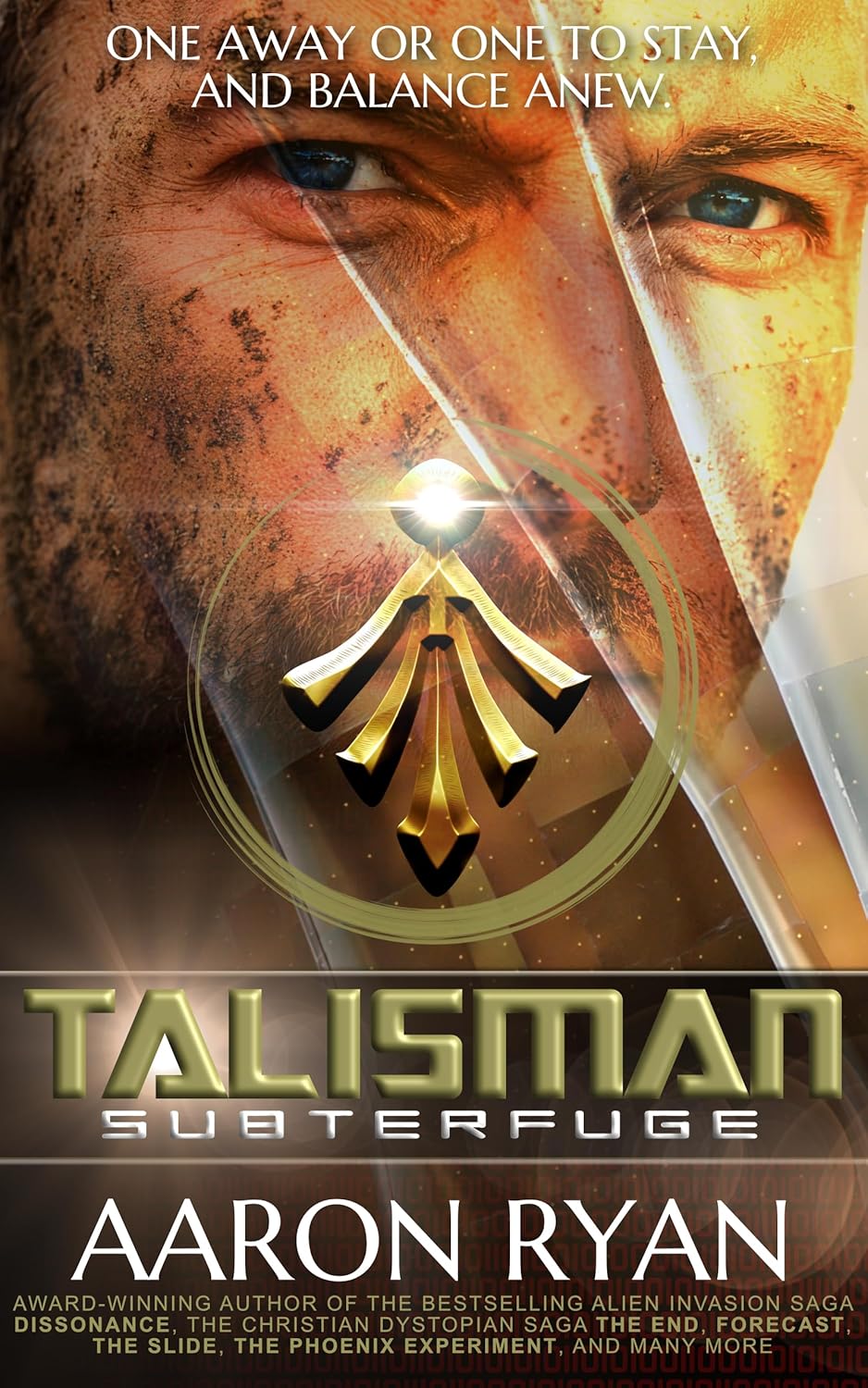

Aaron Ryan’s Talisman: Subterfuge kicks off with a hero who is anything but heroic. Liam “Foxy” Mayfield is a celebrated veteran from a past alien war, but he’s a total wreck. His wife, Janine, was killed by a stray alien, and he’s completely shattered. He’s estranged from his sons and his father-in-law, who just happens to be the President. Then, some mysterious cosmic power called the Aeterium Axis shows up. They give him a crazy deal. He has to save one thousand human lives. If he pulls it off, they’ll bring his wife back from the dead. So Liam accepts, and he becomes this secret vigilante known as “The Talisman,” using new superpowers like teleportation and foresight to save people. It’s not all straightforward, though. A dark, twisted version of himself called The Zorander is hunting him. Plus, a reporter who looks identical to his dead wife is getting dangerously close to the truth.
The writing is fast, it’s raw, and it’s full of emotion. I really felt Liam’s grief. It was heavy, and it made his decision to take this impossible deal feel completely real. I mean, who wouldn’t take that chance? The core idea of “balance” was fascinating. Liam is out there saving lives, which is great, but he’s also killing the bad guys without a second thought to do it. It really makes you wonder. Is he still a hero? Or is he just a desperate man who will do anything to get his wife back? I found myself rooting for him, even when his actions were pretty questionable.
The plot is just non-stop. One minute Liam is saving a wedding party from a landslide, and the next he’s in a brutal, supernatural fight. And then the government, the very people he helped save in the last war, turns on him. Talk about a rough week. I was genuinely angry for him. The author, Aaron Ryan, just keeps piling on the pressure, and it makes for a story you can’t put down. It felt like a dark, gritty comic book. I also liked getting the different viewpoints. We get inside the reporter’s head, and we even see the world through the villain’s eyes. The Zorander is a really spooky dude, and his chapters were intense.
I’d absolutely recommend this book. It’s an emotional rollercoaster. If you loved the author’s Dissonance series, this is a no-brainer. You’ll love seeing Foxy again. If you’re new to this world, that’s fine too. The book does a great job of giving you the backstory you need. This is the perfect read for anyone who likes their sci-fi fast, full of action, and packed with a whole lot of heart.
Pages: 320 | ASIN: B0FV8PL7ZG

Moral Awakening
Switch and Blue Eagle is a coming-of-age superhero novel where a young sidekick battles villains, expectations, and his father’s outdated ideals in a world that no longer sees justice in black and white. What inspired you to explore the father-son dynamic at the heart of the story?
It’s actually an element from my worldbuilding. When I first started doing this, I was inspired by the TTRPG Masks. When me and a gaming group I was part of were preparing to start a campaign in that, I looked over the basic information and saw that the ages of comic book history–the Golden Age, the Silver Age, and so on–were canon as Generations in Masks. So I decided to follow suit with in-universe Ages of Heroism. I’ve always loved the contrast between more serious, darker takes on superheroes and their lighter, more kid-friendly takes of old. So Blue Eagle and Switch ended up being the first two characters I created–along with Queen Venus and one more character that you can likely guess who it is if you read the epilogue–as a contrast between the Silver Age and the Modern Age of Comics and Heroism.
So, in my larger world, I have Silver Age characters and their values, I have Dark Age characters and their values, and I have the younger Modern Age characters trying to find their place in the world.
I know that sounds like an answer to a different question, but the father-son dynamic in this story was actually built from worldbuilding rather than character exploration, at least in the beginning. Once that foundation was built, I started asking myself, “What would people from different Ages of Heroism disagree on when it comes to superhero-ing? What differences would a superhero from each era of comics have, like Superman of the 1950s and Rob Liefeld’s Youngbloods characters in 90s Image Comics, and today’s teen heroes like Miles Morales and Kamala Khan? What complications would those differences create when the people who have those differences also have a father-son and superhero-sidekick relationship? What are some real-life, dare I say political, equivalents to those disagreements?” And this was ultimately my answer.
Jack often questions what makes someone truly “good.” How do your own views on morality shape the story?
Haha, when I was a dumb, edgy 20-something, I really hated Superman (now that I have a fully functioning frontal lobe, I’m now a huge Superman fan). I thought he was way too powerful to have good stories with suspense and stakes, but I also hated how he was essentially a paragon of perfect morality. It was like being super strong allowed him to dictate what was right and wrong. One thing I always said was that, unless a hero possesses “super-morality” as an actual superpower, they have no more credibility on morality and ethics than anyone else.
I now see Superman in a different light, but Blue Eagle represents that part of the old me that was right. That feeling that those in power—churches, pundits, corporate compliance departments—shouldn’t get to dictate what is right and wrong just because they have societal power. A conservative media influencer has no grounds to determine that trans people are immoral while saying nothing about school lunch programs being defunded; a company shouldn’t be able to say an employee having outside income is a conflict of interest while it funds destructive pipeline construction on sacred indigenous land; an elected official shouldn’t be able to say that the presence of migrants is immoral criminal behavior while they take bribes and makes laws that help their rich friends at the expense of education, healthcare, and the environment.
Switch, on the other hand, represents in his teens the moral awakening I didn’t have until my thirties. That society has a real responsibility to lift up its “lowest” and give people real chances to succeed. People don’t succeed in life on their own. We all have support from family, friends, community, and institutions. And when those systems fail people, they are left with paths in life that we would never choose for ourselves. So instead of using force to punish those we deem to be immoral, rightly or wrongly, I believe there is a duty for society at large to ensure that we all have the tools to live happy, dignified lives.
It was that moral conflict that I wanted to place at the core of Blue Eagle and Switch’s disagreements. The father-son conflict and Switch’s desire for independence aside, there is a difference regarding the moral responsibilities that come with power.
The book blends superhero action with introspective realism. Did you set out to challenge typical comic tropes from the start?
Not really. This is another thing born from worldbuilding. This is not the first story I’ve written in this universe, only the first one that I’ve published. And even before I decided to write SWITCH and Blue Eagle, the Blue Eagle Universe, as I call it, was always a superhero universe played mostly straight. It certainly plays with, satirizes, celebrates, and challenges, as you say, comic tropes as well. But it also is one played straight, meant to exist alongside the Marvel, DC, Image, Astro City, Valiant, and other shared universes.
If anything, I would say that the world this book is set in is less “What if superheroes existed in the real world?” and more “What if realistic people existed in a superhero world?”
Jasper’s subplot humanizes the villains. Was it important for you to blur the line between hero and antagonist?
Not really. Not for this book, at least. That’s because I don’t really view Jasper as an antagonist, but one of the two main characters. He just works for the bad guys. The actual antagonists of this book—other than any high-minded literary concept like “Switch’s inner struggles” or something—are the villains. Queen Venus is the primary antagonist, which is fitting as she is the primary member of the Blue Eagle Rogues Gallery.
Actually, the idea for Jasper and the broad spot he sits between the two conflicting ideological positions presented was inspired by a movie I saw from 1990. It was a very high-brow, snooty, underground arthouse film you’ve probably never heard of, called Teenage Mutant Ninja Turtles. Haha. But seriously, in that movie, there are two characters in that film whose fate is really the thematic center point of the movie, and that’s Charles and Danny Pennington. Fatherhood and family are the central themes of that film, with the Turtles and Splinter representing a nurturing and loving family and Shredder and the Foot Clan representing harshness and distance. They present two sides of it, while the Penningtons are teetering on the fence. In the end, they fall into the Turtles’ side, reuniting and beginning the process to reconcile and become closer.
Broadly speaking, Jasper is the same as the Penningtons. Switch believes in societal responsibility and rehabilitation, while Blue Eagle touts personal responsibility and tough love. Jasper’s the case study to prove one of them right and one of them wrong.
Author Links: GoodReads | BlueSky | Facebook | Website | Amazon
Switch the Blue Eaglet is the son and teen sidekick of Blue Eagle, one of Herald City’s top superheroes. But being a sidekick isn’t all glory. Switch is tired of living in his father’s shadow, tired of his strict rules, and tired of being told he’ll never be strong enough to stand on his own.
Jasper Clemens is just another faceless villain henchman. All he wants is to get out of the criminal business. But his debts to the mob keep piling up, and he’s stuck taking the riskiest jobs in order to protect his family.
When a dangerous supervillain launches her deadliest scheme yet, it’s up to Switch and Jasper to stop her. Can Switch prove to the world he’s more than just a sidekick? Does Jasper have what it takes to be a true hero?
Or is Herald City doomed?
Perfect for fans of coming-of-age superhero tales, this short novel delivers action, heart, and a fresh twist on what it really means to be a hero.
Don’t miss this adventure of SWITCH and BLUE EAGLE!
SWITCH and Blue Eagle: A Superhero Sidekick Novel is a short prequel to my main series currently under development, SWITCH and the Challengers Bravo, and the introduction to my larger superhero world of Herald City. It has two focus characters. There is Switch the Blue Eaglet, the sidekick of Blue Eagle, who deals with the self-doubt that comes with the constant criticisms he gets from his father, as well as his unreliable powers. He wants to eventually become a superhero on his own, but he feels the need to prove his worth first. And then there is Jasper Clemens, a supervillain henchman who wants to get out of the business. But his debts to the mob keep piling up, and the only way to keep his family safe is to take on more and more dangerous jobs. And in the background of all of this, Queen Venus, the archenemy of Blue Eagle and Switch, is sprouting her deadliest plan yet and the whole world might be at stake.
Trigger warnings include fantasy violence, father-son family drama, and mob debt.
SWITCH and Blue Eagle: A Superhero Sidekick Novel


Switch and Blue Eagle tells the story of Jack Dufraine, a teenage sidekick known as Switch, and his father David, the legendary superhero Blue Eagle. Together, they protect Herald City from villains like Blizz Kid, Queen Venus, and the eerie Poster Boy. Beneath the flashy battles and high-speed heroics lies a story about legacy, pressure, and the uneasy relationship between generations. Jack struggles to live up to his father’s impossible expectations while questioning the morality of their world, a world that seems to see justice in black and white. The novel blends comic-book action with genuine emotional conflict, making it more than a simple superhero tale.
Author Joseph Safdia’s writing is clear and visual, almost cinematic, and I could picture every fight scene as if it were on a big screen. But what really grabbed me wasn’t the action. It was Jack’s internal struggle. He wants to be a hero in his own way, to think rather than just punch. His dad, though, is stuck in an older mindset, all muscle and certainty. That tension hit home for me. It reminded me of those times when your elders just don’t get what the world feels like now. Safdia captures that gap perfectly. Still, the dialogue sometimes felt a bit heavy, almost like it came from a comic book bubble. It worked in places, but I wanted a bit more subtlety.
What stuck with me most were the small human moments. Jasper, one of the criminals, trying to save his family from the mob, it made me rethink the idea of “villains.” Safdia doesn’t just show the shiny side of heroism. He looks at the cracks in it. The book asks what makes someone good or bad, and whether society even gives people the same chances to choose. Those questions stayed with me. Sometimes leans into comic-style melodrama, but it’s sincere, and that sincerity carries it.
I’d recommend Switch and Blue Eagle to readers who love superhero stories but want something deeper than capes and catchphrases. It’s for those who like action that also makes you think, and who appreciate a bit of heart beneath the heroics. Teen readers will see themselves in Jack’s doubts, and adults might see a bit of their own reflection in Blue Eagle’s rigid worldview. It’s an entertaining, heartfelt story that mixes the thrill of superpowers with the pain of growing up.
Pages: 351 | ASIN: B0FS2718R1
CRIMSON BLOODLINES The Rise of King Musa Africa’s First Vampire

Crimson Bloodlines tells the story of Emma Woodford, a passionate genealogist whose quest to uncover her family roots leads her to a shocking discovery, she is descended from King Musa I of Mali, the famed ruler of the 14th century. Her curiosity takes her from the quiet hum of city life to the scorching heart of Africa, where history, myth, and horror collide. The story starts like a historical mystery and slowly turns into a supernatural thriller, blending the grandeur of West African history with the dark myth of vampirism. The book pulls readers from scholarly research tables to ancient ruins and secret cities hidden beneath the desert sands, creating an atmosphere thick with tension and wonder.
I didn’t expect a vampire story to weave so neatly into African history, but author Aubin Jack makes it work. His writing has a cinematic feel. You can almost hear the hiss of the desert wind or see the gleam of a gold-encrusted citadel rising from the dunes. At times, the prose is lush and descriptive, even indulgent, which slows the pace but also deepens the mood. I found myself swept up in the worldbuilding, the Tuareg warriors, the sacred baobab trees, the mystery of Old Mali, though I occasionally wished for a tighter focus. Still, the book’s heart beats with genuine curiosity about ancestry, identity, and power. I felt Emma’s excitement, her fear, her awe at discovering she might be part of something ancient and monstrous.
Underneath the fantasy and bloodshed is a sharp commentary on legacy and climate change, a surprising but fitting connection, given the author’s background in public safety and activism. Some passages veer into lecture territory, but they come from a sincere place. What stood out to me most was how human this story feels despite its supernatural premise. The vampire lore isn’t just for thrills; it’s used to explore how power, greed, and immortality twist even noble intentions. By the time King Musa’s transformation unfolds, the horror feels earned. It’s not just about monsters feeding on blood, it’s about humanity feeding on the planet and on each other.
Crimson Bloodlines is part adventure, part history, part warning. I’d recommend it to readers who like their historical fiction with a bite of the supernatural, especially those drawn to African mythology, lost civilizations, or climate-driven allegory.
Pages: 150 | ASIN : B0DTRL2D52

Black Glove
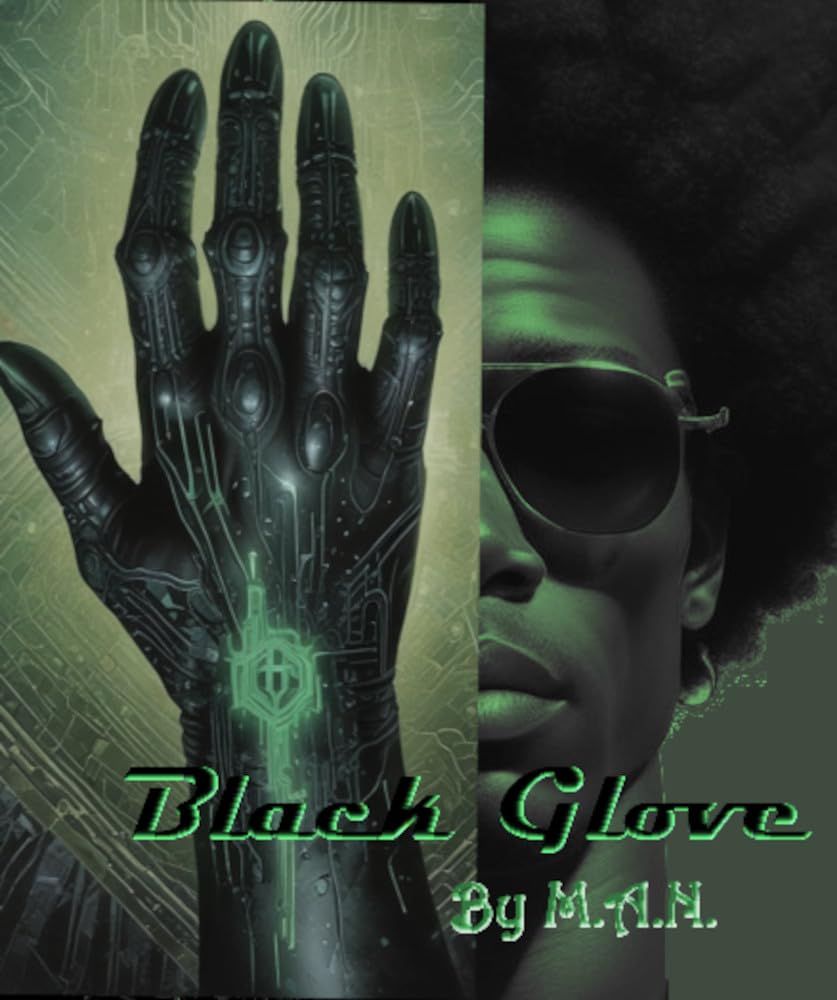
The novel Black Glove by M.A.N. is a sprawling tale of vengeance, power, and the blurry line between justice and corruption. It follows Leroy Black, a young man marked by loss, who grows from grief into a relentless vigilante. His brother is murdered by gang members, his father killed unjustly by police, and these tragedies set him on a lifelong path. Trained in every art of combat, from boxing to martial arts to military precision, Leroy reinvents himself as a force of wrath against gangs and systemic oppression. Parallel to his story is the rise of King Solomon, the leader of the Dynamite Flash, a militant group caught between fighting oppression and becoming what they despise. The two figures move through a world where brutality and ideals clash, raising the question of whether salvation can ever be born from violence.
This story is a whirlwind of action and anger. The fight scenes are long, detailed, and absolutely wild, sometimes almost cinematic in their intensity. At times, I found myself grinning at the sheer audacity of the battles. The writing doesn’t hold back. It’s raw and brutal, sometimes over-the-top, yet I could tell the author poured a lot of heart into balancing the spectacle with deeper themes. I liked the tension between Leroy’s personal mission and the wider chaos around him. He’s both a hero and a man broken by grief, and that contradiction kept me hooked. At the same time, there were stretches where the detail of combat overshadowed the emotional core, and I found myself wishing the quieter, human moments had more room to breathe.
I admired the ambition. The book isn’t afraid to dive into uncomfortable territory. It doesn’t gloss over systemic failures or the ways power corrupts, and it asks hard questions about what happens when resistance begins to mirror oppression. King Solomon, in particular, fascinated me. He’s charismatic and ruthless, convinced that dirt must be fought with dirt. I felt uneasy whenever he spoke, which I think was the point. The moral ambiguity, paired with the relentless energy of the prose, gave the story a jagged edge.
Black Glove is a furious book. It’s for readers who want action mixed with philosophy, who don’t mind a story that gets messy and brutal to make its point. I’d recommend it to people who enjoy gritty superhero stories, vigilante epics, or urban tales that don’t shy away from politics and pain. It’s not a light read, but if you’re ready to ride through chaos, it has a lot to offer.
Pages: 260 | ASIN : B0FDTRSBZH
Mental Health Matters

Ancestor: The Hooded Hero #1 follows a firefighter-paramedic who gets what he thinks is a routine 911 call, only to discover that it quickly escalates into a chaotic, bloody night. What was the inspiration for the setup of your story?
Any time Cody is on duty, if he responds to a 9-1-1 call, it is a call I’ve managed as a firefighter. Of course, they are modified for patient privacy laws. The call I used for the inciting incident was a call I responded to, and the most difficult call for me to handle psychologically in all my 21 years in the service. Cody has similar reactions to me (the echo of the father’s screams causing the taste of blood in his mouth, the callousness toward criminals, the smells of the scene, the woman’s face, etc).
I had to respond to that scene, pronounce the woman dead while her father watched, and assist the coroner’s office with the investigation. Then, when we cleared the scene, we were the only available ambulance to go to the prison and evaluate the prisoner who killed her. I could tell you how compassionate I was toward the prisoner, but you can just read the book.
This is daily life for a first responder, or a nurse, or a soldier. I wanted to highlight the things we have to see and do to keep you safe, and the impact it has on our lives and our own health. It’s important to spotlight these things, because often we take for granted that the police or firefighters just exist to serve us, but they’re people too. And they’re twisted significantly by what they see every day.
I found Cody to be an intriguing and well-developed character. What inspired you to create him and his backstory?
Cody is the quintessential fireman. He’s derived from a variety of responders, including myself, my long-time ambulance partner, and other coworkers. His own mental health and the calls he responds to reflect my own career and my own downward spiral when I had reached my darkest moment. But I’m not a special case by any means. I just wish I was built like him, haha. I wanted him to have a major presence, like gravity, whenever he entered a room. So I made him large like Jack Reacher but with the type of reputation that makes everyone notice him when he enters an area.
What were some themes that were important for you to explore in this book?
First and foremost, I wanted to explore the world of mental health. It’s not normalized enough, despite our 21st-century efforts. This whole series will be an exploration of mental health through the lens of a superhero and a first responder. Sadie, Cody’s love interest, is there to ground people because she’s the ‘civilian’ but still very much entwined in the mental health struggle. Sadie is also supposed to be the calm to Cody’s chaos. She is intelligent, dedicated, goes to therapy, takes her medications, and strives toward self-improvement like no other. She’s the example of what we can all be if we manage our mental health well, and obviously the example of no matter how well we’re doing, nobody’s perfect. Cody is the opposite. He’s the example of what we could become by burying our feelings under alcohol and pressure.
Mental health aside, I’d been looking for a way to tell my “war stories” from the fire department, and I had been excited to come up with a superhero idea for a long time. This gave me the chance to do both. Hopefully people enjoy the ‘peek behind the curtain’ at first responders’ lives.
What will your next novel be about, and what will the whole series encompass?
The Hooded Hero series will explore the ups and downs of managing one’s mental health. Readers will find both allies and enemies who struggle with some mental health issue, and it’s my hope that they can relate to all of them. The next few books in the series get dark. So if you thought Ancestor was dark, buckle up.
I’ve collaborated with a horror author, Carl Bluesy, to create novellae with a more fantasy/horror theme which will fit chronologically in the series timeline and will follow Cody through supernatural challenges, which unlock new superpowers and teach him new lessons about life and what it means to be a hero.
Book 2, titled Burnout, and the first of the novellae, titled Inferno Mirage, are coming Q4 2025. Follow me on social media @authormattoz or join my newsletter to keep up with the latest news.
Author Website
Cody, a US Army veteran who now works as a firefighter, is one bad 911 call from a complete mental breakdown. Then life feeds him two bad calls, back to back.
He begins to hallucinate and hear voices. But they don’t just speak to him-they grant him abilities beyond his wildest imagination. And they have their own agenda.
Meanwhile, sinister forces wreak havoc on the city, tearing apart its infrastructure bit by bit. Will this firefighter-turned-superhero quell the burning city’s flames, or will he be the gust that spreads them?
Ancestor is a dark urban fantasy thriller which explores the daily lives of first responders and mental health topics through the lens of a superhero’s trials.
Inside you will find:Justice and vengeance dealt with a bloody, heavy hand.
Revenge. Beautiful, satisfying revenge.
An unforgettably unique romance subplot.
Insight into the daily lives of first responders, written by a first responder.
Seriously flawed, regular people. Because to be flawed is to be normal.
Jump straight into the depths of Jade City. Buy it now.
Ancestor: The Hooded Hero #1

Ancestor drops you headfirst into the life of Cody Chance, a firefighter-paramedic in the gritty near-future city of Jade. It starts with what feels like a standard emergency call, but quickly escalates into a chaotic, bloody night that leaves Cody haunted by both what he saw and something darker that seems to be following him. A comet burns across the sky like an omen, strange voices whisper from nowhere, and Cody’s grip on reality frays. Between violent calls, moral compromises, and an unshakable sense that something supernatural is at play, the book builds a tense blend of urban fantasy, first responder realism, and psychological suspense.
Ozanich writes with the eye of someone who’s lived it, pulling you into the banter, the gallows humor, and the ugly truths of emergency work. At the same time, the creeping horror threaded through the story kept me off balance. I loved that shift. It’s not just gore for the sake of it. The unease builds slowly, like a shadow you can’t quite catch. The voice of the narrator feels raw and honest, even when the things he’s thinking aren’t noble. That unvarnished humanity made it hit harder.
The violence is vivid and unflinching, and the pace sometimes lingers on procedure in a way that slows the momentum. I found myself caught between being absorbed in the detail and wanting the story to push forward. And Cody, well, he’s not always easy to like. He’s stubborn, sometimes reckless, and definitely flawed, but that’s what makes him real. There’s a claustrophobic quality to the way the night unfolds, which works brilliantly for tension.
I’d recommend Ancestor to readers who like their urban fantasy grounded in real-world grit, especially those who aren’t squeamish about violence or moral ambiguity. If you enjoy character-driven stories where the supernatural seeps in slowly, and you can handle the rough edges of first responder life, this one’s worth the ride. It’s a wild, unsettling, and strangely relatable trip.
Pages: 376 | ASIN : B0FHRQS1JW
Culgan, Freki Wolf Clan
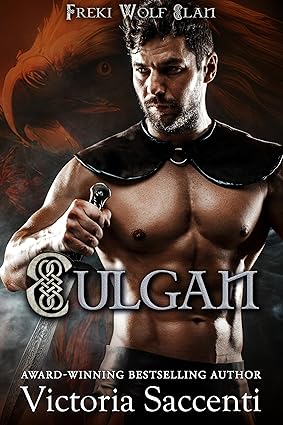
Victoria Saccenti’s Culgan is a rich and magical tale set in a world where direwolves, gryphons, and ancient magic exist in powerful harmony. The story follows Roisin, a young woman on the verge of discovering her destiny as a direwolf shifter, and Culgan, a seasoned warrior and heir to the Freki clan. As a dark force reawakens in the world, Roisin undergoes her shift with Culgan’s help, and together they find themselves bound by fate, ancient prophecy, and a rising evil that threatens the balance of their realm. The narrative weaves romance, fantasy, political intrigue, and supernatural battles into a tight, emotional adventure.
I found myself drawn in almost instantly by Saccenti’s worldbuilding. Her ability to blend myth, lore, and visceral details into a living, breathing world is impressive. The Freki stronghold, the gryphons’ bond with their riders, and the mystical laws of the universe all come alive with elegant precision. But it was the emotional depth of Roisin’s awakening, the fear, the wonder, the pain, and eventual triumph, that left the strongest impression on me. Her transformation didn’t feel like just another magical puberty metaphor. It felt real. And Culgan, stoic and noble, struck the perfect balance between protector and partner. Their connection had a slow-burn warmth that felt earned.
At times, the story takes a pause to dive deep into the background and inner thoughts, which can slow the pace a little. And I felt some of the dialogue leaned toward the polished side, feeling a bit more formal than the story’s otherwise grounded and emotional style. Still, these moments felt intentional and helped flesh out the world and its history. But these moments were few, and the rest more than made up for them. The villains felt truly menacing. The magic felt ancient and consequential. And when Saccenti brings in darker themes like abandonment, manipulation, and power struggles, and she doesn’t sugarcoat it.
Culgan is a heartfelt and exciting fantasy that reads like a coming-of-age epic blended with a deep, magical love story. I’d recommend it to readers who enjoy immersive fantasy worlds with strong female leads, loyal found families, and just the right touch of romance. It’s perfect for fans of Sarah J. Maas or Patricia Briggs, especially those craving more complex shifter lore and mythology. Saccenti writes with conviction, and her story pulses with emotion. I walked away from the last page feeling satisfied, hopeful, and more than a little tempted to dive back into her world again.
Pages: 294 | ASIN : B0F4KN8WJ4


 LITERARY TITAN