Blog Archives
Who Doesn’t Dream of Escape?

Sitnalta follows a young princess trapped in a kingdom ruled by cruelty and fear, who becomes restless, yearning for freedom, and escapes her captivity to embark on a journey of self-discovery. What was the inspiration for the setup of your story?
Originally, Sitnalta began as a short story written for a school project. So, for all budding writers out there: don’t throw away old stories, and inspiration can strike in the most unlikely of places.
In grade seven, my English teacher put up a tic-tac-toe board on the chalkboard and said to make a line. In the line I chose were the words “coin, princess, escape”. From there, the story I was supposed to write should have been two pages. I handed in twelve. This short story just wouldn’t leave me alone. When I got into university, I pulled it out and reread it. Aside from the fact that I found the writing and some of the characterization a little juvenile (I was thirteen!), I felt that there was something there. I worked at it and eventually had a novel, and plans for five more.
Sitnalta was born at a time when most young people can feel trapped. I myself had issues with a bully at school, I didn’t know where I belonged. My friends and I were all figuring out who we were, who we wanted to be, and the character of Sitnalta was very much an extrapolation of that. Who doesn’t dream of escape?
In many contemporary coming-of-age fiction novels, authors often add their own life experiences to the story. Are there any bits of you in this story?
I am very much all over the story. The character of Aud is in many ways inspired by my grandmother who lived with me while I was growing up. Everyone used to say that she was a second mother to me. Aud’s nature, and her relationship with Sitnalta is very her. Sitnalta herself is an amalgamation of my childhood best friend, and characters from books I loved as a child. I used to say that she is my friend Marilyn superimposed on Anne Shirley. Sitnalta’s relationship with Najort, their time together, and how they speak with one another is something that came from every person’s desire to be seen, to be loved for who they are, and the need to be heard.
What were some themes that were important for you to explore in this book?
I wanted to convey the importance of choice. Sitnalta feels that she has hers taken from her continuously. She looks at the world from a place heavy with loss, however, when her back is to the wall, she finds that there is always a choice to be made. It may not always be the best one possible, but it always exists. Everyone has the ability to take their lives into their own hands and run with it. I found that to be an important theme, how even the smallest person can make a choice and better their world.
Can you tell us more about what’s in store for Sitnalta and the direction of the second book?
Well, I don’t want to give too much away, but that pesky coin still exists, and we see so much more of the world Sitnalta lives in, even beyond the shores of Colonodona. The next book is called The Kingdom Thief, and you can read into that title whatever you want to. It’s an adventure book, and may or may not have some hints at a burgeoning romance.
Author Links: Amazon | GoodReads | Website
But Sitnalta has other ideas. Before her father can come for her, she sneaks out of her bedroom window, scales the castle walls, and enters the magical forest that surrounds her kingdom. There she meets Najort, a kind-hearted troll, who was tasked by a wizard decades earlier to protect a valuable secret—with his life, if necessary.
But King Supmylo has vowed that nothing will stop him from returning his daughter to Colonodona, and forcing her to go through with the royal wedding. With the help of friends from both kingdoms, Sitnalta and Najort flee ahead of the rabid king. For if they are captured, Supmylo will become so invincible, no one could stand against him
Code Quest: The Ethics Engine


If you’re a parent, you already know it’s only a matter of time before your children venture into the digital world. Unless your family is entirely off the grid, your kids will soon be online, learning, exploring, and connecting through technology. And with that new freedom comes risk. Code Quest: The Ethics Engine dives straight into this reality, following four children as they navigate a vibrant online universe that mirrors the challenges of our own connected world. Each digital trial they face unfolds as an entertaining game, yet every victory carries a lesson in awareness, responsibility, and integrity.
Teri Green’s book blends education with adventure, offering something reminiscent of Dora the Explorer or Blue’s Clues, yet more intellectually stimulating. The premise is simple: four young friends must rescue their school’s malfunctioning artificial intelligence. Along the way, they encounter ethical dilemmas drawn from real-life decisions about honesty, empathy, privacy, and online safety. Readers aren’t just spectators; they learn right alongside the characters.
While topics like data protection and misinformation may sound heavy for grade-school readers, Green’s lively storytelling and bright, engaging illustrations make the material accessible and fun. The challenges are designed with common-sense solutions, helping young readers internalize values such as empathy, digital responsibility, and critical thinking.
In an age where technology shapes nearly every aspect of childhood, Green’s message feels both timely and essential. Many parents try to shield their children from digital dangers for as long as possible, but such protection has limits in a world that moves at the speed of innovation. Green wisely acknowledges this tension, offering an approachable tool to bridge the gap between curiosity and caution.
Not enough educators or parents are having these conversations with children, and the absence of guidance leaves a critical gap. Code Quest: The Ethics Engine fills that void beautifully. It’s an imaginative, meaningful read that empowers kids to think ethically and act wisely in a digital landscape that’s here to stay.
Pages: 47 | ASIN : B0FKWV6JXB

The Tralls of Colum
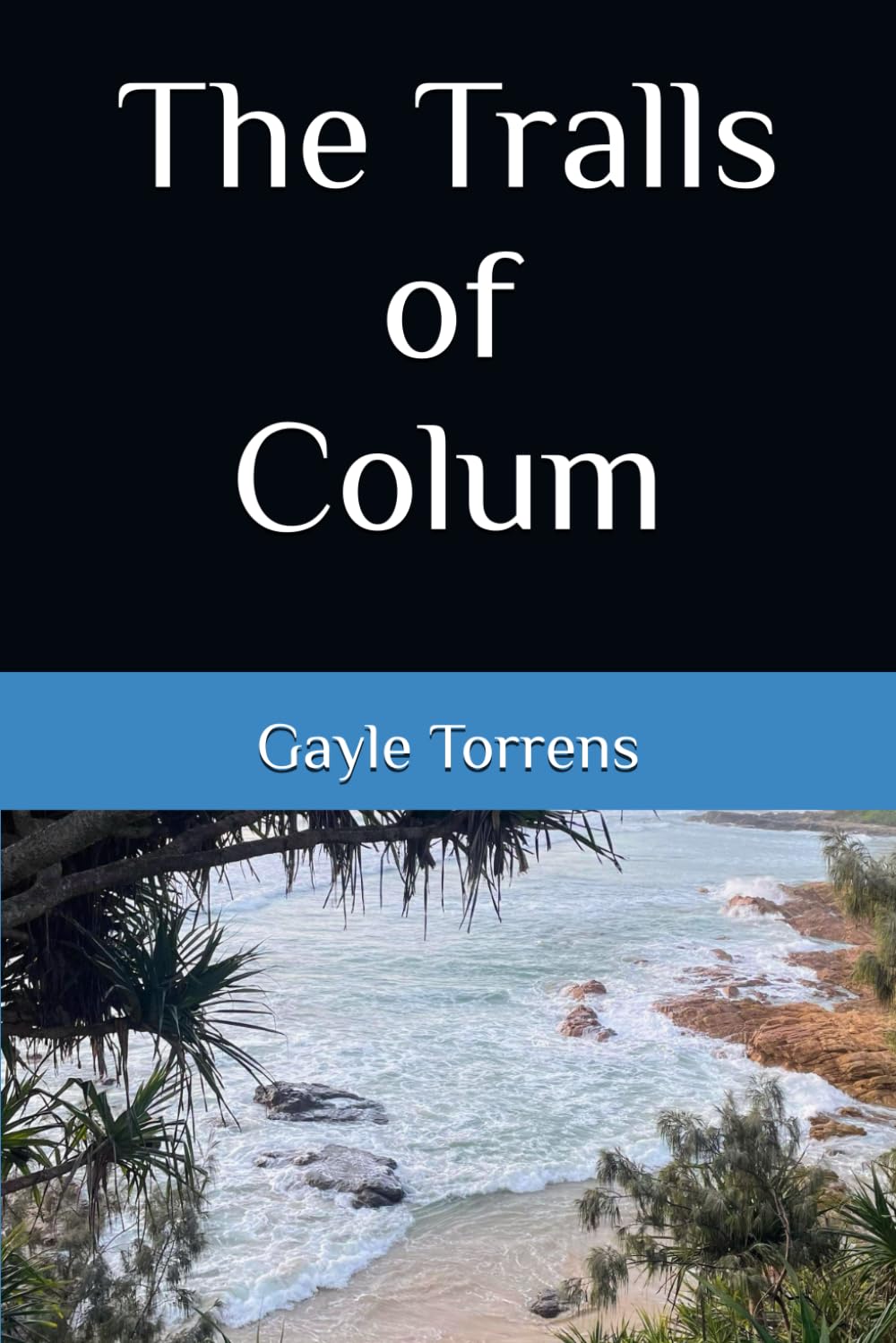

The Tralls of Colum is a heartfelt portal fantasy tale that carries young readers back to the mystical world of tralls, small magical beings living among the wild beauty of the Australian coast. The story follows Jai and Emi, siblings from the Tralldom of Colum, who face challenges tied to environmental changes, friendship, courage, and discovery. It’s a story of family, community, and the tension between nature and human greed, woven through vivid scenes of ocean life, lush forests, and fantastical creatures. Torrens’ world feels lived in, her writing is inspired by Australia’s land and sea. The book blends environmental awareness with adventure, never feeling preachy yet leaving a strong impression about the delicate balance of ecosystems.
Reading this, I felt both wonder and warmth. Torrens writes with sincerity, and her affection for the natural world comes through on every page. At times, I caught myself smiling at the innocence of Jai and Emi, then holding my breath when danger crept in. Her language is simple but rich with imagery. The ocean scenes shimmer, and the tension between the tralls’ traditions and the creeping modern threat of “Mr. Handley” feels hauntingly familiar. I did think the pacing slows in the middle, where dialogue stretches long, but the heart of the book kept me hooked. It reminded me of those childhood stories that stay in your bones, not because of big twists, but because of how honestly they treat bravery and loss.
What really moved me was Torrens’ sense of place. Her Australian voice is clear, proud, and authentic. I also liked how she wrote about courage, not as grand heroism, but as persistence, kindness, and faith in one another. Even the fantasy elements carry a quiet realism that makes the magic feel possible. I found myself thinking about climate change and how stories like this can plant seeds of care in younger readers without lecturing them. That, I think, is where Torrens succeeds most: she teaches through wonder.
The Tralls of Colum is a gentle yet stirring read. It’s perfect for children who love adventure, families who enjoy reading together, or anyone who still believes that nature holds secrets worth protecting. It has heart, honesty, and a deep respect for the world it comes from. I’d recommend it to readers who appreciate fantasy that feels close to home, and to anyone who’s ever stood on a beach and felt that the waves were whispering a story just for them.
Pages: 306 | ASIN : B08WYDVN7C

A Hero to Admire and Inspire

The Eye of Ebon follows a young girl who is brutalized and left to die in the snow, who is delivered a mysterious sword that has the power to change the course of her world, if she can survive. What was the inspiration for the setup of your story?
First of all, thank you for having me, and for your interest in my story, The Eye of Ebon. I greatly appreciate this opportunity to talk about my work, and to be showcased on the Literary Titan website. It is an honor.
The inspiration for the Eye of Ebon came from things I was witnessing in our culture and in the entertainment world around me. I saw strong trends towards glorifying villains, and bad things, and a falling away from valuing heroes in our daily lives. Gone was Adam West’s Batman, and Shatner’s Kirk, and here was Darth Vader and Prince Zuko. The conversation changed. People were more interested in villains, and heroes were cast aside as dull, or boring, or too ‘good’ to be interesting. The questions that floated around in the writer’s circles were no longer about the virtues of heroes, but instead about the complexity of villains, and many times it was just, ‘Is my villain cool enough?’ I wanted a story that brought the focus back to heroes, and one in which the villains were reacting to them. I wanted heroes that were admired and were inspiring to people, and I wanted villains that had no redeeming or likable qualities.
But there was more. I am a believer that for light to shine brightest, it must be pitted against the greatest dark. Samiare is in a dark world, and suffers a terrible ordeal. I knew from the beginning that I wanted to write a female character. I wanted the greater difficulty that comes with that territory. I wanted the female aspects of her character to matter, to not have her just be a man in female trappings, hitting things with her sword in a male, swashbuckling way. I wanted her to have terrible things to overcome. Samiare wrestles with anger and hate and pain through much of the story. She is physically and spiritually damaged, and has a lot to contend with. The opening scene and the ordeals she suffers carry with her throughout all the books, but are strongest in the Eye of Ebon.
Ruegette also has many things to overcome as well, there is a great sadness and regret in her, and her devotion to duty has cost her much, and may cost her more again. She is more mature than Samiare, but her journey is equally as real. My first concept of her was that she needed to be a role model that could make Samiare confident that she could follow in the ways of warriors as well. She needed to be a friend and mentor. In a world where women do not play the role of warrior, one who was living that life, and being highly successful at it, might give the spark that others could do it too. Ruegette is highly competent, and knows when to take risks. And she is just as driven as any to achieve her aims. But to make the choice that has set her on this path has come with a great cost. While it is not as front and center as Samiare and her issues, there is still much pain in Ruegette, and there is no way for her to set it right. She too takes risks of life and limb and does her duty for Tierinor, but is it what she truly wants? Or does it just end in more heartache? There is no going back for her. There is only braving the way ahead.
What were the driving ideals behind Samiare and Ruegette’s character development throughout the story?
For Samiare, I wanted her to wrestle with her feelings of anger and hate, both at her ordeal, but also at the monstrous Groll who did it. Samiare has to come to terms with a lot of change right away. And she is wielding the White Sword. It connects her to powers above—powers unlike those following the Seven Gods have ever known. Her faith and her belief carry a lot of importance, and few in the story share it with her. Samiare is asked to trust, but given little as to why she should. Yet she cannot just ignore the powers that work through her. She does believe, but can she bear it when she hates so much?
With Ruegette, I wanted to pit her devotion to duty, against that of finding love. The daring Captain Darimus travels with her, and she must work with him even though he is an agent from a foreign power—one that is supposed to be an ally to Tierinor, but is seemingly working with the Groll instead. Ruegette cannot wholly trust him, and yet…in their quest together, their feelings for each other grow. It isn’t all just foolish banter, there is something genuine behind it as well.
Ruegette is a Tagore, duty before all else is in her blood. How can she walk the line of duty to her own nation while contenting with her growing feelings towards the Marish captain? Can she survive if she must deny love to keep the Eye of Ebon safe? And what is the cost of duty when the stakes are so high?
What were some themes that were important for you to explore in this book?
There are many themes explored in the book, and in the series.
In the Eye of Ebon we see strong themes of duty and faith, as well as many others, such as overcoming, persevering, loyalty, trust, love, honor, and sacrifice. And many more themes as well. But for me, personally, I wanted the story to reflect that faith matters, and that trust in things greater than oneself is something that even the most faithful wrestle with. Samiare has a lot of faith. Some of it is just hard wired into who she is, and much more of it comes from the act to save her, and her connection to the One Who Watches Over. But she wrestles with that connection throughout the story, growing in faith and questioning trust. This is a theme the spans all five books and lives with the character for the entirety of the tale. Samiare gains somewhat of the warrior ethos over the span of the five books and that too plays a role in who she is.
Ruegette has duty first on her heart. It was bred into her by the importance of being a Tagore, and plays out over the many books as well, as she tries to come to terms with her father’s love, and his effort to do his duties as well. It shapes who she is. Ruegette wants to overcome the grip that duty has on her, but knows the gravity of events means she cannot just put it aside. She must find her own way, and make her own amends. Ruegette has great loyalty to her house and to her nation, but the lone act of rejecting her father’s plans has had a cost on both herself, and on others she loves. It cannot be so easily forgotten or forgiven. Ruegette must find some way to make peace with her demons as well.
When will book two be available? Can you give us an idea of where that book will take readers?
Book 2, The Promise of Eternity, is delayed in becoming available. I am currently working with an editor to help me provide a high quality work, and fix some of the problems it may have. And I am also waiting on the cover artist to make some changes I had asked for in the cover design. Teresa Jenellen is a wonderful artist, and I love her work. She is worth waiting for.
I am looking to have these out early in 2026, if not earlier.
Books 1-4 are all written, and book 5 is in progress. When Book 2 is released, and the rough for book 5 is written, I will be putting all my energy into getting book 3 released. Unfortunately, I have been wrestling with cancer for the last year, and I now feel it is more important to get the whole story written than to meet release date deadlines. It is important to me to complete the tale whether my cancer is cured or not. Hopefully, I can meet a schedule of one a year, or one every 18 months. The editing does take a lot of effort, and the latter books have much higher word counts.
It is my great hope that readers will enjoy them all, and stick with my tale through its darkness and grit to see its beauty as a whole.
My story has been described as, ‘What if Joan of Arc had used her sword and not her banner?’ Well, Sami is not quite Joan, but I’d like to think Joan would have admired her.
Author Links: GoodReads | Facebook | Website
Pulled into a conflict greater than nations and Gods, both Ruegette, and the girl she rescues, try to survive in a land full of threats against brutal foes that will show them no mercy. Can Samiare find the strength to overcome her torments, and can the White Sword be enough to push back the dark? –Or will a sinister creature reclaim its prize…
The Shadow is rising…
…It seeks back its eye…
…It won’t be stopped.
Creative Non-Fiction

Leftwich Blues/Elfwitch Rules follows twin twelve-year-olds from a broken home who are abducted by the Elfwitch and taken to another world, where they must now find a way to get back home and heal their broken home. What was the inspiration for the setup of your story?
The idea started with the title. I like to make lists of titles from time to time. The title made me think who is Leftwich? Why does he have the blues? Who is the Elfwitch and why is she trying to rule? This image came to mind: a witch travelling through the air with twins she had kidnapped. One twin gets away, but the Elfwitch tricks the other twin into serving her. The escaped twin finds an oppressed people who need encouragement in fighting against the Elfwitch. So, the twin has to lead an uprising against the Elfwitch and try to free the other twin who turned against their original selves.
The idea reminds me of the many Saturday morning TV shows by Sid and Marty Krofft: H.R. PufnStuff or Lidsville plus other portal fantasies or science fiction movies like Alice in Wonderland or Planet of the Apes (the original from 1968, not the watered down remakes/reboots) where a stranger ends up in a strange land and has to keep their identity intact while turning from fugitive to hero/heroine to survive in a harsh new reality.
Your characters are wonderfully emotive and relatable. Were you able to use anything from your own life to inform their character development?
The twins’ first names I borrowed from my cousins. Their last name also belongs to distant cousins. I find that the more real or personal I can make the character or backstory, the more I can dig into it to adapt and change it according to how the story dictates. I was a mental health paraprofessional for a few years (so I have been to family court a few times) and worked at a charitable thrift store as well as conducting a twelve-step program and now I am a public educator. I have had ex-clients as my students and have come to know the families. I understand better the dynamic in households and the problems children bring to the classroom.
My writing has been called “creative non-fiction.” I never thought of it like that, but it’s true as I need a heavy dose of realism in my fiction before I introduce the weird and fantastical.
What themes were particularly important for you to explore in this book?
The idea of twins separated and working against each other and having to reconcile was the starting point. Then it became a study of duality: two sides or polar opposites that feed or synergize entities or issues: tyranny and freedom, good and evil, lies and truth, night and day, family/friends and foes, forgiveness and unforgiving.
Is this the first book in the series? If so, when is the next book coming out, and what can your fans expect in the next story?
This was written as a stand-alone. However, I am brewing ideas for a sequel (which I would make into a cliffhanger for a duology). That project will have to wait as I have two other current projects I am working on plus I am currently promoting my first collection of short stories: ghostly shudder tales.
Author Links: GoodReads | Website | Substack
Adapt and Persevere

The King’s Ascent follows the rightful ruler of a kingdom that has been taken over by an insane man craving power and control, who, with his loyal friends, must find a way to regain his throne. What was your inspiration for the setup of the story, and how did that help you create the ending?
I believe people are drawn to the timeless clash of good versus evil. While it is a familiar trope, its enduring appeal lies in its reflection of real life—where both good and bad exist. The battle between Barrett and his friends against evil mirrors the struggles we face in the world today.
As for the ending, I wanted to convey that life is never a straight path. Like Barrett and his friends, we are often guided by unpredictable twists and turns, many of which are beyond our control. Yet, to survive, we must adapt and persevere. While this lesson is difficult and sometimes painful to learn, Barrett’s journey reflects the challenges we all face in life.
Your characters go on a deeply emotional and transformative journey in your novel. Do you think this is intentional or incidental to the story you want to tell?
The theme of transformation is intentional. Every moment, we are changing—shifting in ways both big and small. We are never the same person we were yesterday, last week, or even last month. Barrett and his friends undergo a similar evolution, growing before our eyes. They make countless mistakes, but it’s through these trials and tribulations that they ultimately become stronger and better equipped to reach their goal
What is your background and experience in writing and how did it help you write The Ruinous Curse series?
I have been writing since I was a child, creating short pieces of fiction as early as nine years old. Over the years, I have honed my craft as an outdoor columnist, taken writing courses, and learned the art of editing and storytelling. I have never looked back. My time in the military, where I had the opportunity to travel the world, deepened my understanding of diverse cultures and people. I strive to weave those experiences—the sights, beliefs, and emotions—into my writing, enriching my stories with a global perspective.
Where do you see your characters after the book ends?
That’s a great question, and honestly, I’m not sure there’s a clear answer just yet. I’ve been toying with the idea of extending the series into another trilogy, featuring a more mature and wiser cast of characters. However, I haven’t taken that step yet, as I’m currently immersed in a new project titled The Library Between Worlds. Stay tuned, there’s much more to come.
From the bottom of my heart, thank you to everyone who has read and reviewed my work. I truly appreciate each one of you.
Author Links: Website | LinkedIn
To save their home, the friends must remove the tyrants. But the task will be harder than imagined as their plans fail at every attempt. Making things worse, the wizard Elimar is nowhere to be found and the sorceress, Trishar, is confined to her house under the watchful eyes of Bureau Agents.
Now, Barrett must use all his cunning and powers to free Westmore from the vile grasp of the Bureau, regain his throne, and rebuild the city. Standing in his way are an evil wizard, armies of hired killers, Mystical Affairs, and Grimes himself, who has more secrets than anyone could have guessed.
Leftwich Blues/Elfwitch Rules
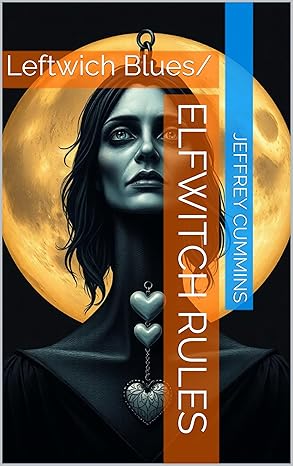
Leftwich Blues/Elfwitch Rules is a sweeping fantasy tale woven into the struggles of a fractured family. It starts in myth, with vows made under the moon and curses that shake kingdoms. Then it jolts into the present, landing in the Ozarks with two twins caught in the fallout of their parents’ broken marriage. From there, the story keeps folding back and forth between a mystical Realm of hunters, owls, and ancient metals, and the harsher modern reality of courtrooms, social workers, and family strife. The twin narratives eventually bleed together, blurring what is real, what is allegory, and what is memory.
The writing bounces between old-world fantasy language and down-to-earth small-town chatter. That clash can be jarring, but it also gives the book a unique energy. One minute I was caught up in quicksilver necklaces glowing under a full moon, the next I was listening to kids argue about video games and crackheads. Sometimes I found myself laughing at the dialogue, other times I felt weighed down by how bleak it could get. The swings were sharp, but they kept me reading.
What hit me hardest wasn’t the magic or the battles. It was the raw mess of family life. The fights between Mom and Dad felt too familiar, too close to real arguments I’ve overheard in my own life. The kids’ tug-of-war over which parent to trust felt honest, painful, and sad. The fantasy parts worked like a mirror, twisting those personal struggles into epic stakes. When the twins lost their footing in the “real” world, it was like the Realm itself was cracking apart. That connection between worlds gave the story its punch.
The sudden shifts might throw some readers. But for people who like fantasy mixed with real grit, who don’t mind faith and scripture tucked into the corners, and who can handle a story that cuts close to the bone about family, it’s worth the ride. I’d recommend it to readers who like their myths messy, their heroes flawed, and their stories willing to sit in both wonder and heartbreak.
Pages: 435 | ASIN : B09CD1D958
The Ruinous Curse: The King’s Ascent

The King’s Ascent is the third book in The Ruinous Curse series and brings Barrett’s long and bruising journey to its peak. With his friends by his side, he faces the final push against Apadora’s curse, the treachery of those he once loved, and the crushing weight of decisions that could end or save entire worlds. The story picks up where the last book left off and wastes no time plunging the companions into the Outerworld, where trust splinters, love is tested, and the line between sacrifice and survival grows thin.
What struck me most while reading was how much darker and heavier this installment felt. The writing carried more bite, more despair, and yet more raw urgency than before. Sometimes that worked brilliantly, especially when Barrett’s doubts mirrored my own unease. I loved how the story kept its momentum, never letting up for long, and the constant clashes and arguments gave the book an energy that pulled me through without pause. I was hooked by the constant turmoil between the characters, particularly the fraught tension with Zanora. Those confrontations sparked with real venom, and I found myself torn between pity and fury every time she opened her mouth.
At the same time, there were moments of beauty that kept me grounded. Gaia’s voice of calm and her warmth gave the book its balance, and the loyalty between the companions, frayed as it was, always pulled me back into caring. I can’t deny the sheer emotion McClain poured into this tale. I caught myself smiling in places and even shaking my head in frustration when Barrett stumbled into old mistakes. That mix of reactions is what made the book feel alive.
The King’s Ascent is a grim, emotional, and fitting conclusion to the saga. It’s a book for readers who crave fantasy that doesn’t shy away from sorrow, who enjoy characters wrestling with their worst selves as much as their enemies, and who want the messy, tangled finish to a story about love, loyalty, and the high cost of leadership. If you’ve made it this far in the series, you’ll be more than pleased with this third entry in the coming-of-age fantasy series.
Pages: 351 | ASIN : B0FC6YKL3C



 LITERARY TITAN