Blog Archives
Family Isn’t Defined by Blood

Guardians of Felina: The Lost Lair follows four young guardians who wind up protecting an underwater city from a hidden enemy, where they discover that courage, joy, and leadership can look different than they expect. What was the inspiration for this underwater world?
The underwater world of Felina began with a simple desire to create something visually exciting and fun to explore. I was inspired by the sheer creativity that underwater settings allow—bioluminescence, unusual ecosystems, and architecture shaped by water itself. From there, the world evolved naturally as I considered how people would live, adapt, and protect something so extraordinary.
How did you approach designing ecosystems and cultures that feel magical but lived-in, and what role does the natural environment play in shaping the story’s conflicts?
When designing Felina, I wanted the fantasy to feel woven into everyday life rather than separate from it. The ecosystems grew out of practical questions—how do these different cat people eat, travel, defend themselves, or celebrate in a world shaped by their surroundings? And how are they adapted to it themselves? The culture reflects that inter-dependence, with traditions and hierarchies influenced by the surrounding environment. Conflict primarily stems from the fact that each territory of Felina has different advantages and weaknesses. Underwater protection, versus mountain cave systems. Dense forests versus stretching desert planes.
What does the book suggest about chosen family?
The Felina series itself suggests that family isn’t defined by blood, but by trust, loyalty, and shared responsibility. The characters each come from different places and have different strengths. Alada and Tierra, for example, are goddess-like beings, while Birch is just a normal Meu. But in the hardest of times, they can come and support one another. They know they can depend on one another completely. Even the Guardians are human (or cat, I should say) on the inside.
What excites you most about continuing in this world, and what emotional arc do you most want to deepen in future installments?
In these first few books, I’ve focused on the power of trust, friendship, and learning to take responsibility for something larger than yourself. I’ve also explored humor as a protective mechanism, which I found really interesting to see evolve. As the series continues and the stakes rise, I’m excited to explore more difficult emotional terrain—questions of morality, regret, and the long-term cost of the choices each character makes.
One arc I’m especially interested in deepening is how immortality and leadership reshape a person over time. What does it mean to protect a world when doing so requires sacrifice, and how do you carry the weight of past decisions without losing your sense of joy or humanity?
Author Links: Facebook | Website
Birch never imagined his forest adventures would lead him to the bottom of the ocean. But in the shimmering underwater city of Lotus Bay, the Festival of Volcanoes is just a spark against the encroaching dark at the shoreline. The Phantom’s beasts are massing, and the safety of Felina hangs by a thread.
Enter Coral, the dazzling and enigmatic Guardian of the bay. She offers sanctuary and advanced weaponry, but her cantankerous nature make for questionable tactics…and morals.
To stop the invasion, the group must locate the Phantom’s hidden stronghold — a fortress that defies every map. As ancient alliances fracture and whispers of war hang in the air, Birch must master stolen tech to infiltrate a place where silence is a weapon and even physics can’t be trusted.
The darkness isn’t just rising…
It’s hunting them.
Rise to Power

The False Princess follows a young princess preparing for her future role as queen as she becomes the target of a calculated assault. Where did the idea for this storyline in this fifth and final installment of your series come from?
It is an unfortunate reality that many people do not respect young women with power. And the whole series has really been leading up to Sitnalta’s rise to power and the fight she has had to wage to come into her own and take what is rightfully hers. So, it would make sense from a storytelling perspective that there would be those who oppose her and who don’t want to be ruled by her. As such, people like the Duke Sparrow would use any tool in their toolbox to take Sitnalta’s power from her and undermine her in any way possible.
Which character in The Sitnalta Series have you most enjoyed writing for?
I obviously love Sitnalta. She was the catalyst for the whole series, and her arc and the changes she goes through have been very fulfilling to write. However, the character of Ipsinki really grew on me. His shifting from the almost cowardly soldier to the leader he ends up as was a lot of fun to write.
How do you approach writing highly emotional scenes?
I approach them with honesty. What is the purpose of the scene? What feelings do I want to convey? And what emotional journey do I want to take the readers on? For me, a good story makes you feel things, and that’s what I aim to do. I feel that if I’ve accomplished that, I’ve succeeded as a writer.
What comes next for you? Are you currently working on a new series?
Right now, I’m in the midst of a middle-grade novel set in the real world. But what I’m excited to let you know is that I’m not done with Sitnalta and her family. Not just yet. The sequel series, The Children of Colonodona, will be coming out fairly shortly. I’m working with the same cover artist, and I have the four manuscripts ready and waiting.
Author Links: GoodReads | Instagram | Facebook | Website | Amazon
Desperate for revenge over the death of his evil friend, the Duke Sparrow finds himself in the possession of some information that will rock the foundation of Colonodona’s monarchy. As the Princess Sitnalta comes of age, Sparrow unleashes his plan for chaos, throwing everyone Sitnalta loves into danger, as he questions whether or not she is fit to rule. Seeing the mistrust and mutiny in her subjects, Sitnalta questions everything she thinks she knows about herself and her past as she makes some hard choices and sacrifices to keep her family safe, and to secure the future of her kingdom.
Guardians of Felina: The Lost Lair (Book 2 in the series)
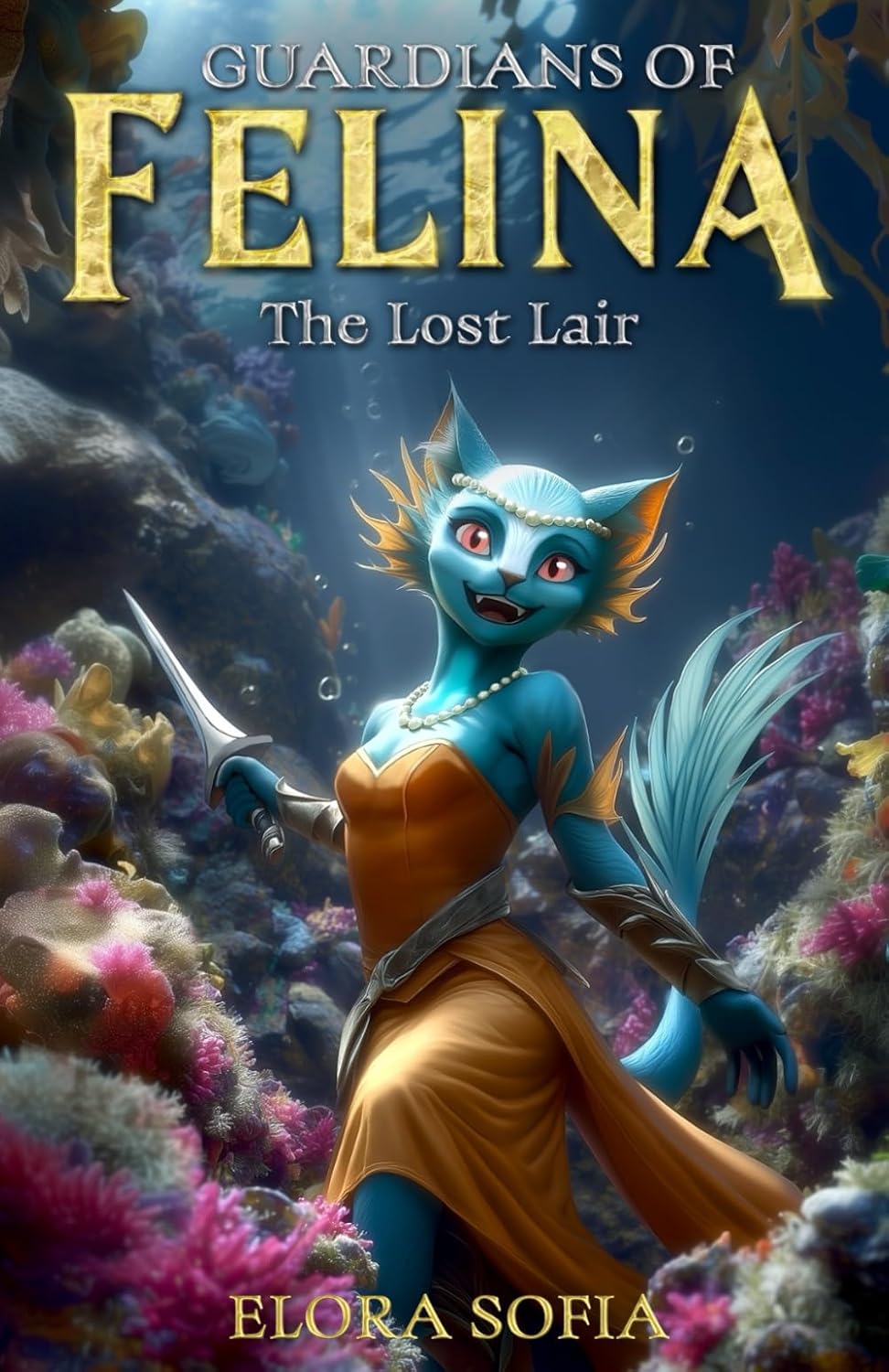

Guardians of Felina: The Lost Lair is a warm and colorful fantasy adventure that follows Tierra, Alada, Birch, and Coral as they confront the rising threat of the Phantom while navigating the vibrant underwater city of Lotus Bay. The story moves between festival lights, ancient volcano forges, and tense confrontations with invading beasts on the shoreline. Even in the early chapters, the book builds a world full of shimmering ecosystems, magical catfolk cultures, and a looming conflict that keeps the tension humming beneath the beauty.
Reading it felt like slipping into a daydream where every corner held something new to look at. I found myself smiling at the playful banter and Birch’s constant moments of panic, only to hold my breath minutes later as Coral’s confidence cracked under the weight of her people’s danger. The writing is vivid without trying too hard. Scenes like the underwater city, full of floating lanterns and swaying seaweed markets, stuck with me because they felt lived-in rather than decorative. I also appreciated how the author let the characters’ personalities clash naturally. Coral’s grace, Tierra’s dry humor, Birch’s nerves, and Alada’s quiet steadiness all bounce off one another in ways that make the group feel like real companions rather than just pieces on an adventure board.
What surprised me most was how grounded the story felt, even with all its magic. Coral’s belief in joy as a form of strength, the tension between leading and stepping back, and the quiet exhaustion that comes with protecting others gave the book emotional weight. It never felt preachy. Just honest. And sometimes that honesty came in small moments: Alada’s hesitation when asked about returning to leadership, or Birch’s discomfort with wishing because of past trauma. The fantasy setting makes it fun, but those little reflections give it heart.
I walked away feeling like I’d spent time with characters who were trying their best in a world that was bigger and more complicated than any of them wanted to admit. If you enjoy middle-grade or YA fantasy with rich worldbuilding, soft humor, brave but imperfect heroes, and a sense of wonder woven through even the tense scenes, you’ll enjoy this book. It’s a story for readers who love adventure with emotional undercurrents, and who enjoy fantasy worlds that feel welcoming even when danger circles the edges.
Pages: 338 | ISBN : 1735495875

Consistency is Key

The City of Arches follows a princess who discovers a letter containing the key to her mother’s hidden past and her connection to a powerful wizard. What was the inspiration for the setup of your story?
I love the idea of family secrets being uncovered. For me, I loved going through boxes of old pictures that my grandparents kept and hearing about all the old stories. The real treasure for a family is always hidden in old documents and old photographs. From the beginning, I have had Learsi’s story mapped out in my mind, and to have her daughter discover it in her own words was a temptation too big to ignore.
How did you balance magic and its use throughout the story to keep it believable?
I think of it almost as a muscle. Like any talent or ability, it needs to be used, trained, and practised. And just like a physical ability, it can be strained, and it can be draining. Like anything, magic needs its limitations to be believable, and once I figured out how it worked in my world, consistency is key.
Which character in the novel do you feel you relate to more and why?
That’s a hard question. I wish I could say that I relate to the hero, but in reality, I’m probably more like Aud. She’s just this normal person who cares about her family. She’s thrust into this world of magic and mess and has to make the best of it. She’s at heart just a mom, and I guess that’s what I relate to.
Can you give us a glimpse inside Book 4 of The Sitnalta Series? Where will it take readers?
Book 4 is called The Hedgewitch’s Charm. It shows us a Colonodona that’s put at risk by a plague. A young hedgewitch named Gwendolyn thinks there’s more to it and fights to save the people alongside Ipsinki. I loved writing her, and her and Ipsinki’s dynamic, and I hope readers love it too.
Author Links: GoodReads | Facebook | Website | Amazon
In the buried past, Kralc finds a ragged Learsi living on the streets after her home kingdom’s destruction and presents an offer: help him set things right with the mysterious City of Arches and he will give her back her family and birthright. With her parents murdered and her kingdom in ruins, she doesn’t know how he can achieve such a thing. All she knows is that she has nothing to lose.
The City of Arches

The City of Arches follows Princess Sitnalta as she uncovers a long-hidden letter, one that reveals the past of her mother, Learsi, whose own journey from starving street thief to reluctant partner of the wizard Kralc becomes the heart of the book. It’s a fantasy novel through and through, built on quests, hidden cities, magic, danger, and old wounds, yet it moves with a personal focus that makes the stakes feel close to the skin.
I found myself reacting less to the grand fantasy quest and more to the author’s choices in shaping her characters. Learsi’s early chapters hit me hardest. Her hunger, the cold stone under her bare feet, and the constant weighing of risk and survival felt vivid and relatable. Even her wary dance with Kralc, a man who can feed her, manipulate her, or save her depending on the moment, brought a tension that carried far beyond the tavern scene. The writing is straightforward and sincere. It doesn’t try to dazzle with flowery language, which I actually appreciated. The pace is steady, letting me sit with Learsi’s exhaustion, Kralc’s prickly solitude, and Sitnalta’s shock as she pieces together her mother’s past.
The fantasy elements are threaded in with a kind of quiet confidence. The legend of the City of Arches, for example, is both eerie and oddly beautiful: enchanted arches emitting a soothing song that masks the slow decay of a cursed people. I liked how the author lets the myth sit without over-explaining it. The emotional beats land more softly than dramatically, but they linger. Even the small moments, like Kralc awkwardly realizing he cannot knock on a deaf girl’s door or Learsi racing to shovel stew into her mouth, gave the book a grounded feel. Sometimes the dialogue is earnest, sometimes the plot steps into familiar fantasy rhythms, but those qualities made the story welcoming and easy to follow.
By the time I reached the later chapters, I felt as if the book was less about a magical quest and more about the way people try to rebuild trust after their world has broken apart. The stakes grow, of course, but the heart of the story stays with Learsi and her slow opening up to someone who might actually mean her well. I rooted for her, even when she second-guessed herself or snapped defensively. Her reactions felt real.
I’d say The City of Arches is best suited for readers who enjoy character-driven fantasy: people who like quests but care more about the companions on the road than the monsters in the woods. If you want something gentle yet still full of secrets, something that balances fairy-tale simplicity with emotional weight, then you’ll heartily enjoy this book.
Pages: 226 | ASIN : B0G46P9D3T

The Ghost’s Gambit
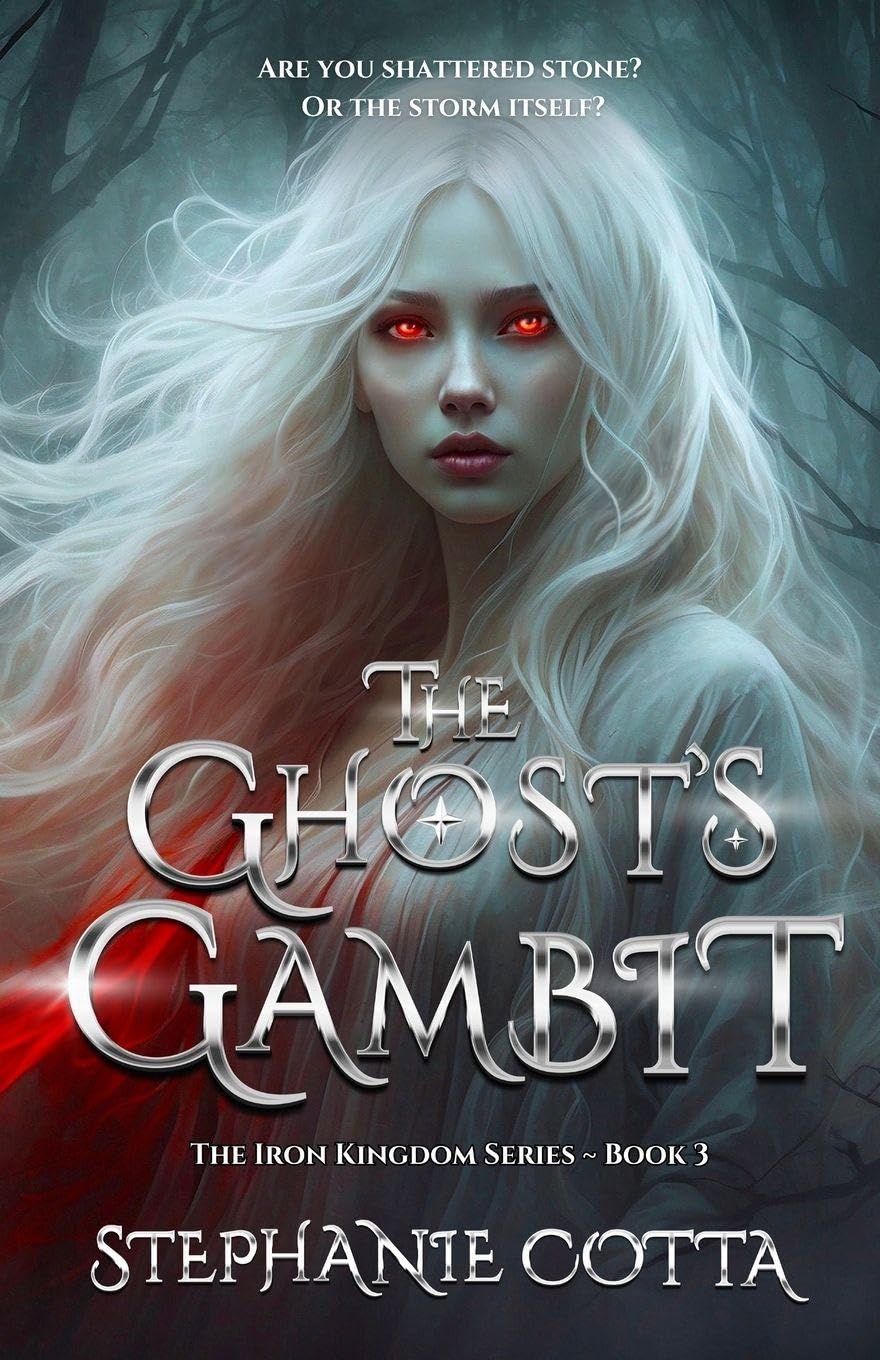
The Ghost’s Gambit, the third installment in Stephanie Cotta’s Iron Kingdom series, sweeps readers back into the dark, perilous world of the Iron Kingdom, where rebellion burns quietly under the thumb of a brutal empire. The story picks up in the midst of chaos, rebels fleeing through snow, soldiers in pursuit, loyalties torn to pieces. Author Stephanie Cotta crafts a world that is both cruel and tender, filled with haunted warriors, hidden magic, and fragile hope. The narrative follows a cast of complex characters, Wraiths, Conjurers, and outlaws, each wrestling with their own ghosts as they defy a king who seeks to crush them. It’s a tale of defiance, sacrifice, and the flickering light that refuses to die in the shadow of tyranny.
Cotta’s writing moves with fierce rhythm, sometimes sharp as steel, other times soft as snowfall. Her descriptions pull you straight into the fight, the clang of metal, the sting of regret, the ache of loss. What struck me most wasn’t just the action, though it’s thrilling, but the intimacy of the quiet moments in between. When Rowan bleeds for his brother, or Tahira whispers spells through tears, or Akaran faces the cost of vengeance, it hits hard. The book isn’t afraid to show how grief shapes courage, or how love can bloom even when surrounded by blood and ruin. I found myself caring deeply for these characters, even when they stumbled, even when they broke.
The pace shifts swiftly, cutting one moment and lingering the next. There are scenes where the prose leans into drama, yet I couldn’t fault it because it felt honest to the pain the story carries. The dialogue has a rawness that fits the world’s brutality, and while the lore is dense, it rewards you for paying attention. What really lingered with me was the emotional weight beneath the battles. This isn’t just a fantasy about swords and sorcery; it’s about forgiveness, loyalty, and the ghosts we carry when the fight is done.
The Ghost’s Gambit is a story that grips you and doesn’t let go, yet somehow leaves a quiet warmth behind. I’d recommend it to readers who crave epic fantasy with heart, especially those who love stories like Throne of Glass or Mistborn but want something cleaner in tone and more focused on the ties between family and faith. It’s dark, yes, but not hopeless. If you like your fantasy with both grit and grace, this book is worth every page.
Pages: 430 | ISBN : 978-1957656946
Deep Kindness and Sincerity

Daughter of Starlight follows a young woman aging out of foster care who finds that a hidden cave holds the secret to her true identity. Where did the idea for this novel come from?
I have always loved the concept of “ordinary people doing extraordinary things.” Magical worlds aside, I believe we all have special gifts that we can share with one another, but first, we have to recognize and embrace those gifts within ourselves. Luma’s starlight power is innate, but it’s not easy—she has to work at it. This forces her to confront parts of herself that she never had the courage to face before, and in doing so, she steps into her true identity. I think the fantasy genre has a unique way of helping people see secret magic and possibilities in the everyday, so when I decided to write a fantasy story, I knew that was where I wanted to start.
What was your favorite scene in this story?
One of my favorite scenes in the story is when Luma decides to leave the safety of the mage’s island and help defend the elven forces at Northhelm from the attacking wizards. I really like this scene because it is the first time we see Luma truly trust herself and her abilities. Up until that point, her powerful starlight magic manifested sporadically in moments of adrenaline and fear; she had not felt confident in her magic, and it even scared her a little bit. But in that scene, she has the option to stay hidden and safe, to say “sorry, I’m not ready,” and no one would blame her for it – but she doesn’t. Whether she truly feels ready or not, she still chooses to go to the aid of her friends, trusting that she can offer them the best chance of survival, even if it means putting herself in danger. This scene marks a significant turning point in her character development, a moment where she first steps into her power and becomes ready to shoulder the mantle of leadership.
Was Luma’s backstory something you always had, or did it develop as you were writing?
When I draft, I create a rough outline for my characters to help map their goals and progress throughout the story. However, as I write, many characters grow and develop in ways I didn’t expect! Luma was definitely one of them. I originally outlined her to stay very guarded and cynical for most of the story. While she does start out that way at the beginning, it soon became clear, as I was writing, that Luma possesses a deep kindness and sincerity, even optimism, that was just waiting for the right circumstances to bring it out. Seeing this character evolution manifest itself on the page is one of my favorite aspects of writing.
I find a problem in well-written stories, in that I always want there to be another book to keep the story going. Is there a second book planned?
Yes! I am currently writing a sequel to Daughter of Starlight, and I hope to complete it by early next year. Stay tuned!
Author Links: GoodReads | Amazon
Heroes of the Empire Book 3: The Emperor

Heroes of the Empire: Book 3 dives deep into a realm of tangled loyalties, sprawling kingdoms, and characters grappling with the shadows of their past. The story picks up with Honzio, a reluctant prince thrust into harrowing circumstances, navigating familial trauma and treacherous politics. With richly painted landscapes and gripping subplots involving betrayal, survival, and personal redemption, author Israh Azizi crafts a saga that’s as emotional as it is expansive. This installment weaves together narratives of hope and heartbreak as characters battle for their lives and destinies.
What struck me most about Azizi’s writing is her vivid descriptions and immersive world-building. The dungeon scenes, where Honzio faces suffocating confinement, resonate deeply. The fear is palpable, and you almost feel the cold stone and sense the oppressive darkness. Azizi skillfully uses these moments to humanize her characters, especially Honzio, whose inner struggles make him both relatable and admirable. I also appreciated the rawness of Natassa’s story. Her attempt to escape captivity while wrestling with her powers is both a highlight and a testament to her strength. These moments of tension are written with such precision that they had me holding my breath.
The characters themselves are the beating heart of this book. Honzio’s internal conflict with his father’s legacy and his reluctant steps toward leadership are a gripping arc. Similarly, Svorgin’s stoic resilience contrasts beautifully with Draven’s arrogance, making their interactions some of the most dynamic parts of the book. For instance, the moment where Svorgin challenges Draven’s privilege with an unforgettable rebuke about hunger stuck with me. This dialogue not only adds depth to the characters but also underscores the broader theme of survival in adversity.
Azizi’s prose is elegant yet accessible, but occasionally, it leans into exposition. Some passages, particularly in the middle, had a lot of descriptions that slowed the pacing. However, these moments are balanced by action-packed sequences and emotional revelations that hit hard. One such instance is Natassa’s confrontation with Yalnos. Her failed attempt to use her Shadow Manos powers to manipulate him not only reveals her vulnerability but also adds layers to her character. It’s these emotionally charged interactions that anchor the story.
Heroes of the Empire: Book 3 is a powerful addition to the series, blending rich character development with thrilling action and intricate political intrigue. Fans of epic fantasy will find much to love here, especially those who enjoy stories about flawed heroes striving against impossible odds. Loyal readers of the series will be rewarded with an unforgettable journey.
Pages: 364 | ASIN : B0CXHTN4RW


