Blog Archives
The Dawning


Zoe Nauman’s The Dawning is an ambitious young adult portal fantasy built around faith, free will, and the seductive pull of power. In Amaris, the former celestial Arielle has sacrificed her wings and immortality to guide a collection of increasingly divided clans. Her frustration makes her vulnerable to Abaddon and the dark ruler Sephtis, who transform her into the formidable Sathariel. Meanwhile, a prophecy summons three wounded teenagers from Earth, Fatiha, Cosmo, and Jiyanu, whose blood may provide the key to containing her. It’s a large-scale story filled with dragons, underwater kingdoms, living trees, stone giants, magical gateways, and enough sacred objects to keep the heroes constantly moving.
I think the book’s most compelling idea is that Sathariel’s fall grows from recognizable emotions. Her resentment, loneliness, and desire to be appreciated give the temptation of darkness a personal foundation. The three Yasha reflect that emotional focus in different ways: Fatiha carries the pain of betrayal, Cosmo lives with grief and anxiety, and Jiyanu struggles with anger after witnessing terrible violence. Their experiences make the novel as interested in emotional recovery as it is in battles and prophecy. Nauman also creates some memorable settings, particularly Mariam’s ocean realm, the Vanavashtha forest, and the dragon riders’ mountain home. The multilingual names and spiritual traditions give Amaris a deliberately multicultural identity, while the scene in which leaders of several Earth religions unite against Sathariel makes the book’s message especially clear.
Readers of Madeleine L’Engle’s A Wrinkle in Time will recognize a similar blend of interdimensional adventure, spiritual symbolism, and young people confronting a darkness that thrives on fear and conformity. Like L’Engle, Nauman treats love as an active force. Her approach is broader and more ensemble-driven, moving among clan leaders, celestial beings, villains, and the three teenagers. That scope gives the story an epic quality, though it also means the opening half carries a substantial amount of mythology, prophecy, and explanation before the Yasha arrive. The prose favors vivid sensory description and states its moral ideas plainly, creating a style that feels accessible and earnest.
What I liked most was the novel’s belief that unity requires choice. The people of Amaris don’t overcome their differences because they suddenly agree on everything. They choose to cooperate because protecting one another matters more than preserving old divisions. The final confrontation gives that principle real emotional weight, and victory comes with a cost that keeps the conclusion from feeling too tidy. The Dawning is a sincere, imaginative fantasy about turning grief into purpose, resisting the appeal of control, and finding strength in people whose lives and beliefs differ from your own. It leaves Amaris secure for the moment, while giving the wider series plenty of magical and emotional territory to explore.
Pages: 313 | ASIN : B0GX3CW7R2

A Gray Cat Showed Up One Saturday

The Great Contagion follows an ancient, sharp-witted cat with a human soul who helps a man confront a deadly sickness sweeping the land. What was the inspiration for the setup of your story?
The idea for The Great Contagion came to me when I was working on Cat Sidhe, another novel in The Merliss Tales series. Cat Sidhe takes place about fifty years after the events in The Great Contagion. I mentioned that the results of a great plague were still visible at the time of Cat Sidhe. After calling attention to this plague numerous times, I decided that I needed to find out what had happened. The result of that exploration was The Great Contagion.
More interesting is the idea for Merliss herself who is based on a real feline. A very thin, sickly, gray cat showed up on our driveway one Saturday and tried to get into our breezeway. We gave it some food and then took it to an emergency vet. The cat had no microchip and was not terminally ill. She was suffering from a respiratory infection, an eye infection, malnutrition, and thousands of fleas. In other words, she needed antibiotics and TLC. A few hundred dollars later, we left the vet with a new cat named Smokey, who was the sweetest lap kitty you can imagine. We never knew how old Smokey was, possibly pushing twenty. She spent her last two and a half years being spoiled by us. Thanks to Smokey, I felt inspired with the idea for an ancient gray cat in a fantasy setting.
What drew you to writing a fantasy centered on healing rather than conquest or warfare?
Many fantasy stories centered on conquest and warfare focus on protagonists occupying the upper strata of society. If you want your characters to directly influence events and you’re dealing with politics and warfare, the characters will need to be in positions of power. I wanted to write stories about characters outside the circles of political and military power and show them dealing with events outside their control, struggling to have an impact on their environment. The healing arts are one area in which a relatively low-status character can impact many others, including high-status characters. Healers also travel through villages and the countryside as part of their work.
How do you build tension in a story that unfolds at a measured pace?
The Great Contagion is composed of numerous subplots that interact and conflict. Some of the subplots center on conflicts and problems related to the people. Others revolve around Merliss, the old gods, and other magical creatures. There is also a subplot involving Merliss and the local cat population. All the subplots are tied together by the contagion, and Merliss is a witness to all the events described. I build tension by staggering high points from the various subplots and planting seeds to set the stage for later scenes of intense action. The level of action increases throughout the book.
What is the next book you are working on, and when will it be available?
The next book in The Merliss Tales series is The Forging of Merliss. The origin tale, this novel is set thousands of years in the past and will tell how Merliss’s spirit came to occupy the body of a cat. I hope to release this book by spring 2027.
Author Links: GoodReads | BlueSky | Website
Merliss is no ordinary cat. She’s a young girl’s spirit trapped in a cat’s body. While the magic that banished her has snatched away her ability to speak to humans, it has given her a life spanning millennia. For centuries she has lived with the cunning folk, assisting their efforts to heal the sick and ward off malevolent creatures. Now a bleeding sickness has thrown the medieval community into chaos.
The cunning man Hailaird and his apprentice Fendrel are in danger from the disease. The life Merliss has worked so long to build is in jeopardy. Before she entered the cat, she had trained to be a shaman. Do her centuries of experience hold a secret to a cure? But disease isn’t her only nemesis.
A pair of malevolent creatures have crossed the moor into the forest, threatening more havoc. With disease and monsters ravaging the land, Merliss is hard-pressed to survive. It couldn’t be worse, until a mob looking for a scapegoat turns its wrath on Merliss. Tooth and claw and magic may not be enough.
The Great Contagion: A Merliss Tale

The Great Contagion is a fantasy novel about Merliss, an ancient and sharp-witted cat with a human soul, who helps a cunning man and his apprentice face a deadly sickness spreading through the Westerlands. As the illness worsens, Merliss and Fendrel are pulled into a dangerous mix of plague, politics, old magic, monsters, and fear. At its heart, this is a fantasy adventure about healing, survival, and the strange loyalty that can grow between people and creatures who do not always understand each other.
What I enjoyed most was how grounded the fantasy feels. Jeff Chapman gives the world a lived-in texture, with herb jars, river paths, sickrooms, sheep farms, old grudges, and weather that seems to press against every scene. The magical elements are there, of course, with pookas, ley gates, goblins, and blood magic, but they don’t t float above the story. They feel rooted in the dirt. Merliss is the reason the book works as well as it does for me. She’s funny, proud, wounded, and practical, and seeing the world through her senses gives the story a fresh angle. A plague story could easily become grim in a flat way, but Merliss keeps it alert and alive.
I also appreciated the author’s choice to let the danger come from several directions at once. The contagion is frightening, but so are suspicion, class cruelty, political power, and ordinary selfishness. The Lord Sheriff’s harshness and the villagers’ fear make the sickness feel bigger than medicine alone. That said, the book asks for patience. It spends time on travel, observation, and small exchanges, and not every reader will want that slower, watchful pace. I did. There were moments when I wanted the plot to tighten, but I also understood the tradeoff. The story is built like a cat moving through tall grass, stopping, listening, circling, then suddenly striking.
I would recommend The Great Contagion to readers who enjoy character-driven fantasy with folklore, healing lore, animal perspectives, and a medieval atmosphere. It will especially appeal to those who like their fantasy thoughtful rather than flashy, with danger that feels physical and moral at the same time. Readers looking for nonstop action may find it measured, but readers who enjoy a strange and clever heroine and a world full of old magic will likely settle in and stay.
Pages: 347 | ASIN : B082F32BHF
Family Isn’t Defined by Blood

Guardians of Felina: The Lost Lair follows four young guardians who wind up protecting an underwater city from a hidden enemy, where they discover that courage, joy, and leadership can look different than they expect. What was the inspiration for this underwater world?
The underwater world of Felina began with a simple desire to create something visually exciting and fun to explore. I was inspired by the sheer creativity that underwater settings allow—bioluminescence, unusual ecosystems, and architecture shaped by water itself. From there, the world evolved naturally as I considered how people would live, adapt, and protect something so extraordinary.
How did you approach designing ecosystems and cultures that feel magical but lived-in, and what role does the natural environment play in shaping the story’s conflicts?
When designing Felina, I wanted the fantasy to feel woven into everyday life rather than separate from it. The ecosystems grew out of practical questions—how do these different cat people eat, travel, defend themselves, or celebrate in a world shaped by their surroundings? And how are they adapted to it themselves? The culture reflects that inter-dependence, with traditions and hierarchies influenced by the surrounding environment. Conflict primarily stems from the fact that each territory of Felina has different advantages and weaknesses. Underwater protection, versus mountain cave systems. Dense forests versus stretching desert planes.
What does the book suggest about chosen family?
The Felina series itself suggests that family isn’t defined by blood, but by trust, loyalty, and shared responsibility. The characters each come from different places and have different strengths. Alada and Tierra, for example, are goddess-like beings, while Birch is just a normal Meu. But in the hardest of times, they can come and support one another. They know they can depend on one another completely. Even the Guardians are human (or cat, I should say) on the inside.
What excites you most about continuing in this world, and what emotional arc do you most want to deepen in future installments?
In these first few books, I’ve focused on the power of trust, friendship, and learning to take responsibility for something larger than yourself. I’ve also explored humor as a protective mechanism, which I found really interesting to see evolve. As the series continues and the stakes rise, I’m excited to explore more difficult emotional terrain—questions of morality, regret, and the long-term cost of the choices each character makes.
One arc I’m especially interested in deepening is how immortality and leadership reshape a person over time. What does it mean to protect a world when doing so requires sacrifice, and how do you carry the weight of past decisions without losing your sense of joy or humanity?
Author Links: Facebook | Website
Birch never imagined his forest adventures would lead him to the bottom of the ocean. But in the shimmering underwater city of Lotus Bay, the Festival of Volcanoes is just a spark against the encroaching dark at the shoreline. The Phantom’s beasts are massing, and the safety of Felina hangs by a thread.
Enter Coral, the dazzling and enigmatic Guardian of the bay. She offers sanctuary and advanced weaponry, but her cantankerous nature make for questionable tactics…and morals.
To stop the invasion, the group must locate the Phantom’s hidden stronghold — a fortress that defies every map. As ancient alliances fracture and whispers of war hang in the air, Birch must master stolen tech to infiltrate a place where silence is a weapon and even physics can’t be trusted.
The darkness isn’t just rising…
It’s hunting them.
Guardians of Felina: The Lost Lair (Book 2 in the series)
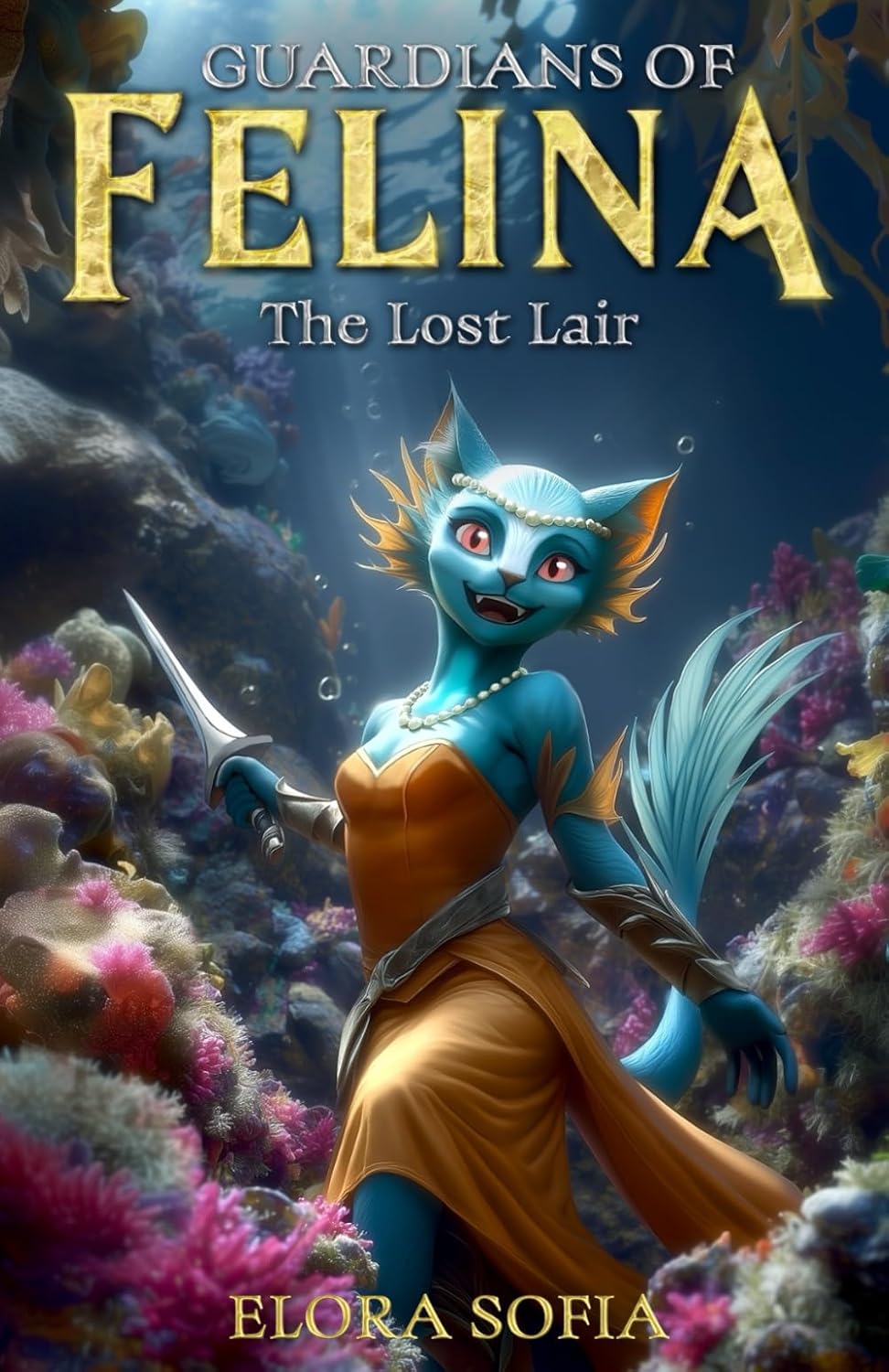
Guardians of Felina: The Lost Lair is a warm and colorful fantasy adventure that follows Tierra, Alada, Birch, and Coral as they confront the rising threat of the Phantom while navigating the vibrant underwater city of Lotus Bay. The story moves between festival lights, ancient volcano forges, and tense confrontations with invading beasts on the shoreline. Even in the early chapters, the book builds a world full of shimmering ecosystems, magical catfolk cultures, and a looming conflict that keeps the tension humming beneath the beauty.
Reading it felt like slipping into a daydream where every corner held something new to look at. I found myself smiling at the playful banter and Birch’s constant moments of panic, only to hold my breath minutes later as Coral’s confidence cracked under the weight of her people’s danger. The writing is vivid without trying too hard. Scenes like the underwater city, full of floating lanterns and swaying seaweed markets, stuck with me because they felt lived-in rather than decorative. I also appreciated how the author let the characters’ personalities clash naturally. Coral’s grace, Tierra’s dry humor, Birch’s nerves, and Alada’s quiet steadiness all bounce off one another in ways that make the group feel like real companions rather than just pieces on an adventure board.
What surprised me most was how grounded the story felt, even with all its magic. Coral’s belief in joy as a form of strength, the tension between leading and stepping back, and the quiet exhaustion that comes with protecting others gave the book emotional weight. It never felt preachy. Just honest. And sometimes that honesty came in small moments: Alada’s hesitation when asked about returning to leadership, or Birch’s discomfort with wishing because of past trauma. The fantasy setting makes it fun, but those little reflections give it heart.
I walked away feeling like I’d spent time with characters who were trying their best in a world that was bigger and more complicated than any of them wanted to admit. If you enjoy middle-grade or YA fantasy with rich worldbuilding, soft humor, brave but imperfect heroes, and a sense of wonder woven through even the tense scenes, you’ll enjoy this book. It’s a story for readers who love adventure with emotional undercurrents, and who enjoy fantasy worlds that feel welcoming even when danger circles the edges.
Pages: 338 | ISBN : 1735495875

The Ghost’s Gambit
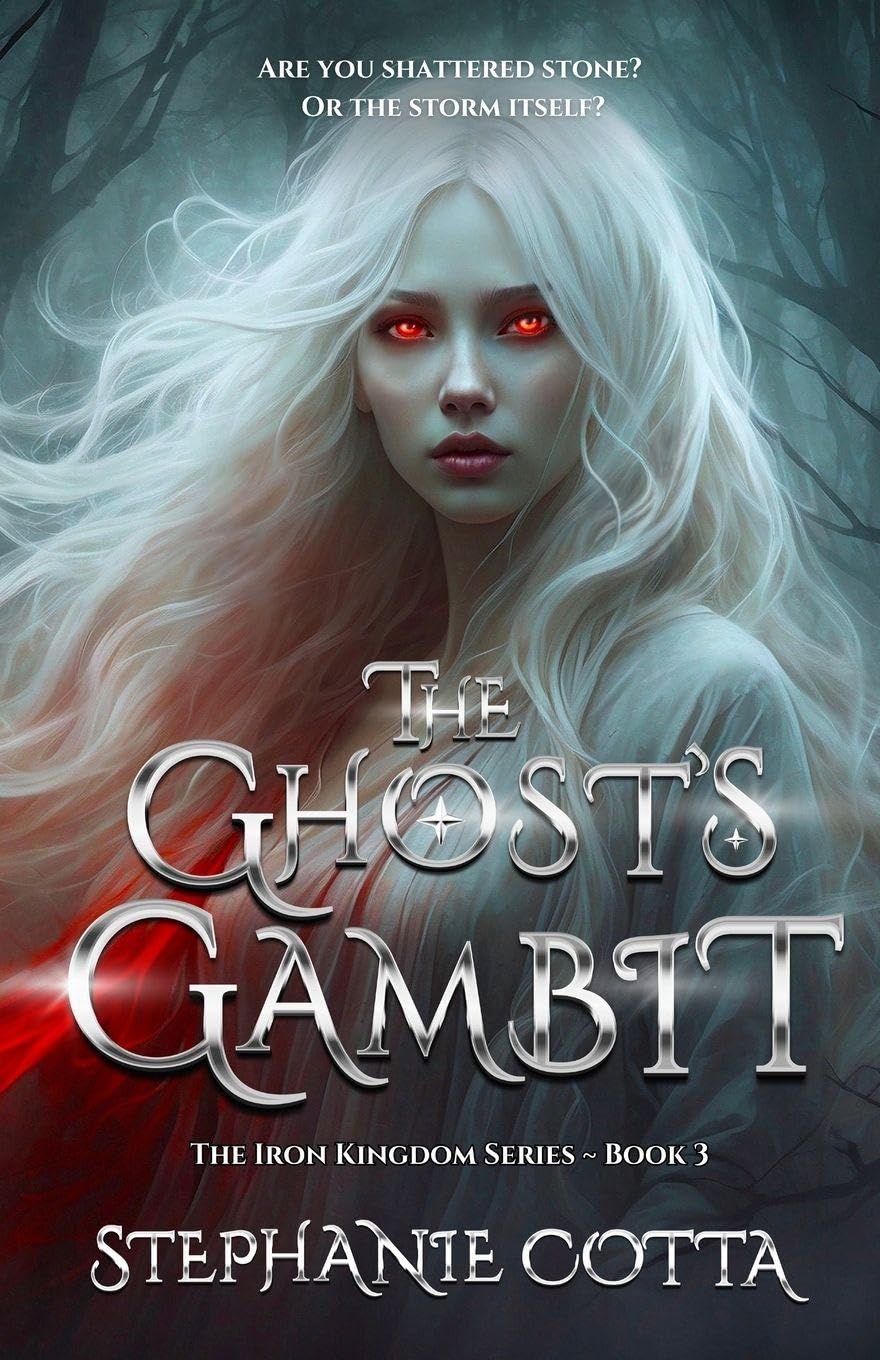
The Ghost’s Gambit, the third installment in Stephanie Cotta’s Iron Kingdom series, sweeps readers back into the dark, perilous world of the Iron Kingdom, where rebellion burns quietly under the thumb of a brutal empire. The story picks up in the midst of chaos, rebels fleeing through snow, soldiers in pursuit, loyalties torn to pieces. Author Stephanie Cotta crafts a world that is both cruel and tender, filled with haunted warriors, hidden magic, and fragile hope. The narrative follows a cast of complex characters, Wraiths, Conjurers, and outlaws, each wrestling with their own ghosts as they defy a king who seeks to crush them. It’s a tale of defiance, sacrifice, and the flickering light that refuses to die in the shadow of tyranny.
Cotta’s writing moves with fierce rhythm, sometimes sharp as steel, other times soft as snowfall. Her descriptions pull you straight into the fight, the clang of metal, the sting of regret, the ache of loss. What struck me most wasn’t just the action, though it’s thrilling, but the intimacy of the quiet moments in between. When Rowan bleeds for his brother, or Tahira whispers spells through tears, or Akaran faces the cost of vengeance, it hits hard. The book isn’t afraid to show how grief shapes courage, or how love can bloom even when surrounded by blood and ruin. I found myself caring deeply for these characters, even when they stumbled, even when they broke.
The pace shifts swiftly, cutting one moment and lingering the next. There are scenes where the prose leans into drama, yet I couldn’t fault it because it felt honest to the pain the story carries. The dialogue has a rawness that fits the world’s brutality, and while the lore is dense, it rewards you for paying attention. What really lingered with me was the emotional weight beneath the battles. This isn’t just a fantasy about swords and sorcery; it’s about forgiveness, loyalty, and the ghosts we carry when the fight is done.
The Ghost’s Gambit is a story that grips you and doesn’t let go, yet somehow leaves a quiet warmth behind. I’d recommend it to readers who crave epic fantasy with heart, especially those who love stories like Throne of Glass or Mistborn but want something cleaner in tone and more focused on the ties between family and faith. It’s dark, yes, but not hopeless. If you like your fantasy with both grit and grace, this book is worth every page.
Pages: 430 | ISBN : 978-1957656946
The Coolest Warrior Ever

The Call of Thunder centers around a young woman struggling with identity and duty, living a hidden existence in a mountain village where she must resist the urge to reveal her own extraordinary powers. What was the inspiration for the setup of your story?
I give a lot of credit to The Legend of Zelda video games, also Marvel (costume was inspired by Black Widow), and movies like The Avengers, Black Panther being my favorite. Being able to create your own world and literally do whatever you want with it got me really excited about this. I spent years trying to create the storyline and figuring out what powers she would have. I truly wanted her to be the coolest warrior ever!
What were some of the emotional and moral guidelines you followed when developing your characters?
There were times in my life that I wanted to stop being so reserved, stop caring what other people thought of every single thing I said and did. I recall in my younger years how frustrating yet amazing it can be to first experience romantic feelings. I wanted to bring that to light in Havanna as somewhat of a reflection of myself.
What was your favorite scene in this story?
Probably when Havanna arrives in Sabbia and fights the Backers trap that was set up for her there. I loved writing about Queen Calista and their relationship, and how freaking awesome she is. It was a way to give Havanna some hope after so much loss.
Can you give us a glimpse inside Book 2 of the Hidden Heroes series? Where will it take readers?
It picks up right where book 1 leaves off, with Quill and Havanna going to find the next Descendant. There are tests along the way to find the other Descendants, such as fighting enormous monsters and one particularly cold, brutal personality. Slow-burn romance is for certain as the characters get to know each other and learn to work together for the same purpose. The ending, in particular, will leave readers shocked, just the way I like it.
Author Links: GoodReads | Facebook | Website | Amazon
In the kingdom of Petros, twenty-year-old Havanna wants nothing more than to be free, to find herself, and to use her powers without reserve. But using her lightning abilities could expose her to the Backers—who do the Dormant King’s dirty work in hunting down her kind—and the bloodthirsty, fatal Dormants.
Besides, not even Havanna’s best friend knows her secret.
When her own impatience, isolation, and a bully create the perfect storm, Havanna’s desperation snaps her self-control. But she triggers the wrath of the Dormant King and a deadly raid that leaves her more alone than ever.
Determined to make things right, Havanna breaks out of hiding to take revenge. While searching for the Dormant King, testing her powers, and exploring the kingdom she begged to see her whole life, she finds that this quest is more difficult than expected.
Maybe that’s because this quest was never Havanna’s alone…
The Call of Thunder is a YA fantasy with an epic quest, adrenaline-spiking action, and a heroine learning the full scope of her power.
The Call of Thunder

The Call of Thunder, by Sarah Blynne, follows Havanna, a young woman marked by loss and destiny. Torn from her parents during a violent raid as a child, she grows up in hiding within the mountain village of Ketra. Her life balances between ordinary tasks like running the eatery and extraordinary challenges such as resisting the urge to reveal her lightning-born powers. Legends of Descendants, monstrous Dormants, and the looming shadow of the Dormant King shape her world. Alongside friends, rivals, and potential love interests, Havanna struggles with identity, duty, and the yearning to break free of secrecy while danger lurks just beyond the village gates.
Reading this book felt like being carried along by a current that shifts from gentle to wild. The writing is vivid and often cinematic. The opening scene of Havanna’s escape filled me with both panic and heartbreak, and that urgency never really let go throughout the novel. The world-building is strong, layered with history and myth that feel alive rather than forced. At the same time, the dialogue sometimes struck me as a bit too modern for the medieval-like setting. Still, I admired how the author balanced action with quieter, emotional moments.
Havanna’s character truly makes this book unique. She’s stubborn, flawed, fiery, and vulnerable all at once. Her grief over her parents, her frustration at hiding, her clashes with Darius, her tender bond with Aria–all of it felt raw and real. I found myself frustrated with her when she lashed out, yet cheering for her every time she picked herself back up. The undertones of a love triangle with Victor and Claeron added charm to the storyline. What I enjoyed most were the training scenes and moments where Havanna questioned her place in a world that expects her to be both hidden and heroic.
I would recommend The Call of Thunder to readers who love fast-paced fantasy adventures with a strong female lead, plenty of tension, and emotional depth. It’s ideal for those who enjoy stories about chosen ones grappling with responsibility and identity. If you appreciate a mix of sword fights, mystical powers, heartfelt friendships, and a dash of romance, this book will keep you hooked until the last page.
Pages: 267 | ASIN : B0DHNLHF59


