Blog Archives
Sincerity and Authenticity
The False Queen follows a young fairy who arrives on an island and is thought to be royalty due to her appearance and she does her best to give back to the islanders. Where did the idea for this fantasy story come from?
The answer to this question takes place at an inspiring moment. I’m just now writing a story for a fantasy anthology, which includes the same protagonist, Viola. In the book The False Queen, I didn’t reveal why Viola left her former life behind and arrived at Swing Island. My separate story goes back in time and shows the background of the escape – but it is a story of its own and may now remain a secret. My novel involves many real-life events, modified, of course. I know people who have gone through the same situations. They have failed, left the old life behind, and tried to make a fresh start elsewhere. Depending on the person, the results have been different. For some, a new beginning allows correcting past mistakes, but others become even more entangled in the same sorrows. In The False Queen, Viola is an ambitious and stubborn fairy girl. Initially, she is just looking for possibilities to benefit from others’ trust and faith and enjoys the opportunities and attention brought by misunderstandings. Even after her deception is revealed, the essential motivation in her actions is still realizing her dreams—to some degree, surviving in a difficult situation, making up for the fraud, and finding a place in this Swing Island fairy society.
What creative element about this story inspired your imagination the most?
The book’s other crucial main character, the fairy boy writing a play in the treetop hut, is close to me. I sometimes feel like a similar observer of life. It was nice to write about how he saw much more from his viewpoint than others and was then able to influence the course of events in his gentle way.
I can relate well to this quiet playwright’s passion for writing down and expressing, through art, everything he saw and experienced. He also gets to live those moments when the results of his work come out and bring joy to others. I feel happy thinking about the fairy boy’s play becoming—under the drama director Viola—an event that finally unites the entire fairy community. This play is like life itself. It can accommodate various types, and the best result is achieved if everybody flourishes in their role.
As a source of inspiration, I would like to mention the old villa at the center of the events of The False Queen. It has its counterpart in reality. In a small town on the west coast of Finland, there is a beautiful yellow villa where I’ve had my summer bookstore for the eighth summer. I’ve imagined many stories to take place in that old building and the surrounding garden. Some of them I have written as separate books or short stories in children’s magazines; some are still waiting, ready in my head.
What were some themes that were important for you to explore in this book?
The most essential theme in this story is sincerity and authenticity. People should learn to be honest with themselves and others. Lies and pretense do not create a sustainable result. Cooperation should be based on mutual trust. That is, it must extend to both one’s own and others’ abilities, and it must not be deceived. Patching the losses is difficult and takes a lot of time!
Many of us desire and aspire to achieve something bigger and better. Still, the goal should be more than one’s personal interests, reputation, and honor. And the means used should not be exploitative or unfair.
The False Queen is yet another story about the power of collaboration. It is valuable that we learn to function as part of different communities and to respect the contributions and goals of others. A well-functioning group needs various members. The community becomes even more vital when we learn to tolerate, understand, and appreciate differences.
In a way, this book also praises art in its various forms. It shows multiple opportunities for self-expression. Using them awakens new sides in people or brings back to the surface previous skills and abilities. The enthusiasm of former amateur actors in my story makes me happy, too!
Do you enjoy writing longer fairy tales, or do you prefer writing picture books?
I have to admit right away that I’m happy with both! The main thing is that I get to write for different target groups to whom I have something to say.
Writing longer texts allows me to express my thoughts more efficiently and in detail because the book’s scope does not set strict limits. Also, thinking about and coordinating the illustration with the story’s narration does not cause an extra headache.
On the other hand, the challenge of a short fairy tale is fascinating. It is rewarding to notice that even a small story can fit a whole world. Even a text that is short in terms of words can convey essential and significant questions for the reader to think about. I often talk about the space between the words and the lines. That is truly important because it carries tremendous emotion and energy – messages that travel directly between the hearts of the writer and the reader.
Cooperation with my network of international illustrators has also given me a lot of joy. I appreciate the work of skilled visual artists. The enthusiasm and effort of young and novice illustrators are refreshing. More experienced artists bring their expertise and, sometimes, more independent interpretations. I recognize when the illustrators are involved with their hearts. Such cooperation creates incendiary moments both for the book’s author and later for the readers.
I write stories with motifs from many countries or cultures, or they are set worldwide. I also like to work with artists from various countries to illustrate my stories. I trust that we all have much in common, wherever we come from.
A new way of combining authors and illustrators from different cultures also stimulates fresh thoughts in the readership. Building cultural bridges is essential in children’s literature, and a certain amount of open-mindedness is an asset. Both the longer stories for children and lovely picture books can equally cherish and develop our lives worldwide!
Author Links: GoodReads | Facebook | Website | Amazon
The False Queen
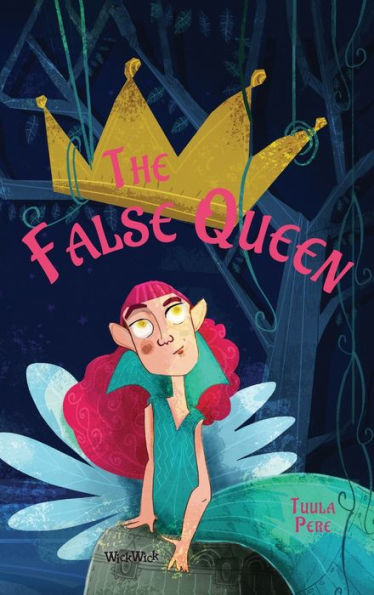

The False Queen is a magical tale that follows a young fairy girl named Viola who arrives on Swing Island wearing a lace dress and a crown. The Islanders become curious with the stranger and decide she must be royalty due to her appearance. In doing so, there assumptions create this version of Viola that is not true. Viola, who turns out to be just a fairy down on her luck searching for a place of her own and her purpose; sees no harm in going along with the Islanders grand idea of her since they are all being so kind to her.
Having extraordinarily little to give back to the Islanders, she does her best to use her skills of designing clothes and jewelry to try and make money to eventually repay the debts. Once Viola’s secret is out that she is no royal fairy, everyone turns on her. Daniel, who is the hero of the story is described as a loner and a writer but most importantly he is the observer of the Island and sees not only the truth of who Viola is but all the Islanders true selves. Daniel’s skills of writing set him on a path of clearing Viola’s name and aiding in her finally finding her place and purpose in life as well as uniting the community in one swift sweep of his quill.
In this short children’s chapter book, the author is able to incapsulate the accurate depiction of how people are quick to make assumptions about another person. Pere also shows how important it is to have friends that will stand by you through challenging times in life and how using your skills can help bring communities together and bring fulfillment in life.
The False Queen is an imaginative children’s book with unique fairy tale elements that young readers will find enchanting. This is a fantastic children’s book that imparts an important life lesson amid an entertaining adventure.
Pages: 110 | ISBN: 9789523577695




 LITERARY TITAN