Blog Archives
Good Boy Bad Boy


Joel Primus’s Good Boy Bad Boy is a heartfelt exploration of self-acceptance and the battle within ourselves between societal expectations and personal authenticity. Drawing on his own experiences and blending them with psychological insights, Primus dissects the binary notion of “good” and “bad” that often traps us in cycles of guilt and shame. Through personal anecdotes, philosophical musings, and practical advice, he invites readers to confront their “shadow self,” embrace their complexities, and ultimately, find harmony. The book is both reflective and actionable, moving from the roots of our struggles to solutions for overcoming them.
From the first chapter, when Primus shares his teenage feelings of inadequacy in front of a mirror, you can feel his pain and relate to it deeply. His journey is woven with relatable examples, like the dichotomy of being a “good kid” who follows the rules but internally feels hollow. The chapter on duality, with its Cherokee wolf parable, offers a powerful metaphor for the internal struggle between our better and darker selves. It’s not just abstract philosophy; the examples, like balancing societal expectations with personal truth, felt refreshingly real.
The book’s strongest moments come when it challenges the idea of external validation. For instance, Primus describes a poignant moment when his coach urged him to race for the love of the sport rather than for others’ approval. That conversation resonated with me, as I’ve struggled with the same perfectionist tendencies. His ability to balance personal anecdotes with universal lessons—such as recognizing and integrating your shadow self—made the book incredibly thought-provoking.
Good Boy Bad Boy is a book for anyone seeking personal growth and self-acceptance. Its candid tone and relatable stories make it accessible to readers who feel weighed down by the need to be perfect. Whether you’re grappling with feelings of inadequacy or simply looking to better understand yourself, this book offers a compassionate guide to navigating the messy, beautiful middle ground of being human. I’d recommend it to anyone who wants a blend of introspection and practical advice wrapped in genuine emotion. It left me inspired to look in the mirror with more kindness and curiosity.
Pages: 166 | ASIN : B0DL8H6HVC

Trailing Around Asia – Mud, Sweat & Bears

Harriet Gaywood’s Trailing Around Asia: Mud, Sweat & Bears chronicles her astonishing year of ultramarathon trail running across Asia. The book is a collection of stories capturing her races through breathtaking landscapes, ranging from lush jungles and karst caves to snow-covered peaks. While it’s not a guidebook, the narrative brims with Gaywood’s personal anecdotes, reflections on resilience, and the spirit of trail running. She shares her journey from a hesitant runner to an ultramarathon enthusiast, inspiring readers to embrace adventure, fitness, and self-discovery.
I was captivated by Gaywood’s vivid descriptions of the environments she traversed. The chapter on the Amazean Jungle Trail stood out for its sensory richness; she captures the oppressive humidity, the challenge of slippery paths, and the eerie solitude of running through a jungle at night, lit only by a headlamp. Her recounting of the vibrant sounds of geckos and cuckoos transported me straight to the Thai-Malay border. It wasn’t just about running; it was about feeling alive in the wild, even with leeches lurking in the dark.
The writing is both relatable and awe-inspiring and her humor and humility shine through. In the Leye Karst Cave race, she recounts crawling through rocky shafts and navigating underground pools. Her awe at the surreal beauty of illuminated caves underscores how ultramarathons aren’t just physical feats, they’re explorations of both nature and oneself. Moments like these showcase her knack for blending the grueling with the magical.
I also appreciated her focus on community and culture. From the smiling hospitality of checkpoint volunteers to her camaraderie with fellow runners, Gaywood emphasizes the human connections that make these grueling races worthwhile. The chapter on Jade Dragon Snow Mountain was particularly moving, as she recounts navigating altitude sickness while marveling at the stunning vistas of the Southern Himalayas. Her resilience and joy in the face of challenges are inspiring without feeling preachy.
Trailing Around Asia: Mud, Sweat & Bears is a refreshing read for anyone curious about ultramarathons, trail running, or travel. Gaywood’s honest reflections, combined with her respect for nature and cultures, make it more than just a runner’s memoir. It’s perfect for adventurers, runners seeking motivation, or armchair travelers looking for a glimpse of Asia’s untamed beauty.
Pages: 100 | ASIN : B0DS9Q9636
Rosemary, Now and Then
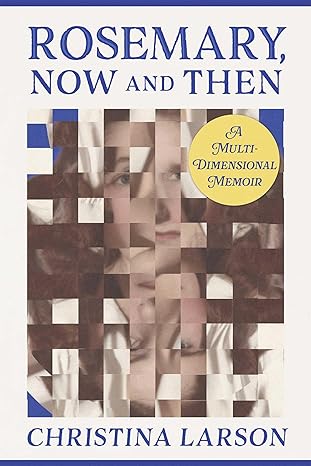
Rosemary, Now and Then is a heartfelt memoir that chronicles the author’s experience caring for her mother, Rosemary, through the labyrinth of strokes and dementia. This story is about resilience, love, and finding moments of humor and grace amid decline. The book paints an intimate portrait of a woman whose vibrant personality and sharp wit remain luminous despite her fading health. It delves into the challenges of caregiving, the philosophical reflections on mortality, and the surprising gifts of dementia, offering readers an unexpectedly uplifting perspective on life’s inevitable final chapter.
The writing is unflinchingly honest and emotionally raw, yet it’s peppered with humor that keeps the tone buoyant. One moment that stood out to me was when Rosemary, in the throes of a stroke-induced episode, commented on walking backward into a wall, comparing it to her mother’s wringer washer. It’s poignant and hilarious, a testament to Larson’s ability to capture the absurdity and humanity of such situations. These anecdotes keep the narrative personal and relatable, transforming it from a clinical account into a deeply human story.
I particularly appreciated Larson’s exploration of dementia not as a linear descent but as a reorganization of memories and self. Rosemary’s “mental excursions” into her past and imagined realms are described with a mystical reverence that challenges the stigma surrounding cognitive disorders. The book doesn’t shy away from showing the hard truths of caregiving, from burnt meals to late-night hospital runs. It also highlights the transformative power of love, like Larson’s determination to honor her mother’s wishes to maintain her dignity and humor to the very end.
One of my favorite sections was the rehabilitation episodes, especially Rosemary’s knack for connecting with strangers at the rehab center. The way she toasted “to the witnesses” at lunch, a subtle nod to Longfellow’s poem about slavery, demonstrated her sharp intellect and enduring sense of justice. It’s these moments of depth and insight that elevate the book from being just a caregiving memoir to a broader reflection on life’s interconnectedness and the enduring strength of character.
Rosemary, Now and Then is a beautifully written and deeply moving memoir that will resonate with anyone who has cared for a loved one through illness or who is curious about the interplay between life, death, and memory. Larson’s storytelling is warm and conversational, making complex topics accessible and relatable. I’d recommend this book to caregivers, healthcare professionals, and anyone seeking a profound yet uplifting exploration of the human condition.
Pages: 355 | ASIN : B0DQLNNFQN
Being a Caregiver, is it a Profession?

Dr. David Soh Poh Huat’s book Being a Caregiver, Is It a Profession? delves into the often-overlooked role of caregiving in society. The book explores whether caregiving should be classified as a profession, weaving through the responsibilities, challenges, and societal perceptions of caregivers. With a focus on raising awareness and advocating for formal recognition, Dr. Soh discusses the skills needed, the evolving definition of caregiving, and the necessity for international standards. The book serves as both a heartfelt tribute to caregivers and a call for change in how their contributions are acknowledged.
One aspect I appreciated is how Dr. Soh shines a spotlight on the blurred lines between caregivers and domestic workers. The section on “Reality” hit me hard, it’s frustrating yet eye-opening to see how often caregivers are expected to perform dual roles without adequate recognition or fair compensation. His argument that caregivers deserve specialized training and certification feels not only logical but overdue. For instance, Dr. Soh points out that “caregivers, much like doctors or nurses, require specialized training,” yet no global standards exist to back this up. The clarity with which he argues this point is both convincing and emotionally impactful.
The section on family dynamics also stood out to me. Dr. Soh emphasizes the importance of family members understanding the caregiver’s role, which is a refreshing take. He even suggests that families attend caregiving courses themselves, a proactive solution that could foster empathy and cooperation. The chapter “Caregiving Begins With Family” reminded me how caregiving is a shared responsibility. Dr. Soh’s personal touch, acknowledging the emotional labor and practical challenges involved, brings the subject closer to home. One of my favorite parts was the vision he outlines in the “Profession” chapter, where he advocates for caregivers to receive liability coverage and formal recognition akin to other established professions. It’s bold and inspiring, yet practical.
Being a Caregiver, is it a Profession? perfect for anyone involved in caregiving, whether professionally or within their families. Policymakers, too, could gain a lot from Dr. Soh’s insights. If you’ve ever doubted the value of caregivers or overlooked their challenges, this book is an excellent wake-up call. It left me with a renewed sense of gratitude for those who dedicate their lives to caring for others and a strong belief that their work deserves the respect and formalization Dr. Soh advocates.
Pages: 31 | ASIN : B0DR4C1NJK
Party at the End of the Rainbow

Ronald Schulz’s Party at the End of the Rainbow sweeps readers into the tumultuous world of the late 1960s and early 1970s, vividly narrating the rebellious counterculture movement through the eyes of its participants. The book delves into the ideals, misadventures, and disillusionments of young revolutionaries like the author himself, mixing personal anecdotes with the wider cultural and political shifts of the era. From anti-war protests to wild music festivals, Schulz doesn’t shy away from the messiness, confusion, and passion that defined his generation’s quest for change.
Schulz’s storytelling is raw, and his writing reflects the era’s frenetic energy. I found myself captivated by his vivid descriptions of the chaos and camaraderie of protests like the Weatherman rampage. His memories of idealistic clashes with authority—like his encounter with Judge Epstein—set the tone for a life fueled by defiance. Schulz’s passion for the counterculture’s ideals is infectious, yet he tempers his enthusiasm with sharp observations about its flaws, such as the naivety that allowed people like Marvin to exploit the movement. These personal reflections added layers of complexity to the narrative. What stood out most were Schulz’s reflections on psychedelics as both a gateway to enlightenment and a dangerous playground. His portrayal of their role in breaking societal norms is fascinating, as he recounts the cultural baggage unspooled during these mind-expanding journeys. Yet, he doesn’t romanticize the era’s drug use, acknowledging the risks and manipulations, such as the CIA’s controversial involvement. This balanced perspective enriched the book, grounding its lofty ideals in the harsher realities of experimentation and exploitation. While Schulz’s broader reflections on societal structures are thought-provoking, the book shines brightest in its intimate moments. His interactions, like the comical awkwardness of meeting a radiant hippie girl at Kickapoo or the tender companionship with Natasha, brought humanity to the revolutionary fervor. These glimpses of vulnerability were refreshing amid the political fervor.
Party at the End of the Rainbow is a heartfelt and unvarnished memoir that speaks to anyone curious about the counterculture era. Schulz paints a vivid picture of the revolutionaries’ idealism, their frustrations, and the turbulent world they tried to change. I’d recommend this book to readers interested in the raw energy of the ‘60s, those intrigued by the intersections of politics and personal identity, and anyone who’s ever wondered what it means to fight for a dream—flawed and fleeting as it may be.
Pages: 276 | ASIN : B0D33TZ6Z6
Everything Old Is New
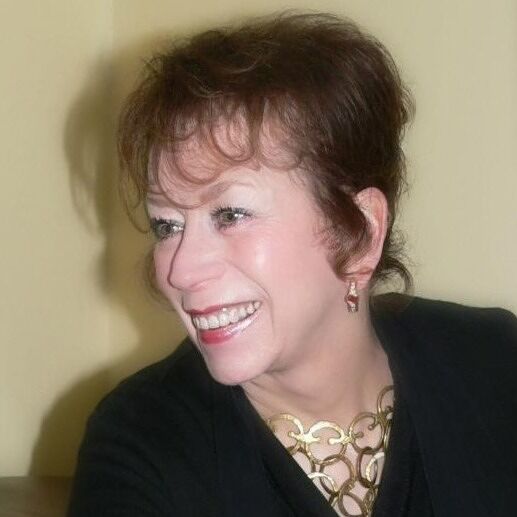
Terror at the Sound of a Whistle is the memoir of a successful career woman who attains all she dreamt of only to realize she may have lost the only thing of worth. You tell your story with novel-like quality; what inspired you to share your story and tell it in this fashion?
I have, as near as possible, a photographic memory. I remember not just incidents from the past but whole conversations and details of where and when. I suppose for most people, it is a strange phenomenon. I draw upon it for my writing, whether non-fiction or fiction. When I started writing Terror, it came back. I heard Jimmy’s voice and mine. I felt the fear. Saw the beauty. I had known great love during that time. I wrote as if I were there once again. I was in my mind and heart.
What were some ideas that were important for you to share in this book?
I started writing this book when I was a law major in college. My father and I had many discussions about the illegal supper club and gambling casino that he and his business partner ran in our huge Victorian home when I was growing up. Dad had become obsessed with how national and local politicians and those with money and power often decided our country and legal issues. When the club operated, gambling casinos were illegal, and bars had to close at midnight. The city had a vice department that raided places like ours, but if you ran a clean operation like my parents and Jimmy’s, you paid under-the-table money, graft, and were given a free pass. Our parents were notified ahead of time when there would be a raid. They emptied most of the money from the cash registers and stuck it in the cushions of our rocking chairs. Then came the fake raid. It affected our lives immensely. I wanted the injustice brought out in the book. I knew what happened then so long ago was as relevant as what is happening today. If not more so… Everything old is new.
How did you balance the need, to be honest and authentic with the need to protect your privacy and that of others in your memoir?
I waited until our parents had passed away, and all those of us left would not be hurt. We knew. We understood. Years before, I had tried to make it into fiction by adding a phony character at the beginning and end. My agent at Curtis Brown LTD, Clyde Taylor, loved it as the true story it was without the made-up character. Clyde was also my mentor, and he was working on marketing a novel I had written when he died unexpectedly. At the time, I was getting very ill with a malady called Trigeminal neuralgia, and the devastating loss of Clyde’s demise and my illness proved too much to start seeking a new agent. I put away all my work but never stopped writing. Now, I have short stories coming out by Running Wild Press. Also, two novels will be released in the near future.
How has writing your memoir impacted or changed your life?
My writing brought to life my desire to give credence to the impact our early lives have upon us as humans. I believed my experiences had elements everyone faces, and I could help others. Our feelings and emotions of those early experiences impress upon us images of all we experienced when we were small, as though we were little sponges. It is said you can’t go home again. I say, you never leave.
Author Links: GoodReads | Facebook | Website
What’s So Bad About Being Poor? Our Lives in the Shadows of the Poverty Experts
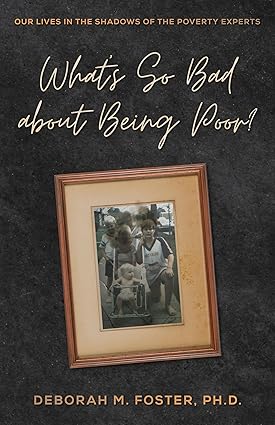
Deborah M. Foster’s What’s So Bad About Being Poor? is a gripping exploration of poverty and mental illness through the lens of her own tumultuous family history. Spanning multiple generations, the book deftly intertwines personal memoir with societal critique, offering a candid, often raw account of the struggles her family faced. Foster’s storytelling blends vivid memories, poignant observations, and biting commentary, making it both a heartfelt narrative and a call to action against systemic inequities.
What struck me most was Foster’s ability to illuminate the deep scars poverty leaves, not just on finances but on the human spirit. The opening chapters introduce us to her father, grappling with schizophrenia, and her mother, struggling with bipolar disorder. These challenges, compounded by the weight of economic instability, create an almost suffocating sense of inevitability that permeates the family’s life. One particularly haunting moment involves Foster’s father’s psychotic episode while serving in the Air Force, a turning point that sets the stage for the family’s challenges with mental health and stigma. These moments are rendered with a stark honesty that makes them both heartbreaking and relatable.
Foster’s critique of societal attitudes toward poverty is both personal and razor-sharp. She targets the toxic ideologies of figures like Charles Murray, whose dismissal of poverty as “not so bad” fuels her lifelong determination to counter such views. The book cleverly juxtaposes Murray’s theoretical musings with Foster’s lived reality, exposing the absurdity of detached policymaking. Yet, the book isn’t all gloom. Foster finds moments of resilience and even humor in her family’s chaos. Her descriptions of her mother’s encounters with eccentric faith healers or her father’s UFO theories add a surreal, almost darkly comedic layer to the narrative. These anecdotes, while strange, serve as a reminder of the lengths people will go to find meaning and hope in desperate circumstances. Foster’s ability to weave these lighter threads into her otherwise heavy tale is a testament to her skill as a writer.
What’s So Bad About Being Poor? is as much a memoir as it is a rallying cry. Foster’s journey from a poor, marginalized child to an academic fighting against the very systems that oppressed her family is inspiring. This book is for anyone who wants to understand the lived experience of poverty beyond the numbers and policies. It’s for those who appreciate a narrative that is as fiercely intelligent as it is deeply personal. For me, it was a stark reminder of the resilience of the human spirit, even in the face of unimaginable hardship. Highly recommended.
Pages: 418 | ASIN : B0CQJ3K8SH
Terror at the Sound of a Whistle
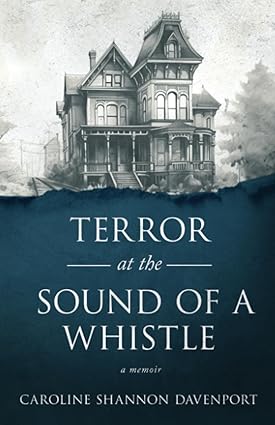
Set on the outskirts of Toledo, Ohio, during the first half of the 20th century, this memoir follows Caroline, Jimmy, their families, and the ever-changing tenants who resided in bungalows on the property. Living in the same large Victorian home but on separate floors, Caroline resided with her parents on the third, while Jimmy’s family occupied the second. Below them, concealed from public view, their fathers secretly ran an illegal after-hours supper club and gambling casino on the first floor. Surrounded by figures of questionable morality, the two children found themselves isolated from their peers at school. Yet, their unusual upbringing forged a quiet, unspoken bond—one of mutual understanding and companionship that grew stronger over time.
Terror at the Sound of a Whistle is a poignant love story stretching from childhood into adulthood. However, as a memoir, it does more than recount personal memories, it reconstructs an era. The story vividly captures the hardships of post-war life, unraveling the complexities of human relationships, whether in the strained dynamics between Jake and Penny or later Jake and Beth, or in the unexpected solidarity among women brought together by shared grief Caroline’s and Jimmy’s mothers, Margie, and Pauline. Equally compelling are the men in the story, disillusioned, weighed down by unresolved trauma, their identities fractured by a world that no longer needs them as protectors yet offers little in return.
What makes this memoir stand out is its storytelling, which is sensitive, nuanced, and deeply immersive. Suspense lingers in the air, an unshakable sense of impending doom keeping the reader engaged. The author’s candid portrayal of raw pain and the devastating void left by sudden loss lends the story a haunting authenticity. One cannot help but wonder if she deliberately crafted this memoir to be as visceral and true-to-life as possible, drawing us into her past until we, too, feel like children playing make-believe once again.
Despite the sorrow woven into its pages, the memoir offers insights into life lessons hidden beneath tragedy’s weight. Emotionally gripping and beautifully written, Terror at the Sound of a Whistle is a must-read for those drawn to tragic love stories and unconventional coming-of-age narratives.
Pages: 260 | ASIN : B0CPQ5SP47



 LITERARY TITAN