Blog Archives
Improvising in Italian


Improvising in Italian is a heartfelt memoir by Jennifer Artley that traces the winding path of a woman who moves to Italy in search of meaning, healing, and perhaps a sense of permanence. The story centers on her family’s relocation to Modena, fueled by a blend of optimism, romance, and idealism, and the personal unraveling that follows. At the core is the difficult departure of her teenage daughter, who chooses to return to the U.S., leaving Artley grappling with loss, identity, and questions about the life she has built. Through lyrical scenes and sharp reflections, Artley threads memories from her nomadic childhood with the chaos of present-day expatriate life. Food, family, and place become the fabric of the tale, stitched together with bittersweet honesty.
Reading this memoir felt like sitting across from a friend at a kitchen table, talking long into the night. Artley’s voice is vulnerable and unguarded. She tells it like it is. What struck me most was her ability to blend humor with heartbreak. One minute, I was laughing at her chaotic car rides through Italy, and the next, I was floored by the quiet grief of watching her daughter slip away. The writing flows easily, but it’s far from simple. She nails those small, aching truths of parenting, how love and guilt and hope get tangled up. I could feel how much she wanted this dream in Italy to work out, and I ached with her as that dream slowly fell apart.
What also stood out was her attention to detail, especially around food and culture. The way she described the tortellini in brodo or the smell of balsamico vinegar aging in attics. But more than just a tour of Italy’s cuisine, the book becomes a meditation on what it means to belong. Artley doesn’t hide her doubts or frustrations. Italy isn’t romanticized. It’s messy, inconvenient, beautiful, and frustrating all at once. That complexity made the memoir land in a very relatable way. Her decision to root herself, despite the chaos, is an act of quiet courage. And there’s a raw admiration in how she holds space for both her own heartbreak and her daughter’s independence.
This book will speak most to people who’ve taken big risks and had to live with the consequences—parents, expats, wanderers, or anyone trying to find home in a world that keeps shifting. It’s not a feel-good story in the conventional sense, but it is a deeply felt one. I’d recommend Improvising in Italian to readers who appreciate memoirs that pull back the curtain and show the vulnerable moments.
Pages: 204 | ASIN : B0DX3Q9NW1

The Who, What and the How

Unpacking: A Memoir shares your story of how you came from a small town in Wisconsin to become one of the most respected script consultants in Hollywood and provides a gentle guide for those trying to live intentionally, especially creatives, seekers, and those who feel like they’re still figuring it out.
What were some ideas that were important for you to share in this book?
The Idea that is probably the most central in my book, Unpacking, is the question and the answer to: “How many people and events does it take to make you who you are?” The memoir is not chronological but is a thematic exploration on the who, what and the how of relationships and adventures that were key crises and struggles and joys in my life. Some were negative but many of them were positive. The negative ones tested my mettle and I tried to say “Yes” to the good things that beckoned to me, in spite of having to go beyond my comfort zone.
The other idea that travels throughout my book is about a girl from a very small town who yearned for more than my little town had to offer me – and ended up being influential in the film industry, creating a career that I adored, traveling the world, and meeting many people who were wonderful and a few who were scoundrels.
What was the most challenging part of writing your memoir, and what was the most rewarding?
The most challenging part for me was the commitment to tell the truth and to unpack some of the episodes in my life that confused me or hurt me or brought me great joy. This meant that I made a decision to change the names of some of the people in my life in order for me to find the truth and to be willing to state it in all its emotional complexity. Probably only a handful of people who know me well will know who I am really talking about. I don’t think I denigrated any of the people I write about, but I did explore the many layers that can happen in relationships and if I had used somebody’s name, they would not be happy and it wouldn’t be fair since I’m only talking about my side of the story.
I found it quite rewarding to look at relationships and events in my life and recognize what a very rewarding and rich life I had. I reached far beyond my dreams, and realized all those difficulties were worth it. And I recognized I made good decisions, even when they were difficult such as disengaging from my first husband and even disengaging from some friendships and facing the reality that not every relationship has to be lifelong. And I discovered qualities in myself that I had not really affirmed much before – such as courage and persistence and integrity.
What advice do you have for aspiring memoir writers?
For any aspiring writer of a memoir, I would advise to make a commitment to telling the truth about your life which might mean owning your faults and mistakes, as well as celebrating your triumphs. Truth is hard to get to and if a memoir author is writing a book for the first time, they will discover the realities of writing. This means recognizing it’s a discipline so you put aside time to write. Generally every chapter I write has gone through 10 rewrites before I think it’s good enough and that I have captured what I felt was the truth of these episodes. Don’t take the frustrations too seriously because they are simply part of the process. Don’t expect it to go fast. And don’t get concerned when you feel like throwing it in the fireplace. That just means it needs more rewriting and thinking about how to get beyond the facts. And call in allies to give you good honest feedback and support when you need it.
Unpacking: A Memoir
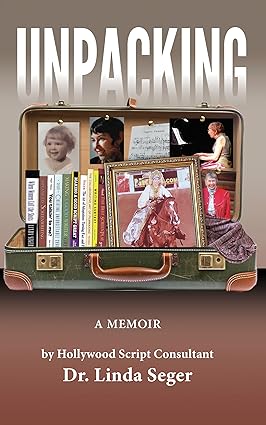
Linda Seger’s Unpacking is a heartfelt, meandering memoir that traces the unlikely and often wondrous path of a small-town Wisconsin girl who became one of Hollywood’s most respected script consultants. Told through a series of personal vignettes, life lessons, and travel tales, the book is structured around thematic “unpacking” sections at the end of each chapter, offering takeaways that feel more like life notes than preachy conclusions. It’s a story of transformation, ambition, faith, and resilience, all told in a voice that’s equal parts warm mentor and curious traveler.
Seger’s tone feels like she’s sitting across from you at a cozy diner, chatting over coffee. The writing is disarmingly honest. She doesn’t try to dress things up. Take the chapter on her early acting ambitions: she flat-out admits she was a “terrible actor” but still loved the drama world deeply. Instead of giving up, she leaned into directing, discovering a passion that eventually blossomed into her trailblazing work in script consulting. There’s something so real and charming about that, admitting your limitations while still chasing what sets your soul on fire.
Then there’s the emotional gravity of her personal relationships. The chapter about her mother, “The Most Magnificent Woman I Ever Met, ” hit me hard. Her mom wasn’t just a parent; she was a visionary who believed in joy, music, and lifting others up, often literally pulling neighbors’ kids out of dangerous home situations. The final moment, where her mother’s last words to Linda were about her “adorable” hair, brought a lump to my throat. It’s such a small, human moment, but it lands with weight because of all the love that came before it.
Seger also gets deeply introspective about friendships, faith, and identity. The story of her friendship with “Mandy,” for instance, was so layered, at once a beautiful tribute to emotional connection and a bittersweet acknowledgment of change and drifting apart. Her decision to write a goodbye letter, then slowly reopen the lines of communication, felt incredibly raw. It reminded me that relationships don’t always end with a bang, sometimes they just fade, and that’s its own kind of heartbreak.
Unpacking is not just a memoir. It’s a gentle guidebook for anyone trying to live intentionally, especially creatives, seekers, and those who feel like they’re still figuring it out. I’d recommend this to readers who enjoy memoirs with wisdom tucked into the corners but with a screenwriting twist. If you’re a writer, a spiritual wanderer, or just someone who likes stories about how people become who they are, this one’s for you.
Pages: 384 | ASIN : B0DTGYS3L8

Dust in the Wind


Michael Triska’s Dust in the Wind is a deeply personal memoir that recounts a life lived on the edge of hardship, heartbreak, and resilience. At its core, it’s the story of Katherine, the author’s wife, a talented and vibrant woman whose life was forever altered by a diagnosis of Multiple Sclerosis at the age of eighteen. Triska doesn’t just chart her medical decline; he details their love, their marriage, and their lifelong battle against poverty, prejudice, and abandonment. What unfolds is not just a chronicle of illness, but a testament to love, loyalty, and surviving in a world that too often looks away.
I was moved by the honesty in Triska’s writing. He doesn’t pretend to be perfect. He owns his fears, failures, and frustrations. That vulnerability gave the story its power. His pain seeps through the pages, but so does his love for Katherine. The depiction of Katherine’s strength, her passion for music, and her indomitable spirit even in the face of such suffering is inspiring and heartbreaking all at once. But more than anything, what got me was the anger. The unfairness. Watching family vanish when things got hard. Seeing a woman slowly robbed of her identity while society either mocked, ignored, or pitied her. It made me furious, and it made me care.
The writing is raw, and sometimes repetitive, but it pulls no punches. There’s no sugar-coating, no elegant prose, no grand metaphors. Triska tells it like it is. Some might find the tone intense or the sadness unrelenting. But that’s also what makes the book work. It doesn’t try to romanticize suffering. It tells the truth: about chronic illness, about poverty, about caregiving, and about the thin line between holding it together and falling apart.
I’d recommend Dust in the Wind to anyone who has ever been a caregiver, battled illness, or just needed to believe that love can survive even the darkest nights. It’s not a feel-good story, but it’s a real one. And sometimes, that’s even more important. Bring tissues because this one will leave a mark.
Pages: 70 | ASI N: B0DRDM49V6
Patient 71: An Inspiring True Story of a Mother’s Love That Fueled Her Fight to Stay Alive
Julie Randall’s Patient 71 is a raw, unflinching memoir about her sudden and devastating diagnosis with stage four metastatic melanoma at the age of 50—and her extraordinary fight to live. What begins as a lively snapshot of a joyful, ordinary life quickly turns into a harrowing, heart-stopping journey through hospitals, fear, surgeries, clinical trials, and the depths of human resilience. The title refers to her status in a U.S.-based immunotherapy drug trial that became her lifeline when all other options had faded. Randall takes us from the sparkling shores of Sydney to the clinical halls of American medical centers, showing not just the physical battle but the emotional and spiritual turmoil that comes with facing death.
What struck me first about Julie’s writing was its honesty. There’s no sugarcoating, no stiff upper lip for the reader’s comfort. She tells her story like she’s talking to a close friend—funny, vulnerable, often foul-mouthed, and always painfully relatable. I found myself laughing at her jabs and swearing, only to be crying just pages later as she grappled with leaving her daughters behind. The style is conversational, even cheeky at times, but that’s what makes it hit so hard. Every ache, every glimmer of hope, every heartbreak, you feel it.
What’s more powerful than the writing, though, is the will to live that pulses through every page. Randall’s fierce love for her family—especially her daughters—drives everything. Even when she’s terrified, even when the prognosis is grim, she never stops trying. There’s something deeply inspiring in her refusal to go quietly. I admired how she didn’t turn herself into a saint or pretend to be brave all the time. She was scared. She was angry. She hated the term “palliative care.” And still, she fought like hell. That’s what makes her story so deeply moving.
This book is for anyone who needs hope, even the faintest glimmer of it. It’s for people who have felt helpless or terrified, and for those standing beside them. If you’ve ever asked, “Why me?” and still got out of bed the next day, Patient 71 will resonate. It’s not always easy to read, but it’s impossible to forget. Randall reminds us that life is brutal, beautiful, and worth fighting for.
Pages: 320 | ASIN : B06ZZB34VN
Spark Your Story: Musings of the Teenage Author

L.A. Thigpen’s Spark Your Story is a deeply personal and powerfully candid memoir-essay hybrid that follows the journey of a young, autistic, biracial teenage girl navigating creativity, identity, and self-worth in a world that doesn’t always make room for people like her. Through lyrical prose, diary-like reflections, and bursts of poetic insight, Thigpen charts her transformation from a shy dreamer into a published author, wrestling with schoolyard cruelty, internal conflict, and the heady pride of achievement. The book swings between narrative storytelling and heartfelt advice, tackling themes of bullying, neurodiversity, minority representation, and the relentless pursuit of creativity.
Reading this book felt like sitting down with someone raw and real—someone who isn’t afraid to spill their soul. What struck me the most was the voice. It’s urgent. It’s poetic. It’s completely unfiltered in the best way. Some pages sing with metaphor and beauty. Others slice through with blunt emotion. There were moments that felt like I was reading the words of a seasoned author, and then others where her teenage fire and vulnerability shone clearly. That inconsistency was honest. It made the book feel alive. The mix of prose, journal entries, rants, affirmations, and analogies (the wren motif especially) stitched together a voice that’s wholly unique.
Parts of the book felt tangled. There were times I wanted to stay longer with one idea. It’s chaotic. But maybe that’s the point. Thigpen isn’t trying to hand you a neat memoir with a tidy bow. She’s showing the mess of coming-of-age, the war between self-love and self-doubt, the push-pull of wanting to belong and choosing to stand out. The unfiltered format might not be for everyone. But for me, the emotional bursts and creative zigzags were what made the book engaging and relatable.
Spark Your Story is a love letter to outsiders. A manifesto for young creators. It would resonate with anyone who’s ever felt out of place, especially young women, neurodivergent teens, and aspiring writers. It’s also a reminder to the rest of us that genius doesn’t come with age—it comes with truth. I’d hand this to every middle schooler feeling invisible, to every dreamer who’s been told “no,” and to every adult who forgot what that fire felt like.
Pages: 111 | ASIN : B0DKDBDK8C
The Joys and Troubles of a Missionary Life
This book is a detailed and deeply personal account of Jowett Murray’s life as a missionary in early 20th-century China, written by his son, David J. Murray. Spanning nearly four decades, the narrative traces Jowett’s journey from his Oxford days to his complex, sometimes conflicted, tenure with the London Missionary Society (LMS) in Tientsin and beyond. With rich use of primary sources, including letters, reports, and institutional records, the book explores not just the man but the cultural, political, and theological tides he swam through. From his educational mission at the Tientsin Anglo Chinese College to his theological work and relationships with local Chinese intellectuals, the story is part biography, part history, and part heartfelt meditation on legacy.
What struck me most was the sheer honesty of the writing. David Murray didn’t sugarcoat his father’s struggles—physical illnesses, internal conflicts with LMS authorities, and the broader colonial tensions that hovered over missionary work. You really feel the weight Jowett carried—not just books and sermons, but moral questions and cultural clashes. Murray’s writing is layered but sharp. You can tell this was a labor of love and also a work of rigorous scholarship. I appreciated how the book never lets you sit comfortably. Just when you start to admire Jowett’s resolve, you’re reminded of the imperialist structures he was tangled in, even while resisting them. That kind of complexity is rare and refreshing.
But the book doesn’t just stay in the realm of politics or theology. There are tender, often funny, sometimes painful moments. A failed sermon here, a sickbed reflection there, an awkward conversation in Mandarin. These are the parts that stayed with me. They’re not grand or historical, but they make Jowett feel real. And David’s personal reflections—especially his shifting understanding of his father—gave the book a soul. There’s grief in these pages, but also reconciliation. You get the sense that the writing process was cathartic, maybe even redemptive. That intimacy, though sometimes quietly delivered, packs an emotional punch.
I would recommend The Joys and Troubles of a Missionary Life to anyone interested in missionary history, Sino-Western relations, or just a good, thoughtful biography. But more than that, this is for readers who like stories that don’t offer easy answers. It’s for those willing to sit with contradictions, to hear a voice from the past filtered through the eyes of a son still trying to make sense of it all. There’s joy here. And trouble. But mostly, there’s truth.
Pages: 214 | ASIN : B0F9VG9ZYY
My life as a Telepathic Icon

Barry Aubin’s My Life as a Telepathic Icon is a memoir that defies categorization. It follows his extraordinary experiences as a self-proclaimed telepath, chronicling his belief that he is globally recognized through telepathic communication, often involving prominent figures such as Bill Gates, Barack Obama, and Wayne Gretzky. The book oscillates between Aubin’s convictions about telepathic networks and his struggles with mental illness, specifically schizoaffective disorder. His narrative weaves reality, paranoia, and grandiosity into a unique, surreal tapestry. The book ultimately asks the reader to consider the nature of perception, truth, and the limits of human experience.
Aubin’s writing is deeply personal, yet its structure is chaotic, reflecting the intensity of his inner world. He describes a battle between forces of good and evil, a secret dictatorship manipulating people telepathically, and his mission to bring telepathy into the open. His encounters with psychiatric professionals paint them as antagonists, dismissing his claims as delusional while he remains steadfast in his beliefs. One of the most compelling sections describes his time in Hope, British Columbia, where he believes he experiences mystical encounters, glowing landscapes, and alien interventions. His recounting is raw, and at times heartbreaking, as he wrestles with sleep deprivation, paranoia, and a world that refuses to validate his truth.
While the book presents a fascinating premise, its narrative often takes a winding path, making it challenging to follow at times. Aubin passionately asserts that his thoughts are broadcast globally, yet he grapples with a lack of mainstream recognition. His descriptions of extraterrestrial encounters, talking diamonds, and telepathic battles with unseen forces are compelling, though they are shared more through personal conviction. His critiques of psychiatry are deeply felt, shaped by his own experiences, though they lean more on emotion. A particularly intense section recounts his confrontation with the police and subsequent hospitalization, which he perceives as persecution, further deepening his mistrust of the system. While his perspective is thought-provoking, distinguishing between his lived reality and external perception can be complex, making the reading experience both immersive and challenging.
My Life as a Telepathic Icon is a story of loneliness, conviction, and a search for meaning. Whether the reader views Aubin as a misunderstood visionary or a man trapped by his mind, his writing elicits strong emotions—sympathy, frustration, even awe at his unwavering belief. The book’s most valuable aspect is its unfiltered look into the mind of someone experiencing what psychiatry defines as delusions. It offers an important, albeit unsettling, perspective on mental illness, freedom of thought, and the nature of subjective reality.
I would recommend this book to readers interested in unconventional memoirs, psychological exploration, and narratives that challenge reality. It is for those open to stepping inside the mind of someone whose world operates by an entirely different set of rules. My Life as a Telepathic Icon is a reading experience you won’t forget.
Pages: 384 | ASIN : B099X777R3



 LITERARY TITAN