Blog Archives
Bronx Attitude


Bronx Attitude is Rossana Rosado’s memoir of becoming herself: a Bronx-born Puerto Rican girl raised among stairwells, bodegas, bilingual family music, formidable women, stern patriarchs, and the warm chaos of Wheeler Avenue, who grows into a journalist, publisher, public servant, and keeper of communal memory. The book moves from childhood scenes, like her grandmother teaching her to read El Diario in Spanish, to the electric public history of Sonia Sotomayor’s Supreme Court nomination, to Rosado’s years at El Diario, where journalism becomes both vocation and inheritance. It’s really a story about “we”: family, Latinos, women, neighborhoods, ancestors, and the complicated blessing of belonging.
The early chapters have a gorgeous lived-in texture: the garbage cans clanging on the curb, WADO playing through a neighbor’s window, Papá bringing coffee to Mamá, the child sneaking upstairs for toast and discovering that the newspaper isn’t broken, it’s in Spanish. Those moments feel tender. I also loved how she writes women into the center of the world, not as saints exactly, but as forces. Mamá with her private money, Lucía dancing with children in the rain, Rosa calling everything “divine” despite the quiet cruelties around her. Rosado’s sentences can be plainspoken, almost conversational, and then suddenly they gleam. The memoir has that Bronx rhythm: affectionate, blunt, funny, wounded, proud.
The book insists that personal history and public history are braided together. Rosado doesn’t treat Sonia Sotomayor’s nomination as a distant news event. She makes it feel like a family room, a newsroom, a collective exhale, with champagne glasses, red nail polish, and the startling realization that one woman’s ascent could lift a whole community’s posture. The chapters on El Diario carry a different ache. When she writes about Manuel de Dios’s murder, or about inheriting leadership after Carlos Ramirez’s death, the memoir becomes more than remembrance. It becomes an argument for ethnic media, for courage, for telling the stories mainstream institutions overlook. I didn’t always feel the book was equally tight from chapter to chapter, but even that looseness has a kind of honesty. It reads like someone making room at the table for everyone who shaped her.
I felt like Bronx Attitude had earned its title: not attitude as swagger alone, but as stance, memory, defiance, and love. Rosado’s final reflections on leaving El Diario and looking back at her younger self gave the book a soft, satisfying ache, especially because the memoir never pretends success is clean or solitary. It’s carried by the dead, the elders, the cousins, the mentors, the city, the language, the food, the paper, the block. I’d recommend this to readers who like reflective memoirs about identity, journalism, Latina leadership, New York City, and the emotional architecture of family. It’s a good book for anyone who knows that where you come from doesn’t just explain you, it keeps speaking through you.
Pages: 264 | ASIN : B0GS98TMGQ

We Are Not Monsters

In Out Of Step, you share your experiences in the military during the Vietnam War, from the rigors of Basic Training to family pressures, shame, and the social physics of the Army. Why was it important for you to share your story?
The first question about that war for those of us who were there is “What the Hell happened? And how did we end up on the wrong side of history, vilified as monsters and baby-killers? It is a little-known fact that ninety percent of us were not in the Hollywood version of Combat. We were the clerks and jerks, the cooks, truck drivers, supply and logistics specialists who played defense. I sat through about ninety mortar attacks but, aside from one time at the range, never fired my weapon. I cleaned it everyday. I arrived a month after the Tet Offensive and did my job…or rather jobs. I had five of those simultanously. I was part of the most effective intelligence collection system of the war but had to add contributions from John Wadje and John A, Reid to create a full picture of what happened at my unit and brief paragraphs from other ASA soldiers. That’s the other thing, I wasn’t really in the Army but a uniformed part of the NSA with compartmented access to protect “sources and methods”. I had to wait fifty years for NSA to declassify most of it so I can provide a wider context. I think it is important to correct the popular culture image and provide a narrative without the guts and glory meme. That’s just for the other ninety percent who were not so-called “front line” soldiers. I’m a novelist so this written as one without the fiction.
I appreciated the candid nature you use in writing about your darkest days. What was the most difficult thing for you to write about?
The humiliations I suffered in training. I think this is where most of my PTSD comes from. Vietnam was easier. I was never really afraid and I never thought I would die there. I was seriously thinking about making the Army a career. The reasons I didn’t are in Part Two. The main reason was an invitation to attend the Iowa Writers Workshop. Even the re-enlistment NCO thought I’d be a fool to turn that down.
Looking back on your writing process, is there anything else you now wish you had included in your memoir?
No. It was already too long. That’s why I split it into two parts. In Part Two I go from the hot war to the Cold War as a General Staff NCO at the European headquarters of ASA. It was a unique path. The most surprising thing about it was the anti-Vietnam veteran prejudice even within the Army. The resentment was palpable. But I ended up in the Public Information Division. That was my first paid job as a writer.
What is one thing you hope readers take away from your story?
That Veterans of all the wars after World War Two, the so-called “Greatest Generation” also deserve respect. And I do not mean that “thank you for your service” BS that most utter and do not mean. That’s just patronizing and demeaning.
Out Of Step – Part One, A Memoir of the Vietnam War
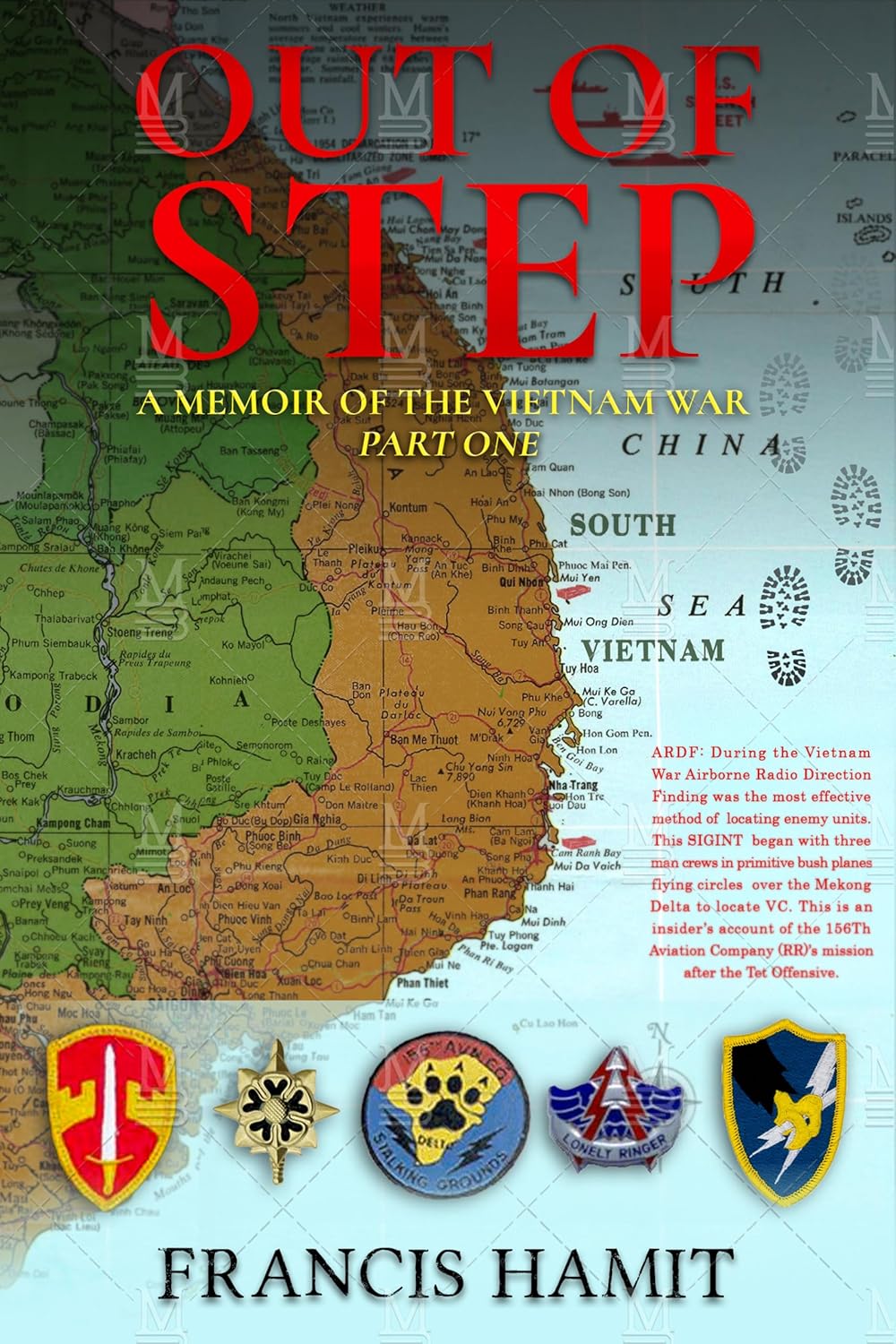

In Out Of Step, author Francis Hamit walks readers through the Vietnam-era hinge where a messy young life gets snapped into military shape, first in Basic Training and stateside intelligence schooling, then into the quieter, stranger corridors of the Army Security Agency (ASA) and its SIGINT world. He frames the war as an intelligence contest as much as a jungle contest, admiring (with a bit of grudging awe) how North Vietnam built a formidable cryptographic service and set the terms of visibility, see clearly or be seen clearly, long before Americans turned it into a slogan.
What struck me first was the book’s refusal to behave like a tidy “war story.” Hamit’s voice is candid, prickly, and alert to the social physics of the Army: who gets hazed, who gets protected, who is quietly sacrificed to bureaucracy. He’s funny in a sharp-edged way, humor as a scalpel, not a comfort blanket, and he’s willing to show himself unflatteringly, including the bad motives that shove him into enlistment and the petty humiliations that sandpaper a person down. The prose keeps swiveling between the personal (family pressure, wounds, lust, shame) and the institutional (orders, cover stories, the odd not-quite-Army status of ASA), which made me feel the claustrophobia of being processed by a machine that doesn’t pause for individual anatomy.
My second reaction was an admiration for the way Hamit describes “realistic training” metastasizing into something darker, particularly the Tactical Training Course at Fort Devens, where simulated capture and interrogation drifts into sanctioned cruelty. Reading about the “menu” of coercion, electric shocks, the “Apache pole,” waterboarding, lands with a delayed thud, because it’s delivered not as a sensational reveal but as another entry in a long ledger of what people will justify when they think the future demands it. And yes: he warns early that sex is plentiful and the story is also a coming-of-age account, which changes the temperature of the memoir. This isn’t antiseptic recollection, it’s lived-in memory with sweat still in it.
This will hit best for readers who like memoir, Vietnam War, military history, espionage, SIGINT, and coming-of-age narratives, especially anyone curious about the war’s less cinematic strata: cover names (“Radio Research”), invisible bounties, and the daily discipline of not drawing attention to yourself while doing work the broader Army barely understands. If Tim O’Brien gives you the war as moral weather in The Things They Carried, Hamit gives you the war as a lived system, bureaucratic, occasionally absurd, and always humming with consequences. In the end, this is a memoir that doesn’t salute the myth of Vietnam; it interrogates it, and keeps its balance while doing so.
Pages: 196 | ASIN : B0G5483Y6L
The Next Generation of Disaster Management

Dr. Todd D. Brauckmiller’s The Next Generation of Disaster Management is a bold and sweeping overview of how emergency response has evolved, from Cold War-era civil defense to cutting-edge, AI-driven systems. Drawing heavily from the author’s own military and academic experience, the book is both a technical deep dive and a passionate argument for more compassionate, inclusive, and forward-thinking disaster preparedness. It covers everything from nuclear fallout shelter engineering to ethical AI applications in emergency scenarios, while weaving in historical case studies, policy critiques, and future-facing solutions to modern crises like pandemics and climate disasters.
What struck me most about this book is its sharp blend of gritty realism and visionary optimism. Brauckmiller doesn’t sugarcoat the brutal realities of past disasters or the bureaucratic shortcomings that plagued them. He breaks down historical events with a soldier’s precision and a teacher’s clarity. The sections on bioterrorism and the fallout from 9/11 are particularly gripping—grounded in historical fact, but animated with moral urgency. Yet, amid all the analysis, there’s a human warmth that runs through the text. His personal journey from foster youth to Bronze Star-decorated leader is compelling and gives weight to his emphasis on servant leadership. It’s not just about drones and data; it’s about people, especially the most vulnerable.
While the content is rich and thoughtful, the delivery sometimes has a formal academic tone. The technical sections on AI and logistics are impressive but can be dense if you’re not well-versed in emergency management jargon. Still, the author’s sincerity, depth of knowledge, and drive to make the world more resilient shine through, even when the prose gets heavy.
This is a book that delivers more than it promises. It’s a call to rethink how we serve each other in crisis. I’d recommend it to emergency planners, public policy leaders, educators, and anyone curious about the intersection of tech, humanity, and crisis response. If you’re looking for hope grounded in hard-earned wisdom, this book delivers.
Pages: 230 | ASIN : B0DW7ZR2NC

The Joys and Troubles of a Missionary Life
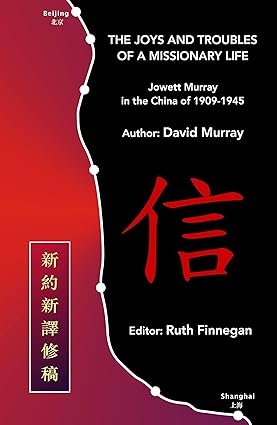
This book is a detailed and deeply personal account of Jowett Murray’s life as a missionary in early 20th-century China, written by his son, David J. Murray. Spanning nearly four decades, the narrative traces Jowett’s journey from his Oxford days to his complex, sometimes conflicted, tenure with the London Missionary Society (LMS) in Tientsin and beyond. With rich use of primary sources, including letters, reports, and institutional records, the book explores not just the man but the cultural, political, and theological tides he swam through. From his educational mission at the Tientsin Anglo Chinese College to his theological work and relationships with local Chinese intellectuals, the story is part biography, part history, and part heartfelt meditation on legacy.
What struck me most was the sheer honesty of the writing. David Murray didn’t sugarcoat his father’s struggles—physical illnesses, internal conflicts with LMS authorities, and the broader colonial tensions that hovered over missionary work. You really feel the weight Jowett carried—not just books and sermons, but moral questions and cultural clashes. Murray’s writing is layered but sharp. You can tell this was a labor of love and also a work of rigorous scholarship. I appreciated how the book never lets you sit comfortably. Just when you start to admire Jowett’s resolve, you’re reminded of the imperialist structures he was tangled in, even while resisting them. That kind of complexity is rare and refreshing.
But the book doesn’t just stay in the realm of politics or theology. There are tender, often funny, sometimes painful moments. A failed sermon here, a sickbed reflection there, an awkward conversation in Mandarin. These are the parts that stayed with me. They’re not grand or historical, but they make Jowett feel real. And David’s personal reflections—especially his shifting understanding of his father—gave the book a soul. There’s grief in these pages, but also reconciliation. You get the sense that the writing process was cathartic, maybe even redemptive. That intimacy, though sometimes quietly delivered, packs an emotional punch.
I would recommend The Joys and Troubles of a Missionary Life to anyone interested in missionary history, Sino-Western relations, or just a good, thoughtful biography. But more than that, this is for readers who like stories that don’t offer easy answers. It’s for those willing to sit with contradictions, to hear a voice from the past filtered through the eyes of a son still trying to make sense of it all. There’s joy here. And trouble. But mostly, there’s truth.
Pages: 214 | ASIN : B0F9VG9ZYY
A Society Divided By Technology

Christine Z. Miller Author Interview
Tools, Totems, and Totalities is a striking and expansive critique of modern technology and its pervasive role in shaping culture, institutions, and identities. Why was this an important book for you to write?
To bring together a society that has been divided by technology.
What is a common misconception you feel people have about how technologies impact culture and individuals’ identities?
We feel that we are the masters of the technology, when in fact we are enslaved by it.
What were some ideas that were important for you to share in this book?
First, that “technology” is not a human universal, but rather is a specific creation of the industrial revolution, and second that “technology,” like industrialization generally, has its pluses and minuses.
What is one thing that you hope readers take away from Tools, Totems, and Totalities?
That we collectively should be thinking about a world beyond technology, a world in which human connections and conviviality are more important than the tools we use.
Author links: GoodReads | Website
Tools, Totems, and Totalities: The Modern Construction of Hegemonic Technology, the 2024th Edition

Tools, Totems, and Totalities is a striking and expansive critique of modern technology and its pervasive role in shaping culture, institutions, and identities. Allen Batteau and Christine Z. Miller craft an ethnographic and philosophical journey through the social ecosystems technology inhabits, evolves within, and often dominates. Rather than viewing technology as a neutral tool, the authors challenge us to see it as a deeply embedded hegemonic force—one that organizes power, redefines human interaction, and reshapes meaning in the modern world. The book blends anthropology, design theory, engineering insight, and cultural criticism to show how tools become totems, and how both can culminate in totalizing systems of control.
What grabbed me right away was the authors’ raw honesty in grappling with our blind trust in “progress.” The opening chapter sets the tone, arguing that our imagination of technology—our deep faith in it—is more fantasy than fact. We treat smartphones, space probes, and electric grids as if they magically better our lives, when in truth, many of these devices mask deeper social problems or even create them. The idea that technology acts as a form of modern magic, filling the spiritual and communal voids of contemporary life really resonated with me. We reach for the newest device like it’s a talisman against chaos, and in doing so, we lose sight of the human behind the machine. That sense of disillusionment is something I’ve felt before, but the book gave me the language and history to make sense of it.
But it’s not all doom and gloom. I found myself surprisingly moved by Chapter 6, where the authors introduce “convivial technology.” Here, they offer a hopeful, even beautiful vision of tools designed to enhance human relationships and community life, not just productivity. It was a breath of fresh air. They celebrate thinkers like Ivan Illich and Victor Papanek, who envisioned technology that’s adaptable, human-centered, and a little slower. Their critique of modern design culture—its obsession with speed, efficiency, and control—felt deeply personal. As someone who’s worked in tech, it made me pause. Maybe the point of innovation isn’t always to push forward, but to step back and ask, “Who is this really serving?”
Tools, Totems, and Totalities is a mirror held up to our techno-utopian fantasies. It doesn’t offer easy answers, but it does offer clarity. The writing is at times dense but always thoughtful, weaving scholarly insight with a conversational rhythm that kept me engaged. The authors don’t pretend to speak with a single voice—they embrace their differences, and it works. The book doesn’t preach. It pokes, it nudges, and sometimes it throws cold water on our comfort zones. But I appreciated that. I finished the final chapter with a weird mix of dread and inspiration. I wanted to change something. Or at least think differently.
This book is for people who aren’t satisfied with buzzwords. If you’re curious about the social and cultural consequences of technology—and especially if you’ve ever felt unsettled by your own reliance on it—this book will challenge and reward you. Scholars, designers, engineers, sociologists, and everyday readers who are just plain tired of the hype will find something meaningful here.
Pages: 231 | ISBN : 9819787076
Unwavering Dedication

In When The Bell Rings – A Firefighters Journey, you share with readers your experiences as a firefighter and the mental and emotional challenges you faced throughout your career. Why was this an important book for you to write?
Writing When The Bell Rings – A Firefighter’s Journey was a deeply personal and essential endeavor for me. As a firefighter, I witnessed and experienced firsthand the intense mental and emotional challenges that come with the profession. Firefighting isn’t just about battling flames; it’s about confronting fear, grief, and the relentless pressure to perform under life-and-death circumstances.
This book allowed me to share the human side of firefighting, providing a window into the inner struggles and triumphs that are often hidden behind the brave exterior. It was important for me to give a voice to the emotional and psychological toll this career can take on some individuals. I hoped to foster greater empathy and awareness among the public, while also providing a source of support and validation for my peers.
What was the hardest thing for you to write about?
The hardest part of writing When The Bell Rings – A Firefighter’s Journey was revisiting and recounting the moments of profound loss and tragedy. As firefighters, we are often the first to witness the aftermath of accidents, fires, and disasters. Writing about the lives that were lost and the families that were forever changed was incredibly challenging.
I knew that sharing these experiences was crucial to painting an honest picture of what it means to be a firefighter. It was through this candor that I hoped to honor those who have sacrificed so much and to shed light on the profound impact these experiences can have on our mental and emotional well-being.
What is a common misconception you feel people have about the life of a firefighter?
A common misconception about the life of a firefighter is that our job primarily revolves around fighting fires. While responding to fires is indeed a significant and highly visible part of what we do, it represents only a fraction of our daily responsibilities. Many people are unaware of the extensive training, preparation, and variety of emergency responses that fill our days.
Firefighters are often first responders to a wide range of emergencies, including medical crises, car accidents, hazardous material incidents, and natural disasters. We also engage in community education, fire prevention, and safety inspections.
Additionally, the camaraderie and the sense of family within the fire department are crucial elements of our lives that are often overlooked. The bond we share with our fellow firefighters is built on trust, shared experiences, and a deep understanding of the unique challenges we face. This aspect of our lives is just as important as the heroics often associated with our profession.
What is one thing you hope readers take away from When The Bell Rings?
One thing I hope readers take away from When The Bell Rings – A Firefighter’s Journey is a deeper appreciation and understanding of the resilience required to be a firefighter. Beyond the physical bravery and technical skills, our journey involves confronting and managing intense emotional challenges, from the trauma of witnessing loss to the constant pressure of making life-or-death decisions.
I want readers to see the human side of firefighting—the vulnerability, the camaraderie, and the unwavering dedication to serving the community despite the personal sacrifices involved. By sharing my experiences candidly, I hope to inspire a greater sense of empathy and respect for those who put their lives on the line every day.
Ultimately, I hope my story serves as a testament to the strength and resilience of firefighters everywhere.
Author Links: GoodReads | X (Twitter) | Facebook | Website | Amazon
Forget Hollywood. This isn’t a story about glory. It’s a raw, unfiltered look at life as an NYC firefighter.
More than just burning buildings. Join a veteran firefighter with 27 years under his gear. Witness the adrenaline rush of the unknown, the camaraderie that sustains you through the firestorm, and the quiet toll it takes on the men and women who answer the call.
This book isn’t just for firefighters. It’s for the spouses who hold down the fort, the adult kids who wait by the window, and anyone who wants to understand the invisible scars left by heroism. This is a collection of stories of courage, of family, and the unspoken battles fought after the flames are out.
When the Bell Rings takes you inside the firehouse, onto the frontlines, and into the hearts of those who risk it all.
Are you ready to step into the heat?
A 2024 FIREBIRD BOOK AWARD FIRST PLACE WINNER


