Blog Archives
Case Files from the Nightfall Detective Agency: Fury of the Vampire
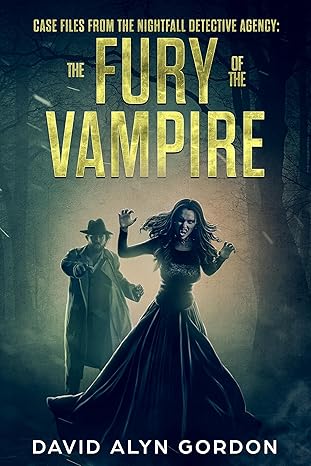

David Alyn Gordon’s Fury of the Vampire is a sweeping supernatural thriller that jumps across centuries, from ancient Jerusalem to 1920s Arizona, weaving together myth, history, and horror. The story follows vampires, werewolves, jinn, and humans caught in webs of betrayal, love, and ambition. At its heart is the eternal struggle between Lilith, Abram, and a cast of characters tied to mystical objects like the Ring of Solomon. Intertwined with this are political conspiracies, mob dealings, and the simmering tension of racial injustice in early 20th-century America. It’s a bold mix of folklore, pulp action, and noir detective work.
I enjoyed how daringly the author blends myth with history. Seeing Lilith spar with Abram in one chapter and then finding myself in the smoke-filled dance halls of Prohibition-era Tucson in the next kept me hooked. The pacing is brisk, and the action scenes pop with energy. I found myself leaning in whenever vampires clashed with werewolves or when political schemers whispered in dark corners. The dialogue can be blunt, sometimes even melodramatic, but it fits the pulpy, high-stakes feel of the book. It reminded me of flipping through an old serialized adventure, where the thrill matters more than polish.
Some passages carry raw emotional weight, like Malia grieving for her cousin, while other scenes are exaggerated. That didn’t ruin the ride for me, though. If anything, it made the book feel unpredictable. I enjoyed how unapologetically it leaned into its own wildness. It’s not a quiet or subtle novel; it’s brash, bloody, and loud. And I have to admit, I had fun with that. Sometimes I rolled my eyes, other times I grinned, and a few moments genuinely made me pause and think, especially the parts dealing with cultural memory and injustice.
I’d say Fury of the Vampire is best for readers who love fast-moving supernatural adventures, who don’t mind a little chaos in their fiction, and who want something that feels both familiar and refreshingly strange. If you’re into folklore reimagined as a gritty pulp detective saga, this is your book. It’s messy, it’s fierce, and it absolutely has bite.
Pages: 164 | ASIN : B0FLTB1L71

American Eugenics Movement
Trail of the Zombies follows a trio from the Nightfall Detective Agency as they unravel a sinister conspiracy tied to eugenics, Indian boarding schools, and a nefarious project called the Utopia Institute. What was the inspiration for the setup of your story?
Great question. I had recently heard of the recent stories about the mistreatment of Indian children in boarding schools and read/mostly watched several documentaries on the subject in researching the beginning of Trail of the Zombies. I also am a fan of the works of Edwin Black and his book, War Against the Weak, told about the height of the American Eugenics Movement which coincided with the timing of the persecution of the Indian children. I also wanted to portray zombies in the way they were meant to be depicted. Recent works and movies/television series inspired by Day of the Dead and The Last Man on Earth show them as flesh-eating monsters. Those are actually ghouls, not zombies.
What kind of research did you do for this novel to ensure you captured the essence of the story’s theme?
This kind of supplements my response to question one. I read and watched a lot of material like many documentaries on the persecution of the Indian Children, the American Eugenics Movement, and actual Zombies. You can find all the sources I used in the Acknowledgement section of Trail of the Zombies.
The Trail of the Zombies crosses many genres. What books or authors were the biggest inspiration for you?
Good question. I mentioned Edwin Black and his book War Against the Weak. That really helped. Universal Horror and Horror movies of that era from other studios like White Zombie were inspirational as well. Mystery-Noir works also guided me as well as the writings and shows of Rod Serling like The Twilight Zone. Historical Fiction like those by James Michener also influenced me.
I hope the series continues in other books. If so, where will the story take readers?
The next book in the Case File Series will be Fury of the Vampire and it will come out before Halloween this year. It picks up right where Trail left off and our heroes will have to solve a political assassination, prevent widespread contamination of a local water supply, stop the antagonists from creating an alternative reality, and combat a powerful Jinn. I think readers are going to enjoy it when it comes out.
Author Links: GoodReads | X (Twitter) | Facebook | Website | Amazon
For the first time since coming into their office, Simon struggled to lift his head, the bullet hole in his eye becoming more evident.
“To find out who killed me.”
Thus begins the next thrilling adventure for the Nightfall Detective Agency.
Vampire Detective Tori Jacobsen and Werewolf Detective Bram Mueller are drawn into the shadowy depths of the Utopia Institute to both solve the murder of the late Ira Simon and the reports of abuse of the Native American Students and those deemed unfit to attend there.
Set in 1929, just outside Marana Arizona, the pair unearth a web of dark secrets.
The Institute is a front for a sinister plot.
Evil Forces, once thwarted in their pursuit of the Eye of Aten, are now bent on creating an army of Zombie slaves from the people held at the Institute.
The ultimate goal?
A hidden Aztec treasure that could fund their designs for world domination.
Tori and Bram must race against time to prevent the ushering in of a new Dark Age of Terror.
If they fail, the world will descend into chaos and repression.
The stakes have never been higher.
Mysterious Stranger

Inescapable follows a 17-year-old boy dreaming of escaping his small-town life, whose life takes a strange turn when a vampire and a witch move into town, and bodies start mysteriously piling up. What was the inspiration for the setup of your story?
I find small towns intriguing because everyone knows everyone – and everyone talks about everyone. It’s like a soap opera. It can be great because there usually is a sense of community, but if you don’t fit in it can also be very lonely. When I was Dylan’s age – and I think it’s the same for most teenagers – I always felt like an outsider in my small town and I desperately wanted to leave. I loved stories about teenagers befriending the mysterious stranger who had just moved to town and turns out to be a vampire or a witch. But it got me thinking… What if – unlike in most YA vampire stories – the newcomer isn’t the good guy?
In many contemporary coming-of-age fiction novels, authors often add their own life experiences to the story. Are there any bits of you in this story?
As I said I’m from a small town. It is not as remote as Berlin, New Hampshire in Inescapable but everyone knows everyone there as well. I’m also really lucky to have an amazing mom – just like Dylan. We don’t have the same dynamic as Susan and Dylan, but I drew from my relationship with my mom to paint a convincing picture of Dylan’s.
What were some themes that were important for you to explore in this book?
I wanted to explore the concept of the vampire as an outsider – someone on the fringes of society who lives by their own rules – and what happens when they meet a human outsider. The concept of “monster” in general is something that I dive into in the book as well. What makes a monster? Who is the good guy, who’s the bad guy?
Friendship and family are an important topic, too. Who are we without the people who love us? And can we choose our own family?
Where does the story go in the next book, and where do you see it going in the future?
The next book will dive deeper into the vampire lore of the Immortal-Blood-Gift-universe. You’ll meet new characters and Dylan will face new challenges. I can’t really say much more without spoiling Inescapable. So go ahead and read it!
Author Links: GoodReads | Instagram | Website | Amazon
As bodies start piling up, each one more gruesome than the last, the town suspects a wild animal is to blame. But Dylan’s world is turned upside down when he learns that Marie is a vampire and Molly, the daughter of his mother’s new boyfriend, is a witch who believes Marie is responsible for the murders.
As Dylan finds himself drawn deeper into the supernatural world, he must make a choice: embrace the darkness within or fight for his humanity. But with a bloodthirsty monster on the loose and no way to return to his old life, Dylan’s decision may already be made for him.
\
Set against the backdrop of 1980s horror, “Inescapable” is a chilling coming-of-age tale that will keep you on the edge of your seat until the very end. If you enjoyed “Stranger Things,” you’ll love this thrilling tale of magic, monsters, and self-discovery.
Don’t miss out on this gripping read.
Case Files From The Nightfall Detective Agency: Trail of the Zombies


Trail of the Zombies is a supernatural detective story set against the haunting backdrop of 1920s America. The novel follows a trio from the Nightfall Detective Agency as they unravel a sinister conspiracy tied to eugenics, Indian boarding schools, and a nefarious project called the Utopia Institute. Zombies, mind control, and historical evils merge into a narrative that is both pulpy and painfully relevant. At its core, the book is a thriller with a conscience, blending paranormal intrigue with real-world atrocities.
The writing in Trail of the Zombies is striking in its directness and conviction. Gordon confronts the grim realities of the era head-on, refusing to soften or obscure their brutality. Chapter five, in particular, stands out as we are introduced to the eugenicist architects behind the Utopia Institute. Their dialogue, steeped in cold-blooded ideology and unapologetic prejudice, is profoundly disturbing and all the more powerful because of it. Gordon draws unsettling parallels between fictional characters and historical figures such as Harry Laughlin and Madison Grant, blurring the line between fiction and fact. The result is a narrative that reads like speculative history, yet feels alarmingly authentic.
The novel’s use of zombies is particularly compelling in its departure from conventional tropes. Initially, I approached this element with some hesitation, given how frequently the genre relies on familiar, often superficial portrayals. However, Gordon subverts expectations by grounding his depiction of zombies in Haitian Vodou tradition, reframing them not as mindless predators but as victims, individuals chemically manipulated and robbed of their will. This interpretation transforms the horror into something far more poignant. The attack on Professor Wallace in chapter one, for instance, is not simply a moment of terror; it is a sobering reflection of exploitation and control. The fear evoked is not of the undead themselves, but of the systems and individuals who create and command them.
What I also loved was the supernatural detective team at the heart of the story. Tori is a vampire with attitude and compassion. Frank is a golem with a heart. Mueller brings a touch of old-world wisdom. Their banter adds humor, but more importantly, their compassion balances the grim subject matter. When Tori rescues Malia from the Institute’s goons at the synagogue, it’s a fist-pumping moment of justice. The way Gordon blends mythology with gritty noir detective work just works.
Trail of the Zombies is an unexpected yet impactful work, gritty genre fiction used as a vehicle for urgent historical and moral inquiry. Beneath its pulp-inspired exterior lies a pointed critique of systemic injustice, particularly in relation to eugenics, racism, and the abuse inflicted on marginalized communities. Readers with an interest in social history, speculative fiction, or political horror will find its themes both provocative and emotionally resonant. Some passages, particularly those involving the mistreatment of children, are difficult to endure, but they serve a necessary purpose. This is a forceful and unflinching novel one that challenges as much as it entertains.
Pages: 158 | ASIN :B0DFM8W9FJ
Dream-Logic Terror

The Dream Killer follows a man who is horrified to discover the body of a missing child prodigy in his basement. What was the inspiration for the setup of your story?
The Dream Killer came straight out of a recurring nightmare I’ve had for years—decades, actually. The first time I had it was in the early ‘90s when the JonBenét Ramsey case was all over the news. I was about ten, so I didn’t really understand what had happened, just that a little girl had been found dead in a basement and that nobody knew who did it. I guess my brain took that fragment of information and processed it into a nightmare.
In my dream, I found JonBenét’s body, and somehow, I knew I was the one who killed her… but I had no memory of doing it. My parents knew too, and they helped me cover it up—hiding the body, making sure no one found out. But the police were onto me, questioning me, circling closer. The overwhelming feeling was this deep, gnawing dread. I was free… but not really. It was just a matter of time before the other shoe dropped before I was exposed and my whole life was over.
And this nightmare kept coming back. It wasn’t always JonBenét (I’m not a total psychopath), but the core of it was the same: I’d find a body, I’d know I was responsible, and the dream was all about covering it up, not getting caught, and feeling the crushing guilt of having done something unspeakable. I’d wake up from these dreams still carrying that feeling—sometimes it would take me ten, twenty minutes to shake it off and realize, Oh. Right. I didn’t actually kill anyone.
Then, a couple of years ago, I had the nightmare again… but this time, it didn’t stop. It evolved. It played out past the usual cycle of guilt and cover-up, into an Act 2 and an Act 3. And in this “sequel nightmare,” I finally got answers: Who am I? Who is the girl? Why was she killed? What does it all mean? I woke up from that version of the dream so excited because I love movies and books that feel like nightmares stuff like War of the Worlds (Spielberg’s version), Eraserhead, The Trial, The Metamorphosis. I’d always wanted to write something that captured that kind of dream-logic terror, but whenever I tried to force it, it never entirely worked. It always felt like… trying too hard.
But with The Dream Killer, I didn’t have to force anything. I’d say 80% of it is the nightmare. I just translated it into a novel. It’s pure id, ego, and superego—raw and unfiltered. And I finally managed to create something that feels like nightmare fuel… because it is nightmare fuel. It comes straight from that part of me.
Which of your characters is most similar to you or to people you know?
Ethan is kind of a cipher for the everyman—he’s technically me, in the sense that he’s the dreamer who finds the body. He spends the story constantly bewildered by the shifting, surreal world around him, which is exactly how I felt in those nightmares.
Sophia Labelle, on the other hand, is this rebellious, film-school-dropout-turned-director—a sort of splatterpunk filmmaker. She came from this idea I had back when I was in film school. I used to always say, “Where’s the female Tarantino? I bet if there was one, people would lose their minds over her movies.” And this was before Julia Ducournau and Coralie Fargeat came onto the scene, so Sophia is kind of my imagined version of that—a cocky, fearless filmmaker who makes these ultra-violent, no-holds-barred films. She doesn’t compromise, and she doesn’t care who she offends.
Was there a risk you felt you took in this book? With your characters or with the plot?
The biggest risk I took with this book was trusting that readers would connect with its subconscious, dreamlike logic. It operates on nightmare rules—things don’t always make immediate sense, but instead of holding the reader’s hand, the story asks them to just feel what Ethan is going through.
I really believe that if you go along with that experience, everything clicks into place by the end. There are plenty of clues dropped throughout, and if you’re paying attention, you’ll start to piece together what’s really happening. What I’m most proud of is that early readers have embraced that challenge. Instead of needing everything spelled out, they’ve leaned into the mystery, becoming detectives in their own right. And hopefully, by the time they reach the twist, it feels like this mind-blowing, cathartic moment that makes it all worth it.
Can we look forward to more books from you soon? What do you currently have in the works?
Right now, I’m working on a book called The End, which follows a man trying to make sense of his girlfriend’s suicide. It explores themes of the afterlife, and I’ve got it fully outlined—but there are still some missing pieces that I need to make it as strong as it can be.
Right now, I’m letting the idea marinate. I know it’s close, but I’m waiting for that spark of inspiration to bring everything together—especially in a way that truly cements it as a horror novel. That’s the missing piece. So for now, I’m just living with the idea, letting it evolve in the back of my mind until writing it feels inevitable.
Author Links: GoodReads | Instagram | Facebook | Website | YouTube | Amazon
His quest leads him to James LaRoche, a scientist who believed people could kill within their dreams. As Ethan unravels a global conspiracy, every clue ensnares him deeper, unveiling horrors beyond imagination. Welcome to… The Dream Killer.
The Dream Killer
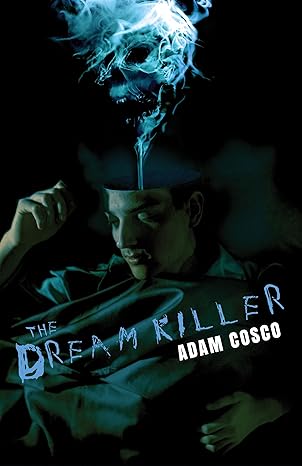
Adam Cosco’s The Dream Killer is a psychological thriller that hooks you from the very first sentence and doesn’t let go. The story follows Ethan Webman, a man whose ordinary life is shattered when he becomes entangled in the mysterious disappearance of a child prodigy, Mary Kay Redding. What begins as an eerie news report soon spirals into a waking nightmare as Ethan discovers her lifeless body hidden inside his own basement carpet. The novel expertly blurs the line between reality and paranoia, leaving the reader questioning what is real and what is part of some greater, sinister design.
Cosco’s writing is vivid and unsettling in the best way. His descriptions plunge you into the thick of Ethan’s growing dread, like the moment he first unrolls the carpet and sees a strand of blonde hair, a slow, horrifying revelation that made my stomach drop. The scene where his mother walks in, unknowingly asking for the same carpet, adds an unbearable tension, forcing Ethan and us to confront the unthinkable. There’s something cinematic about Cosco’s pacing, the way each revelation lands like a gut punch, pulling you deeper into the mystery.
The novel’s greatest strength is its psychological complexity. Ethan is a man drowning in uncertainty, not just about the crime but about himself. The way his past, his father’s illness, and his own isolation intertwine with the investigation creates layers of unease. When Detective Harris enters the picture, the novel takes on a suffocating quality, each interaction a game of cat and mouse where Ethan is the rat trapped in a maze he doesn’t understand. And the symbol, the triangle with three dots lurks at the center of it all, a haunting, ever-present mark of something ancient and unknown.
Cosco’s style leans into slow-burn suspense rather than explosive action, making every discovery feel earned rather than handed to the reader. Some might find the narrative’s dreamlike quality disorienting, especially as Ethan’s grip on reality loosens. But this is what makes The Dream Killer so effective, it lingers, crawls under your skin, and refuses to leave, much like the chilling final scene where Ethan begins to question whether he ever had control over his own actions at all.
The Dream Killer is perfect for fans of dark, cerebral thrillers like Gone Girl or The Girl with the Dragon Tattoo. If you enjoy stories where paranoia, conspiracy, and fractured identities collide, this book will keep you up at night. It’s the kind of thriller that makes you glance over your shoulder long after you’ve turned the last page. Highly recommended.
Pages: 326 | ASIN : B0DTMPDJXR

Noir Mysteries
Case Files From the Nightfall Detective Agency: The Mummy’s Vengeance follows a vampire and werewolf detective who discover a gruesome murder, leading them on a race against time to solve the case before a curse causes a global catastrophe. What was the inspiration for the setup of your story?
Well, I was partially brought up by my Dad on Universal and Hammer Horror movies along with good noir mysteries like 1932’s and 1959’s Mummy, The Wolfman, Murder on the Orient Express, American Werewolf in London, and Laura. I wanted to create a story in that tradition. I was also influenced by modern television shows like Forever Knight and Supernatural.
Your book introduces readers to some unique and interesting characters. What character did you enjoy writing for? Was there one that was more challenging to write for?
I think Tori is the one I had the most enjoyable time writing because she originally came from the time travel stories of the Jigsaw Universe and she has a strong dynamic persona coupled with the arc of coming to grips with her vampirism. Frank the Golem was probably the most challenging in this tale but you will see him develop more in the next installment of the series.
What intrigues you about the horror and paranormal genres that led you to write this book?
That you can apply the human condition through the parables of these tales. That makes them educational as well as entertaining.
When will book two be available? Can you give us an idea of where that book will take readers?
Book two: Trail of the Zombies came out last October and has generated some praise. The link is below. It takes our characters to the Tucson-Marana area a year after the events of the first book and it deals with our detectives having to solve a murder mystery before an evil organization can create an army of Zombie Slaves from the Native American students they are persecuting. This book, especially the first chapters, is very dark.
The third book of the series, Fury of the Vampire will be out this October.
Author Links: GoodReads | X (Twitter) | Blue Sky | Facebook | Instagram | Website | Amazon
But the discovery of a gruesome murder plunges them into a race against time. At the heart of the chaos is the Eye of Aten, an ancient relic of unimaginable power capable of unleashing a deadly curse. With the help of an unusual team—including a golem with a surprising soul—Tori and Mueller must stop a fanatical cult from triggering a global catastrophe.
As alliances crumble and supernatural forces clash, Tori and Mueller face their most dangerous enemy yet. Can they contain the curse, or will the world fall to the Mummy’s Vengeance?
Twists and Turns

Wolf’s Hyde follows a sheriff investigating several murders that don’t appear to have been committed by a human. What was the inspiration for the setup of your story?
I wanted to write a “different” story that gave nods to all my favorite tales in the genre. The movie The Usual Suspects is one of my favorite movies, and I wanted to create something that had that level of twists and turns. It was also very important for me to write a fast-paced book. I wanted to draw non-readers in. So, from the first page, it launches the reader into the fire and keeps them there until the end. If I can give them nightmares while still wanting to keep reading, then I have done my job… Hopefully.
How much and what kind of research went into the elements of folklore in your book?
Weeks that turned into Months. Burning my eyes out from internet searches and making sure I wasn’t going too far to be disrespectful of the Navajo culture. From the historical points to the folklore, I dug deep and wide, looking for anything I could pull ideas and inspiration from but was still broad enough that I could make it my own. I have Native American heritage that goes back through my family tree, so it is something that I have been drawn to since I was a kid.
What is it that draws you to write horror stories?
Being born in the late 70s, all we had in the 80s and early 90s growing up were paperback books. We didn’t have thousands of movies out as we do now that you can watch from the comfort of your bed to your toilet. If you were a horror fan, you read. That’s what we did. Horror has always been something that not only I was drawn to but my family as well. Saturday afternoon Thriller Features, Twilight Zone, and Tales from The Darkside were constantly on our TV while growing up. There is just something about being scared that draws me in for more. It’s like a roller coaster rush to me.
What is the next book that you are working on, and when will it be available?
Currently, I am wrapping up a novella titled “Sexbomb.” It is a story that takes place in the late 1970s Las Vegas. Where we find the famous singers Tom Jones and Billie Preston are vampire hunters. It’s a mixture of Fear and Loathing meets Fright Night. Lots of dark humor. I am shooting for the spring of 2025 for the release.
But have no fear. I have already started two follow-up books to “Wolf’s Hyde.” There is much, much more to come from Tanaka and Norman. As well as other characters from the book. I didn’t intend to make a series out of this story but as it came to the end I was like… yes… this needs to be a series. Even I wanted more.
Author Links: GoodReads | Facebook | Website | Amazon
From the author who brought you the horror story collection, Free Candy, comes the novel Wolf’s Hyde. From the trenches of Nazi Germany to the streets of Detroit. Follow one man’s crusade fueled by guilt and driven by wrath.



 LITERARY TITAN