Blog Archives
The Unknown
Makanda centers on a crime scene investigator investigating a series of mutilated bodies dating back to 1973 in a region where local legend, cryptid folklore, and biological terror blur into nightmare. Where did the idea behind this story come from?
There exist real police reports and other supporting documents from 1973 from people who saw the Big Muddy Monster firsthand. Funnily enough, I’m acquainted with one of several people who saw the monster and were interviewed by the local Murphysboro police department (though I didn’t find that out until after I’d written my novel). I took eyewitness accounts and local legend and combined them with violence, gore, fear, suspense, and a giant dash of biology to add my own nefarious spin onto the landscape and unsuspecting folks of southern Illinois.
Giant City State Park becomes almost a character itself in the story. How did the landscape and atmosphere of southern Illinois shape the tone and direction of the novel?
Giant City State Park is a legitimate character in real life. The park is huge and beautiful. Every day, folks come from all over the world to visit the park and its gorgeous winding trails, verdant expanse, and serene landscape. The Shawnee National Forest here in southern Illinois is exceptionally large, with a varied terrain of rock formations, woods, creeks, wetlands, and flora and fauna. The park is peaceful yet dark and brooding come sundown. It’s quite atmospheric in many ways.
The idea of a local legend returning in a new form is central to Makanda. What do you hope readers take away about the relationship between myths, fear, and the unknown?
I hope that folks understand that while times change, people change, and landscapes change, our cemented fears rarely change. Sure, it can be said that myths change – which they do (that’s part of the allure of our myths and legends). But at the end of the day, those myths, fears, and the unknown rarely change in our minds. The circumstances that cause that fear may change, but the idea behind the fear remains the same. We will always be afraid of the what-ifs. We will always be afraid of the unknown. And we will always be afraid of the boogeyman in whatever form it manifests itself. Don’t believe me? Go and read IT by Stephen King. That book will change your mind.
What is the next book you are working on, and when will it be available?
I write all the time. Even on days that I’m physically and mentally drained, I have to write so as to offer my mind some respite from itself. I refer to the endless library of information inside my mind as my Hoard. Inside my Hoard are a plethora of folks, and the only thing they require to become real and substantial is my unwavering, incessant need to write. If I write, those folks inside my Hoard become quiet. If they’re quiet, I’m allowed a smidgeon of peace from time to time. With that said, I have enough written works to release one novel every year or two for the next two decades. However, as it currently stands, I do not yet know what book will be released next. I’ll pray to God for clarity on what comes next. But I will say that I’m leaning towards a collection of short stories based solely on southern Missouri during the summer. Whatever book comes next will be within the next year and a half to two years.
Author Links: GoodReads | Amazon
When mutilated hikers begin turning up in Giant City State Park, crime scene investigator Janice Redfield suspects the truth is far worse than an animal attack. Decades earlier, locals whispered about the Big Muddy Monster—a towering nightmare blamed for a string of brutal deaths in 1973. Now the legend is waking up.
Born from a microscopic parasite older than history, the creature grows smarter and deadlier with every host it consumes—cricket, snake, deer, man—until it becomes a towering apex predator with a hunger for perfection. As blood floods forests, classrooms, and homes, science, obsession, and violence collide.
Makanda is a relentless descent into body horror, biological terror, and vivid brutality—where survival may demand the unthinkable, and mercy comes at the price of sanity.
Makanda


Makanda is a horror novel rooted in southern Illinois, where local legend, forensic investigation, cryptid folklore, and biological terror all feed into the same creeping nightmare. The story begins with Janice Redfield investigating mutilated bodies in Giant City State Park, then stretches back to 1973 to show how the area’s old fear of the Big Muddy Monster never really disappeared. By the time the book states, “Terror was on its way,” it’s not just setting a mood. It’s warning the reader that the past and present are about to overlap in a very bloody way.
What makes the book feel personal is how much time it spends with Janice and Frank Redfield. Their marriage is funny, affectionate, blunt, and lived-in, full of teasing, coffee, anxiety, sex jokes, hiking, hunting, and the kind of shorthand that only comes from deep love. Frank’s anxiety and Janice’s emotional exhaustion give the horror a human center, so the monster isn’t just something stalking the woods. It’s something pressing against the fragile comfort of their everyday life.
The creature itself is a mix of cryptid nightmare and biological experiment, and that combination gives the book its identity. The science around spores, hosts, cocoons, cytoplasm, and genetic recombination turns the local monster legend into something physical and evolutionary. At the same time, the story keeps the folklore texture alive through old memories, whispered fear, sightings, and people who know more than they want to say. When the book later says, “The hunt was on,” it lands because the monster has become more than a rumor. It has a target.
The novel is also graphic, and its violence is meant to be felt. Bodies are torn apart, heads are destroyed, and death is often described in close, messy detail. But the gore isn’t the only thing driving the story. The book keeps circling grief, abuse, racism, trauma, and the damage people carry after seeing something they can’t explain. Gladys and Jonas bring in the scientific curiosity, Janice and Frank bring the emotional weight, and the older townspeople bring the history that makes Makanda feel haunted before the monster ever steps into the light.
Makanda is a creature-horror novel with a strong sense of place and a lot of heart beneath the blood. It’s about the woods, the stories people tell about them, and the terrifying idea that legends might simply be misunderstood biology waiting for the right conditions to return. The book works best when it lets its characters talk, joke, worry, and love each other before the horror crashes in. That makes the final stretch hit harder because by then the reader isn’t only afraid of what’s in the trees. They’re afraid of what it can take from people who’ve become real.
Pages: 404 | ASIN : B0GY67TRWH

The Muck: A Neo-Gothic Horror-Thriller
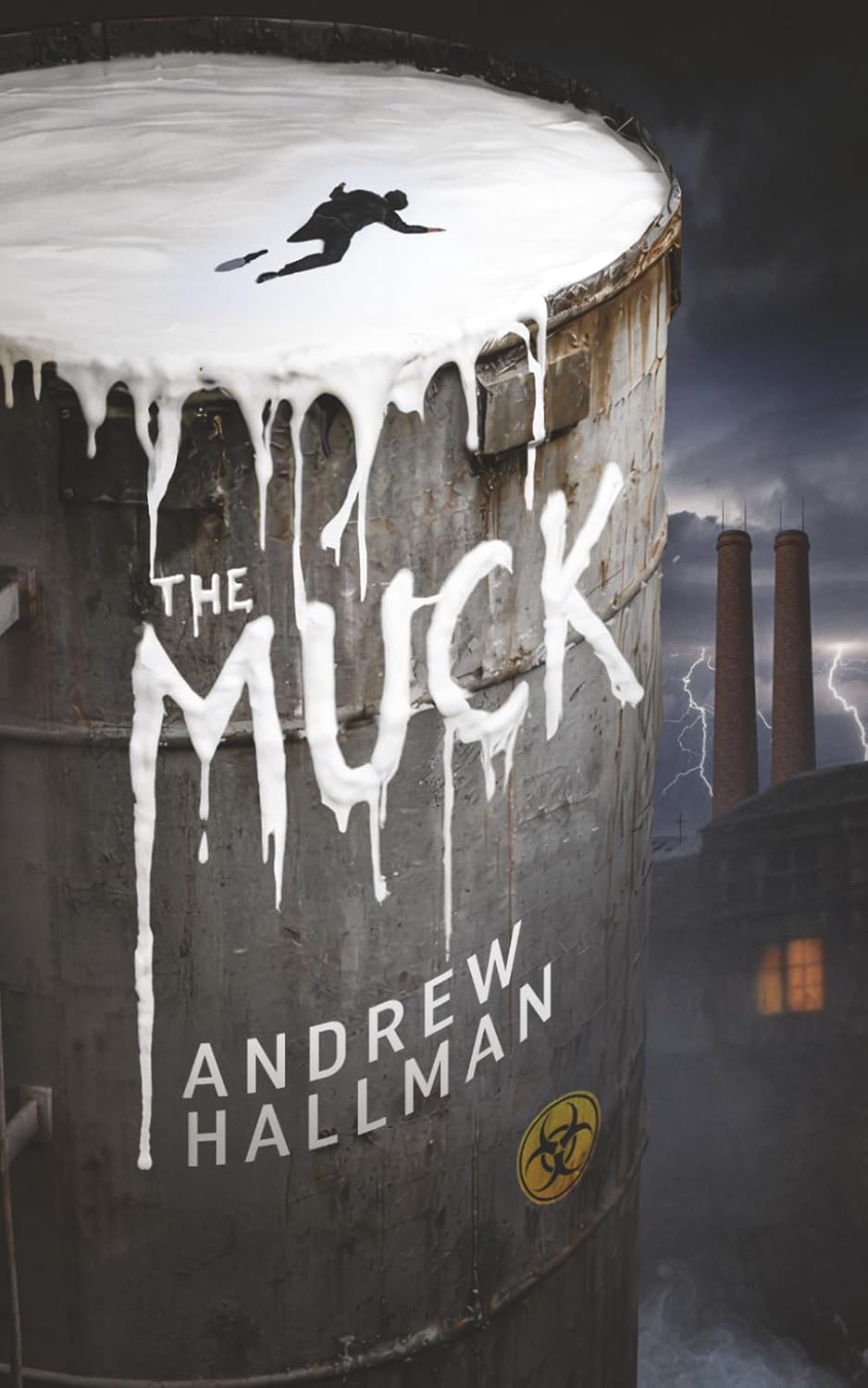
The Muck, by Andrew Hallman, follows Glenn Hurst, a cash-strapped ghostwriter who accepts a lucrative job writing the “origin story” of crypto magnate Brad Thorsen. The assignment brings him to the Mattison Alkaline Works, a decaying industrial complex in rural Virginia known locally as the Maw, where old chemical horrors, corporate ambition, exploited workers, invasive technology, and a maddening itch begin to converge. What starts as a vanity memoir project curdles into a neo-gothic horror-thriller about pollution, power, and the monstrous appetite to turn every human weakness into product.
I was pulled in first by Glenn, who is not heroic in the gleaming, uncomplicated sense. He is broke, defensive, lonely, vain in small ways, and painfully aware of his own failures. That makes him interesting company. His interior voice has a sour wit that never fully protects him from shame, and the book uses that tension well. The Maw itself is the real cathedral here: part factory, part castle, part tomb. Its rusted chambers, poisoned runoff, salt tunnels, and technological altars give the story a thick, tactile dread.
I really enjoyed how the horror keeps widening. The book isn’t content with one monster. It finds terror in chiggers, toxic sludge, AI content mills, billionaire self-mythology, immigration abuse, surveillance, and the old American habit of burying disaster until it leaks back into the water. There are many moving parts, and the momentum can feel almost feverish. But that excess also suits the material. This is a novel about systems that metastasize, and its best passages have the nasty propulsion of an allergic reaction you know you should not scratch.
This book is for readers who like neo-gothic horror-thriller, eco-horror, industrial horror, tech horror, and corporate satire sharpened into a blade. Fans of Stephen King’s character-driven dread and Michael Crichton’s techno-paranoia will find familiar pleasures here, though The Muck has a grimier, more caustic personality all its own. It’s smart, grotesque, and unnervingly contemporary. The Muck turns the American dream into a contaminated site, and dares you to keep digging.
Pages: 392 | ISBN : 978-1969599040
The Great Dick: And the Dysfunctional Demon


Barry Maher’s The Great Dick and the Dysfunctional Demon starts with a Harvard professor in the late sixties riffing on Moby-Dick and The Great Gatsby and tossing off the idea of a modern version called “The Great Dick.” The story then jumps to 1982 and to Steve Witowski, a thirty-something screwup on the run from a botched drug deal who stumbles into a brutal assault near an old church on the California coast. He tries to help, kills the attacker in chaotic self-defense, and meets Victoria Fairchild, a luminous stranger with secrets of her own. From there, the book slides into a mix of road novel, noir, and supernatural thriller as Steve gets dragged deeper into a tangle of murder, occult relics, demons that may or may not be real, and his own talent for bad decisions.
Steve opens by flat-out calling himself an asshole, and the narration never lets him off the hook. His inner monologue is sharp, petty, funny, horny, scared, sometimes all in the same beat. The writing leans hard into sensory detail and low-level absurdity, like the reek of the Checker cab or the way cheap weed and an old song drift through the scene right before the attack. The fight on the embankment is brutal and weirdly intimate. Keys in his fist, Latin muttered at the worst possible moment, a truck roaring closer. I could feel the panic in my throat. When the book slows down afterward and lets Steve and Victoria talk, that same energy hums under the dialogue. The tone stays casual and foul-mouthed, yet there is a careful rhythm in the sentences. It feels tossed off in the way really worked-over prose often does. I found myself rereading lines just to enjoy how a joke landed or how an image curved at the end.
The book plays with failure and faith in a way that was thought-provoking. Steve keeps trying to patch his life with lies, quick exits, and a little dope, then suddenly he is neck deep in something that smells like capital E Evil. The dagger with the names of Jehovah, Ahura Mazda, Huitzilopochtli, and Asmodeus etched into the handle is such a great symbol for the book’s spiritual chaos. It pulls Jewish, Christian, Zoroastrian, and Aztec gods into the same creepy object and then hands it to a loser who just wanted to dodge a prison sentence. I liked how the story keeps asking what counts as sin, what counts as choice, and where simple cowardice shades into something darker. At the same time, it never reads like a lecture. It feels like a wild story that happens to drag big questions in behind it.
The book is full of sex, violence, and black humor, yet there are small, quiet moves that give it an unexpected emotional weight, little flashes of shame or tenderness or sheer exhausted relief. The setting, work around coastal California, and the abandoned church give the more supernatural turns a solid, grimy base to grow out of, which I really liked, and the whole thing runs on a kind of nervous, late-night momentum.
I would recommend The Great Dick and the Dysfunctional Demon to readers who enjoy flawed, talkative narrators, morally messy thrillers, and horror that leans into both jokes and genuine unease. If you like work in the vein of Carl Hiaasen or early Stephen King but wish it had more occult weirdness and a bit more sex, this will probably hit the spot. For anyone up for a fast, foul-mouthed, slightly unhinged ride that still has something on its mind, I think this book is absolutely worth the trip.
Pages: 464 | ASIN : B0FKWK2K7C
The Tempests of Time

Lloyd Jeffries’ The Tempests of Time, the fourth entry in the Ages of Malice series, is a wild, relentless ride through apocalyptic landscapes, theological conflicts, and the clash of immortals. The novel follows Emery Merrick, a former journalist whose life is tangled with ancient prophecies, political upheaval, and the enigmatic, menacing figure of Cain, the biblical first murderer, now a world-dominating force. The story unfolds with unrelenting chaos: nuclear annihilation, supernatural torment, desperate love, and an ever-looming battle between forces greater than humanity can comprehend.
Jeffries’ writing is sharp, cinematic, and unafraid to dive deep into the grotesque. Some passages feel like a fever dream, especially in the opening where Emery is trapped in a visceral, never-ending cycle of pain and resurrection, torn apart by demons only to be made whole again. The horror is relentless, the descriptions unflinching: “They rip out all my teeth… My mouth fills again with teeth”. It’s brutal, but it lets you know that this story doesn’t do half-measures. While some moments feel excessive in their grimness, they also carry an intensity that makes the story hard to look away from.
Yet, for all its darkness, The Tempests of Time isn’t just about suffering. Jeffries weaves in biting humor and deep philosophical musings. Bill, a stoner with a surprising depth, offers bizarre but compelling insights on existence: “Ever notice how everything starts with nothing?” he ponders. “Take Emery, an artist with the written word, who stares at the nothingness of a blank page.” This contrast between absurdity and existential weight is one of the book’s strengths. Meanwhile, Cain is a fantastic charismatic villain. He’s smooth, chilling, and eerily persuasive, playing the long game with a patience that spans centuries. His interactions with Emery are fascinating, particularly when he dismisses mortal struggles with the nonchalance of a being who has seen it all before.
The book can feel overwhelming at times. There’s so much going on. Biblical mythology, history, dystopian warfare, supernatural horror. The breakneck pacing means that quieter character moments, like Emery’s love for Rhyme, are often overshadowed by the grander conflicts. This isn’t necessarily a flaw, it’s part of the novel’s DNA.
The Tempests of Time is not for the faint of heart. It’s a book for readers who like their fiction dense, intense, and thought-provoking. If you enjoy apocalyptic thrillers with theological depth, visceral horror, and rapid-fire action, this book is for you.
Pages: 359 | ASIN : B0DZ15ZL91
Where Dark Things Grow
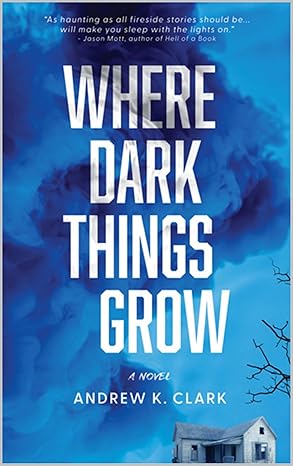
Andrew K. Clark’s Where Dark Things Grow is an enthralling blend of mystery, horror, and emotional depth that captivates readers from start to finish. For fifteen-year-old Leo, life has reached its bleakest point. His younger sister is on the brink of death, and his mother’s mental health is unraveling due to his father’s mysterious disappearance. Forced into the role of provider, Leo faces constant bullying and poverty, all while carrying the burden of his family’s survival. When his mother pleads with him to find his estranged father, he reluctantly sets out on a journey he dreads, confronting his past and inner demons.
Set against the backdrop of the Appalachian Mountains during the Great Depression, Where Dark Things Grow immerses readers in a world steeped in racism, poverty, and survival. The atmosphere in the novel is thick with a foreboding sense of dread, and the tension lingers on every page. Clark’s vivid descriptions transport the reader to this haunting landscape, where every scene is meticulously crafted and every emotion raw and palpable. I could almost feel the damp chill of the woods and hear the rustling of leaves as Leo ventured deeper into the supernatural. The characters are richly developed, each distinct and compelling, while the dialogue flows with poetic elegance. I found myself especially captivated by Leo. His mix of curiosity, innocence, and toughness feels authentic, especially in the way he’s shaped by his circumstances. This coming-of-age story forces its young protagonists to confront the darkest corners of their world and themselves too soon.
Where Dark Things Grow is a must-read for fans of Southern Gothic, folklore, and dark fantasy. Andrew K. Clark weaves an atmospheric, eerie narrative that’s as much about survival as it is about confronting the shadows within and without. I’d recommend this book to anyone who enjoys a haunting, slow-burn story set in a richly imagined world. It’s perfect for readers who love tales steeped in mythology, magic, and the dark undercurrents of human nature.
Pages: 335 | ASIN : B0DG6WZBYZ
An Unexpected Nemesis

In The Consortium – Genesis, a secret society of scientists and science enthusiasts sacrifices the lives of abandoned and lonely individuals as they attempt to evolve the human race. What was the inspiration for the setup of your story?
Actually, it came to me in a dream. Literally. Normally my dreams are a confusing, clouded mess, but in this instance, the story was clear and very memorable. In fact, I couldn’t stop thinking about it. It grew so much in my head, it filled my thoughts and I had a hard time being able to think about anything else. So, I decided to write it down to try and get it out of my head (and get a little peace up in there). The next thing I know, I’ve got a novel.
How long did it take you to imagine, draft, and write the world your characters live in?
Basically, the story was there. I just had to write it down. It took about 2 months of steady writing to get the first part of it down, about 350 pages worth. It left off with something of a cliffhanger and I thought I was done. I gave it to a good friend to read, and she was like, “Where’s the rest of it?” I told her that was it, and she said, “No no no, you can’t leave my girl [Amelia] hanging like that. Where’s the rest of it?” So I sat down, re-read it, then thought, “Well, s**t, she’s right.” I didn’t have the ability to write full time so it took me about 2 years to get the rest of the trilogy written, but I was finally able to finish it, lol!
What was your favorite character to write for and why? Was there a scene you felt captured the character’s essence?
Oh, wow … that’s a tough one. I love all the main characters – Amelia, Spike, Hao, Drake, and Shane. They complement each other so well. I guess my favorite scene is the one where they all meet at The Black Door bar for the first time, when Amelia shows them her powers. That initial part where they realize they can hear Spike’s thoughts and their reactions, were laugh-out-loud funny to me. Makes me smile every time I think about it.
Can you give readers a peek inside the next installment of this series? When can we expect to see it released?
Absolutely! In fact, I made sure all of it was completed before I even attempted to publish so people wouldn’t have to wait and wonder if I was going to continue it. That’s something I hate myself, so I didn’t want to leave my readers like that. Amelia’s story doesn’t end with Genesis. She and the gang face even greater obstacles in Rising as they continue their efforts to dismantle The Consortium from the inside. More characters are introduced, culminating in the final showdown and battle with an unexpected nemesis in Apex. The digital version of Genesis, along with the paperback and digital versions of Rising and Apex, will be available on August 1, 2024. I am also working on the audiobook for Genesis and hope to have it completed and available within the next one to two months. The paperback and digital versions are available on Amazon, and while I hope to get the audiobook accepted by Audible, that will take a while. In the meantime, once it’s ready, the audiobook version will be available for purchase on my website (https://www.bachapman.com). For those who are interested, be sure to use the sign-up form on my website to be notified of upcoming release dates.
Author Links: GoodReads | Website | Amazon
Amelia is a young woman trapped within the diabolical web of The Consortium – a powerful, secret organization run by scientists who have turned science fiction into science fact.
Over the decades, The Consortium has grown in numbers and power. There are only two classes of people that are important to them: their scientists, and those that help fund their work. No one else matters.
Amelia is one of The Consortium’s many victims, known as inductees. The scientists use them in their cruel experiments to further their goals of evolving the human race.
When an experiment unexpectedly turns her into a player instead of a pawn – one with abilities only previously imagined as possible – she realizes she might just get the chance to end the living nightmare she has fallen victim to …
… even though it may cost her her humanity – and her soul – in the process.
The Consortium – Genesis

The Consortium Genesis, by B. A. Chapman, is a compelling sci-fi novel that delves into the dark world of a secret society known as the Consortium. This group, composed of brilliant scientists and science enthusiasts, is willing to sacrifice human lives in the pursuit of scientific advancement for the supposed greater good of humanity. As human experimentation became illegal, these individuals formed a clandestine organization, abducting abandoned or lonely individuals and conditioning them into submission. The story follows Amelia, one of the Consortium’s inductees, who endures extreme experiments conducted by her Examiner. A group of law enforcement officials, including two detectives, an FBI agent, Amelia, and her keeper Spike, uncover this hidden world and begin to challenge the Consortium, aiming to liberate those trapped in its sinister system.
Chapman’s writing style is both engaging and impactful. The author skillfully introduces the background stories and the abuses faced by the inductees, capturing the absolute terror experienced by the victims with striking realism. The portrayal of the sickening practices within the Consortium is so vivid and believable that it almost feels like it transcends fiction. The storyline is well-crafted, with believable characters who possess their own faults and quirks. The novel’s pacing is another strength. From the tense moments of Amelia’s rescue to the intricate explanations of The Consortium’s operations, Chapman maintains a steady rhythm that keeps readers on edge. The scenes of interrogation and the detectives’ growing realization of the horrifying truth are particularly well-crafted, blending suspense with a creeping sense of dread.
The inclusion of detailed processes, like the induction of new subjects and the creation of a controlled working class, adds layers of authenticity and horror to the story, making it not just a thriller but a deep dive into a meticulously constructed nightmare. It is important to note that the book contains graphic depictions of violence, abuse, torture, and trauma, and readers should be aware of these potential triggers.
I recommend The Consortium Genesis to those who enjoy medical sci-fi novels involving extreme human experimentation. The book lives up to its subtitle, “A Psychological Horror Thriller and Dystopian Science Fiction Novel,” and offers a gripping and thought-provoking read.
Pages: 300 | ASIN : B0D77DDHNK


