Blog Archives
Storytelling and Healing

Scarlet Birthright follows a young DJ in Trinidad who falls in love with a dancer who becomes pregnant and flees to America, leaving his daughter with a lifetime of questions and longing. What was the inspiration for the setup of your story?
Scarlet Birthright is deeply personal—it’s autobiographical fiction born from my own experience. I was the love child of teenage parents, and my father left Trinidad when I was just a few months old. I grew up with my loving grandparents in Trinidad and Tobago while my father lived in America with his other family. This novella became my way of weaving together fact and fiction to explore that story, and ultimately, it helped me process and resolve the trauma of growing up with an absentee father. Writing this title was both an act of storytelling and a form of healing.
Were you able to achieve everything you wanted with the characters in the novel?
Mostly, yes. Since Scarlet Birthright unfolds through multiple perspectives, I felt I gave proper depth to the father, daughter, grandparents, and mother—each voice felt authentic and complete. However, I do wish I’d spent more time developing the stepmother’s character. Her story felt unfinished to me, which is why I ended up writing a separate short story dedicated entirely to her perspective. Sometimes characters demand more space than we initially give them.
What were some themes that were important for you to explore in this book?
The central theme became letting go of anger—a gift I didn’t realize I needed when I began writing. Through the process, I also explored the idea that perhaps we all do the best we can in any given moment. We’re imperfect humans making imperfect choices, often with limited information or emotional resources. There’s something both humbling and liberating about accepting that complexity in ourselves and others.
What is the next book that you’re working on, and when can your fans expect it out?
I’m working on “The Other Side of Love and Desire,” which will be the fullest exploration of themes that first emerged in my short story collection, Scarlet Yearnings: Stories of Love and Desire. It’s my way of diving deeper into those emotional territories that readers responded to most strongly. The book is scheduled for publication at the end of 2025 and will be available on Amazon, Barnes & Noble, and from all major book retailers.
Author Links: GoodReads | Website
🔥 A Life-Altering Spark: Witness the impulsive choice that sets Joromi on a collision course with family, identity, and legacy—its aftershocks echoing across decades.
🌴 Vivid Caribbean Setting: Immerse yourself in the lush beauty and folklore of Trinidad, where family legacies run deep as the island’s roots.
💔 Generations of Heartache: Follow Trisha’s poignant struggle to find her place—and finally confront the father she never knew.
✨ Ancestral Magic: Spirits, legends, and cultural traditions weave through every page, reminding us how the past guides our future.
💪 A Story of Hope & Redemption: Watch as one family’s destiny unfolds across decades and oceans, revealing the power of forgiveness and second chances.
Buy now to immerse yourself in a novel where passion transcends distance, heartbreak challenges fate, and one family’s destiny unfolds across oceans and decades.
Read less
Scarlet Birthright: What They Left Behind


Scarlet Birthright is a raw, emotional novella about love, abandonment, regret, and redemption. Set between Trinidad and New York from the late 1960s to the early 1990s, it tells the story of Joromi, a young DJ whose summer romance leads to heartbreak, a hidden daughter, and lifelong consequences. Across shifting seasons and continents, James stitches together the lives of Joromi, Margaret, Trisha, and their families, weaving a tale about choices that echo through generations. It’s messy, real, and haunting in the best way.
One thing that hit me right off the bat was how vivid and alive the writing is. The first chapter, where Joromi meets her at the party, practically sizzled off the page. James doesn’t just tell you that he’s struck dumb; you feel the sweat, the frangipani scent, the pounding heart when the mystery girl with the Afro walks in. That attention to atmosphere is a real strength. It dragged me into the heat of Trinidad’s dry season without mercy. At times, the language was almost overwhelmingly rich, dense, and luxuriant, like indulging in a second slice of chocolate cake despite already being full, but ultimately, it remained deeply satisfying.
Emotionally, this book gutted me. Joromi’s slow-motion car crash of choices, breaking things off, lying to himself, chasing an American dream while abandoning his roots, felt so human it was painful. The scene where he learns about the death of Trisha’s mother broke me. He crumples onto the kitchen floor, and even though he deserves the gut punch, you can’t help but ache for him. James captures grief and guilt in a way that’s too real. It’s messy and selfish and confused, just like real people. That said, there were moments when I wanted to shake Joromi until his teeth rattled. I mean, come on, man, your daughter’s right there!
What stood out even more was the women. Margaret, in particular, was complicated and, frankly, sometimes pretty hard to like. But that’s what made her fascinating. When she tells Joromi, “Just don’t bring her into this house,” after learning about Trisha, my stomach twisted. I hated her. I understood her. James doesn’t try to make any woman a saint or a villain. They’re just…human, battered by life and culture and their own fears. It’s messy in a way that polished, sanitized novels rarely dare to be.
Scarlet Birthright is a story for anyone who knows that love isn’t always enough, that choices leave scars, and that healing takes more than just time; it takes courage. I’d especially recommend it to readers who like intergenerational family dramas, emotionally complex characters, and writing so lush it feels like stepping into another world. Bring tissues, and maybe a little grace for the characters you’ll love and hate all at once.
Pages: 179 | ASIN : B0DYYXKV5F

One Bad Decision

The Wife’s New Maid follows a woman who marries a wealthy man to create her perfectly crafted life, which begins to fall apart when her new maid, desperate to escape a violent boyfriend, enters their lives. What was the inspiration for the setup of your story?
It’s a story about how one bad decision can change everything in a person’s life journey. How chasing the wrong dream can turn one’s life upside down.
The main character, Linley, ignored the warning signs in her rush to escape the grind of corporate life and marry the man who promised her a fairy tale life in the suburbs. But the dream soon turned into a nightmare. Her instincts whispered truths she didn’t want to hear, because she was dazzled by the prospect of marrying a rich, handsome man, ignoring red flags by drowning out reason. By the time her husband’s true nature came to light, she was already trapped. To protect her family, she made choices she’d never imagined—morally questionable actions that felt justified only because her husband’s betrayal had forced her into a dark corner.
What were some of the emotional and moral guidelines you followed when developing your characters?
I made sure that each character’s choices, even the questionable ones, were rooted in believable desperation and a longing for survival. That love and survival often force people into making morally gray decisions and how people, especially when pushed into a corner, rarely make clean choices.
I wanted to show how loyalty, betrayal, and the hunger for freedom can twist even the best intentions. My intention when developing the characters(except for Ana’s abusive boyfriend, Hector) was to avoid painting someone as purely good or evil but defined by their circumstances and desires.
I wanted the characters’ moral dilemmas to feel personal, raw, and inevitable. And how every major choice must cost the character something emotionally, so the stakes always felt real.
Do you think there’s a single moment in everyone’s life, perhaps not as traumatic, that’s life-changing?
Sure. Here are a few that come to mind(I’m sure there are plenty more!)
There’s falling in love and the visceral sensations that come with feeling that powerful connection with another human being. Or heartbreak, which can have devastating consequences and cause a profound form of depression that is hard to shift. Or feeling profoundly humiliated in a way you never forget. A medical diagnosis that forces a big career change. Moving home. A major act of courage. Meeting someone who helps you see things in a new light. A spiritual awakening through art or nature. Realizing you’ve been chasing the wrong dream all along, which was Linley’s epiphany.
What is the next book that you are working on, and when can your fans expect it to be out?
Though The Wife’s New Maid is a stand-alone, I’m writing a sequel called, The Maid’s New Husband. Hopefully, it will be out around October this year.
Author Links: GoodReads | X | Facebok | Website
Linley had crafted the perfect life— a dazzling home, an elite social circle, and a wealthy, handsome husband who promised her everything.
Marrying Dorian Gunn should have been a dream.
But not all fairy tales end well…
Three years in, Linley’s marriage is a hollow shell reduced to icy silences and a cruel prenup demanding an heir she can’t seem to produce. Then comes the new maid—young, beautiful, and with dreams of her own.
And she’s not only there to clean. She’s here to survive.
Desperate to escape a violent boyfriend, the maid sets her sights on the one man who can save her—the rich husband—and she’ll do whatever it takes to claim him. After all, morality is a luxury she can’t afford.
In this house of whispered betrayals, no one’s hands are clean. Everyone is hiding something, and when the truth finally comes out… someone won’t make it out alive.
A Stand-alone Domestic Thriller
The Wife’s New Maid


Amora Sway’s The Wife’s New Maid is a dark, slow-burning psychological thriller dressed up in luxury, suburban charm, and a heavy coat of emotional disarray. Told through the lens of Linley, a woman who trades her independent New York life for a marriage to a wealthy, controlling hedge funder named Dorian, the novel drips with passive-aggressive tension and subtle menace. It explores the suffocating demands of a picture-perfect marriage and how little cracks, like a too-sexy maid or a fading sex life, can deepen into full-blown chaos. It’s twisted, oddly funny at times, and uncomfortably real.
I was genuinely surprised by how compelling the narrative became. The writing style is understated, yet it carries a quiet precision and a strong sense of character throughout. Linley’s voice is vulnerable, cynical, and funny in that “laugh so you don’t cry” kind of way. Early on, there’s this scene where she props her legs up against the wall post-coitus like it’s a team sport, just trying to conceive before a four-year prenup clause kicks in. The blend of quiet desperation and dry humor is executed with remarkable precision. It made me squirm and laugh and then feel kind of bad about laughing.
What really got under my skin was how slowly and subtly the horror unfolds. At first, it’s just awkward silences, missing affection, and a husband who’s a little too into coasters and keto muffins. But then the porn browsing, the rigid control, and the maid’s “skimpy” outfits start to add up. One moment that hit hard was when Linley finds her husband masturbating to buxom brunettes online. She doesn’t scream or confront him; she freezes, tiptoes away, and quietly screams into a pillow. That broke me a little. It’s not about shock, it’s about how many women are trained to shrink themselves in real time, even when their world is burning.
The pacing dragged a bit in places. The prose leans repetitive, and some inner monologues circle the same idea over and over with Linley’s loneliness, Dorian’s emotional constipation, and the perfect wife act. But I’ll admit, it mirrors her rut perfectly. It makes you feel like you’re right there with her, smiling at dinner parties and dying on the inside. The book club scenes are particularly well-crafted, offering a sharp and memorable portrayal of social dynamics. The passive-aggressive wine-sipping suburban wives were both hilarious and horrifying. Everyone smiles with perfect teeth, but it’s all gossip and envy under the surface.
The Wife’s New Maid is for people who enjoy thrillers that simmer rather than explode. It’s for readers who want something psychological, layered, and eerily close to real life. For anyone who has ever maintained the illusion of a perfect life while quietly unraveling beneath the surface, this novel may resonate deeply, both unsettling and engrossing in equal measure.
Pages: 227 | ASIN : B0F1L6PQC2

My Home Country
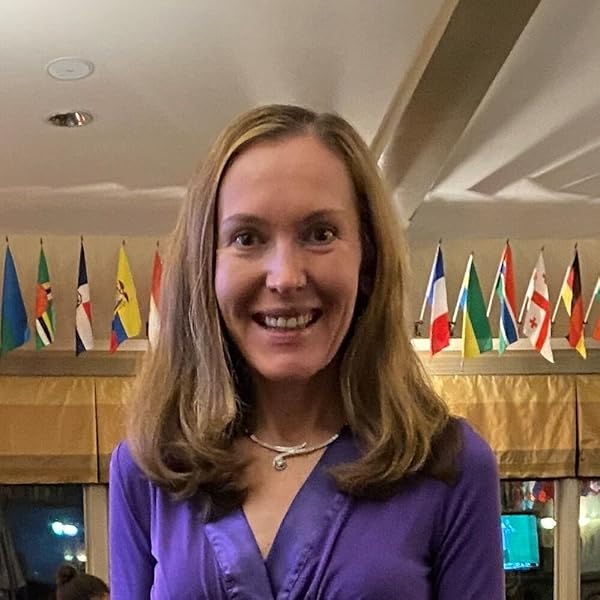
The Dream Lives On follows a man fleeing with his children and mother from Ukraine to the US to seek refuge, who falls in love with a successful woman searching for meaning in her life. What was the inspiration for the setup of your story?
When the war began in Ukraine, it came as a tremendous shock for me. I moved to the United States from Ukraine back in 2005, but I still feel a very strong connection to my home country. I used to visit Ukraine every year. Many of my friends and relatives still live in Kyiv and I am in touch with them regularly. I was completely devastated and extremely worried about everyone when the war started. Unfortunately, the situation has not improved since the war began. Ukrainian residents still suffer from missile and drone attacks daily-just last night there was a deadly air attack that injured and killed people, as well as damaged some buildings. This is a nightmare with which we are forced to live since 2022.
Given all this background, it was only natural for me to start writing a fiction novel that takes place during the first months of the war. This is what was on my mind the whole time.
While all the characters of the novel are fictional, the events are not. As the Russian army started approaching, Ukrainians needed to make a choice of either staying or leaving Ukraine. This was not an easy choice…The characters in my novel took different routes and outcomes were quite different. Not everyone survived, unfortunately. You’ll need to read the book to know how things worked out for them.
As to the romance between the main characters, Viktor and Teresa, I wasn’t originally planning on that. But this idea came to my mind as I was progressing through the book. I thought that both Viktor and Teresa were wonderful people who faced a lot of adversity (for very different reasons). They deserved to find their happiness in the end. And happiness for me means being with a person who loves you, respects you, and truly understands you. It does not involve money, power, or other similar things.
What are some things that you find interesting about the human condition that you think make for great fiction?
For me, the most interesting ones are growth and development. Throughout their lives, people have new experiences, they learn, they adapt, they evolve and hopefully become better people in the end. In my current novel, characters learn to live in completely new circumstances. Their world essentially comes crashing down, but they remain true to their values. They help each other and build a new future. It might be quite different from the one they expected originally, but they learn to live in it. The most important thing in life is staying true to your values, no matter what happens.
What was one scene in the novel that you felt captured the morals and message you were trying to deliver to readers?
There are multiple scenes in my novel which capture the essence of war and tremendous hardships faced by civilians, especially small children. I tried to watch as many documentaries as possible to give an accurate account of what happened. Some of the most critical scenes are those that depict the damp bomb shelter in which adults, children and their pets gather; the Yurchenko family’s miraculous escape from the town of Irpin under the Russian missiles, and the crowded train platform where thousands of frightened people wait for a scarce train to Warsaw.
What is the next book that you’re working on, and when can your fans expect it?
I have two books in the works.
One of them is the sequel to The Dream Lives On, which would complete the trilogy. There are still some unanswered questions remaining. First, we still need to know why Solomon left his home country of Tanzania and moved to Ukraine. What prompted him? Did something bad happen to him back home? We also need to know what happened to Solomon’s sister, Gloria. Does she still live in Tanzania, or did she move away? What did her life turn out like? I know some answers already, but not all, so more work remains to be done.
The second book I’m writing is a novel inspired by the expat life in Uzbekistan. For the last two years, I’ve been living in Uzbekistan together with my family due to my job (I work in international development). I never imagined in my wildest dreams that I would be living in Central Asia, but sometimes life takes you to the most unexpected places. I must say it’s been a very interesting experience which I would very much like to reflect in a new fiction novel. I already have a few chapters written and I hope to finish the book before I leave my posting in Uzbekistan.
Author Links: GoodReads | Instagram | Website | Amazon
All he is looking for is a refuge for his family; falling in love is the last thing he expects on the other side of the Atlantic. What’s more, he would have never guessed that his journey could help his relatives connect the dots in a decades-old family mystery.
Teresa Jameson, a top executive in an international company, has lived for sixteen years in a seemingly happy marriage. Or maybe she just closed her eyes too often and refused to face the reality?
As ample cracks start to show, she needs to dig deep into her soul. Will she look away just one more time, or give the new relationship a chance to flourish?
The Dream Lives On
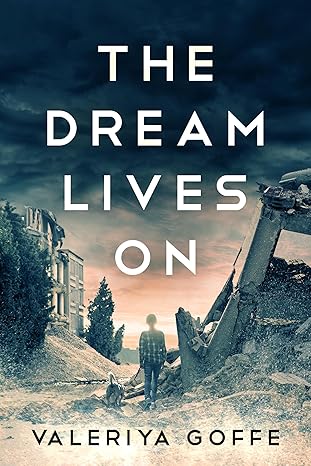
War tears lives apart but in rare, unexpected moments, it forges powerful connections. The Dream Lives On by Valeriya Goffe is a poignant exploration of this paradox, unfolding against the backdrop of a brutal conflict. As the war in Ukraine escalates into a devastating reality, Viktor Yurchenko makes a split-second, life-altering decision: flee to America with his three children and aging mother. Their journey exposes them to the raw, immediate face of war, but also to something just as powerful compassion, solidarity, and the invisible threads of human connection that stretch across borders and generations.
In stark contrast, Teresa Jameson lives in a pristine, orderly world. From the outside, her life gleams with success. A top executive at a prestigious firm, mother to a high-achieving daughter, and wife to an equally driven husband, she appears to have it all. Yet beneath the polished surface, her life is hollow. The illusion soon shatters, forcing her to confront uncomfortable truths and reevaluate what truly holds meaning. Authenticity, purpose, and emotional depth, things long buried begin to resurface.
These two seemingly unconnected lives intersect in a profound way. What follows is a richly layered narrative of healing and rediscovery. Through shared experience and vulnerability, Viktor and Teresa find common ground. Their paths, shaped by chaos, clarity, and courage, illuminate the resilient spirit of the human heart.
Goffe’s storytelling is both tender and unflinching. Her portrayal of war’s civilian toll is vivid, her narrative pulsing with fear, uncertainty, and loss. Yet she also captures moments of grace, small but powerful glimpses of humanity’s enduring warmth. Each character embodies resilience in a different form. Whether fleeing danger or navigating emotional upheaval, they persist, adapt, and ultimately evolve.
Told through multiple perspectives, the novel builds with subtle intricacy. Each voice is distinct, and each storyline is purposeful. As the narrative threads weave together, the plot expands in surprising, satisfying directions, offering both emotional resonance and structural sophistication.
The Dream Lives On is a tribute to the everyday people swept up in the tides of war. It speaks softly but powerfully of endurance, compassion, and the pursuit of light, even when surrounded by darkness. Goffe reminds us that even in the most fractured moments, the human spirit has an extraordinary capacity to survive and connect.
Pages: 267 | ASIN : B0DWJYRSM2
A Story That Needed to be Told
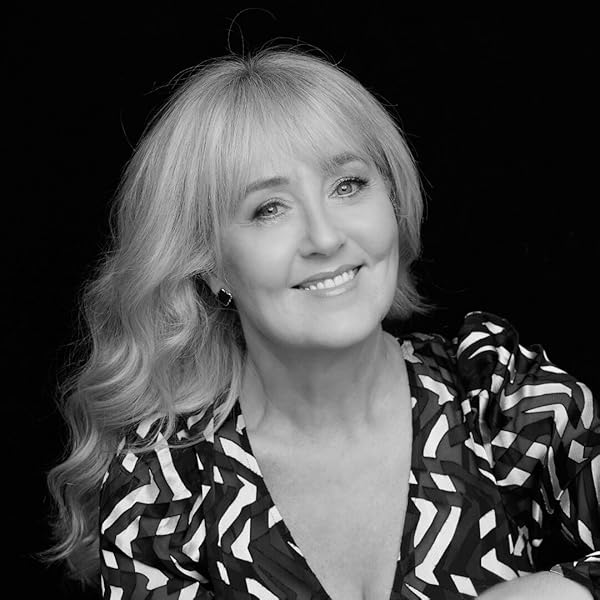
Yankeeland follows a young woman from a stifling Irish village who escapes to the New World with her husband, seeking a life where they can realize their dreams. What was the inspiration for the setup of your story?
I have always been a champion of strong, powerful women and knew that this story needed to be told. Reading Brigid’s letters forever changed my thinking on secrets. The heartache from the secrets which society forced upon the female protagonists in Yankeeland haunted me deeply. Discovering and unraveling how their lives played out filled me with a profound sense of sadness, which stayed with me. The what-ifs and the desperate attempts at explaining away the various actions and outcomes all came back to the trauma caused by secrets. The basic human experience of compassion was lost to Brigid and Kate.
It seemed like you took your time in building the characters and the story to great emotional effect. How did you manage the pacing of the story while keeping readers engaged?
It was important for me to understand the challenges that were faced in Yankeeland, and my writing comes from a place of lived experience. I connected at a deep level with each character and their journey. I am a storyteller at heart and a lot of storytellers carry pain in their words, my objective is to turn suffering into something that we can learn from. The greatest compliment I received was that Yankeeland was not a ‘breezy’ read—I have tried not to detract from the reality of these experiences. In recreating Brigid’s story, I was able to recreate their path as emigrants understanding the society of the various locations. I was also able to reach into stories I had heard in my own childhood, particularly of Well’s House and the Doyne family that had lived there.
What were some themes that were important for you to explore in this book?
In a piece I wrote for my website ‘Secrets’ I looked at how lives that are lived in pain do not allow for awareness. Existing—the sole occupation of the sufferer. These pieces explore some of the themes in Yankeeland and my greatest wish is for the reader to reflect and give consideration from their own viewpoint and experienes. ‘Tis only and aul wink’ was written following a funeral I had attended in the West of Ireland. As I sat and listened to the priest give his sermon on how life passes so quickly, ‘aul wink of the eye,’ I felt a deep sense of emotion. I was frustrated thinking how Brigid and Kate had not been afforded this luxury. I also wanted to show how historically Women were often betrayed by society at the behest of a powerful patriarchal system. This did not bode well for any woman, never mind one who was strong and powerful such as Brigid was.
What is the next book that you’re working on and when can your fans expect it out?
I am working on a story about navigating modern day ‘Humbugs’. A girl’s journey through vulnerability, navigating the various modalities that are competing in today’s world, where spirituality meets commercialisation. It will follow a similar theme, looking at moral dilemmas. I would love for this to be with readers in 2026. The publishing journey requires adequate time to ensure quality of the output.
Author Links: GoodReads | X | Facebook | Website
Brigid and her cousin Molly, who is more like a sister, dream of a new life in the seemingly unlimited land of opportunity they call Yankeeland-America. Brigid gets her chance when she emigrates with her husband Ben and her brother James, while Molly stays in Ireland.
But when Brigid’s quest to have a child leads her to seek unconventional help, her mental stability is questioned. She is soon caught up in a patriarchal medical establishment she has little power to fight.
The new life in America Brigid dreamed about takes a drastic turn. Decades later Brigid’s grandniece discovers a sack full of letters between the two cousins. She unravels the story and vows to tell the tale of what really happened to Brigid in Yankeeland.
Yankeeland

Lacy Fewer’s Yankeeland is a sweeping tale of hope, resilience, and transformation that weaves through decades and continents. Centered on Brigid Kelly’s journey from a stifling Irish village to the promise-filled shores of America, the novel explores family dynamics, societal expectations, and personal ambition. Brigid’s dreams clash with her father’s traditions and her stepmother’s rigid control, culminating in her determined escape to the New World with her husband, Ben. What unfolds is a compelling narrative of immigrants grappling with love, identity, and survival in a land where opportunities are as abundant as the challenges.
Fewer’s writing captures the texture of Irish life in the early 20th century with remarkable detail. The quiet desperation of Brigid’s early years and her longing for freedom and beauty are palpable. I loved how Fewer used vivid imagery, like Brigid poring over forbidden magazines or sneaking into the store to gaze at glamorous pictures. These small acts of rebellion made Brigid feel alive and relatable. Yet, at times, the prose overindulged in descriptions that slowed the pace. While the lush details are immersive, there were moments I wanted the story to move faster, particularly in the sections set in Ireland. The narrative shines brightest when it dives into the immigrant experience. Brigid’s arrival in New York, her awe at the Manhattan skyline, and her disdain for the haughty first-class passengers who snub her felt raw and immediate. One scene, where Brigid defiantly stands up to an arrogant British couple aboard the ship, is potent. It underscored her tenacity and pride, traits that define her character throughout the book. However, the portrayal of Ben’s struggles with inferiority in America was equally compelling and balanced with Brigid’s ambitious optimism. Fewer skillfully juxtaposes their experiences, making their relationship dynamic and layered.
I felt the weight of Brigid’s choices—her sacrifices, her hopes for a better life. The novel’s themes of familial duty versus personal aspiration struck a chord. Fewer’s portrayal of immigrant life is both harsh and hopeful, never sugarcoating the realities but always highlighting the perseverance and ingenuity of her characters. The bittersweet yet triumphant ending left me reflecting on the cost of dreams and the resilience required to achieve them.
I’d recommend Yankeeland to readers who enjoy historical fiction with strong, complex female protagonists. Fans of Colm Tóibín’s Brooklyn or Christina Baker Kline’s Orphan Train will find much to admire in this heartfelt tale. While it’s not a breezy read, its rich storytelling and poignant themes make it a journey worth taking.
Pages: 258 | ASIN : B0DQWTPGRX


