Blog Archives
Lilli’s Question


Lilli’s Question follows Jim McGann, a young American seminarian whose brief, luminous encounter with a German woman named Lilli leaves him with a question he spends his life trying to answer: why be a priest? What begins as an intimate memory from a bus trip through Europe widens into a decades-long reckoning with vocation, grief, love, Catholic hierarchy, and moral courage. Jim becomes a priest, suffers the shattering loss of his brother Tommy in Vietnam, wrestles with celibacy and desire, rises through the Church, and finally finds his answer by using his authority to challenge the exclusion of women from the priesthood.
I was struck by how patiently this novel lets a life accumulate. The book is not hurried toward revelation; it gathers weather, meals, old friendships, liturgies, landscapes, jokes, silences, and losses until Jim’s final act feels less like a plot twist than the slow ignition of everything he has lived. O’Neill writes especially well about the Catholic imagination, not as a set of abstractions but as a tactile world of incense, vestments, parish kitchens, funeral prayers, institutional politics, and private doubt. The scenes around Tommy’s death are devastating because they refuse easy sanctity. Jim’s grief is raw and unbeautified, and the book is strongest when faith and fury are allowed to occupy the same pew.
I appreciated the novel’s moral seriousness without pomposity. Jim can be reflective, even theological, but he is also funny, embarrassed, lonely, and frequently bewildered by the turns his own life takes. The women in the novel, especially Lilli, Jeannie, Sally, and Anna, are not merely stations on his spiritual journey; they are the voices that press him toward honesty. The novel’s discursiveness may test readers who prefer a tighter, more conventionally dramatic structure, but I found its spaciousness fitting. This is a book about conscience forming over time, and conscience is rarely efficient. It moves by detour, recurrence, ache, and sudden clarifying flame.
This is an ideal novel for readers of historical fiction, spiritual fiction, and character-driven coming-of-age stories that stretch across a lifetime. Readers who admire Graham Greene’s fascination with faith under pressure may find a gentler but no less searching companion here, one more interested in vocation as a lived tenderness than as a battlefield of damnation. Lilli’s Question is a thoughtful and tender novel about the cost of answering a question honestly.
Pages: 270 | ASIN : B0H3M7BQ1F

Crossing Paths, Tempting Memories

Crossing Paths, Tempting Memories, by Dorothy Elizabeth Love, is a sensual African American romance built around escape, attraction, and emotional recovery. Caitlyn Crenshaw comes to Barbados trying to breathe again after a humiliating betrayal, while Richard Townsend arrives carrying the weight of a bitter divorce and a career under pressure. The book puts them in a setting that feels warm, colorful, and inviting, but the real draw is watching two guarded people slowly recognize something honest in each other.
The story has a strong vacation-romance feel, but it’s also very much about rebuilding. One line captures Richard’s need for the island perfectly: “Peace of mind was the best medicine for a frantic soul.” Barbados isn’t just scenery here. It becomes the place where Caitlyn and Richard can loosen their grip on the pain they brought with them, flirt without pretending they’re fine, and start imagining a life that isn’t controlled by old mistakes.
Caitlyn is especially easy to root for because she’s not simply looking for romance. She wants joy, independence, and the courage to stop letting other people choose her future. Richard’s charm works because he’s wounded too, but still warm, playful, and deeply drawn to Caitlyn’s spirit. Their chemistry is direct and steamy, but the emotional pull matters just as much. The book understands that desire feels different when it’s mixed with trust.
There’s also a lively supporting cast, especially Christina and Evan, whose relationship adds humor, tenderness, and a bittersweet counterpoint to Caitlyn and Richard’s path. The family drama, corporate tension, divorce conflict, and romantic complications give the story plenty of motion. One of the book’s clearest ideas comes through in the line, “Running from something was far worse than running to something.” That’s really what this novel keeps circling back to: the difference between escaping pain and choosing happiness.
Crossing Paths, Tempting Memories is a passionate and emotional romance with a big heart and a strong sense of place. It’s sexy, yes, but it’s also about second chances, self-respect, friendship, grief, and the relief of being seen by someone at the right time. Readers who enjoy romance with heat, travel, family ties, and characters working through real hurt will find a lot to enjoy here.
Pages: 289 | ISBN : 978-1585712366
Witness to Tribulation

Liz Finnegan’s Witness to Tribulation is a reflective historical novel about inheritance, grief, and the strange pull of Gettysburg. The story follows Emily Tomaso, a young woman who leaves a tense home life behind after inheriting her grandmother’s family house in Gettysburg, Pennsylvania. What begins as a fresh start becomes something deeper when Emily finds an old Civil War diary and starts sensing that the past in this town is still very much alive.
The book blends family drama, romance, history, and ghost story in a way that feels personal rather than flashy. Emily’s connection with Peter Sanders gives the story warmth, but the heart of the novel is really her growing relationship with the people who came before her. The Civil War material is woven into the plot through Gettysburg itself, through the diary, and through the emotional residue left behind by ordinary people who had to survive extraordinary suffering.
Finnegan’s strongest idea is that history doesn’t stay sealed away in textbooks. It moves through families, houses, memories, and even silence. That idea comes through beautifully in the repeated use of candles, bells, old rooms, and remembered voices. One line captures the spirit of the town especially well: “If you were to put a candle in every window in this town, it still wouldn’t be enough to acknowledge all of the suffering.” That sense of reverence gives the novel much of its emotional weight.
Emily’s journey also works because it’s grounded in everyday hurt. Her strained relationship with her mother, Mandy, gives the story an intimate tension that balances the larger Civil War history. As Emily uncovers the pain carried by her ancestors, she also begins to understand her own family with more tenderness.
Witness to Tribulation is a heartfelt novel about memory, forgiveness, and the ways a place can shape the people who live there. Finnegan writes Gettysburg as more than a historic site; it becomes a living space where sorrow, faith, love, and reconciliation meet. Readers who enjoy family-centered historical fiction with a spiritual atmosphere will find this book thoughtful, sincere, and easy to settle into.
Pages: 324 | ISBN : 978-1637777749
Murder on the Set: An Amanda Pennyworth Mystery


James Gilbert’s Murder on the Set drops Amanda Pennyworth, American consul, amateur sleuth, and increasingly conflicted woman, into a Puerto Vallarta movie production that begins as a logistical nuisance and turns into a double-murder investigation. A Hollywood crew arrives to film a glossy romance on location, Amanda is pulled in to smooth relations between studio egos and local authorities, and the novel steadily tightens from social comedy into a mystery about performance, authorship, and the things people will do to protect an invented version of themselves. The setup is clever on its face, but what gave it lift for me was the way the book makes the film set feel both seductive and faintly toxic, all bright surfaces and hairline cracks.
What I liked most was the book’s sense of place. Puerto Vallarta is not a pasted-on backdrop here; it has weather, texture, sidewalks, petty irritations, good coffee, bureaucracy, sea air, gossip, and the faint shimmer of a life Amanda may not want to leave. That local fullness gives the novel ballast. I also liked Amanda herself. She is observant without turning brittle, competent without becoming superhuman, and her interior conflict about duty, desire, and departure gives the mystery a second pulse. The book is at its best when it lets the investigation move through social nuance, class signals, artistic vanity, diplomatic tact, and expat performance. There is a pleasingly old-fashioned intelligence to that.
The novel unfolds with a deliberate, almost courtly pace that lets the tension gather naturally, and I found that measured rhythm one of its strengths. Rather than chasing constant shocks, it rewards patience with richer atmosphere, sharper character work, and a deeper satisfaction as the story gradually comes into focus. Gilbert writes in a way that is more measured than trendy, and the book’s pleasures come from the sharpened dialogue, the sly observations, the metafictional wrinkle in the case itself, and the growing realization that this is a murder story about fabrication in more than one sense. By the end, I felt the book had earned its composure.
I’d hand this to readers of traditional mystery, cozy-adjacent mystery, international mystery, and murder mystery with literary elements, especially anyone who enjoys sleuthing mixed with atmosphere and character rather than nonstop mayhem. It reminded me a little of Donna Leon, if she wandered onto a film set in coastal Mexico, and readers who like Louise Penny’s interest in psychology over pyrotechnics may also find something to admire. This is a polished, sea-breezed mystery that knows glamour is just another kind of disguise.
Pages: 272 | ASIN : B0G87FDWB6
The Jack Dean Story
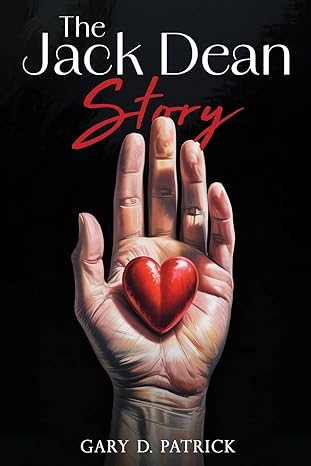
Gary D. Patrick’s The Jack Dean Story follows the extraordinary life of a man who endures more loss, danger, and transformation than most people could imagine. From being orphaned as a child to surviving brutal foster homes, finding real love in the care of two teachers, and later navigating the violence of war and the moral fog of life afterward, the book traces Jack’s path through heartbreak, courage, and self-reinvention. It reads like a heartfelt confession mixed with an adventure story, full of emotion and grit, told in plain language that feels genuine and unpolished in a good way.
I found myself pulled into Jack’s world almost immediately. The writing isn’t fancy or flowery, but that’s what makes it feel so real. It’s simple, honest storytelling that fits the life it’s describing. The early chapters broke my heart, especially the scenes of abandonment and cruelty. You can almost feel the coldness of those houses and the emptiness of being unwanted. Then the warmth of the McClearys comes like sunlight after years of rain. Later, in Vietnam, the story takes on a tense, vivid rhythm that captures both the horror and the brotherhood of war. Patrick doesn’t shy away from pain, but he also doesn’t wallow in it. There’s a kind of steady resilience running through Jack that makes you root for him, even when his choices later in life start to blur the lines between right and wrong.
Emotionally, the book hit me harder than I expected. It’s not just about one man’s life: it’s about what happens when fate keeps testing someone who refuses to quit. The way Patrick writes about loyalty, guilt, and redemption feels raw and human. I liked that Jack isn’t perfect. He makes mistakes, sometimes big ones, but you still feel his heart in everything he does. The story kept me turning pages because I wanted him to find peace, and even when he didn’t, I understood why.
I’d recommend The Jack Dean Story to anyone who enjoys true-to-life tales about perseverance, sacrifice, and the search for meaning. It’s a powerful read for veterans, history buffs, and anyone who’s ever wondered what it takes to keep going when life doesn’t play fair.
Pages: 124 | ASIN : B0FH1X9ZRK
The Sins We Inherit
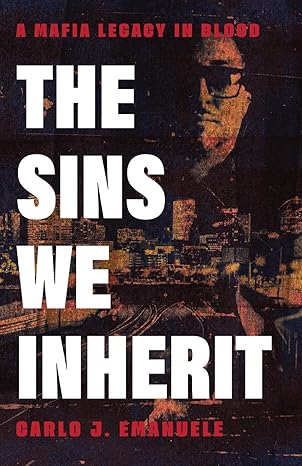
Carlo J. Emanuele’s The Sins We Inherit is a bruising, heartfelt story about family, legacy, and the ways the past refuses to stay buried. The novel follows Costantino “Cost” Caduto II as he returns to his family’s orbit after the death of his grandfather, Tiger, a man whose shadow looms over Milwaukee’s underworld and over Cost’s own conflicted heart. The book moves through wakes, eulogies, burials, backyard feasts, and street confrontations, blending the intimacy of family drama with the sharp edges of a crime saga. It’s about fathers and daughters, fathers and sons, and the ways love can be messy, protective, and even dangerous.
Right from the opening pages, where Cost stands at Tiger’s wake, worn down and haunted, I felt pulled into the smoke-filled rooms and tight-lipped exchanges that define this world. The writing is cinematic without being overstuffed; little details like the smell of cigar smoke or the scrape of pews in a church make the world feel alive. At times, though, the heaviness of description slows things down, especially in the funeral chapters, but I didn’t mind lingering there. It felt true to the weight of grief, and it set the stage for the power struggles that follow.
I also appreciated how Emanuele balances the personal with the criminal. Cost isn’t just an heir to a mafia empire, he’s a divorced father trying to stay close to his daughter, Maddy, even as she slips through his fingers. The moment when she addresses him as “Dad” at the wake, only to retreat into the crowd, struck me with particular force. That small interaction captured more distance and heartbreak than any shouting match could. Later, when Frank Vistoso tries to assert himself at the altar during Tiger’s funeral, it’s not just a clash of egos; it’s a reminder that Cost can never fully escape this world, no matter how much he wants to. I found myself rooting for him, even when I suspected he wouldn’t get the peace he craved.
What I didn’t expect was how much heart the book carries in its quieter moments. A favorite scene of mine was the repast after the funeral, with sausage sizzling on the grill and cousins arguing over poker. The food, the noise, the laughter, it all felt warm and familiar, and it reminded me that this story isn’t only about violence and legacy, but also about belonging. I could almost smell the garlic bread and hear Sinatra crackling on the speaker. It’s those scenes, where love and menace share the same table, that give the book its punch.
The Sins We Inherit left me thoughtful and stirred. It’s not just a mob tale, it’s a story about trying to be better for the people you love, even when the past won’t let you. I’d recommend this book to readers who enjoy crime dramas with a human center, especially fans of The Sopranos or Dennis Lehane. But I’d also recommend it to anyone who’s ever wrestled with family expectations, or who’s wondered how much of our lives are chosen versus inherited. It’s a dark, gripping read, but underneath the gunmetal, there’s a father’s love beating strong.
Pages: 258 | ASIN : B0FKN76L1K

A Siren Called Truth: A Bone Wars Novel (The Bone Wars Trilogy)
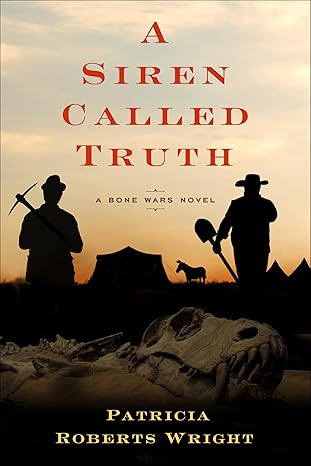
At its core, A Siren Called Truth is a historical fiction that brings to life the simmering rivalry between Edward Cope and O.C. Marsh, two brilliant minds caught in the swirl of ambition, personal demons, and scientific discovery during the Gilded Age. Told through alternating perspectives, the book travels from Berlin’s underground burlesque bars to polished banquets with Charles Darwin and Sir Charles Lyell, capturing the drama not just of paleontology but of two men clashing over ideology, status, and secrets. It’s rich in period detail, intellectual ego, and unspoken desires, making for a compelling blend of science and scandal.
Wright’s writing is lush and immersive. From the very first page, she nails the tension: “The Earth tantalized me like a siren.” That poetic line sets the tone, romantic, almost sensual in its reverence for nature and truth. But the book doesn’t stop at beauty; it goes gritty and raw. One standout scene early in the book has Cope and his companion, Persifor Frazer, stumbling into a Berlin bar full of “men in love with them for the moment.” The mix of curiosity, discomfort, and realization is electric. It’s not just a moment about sexuality or social norms; it’s a glimpse into Cope’s inner turmoil and naiveté. That vulnerability keeps pulling you in.
And wow, does the rivalry between Cope and Marsh sizzle. Wright paints Marsh as arrogant, manipulative, and more than a little dangerous. His icy greeting to a feverish Cope in Wyoming, “My God,” is laced with quiet malice. Their cat-and-mouse game at a high-profile dinner in Berlin is maybe my favorite part of the book. The tension is delicious. Cope, the earnest genius without a degree, and Marsh, the snide academic backed by money and power, throw shade through polite conversation, veiled insults, and strategic pauses. “I earned my first degree in the college of the world,” Cope says, defiant. Marsh responds, “So many words for a man without letters.” You can feel the air crackle.
But it’s not all rivalry and ego. There’s a surprising amount of heart here, especially in Cope’s storyline. His love for Emily, a Catholic woman deemed unsuitable by his Quaker family, adds a bittersweet edge to his otherwise driven life. His internal conflict of duty vs. desire and family vs. love is painfully relatable. When he clutches the poetry book she gave him, still scented with jasmine, I felt a lump in my throat. That quiet longing, that ache to follow your own truth even when it leads to heartbreak, that’s what makes this book so much more than a historical drama.
A Siren Called Truth is a vivid, character-driven tale that blends history, science, and human emotion in equal measure. It’s perfect for readers who love a good intellectual rivalry, a dash of forbidden love, and scenes that simmer with unspoken tension. History buffs, science nerds, and fans of layered characters will find plenty to devour. Wright doesn’t just tell a story, she resurrects a time and two men who burned with brilliance and bitterness. Highly recommended.
Pages: 428 | ASIN : B0D7N3HJ3C
Night Hawks
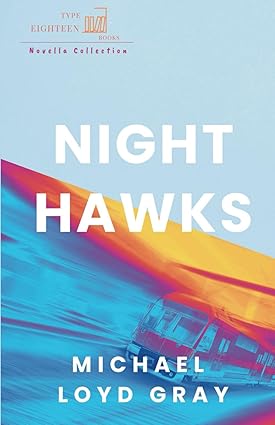
Michael Loyd Gray’s Night Hawks is a gritty, heartfelt novella that weaves together the lives of small-town drifters, dreamers, and the disillusioned. Told through interlinked short stories, the book captures the quiet struggles of characters who are yearning for something more—a fresh start, an escape, or just a little understanding. From the weary cook Hank Spencer to the hopeful but battered Lois, and the haunted veteran Tyler, each chapter peels back another layer of the town’s people, their regrets, and the fragile hope that still lingers in them.
What struck me most about Gray’s writing is its stark simplicity. He doesn’t waste words. Every line feels intentional, every conversation rings with unspoken truths. Take the scene in The Last Train to Chicago, where Lois and Hundley sit in a small-town diner, the weight of their decisions hanging between them like cigarette smoke. You can almost hear the loneliness in the clink of coffee cups and the hum of a jukebox playing old country songs. The writing doesn’t spell things out, it lets the silence do the talking. And that’s the kind of storytelling that hits me hard.
The book’s emotional depth really comes through in Objects in Mirror, where Tyler, a soldier trying to leave Afghanistan behind, takes a construction job demolishing an abandoned building only to realize he’s also tearing down pieces of his own past. Gray does an incredible job of showing the slow, painful process of healing without dramatizing it. The imagery here is unforgettable: the dust rising from broken bricks, the sweat, the ache in Tyler’s arms are all mirroring his internal battle.
Lois’s story arc was the most gripping for me. She leaves town with high hopes, chasing a better life in Chicago, only to be let down in the worst way. Her return in Wrong Turn is almost too painful to watch. When she knocks on Hank’s door, ashamed and exhausted, you feel the weight of every bad decision she’s ever made. But it’s Hank’s quiet understanding that makes this scene so powerful. He doesn’t lecture her. He doesn’t judge. He just lets her in. And sometimes, that’s all someone needs. While the book’s strength lies in its subdued, character-driven storytelling, there are instances, like in The Off Ramp to Nowhere, where I think the internal monologues could be tightened to maintain narrative momentum.
Gray doesn’t offer easy answers, and that’s what makes Night Hawks so compelling. It’s a book about real people making real mistakes, but it also offers moments of grace and redemption. The prose is unpretentious but deeply evocative, making it a perfect read for those who appreciate character-driven stories with a raw, honest edge. If you liked Kent Haruf’s Plainsong or Raymond Carver’s short stories, this one will stick with you.
Pages: 111 | ASIN : B0DKVGTZ21


