Blog Archives
Surviving

Kitty Schmidt: My Life As A Prostitute follows a young woman whose only option to pay for her grandfather’s burial is with sex, sending her on a path to becoming the madam of a high-class brothel for the Nazi in WWII. What was the inspiration for the setup of your story?
I had read a magazine account of Kitty’s life and how the SS refused to let her leave Germany, instead ordering her to work for them. I wanted to know more about her impoverished background that, unbeknownst to her at the time, served to help her manage a brothel for the inner circle of the Third Reich.
In addition, I thought it was important to draw attention to the exploitation of women before and World War II. Kitty Schmidt is a fascinating character who does what she must do to survive during a time when women were not valued as highly as men. She used her position to get information to expand her mind and her portfolio to improve her life and the lives of those around her.
What scene was the most interesting to write for that character?
Two scenes stand out. First, we see how a young child witnesses her mother’s murder at the hands of her alcoholic father. How does a young child process such a situation ? Does it scar her for life? She goes to live with her elderly grandparents who are in their last day, but she won’t have it. She finds paint and brushes and begins to work on fixing their house which has fallen into disrepair. In the second scene, in order for Kitty to pay for her grandfather’s funeral, she must sell herself to a pathetic undertaker. That is when she realizes she has power over men. This power helps her pay for her groceries, her clothes, and household repairs. It opens up a world that she had not known existed.
What draws you to the period of WWII and makes it ripe for you to write such a great historical fiction novel in it?
The WWII generation witnessed many heroes and heroines who in some cases made the ultimate sacrifice. I have written several novels centered on that generation: Brazzaville, The Reluctant Nazi, and Sunrise Over Casablanca. They all embrace a theme of personal growth and self-awareness and sacrifice in the midst of external struggles as well as in their own personal conflicts.
What is the next book that you are working on, and when will it be available?
On the Wings of Flying Tigers tells the story of a young man named Albert who always wanted to fly to feel free. That love grows when he watches flying circus performers in the 1930s. Then his uncle gives him a one-man plane to build.
Through hardship and self-sacrifice, Albert joins the military and moves up the ranks to become a member of the Flying Tigers, a volunteer Air Force branch of the Chinese Army. His time in the air indeed makes him feel free, but that freedom comes at a price. We expect to enter the publishing stage of this book in the coming weeks.
Author Links: GoodReads | Website
When Kitty attempted to leave Nazi Germany, the Gestapo made a deal with her. Manage a bordello for their hierarchy or go to a concentration camp. They wired her bordello so they could eavesdrop on every officer, diplomat, and foreign dignitary that passed through her door. Every word was recorded and passed to the authorities.
A modern-day Berliner stumbles upon her story, and he reads it during breaks from remodeling the building that housed her bordello. In doing so, he contrasts his life with hers
Avoiding Muddy Foxholes: A Story of an American Bombardier


After reading Avoiding Muddy Foxholes: A Story of an American Bombardier by Jim Loveless, I found myself both emotionally stirred and intellectually enriched. This book recounts the life and military service of Richard “Dick” Loveless, a young man from Washington, D.C., who joins the Army Air Corps during World War II to avoid the muddy foxholes of infantry life. What starts as a reluctant enlistment grows into a profound journey of love, sacrifice, camaraderie, and resilience. From Dick’s early training days to bombing runs over Germany, from the horror of being shot down to surviving as a prisoner of war in Stalag Luft III, the narrative offers a personal window into the often-overlooked life of an American bombardier.
Jim Loveless writes like a loving son, and that gives the story an emotional weight that historical accounts often lack. His voice is earnest, plainspoken, and full of heart. There’s humor, grit, nostalgia, and a sense of duty packed into nearly every scene. Some moments made me smile, like Dick’s charming early courtship of Mary Lu, and others just broke me. The POW chapters, in particular, are haunting. Loveless doesn’t glamorize war, and he doesn’t shy away from the psychological toll it takes. The book is structured like a novel but reads like a memory, messy at times, but never artificial.
There were moments when the dialogue leaned on dramatization, and the pacing occasionally slowed with extra detail that felt sentimental. Yet, I found myself forgiving those moments quickly. It’s clear the author wasn’t just telling a story, he was keeping a promise. There’s something admirable in that. The emotional investment he had in sharing his father’s story bleeds through in every chapter. It’s not about being polished. It’s about being real.
Avoiding Muddy Foxholes is a touching and important story about an ordinary man in extraordinary times. It’s not a textbook. It’s a love letter to a father and a generation. I’d recommend this book to anyone interested in World War II, but more so to those who enjoy stories about quiet heroism and family legacies.
Pages: 339 | ASIN : B0CF3C4LM8

Kitty Schmidt – My Life as a Prostitute
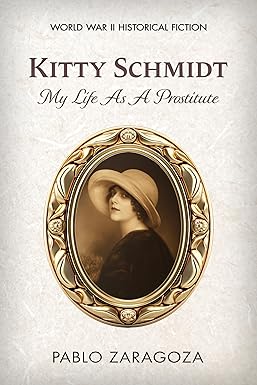
Pablo Zaragoza’s Kitty Schmidt: My Life As A Prostitute is a raw and emotional novel told through the discovered diaries of a fictionalized Katharina “Kitty” Schmidt. The story begins in post-war Berlin with a renovation worker, Paul, unearthing a secret compartment containing journals that reveal the harrowing and complex life of Kitty, a poor butcher’s daughter who becomes the madam of a high-class brothel. Through her vivid and at times unsettling voice, the reader travels from childhood trauma to sexual awakening, and ultimately to a dark but empowering life built in defiance of a cruel, male-dominated world. The narrative folds history and personal suffering into a confessional tapestry that is as gut-wrenching as it is honest.
The language is plainspoken but layered with emotion. Kitty’s voice is full of pain, grit, anger, and sometimes surprising humor. Her observations on war, love, men, and shame are deeply felt and uncomfortably real. I found myself torn, at times revolted by what she endured and at others quietly cheering her cunning, her resilience, and even her tenderness in the face of horror. There’s something deeply moving in the way Kitty carries the weight of generations of women who were used, cast aside, or forgotten, and decides to write her truth anyway.
The writing walks a tightrope. Some passages are lyrical and even poetic, while others are brutally stark. The transitions between historical commentary and personal storytelling can be jarring. But honestly, that messiness added to the charm for me. Kitty’s world is cracked and chaotic, and the structure reflects that. What I appreciated most was that the book didn’t fall into the trap of making Kitty a saint or a martyr. She is complicated. She profits off other women. She manipulates. She survives. And I believed every word she wrote because the character was built with such emotional clarity.
If you’re drawn to historical fiction with grit, if you like character studies that go deep into the soul of a person, flaws, sins, strengths, and all, Kitty Schmidt: My Life As A Prostitute is worth your time. It’s not for the faint of heart, and definitely not for those who want a sanitized version of history, but it is a very compelling read.
Pages: 210 | ASIN : B0F44SDGDY

Johnny’s War – Volume Two – Storm Clouds Over Africa


Johnny’s War – Volume 2 picks up where the first left off, following the ever-changing and ever-challenging journey of Johnny Pink, a young RAF officer during World War II. The book dives deep into his evolving experience, from the highs of promotion and love to the brutal lows of combat and loss. We follow Johnny as he boards a Sunderland flying boat bound for North Africa, reconnects with old friends, and gradually descends into the heart of war’s emotional chaos. It’s not just a tale of battles and bombers, though. It’s a story about growing up too fast, about finding courage in the unlikeliest places, and about the lasting scars—visible or not—that war carves into people.
Reading this was like being dropped straight into the 1940s, with all its smoke, salt, fear, and tea. The writing is unapologetically immersive. That first vivid attack on the Sunderland—my stomach actually turned. What caught me most, though, were the quiet in-between moments: Johnny’s chats with his mates, his unspoken grief, his longing for home. The author doesn’t just want us to know the facts of war. They want us to feel it. The fear, the camaraderie, the occasional absurdity of army life—it all came through loud and clear.
At times, the pacing slowed with heavy detail, especially in technical sections, but then it would slam you with a gut-punch of emotion or action that left you breathless. And I felt Johnny’s emotional shifts, while often believable, occasionally moved too quickly without enough inner reflection. But those are small things. What really stayed with me was how the war slowly changed him, not in a dramatic, movie-style way, but in that creeping, quiet erosion of innocence. It’s those little truths, told plainly, that make this book more than just historical fiction. It becomes personal.
Johnny’s War – Volume 2 is not just for military history buffs or fans of wartime dramas. It’s for anyone who wants to understand the human side of war—what it costs, how it twists people, and how, sometimes, even in the darkest places, you find light. I’d recommend this book to readers who love character-driven narratives, rich historical detail, and emotional truth. It’s not a page-turner in the thriller sense, but it sticks to your bones.
Pages: 325 | ASIN : B0F9X715VC
Johnny’s War Volume one
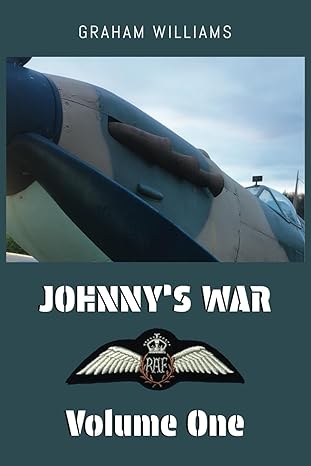
Graham Williams’ Johnny’s War: Volume One is a heartfelt and immersive account of a young man’s journey from the peaceful English countryside into the skies of World War II Britain as a trainee RAF pilot. Told through a blend of personal letters, vividly detailed scenes, and nostalgic reflection, the story follows John “Johnny” Pink from his family home to the RAF training grounds. Along the way, readers are introduced to a cast of fellow cadets, the unbreakable bond between friends, and the anxieties of wartime youth. It’s a story that doesn’t glorify war—it personalizes it, through the eyes of a son, a friend, and a hopeful pilot.
Reading this book was an emotional ride. I was struck right away by the authenticity of the writing—it didn’t feel like fiction. The dialogue between characters, especially Johnny and his friend Tommy, was real and warm, full of that particular blend of courage and awkwardness you’d expect from young men stepping into war. I appreciated how the author didn’t rush anything. Scenes breathed. Letters home from Johnny gave the book its soul. And the flying scenes were genuinely thrilling. The writing is simple and tender, almost old-fashioned in tone, which fits perfectly with the 1940s setting. The pacing is gentle, but it suits the story’s reflective nature.
What really hit me was the depth of care in the relationships. Johnny’s bond with his father had me choked up more than once. There’s such dignity in the way George keeps his hope alive, reading letters, tending the grave of his wife, and waiting. It’s a slow burn emotionally, but the ending caught me off guard. The buildup to Johnny’s solo flight was incredibly satisfying, both nerve-wracking and beautiful. And the quiet mystery of the boy with the apple added just the right amount of eerie wonder. This isn’t a flashy book—it’s thoughtful, steady, and often poignant. And that’s its strength.
If you love character-driven tales, historical settings done with care, and stories that tug at your heart more than your adrenaline, you’ll really like Johnny’s War. It’s a book for history lovers, romantics, and anyone who’s ever missed someone. I’d recommend it to readers who appreciate Band of Brothers for its humanity more than its action, or fans of heartfelt war dramas like Testament of Youth.
Pages: 364 | ASIN : B0F5Z2VXQT
An Unsung Neighborhood

The Mystery from Way Back When follows a man returning to his childhood church where he meets a young woman who is the baby he rescued years ago. She now needs his help to find her birth mother. What was the inspiration for the setup of your story?
My father grew up a member of a close family that were proud members of Sacred Heart Church in the Keighry Head neighborhood of Elizabeth, New Jersey. He attended Sacred Heart School and was even an altar boy. Sacred Heart Church later became Our Lady of Fatima Church. I wanted to set a mystery there, in Keighry Head. It’s an unsung neighborhood and, from my late dad’s stories, the way it once was when he was a boy during the Depression and World War II has pretty much disappeared.
What were the morals you were trying to capture while creating your characters?
Above all, strength of character and decency! The main character, Benny, doesn’t hesitate for a second when he sees a young girl at a distance abandoning a baby on the steps of his church. He takes the baby right home to his mother, knowing she can help the little one, and then tries to identify who abandoned her. It’s World War II. The people are patriotic. The kids have their eye on a suspected spy. Maybe a lot of people these days don’t realize this, but Catholics have always taken a lot of flak in this country, even yet, and especially since the whole situation came to light about the pedophile priests. In this story, the priest doesn’t belong in jail. He’s a really good guy.
What was your favorite scene in this story?
Oh, that’s an easy question! When Benny brings the abandoned newborn baby home and his mother tends to her, she starts to sing to the baby, and naturally, the song is “Baby Face.” Benny, his brothers, and even the old grandfather who lives with them chimes in. It’s joyous! It turns the baby’s sad start into something of a celebration of her arrival.
What is the next book that you are working on, and when will it be available?
There were two books that I had started working on and then put temporarily aside. I picked them up again and I’m continuing with both. They’re mysteries. One is set on a cruise ship and the other in a non-profit organization where someone is corrupt to the core and stealing the funds. I also have another one in mind, and it’s a mystery that unfolds during a wedding, where the parents of the bride are divorced and it’s always a battleground when they’re required to get together. So I’ve got three books in the works, and they should be available later in the year. Somehow, for me, it works out beautifully to work on more than one book at a time. I’m loving the whole process of creating all of these stories!
Author Links: GoodReads | X (Twitter) | Facebook | Website | Amazon
The only clue to the child’s origins is a note found in the basket requesting that she be raised Catholic. The police arrive to get the baby to the hospital while the parish priest arranges for her adoption. Meanwhile, the boys try to play detective and figure out who gave the baby up. Benny even has a likely suspect, Nancy Kilkenny, but she hotly denies it.
Years later, the baby, all grown up, has an urgent reason to connect with Benny and Timmy to try and find out what really happened way back when. Who was the mother who gave her away? What happened on that memorable day in 1944? And can she ever manage to find out the truth?
Contending With the Aftermath
To Bloom Like a Tulip follows a family separated by two continents during WWII and their efforts to survive as a Jewish family. What was the inspiration for the setup of your story?
I have known quite a few people who survived World War II in Europe. One of the toughest aspects of the war was that people didn’t always know where their relatives were, or what was happening to them if they were separated in different countries by the war. Communications between warring Allied and Axis nations were completely stopped. So in this story, the mother had taken her two youngest children to America to settle her late father’s estate. Her three oldest children and their father stay behind in the Netherlands so the kids can go to school and the father can run his business. They think their country is going to remain neutral as it did in World War I, so they’re not initially worried, although the Nazis are already gearing up to be on the march. Settling the estate takes longer than the mother thought it would, the war comes to Holland when the Nazis invade, and then, they can’t be reunited for years. Right there, that’s a cause for a lot of concern and worry on both sides. So that was the initial setup. Add to that, this is a Jewish family, so the ones under Nazi occupation are in peril. Imagine being in America and having to wonder what’s happening to them! Horrific. Yet it’s exactly what went on with a whole lot of families during that war.
What were some ideas that were important for you to personify in your characters?
The time period of this story is completely crazy so that in itself adds a lot of intriguing drama into the mix. Nazis turned normal life on its head in every one of the countries they took over, and, worse, state-sanctioned murder was legal. The Jewish characters are a nice family that’s just trying to survive and they find themselves in extraordinary circumstances. There are some very good people in this story, like the ones who hide the three children in a movie theater when matters become worse, and there are also some absolutely atrocious folks, hideous ones. A lot of prejudice came to the surface after the Nazis arrived on the scene, and the worst of the civilian characters suddenly think they have a green light to persecute others, in their own small ways. Others are just nosy and are watching their neighbors to see what they’re up to, but that’s terrifying to those they’ve got under scrutiny. So there was a lot to work with there.
What were some themes that were important for you to explore in this book?
I’ve heard that for many, many people who survived the war, the worst part of it wasn’t the war itself, incredibly, but contending with the aftermath. In this case, some of the characters are betrayed. They don’t know by who, and they don’t know why. Imagine making it through, yet having to live with a question like that! It would be like the “whodunit” from Hell, and it happened, for real, to scores of survivors. So that’s the big question they’re all trying to answer in this story, once the hostilities are over and they’re trying to go forward. Who did it?
What is the next book that you are working on, and when will it be available?
I’m in the middle of writing another mystery, and this one is set in the neighborhood where my dad grew up in Elizabeth, New Jersey. The characters in this one are Catholics. Two little boys find a baby abandoned on the steps of their church. It’s also set during World War II, but on the American homefront. I’m enjoying writing it to the hilt because my father grew up in a very colorful area with a lot of interesting personalities and I was told so many wonderful stories about it. The book should be available sometime this winter. Stay tuned!
Author Links: GoodReads | X (Twitter) | Facebook | Website | Amazon
The Van Der Graafs, Bram and Charlotta, took the risk of hiding Rika, Henk and Kees Spranger, concealing them in their movie theater. All went well – until they were betrayed. Who could have done it?
TO BLOOM LIKE A TULIP is the unforgettable story of good people in a bad time, their efforts to survive the war, and their ultimate determination to find out the identity of the informer.
Tremendous Social Injustice

The Fight of Their Lives presents a sweeping narrative of World War II, tracing the conflict from the fallout of the Treaty of Versailles to the dawn of the Cold War. Why was this an important book for you to write?
Well, there is certainly no shortage of books about World War II out there, but the vast majority are written for an audience of World War II history enthusiasts. I wanted to write–substantively and stylistically–something for a broader audience. Readers who are interested in history and want to learn more about the war, but would never pick up an 800-page book on the subject. The Fight of Their Lives is for them.
How much research did you undertake for this book and how much time did it take to put it all together?
I spent about two years researching the material for this book, but thankfully there are tremendous resources out there, from the National World War II Museum to the Holocaust Museum and Memorial, to all the historical documents, images, and records available from the US Army, US Navy, and US Marine Corps. I also relied a great deal on secondary sources, of which there are so many out there – all credited in my book.
What were some ideas that were important for you to share in this book?
First, the utter inhumanity that swept across the world in those years, and the horrific scale of death and destruction, particularly among innocent civilians. Second, the importance of global alliances and partnerships – we were hardly close friends with the Soviets, but very simply, we wouldn’t have defeated Hitler without them. And finally, although there are countless stories of perseverance, courage, and sacrifice in that era, it’s important for people, particularly Americans, to understand there was also tremendous social injustice at that time in our own country, most notably racial inequality and the wartime incarceration of Japanese Americans. Winning the war was imperative, but we had quite a bit of work to do at home.
What is one thing that people point out after reading your book that surprises you?
I think a lot of readers are taken aback by the degree of suffering among civilian populations. And to be honest, I’m glad that is making an impact – people really need to understand how profound that suffering was if we are to ensure it never happens again.
Author Links: GoodReads | Facebook | Website | Amazon
The Fight of Their Lives: A 21st Century Primer on World War II is a riveting account of the peril and resiliency that marked the darkest chapter in human history. From blood-soaked clashes across farm fields and jungle islands, to the code rooms and factory floors that powered the Allies to final victory, the fast-paced narrative fully documents the epic struggle that claimed at least sixty million lives. Styled to appeal to all audiences, The Fight of Their Lives is a timely read, from the legacies that remain supremely relevant today, to the lessons humanity cannot afford to learn again.


