Blog Archives
What May Have Been

Ink & Saltwater follows a transgender man aboard the Titanic in 1912 as he discovers friendship, love, and the freedom to live openly as himself while facing an uncertain future. Why did the Titanic feel like the right historical setting for Tom’s story?
I’ve been fascinated by the Titanic for as long as I can remember, but over time that fascination shifted away from the ship itself and toward the people aboard it. We know so much about the disaster, but there are hundreds of people whose names survived while their thoughts, relationships, fears, hopes, and private lives disappeared with them. I kept coming back to the question: who else don’t we get to know?
Eventually that became, “What might life have looked like for someone like me in 1912?” The Titanic also gave Tom something his old life could not: anonymity. He steps onto this enormous ship surrounded almost entirely by strangers, introduces himself as Thomas Bennett, and suddenly nobody there has a previous version of him to compare against. For a few days, he gets to experience what it feels like to simply exist as himself without having to explain how he got there.
That made the setting especially powerful to me because the reader knows something Tom doesn’t. He sees the voyage as the beginning of his life. We know how little time he actually has. I wanted the tragedy to come not only from the sinking, but from watching someone finally begin imagining a future just before history takes that future away.
The novel places a lot of emotional weight on small moments, such as Tom being called “lad” or hearing his chosen name. Why were those quiet moments important to you?
Because I think identity is often experienced through incredibly ordinary moments. For Tom, being called “lad” might seem meaningless to everyone else in the room. Nobody stops the conversation. Nobody realizes they have just done something profound for him. But to Tom, it means someone looked at him and saw exactly what he hoped they would see without needing an explanation.
I wanted those moments to matter because I didn’t want his identity to exist only in dramatic conversations about being transgender. His life is also eating breakfast with friends, getting teased, laughing too loudly, flirting badly, sharing a room with other men, hearing someone casually say his name. Those ordinary experiences are part of what allows him to realize that he isn’t pretending to have a life. He is actually living one.
There’s also something especially meaningful to me about his name. Tom has known who he is long before anyone aboard the Titanic meets him, so other people aren’t making him real by calling him Tom. But hearing that name reflected back at him lets him experience being recognized in a way he rarely has before. Sometimes the smallest acknowledgment can carry an enormous amount of weight when you’ve spent years wondering whether you’ll ever receive it.
Were there real historical people, passengers, or accounts that influenced the characters or events in the novel?
There wasn’t one specific Titanic passenger who became the model for Tom, Nora, or the other major characters. I actually wanted them to remain fictional because that gave me room to explore possibilities without putting thoughts, identities, or experiences onto a real person who can no longer speak for themselves.
What influenced me much more were the real accounts surrounding the Titanic: passenger experiences, third-class life aboard the ship, social expectations in 1912, the physical spaces passengers would have occupied, and the thousands of small historical details that make the world believable.
I was also influenced by what the historical record does not tell us. Queer and transgender people obviously did not suddenly begin existing once society developed modern language for them, but the records we have from earlier periods are often incomplete, filtered through other people, or simply silent. That silence fascinated me.
I didn’t want to write a modern trans character wearing Edwardian clothes, but I also didn’t want to treat an incomplete archive as proof that people like Tom could not have existed. There are things history can tell us with certainty, and then there are places where fiction has to admit, “We don’t know, but this life was possible.” That space between what we know and what may have been is really where Tom was born.
If you could ask readers one question after they finish Ink & Saltwater, what would you want it to be?
Whose stories are we still missing? That question goes beyond Tom and beyond queer history for me. History is very good at preserving certain people: the famous, the wealthy, the powerful, the people who left behind enough paperwork for us to reconstruct their lives. But human beings are more complicated than the archive.
After readers finish Tom’s story, I hope they find themselves wondering about the people whose names appear once on a passenger list, in a census record, in a photograph, or sometimes nowhere at all. Who did they love? What were they afraid of? Who did they become when nobody was documenting them?
We can’t know every lost story, and fiction shouldn’t pretend that we can. But I think there is value in remembering that silence in the historical record does not mean a life never existed. If Tom makes someone look at history and wonder, “Who else was there?” then I think the book has done what I hoped it would do.
Author Links: GoodReads | Facebook | Website | Amazon

Southampton, 1912.
Thomas Bennett has spent most of his life just getting by. After years of hiding who he is and carefully navigating a world that allows little room for people like him, he receives an unexpected gift: a third-class ticket aboard the RMS Titanic and a chance to start anew in America under his chosen name.
For the first time, no one on the great ship knows his past. To his fellow passengers, he is simply Tom. As the Titanic takes him farther from England and closer to the future he has always dreamed of, he begins to discover something he never thought possible: friendship, belonging, and the chance for a life that feels like his own.
Among the crowded decks and lively third-class gatherings, Tom is drawn to Nora, a sharp-witted young woman whose confidence pushes him and whose kindness slowly earns his trust. What starts as chance meetings soon becomes something neither of them expected. But love is hard enough without secrets, and Tom must decide if he is willing to risk the life he has built for the chance to be truly known.
Set against the backdrop of the Titanic’s maiden voyage, Ink & Saltwater is a sweeping historical romance about identity, bravery, found family, and the people who show us how to take up space in the world. Heartfelt, hopeful, and ultimately heartbreaking, it is a story of survival, love, and the lives forever changed aboard the most famous ship in history.

Ink & Saltwater


Ink & Saltwater, by Kayden Etter, is a work of historical fiction built around a compelling idea: what might life have looked like for a transgender man in 1912, particularly one traveling aboard the RMS Titanic? Thomas Bennett leaves Southampton for New York with a third-class ticket, a carefully chosen name, and a journal given to him by his cousin Clara. What starts as a story about leaving home gradually becomes a story about being known. Tom’s journey across the Atlantic gives him something he’s rarely experienced before: the chance to introduce himself without having to account for who other people once thought he was. The ship becomes a temporary world where friendships, romance, and ordinary interactions allow him to imagine a future that feels genuinely his. That’s especially effective because the book treats small moments of recognition as meaningful. Being called “lad,” hearing someone casually use his name, sharing a room with other men, or laughing at a crowded table can carry as much emotional weight as the larger historical events surrounding him.
Tom is the reason the novel works as well as it does. He’s funny, observant, anxious, occasionally sarcastic, and constantly aware of how other people see him. His relationship with Clara gives the opening chapters warmth, while his friendships with Liam, Arthur, and Erik let the book explore masculinity without reducing it to a single model. Tom slowly realizes that the men around him are all completely different, which loosens his belief that there’s one correct way to be a man. His developing relationship with Nora pushes that idea further. She notices the effort behind his careful behavior without treating him like a problem she needs to solve. When Tom eventually begins telling her more about what he carries physically and emotionally, her response focuses on the loneliness and exhaustion of it. The journal entries are a smart addition because they give Tom room to say what he can’t always manage in conversation. They also reinforce the book’s recurring interest in ink, names, stories, and the idea that writing something down can make a life harder to erase.
The book reminded me of Taylor Jenkins Reid’s The Seven Husbands of Evelyn Hugo, particularly in the way both stories place queer identity inside a historical setting that readers think they already know. Reid uses old Hollywood, while Etter uses the Titanic, but both are interested in the distance between the life the world sees and the life a person actually experiences. Ink & Saltwater is quieter and more intimate in its approach. A substantial amount of the novel is spent eating meals, joking with friends, walking the decks, writing in a journal, and getting to know Nora. That leisurely pace gives Tom’s happiness time to feel ordinary before history intrudes. It also means the recurring thoughts about being watched, passing, breathing, hiding, and learning how to occupy space sometimes echo one another quite closely. Still, the repetition has a purpose. Tom has spent years monitoring himself, so his narration naturally circles the same fears while gradually changing what they mean. By the time the Titanic begins to sink, the passengers around him aren’t simply names attached to a famous disaster. They’re people the reader has watched tease each other, eat breakfast, flirt, argue, make plans, and picture lives in America.
That investment makes the final stretch painful in exactly the way the novel has prepared for. The tragedy isn’t powerful merely because the reader knows what happens to the Titanic. It’s powerful because Tom has finally begun imagining a life beyond it. Etter ultimately turns the journal Clara gave him into one of the book’s strongest symbols. The novel is really about the life he manages to claim before it, including friendship, attraction, laughter, embarrassment, hope, and the startling experience of being accepted without negotiation. Etter’s author’s note makes that intention explicit, describing the novel as an attempt to imagine queer lives that history often failed to record and to give a transgender character a full story of love, survival, identity, and belonging. What stayed with me most was that sense of being recorded on your own terms. I recommend Ink & Saltwater to readers who enjoy historical fiction with LGBTQ+ themes, heartfelt romance, rich character development, and stories of identity, belonging, and resilience.
Pages: 418 | ASIN: B0HFYFHMWH
Ninas Whisper
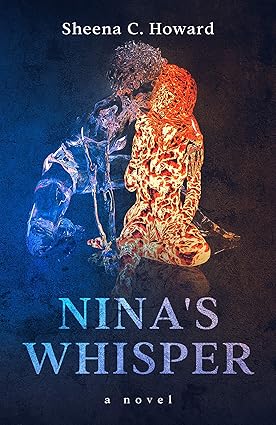
Nina’s Whisper is a raw and emotionally charged novel that follows the life of Nina, a successful pediatrician who becomes entangled in a passionate and tumultuous relationship with a woman named Page. What begins as a whirlwind romance quickly descends into a harrowing exploration of emotional manipulation, psychological abuse, and intimate partner violence. Told from Nina’s point of view, the story is an intimate confession of how love, hope, and commitment can trap a person in an increasingly dangerous situation. The novel chronicles her emotional journey over the course of several years, culminating in an intense and heart-wrenching effort to reclaim her life and sanity.
The writing is clear and deeply personal, and Howard does an exceptional job of pulling you into Nina’s mind. I found myself often frustrated, angry, scared, and heartbroken alongside her. The emotional depth is gripping. The storytelling is tight, and the pace is steady even as the subject matter grows more intense. Howard doesn’t sensationalize abuse, she renders it quietly, carefully, which somehow makes it hit even harder. It felt so real that I caught myself questioning how easily love can blind us. Nina’s gradual loss of self, her inner justifications, her attempts to make sense of madness, they’re all too relatable.
What struck me most about this story was how deeply it made me feel. The emotional intensity is relentless, it doesn’t flinch, and it doesn’t let you look away. It pushed me to sit with discomfort and reflect on how easy it is to lose yourself in the name of love. I found myself yearning for more moments of calm or joy for Nina, but I also see the value in how unapologetically the story centers the reality of trauma. There’s a kind of beauty in its rawness.
Nina’s Whisper is a gut-wrenching read, but one that’s worth every page. It’s for readers who want honesty, who can sit with discomfort, and who are drawn to stories that show how strong the human spirit can be even in the face of relentless harm. I’d especially recommend it to survivors of abuse, therapists, and anyone who wants a deeper understanding of the quiet ways people get broken and the fierce ways they try to build themselves back up.
Pages: 218 | ASIN : B0848YGLTL

Kissing Toads
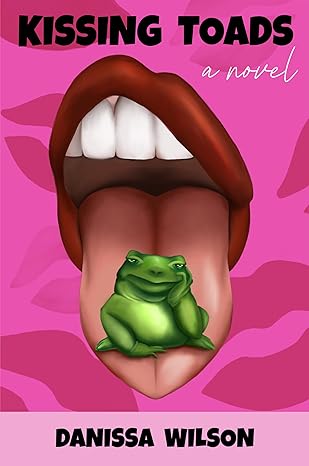
Danissa Wilson’s Kissing Toads is a nostalgic, heartfelt, and sometimes laugh-out-loud funny journey through the highs and lows of finding love in the 80s and 90s. At its core, it’s a coming-of-age story wrapped in a romantic memoir, following Annie as she navigates the minefield of romance, heartbreak, and self-discovery. Raised with the belief that a woman’s worth is tied to the man she lands, Annie embarks on a decades-long quest to find her “Prince Charming” by kissing an array of metaphorical (and sometimes literal) toads. Through first loves, bad boyfriends, and the chaos of early online dating, her story unfolds with a mix of humor, nostalgia, and a healthy dose of reality. But just when you think you’ve figured out where it’s headed, Wilson throws in an unexpected twist that flips the script entirely.
Wilson’s writing shines in its ability to be both sharp and self-deprecating. The humor is biting but never forced, and Annie’s voice is refreshingly honest. The opening chapter, where Annie details the absurdity of being named after her mother’s beloved golden retriever, immediately sets the tone. Lines like, “Being the namesake of the family pooch? Does it get more humiliating than that?” make it clear that this book isn’t just about romance; it’s about identity, self-worth, and breaking free from expectations. The book doesn’t shy away from the awkwardness of young love either. Annie’s high school relationship with the Ozzy Osbourne-worshipping, eyeliner-wearing “Oz” is painfully relatable, showing how teenage romance can be both intoxicating and utterly misguided.
One of the most compelling aspects of Kissing Toads is its exploration of societal expectations placed on women, particularly in past decades. Annie’s mother, a woman who abandoned her own dreams for the role of perfect wife and mother, serves as both a loving figure and a cautionary tale. She constantly reinforces the idea that Annie’s happiness hinges on finding a man. This generational pressure is woven throughout the book, making Annie’s journey all the more meaningful. When she starts to question whether she’s searching for love or simply fulfilling a script handed down to her, the book reaches its most thought-provoking moments. Scenes like her internal struggle over a sexist “No Fat Chicks” sticker she bought as a teen highlight the subtle ways misogyny is ingrained in everyday life. Wilson brilliantly captures how these influences shape Annie’s choices, often without her even realizing it.
The book’s pacing is another strong point. Wilson moves seamlessly from high school heartbreaks to the cringe-worthy infancy of online dating, never lingering too long on any one phase of Annie’s journey. Each relationship teaches her something new, sometimes through devastation, other times through sheer absurdity. The dialogue is snappy, the 80s and 90s references are spot-on, and there’s an authenticity to Annie’s experiences that makes her deeply relatable. However, what sets Kissing Toads apart from a typical rom-com or coming-of-age novel is its refusal to tie everything up in a neat bow. Without giving too much away, Annie’s “happily ever after” isn’t what you’d expect but it’s so much more satisfying because of it.
This book is for anyone who has ever looked back on their past relationships and cringed, laughed, or wondered what the hell they were thinking. It’s for Gen Xers who lived through the rise of online dating, for women who’ve been told that their worth is measured by their romantic success, and for anyone who loves a story that balances humor with heartfelt moments. Wilson has crafted a novel that’s both wildly entertaining and deeply resonant, proving that sometimes, kissing toads isn’t about finding a prince, it’s about finding yourself. Highly recommended.
Pages: 180 | ASIN : B0DGVT1XVC
The Beauty and Destructive Power of Friendship
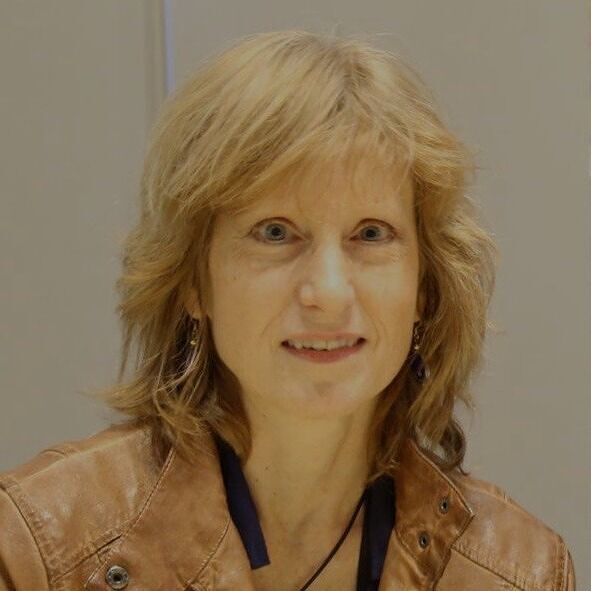
Beautiful and Terrible Things follows a twenty-nine-year-old woman who manages a bookstore who meets a quirky man, and takes a chance stepping out of her comfort zone and making new friends. What was the inspiration for the setup of your story?
First, I decided what age group I wanted to dig into. I was bothered by the stereotype of Millennials as self-indulgent, unmotivated and entitled. That does not describe my daughters or their friends at all. So I decided to feature a more realistic cast of Millennials in my novel.
I also liked this age for my characters because people on the cusp of 30 are grappling with major life decisions about marriage, children, careers, etc.
Once I had the age down, my goal was to depict both the beauty and the destructive power of friendship by building a cast of characters that reminds readers of New Girl, Friends or The Big Bang Theory. Making the lead character, Charley, an introvert with borderline depression gave me lots of room to explore that concept and show her personal growth. And quirky Xander was the perfect foil for her, one capable of pulling her out of her self-imposed social isolation.
What were some of the emotional and moral guidelines you followed when developing your characters?
Emotionally, my six main characters bring very different sensibilities to the table. My guideline was simply to make them as real as possible. Morally, my goal was to present differing views on difficult subjects. For example, the friends spar over the issue of undocumented immigrants. But most important for a story featuring six individuals of varied race, heritage, gender identity and sexual orientation was to be sensitive to how I depicted them.
I was fortunate to have the guidance of many sensitivity readers on the cultural, race, mental health and immigration aspects of the book. I even got feedback from a Filipino artist, who matches one of the characters!
What are some things that you find interesting about the human condition that you think make for great fiction?
First, that we don’t always do what’s best for us, sometimes because we don’t see it, sometimes because we don’t want to see it, and sometimes because we acknowledge it but for some foolish reason think it might, against all odds, work out differently.
Second, that in trying to do right by one person, we sometimes hurt another. Such is the case when Jessica, in Beautiful and Terrible Things, makes a major sacrifice to help pull Charley out of her depression, but her actions end up hurting another loved one in a very tragic way.
What is the next book that you are working on, and when will it be available?
My next novel, 101 Ways to Screw Up a Kid, is about the toll that secrets take on a family. It features a (hopefully) loveable curmudgeon similar to Elizabeth Zott in Lessons in Chemistry. And I’m co-writing a true crime memoir, which is a bit different for me. It’s a highly compelling story about how a rape victim and the investigating detective work together to catch the suspect, and then fall in love years later. I’m working on securing agents/publishers for both.
Author Links: GoodReads | Facebook | Website | Instagram
Beautiful and Terrible Things


Beautiful and Terrible Things by S.M. Stevens is an engaging narrative that delves into human resilience amidst tragedy. This novel thoughtfully examines pressing issues such as love, race, gender, and activism, providing a multifaceted look at the challenges and growth experienced by individuals in contemporary society. The protagonist, Charley Byrne, is vividly drawn; a young woman initially engulfed by fear and isolation until the dynamic activist Xander Wallace enters her life, sparking a transformative friendship.
The book adeptly navigates themes of friendship, love, and social justice, effectively pulling readers into Charley’s evolving world. Her journey of personal growth and the quest to find her voice within a tightly-knit community underscores the narrative. Stevens introduces a diverse array of characters, each adding layers of complexity and enhancing the story with their perspectives, thus illustrating the strength derived from empathy and collective endeavor. Stevens’s prose is lyrical and rich, capable of drawing readers deeply into the emotional landscape of the story—from introspective quietude to the fervor of protests and activism, the authenticity and emotional resonance of each scene are palpable. While the plot occasionally takes familiar turns, and some narrative threads could be more concise, the book’s deep exploration of significant themes and rich character dynamics ensures a rewarding reading experience.
Beautiful and Terrible Things is not just a story about overcoming adversity but also a reflection on the intrinsic beauty that can be found in life’s most formidable moments. It challenges readers to consider the enduring impact of human connections and the personal strength that can emerge from hardship. This novel remains with you, a testament to the indomitable human spirit and the complexities of life it navigates.
Pages: 432 | ASIN : B0CX5SHPDT
Dynamics of Relationships

Roam Within: Macallah and the White World of Light follows a woman setting out on an adventure of self-discovery and personal growth. What was the inspiration for the setup of your story?
The inspiration for the set up of this story was my own personal diary as well as our ever-changing daily reality that is an inexhaustible source. Through our existence we are all on this ever-lasting quest of self-discovery, so that’s a theme that’s always relevant and relatable. Also, I’m fascinated by dynamics of relationships and how others affect us. When you explore these dynamics from different angles, you come to understand that nothing is ever as it seems.
What was one scene in the novel that you felt captured the morals and message you were trying to deliver to readers?
Oh gosh, it’s so hard to pick one:) But if I must, it would take me somewhere by the end of the novel where Macallah acknowledges new layers to her being as she comforts Saku. Re-reading the novel, these scenes with Saku always feel most raw and very touching. It’s just about living this life & walking this planet while noticing other human beings without any prejudice. Like, really noticing.
Were you able to achieve everything you wanted with the characters in the novel?
I hope so because as you write the story and it starts to unravel before your eyes, you sort of magnetise the characters for the purpose of the story.
What is the next book you are working on, and when will it be available?
Actually, I’m on an intersection now, as I’ve already written parts of, in my mind, several different books. They all have the same strong Magical Realism tone, but differ in the setting, the characters, and the sub genres. I give myself a few more months to marinate, and then I’ll decide on the final winner for the next novel to set out to the world. In any case, I plan to publish my next book by the end of next year.
Author Links: GoodReads | Facebook | Instagram | Website | Amazon


