Category Archives: Interviews
Identity and Loneliness
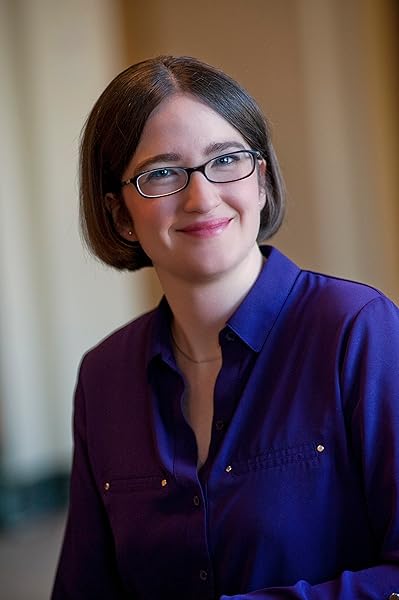
Allie’s Adventure on the Wonder follows a teenage girl navigating life with Auditory Processing Disorder (APD) and what it feels like to live in a world where words don’t always connect the way they’re supposed to, and how exhausting and isolating that can be. What was the inspiration for the setup of your story?
For those who don’t know, Auditory Processing Disorder (APD) is a neurological condition that affects the way the brain takes in and processes information. I was diagnosed when I was about two years old, as I was not responding to certain sounds or forming words when I should have been. Despite the name, however, I am in no way deaf, nor do I have any kind of physical brain damage. There is currently no medication or cure.
My novel originally began as a college project at UMD (University of Minnesota Duluth) back in 2012. Childhood in Literature and Culture was a course in which I studied the depiction of young people in various media from different cultures, eras, and demographics (i.e., The Cat in the Hat, Children of the Corn, and The Bad Seed, among many others). For my final project, I wrote an original short story based on a studied text of my choice—Alice’s Adventures in Wonderland—with an explanatory 5-page essay attached. This was the first draft of Allie’s Adventure on the Wonder. (For those interested, this draft is available to view on my website, elatales.com.) As I was working out the plot, I realized that much of the faulty logic Alice displays in Lewis Carroll’s story (her tender age of seven years notwithstanding) mirrors many of the symptoms of APD. Like me, she can be easily distracted, doesn’t always think things through before acting on them, overthinks pointless details, and makes inappropriate or inapplicable comments in a given conversation.
Are there any emotions or memories from your own life that you put into your character’s life?
Several. Many side characters are based on real people in my life, with given or only slightly altered names. (I’d rather not reveal these for the sake of privacy.) Many incidents mentioned also in fact happened. For example, at the suggestion of my speech therapist at the time, I once entered an art contest in which kids had to draw cartoon characters on posters; only after it was all over—another girl won for drawing the speech-impeded Scooby Doo—did I find out that mine, featuring Winnie the Pooh and Tigger, had been disqualified because it was drawn so well the judges thought I had traced it, which was against the rules. (I feature a picture of it in the “Photos” section toward the end of the book.) And my fifth-grade art teacher really did dismiss my drawing of Rafiki from The Lion King before lecturing me on how real animators don’t use How to Draw guides. It can be the most maddening feeling in the world when doing my best is considered too good as well as not good enough, especially by those whose job it literally is to encourage children’s gifts and potential. Even worse is how, even in college, I’d sometimes misunderstand or mishear school assignments to the point where it feels like the teacher is suddenly mentioning it for the very first time just to mess with me when I know deep down that’s not true. It can feel like a desperate gamble, hoping and praying that my work or understanding will satisfy someone else’s unknown/arbitrary standards juuuust enough for them to leave me in peace, never mind give me praise. And even now, I still have fears of how APD will negatively affect my professional and personal relationships and my ability to do important tasks, like paying bills or doing taxes, during times when I will inevitably have no one (with or without patience) to guide me.
What were some themes that were important for you to explore in this book?
Identity and loneliness. If there is one lesson that living with APD has taught and ingrained in me, it’s the old proverb, “Every story has two sides.” It’s easy to talk about how Alice is the one “normal” person in the “crazy” world of Wonderland. But I think what many miss is that Alice is the one who invades Wonderland and makes trouble for its inhabitants, whether in a relatively minor way like insulting/disturbing the birds and sea creatures by carelessly talking about her violent cat, or in a much more devastating way like nearly destroying the White Rabbit’s house from the inside as a giant after effectively stealing a growing potion. One person’s curiosity can be another person’s carelessness. But is one truly right and the other truly wrong? How, when, and why? Where do such distinctions and meanings come from? Who decides such things? Of course, objective, irrefutable truths do exist, but there are times when one can’t answer such questions, with the results being confusing at best and detrimental at worst. This can lead to even more negative and painful questions regarding one’s right to voice their thoughts and whether they have any worth. All too often, we forget that everyone sees the world in different lights, good and bad, and constantly shifting in meaning, or lack thereof, depending on a limitless number of circumstances. More than anything, though, I really want to reiterate through my story that just because APD isn’t as dangerously debilitating as some other conditions, mental or otherwise, doesn’t mean that those afflicted with it are any less deserving of help, guidance, and patience. Nor should they be labeled “stupid” or “lazy” just because they may be more prone to making obvious but honest mistakes than the average person without the luxury of such conditions as an excuse.
Will there be a follow-up novel to this story? If so, what aspects of the story will the next book cover?
I very much doubt it. While I still research APD for my own personal reasons and well-being, I feel I’ve said my piece on the subject and have little interest in pursuing it as far as writing and publishing are concerned. At the end of the day, like many, if not all, fiction writers, I write to escape real life! Not to mention, as much as I adore the original Alice books, there’s only so much I can add or reinterpret considering all the other Alice re-writings and reimagings floating around out there. Right now, besides my story-highlight radio show, The Tale Collector, I want to focus on a speculative science fiction novel, my first for an adult audience, along with some unfinished fantasy short stories that I’d like to compile into an anthology someday.
But of course, never say never!
Author Links: GoodReads | Facebook | Website | YouTube | Soundcloud | Audioport | Amazon
But one day, during a field trip on a ferry named the Wonder, Allie meets an odd character named Charlie and sees the creative genius and unadulterated joy that madness can bring.
A semi-autobiography of the author’s personal experiences growing up with APD, reimagined through the lens of Lewis Carroll’s timeless nonsensical classic Alice’s Adventures in Wonderland, here is a contemporary fairy tale about learning—and accepting—the methods in one’s madness to navigate the real world.
These Stories Shaped Me
An Inconvenient Witness recounts your life with vivid details, moving between childhood scenes, brushes with death, family dysfunction, and encounters with cultural and historical moments. Why was this an important book for you to write?
People kept telling me, “You’ve got to write this down.” Then my daughter handed me a book called Dad, Tell Me Your Story—which is basically a polite way of saying, You’re not getting any younger. Writing it was cathartic and allowed me to reflect on the past and perhaps find some meaning. These stories shaped me, whether I wanted them to or not.
What were some ideas that were important for you to share in this book?
That life is messy, sometimes ridiculous and doesn’t care about your plans. It’s best to be adaptable, remain open-minded and recognize subtle guideposts that can take you on a more rewarding journey than you planned. That ordinary moments can be extraordinary if you look hard enough. And that humor doesn’t erase anything, but it makes the truth easier to swallow.
What was the most challenging part of writing your memoir, and what was the most rewarding?
The most challenging aspect is revisiting events and times that I would rather forget. On the other hand, the most rewarding experience is realizing that these events have made me stronger, more confident and more adaptable to various situations.
What do you hope is one thing readers take away from your story?
We all have stories to tell, even in challenging times, there’s room for humor and hope. While we can’t control our past, we can shape the narrative it presents.
Acceptance
The Wild Shepherdess follows a girl born under mysterious circumstances during a storm, and marked by the blessing of a dragon, who, despite growing up tormented, discovers moments of wonder while embarking on an unforgettable quest of self-discovery. What was the inspiration for the setup of your story?
It all started when I was doing an online class about fantasy novel writing when the pandemic struck. So, I was writing out what creatures to involve in the story, the character, and it just evolved.
You took your time in building Clara’s character and the story to great emotional effect. How did you manage the pacing of the story while keeping readers engaged?
I had to think about how much time I needed to put into Clara’s character, where it felt realistic but not over the top or corny. I also had to keep in mind that this was a world of danger, and Clara is not entirely safe from it.
What were some themes that were important for you to explore in this book?
It mostly focuses on the theme of acceptance. I feel that it’s important to surround yourself with people who truly value you as a person and the gifts you have.
Is this the first book in the series? If so, when is the next book coming out and what can your fans expect in the next story?
Yes. The Wild Shepherdess is the first book in the series, and I’m currently working on the sequel. I can’t give a precise date yet, but I can say there will be more human characters Clara interacts with, and the inclusion of Selkies to boot.
Author Links: GoodReads | Facebook | Website
We Are Not Promised Tomorrow
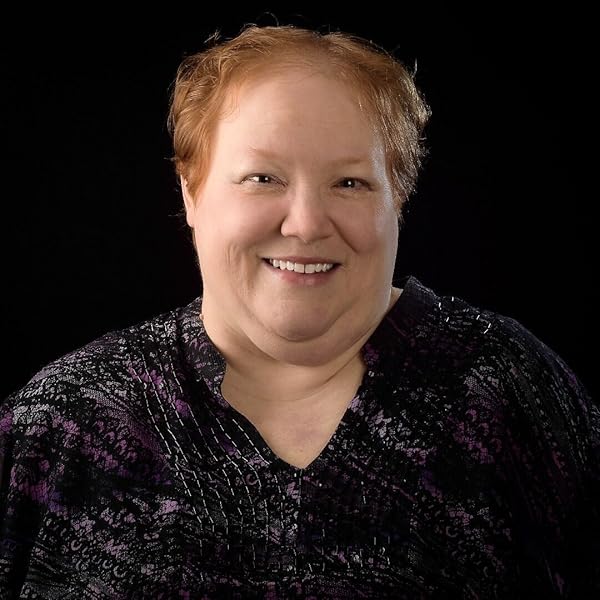
The Long, Lazy Summer follows a young boy who spends one last summer with his terminally ill mother, which deepens into lessons about love, loss, and the beauty of small moments. What made you write a story about this topic? Anything pulled from your life experiences?
Most of the children books I write are fiction fantasy with a lot of humor. The last few years, I’ve watched the Newbery Awards, and the books that won usually have a more serious tone to them. That really is the main reason I tackled this subject matter. I’ve had friends and family who have died of cancer, so that’s mainly why I focused on this area.
Surprisingly, real life ended up imitating art. My illustrator ended up finding out she had cancer when I was ready to start this book. She’s fine now, but this book almost didn’t happen. Then I faced my own mortality as well when I had heart problems this year. The ending of the book reflects the kind of thoughts running through my head at that time period.
What were some ideas that were important for you to share in this book?
The main ideas that were important to me were:
- Honesty of emotion. How would any adult feel going through that – facing their mortality and how do you explain that to a child?
- Love – what do we leave our loved ones after we are gone?
- Legacy – if you have a limited time left, what would be important to still do before you go? What do you want to be remembered for?
What is one thing that you hope readers take away from your story?
None of us are promised tomorrow. Look around you – are you living the life you truly wish to live? What do you think your loved ones will remember as being the most important part of your life?
I hope the Wonders of Childhood & Beyond series continues in other books. If so, where will the story take readers?
This series is intended to be unusual and perhaps unexpected. If the reader can learn to look at the world in a way different than they have before, then I will have done my job well as a writer.
Author Links: GoodReads | X | Instagram | Facebook | Website
For some of us, the greatest love and memories that we will hold in our hearts our whole lives through are the ones we experience and share with our parents.
They are part of our earliest memories and shape the lives we learn to live. They are our whole world, and when they leave us – when they pass over to the other side where pain and death can no longer touch us, we are left with an emptiness we can never again fill. To lose a parent is like losing a limb – you remember it being an essential part of your life even though it is no longer there. In many ways, you can still feel their spirits nearby, but they have moved beyond this realm where our five senses reign supreme and register into other senses of extraordinary perception we never knew we had.
For Raymond, it’s simple. He spends a beautifully long, lazy summer with his mother that he will never forget. His last one with her.
Nobody is promised forever. Any of us could leave this world at any moment. That being the case, what kind of memories would you leave your loved ones if you had a choice?
Forces Outside Our Control
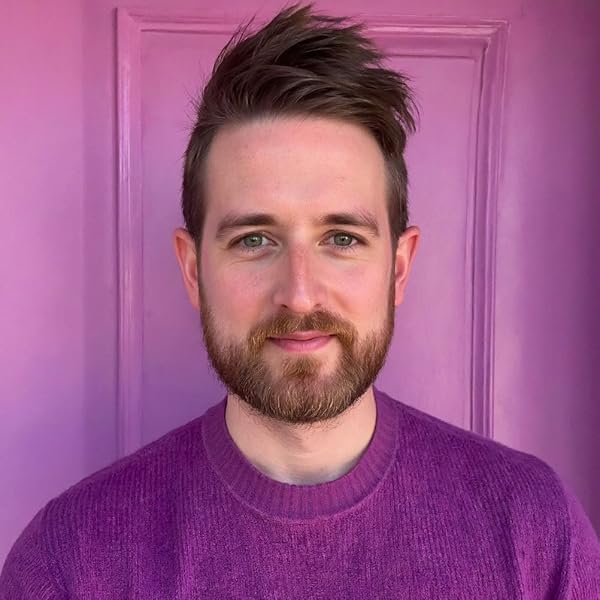
Lily Starling and the Storm Riders follows the captain and crew of a starship who, while on a routine rescue mission, get ambushed by a group of raiders wielding the power of a cosmic tempest. What was the inspiration for the setup of your story?
The first book is about agency—Lily finding her own way, claiming an identity, learning she has a voice in her own story. For the second book, I wanted to put her up against something she couldn’t just outwit or outfight. There are forces in life that are simply bigger than us, no matter how defiant we feel. You can raise your middle finger to them all you want, but they don’t go away.
So the storm became that unstoppable force. It isn’t just a backdrop, it’s a presence—something ancient and impartial that challenges the crew at every turn. Lily has to confront what it means to face chaos after she’s already defined herself. She’s grown, but she’s still running from her heart, still scared of commitment, and still making messy, very human decisions. Some of the consequences this time around are unavoidable. I wanted to see how she—and the people around her—hold up when survival itself is on the line.
The supporting characters in this novel were intriguing and well-developed. Who was your favorite character to write for?
Xynn, without a doubt. She plays a much bigger role in this book, and her dynamic with Lily is becoming one of the central threads of the series. They’re opposites—Xynn is organized, methodical, practical, while Lily is impulsive and emotional—and that tension makes every scene between them spark. I hit a point while drafting where I realized something was missing, so one night I sat up in bed and wrote an entire novella about their time together on Adius II between books. That’s how real they feel to me—sometimes the story just demands more space for them to breathe.
Beyond that, I had so much fun bringing in new voices. Charlie and Tevya were a blast to write, and Ronin—well, who doesn’t love a good villain? But Xynn and Lily together are where a lot of the emotional heart of Storm Riders lives.
What were some themes that were important for you to explore in this book?
A big one was the idea of forces outside our control. The storm is a metaphor for that—chaos that no one can outrun. I think the pandemic left us all with a deeper understanding of how uncontrollable events can reshape our lives, and how our reactions to them can send us in completely different directions.
Another theme is faith twisted into extremism. I grew up in a religious environment, and while that gave me empathy and perspective as an outsider, I also saw firsthand how beliefs can be damaging or dangerous when taken too far. That’s woven into Leviathan’s Hand in the book, which is less about any specific faith and more about how conviction can be distorted into violence.
I also wanted to explore Earth. Lily didn’t want to go back—she dreaded it—because she already knew it could never be the place she once imagined. And she wasn’t eager to reopen her own past. That visit forces her to confront the tension between leaving the past behind, letting it haunt you, or finding some middle ground. For her, it’s not nostalgia—it’s reckoning.
And threaded through all of this is a layer of hypocrisy. If you look closely, it comes up again and again: institutions, leaders, even individuals who claim one thing but act in another way. That contradiction is part of what the crew—and Lily in particular—are wrestling with in Storm Riders.
I hope the series continues in other books. If so, where will the story take readers?
The main arc will be at least five books—possibly more if spin-offs grow out of it—but there’s a clear throughline I’m building toward. Book three, Lily Starling and the Death Machine, continues some of the threads from Storm Riders while taking a few turns I don’t think readers will expect.
The central theme this time shifts toward the institutions we put our trust in every day. When you start peeling back the layers, you may find less to believe in than you hoped. Any organization with great power, even one with the best intentions, carries secrets. The questions become: where is the line that finally causes you to lose real trust? Is it possible to do good from within a flawed or corrupt system? Or does integrity mean walking away?
And of course there will be plenty of adventure—space chases, a manhunt across the stars, friends pitted against each other, and a mystery or two to keep readers guessing. I’m just as excited as anyone to see where the adventure takes us.
Author Links: GoodReads | Threads | Facebook | Website | Instagram | TikTok
Lily Starling thought she’d finally found her place among the stars. But when a routine rescue mission turns into a devastating ambush, she watches in horror as the Storm Riders—a ruthless band of spacefaring raiders—vanish into the chaos, taking her closest friend with them.
Now, with the Salamander crippled and the galaxy on edge, Lily must convince her crew that the Storm Riders are more than just pirates. They are zealots, wielding the power of a cosmic tempest the Union refuses to understand—one that may have been set in motion long before Lily was even born.
As the hunt takes her to the farthest reaches of known space, Lily must rely on unlikely allies, question everything she’s been taught, and face the growing storm within herself.
Because the leader of these zealots is hiding a dark secret.
And if Lily can’t stop them, the storm will swallow everything.
We Can Do This Better

The Adoption Paradox weaves together your story, historical records, and interviews with nearly a hundred people from across the “adoption constellation” into an unflinching look at the industry’s ethical and emotional complexities. Why was this an important book for you to write?
I started out wanting to write a deep exploration of adoption’s emotional complexities from all sides. I’m very new to this internal awakening in my life’s journey. As an adoptee from a standard closed adoption from 1965, I had an overall good experience. As my parent’s only child, I felt loved and accepted for the most part within my family and our larger culture.
Then in 2020 with both of my adopted parents gone, I finally started to search for my birth family, which fueled the emotional curiosity that led to this work. I read books written by adoptees about their search. Then others about the birth mothers who relinquished us back in the era I was born in. What I learned shocked and saddened me. I felt this deep inner shift, and started questioning the typical storyline I’d always been fed. It was one thing to know that in ’65 my mother didn’t have the same choices I did growing up in the 1980s. It was another thing to come face to face with how badly many of these young women were treated.
There was more to tell in all of this I was sure, but I didn’t see any other books out there that had the voices and the deep research and thru lines for everyone in the adoption triad: adoptees, along with birth and adoptive parents. So, I decided to audaciously tackle that niche myself. That’s what started it all. This book is for me, in part, but my hope is that in reconciling the stories within, others find it helpful too.
What were some ideas that were important for you to share in this book?
There is no one adoption story. Ever. There are many sides, and all have this vastly diverse lived experience, even within one family. You can have an adoptee who feels completely seen and understood by the people who raise them, and another who feels isolated, lost and alone and their parents have no idea they are struggling. That’s heartbreaking. Adoption always begins with a loss, and our society completely forgets that narrative in popular culture. It’s just assumed we are lucky as adoptees, and that our families are fantastic! The truth is it’s often a mix.
There are misconceptions and oversimplifications about adoption and foster care among the general public. Adoption can heal, save lives and fulfill its potential to create a loving home for a child who needs one. But in modern times that is not generally what’s driving a relinquishment. Infant adoptions usually occur due to a lack of resources experienced by the natural parent(s). Then, understand we have allowed commercialism and an unchecked profit motive to proliferate within an industry that is responsible for the placement of children into homes. How can that possibly be beneficial for those affected or our society at large? Most people are complexly unaware of these realities. What gets lost in the shuffle of that are the needs of the adopted person. Not just as a youngster, but for their entire lives.
When we make assumptions about people, we flatten out their stories and miss the depth and nuances that are part of each and every family. I can have a good adoption story, and there is always some sadness behind it. We need to live in places of truth, both fiercely and gently with each other, and how we build or defend our families.
What was the most challenging part of writing your book, and what was the most rewarding?
Definitely stories of abuse were the hardest to hear, and it was also I think essential for those folks to feel seen and heard. Listening and sitting with them through their pain was validating for both them and me. Receiving the trust from all of those interviewed was by far the most rewarding experience.
The other bonuses have come from adoptees, adoptive parents and birth parents who unknown to me have already shared how the book has helped them feel affirmed, taught them something, or caused a shift in their mindset. They are the reason – because we can do this better.
What is one thing that you hope readers take away from The Adoption Paradox?
If parents are more informed before they adopt, their kids do better and are less likely to struggle. If natural parents and treated with dignity and fairness by our statutes then their rights are protected, because they deserve nothing less than that. My hope is the general public will understand our laws need revising and modernizing beyond the way we currently practice adoption.
In most states, we still overwrite adoptees birth certificates as part of this legal process and seal them away – inaccessible without a court order. Why can’t we create a “certificate of parentage” that doesn’t overwrite a person’s truth of who they are, where they came from, and deny them access to their medical history? Everyone in this story deserves better than these archaic systems we currently have.
I am not anti-adoption, but I am interested in our culture evolving to embrace a better future for how we practice adoption and answer the real needs of families interacting with the child welfare system. The most important thing is that we talk honestly with each other and listen. I hope my book begins and stirs that conversation. Thank you!
Author Links: GoodReads | Facebook | Website
Adoption impacts countless families worldwide, yet the voices of those directly involved—especially adoptees, the central focus of the process—are rarely highlighted. In The Adoption Paradox, nearly one hundred individuals are interviewed, from domestic, international, and transracial adoptions, as well as foster care, along with adoptive and birth parents, therapists, experts, and allies. These narratives reveal both the love and the emotional costs borne by everyone affected, exposing adoption as a complex and challenging experience. Healing is possible with the right support, but addressing adoption’s hidden issues requires activism to confront unethical practices that lack oversight. These moving stories shed light on unaddressed pain and systemic flaws, calling for a more transparent and compassionate approach to adoption.
I Love Everything About Noir
Three Faces Of Noir Curse Crime Cringe is a deep dive into the shadowy world of film noir, tracing its roots from German Expressionism through Hollywood’s golden age and into overlooked B-movie gems. This is your fourth book on Noir Films; what drives your passion for this genre?
I love everything about noir – imagination overcoming low budgets, crisp dialogue, sharp black and white photography, willingness to engage with vexed social issues, great acting, direction, sets, and music.
What sets this time period of noir film apart from previous periods, and do you have a favorite period?
French critic Nino Frank described film noir as a new kind of 1940s crime movie that was at its heart a psychological tale. As I say in my book, gangster movies, and horror movies shared some of this psychological edge because many of the cast and crew ( often European expats) went from gangster and horror to noir. But noir was of its time and critically examining that time as few movies before had done. With war, censorship, and social inequality in our present time, it would not surprise me to see new converts to the magic of film noir.
What are some things that you find interesting about the human condition that you think make noir films come alive?
In a bleak period of history when war, corruption, and economic, depression prevail, people are lonely, frightened, and desperate for human contact and peace. Others are consumed by greed, lust, and revenge. Noirs reflect these social reactions.
Do you have any plans to write a new series on Neo-noir and how it has shaped the film industry?
I might. As a percentage of good neo-noirs, (movies made in or after 1960) to overall product, the genre is inferior to noir. With the relaxation of censorship and color favoring the big image, story and character sometimes suffered. That being said, some first or second time directors produced some good neo-noirs. I think they studied low budget noirs and made films with that sort of ambience. A good example is the second feature of Tom Ford, Nocturnal Animals 2016.
Some very good neo-noirs for those who want to know more: Chinatown, A Simple Plan, Blood Simple, The Departed, Unsane, Emily the Criminal
Author Links: X | Facebook | Website
In six lively pictorial essays, Dowling continues his series on film noir in the public domain.
In the Curse section, Dowling reviews 1940s horror noirs, while Crime examines the 1938 proto-noir Algiers and a 1950s noir directed by Stanley Kubrick. Cringe looks at the noir theme of humiliation in the 1940s and 50s.
Dowling’s sly humor offers comic relief along the path to the joyous darkness that is film noir.
Historical photos abound of classic Hollywood, its movies, and their creators.
This is the final volume of this series on film noir in the public domain, and Dowling reveals his 10 favorite film noirs, with a surprise or two on the list.
Building Language Skills With Adventure

Addison’s Delaware Discovery follows a ten-year-old girl on a family trip who meets a young girl with Juvenile Disc Disorder and helps her connect with other kids in her town with the help of a local legend, the Delaware Swamp Monster. What was the inspiration for your story?
During my research, I came across the fascinating story of a swamp monster in Delaware, a legend that originated in 1964. A newspaper man who was eager to increase his sales created the hoax, and along with a local resident staged Bigfoot-like sightings in the Great Cypress Swamp. Despite the story being a fabrication, the tale grew, with creature sightings reported for years afterward.
Inspired by this quirky piece of folklore, I imagined the children in my story discovering an old newspaper article about the monster, which eventually leads them to create a mythical creature of their own.
Gaining experience as a volunteer working with an organization that supports adults with disabilities, I was motivated to highlight a disability that starts with the letter “d” for this volume of the Addison series. Daisy’s character emerged after researching various disabilities. Not only did I want her story to be informative, but also to encourage greater acceptance of those who may be perceived as different.
What were some educational aspects that were important for you to include in this children’s book?
A core feature of every Addison book is the introduction of new vocabulary, which helps to expand children’s vocabulary in an engaging way. Each volume focuses on one specific letter of the alphabet, in this case the letter “d.” As children read at different levels, Addison books offer additional support by providing brief definitions at the bottom of each page. This approach ensures that young readers can better understand unfamiliar words without interrupting the flow of the story.
In addition to building language skills, every Addison book features a captivating adventure, with meaningful life lessons that young readers discover along the way.
I loved how the artwork brought the story to life. What was the art collaboration process like with the illustrator Mariya Stoyanova?
She is a talented and wonderful artist.
Can you tell us more about what’s in store for Addison and the direction of the next book?
The next adventure in the Addison series follows Addison and her family as they embark on an expedition to Egypt, motivated to assist their mother’s friend during an emergency. Their journey begins with a flight to Cairo, but after they land, they must still hop on a train and board a boat before finally arriving at Elephantine Island.
Addison and her family set out to help in their mother’s friend’s eatery. Their inexperience causes both errors and embarrassment as they attempt to prepare the food. With extreme determination, their efforts eventually pay off, as they succeed in creating edible Egyptian dishes. During their visit, Addison and her family explore markets and exquisite temples, but soon find themselves caught up in exhilarating escapades while discovering the wonders of Egypt.
Author Links: GoodReads | Facebook | Website
Their visit takes a dramatic turn when they uncover a clue that leads to the discovery of the legendary beast called the Delaware Swamp Monster! Eager to solve the mystery, these daring detectives dive into the creature’s forgotten history. As Daisy’s birthday approaches, they plan a party theme using the legend to draw local children together. When the swamp monster makes an unexpected appearance, the celebration turns into Delaware’s most unforgettable event.
Addison’s Delaware Discovery whisks young readers on a daring adventure, where each page introduces dynamic ‘d’ words with easy-to-understand definitions. By blending bold storytelling with effortless vocabulary growth, this charming tale empowers children to read with confidence, no interruptions, just discovery.



 LITERARY TITAN