Blog Archives
The Wandering Adventures at Hobart Mill


The Wandering Adventures at Hobart Mill is a charming and heartfelt tale that follows young Malachi Halladay as he is uprooted from New York and placed into the care of his eccentric and endlessly adventurous great-grandmother, Granny Annie, in the wilds of Tasmania. After the tragic loss of his parents, Malachi embarks on a journey of healing, discovery, and wonder. The narrative weaves his real-world grief with magical and mysterious elements, from a mischievous Tasmanian devil named Fern to a curious and long-forgotten estate called Hobart Mill. With a cast of quirky characters and an ever-growing sense of curiosity, Malachi’s story is part adventure, part emotional awakening.
What really stood out to me was the sincerity in Kinard’s writing. He doesn’t shy away from portraying the rawness of grief through Malachi’s eyes, but he balances it beautifully with warmth and humor. Granny Annie is a scene-stealer—skydiving, rock-climbing, storytelling—she’s a whirlwind of vitality and love. And then there’s Fern, a Tasmanian devil who becomes a literal and emotional companion to Malachi. Their bond feels real, honest, and surprisingly moving. The narrative’s pace is gentle but never dull, and Kinard’s prose, though simple, is surprisingly powerful in the way it captures feelings and places. The dialogue can sometimes be a little too polished for kids, but it never loses its heart.
The book leans into nostalgia and sentimentality. Some scenes play out with an almost movie-like sheen—idealized, even dreamlike. The secrets of Hobart Mill are tantalizing, but they’re teased more than they’re revealed. Still, that sense of wonder—of something just around the corner—is part of what makes the story so engaging. Kinard’s use of real-world geography mixed with fantasy elements gives the whole book an almost timeless feel, like a modern-day Narnia with a dash of Roald Dahl’s mischief.
All in all, I’d recommend this book to middle-grade readers and families looking for something cozy yet adventurous. It’s a gentle read that touches on deep themes without becoming heavy. Readers who’ve lost someone might find solace in Malachi’s journey, and kids who love exploration will adore the quirky mysteries that unfold.
Pages: 240 | ASIN: B0CWFMK31D

The Lost Princess
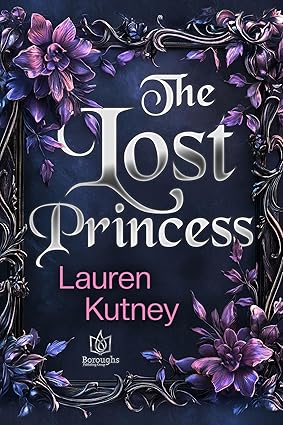
The Lost Princess is a romantasy novel that blends high-stakes political intrigue with personal discovery. It follows Elena, a young woman raised in an orphanage, who discovers she is the last surviving heir to the throne of a secretive realm called Zurdonia. Thrust into a life she never asked for, she must face assassins, unravel hidden truths, and confront a destiny tied to her mysterious lineage. Alongside her fiercely loyal best friend Hannah and her enigmatic protector Alexei, Elena navigates a world of danger, romance, and ancient secrets.
This book pulled me in right from the start. Kutney’s writing style is punchy and vivid. There are lots of quick dialogue, emotional sparks, and fast-moving scenes. There’s something deeply satisfying about how Elena’s voice carries the story. She’s grounded and relatable, but also sharp, stubborn, and wonderfully defiant. I loved how the book didn’t waste time. It throws you into danger within the first few pages and keeps that tension simmering the whole way through. Alexei, the stoic protector with his secrets and steel, is exactly the kind of brooding mystery you want in a romantasy. Their chemistry crackles, and even though some of the tropes are familiar, Kutney injects enough personal warmth and emotional stakes to make it feel fresh.
The book’s ideas about duty, destiny, and identity hit harder than I expected. There’s a rawness to Elena’s internal conflict—choosing between freedom and responsibility—that made me pause more than once. I felt her hesitation in my gut. The exploration of found family versus birthright tugged at me emotionally, and I liked that the book didn’t tie everything up in a neat bow. Not everything was clear-cut. Some of the pacing toward the end could’ve been tighter, and a few side characters blurred together, but it didn’t take away from the emotional core. What stuck with me most was the dreamlike intensity of Elena’s journey—both the external battles and the personal ones.
I’d recommend The Lost Princess to anyone who loves fantasy with a romantic edge and emotional grit. If you enjoy books where secrets unravel, relationships deepen under pressure, and ordinary girls discover they were anything but—this one’s for you. It’s a story about strength, sacrifice, and the power of knowing who you really are when everything else is taken away.
Pages: 254 | ASIN : B0F5KJVQQV

A Step in the Right Direction

Stormy Sailing follows a young boy and his father, on a journey with their refugee family, who get separated from the rest of the family and try to find a way to reunite with them. What was the inspiration for your story?
Even today, conflicts surround us, impacting people—families and children, too—in various ways. Some of us follow such events in the news. For others, social unrest and even war situations are part of their daily lives, forcing them to fight for survival.
It’s painful to witness world events that cause suffering, especially for children. They are innocent of the conflicts that displace families from their homes. Under inhumane conditions, little ones begin their lives without the security and joy that should be inherent to every child’s life. All means that could assist in this regard must be utilized.
There are influential individuals in society who possess the keys to important solutions, but we, the ordinary people, can affect them. We can also elevate the voices that might otherwise be silenced.
I feel like I’m an insignificant influencer, yet I strive to make these challenging situations visible through my children’s books. A storybook is a humble way to spread attitudes and feelings that, in turn, influence actions. It could be a step in the right direction.
What were some ideas that were important for you to share in this book?
The main themes of Stormy Sailing are the strength of close relationships and the significance of collaboration during challenging times. For family members, this is based on their love for one another and their readiness to make sacrifices for each other’s well-being.
The story’s overwhelming difficulties are portrayed through the eyes of the two main characters, a father and a son after their other relatives have already departed for the other side of the sea. Although the narrator describes the events from an outside perspective, the dialogues uncover the different perspectives of the adult and the child.
The father has his own role as an adult. He represents a parent who strives to ensure his child’s survival in every way possible. On the other hand, the child also has strength and refuses to give up. His sincerity and childlike optimism motivate the father to do his best from nearly impossible starting points.
For me, one of the most difficult parts of the story to write was when the father instructed his son to hold on to him as long as he was afloat. In other words, this means that the father tells his son to let go of him if necessary, in order to save himself. The father acts calmly, as a parent should behave to prevent the child from panicking. – In the most challenging situations, the greatest love also appears purest.
What is one thing that you hope the reader takes away from Stormy Sailing?
Earlier, I discussed the themes I consider most important in my story. If I were to highlight one more idea that could provide valuable support for the reader’s journey, it would be perseverance.
There are times in life when it seems like all means have been exhausted. It may appear that trying is no longer worthwhile. Even then, the Finnish saying “while there’s life, there’s hope” holds true. Although the outcome may not meet our expectations or may even be miserable, it feels better to have had the courage to make the attempt.
Even if our efforts were unsuccessful, we can at least be sure that nothing more could have been done. There is no blame or regret afterward. This relates to self-respect and confidence as well. Making the most of every opportunity strengthens us for the next time when that strength is needed.
What is the next book that you are working on and when will it be available?
I’m continuing my work on the Lyrics of Life Series, including Stormy Sailing. The second volume, illustrated by Spanish artist Catty Flores, has already been published and is titled Carried by Wings. The next two volumes in the series, The Hermit’s Hut and A Star Gazer are currently in progress, both illustrated by Nyamdorj Lkhaasuren from Mongolia.
My favorite songs inspire the books in my Lyrics of Life Series. Music is woven into my writing in various ways. Sometimes it plays in the background while I sit at my computer, immersed in a story. At other times, it creates moods that motivate me to explore new topics.
What has happened with this series is inspiring. I noticed that certain songs have played a significant role in my life at various times. Initially, they were on the radio when I was a child or teenager. Later, I rediscovered them as I sought the memories and emotions they evoked. Ultimately, they now serve as a source of inspiration for the children’s book series that has emerged.
In Stormy Sailing, waves from Rod Stewart’s “Sailing” were echoing in my mind. The song was written by Gavin Sutherland in 1972. In Carried by Wings, the winds of the Andes were blowing in my mind, and so was the Simon & Garfunkel song “El Cóndor Pasa” (“If I Could”). The original music was composed by Daniel Alomía Robles in 1913. These popular songs play in the background of the two latest episodes. I won’t reveal the other two until Nyamdorj Lkhaasuren and I have finished the books.
I have truly enjoyed writing the Lyrics of Life Series, and I hope the melodies resonate with the stories, even if they are not played out loud. Music has a wonderful effect and connects people everywhere, even when we do not realize it. Various forms of art inspire one another, and together, they influence human lives, including children’s lives.
Author Links: GoodReads | X (Twitter) | Facebook | Website | Amazon
Can a homemade ship, assembled from the wreck of a sailboat, last in a stormy sea? Will father and son survive the sea crossing and find the rest of the family?
Imagination Took Over

The Attic Door follows a little boy in a new bedroom that has a strange door where strange and scary sounds come from who works up the courage to investigate what is behind the door. What was the inspiration for your story?
The inspiration for The Attic Door came from my experience in second grade when I lived in Chicago, Illinois. My family moved into a new house, and my sister, brother, and I each got to choose our own bedrooms. Unfortunately, I picked the one with a large door that led into the attic. At first, I didn’t think much of it, but that quickly changed once night fell—especially during Chicago’s windy winters. The attic door would rattle and shake, and I began having nightmares. Eventually, my younger brother and I switched rooms, since the attic didn’t bother him at all. But as fate would have it, his old room—now mine—had a window that opened onto the roof. Of course, my imagination took over once again. I had to endure the rooftop window for another year until we finally moved!
What were some ideas that were important for you to share in this book?
I loved writing the story, and the completed illustrations made me love the picture book even more.
The art in this book is fantastic. What was the art collaboration process like with the illustrator David Barrow?
All communication went through the publisher. She shared the illustrations as David completed them, and I provided feedback. It was an easy process because David captured everything just as I had envisioned.
What is the next book that you are working on, and when will it be available?
I submit directly to publishers and currently have three stories out on submission. No takers so far, but I’m keeping my fingers crossed!
Author Links: GoodReads | Amazon
Scary noises are coming from the creepy attic door in Eduardo’s bedroom. His imagination goes wild!
When Eduardo (and his stuffed alligator) finally gather their courage to go investigate, is it a ghost? Or a monster? Or something unexpected?
A Track of Forgiveness

Snow: Cursed begins in a traditional way, but then takes a turn that defies traditional fantasy storytelling. What was your approach to writing the story?
My approach was definitely to “defy tradition,” and that trope of “good guy versus bad guy” with the good guy always winning. I wanted to express the fact that we—as humans—are all different, and that good and evil are not two absolutes, but that there’s a blurred line in between. I really just wanted to turn the whole idea of a fairytale on its head so I could expose that truth while unraveling that trope in the process. I tried to really show that in the prologue of Snow: Cursed, which is written in Snow’s first person as a sort of “looking back” type thing. In a way, I set out to make something entirely untraditional, to escape the black and white, and I believe I succeeded.
What are some things that you find interesting about the human condition that you think make for great fiction?
The human condition is so unique and can take lots of different turns which makes it stellar for fiction books. As humans, we have countless emotions that can be displayed in so many ways, and we get into lots of situations that are awesome to write about. Our reactions to things are very interesting and are fun to play with in fantasy because sometimes they can become warped by fictitious realities. Writing from perspectives other than my own sort of allowed me to place myself in their bodies and feel for what I, as the character, would do in that situation. I’ve done this with Snow more times than I can count. It’s so fascinating to me to put all those components into a character and to stir them up and spew them out sometimes.
What were some themes that were important for you to explore in this book?
There were a lot of themes that I wanted to explore throughout Snow: Cursed, primarily the fact that good and evil aren’t as black and white as the stories say. I really wanted to show off that morally gray area in my debut novel. Self-discovery, self-acceptance, forgiveness, and friendship are also really important parts of my book. Snow has to go on a journey to find herself, and to accept who she has become because of her knowledge of the curse. She sets herself on a track of forgiveness when Merlin refuses to go with her out into the world behind the wall. Forgiveness is something I think a lot of teens reading YA probably struggle with, so I wanted to delve into that quest. Snow’s friendships were also paramount in my mind when I was writing their interactions with each other, but especially with Merlin. The strong bond between the two characters is expressed during Merlin’s flashback in chapter twenty-four. Themes of loyalty and trust are explored through their relationship, sometimes both getting shattered in different situations. All of these are really important to me.
What is the next book that you are working on, and when can your fans expect it to be out?
I’ve finished writing book two of the Snow Saga, and I am currently revising it. It’s a continuation of Snow: Cursed that follows up on the cliffhanger ending, so readers will learn what happens to Snow, along with Marian and Merlin. New characters are introduced into the story, such as Gretel Charming, Jack Horner, and Mulan. The title of the second installment is Snow: Wanted. I’m also playing around with a few different series ideas to expand my writing interests a bit further.
Author Links: GoodReads | X (Twitter) | Facebook | Website | Amazon
On the eve of her fifteenth birthday, her father divulges a secret that her parents had kept from her since the very beginning. One that could ruin her life forever. The fact that she was cursed at birth by an evil sorceress who cast a spell that is nearly impossible to break.
Snow will find that the line between good and evil is not all that it is cut out to be. It is blurred, and it has faded from the black and white that it once was. Good is not always pure, and evil is not always wicked. Throughout her adventures, battles, and difficulties she quickly discovers that she might not be on the side that she thought she was on.
Will she succumb to the fate that was forced upon her or live to see another day? Will she find the truth or just encounter lies? Will she remain pure as snow, or will her conscience falter as the trials of her life wear on? Will she live happily ever after or have her future unjustly stolen from her grasp? The future is up to Snow.
Everything Is at Stake

Until the Rescue Ship Arrives follows a retired priest who discovers a washed-up alien on a beach and chooses to protect this visitor and not turn them over to the authorities. What are some things that you find interesting about the human condition that you think make for great fiction?
Regardless of genre, what I consider great fiction always reveals the strengths and weaknesses of the characters who are presented with a problem or crisis in which much or everything is at stake. Great fiction requires presenting characters with great challenges.
What was one scene in the novel that you felt captured the morals and message you were trying to deliver to readers?
There are numerous scenes in Until the Rescue Ship Arrives in which characters had to reach deep within themselves, especially in Chapter 22, but to avoid giving those surprises away, a scene I would mention is in Chapter 4 when the female alien, already physically depleted and functioning almost on force of will alone, battles fatigue and the elements in her struggle to reach the Oregon shoreline.
What is the next book that you are working on, and when will it be available?
I am still exploring little fragments of stories that come into my head. Sooner or later, I’ll conjure a scene, a situation, or an exchange of dialogue that tells me there is a story here waiting to be discovered. I constructed the Until the Rescue Ship Arrives from the opening of Chapter 1 in which Father Hughes discovers the alien female on the beach. I saw everything pretty much as I wrote it up to the point when he kneels down and realizes he has discovered a person from another world. For some time thereafter I engaged in “what happens now?” until finally, I just began writing that scene. From then on, I was mostly just a reporter describing what I saw and what I heard the characters saying. The next book will probably follow that pattern.
Author Links: GoodReads | Amazon
Mystery and Intrigue

While The Jury Waits follows a self-absorbed but magnetic defense attorney who gets tangled in the most personal case of his career, the murder trial of his lover. What was the inspiration for the setup of your story?
The inspiration for the setup of the story was driven by two things; first, my intense desire to step outside my comfort zone to write a work of fiction, and secondly by my love of crime shows, movies, and John Grisham novels.
What were some driving ideals behind your character’s development?
Believe it or not, the movie, Liar, Liar where Jim Carrey played a charismatic attorney who came across as not having a legal mind at all.
How do you balance story development with shocking plot twists? Or can they be the same thing?
I consider them different. Balancing the two, albeit difficult to do, is driven by the structure associated with writing a decent work of fiction. Introduce, develop, and create mystery and intrigue through plot twists is my approach.
What is the next book that you are working on, and when can your fans expect it to be out?
The sequel to While the Jury Waits. It is going to be a trilogy eventually.
Author Links: GoodReads | Instagram | Facebook | Website | Amazon
Finding Your People

Racing Towards Destiny follows a neurodivergent marketing professional who has her whole life implode in a single day, she quits her soul-sucking job, catches her boyfriend cheating, and impulsively buys a one-way ticket to Spain. What was the inspiration for the setup of your story?
Half of the inspiration was having a bad boss for eight years. I wrote Racing Towards Destiny after six of those years when I’d had enough. A couple of friends and I would leave work on Fridays for lunch and fantasize about not coming back. Of course, we always returned after lunch, but sometimes we’d joke and say, “Is this the day we just keep going?” That’s where Anna’s move came from.
The second half of the inspiration was from following MotoGP. There were five sets of brothers racing in the various levels (Moto3, Moto2, and MotoGP), and I wondered how it would be to be the one always in the shadow. That’s where Isaac’s character arc and his story came from.
The other background for the setup was based on a favorite children’s book, Alexander and the Terrible, Horrible, No-Good, Very Bad Day by Judith Viorst. Anna has the adult equivalent and moves to Spain.
A lot of time was spent crafting the character traits in this novel, especially for Anna. What was the most important factor for you to get right in your characters?
It was important to me that the characters felt real, or three-dimensional, which was why I spent so much time and energy working on them. Anna’s character traits have a lot in common with mine, especially her neurodivergence. While she is not entirely based on me (and our childhoods were very different), many aspects of her ASD are mine. The way she sees the world and how she interacts with it is much like how I do. It was important to me to portray someone on the spectrum who wasn’t emotionally flat but full of emotion and capable. Just sometimes overwhelmed.
While the racers were inspired by some of the real MotoGP racers, they are all fictional characters, so I invented things about them that could be true or seemed to fit with what I know of racing and the racing lifestyle.
What were some themes that were important for you to explore in this book?
Themes of finding your people and advocating for yourself were important. If we don’t put ourselves first sometimes, who else will? Anna was also learning to accept her own value. As the story progresses, she is more difficult to take advantage of and starts to believe she deserves to be treated well.
Acceptance was also an important theme. I also explored the idea of best friends and family.
I hope the series continues in other books. If so, where will the story take readers?
The second book is already written, and I’m just waiting to pitch it to my publisher (Black Rose Writing) this summer when they’re figuring out titles for 2027. Vince (Isaac’s older brother) and Catarina’s story takes place during the following racing season. Love on Track #2 is currently called Racing Hearts: A Sports Romance (Love On Track #2).
A second, related duology is in the works; this series will be called Love Off Track and will focus on secondary characters from Racing Hearts. Expect at least one of these in 2028.
Author Links: GoodReads | Facebook | Website | Amazon
Though her autism means Anna struggles to connect, she takes a job as an umbrella girl on the MotoGP motorcycle racing circuit to make ends meet. Traveling across Europe with the team, she is soon caught up in the exhilarating world of racing.
Isaac is a motorcycle racer who lives forever in his brother’s shadow. His older brother is the most famous motorcycle racer of all time-a twelve-time champion. When Anna joins Isaac’s team, he dares to imagine a life beyond racing-one filled with love and family. His newfound happiness improves his performance on the track, but his success causes friction. For the first time, Isaac becomes a contender for the championship and his brother’s rival.
Anna and Isaac must advocate for themselves, or their newfound happiness will skid off track.
Start your engines and grab your copy of Racing Towards Destiny-filled with heart-pounding race action and steamy romance.



 LITERARY TITAN