Blog Archives
Time to Tell Her Story

Beyond the Sky, written in two parts, follows a young woman through her college years and her involvement in the civil rights, and traces her ancestry from immigration from Ireland to the mountains of Hidden Valley. What was the inspiration for the setup of your story?
When Tillie first showed up in Hidden Valley in my debut novel, New Tomorrows, I knew she would be the one whose mysterious background would take her away from the valley to be involved in the activism of the Civil Rights Movement of the 1960s. My intent as a writer is to create engaging stories that readers can not only enjoy but also be drawn in to explore real, contemporary issues with characters they can relate to. I identified the racial tension our country has faced and dealt with, in one form or another, throughout our history, as one of several important issues I wanted to help my readers explore. I myself enjoy stories that have a touch of romance, but not in the traditional way romance is presented in many books in that genre. I see romance as just one aspect of human connections, and I wanted my stories to be about connections, especially in families and communities.
When I first imagined Tillie, we were witnessing legislative and societal changes influenced by my generation begin to erode or disappear. As a writer, I feel a responsibility to speak about the past to shine light on the present. It was time to tell her story.
I was deeply involved in the Civil Rights Movement myself in the 1960s. I decided to bring Tillie to the same University I attended, letting her arrive as a freshman the year I was a senior. Her story is not at all biographical, but I was able to write about a time period and events that I personally experienced. While the events are real, both those that are part of our well-known (and some not so well-known) history or the local events in Pittsburg, the characters all spring from my imagination.
What is it that interests you most about historical fiction?
Let me first share my perspective on fiction vs. non-fiction. I like to define fiction as learning through imagination, whereas non-fiction is learning through facts. Reading fiction gives us an opportunity to spend time in a life quite different from our own. I believe folks can often learn more history through fact driven, engaging fiction than they might from a history book. When that happens to us, we often come away with a new understanding or a wider perspective of what life is like living in another person’s skin, both figuratively and realistically. My hope with all my books is that readers might gain increased awareness, understanding, and empathy for the marginalized in our society who struggle daily for justice, inclusion, and dignity.
I have always been a bit of a history buff; my college degree is in Creative Writing, but my minor was history. If I am going to write about human connections, part of who we are is defined by where we can from – the ancestors of yesterday who built the foundation for who we are today. That was especially true for Tillie. Her story was not complete without the stories of the strong woman who came before her and the choices they made, along with the men who loved them.
How did you go about finding your characters’ voices while planning your writing?
First, let me say a word about my writing process. Some folks divide writers into two groups – the plotters, or the seat-of-the-pants writers. I’m a combination of both, but my plotting is very sketchy with only major plot turns in my mind. It’s no more a brief list, rather than a plot outline. My writing is very character driven and sometimes even those major plot turns change as I become more immersed in the life of a character. As I wrote and got to know my characters on a deep personal level, they often sent me off on an unexpected side trip. One such side trip was quite literal when Percy told me to take him back to Quebec because he had to talk to his grandmother and get the pearl ring she had promised him. I didn’t even realize the ring had a pearl instead of a diamond until Percy first heard Taynay’s song about the moon.
One of the greatest joys of writing Tillie’s story was getting to know the six generations of mountain women who came before her. I imagined these women, along with their families, making choices that were often difficult. Choices that went beyond the traditional thinking of their time period. Each one was different, so they spoke and acted in their own unique way.
My original intent was to reference their journals with quotes as Tillie was reading and learning more about her generations of grandmothers. As their situations and choices came to light, and as their words began to paint a picture of the challenges of her time period, I realized I could not merely include snippets of their lives. These women deserved to have their whole stories told, thus I created the entire second half of the book to include their entire first-person narratives.
Where will the next book in the Hidden Valley series take readers? When will it be available?
The next book is already in progress, but I have as usual, been doing a bit of research into its topic and only have a few opening chapters written. The title is One More New Chance: A Vet Tech Romantic Suspense. The male protagonist is Brink, but I won’t reveal the name of the female protagonist because it would be a spoiler. I will drop a brief hint that she is a character readers have met in a prior book, however briefly. Brink is struggling with two issues – his dedication to tracking down the criminal rings that are staging the dog fights in various remote hollers in the valley and his own personal identity conflict due to bullying he has experienced as a result of his bi-racial background. It will be out in 2026, but I do not have a firm date right now. In truth, it has briefly been placed on the back burner while I’ve been doing some minor revisions and reformatting of my first book in the series, New Tomorrows. That slightly revised book will be live soon, to coordinate with October being National Domestic Violence Awareness Month.
Author Links: GoodReads | Facebook | Website | Amazon
The passion of activism flourished on college campuses in the tumultuous sixties, and Tillie embraced it as a freshman at the University of Pittsburgh. Descended from Irish immigrants known in their Appalachian community as Granny Women – the healers – her compassionate nature drew her into the Civil Rights Movement. She could never have predicted how dramatically her life would change. When family journals reveal shocking news about her history and lineage, she’s forced to re-define her path to the future.
Which road will she choose?
After navigating new horizons, she may have to look for answers that lie Beyond the Sky.
Join readers on a thought-provoking journey through the divisions of the Civil War into the ardor of an era when our country’s youth led the way to a better national consciousness.
Beyond the Sky: A Mountain Woman’s Journey to Personal Freedom


Beyond the Sky follows Tillie Carpenter, a character introduced earlier in Ann Heap’s Hidden Valley series. The book is split into two parts. The first part traces Tillie’s journey from her teen years through college, weaving her passion for science and her involvement in the civil rights movement into a vivid coming-of-age narrative. The second part shifts back in time, presenting the journals of her foremothers, the mountain women of Hidden Valley, stretching from Irish immigrant ancestors in the 1840s to Tillie herself. The book is about heritage, resilience, and the blend of old wisdom with modern science.
I found myself swept up in the writing. The style is warm, almost conversational, yet it carries weight when the story demands it. The descriptions of family bonds, quiet mountain life, and the turmoil of the civil rights era felt raw and real. There were moments when the writing tugged me straight into Tillie’s skin, especially during her conflicts with her stepmother and her longing to merge Granny’s folk remedies with modern research. There were times the pace slowed, especially in some of the journal sections, but just as quickly, Heap would pull me back with a sharp emotional moment.
I admired how Heap connected the private, everyday struggles of women across generations with broader historical movements. It gave the sense that change doesn’t just happen in marches or headlines, but also in kitchens, gardens, and the quiet choices families make. I loved that balance.
Beyond the Sky is a heartfelt novel that I would recommend to readers who enjoy historical fiction rooted in family and community, and to those who like stories that braid social justice into personal lives. It would especially resonate with readers who appreciate strong, complex female characters and the blending of old traditions with modern challenges. It’s not a quick or light read, but if you’re willing to let the story take its time, it’s rewarding.
Pages: 352 | ASIN : B0F4RRHPQ4

Ripple Effect

Heather’s Journey follows a 19-year-old girl living in a small town in Illinois during the 1930s who dreams of leaving, but tragedy strikes, changing everything about the course of her life. What was the inspiration for the setup of your story?
The year 1930 amazes me. For most of the year, everyone thought the stock market crash would breeze over and they could keep dancing like they did in the Roaring Twenties. They were so vulnerable, and our early Americans have grabbed my heart. Along with this, there was Prohibition, and racism that was considered normal. They were still recovering from World War I and the Titanic sinking. (Similarly, we’re still recovering from 9/11, which was over 20 years ago. Healing takes time.) Heather was a mirror of her father’s dreams in his younger days. He moved north; she wants to go south where the dreams started, but racism, like I said, was normal. I pondered on how unfair that had to have been for a young woman with enough issues to deal with. Racism had such a ripple effect on Heather’s entire life. It really umbrellaed her whole “journey.”
Were you able to achieve everything you wanted with the characters in the novel?
I took 18 months to write the novel. I fell in love with all my characters. I even have some compassion for Sylvia. It took time to develop her character. I withheld good qualities from her. I also discovered a struggle in creating Mae — a comical character who isn’t too annoying. Renato’s character was fun — I built him from younger photos of Marc Anthony. I picture Heather to look like Dorothy Danridge in her younger years. Hugh is a soft version of Denzel Washington. 🙂 I have gazed over the marsh in Savannah and thought, this is what the end of a happy story looks like. And so, . . . So, yes, I achieved everything I wanted to.
What were some themes that were important for you to explore in this book?
One important theme is conflict with independence and family — when are we being selfish, and how much of ourselves should we feel guilty about if we don’t give away? Sylvia suffered this conflict. So did Heather and Mae. Renato keeps the reader in conflict with this. He held back going to his family who could keep him safe to take care of Heather and Mae.
Chasing a dream that seems impossible is another theme. Must we have the skills and resources to walk towards where we want to be in life? Renato had a rough past, but he dreamed of respect.
The power of the ripple effect of racism is embedded before page 1.
What is the next book that you are working on and when can your fans expect it to be out?
I am working on another book set in 1930. The setting is a Chicago hotel. Once again, the protagonist is an unadmirable character in the American eye — an Irishman named Percival Dooley. I am hoping to be done with the story by the end of June of this year.
Author Links: GoodReads | X (Twitter) | Website | Amazon
Nineteen-year-old Heather Randolph longs to escape her small-town life in Sterling, Illinois, and uncover her family’s roots in Savannah, Georgia. But when tragedy strikes, she’s thrust into a world of danger, deception, and forbidden romance.
Caught between a charming Puerto Rican bootlegger, her sharp-tongued 12-year-old sister, and a mother whose cruelty knows no bounds, Heather must navigate the turbulent era of Prohibition, the shadows of World War I, and the harsh realities of racism and lawlessness. With the law closing in and her dreams slipping away, will she find the freedom she craves—or be trapped by the past she’s desperate to escape?
A gripping historical fiction novel set in 1930s America, perfect for fans of sweeping family sagas, unforgettable heroines, and forbidden love.
Heather’s Journey: Historical Romance of 1930
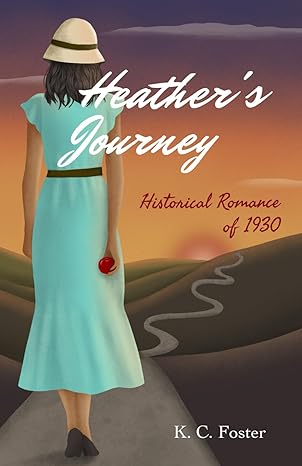
Heather’s Journey by K.C. Foster is an emotional, immersive novel that pulls the reader into a deeply atmospheric world of family struggles, love, loss, and the quest for identity. Set in the 1930s, the book follows Heather as she navigates a life tangled with mystery, survival, and self-discovery. From the first few pages, we are drawn into Heather’s tense reality, witnessing a secretive late-night burial in Chapter 1 that sets the tone for the book’s brooding undercurrents. As the story unfolds, we meet a complex cast of characters, each carrying their own burdens, yet all woven into Heather’s path toward understanding herself and the world around her.
Foster’s writing is rich and evocative, making every setting feel alive, from the small town of Sterling, Illinois, to the shadowed corners of Dodge Grocers. There’s a poetic rhythm to the prose, particularly in descriptions of the world Heather inhabits, whether it’s the wind whispering secrets across the fields or the hushed tension in a dimly lit kitchen. One of the book’s strongest points is its ability to create mood. In the opening scene, Heather is watching shadows move in the night while whispers of danger hang in the air, which immediately sets up an eerie intrigue. The dialogue, too, is crisp and filled with subtext, particularly in interactions between Heather and the enigmatic Renato, whose presence in her life is as steady as it is uncertain.
The heart of the book, though, is in its characters. Heather’s father, Hugh, is a quietly dignified figure, a man of resilience, whose fate is one of the novel’s most devastating blows. When tragedy strikes, Foster doesn’t hold back in letting us feel the rawness of Heather’s grief. The way she stumbles through her pain, desperately seeking solace in routine, in small moments, in the presence of Renato, it’s heartbreakingly real. And then there’s Sylvia, Heather’s absent mother, whose arrival is both anticipated and dreaded. When she finally steps onto the page, she’s not the warm, comforting figure Heather might have hoped for. Instead, she’s a force of vanity and detachment, more concerned with reclaiming control over the family store than reconnecting with her daughters. Foster masterfully builds Sylvia as a character we want to understand, yet can’t fully trust.
There are moments in this book that feel so intimate, they almost hurt to read. One of the most striking is when Heather, caught between grief and longing, kisses an unconscious Renato, a moment filled with quiet yearning, desperation, and a kind of naive hope. It’s these personal, human moments that make Heather’s Journey so compelling. The novel isn’t just about external struggles, it’s about the battles within, about the weight of choices, and about how even love can be tangled in regret and hesitation.
By the time I reached the final chapters, I was left with an ache in my chest. Heather’s Journey is not just a coming-of-age story; it’s a reckoning with past and present, with what we want and what we are forced to accept. It’s a book for those who love deeply drawn characters, slow-burning tension, and writing that lingers long after the last page is turned. If you enjoy historical fiction with a raw emotional core, this book is absolutely worth the journey.
Pages: 207 | ASIN : B0CWB5QRNX
Everything in Prosperity: Book 2 – Prosperity Series
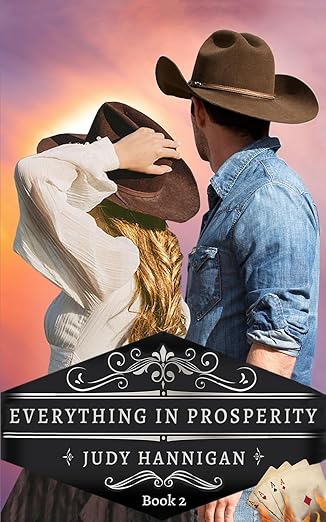
In Everything in Prosperity, Judy Hannigan masterfully transports readers to the rugged, untamed world of the Old West, weaving a tale rich in action, romance, and suspense. The novel follows Sam and Jackson Knight, whose partnership with Deputy U.S. Marshal Price Hardin to dismantle the notorious Colson Brigham Gang sets the stage for conflicts that reach far beyond gunfights and outlaws. Their most perilous battles are not against their enemies but within their own hearts. Sam carries a secret that weighs heavily, her past shrouded in whispers and shadowed by guilt. Meanwhile, Jackson wrestles with his loyalty to Sam and his connection to Jessa Nolan, the widow who saved his life and whose son may hold an unspoken bond with him. Complicating matters further is Deacon Storey, Sam’s childhood confidant and former suitor, whose return stirs old emotions and unresolved tensions. As danger closes in and trust is tested, Sam and Jackson must navigate a maze of jealousy, doubt, and betrayal to determine if their love can withstand the pressure—or if the past will tear them apart forever.
Hannigan’s storytelling stands out for its meticulous research and seamless integration of real historical figures like Annie Oakley, anchoring the fictional narrative in a vivid sense of authenticity. Her portrayal of frontier life brims with detail, painting scenes of dusty trails, bustling saloons, and the raw, unpredictable nature of life on the edge of civilization. Every description immerses readers in a world that feels both gritty and alive, pulling them into the drama and danger. At its core, this is a story about resilience and redemption. Sam and Jackson’s relationship is layered and deeply human, their love tested by external threats and personal demons alike.
Sam’s strength and vulnerability make her a compelling heroine, while Jackson’s loyalty and inner conflict ground him as an imperfect yet endearing partner. The supporting cast adds richness to the narrative, from the determined Deputy Hardin to the enigmatic Deacon Storey, and even young Peter Jack. Together, they create a tapestry of relationships that feel genuine and multifaceted. The villains, meanwhile, bring a chilling edge, their menace adding tension and urgency to the story.
Everything in Prosperity isn’t just a tale of romance and adventure—it’s an exploration of the themes of forgiveness, loyalty, and the enduring power of love. Hannigan’s ability to balance heart-pounding action with deep emotional resonance ensures that the story grips readers from beginning to end. Fans of historical fiction, romance, and suspense will find much to admire in this novel.
I highly recommend this book, as it is an unforgettable journey into the trials and triumphs of the Old West. It leaves readers pondering one of the oldest questions of all: Can love truly conquer the scars of the past and the challenges of the present? With its gripping narrative and emotionally charged characters, Everything in Prosperity delivers a resounding answer.
Pages: 402 | ASIN : B0DMYGL3LM
A Timeless Attraction


In A Timeless Attraction, E.T. McNamara crafts a compelling narrative that follows the resilient Molly Hannon as she embarks on a life-changing journey. Molly’s early life was fraught with hardship, marked by her father’s abandonment in infancy and her mother’s death when she was just sixteen. Now, as she takes on a new role as a history teacher in Gettysburg, Pennsylvania, Molly hopes for a fresh, more promising chapter in her life. Despite a recent breakup, Molly, an optimistic and independent young woman, immerses herself in the study of the Civil War and the Battle of Gettysburg. As the story unfolds, Molly begins experiencing vivid dreams that inexplicably transport her back to 1863.
McNamara’s novel transforms into a fascinating time-travel adventure, providing readers with a unique perspective as Molly navigates the challenges of living in a bygone era with the mindset and sensibilities of a modern woman. The novel shines in its portrayal of Molly’s character development. Her journey of self-discovery and adaptation to an unfamiliar time period is skillfully depicted. McNamara excels in world-building, vividly contrasting the past and present and demonstrating thorough research in the language and nuances of the era.
The novel’s romanticization of the wartime period adds an intriguing layer of complexity. The familiar trope of love blossoming amidst conflict is explored with a fresh perspective, offering readers a compelling blend of romance and historical tension. While this approach adds a unique charm to the narrative, I believe there remains an exciting opportunity for an even deeper exploration of the era’s complexities, which could further enrich the story and its characters. This aspect provides a dynamic foundation for future narratives to build upon, enhancing the richness and authenticity of historical romance.
A Timeless Attraction remains an engaging read. Molly’s character is a highlight, showcasing a strength and resilience that resonate throughout the novel. McNamara’s captivating storytelling and the evocative depiction of different periods make this book a worthwhile journey for fans of historical fiction and time travel.
Pages: 331 | ASIN : B0D4F119ZS
Shelter in a Hostile World: A Love and Peace Novella

Mack Little’s Shelter in a Hostile World is a poignant narrative that chronicles the life of Badu, a young African child from the Igbo community whose trajectory is dramatically altered due to a capital offense. The novel is structured around two distinct periods in Badu’s life: initially in 1628, as the diligent son of an Igbo farmer yearning to marry Ekemma, and later in 1651, as a father in America endeavoring to rescue his daughter from a slaveowner known as The Admiral. This dual timeline effectively portrays Badu’s transformation and the lengths one might go to protect a loved one from suffering.
Little’s novel sheds light on the myriad challenges faced by slaves in the 1650s, particularly those uprooted from Africa to America. Through Badu’s experiences, the narrative delves into themes of social isolation, chronic anxiety, and psychological trauma. The author skillfully portrays the varying responses of slaves to their circumstances: from Dinny’s rebellious desire for independence, Hermes’s pragmatic collaboration with white masters, to Badu’s initially neutral stance that shifts as personal stakes rise. The narrative is marked by its clarity and well-paced scenes, avoiding any sense of rush or superfluity. Time transitions are handled with finesse, contributing to the story’s coherence. A commendable aspect of Little’s writing is the authentic depiction of Igbo culture, presented in a manner that allows readers the freedom to interpret and form their own judgments.
Shelter in a Hostile World is a historical fiction novella that resonates with emotional depth, weaving together moments of sorrow and joy. While the book addresses mature themes and may not be suitable for younger audiences, it is recommended for those who appreciate thought-provoking storytelling.
Pages: 121 | ASIN : B0CDYKJ4NS
Validation and Encouragement

Elizabeth’s Mountain follows a mother and daughter, one who reflects on her past relationships and one who is hoping to have a love like her mom. What were some themes that you felt were important to highlight in this story?
The most important theme highlighted in Elizabeth’s Mountain is love, of course. Through generations, mores and approaches toward dating and romance change, but love never changes. Other themes prevalent in Elizabeth’s Mountain are the attitudes and recognition of PTSD for what it is, and the essence of land partnered with life.
What’s the trickiest thing about writing characters of the opposite gender?
The trickiest thing about writing characters of the opposite gender is thinking like them. “Men are from Mars, women are from Venus” aptly applies!
Are there any books or authors that inspired you to become a writer?
I get inspiration from many authors, but there are a few who stand out for me: Ann Patchett for her family sagas, Pat Conroy for his emotion-heavy reads, Harper Lee for her classically poignant American story.
Has writing and publishing a book changed the way you see yourself?
There is validation in seeing your work published and the reviews and responses to it. It’s heartwarming and encourages me forward as a writer.
Author Links: GoodReads | Twitter | Facebook | Instagram | Website
Present day. Amanda yearns to stop wasting time. After ending a dead-end, three-year relationship and moving in with her spirited grandmother, the thirty-four-year-old nurse sees her dream of marriage and kids vanishing. But when she meets a handsome widower at a hospital summit, she cautiously lets down her walls.
As Elizabeth’s memories take her back to when she was a hopeful young woman, she reveals how a horrific accident led to the ER and a charming doctor. While Amanda fears the worst when she overhears the enigmatic man she’s fallen for talking on the phone with another woman.
Do both women’s stories lead to a grand legacy and a lifetime of love?
In an emotional rollercoaster that interweaves the two women’s chance at a future, their parallel romances illustrate the power of resilience and hope despite heartbreak. And as one story comes to its twilight years while the other is just beginning, readers will fall hard for this poignant inheritance of happiness.
Elizabeth’s Mountain is an enchanting women’s fiction novel. If you like relatable characters, dual timelines, and multi-generational romance, then you’ll adore Lucille Guarino’s touching tale.


