Blog Archives
Love, Hate, and Ego
The Long Farewell follows a young man with an Oedipus complex living in the rise of Nazi Germany who, after a series of tragic events, seeks to get revenge on his father. What was the inspiration for the setup of your story?
When I was in college, I was fascinated by Jorgen, a fellow student whom others in our student house labeled as a weirdo. He exhibited abrupt mood swings and had an aggressive aura, although he was skinny and short. When something irked Jorgen – and many things did – he stood trembling, his fists clenched, his eyes wide-open, in front of you and then burst into tears. After such an emotional eruption, he was withdrawn and silent. In our student house, we placed bets on how long he would last at university. I had been so stupid to tell the others I wanted to become a writer and that Jorgen could become a fascinating character in the novel I wanted to write. The rumor had apparently reached Jorgen: during an evening out at the well-known student pub The Red Scaffold, he confronted me about my statement. It turned out that, for once, he wasn’t aggressive. On the contrary, he seemed flattered. We found a quiet place on the terrace. Jorgen told me he wanted to become a poet and asked a string of questions. We drank a few beers, and he became nostalgic and tearful. He boasted he was diagnosed as borderline schizophrenic. He really seemed proud about it and became strangely souped-up and said with trembling lips and flared nostrils: “My mother turned me into a creep. I was only thirteen when she confessed that she wanted me to make love to her. I remember that a fiery arrow went along my spine, making me shudder.” He peered closely at my shocked face and almost whispered:” Nobody knows if we did it or not.”
What could I say? I was quiet.
Jorgen looked me straight in the eyes. I saw he was fighting back tears. “I hate my father,” he whined softly, exhaling with quivering lips. “It’s all his fault.”
That evening, in my bed, I vowed to write a book one day, circling a character with an Oedipus complex.
And to dodge Jorgen.
I didn’t have to do that long. Two weeks later, Jorgen didn’t check in on Monday at our student house.
And never came back.
The memory of this troubled young man stayed with me for several years.
And popped up stronger than ever when I began writing “The Long Farewell.”
The tragic boy Hermann was born.
What are some things that you find interesting about the human condition that you think make for great fiction?
The contradiction between our ‘good’ and ‘bad’ urges is breathtaking. The building of our personalities after birth is chaotic. Our instincts are relentlessly brutal. If babies had the strength to wield weapons, I believe that most of them would be murderers before their third year. We speak with disdain –and fear- about narcissists and don’t want to face up to the fact that our own ego is narcissistic on different levels. In “The Long Farewell,” we see Hermann’s mental suffering, fueled by his hate for his SS father, getting worse and culminating in a dangerous schizophrenia, leading to a truly apocalyptic ending in the German city of Dresden. Schizophrenia is a fascinating and eerie mental disease. When a baby grows up in a family where its mother and father imprint it with radically opposed worldviews, research has detected that the tension thus generated later on in life is the ideal breeding ground for mental anomalies. In past times, these anomalies were called demons. You may smile, but I assure you that we have to take them seriously.
What were some themes that were important for you to explore in this book?
You know, I often think that everything on this Earth eventually comes down to the endless configurations that love, hate, and ego can produce. Love and ego can join forces to form powerful hate and cruelty. I know that we want to see love as something pristine and holy, but reality shows us otherwise.
Of course, I propose my statement here, pure and well-defined. In everyday life, the borders between love and hate –and ego! – are fuzzy. In my oeuvre, I try to follow the intricate signs in our mind that forecast violent drama. Not an easy task, I can assure you. You may wonder why I am so frantically searching for the roots of our violence. I wonder about that too, because after 39 years of being a full-time author, I’m still searching. I’ve been a travel writer in conflict zones between 1990 and 2003, visiting Somalia, Liberia, Sudan, Lebanon, Burundi, Bosnia, Gaza, Iran, Iraq, Kosovo, Myanmar… to name but a few. Those travels have surely influenced my outlook on the world. In Belgium and the Netherlands, my Flemish/Dutch publisher published 45 books. Although set on several continents, they all focus on the mystery of our aggression, on the executioners and the executed.
What is the next book that you are working on, and when will it be available?
I suspect that I’m writing my last novel: I am seventy-two, and I feel my energy waning. Three years ago, I fell victim to a sepsis infection that nearly killed me. I still struggle with the damage the sepsis has wrecked. Moreover, I am afraid to lose my mental powers and glide into Alzheimer’s maw. The terrible disease destroyed my mother’s brain. I know that Alzheimer’s is hereditary, therefore I spy on myself as if my life depends on it. Which it does, of course.
But enough whining, my manuscript-in-progress carries the ominous working title “Black Water,” but I keep searching for a better one. Over here, in Belgium, readers know me as an author who writes crossovers between suspense and literary, but “Black Water” is more magical realism, with a story taking place on different continents, with a central character, a writer/father hiding many secrets from his teenage daughter until a car accident results in a deep coma. Moran, the daughter, tries to wake him up by reading excerpts of his diary. I could explain more, but an author must be cautious and not divulge too much about a work in progress—the novel centers on love, sorrow, and guilt.
And magical mystery?
Maybe.
When out?
I hope next year.
Author Links: Website | Email | Facebook | X | Instagram | LinkedIn | YouTube | BookBub | Amazon | GoodReads | TikTok | Substack
His father is in the SS, his mother is Belarusian, and his girlfriend is Jewish. After a brutal clash with his father, Hermann and his mother flee to Paris. Swept along by a maelstrom of events, Hermann ends up as a spy for the British in the Polish extermination camp Treblinka.
The trauma of what he sees in this realm of death intensifies his pessimistic outlook on humanity. In Switzerland, the famous psychiatrist Carl Gustav Jung tries to free Hermann of his frightening schizophrenia, but fails to unravel the power of the young man’s emotions, especially his intense hate for his father.
What follows is a tragic chain of events, leading to Hermann’s ultimate revenge on his father: the apocalyptic bombing of Dresden.
THE LONG FAREWELL is an unforgettable exploration of fascism’s lure and the roots of the Holocaust. More than ever, the novel is a mirror for our modern times.
The Long Farewell
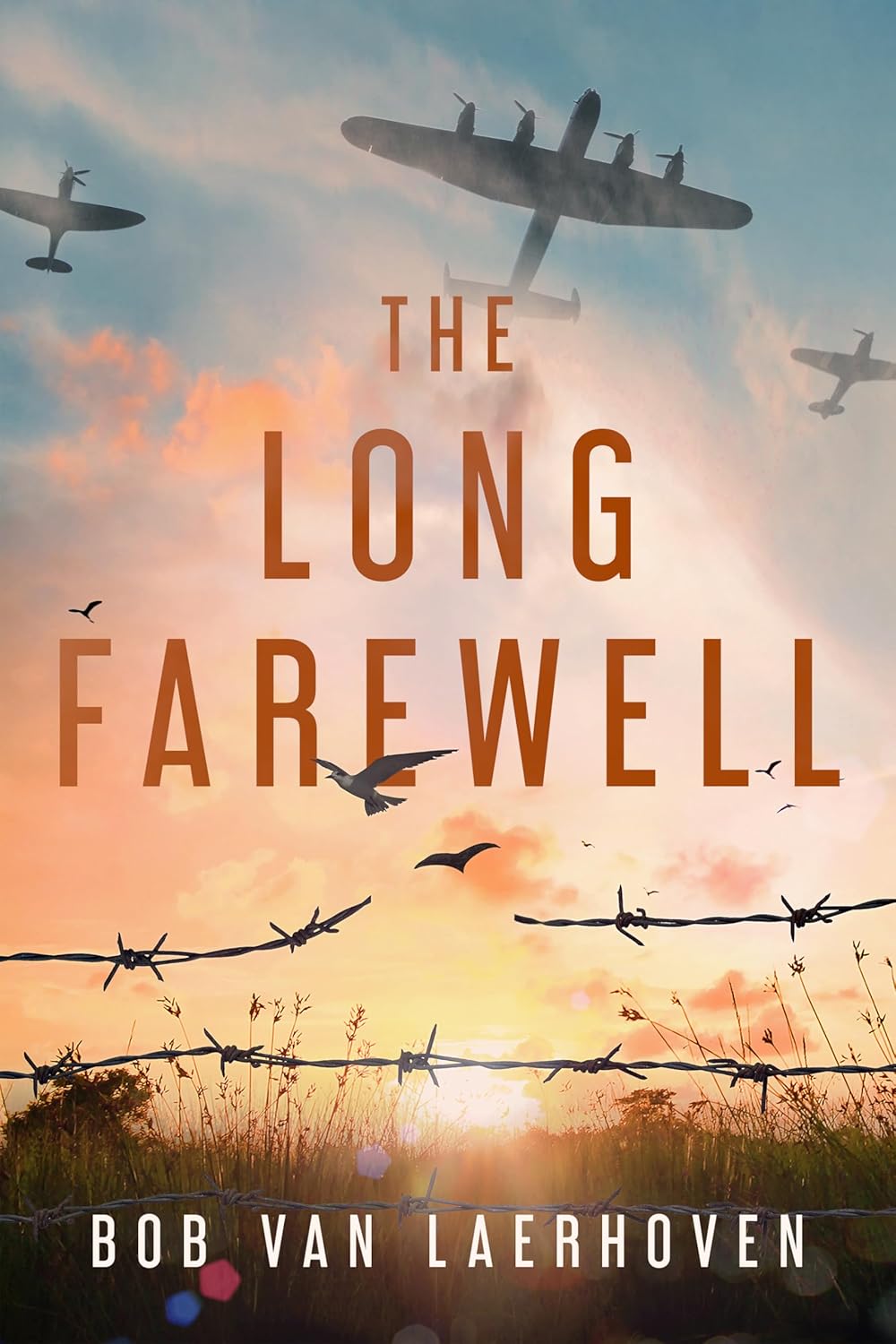

The Long Farewell is a haunting and relatable story set in the grim rise of Nazi Germany. It follows Marina Nesdrova, a Belarusian refugee trapped in a loveless marriage to an ambitious German officer, and her son Hermann, a boy torn between the warmth of his mother and the cold ideology consuming his father. Through their eyes, the book reveals the slow poisoning of ordinary lives by fanaticism. Love, guilt, betrayal, and fear mix with the heavy shadow of history, turning the personal into something almost mythic. Author Bob Van Laerhoven writes with the precision of a historian and the soul of a poet, weaving the domestic and the political into a tapestry that feels both intimate and terrifying.
What I liked most was the raw, unfiltered emotion beneath the words. Every page hums with quiet menace. The author doesn’t let us look away, and I found myself torn between admiration and discomfort. Marina’s despair feels like a slow drowning. Hermann’s innocence is eaten away scene by scene until you realize there’s no escape for him. Laerhoven’s prose is elegant but never showy. He keeps the sentences sharp and grounded, and the translation by Vernon Pearce carries a dark rhythm that lingers. It’s not just a story about Nazis and victims, it’s about what happens when love rots in the shadow of power.
I won’t lie, reading it was emotionally difficult. I felt angry, then sad, then strangely numb. The violence is understated yet suffocating. It creeps in like a chill. I found myself wanting to shake the characters, to warn them, but they kept walking toward their fate, blind and hopeful in equal measure. What I loved most, though, was how the book refuses to moralize. It just presents life as it was, messy, cruel, and tragically beautiful. It’s that honesty that makes it unforgettable.
The Long Farewell is not a book you finish and set aside. It’s a book that keeps you thinking well after it’s ended. I’d recommend it to anyone who loves historical fiction that bites deep, who doesn’t mind feeling a little broken when they turn the last page. If you want to look straight into the heart of human weakness and still find traces of grace there, this book will stay with you for a long time.
Pages: 365 | ASIN : B0FPK7P459

Humans are Living Mysteries
Scars of The Heart is an influential collection of short stories that delve into the profound impacts of physical war and the psychological impact of violence on humanity. What made you write a story about this topic? Was anything pulled from your life experiences?
I have been a travel writer from 1990 to 2003 and wrote New Journalism texts about conflict zones in the world (contributions that report on events taking place, but in a literary, subjective way). I visited Somalia, Liberia, Bosnia, Sudan, Gaza, Iran, Iraq, Mozambique, Kosovo, Lebanon, and Myanmar… to name a few. I got very close to the atrocities of war, its physical but also its mental consequences. I thought I could handle them, but these days I have PTSD symptoms. They have become more bearable with time, but I can’t forget people’s suffering in war circumstances. In my eyes, I was a “war tourist” who shared their life for a couple of weeks and disappeared again while they were doomed to stay in hellish places. My anger, my shame, remorse, sadness, and despair fuel my stories.
What are some things that you find interesting about the human condition that you think make for great fiction?
When you think about it, humans are living mysteries: contradictory, unpredictable, chaotic. Great fiction tries to create a holistic image of our ambiguity. I believe no other art form is more proficient for this task. Great fiction asks the reader to feel what is hidden between the words so that the voyage into the depths of our being – the maze in our souls, if you like – is an honest, compelling exploration for the reader and the writer. Therefore, great care must be given to the choice of words, their ambiguity, and the rhythm of the sentences. This mixture is called style, and it is necessary to pick up glimpses of the hermetic, sometimes angelic, sometimes demonical, poetry that drives our lives. Great literature is a mixture of empathy, relentless challenges, and mighty victories, yet already tainted with the treason of our egos.
What themes were important for you to explore in this book?
Although they take place in different eras and countries, the background of the stories deals with violence, greed, sexual conquest, and our amazing capability to lie to others and ourselves. Probably you’re thinking now: “And love? Where is love?” Oh, it’s there, sometimes at the brink of obsession or tragedy, sometimes fueling our inner loneliness and addiction to happy dreams and delusions. It is said that readers like happy endings. So sorry to disappoint: when I wrote this collection, the tragic and sad endings even took their toll on me, so I want to advise the reader to read each story at intervals and not right after each other.
What is the next book that you are working on, and when can your fans expect it to be out?
“The Firehand File,” my next book, is set in Berlin in 1921. Let me give you the blurb of the Dutch mother version of the novel so you have the broad outline.
1921. Berlin is a city of extremes. Political violence plagues the streets during the day. A serial killer whom the media call “The Skinner” roams the streets at night. It is suspected that he is a rabid World War I veteran, but he remains untraceable. In this human pressure cooker, the relationship between the famous Flemish DADA poet Paul Van Ostaijen and his impetuous girlfriend Emma Clément is on edge. Like hundreds of thousands of others in Berlin, they live in poverty and are addicted to cocaine and other drugs.
When Van Ostaijen, on a high whim, steals the Feuerhand Obsession file in the apartment of the spy Elise Kraiser, the poet sets in motion a series of dramatic events that shed surprising light on a politician who is rapidly gaining influence: Herr Adolf Hitler.
Carly Rheilan, my translator, scores a fantastic – and poetic! – job. However, the novel’s second part is hard to translate because I tried to use the same manner of Van Ostaijen’s spoken language, a mixture of Antwerp dialect from the twenties with French and German words. “The Firehand File” is a literary suspense novel but also a homage to Paul Van Ostaijen, who revolutionized poetry in the Roaring Twenties. We hope to have the translation finished at the end of this year so that the novel can come out in 2025.
Author Links: GoodReads | X | Facebook | Website
Through ten stories set in different countries and eras, Van Laerhoven takes us through the destructive consequences of our passions as a common thread, from contemporary Syria to Algeria in the 1950s, and the civil war in Liberia to the uprising in Belgian Congo in the 1960s.
The ten stories in SCARS OF THE HEART highlight the dark side of love, which fuels our violence, inner loneliness, and greedy egos.
Scars 0f The Heart

Scars of The Heart by Bob Van Laerhoven is a compelling collection of short stories that delve into the profound impacts of war. The initial stories, set in various war eras, are particularly devastating, highlighting the unquantifiable effects of war on the human psyche. Through these narratives, Van Laerhoven transports readers to the shattered worlds of war-torn individuals, offering poignant glimpses into their lives and struggles.
The author takes a unique approach to representing human nature, weaving tales that feature a diverse cast of characters, including aliens, painters, friends, enemies, and exploring themes of betrayal, loyalty, greed, love, and revenge. This eclectic mix adds depth and variety to the collection, ensuring that each story is distinct and memorable. Van Laerhoven’s writing style is reminiscent of the macabre and powerful prose of Roald Dahl. His stories shock and captivate, blending mysticism with stark reality. Although fictional, these tales resonate with truths about the human condition. Not all stories are set on battlefields, but the sense of war—whether physical or psychological—permeates the collection. The settings range from the war-torn Middle East to World War II and Nazi Germany, bridging past and present to create relevant and relatable narratives. I finished the book with immense respect for the author’s raw and heartbreaking portrayals of reality. The non-war stories are equally compelling, showcasing Van Laerhoven’s versatility and skill in crafting riveting tales.
Fans of Roald Dahl or Edgar Allan Poe will appreciate the beautifully crafted stories in Scars of The Heart. For those who enjoy well-constructed plots and complex characters, this collection is a must-read. I highly recommend this book to anyone who can endure the psychological turmoil and pain depicted, as it offers profound insights into the atrocities and resilience of life.
Pages: 245 | ASIN : B0CX5S8NJZ

A New Novel, Coming To Life
The Shadow of The Mole follows the intertwining stories of a man who believes himself dead, who is writing a story he claims is being recited to him, and the doctor caring for him during WWI. What was the inspiration for the setup of your story?
From 1990 to 2003, I was a freelance travel writer in conflict zones worldwide: Somalia, Liberia, Bosnia, Serbia, Sudan, Gaza, Iran, Iraq, Mozambique, Kosovo, and Burma(Myanmar)… to name but a few. I stopped when I was fifty and began to suffer from strange psychic symptoms. I struggled with the impression that something invisible followed me like a shadow. A leering, threatening presence mocked me, whispering that I wasn’t an actual human, just a walking mummy and that a terrible death would be my fate. So, of course, I sought professional help and soon learned that long periods of stress can produce all kinds of unusual mental phenomena. Intrigued, I began researching Post Traumatic Stress Disorder (PTSD). I learned that PTSD, even in Roman Times, was documented and that, in WW1, soldiers who showed signs of PTSD usually ended up in front of the firing squad as cowardly deserters who pretended to be lunatics.
And then, I stumbled across Cotard’s Syndrome, sometimes also called “walking corpse syndrome.” When I began to read about it, it was as if a cold finger prodded me in my neck, and I smelled the energy – still far away – of a new novel, coming to life.
In 1880, the French neurologist and psychiatrist Jules Cotard was the first to describe and analyze the psychiatric syndrome he called Le délire des negations (The delirium of negation). I read about different symptoms and cases, but the ones that I found highly fascinating were patients who were convinced that they were dead. One of them was a young man who told everyone that he was a corpse and that his ‘self’ (sometimes, he said ‘soul’) was standing behind his right shoulder.
That night, I had a nightmare in which a ‘gypsy’ played a frightening role. That made me think about thirty years ago when I published ‘Feria,’ (Funfair), my third book, a short story collection about the Romani – gypsies – a people of wanderers with a unique culture and myths of gods and demons that I found fascinating.
Subsequently, by chance, I read stories about soldiers in WW1 trenches who reported about ‘presences,’ benevolent or malicious, materializing during intense fighting. New trends in psychiatry and psychoanalysis didn’t limit these symptoms to stress or cowardice but, hesitantly, began to search for malfunctions in the brain and childhood traumas in Freud’s psychoanalysis, often of sexual nature.
Thus, puzzle after puzzle, the hidden entry in my subconsciousness opened itself slowly and gave me access to writing “The Shadow Of The Mole.” The road to completion took me three years, sometimes stumbling over wondrous details, sometimes following dead-end forks in the journey before I once again found the “silver thread beneath my feet” (Hermann Hesse: Steppenwolf). Buffeted by doubt, despair, illumination, wonder, and hope, I wrote like a mole, rooting deeper into my story…
When you first sat down to write this story, did you know where you were going, or did the twists come as you were writing?
Being a full-time author for over 30 years, I have published ( traditionally) more than forty books in Holland and Belgium, and each novel started with only a hunch, a flash of intuition, and a first sentence. Each time a first sentence of a book came to me, I knew that I was on my way and that I more than possibly would finish the novel, trusting the inspirations that would materialize when the story developed itself. Often, I felt a pass-through for insights given to me.
This ‘method’ was not always foolproof: sometimes, I made useless detours, or, on other occasions, I resisted an inducement because I was afraid of the artistic, commercial, or personal consequences. When this happened, I noticed that the story fell flat or just plain stopped, so I had to give in and sought for a style and an element of mysterious opaqueness to incorporate the inducement in my story. For instance, there is a family secret of sexual nature in “The Shadow Of The Mole” that plays a big part in the story, but I didn’t want it to be in the readers’ faces, so dispersed in the novel, you can find allusions, hints, metaphors. This mysterious atmosphere plays an essential part in this novel.
What were some themes that were important for you to explore in this book?
During my years as a travel writer, I noticed how war and violence could turn humans into terrible creatures committing horrible atrocities. Why and how does conflict trigger such savagery in us? And why don’t we learn from warfare in the past? For instance, in the nineties, I witnessed the Bosnian war’s ruthlessness, and now, thirty years later, I see the same horror in the Ukrainian conflict. Nothing has changed…Correction, something has changed: the weapons used on the battlefield have become even more sophisticated, deadly, and destructive.
Must we conclude that war alters something in the chemistry of our brain, or do we have to turn back to the old belief that humans can be possessed by demons who thrive on endless suffering? Hidden in “The Shadow Of The Mole” lies a possible and chilling answer.
What is the next book you are working on, and when will it be available?
I’ve chosen the working title “The Firehand File” for my next novel. Again, it’s a historical novel, this time situated in 1921 Berlin, the European “capital of sin.” In Flanders, critics described “The Firehand File” as a “worthy successor to “Baudelaire’s Revenge,” my first novel in English translation (2014), which won the Hercule Poirot Prize for best suspense novel of the year in Belgium, and the USA Best Book Award 2014 in the category “mystery/suspense. “Baudelaire’s Revenge” has been translated into English, French, and Russian. The novel centers around the poetic oeuvre of Charles Baudelaire, one of the greatest nineteenth-century French poets.
Likewise, the plot of “The Firehand Files” has a lot to do with the poetry of the Flemish Dada poet Paul Van Ostaijen who lived for a while in Berlin. Once again, it is a complex, thrilling, historical novel noir.
Maybe, it’s better that I disclose the first draft of a blurb. It will give readers a condensed picture of the novel’s soul.
Berlin is a city of extremes. Political violence plagues the streets during the day. A serial killer whom the media call “The Skinner” roams the streets at night. He is suspected to be a rabid World War I veteran, but he remains untraceable.
In this human pressure cooker, the relationship between Paul Van Ostaijen and his impetuous girlfriend, Emma Clément, is on edge. Like hundreds of thousands of others in Berlin, they live in poverty. They are addicted to cocaine and other drugs, while Van Ostaijen is convinced that the artistic Dada movement, rejecting the logic, reason, and aestheticism of modern capitalist society, instead expressing nonsense, irrationality, and anti-bourgeois protest, would change the world.
On a drug-induced whim, Van Ostaijen steals a document titled “The Firehand File” in the apartment of the spy Elise Kraiser. He finds the title “dramatically poetical.” Who could foresee that the poet, doing so, would set in motion a series of dramatic events that shed surprising light on a politician who is rapidly gaining influence?
His name is Herr Adolf Hitler.
The Firehand Files was one of the five finalists of the 2018 Hercule Poirot Prize in Belgium. I hope to see the translation finished this year and that Next Chapter, my publisher, will find it a worthwhile novel.
I sense that “The Firehand File” will be my last novel. I turn seventy this year, and my health is waning, so I’m preparing myself for the most fantastic adventure of all: death and the afterlife.
Author Links: GoodReads | Website
The Shadow Of The Mole is the Gold Category Winner for “Historical Literary” in the 2022 Historical Fiction Company Book Of The Year Contest
1916, Bois de Bolante, France. The battles in the trenches are raging fiercer than ever. In a deserted mineshaft, French sappers discover an unconscious man and nickname him The Mole.
Claiming he has lost his memory, The Mole is convinced that he’s dead and that an Other has taken his place. The military brass considers him a deserter, but front physician and psychiatrist-in-training Michel Denis suspects that his patient’s odd behavior is stemming from shellshock, and tries to save him from the firing squad.
The mystery deepens when The Mole begins to write a story in écriture automatique that takes place in Vienna, with Dr. Josef Breuer, Freud’s teacher, in the leading role. Traumatized by the recent loss of an arm, Denis becomes obsessed with him and is prepared to do everything he can to unravel the patient’s secret.
Set against the staggering backdrop of the First World War, The Shadow Of The Mole is a thrilling tableau of loss, frustration, anger, madness, secrets and budding love. The most urgent question in this extraordinary story is: when, how, and why reality shifts into delusion?
The Shadow Of The Mole
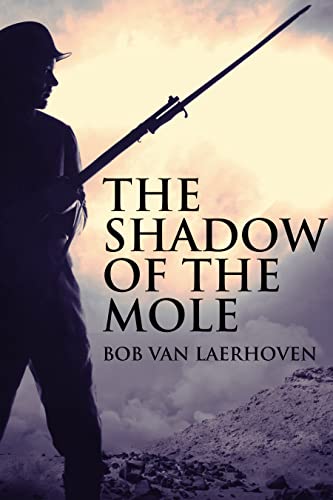
Bob Van Laerhoven’s The Shadow of the Mole is an intriguing and compelling historical thriller that has left readers both baffled and in awe. This beautifully written, thought-provoking story deals with the complex themes of loss, suffering, and the psychological traumas of war. The author also includes the challenges of a complicated, budding love affair in the difficult times of war. The novel employs symbolism heavily and also explores themes of the supernatural along with sexual themes. Set against the staggering backdrop of the First World War, the story is initially set in 1916, Bois de Bolante France but wanders into earlier times as the novel proceeds.
The novel is made up of different perspectives and shifting timelines. Still, the story primarily follows Michel Denis, a front-line physician, and psychiatrist-in-training, who is in his own mental and physical turmoil after losing an arm in battle. He takes a peculiar interest in ‘The Mole,’ a man who was found in a deserted mineshaft by the French troops. The Mole has amnesia and firmly believes that he is dead and an ‘Other’ has taken control of his body. Denis is compelled to open a psychiatric investigation to uncover the mystery of this man’s past and the events that led him to hold such a belief. What is even more fascinating is that this novel contains a story within a story: Denis’ story is interspersed with The Mole’s writings of Alain Mangin, a story he begins writing in écriture automatique. He insists that he is just writing down what is being recited to him by ‘another.’
Throughout the course of this extraordinary story, deception and reality go hand in hand, and people’s minds are tested to their limits right to the end. The most pressing question raised is, “when, how, and why does reality shift into delusion?” The story’s climax is equally dramatic: a truly cinematic experience that thoroughly engages the reader until the very last page, leaving them questioning what they believe to be true. I recommend this book to those who enjoy historical fiction and thrillers, for I can assure you that this novel will be unlike any other you have read!
Pages: 430 | ASIN : B09RTTK28K


