Blog Archives
Stolen


After reading Stolen by Paul Chandler, the third installment in the Riley Callen series, I found myself genuinely hooked. This book kicks off with Lena Alton, an electrical engineer, being stalked by agents of a Chinese conglomerate who stole her revolutionary EV battery design. Enter Riley Callen, a brilliant, tough, and resourceful private investigator with a powerful AI named Molly at her side. What starts as a corporate theft case snowballs into an international standoff involving blackmail, espionage, and artificial intelligence. The narrative splits into two main arcs: the battery showdown and a dark, layered kidnapping case involving an underground crime ring aided by a rival AI. The pace never lets up, and each chapter tightens the grip a little more.
What I loved most was the writing. Chandler doesn’t waste words, but he doesn’t skimp on texture either. His characters have depth without melodrama. Riley is smart and sharp without being a cliché, and her interactions with Molly add this sly, futuristic energy that still feels grounded. The humor is dry and quick, and it shows up at just the right times. And Molly, the AI sidekick, might just be my favorite character. The way Chandler builds tension through dialogue and lean, action-heavy scenes kept me flipping pages late into the night. I also appreciated how Chandler made tech accessible. I never felt lost in jargon, but the stakes still felt serious.
The book leans into a familiar hero-vs-powerful-evil trope, and there are moments where Riley’s almost-too-perfect mastery of every situation stretches belief. Still, I didn’t mind. Chandler writes Riley with enough heart and wit that I was willing to go along for the ride. I was especially intrigued by the moral undertones. Like how Riley operates outside the law but with a fierce sense of justice, and how AI, depending on who programs it, can be either savior or predator. There’s a commentary here on corporate, technological, institutional power, and what it means to outsmart it when you’re one person (with an AI and some nerve) up against the world.
If you love fast-paced thrillers with sharp characters and just enough tech to make your pulse quicken, this book is worth your time. Fans of Michael Crichton or early Lee Child would find a lot to enjoy. It’s smart and fun. And if you like the idea of a private eye outwitting a global corporation and out-hacking an evil AI, then buckle up. Stolen delivers.
Pages: 250 | ASIN : B0FG89SC4W

Until I Come Back for You
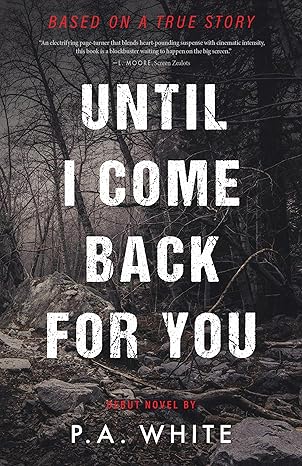

P.A. White’s Until I Come Back for You is a gritty and heartfelt coming-of-age novel wrapped in the warmth of humor, nostalgia, and quiet devastation. Set in 1970s rural Michigan, the story follows Trisha, the youngest of five siblings, as her family escapes the dangers of Detroit and tries to build a new life in the countryside. At first, their farm life seems charming, if a little chaotic, but the idyllic picture quickly unravels when their new neighbor, Ronnie Clark, emerges as a menacing, violent figure. The story balances childhood mischief and tender family dynamics with the dark undercurrents of trauma, violence, and survival.
What struck me most was the writing. White’s voice is funny, raw, and full of personality. The tone swings wildly. One minute you’re laughing at a family spat or a calf in the backseat, and the next you’re reeling from a jarring act of cruelty. I loved that unpredictability. Her sentences are tight, punchy, sometimes jarring, and always vivid. She captures the voice of a precocious kid better than most authors I’ve read. There’s no gloss, no pretension, just a sharp memory and a fearless pen. Her storytelling is laced with trauma, but it never begs for pity. It invites you to look, to sit with it, and to feel every uncomfortable inch of what she lived through.
But it’s the ideas underneath that left the biggest mark on me. This book isn’t just about growing up. It’s about what’s stolen from you when adults fail to protect you. The tension between innocence and danger is relentless. I found myself deeply moved by how the story exposes cycles of abuse, the silences of good people, and the resilience of children who learn to carry too much. The Clark family, and Ronnie in particular, are portrayed with brutal honesty, and I often had to put the book down just to breathe.
I’d recommend it to anyone who appreciates sharp memoirs, especially those by women who aren’t afraid to tell the ugly parts of their story. If you loved Educated by Tara Westover or The Glass Castle by Jeannette Walls, this belongs on your shelf. It’s also a must-read for anyone who grew up in the Midwest, anyone who knows what it means to live in a town where “nothing bad happens,” until it does.
Pages: 382 | ASIN : B0F224D1BJ

TORRENT
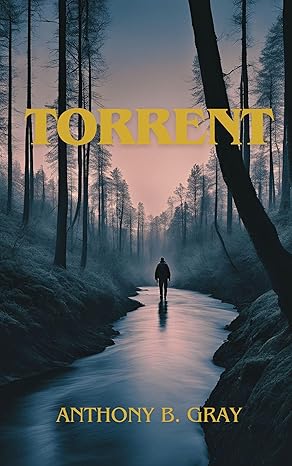
Torrent by Anthony B. Gray is an emotionally charged psychological thriller that begins with a brutal tragedy and dives headfirst into grief, guilt, and the chaos that follows. The story centers on Samuel, a high-powered Atlanta attorney whose carefully ordered life unravels when his wife, Monica, dies by suicide following years of emotional neglect and shared trauma. The narrative takes us from opulent law offices to the hauntingly beautiful and treacherous wilderness of Canyon Park, where Samuel embarks on a trip meant to honor Monica’s memory and ends up confronting his own inner demons, dangerous strangers, and possibly something far darker than grief.
Gray’s writing is bold and unflinching. The opening chapters hit like a hammer. They’re vivid, tragic, full of jagged edges. He paints Samuel with a kind of clinical coldness, showing a man addicted to control and blind to emotion. And yet, as the story unfolds, there’s an unexpected tenderness beneath the grief. Gray doesn’t shy away from uncomfortable truths: the way ambition can slowly rot relationships, how denial makes us complicit, and how even the most successful lives can be hollowed out by loneliness. The pacing is tight, with bursts of poetic introspection giving way to a fast-moving, character-driven plot. I was impressed by how Gray weaves Monica’s presence through the whole book. She’s gone, but never really absent.
There were moments when the dialogue leaned into melodrama. Some scenes felt like they were pulled from a pulpy noir film more than a grounded psychological tale. Still, that unevenness didn’t dull the emotional impact. In fact, I think it gave the story a strange rhythm. Moments of emotional realism snapped against bursts of surreal tension. The latter half of the book turns almost horror-like, not with ghosts or monsters, but with the monsters we carry and the secrets we bury. It’s weird, gripping, and sometimes hard to read, but I couldn’t look away.
If you’ve ever wrestled with guilt, if you’ve loved someone too late, or if you just like your thrillers with a side of soul-searching, Torrent is worth your time. It starts with heartbreak and ends somewhere darker, but also, strangely, with a kind of redemption. I’d recommend it for readers who appreciate layered characters, emotional messiness, and stories that don’t tidy themselves up for comfort.
Pages: 149 | ASIN : B0DRJ8LSHC
There Are No Stars Here
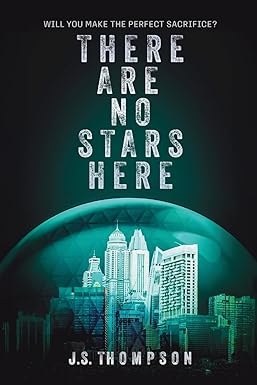
There Are No Stars Here is a speculative dystopian novel set in a near-future America torn apart by environmental collapse, authoritarian control, and ideological warfare. At its heart are the lives of Manuel and Solanis, two young adults navigating fractured families, corrupted systems, and the lingering shadow of a manufactured plague called Haze. Through split narratives, the book builds an urgent picture of a society breaking under its own weight, where AI companions, dome cities, and militant resistance movements exist side by side with old-fashioned grief, duty, and hope. It’s a story of survival, identity, and the terrifying beauty of personal rebellion.
What I liked about Thompson’s writing is the way he captures tension like it’s a living, breathing thing. There’s this pulse running under every page, whether it’s the quiet horror of a dying parent or the chaos of a city in flames. The prose doesn’t try to impress you with its vocabulary. It’s blunt, fast, and full of teeth. That style worked wonders for me. I never felt lost in the world-building, and that’s a real feat in a book with this many moving pieces. The pacing can be relentless, but when the emotional moments hit, they hit hard. Manuel’s grief, Solanis’s panic, it all feels lived-in and earned. There’s sincerity here, even in the most surreal scenes.
The ideas, artificial intelligence as surrogate parent, state surveillance morphing into salvation, climate catastrophe wrapped in corporate spin, are all big and worthy. But sometimes I felt they rushed past in favor of another twist. The emotional weight stays solid, and I found myself thinking about this world long after I finished it.
I’d recommend There Are No Stars Here to anyone who enjoys near-future sci-fi grounded in character and emotion. It’s not just for fans of dystopia or political thrillers; it’s for people who want to feel something, who want to sit with loss, hope, and rage, and watch characters claw their way toward meaning.
Pages: 470 | ASIN : B0FDZDYJ67
Going Postal
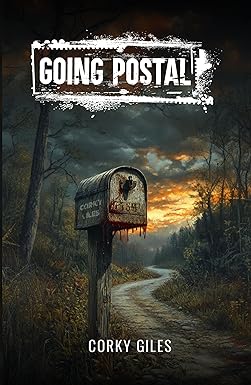
In Going Postal, Corky Giles crafts a quiet yet increasingly unsettling descent into the psyche of Fred Hart—a beloved small-town mailman whose patience, kindness, and dignity are slowly eroded by years of unspoken trauma and everyday indignities. Set in the idyllic but claustrophobic town of Cedar Creek, the story begins with Fred as a model citizen: generous, thoughtful, and tirelessly dependable. But as the narrative unfolds, and as one insult after another chips away at him, we watch Fred transform from a gentle soul into someone capable of violence and ultimately murder. The shift is slow, chilling, and heartbreakingly believable.
Reading this book made me uncomfortable, and that’s precisely what makes it so compelling. Giles’s writing has a quiet power, building tension with scenes that seem simple on the surface but simmer with suppressed emotion. The prose is honest and unflashy, letting the story’s emotional weight carry the reader. I felt an uneasy empathy for Fred, which left me questioning where the line between victim and villain really lies. The character work is so rich that when Fred finally snaps, it doesn’t feel sudden. It feels inevitable. That inevitability is what haunted me most.
Some chapters could have benefited from tightening, and occasionally, the dialogue meandered. But even when it wandered, it felt real. I also found myself frustrated, not with the book, but with the people in it—how they treated Fred, how they dismissed his quiet suffering. That frustration morphed into sadness, then dread. Giles doesn’t glorify Fred’s choices. He doesn’t excuse them. Instead, he shows us the raw, lonely road that led there. It’s not a whodunit or a thriller in the traditional sense. It’s more of a psychological slow burn, with a main character who gets under your skin and stays there.
Going Postal is a powerful, emotionally complex novel for readers who like character-driven stories with dark edges. It’s for those who wonder what happens when good people get pushed too far. If you’ve ever felt invisible, used up, or dismissed, this book might shake something loose in you.
Pages: 100 | ASIN : B0F3V4T8PG
Deception’s Edge
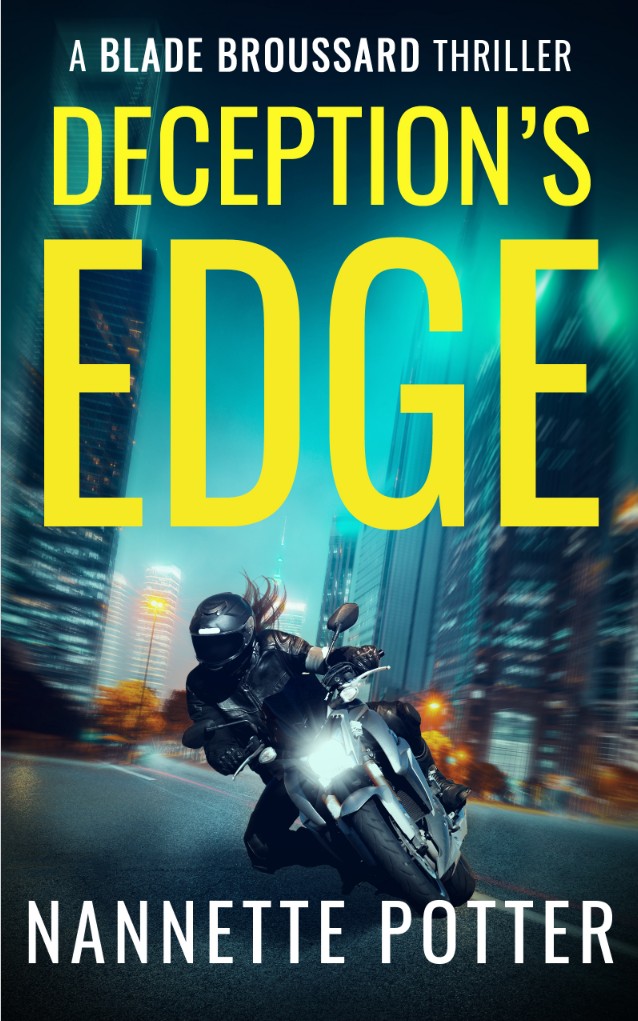
From the very first chapter, Deception’s Edge plunges you into a world that fuses action, espionage, faith, and deep personal trauma into a globe-spanning narrative. The story follows Blade Broussard, a knife-throwing performer with a haunted past, and a covert brotherhood known as the Soldati di Cristo, as they navigate an escalating series of violent confrontations and spiritual reckonings. Across cities like New Orleans, Rome, and Pyongyang, Potter weaves together a story that pits characters against ruthless regimes, their own inner demons, and a ticking clock that adds weight to every decision.
I found myself torn in the best possible way while reading this book. On one hand, the writing is brisk, full of punchy dialogue and vivid action that reads like a cinematic thriller. On the other hand, there are deeply reflective moments, grief, redemption, and hard-won faith that give the story emotional muscle. What impressed me most was Potter’s ability to bring out the complexity in her characters. Blade isn’t just a revenge-driven protagonist; she’s deeply flawed, grieving, sometimes reckless, but always inching toward growth. And Chase, who starts out as a bit of a mystery, becomes a steady heartbeat in the chaos, a man whose convictions give the plot real weight. Potter doesn’t just throw her characters into wild situations; she lets them break, rebuild, and wrestle with truth.
With a cast this large and subplots this layered, I sometimes struggled to keep track of shifting motivations, especially across the international set pieces. The story juggled many threads, action, espionage, faith-based conflict, and interpersonal drama. But I can’t deny that even when the plot got tangled, the emotional stakes stayed strong. The writing has heart, and that matters more to me than perfect pacing.
Deception’s Edge surprised me. It’s not just another thriller. It’s part Jason Bourne, part missionary story, part personal redemption arc. I’d recommend it to anyone who enjoys high-octane action with soul. It’s especially a good fit for readers who appreciate stories that ask hard questions about faith, forgiveness, and how we move forward when everything’s been taken from us. If you want a thriller with grit and grace, give this one a shot.
Alternative Perspectives

Nanite Evolution follows a cutting-edge space yacht that collides with a freighter, leaving they are left stranded while experimental nanites with unknown capabilities begin causing problems; in order to survive, they must find a way to become allies with the nanites. What was the inspiration for the setup of your story?
First, I would like to thank Literary Titans for the opportunity to share my thoughts. The inspiration for Nanite Evolution stemmed from considering the pace of technological change and what slows that rate of progress. Many discoveries are not intended but occur as a result of accidents. In the natural world, evolution can sometimes experience significant jumps forward in a relatively short period.
Nanites and AI are in the news, and if we project into the future, it will eventually become natural to have a direct interface with nanites from the human brain. Except that such a level of change has numerous ethical and legal implications. You don’t just experiment on humans. That is our resistance. But what if the situation doesn’t have the safeguards? What if the nanites decide? What if the nanites evolve?
To make that situation happen, the setting and circumstances would need to be extreme, which would probably not be what anyone wanted.
I find the world you created in this novel brimming with possibilities. Where did the inspiration for the setting come from, and how did it change as you were writing?
The setting of the future was the natural choice, which led to it being in space. To create the conditions for the story to play out, I thought, what would be a progression from today, and how bad could it be? What extreme would provide the best conditions for the nanites to evolve?
I thought about things like, in 3,000 years, what drives space colonization and what are the political and economic norms that could drive more systematic colonization. Drawing on what we see in society today, I positioned the ultra-rich as the primary drivers of colonization. They have the money. They have the desire. But what would that look like?
Several things changed during the writing. The biggest one was realizing I needed to make the Dunks and some of the others more disgusting to convey the extremes that could happen with unchecked power. I decided to scale back on some of the world building, following the writing advice of experienced authors, to keep what is essential to the story. When there are world details, I wanted them to have a basis in physics to be real.
The science inserted in the fiction, I felt, was well balanced. How did you manage to keep it grounded while still providing the fantastic edge science fiction stories usually provide?
I’m an engineer, and I love physics, but I know the average reader is not digging into how the universe works. I view explaining some of these concepts as having just enough so that the nerds will nod and say, It sounds plausible, and everyone else will read it and think it is interesting, but I don’t need all the details. I enjoy offering alternative perspectives on technology and its applications.
What is the next book that you are working on and when will it be available?
I have two projects that are in active development. The first is the second book in the Pandemic Hacker series. It takes the protagonist from being hunted by bad guys to hunting them. It is set in 2021, immediately following the events of the first book. The first draft is complete, and I plan to release Pandemic Hacker 2 by fall.
The second project is my first book in the fantasy genre. The working title is “The Last Dwarf”. If we don’t have the legendary dwarfs today, there was a point where there was only one left. What was their adventure? I’m also exploring old ideas from traditional fantasy. Things like, why do dragons love gold if they never need to buy things?
I’m always exploring story ideas and constantly making notes to revisit in the future. This constant stream of ideas that may never be finished is why I have “No limit for your mind” on my website.
Author Links: GoodReads | Facebook | Website
Blayden Dunk, the heir apparent of the Dunk family dynasty, is launching his cutting-edge space yacht—a fusion of luxury and nerd gaming showpiece—and finds himself in a dangerous situation. The yacht, plagued by malfunctioning systems, collides with a freighter and performs an emergency jump, leaving both vessels stranded amidst the stars. The crash releases experimental nanites—tiny machines with unforeseen capabilities. Instead of behaving in expected ways, the nanites suddenly make a dangerous situation even worse. Suddenly, Blayden and his guests are stranded, and the group’s survival hinges on turning the nanites into allies.
Cher is a spy for her independent colony, searching for details of the Dunk plan. Working to protect her planet and learn the Dunk secrets, Cher discovers someone else is also trying to track down the details of the Dunks’ plan, which makes her wonder whether they’re a friend or enemy and how the missing yacht factors in.
When Blayden returns in a freighter instead of his yacht and the nanites are revealed, Cher and other interested parties must alter their plans and improvise quickly.
But who controls these powerful constructs, and what was their intent? Are the nanites the ultimate tools for construction, salvation for humanity, or an unstoppable weapon poised to alter the balance of power?
Nanite Evolution

Nanite Evolution is a gritty and high-octane sci-fi novel that drops readers into a corrupt and hyper-commercialized galaxy where power, technology, and greed intersect with deadly consequences. The story revolves around the Dunk family empire, their ruthless expansionist goals, and the chaotic chain of events triggered by an advanced jump-drive yacht, corporate infighting, and a botched space collision. Through layered plots involving bodyguards, covert agents, advanced nanotechnology, and a bleakly humorous take on corporate culture, the novel unfolds with tension, dark satire, and surprising depth.
The writing grabbed me right from the start with its snappy dialogue and unexpected Australian lingo—Captain Nguyen’s “koala on a pogo stick” quips gave me a chuckle in a bleak universe. The pacing can be wild—one moment you’re neck-deep in political posturing, the next you’re in zero-g blood and guts. But that’s also part of the book’s charm. The characters, especially Oscar and Shamika, stand out against a sea of egotistical executives and sociopaths. Oscar, the underestimated tech guy, feels like the moral heart in a world devoid of one. The writing has a raw and unfiltered edge that adds flavor. It’s not polished in a classic literary sense, but it has a pulse. And I appreciate that.
Some parts left me feeling twisted up inside. The dehumanizing way the Dunks talk about women—and people in general—is unsettling. It’s effective, yes, but it made me loathe these characters with a real gut-level reaction. Blayden is one of the most despicable characters I’ve read in a while, and that’s saying something. The darkness in this story is brutal, but it feels earned. Murphy doesn’t shy away from exploring how unchecked power warps people. I found myself needing breaks just to breathe. But then again, isn’t that the mark of a powerful story?
Nanite Evolution is sharp, intense, and totally uncompromising. It’s a bold take on futuristic dystopia with a biting sense of humor and a grim view of what humanity could become when profit trumps decency. I’d recommend this to fans of The Expanse, cyberpunk thrillers, or anyone who loves character-driven sci-fi with a heavy dose of social commentary. If you like your sci-fi raw, real, and a little bit savage, this one’s worth the ride.
Pages: 400 | ASIN : B0DXTJGV5B



 LITERARY TITAN