Blog Archives
Healthy Minds, Healthy Nation: How Meditation, Shamanism, and Indigenous Healing Can Tap into Your Light Within and Change the World
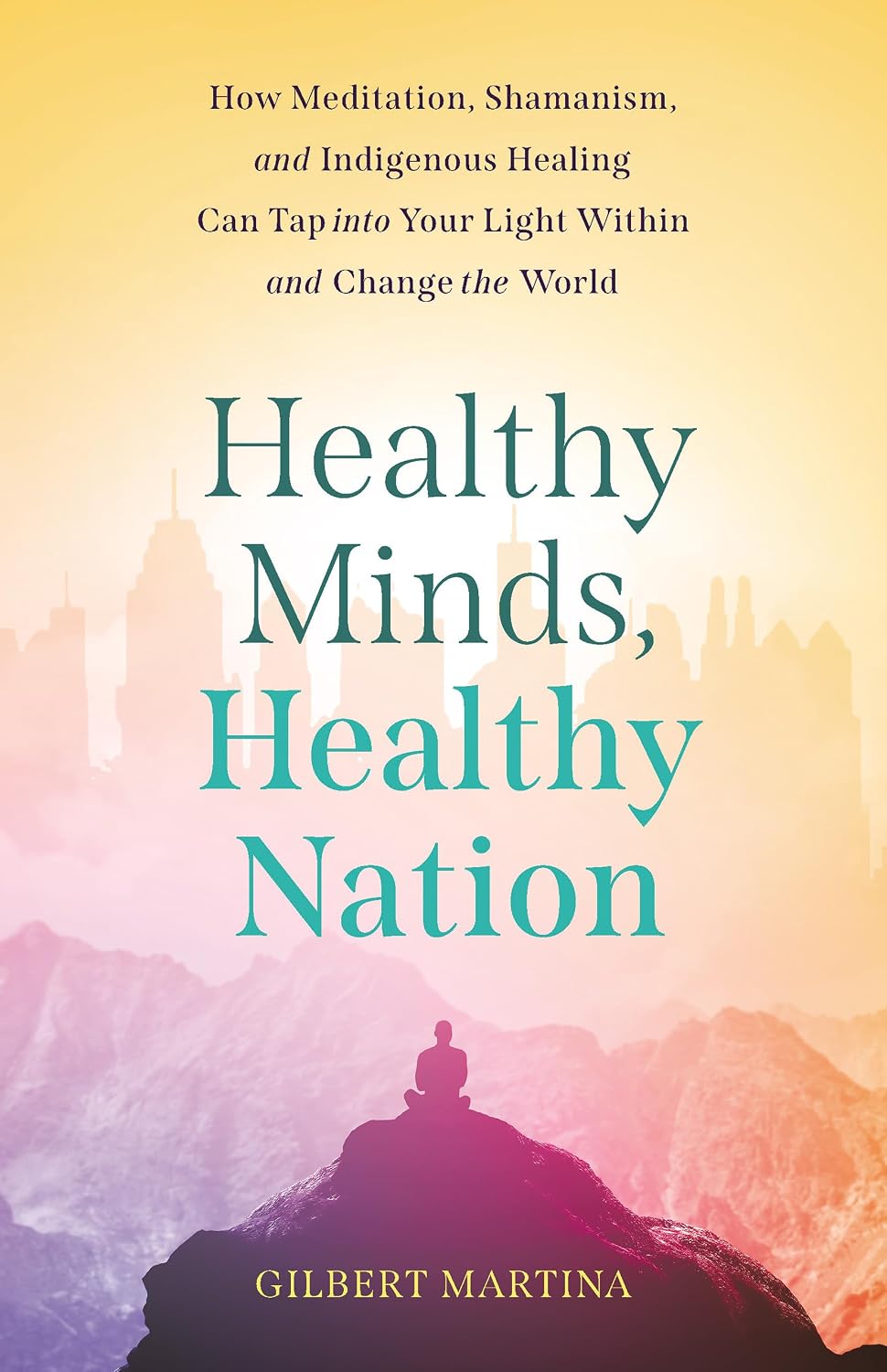

Healthy Minds, Healthy Nation, by Gilbert Martina, is a personal, spiritual, and socially minded exploration of the idea that healthier societies begin with healthier individuals. Martina builds the book around his own experiences with grief, chronic pain, professional pressure, family trauma, and leadership in Curaçao, then connects those experiences to larger questions about consciousness, morality, and collective well-being. The book moves through four broad stages: establishing the foundations of a healthy mind, examining how trauma can affect whole societies, describing spiritual awakening, and introducing practices such as Transcendental Meditation, shamanism, and Indigenous healing. What makes the book especially personal is that Martina rarely presents these ideas from a distance. His parents, marriage, career, physical pain, and Curaçaoan heritage are woven directly into his argument, so the book reads partly as memoir, partly as a guide to spiritual development, and partly as a reflection on leadership.
One thing that was most interesting to me was the way Martina moves between individual trauma and national history. His discussion of Curaçao gives the book a strong sense of place, particularly when he considers slavery, colonialism, discrimination, political power, and the long psychological effects of historical wounds. He argues that unresolved trauma can shape not only individual behavior but also relationships, institutions, leadership, and entire communities. That argument becomes more compelling when Martina connects it to his own life, including his mother’s fight against discrimination, his professional battles over integrity, and his struggle to separate what he calls the ego from the true self. The Papiamentu sayings passed down by his mother are especially memorable because they turn abstract ideas such as honesty, discipline, humility, resilience, and responsibility into something lived and specific.
The book becomes more explicitly spiritual as it progresses, especially in its treatment of meditation, energy healing, shamanic practice, chakras, ancestral trauma, vision quests, and ayahuasca. Martina treats neuroscience, psychosomatic medicine, spiritual experience, and Indigenous healing as parts of a connected picture of human health. That gives the book a distinctive confidence and makes his worldview easy to understand, even when some of the scientific and spiritual claims are presented with different kinds of supporting evidence. His strongest material tends to come when he describes what these practices have meant in his own life. Still, the central thread remains clear: healing requires attention to mind, body, relationships, history, and spirit, and personal transformation matters because it changes the way a person acts in the world. By the final chapter, Martina turns that idea toward moral courage, arguing that an awakened person should be willing to speak up against injustice and choose principle over fear, status, or money.
I recommend Healthy Minds, Healthy Nation to readers who are interested in spirituality, meditation, holistic approaches to healing, personal transformation, and values-based leadership. It will also have particular appeal for readers interested in Curaçao and the Caribbean, especially those thinking about how colonial history and inherited trauma continue to shape modern communities. Martina writes with the conviction of someone trying to make sense of his own life while also offering that meaning to others, and the book’s warmth comes from that personal investment. By the conclusion, his message has become both intimate and ambitious: quiet the mind, care for the body and soul, loosen the hold of ego, heal what has been carried from the past, and let that inner work influence families, communities, and nations. Readers who enjoy books that bring memoir, spirituality, leadership, cultural history, and self-development into the same conversation are likely to appreciate it most.
Pages: 246 | ASIN : B0GP4Y8JF2

Our Extraordinary 300,000-Year Journey. Our Ancestors, Their Resources, and Their Incredible Story


Ruth Finnegan’s Our Extraordinary 300,000-Year Journey is an ambitious and searching account of human survival told through the oldest and most ordinary of necessities: food. Beginning with life in the deep ocean and moving through animal foraging, human migration, cultivation, trade, domestication, cooking, sweetness, ritual, and the fragile wonder of the present, the book argues that our history has never been a clean ascent of human mastery. It is instead a long, improvised, creaturely story shaped by hunger, chance, ingenuity, memory, cooperation, and the astonishing generosity of the earth. Finnegan’s central insight is both simple and profound: food isn’t merely what sustained the journey; it is the thread that reveals what kind of beings we are.
What moved me most was the book’s refusal to flatter humanity too easily. Finnegan keeps returning us to continuity, to the humbling fact that humans did not invent survival from nothing. Bees manufacture honey with exquisite precision, nutcracker birds store thousands of seeds against scarcity, ants “milk” aphids, honeyguides recruit humans to open nests, and chimpanzees hunt with tools and strategy. These examples could have felt like curiosities in a lesser book, but here they become part of a moral enlargement. I found myself increasingly persuaded by the author’s insistence that our story is less about domination than participation. Even the grand phrases of history, like “agricultural revolution” or “Columbian exchange,” are gently unsettled. Finnegan asks us to imagine not abstractions but hands, mouths, children, gardens, fear, hunger, luck, and small acts repeated until they became civilization.
The writing has a distinctive warmth, at times almost conversational, at times lyrical. I admired the way Finnegan braids scholarship with personal memory, especially the Donegal scenes of wartime foraging, nettles for soup, cockles in the sand, crab rock, wild strawberries, and the dangerous gathering of carrageen seaweed. Those moments give the vast historical sweep a human pulse. The manuscript can sprawl, and its abundance of examples sometimes makes the reading feel more like wandering through a richly stocked natural history cabinet. Yet that profusion is also part of its charm. The book thinks associatively, generously, with a mind alert to apples and olives, potatoes and oranges, milk and tea, hunger and hospitality. I often wanted to linger in the author’s wonder.
By the end, I felt the book had made the familiar strange again. A bowl of olives, a cup of tea, a potato, an orange, a cooked meal, even the phrase “put the kettle on” began to feel like small inheritances from an immense and precarious past. This is a thoughtful and intellectually capacious work, and its best passages carry both gratitude and warning. Our journey, Finnegan reminds us, was never guaranteed, and it still isn’t. I would recommend this book to readers who enjoy expansive cultural history, anthropology, food history, and reflective nonfiction that asks large questions without losing sight of ordinary human tenderness.
Pages: 350


