Blog Archives
Welcome to the Damned


Welcome to the Damned, by Astraea Long, is a chaotic and dark dive into a dystopian world filled with mind control, broken characters, and violence. The story follows Tal and Rovis, two members of a group known as the Aconites, as they navigate a crumbling society, fighting both external enemies and their own demons. The plot is layered with betrayal, revenge, and a pervasive sense of despair as Tal and Rovis confront forces that threaten their existence and sanity. At its core, this is a story about survival and the blurred lines between good and evil in a world that offers no redemption.
What immediately struck me about the book is its raw, unfiltered tone. From the start, the prose grabs you with a visceral intensity. The opening chapter, where Zero flushes a bottle of pills in an attempt to break free from her own suicidal thoughts, sets the stage for the emotional turmoil that carries through the book. The writing is brutally honest, almost harsh in its depiction of mental health struggles, and yet it feels deeply human. There’s something refreshing about the way Long allows her characters to wallow in their flaws without forcing a neat resolution. It’s gritty and a bit heartbreaking to read, but it gives the book a powerful emotional core. There are moments of pure brilliance that are haunting and beautifully tragic, and the fast-paced action keeps the story exciting and full of energy.
The world-building is rich and intriguing, and it’s introduced in such a dynamic way that it invites you to dive deeper, rewarding readers who enjoy revisiting key details to fully immerse themselves in the complexity of the setting. Tal and Rovis aren’t just antiheroes; they’re messy, morally ambiguous, and sometimes downright unlikable. Yet, it’s impossible not to root for them as they fight for a place in a world that has tried to crush them. The relationship between the two is complicated and layered with tension. Their banter and interactions often serve as brief moments of levity in an otherwise heavy narrative.
Welcome to the Damned is the perfect read for those who enjoy dark, complex stories with characters that linger long after the final page. I highly recommend this book to readers who appreciate dystopian settings with a psychological twist and aren’t afraid of confronting difficult themes like mental illness and violence head-on.
Pages: 314 | ASIN : B0CP7JTRC6

Reflecting the Diversity of Our World

In Glitches of Gods, an engineer grappling with his father’s death is propelled into an alternate timeline and a new life following a mysterious technical glitch. What was the inspiration for the setup of your story?
I began with a set of themes I wanted to explore: the multiverse, AI, virtual worlds, memes, and leadership. Don’t ask me why these particular themes – I don’t have a logical explanation. I felt they would create an intriguing combination. I then employed the Save the Cat method to outline the story structure and develop story beats until I had a compelling narrative. As a test, I narrated the entire story to some friends to gauge their reactions. Only after that did I begin the actual writing process.
What character did you enjoy writing for? Was there one that was more challenging to write for?
The protagonist, Julien, is my favorite character to write. He begins as a likable yet irresponsible individual who doesn’t take anything seriously, but throughout the story, he gradually evolves into the responsible person he needs to become. As an author, crafting this transformative journey was incredibly rewarding. Of course, there’s also Zha-Zhar, who seems to be a fan favorite among my readers. She was definitely enjoyable to write as well, though as a supporting character, her personal growth wasn’t as central to the narrative.
I can’t recall struggling significantly with particular characters, though some were easier or more enjoyable to write than others. To be clear, I’m fond of each character in my novel. However, just as in real life, some personalities are more challenging to engage with.
What is one thing that you hope readers take away from Glitches of Gods?
Human diversity is a central theme in my work. While I’m unsure if some groups, such as the LGBTQ+ community, are still underrepresented in contemporary fiction (they certainly were for many decades), I consciously try to ensure they have significant representation in my novel. I believe in creating a rich tapestry of characters that reflects the diversity of our real world.
Can you give us a glimpse inside Book 2? Where will it take readers?
I plan to take readers to another world in the Playspheres saga. This time, it will probably be a bit more fantasy-oriented than the first one. But the plan is to continue the larger thread that I started with the first one.
Author Links: GoodReads | X | Facebook | Website
Julien feels utterly miserable. Creator of the AI that killed his father, the brilliant engineer deftly evades work on the world’s first human-level android, dodging the off-chance of snuffing out more lives. Instead, Julien much prefers bickering with his virtual assistant, crafting memes with his quirky friends, and shagging dates across a broad spectrum of genders. Yet, due to a maddening jump across timelines, he grudgingly faces his greatest dreads: raising a family and leading his team to win the AI race.
Drowning in new duties, Julien aims to avoid a second AI disaster. But when a mysterious technological infection wreaks havoc on the city, Julien flip-flops between shielding his loved ones and leading his team as he battles it out with broken robots, idiot protestors, and a rather sinister cat. Learning he got himself involved in a war between gods, should Julien save his new family or finish his team’s android to prevent an AI apocalypse?
Glitches of Gods is the extraordinary first book in the Playspheres epic science fantasy series. If you like cynical sentients, wacky worlds, and plenteous profanity, then you’ll love the kick-off of Jurgen Appelo’s bewildering and humorous dystopian sci-fi saga.
Buy Glitches of Gods and choose sides in a super-sentient war!
Glitches of Gods (Playspheres Book 1)

Jurgen “Jojo” Appelo’s debut sci-fi novel, Glitches of Gods, offers an exhilarating journey through a troubled future where advanced AI, virtual worlds, and reality-warping “gods” intertwine. The story centers on Julien, a brilliant yet tormented engineer burdened with guilt over an AI malfunction that led to his father’s death. The narrative takes off when a mysterious technical glitch disrupts Julien’s city, propelling him into an alternate timeline. Suddenly, Julien finds himself a single father of twin boys and the leader of a quirky tech team. As he grapples with broken bots, misguided protestors, and an escalating conflict among “gods,” Julien’s world becomes increasingly chaotic.
Delving deeper into the novel’s unique plot risks spoilers, but suffice it to say that Appelo’s writing embraces a mix of genres. Glitches of Gods seamlessly blends science fiction, family drama, and fantasy, creating a disorienting yet compelling read—much like the experience of being thrust into an alternate reality. One of the book’s standout features is its world-building. Appelo crafts a vividly imaginative universe filled with intricate details ranging from futuristic technology to a diverse cast of supporting characters. The sections set in virtual reality are particularly mesmerizing, offering a trippy, immersive experience.
Julien is a captivating protagonist—a complex and flawed hero who evolves from a cynical, self-loathing individual into a natural leader. His journey is organic and unrushed, making him an easy character to root for despite his stubborn and melancholic tendencies. The supporting characters, including Julien’s precocious children and his eccentric interdimensional housekeeper, add depth, humor, and warmth to the story. The plot is well-paced, brimming with twists and turns that grow increasingly bizarre as the narrative progresses. Although the story can become challenging to follow, especially towards the end, the effort is well worth it. Appelo’s tone shifts dramatically throughout the novel. He deftly moves from sharp satire on corporate greed to slapstick comedy and even touches on existential horror. While this tonal variety can cause some whiplash, it underscores Appelo’s commitment to his unique vision. Beyond its entertaining plot, the novel delves into profound philosophical themes. It explores the moral implications of creating advanced AI, simulation theory, and the tension between destiny and self-determination. Appelo weaves these themes into Julien’s journey without becoming overly didactic.
Glitches of Gods is an ambitious and thrilling debut novel. Appelo’s work is highly recommended for readers who appreciate a genre-blending, thought-provoking adventure.
Pages: 526 | ASIN : B0D5NPZY8Y
Cadence

Cadence, by David Loermans, is a thrilling ride through a dystopian world where crime, corruption, and a peculiar religious order intertwine. The story follows Darius, a hardened criminal with a bounty on his head, as he navigates a city rife with chaos and decay. Paired with Lisha, an enigmatic and powerful entity bound to him through a mysterious tattoo, Darius takes on dangerous missions that bring him face-to-face with religious leaders, corrupt officials, and deadly adversaries. The book mixes high-stakes action, dark humor, and philosophical musings on power, faith, and human nature.
Loermans’ writing style is gritty and immersive, perfectly capturing the grim atmosphere of Sorel. The vivid descriptions of the decaying cityscape and the brutal reality of life within it are both compelling and haunting. The dialogue is sharp and often laced with dark humor, adding depth to the characters and making their interactions authentic. The relationship between Darius and Lisha is particularly intriguing as it evolves from mere necessity to a complex partnership marked by mutual dependence and a shared thirst for mayhem.
One of the standout aspects is its exploration of the Earthdawn religion and its influence on the city and its inhabitants. The Earthdawn, with its emphasis on light and purity, stands in stark contrast to the darkness and corruption that pervades the story. This juxtaposition raises thought-provoking questions about the nature of faith, power, and morality. The scenes involving the Earthdawn leadership, particularly the tense negotiations, and violent confrontations, are some of the most gripping in the book, highlighting the lengths to which people will go to maintain control and protect their beliefs. Some chapters feel packed with action and intrigue, while others slow down significantly, delving into Darius’s internal struggles and his complex relationship with Lisha. These introspective moments add depth to his character.
Cadence is a captivating read for those who enjoy dark, dystopian thrillers with a philosophical edge. David Loermans crafts a vivid and unsettling world populated by complex characters and driven by a relentless, often brutal narrative. Fans of cyberpunk and gritty crime fiction will find much to appreciate in this book, while those interested in exploring themes of faith, power, and human nature will be drawn in by its deeper questions.
Counterblow Clemency
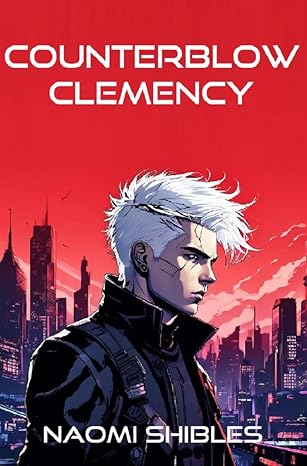
Counterblow Clemency follows the journey of three primary protagonists: Bjorn Bear, Doodle, and Murgatroyd, as they navigate a futuristic world filled with wonders, perils, and a desperate need for change. Bjorn, a rebellious teen, is joined by his friends, who come from radically different circumstances. Together, they face the consequences of Bjorn’s actions and are drawn into a conflict far beyond their control.
Shibles masterfully balances the familiar with the unfamiliar in this sci-fi tale. A hallmark of great science fiction is the blend of relatable elements with the fantastical, allowing readers to anchor themselves in the story while exploring new and strange wonders. Shibles achieves this by leveraging familiar experiences, such as parent-child relationships and friendships, while setting the characters in a world that is entirely fantastical. This technique allows readers to stay connected to the narrative, even as Shibles’ creativity runs wild with the setting. The characters are well-crafted and relatable, their struggles and imperfections making them both believable and engaging. As the story unfolds, readers find themselves rooting for these flawed yet endearing characters, even as their situation grows increasingly dire. Shibles’ approach of not providing convenient explanations for everything mirrors the experience of the protagonists being thrust into situations beyond their control. This technique adds to the immersive quality of the world Shibles has created. While it might be a bit challenging for those new to sci-fi, it is a testament to the depth and richness of the narrative. Experienced sci-fi enthusiasts will undoubtedly appreciate this intricate storytelling, and newcomers will find it a rewarding and enriching dive into the genre.
Counterblow Clemency works beautifully as a standalone adventure and has the potential to launch a new series. Shibles ties up most loose ends within the book’s relatively brief runtime, making it a satisfying read. For fans of the fantastical and the unknown elements of science fiction, this book is a must-read.
Pages: 156 | ASIN : B0CQTKF5MN
The Logoharp: A Cyborg Novel of China and America in the Year 2121

Set in the 22nd century, The Logoharp, by Arielle Emmett, transports readers to a world where Naomi, a human-cyborg hybrid, navigates the complexities of her existence as a “reverse journalist” in China. In Naomi’s reality, the interplay between media and truth creates a landscape both intriguing and terrifying. Dissatisfied with her life and disturbed by the rampant political power and media manipulation that the masses accept without question, Naomi dreams of rebellion. Her quest for meaning propels her down unexpected paths, where she hopes to find wisdom at the end of her journey.
Emmett’s novel fits snugly into the cyberpunk genre, addressing profound themes such as the search for personal identity and meaning in a world that demands conformity. The narrative echoes the dystopian tones of Aldous Huxley’s Brave New World, yet it stands out with its unique exploration of a cyborg’s struggle against societal constraints.
Despite her cyborg nature, Naomi’s yearning for self-actualization is a universal human experience. Her desire to break free from routine and seek deeper meaning resonates deeply with readers who feel the same urge in today’s society. Naomi’s journey is fraught with obstacles, reflecting the real-world challenges faced by those who dare to defy the status quo. Her poignant angst and the prose, ranging from poetic to vitriolic, vividly convey the tumultuous emotions within her. The writing style is a highlight, mirroring Naomi’s inner turmoil with its shifting tones. Emmett’s prose captures the delicate balance between introspection and fierce defiance, engaging readers in Naomi’s emotional and intellectual battles.
The Logoharp offers a thought-provoking experience for those willing to confront unsettling truths. Some may find comfort in the familiar illusions of their own “Matrix,” while others may feel a revolutionary spark ignited within them. Ultimately, this novel serves as a mirror, reflecting each reader’s willingness to either accept the status quo or challenge it.
Pages: 466 | ASIN : B0D7TCFTSN
Hope and Humanity
Hounds of Gaia follows an elite bounty hunter who is sent on a mission to transport a serial killer that turns from a simple mission into a life-altering adventure. What was the inspiration for the setup of your story?
When I first came up with the idea for The Marrower Saga, it was in the form of music. I wanted to write a concept album, inspired largely by The Mars Volta and Coheed & Cambria, that was a police procedural about a serial killer in space. I even wrote a few songs in the process of developing the idea. As time went by, however, my dreams of being a musician faded, and I refocused myself on writing (which is what I went to school for). Over about a decade, I kept coming back to this idea, turning it over in my mind. Eventually, I decided I had to just sit down and put pen to paper. That seemingly simple act forced the idea to evolve even more, as I had to finally ask myself what kind of story I wanted to tell and what themes I wanted to explore. The basic concept remained—there is still very much a serial killer in space underpinning the story—but the vast majority of the concept changed pretty immensely. I found that I had to imbue the concept with a lot more emotional depth to make it a story worth telling in novel format.
Foxhound is a well-developed character that keeps readers guessing as she uncovers more about her past throughout the book. What were some driving ideals behind your character’s development?
Creating Foxhound was an interesting exercise. I didn’t want to create a character that was too much like myself or anyone close to me, but I also needed to inject her characterization with elements of realism. She needed to be confident and self-assured—a function of her career—but she also needed to have some internal conflict, which relates to her larger story and will further unfold as the story continues. She’s a fun character to explore because she’s so task-driven, as her name suggests, but that drive is going to continue to unravel as she has to reckon with who she really is and where she comes from. Her self-assuredness comes less from actual confidence and more from her refusal to self-examine. So forcing her to take a look in the mirror is going to have a pretty big impact on her psyche and how she approaches things. I guess the larger point is that Foxhound is driven by a question we’re all forced to ask (and one that philosophers and artists have pondered for centuries): who (or what) are we, really?
I find the world you created in this novel brimming with possibilities. Where did the inspiration for the setting come from and how did it change as you were writing?
I’ve loved science fiction for most of my life. I remember watching Star Wars on VHS over and over again until the tapes themselves were getting warped. But the thing that I always loved the most about sci-fi stories was the human element. Sure, the spectacle is what drew me in, but starships and aliens only get the story so far. Ultimately, I believe sci-fi serves as a vessel for us to explore elements of humanity, be they positive or negative, world-altering in scope or incredibly personal and private. For my world, I wanted to really latch onto that human element and, in some ways, hold a mirror up to current events and developments. What made the most sense for the story I wanted to tell was to create a universe in which humans are utterly alone—there was no first contact, there are no aliens, etc. What do we do, as a species, when we have nothing to rely on but ourselves? So that’s where it all kind of started.
As I got to the writing, however, the world I was trying to create really bloomed. Again, Star Wars (the original trilogy) served as an inspiration—specifically the grittier locales. I remember very vividly how it felt to watch Luke and Obi-Wan walk into the cantina on Tattooine for the first time. It was inelegant, dirty, old, and full of ne’er-do-wells. I really wanted a lot of my locations to feel like that—not quite an apocalyptic dystopia, but like the stations and ships were always in a state of disrepair and just teetering on the brink of collapse. But arguably, the most important part of the setting emerged as I was writing. I realized that grittiness lacks a certain believability when overdone, so I made it a point to try and inject just enough hope and humanity—which, again, I feel like is a reflection of real life. Even in the worst places, there are still these bastions of hope, however small, where people are really trying to help one another survive (and not just for personal gain).
When will book two be available? Can you give us an idea of where that book will take readers?
I’m in the process of writing book two right now, and I’m hoping to have it wrapped up well before the end of the year. If I can manage that, I’d expect to see book 2 released in early 2025, barring any unforeseen setbacks. Book two will also have a very different vibe, as it leaves behind the gritty edge of the solar system and centers the story on Earth, which is the center of everything—commerce, religion, society, etc. What I’m most excited about is showing that the glitz and gloss of this part of my universe isn’t really any better or safer—just that the facade is prettier. Things are going to get pretty dark, and I hope my readers are excited to go along for the ride.
Author Links: GoodReads | Facebook | Instagram | Website
So when she receives an urgent prisoner transfer request from a cult starship, she accepts the gig. She figures that transporting a bone marrow-eating serial killer from the cult’s colony back to Earth is just another well-paying job that’ll keep her mind off things. Upon discovering that the suspect in custody is an orphan girl—one that could pass for her much younger doppelgänger—she decides it’s time to get some answers.
Before she can piece together who the girl is and how their lives intertwine, a group of violent prisoners aboard Foxhound’s starship breaks free. As the once-peaceful cultists take up arms in response, the Contractor teams up with her mechanized AI assistant and two of the cult’s wayward members to stop the barbaric escapees and elude the grasp of the cult’s radicalized leader. And when that’s done, she can focus on figuring out the secret behind the mysterious, potentially dangerous girl—but will she even want to know the truth?


