Blog Archives
Gods of Glenhaven
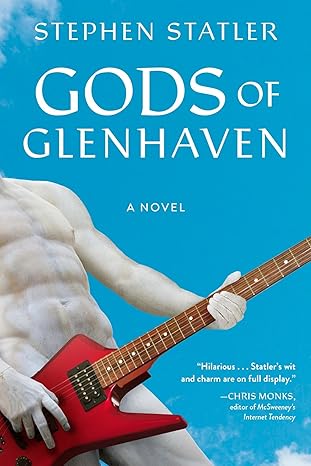

Gods of Glenhaven is a raw, darkly funny, and deeply human story about people falling apart and trying to stitch themselves back together. It follows Christian Orr, a man sliding into middle age with a broken marriage, sexual dysfunction, and a pile of humiliations that somehow keep getting worse. His wife, Sloan, is a driven attorney who mistakes dominance for control until her life unravels, too. Their teenage daughter Francesca floats between them, trying to make sense of the wreckage. Around these three, the town of Glenhaven buzzes with gossip, longing, and absurdity. It’s a small world full of big emotions, where humor and despair share the same seat.
I found Statler’s writing disarmingly sharp. Every line feels alive with awkward truth. He doesn’t flinch from embarrassment or pain, and he writes humiliation with the kind of precision that made me both laugh and squirm. The dialogue is quick and biting, but the silences hit harder. Christian’s spiraling self-awareness feels almost too real at times; I could feel the claustrophobia of his failures and the absurd hope that something, anything, might still redeem him. Sloan, on the other hand, made me furious and fascinated in equal measure. She’s brittle, proud, often terrible, but undeniably human. The novel moves like a tragic comedy that keeps threatening to tip either way.
What really struck me was how the book keeps shifting tones without losing its rhythm. One page had me laughing at Christian’s disastrous attempts at self-improvement, and the next left me staring, a little shaken, at how much loneliness the humor covered up. Statler writes like someone who has seen both the joke and the wound and refuses to pick one. The story feels like real life that’s been turned just slightly toward the absurd, so everything painful also glows with a weird kind of beauty. It’s messy, brave, and very alive.
Gods of Glenhaven is a brutal but compassionate look at failure and forgiveness. I’d recommend it to readers who love flawed people written with empathy. Fans of writers like Richard Russo or Jonathan Franzen will probably feel at home here. If you’ve ever felt lost, humiliated, or ridiculous and still had to get up the next morning, this book might hit uncomfortably close to the truth.
Pages: 378 | ASIN : B0F8KPGH67

“The Line of Horror”

A Dangerous Friendship follows a woman navigating heartbreak, loneliness, and the lure of risk, who, after a failed marriage, is drawn to a magnetic yet volatile woman whose energy feels both liberating and destructive. What was the inspiration for the setup of your story?
Any kind of loss that forces a woman to question her future and identity sends me into story-telling mode. Especially against the backdrop of New York City in the 1980s, where there was an electric vibe and the possibility that anything could happen if you were open to it. I lived in the City during that time and it was magical. Wealth, street art, theater, fantasies of changing your life in a New York minute—it was heaven.
What was the inspiration for the relationship that develops between Tina and Spike?
Every female friendship I’ve had or witnessed since high school. We know the archetypes of the popular girls, the mean girls. What about the dangerous ones? What about the women who promise to give us power. Who tell us stories that we want to believe are true because are own lives seem so meh. Also, in the 1980’s, there was a second wave of feminism with women fighting for equal rights and questioning cultural and social norms. That history fans the flames of the relationship between Tina and Spike and their confusion: wanting to be powerful in their right but also looking to be elevated to a different reality by wealthy men.
What were some themes that were important for you to explore in this book?
Reinvention after loss. I like to explore the ways women navigate identity and self-worth when their lives take an unexpected turn. Also, truth vs. fiction. I’m fascinated by the stories we tell ourselves and each other to survive. Finally, the thin line between attraction and danger. Tina calls this “the line of horror,” which she refuses to cross at first, then leaps over, believing that Spike, like a cult leader, will change her world.
What is the next book that you are working on, and when can your fans expect it to be out?
My next novel is The Enlightenment of Henry Pike. It leans even further into dark humor than A Dangerous Friendship. It follows a slightly unhinged philanthropist who’s being swindled out of his fortune by those closest to him. At its core, it’s also about loss and reinvention—and our endless obsession with wealth, power, and the lives we think we deserve. Readers can expect it in the next two years.
Author Links: GoodReads | Instagram | Facebook | Website
In 1980s New York City, aspiring writers Tina and Spike bond in a complex, all-consuming friendship that will change their lives forever.
Desperate to redefine herself after a failed marriage, twenty-nine-year-old Tina embarks on a thrill-seeking journey to feel alive again. When she meets thirty-five-year-old Spike, a beautiful, seductive, seemingly invulnerable woman, she becomes enthralled by the older woman’s stories of NYC power brokers, sex, wealthy men, and her past. Tina latches on to Spike as someone who can save her from mediocrity and show her how to be the kind of woman who can have power over men—both in romance and in life.
Chasing adventure and the writing life, Tina and Spike rent a cabin together for the summer in the rural backwoods. There, they go on a wild, manic, darkly humorous journey involving dive bars, drugs, men, and all-night dancing, becoming increasingly psychologically entangled in each other’s lives along the way. But eventually Tina realizes just how dangerous Spike is, and is forced to act to save herself.
Filled with New York wit and fast-paced dialogue, this is a story of loss, betrayal, survival, and blurring the line between attraction and peril.
A Dangerous Friendship

Robin Merle’s A Dangerous Friendship tells the story of Tina, a woman navigating heartbreak, loneliness, and the lure of risk, who is drawn into a powerful and consuming relationship with Spike, a magnetic yet volatile woman whose energy feels both liberating and destructive. The book unfolds as a mix of confession, memory, and cautionary tale, with Tina’s voice pulling readers through the strange encounters, reckless adventures, and raw emotions that define her search for meaning and connection. At its heart, the novel explores how desire, loss, and self-deception intertwine when we reach for love in places that might destroy us.
The writing is sharp, sometimes even intoxicating, as if the sentences themselves were alive with the same restless energy that fuels Spike. There were moments I felt swept along by the chaos, unable to look away even when the scenes grew uncomfortable or unnerving. The style often felt conversational, almost like overhearing someone at a bar late at night telling you the truth they hadn’t meant to say out loud. That rawness worked for me. It made me trust the voice even when I knew the choices being described were dangerous or misguided. Still, there were times when the sheer intensity wore me down. I caught myself needing a pause, needing to breathe, because the book doesn’t really let you step away from the emotional heat. That relentlessness is its strength, though.
I kept coming back to the theme of how easily people mistake chaos for passion, or instability for depth. Spike is fascinating because she’s equal parts irresistible and terrifying. I understood Tina’s attraction to her. Who doesn’t want to be pulled into someone’s orbit when they seem larger than life, when they make you feel braver than you are? Yet I also felt a knot in my stomach, knowing where such relationships might lead. The book never pretends that this friendship is healthy, and I liked that honesty. It made me think about the kinds of people we let in when we’re at our most fragile, and how often the need to feel alive can push us right to the edge of destruction.
A Dangerous Friendship left me unsettled in the best way. It’s not a comforting read, but it is a truthful one. I’d recommend it to readers who enjoy stories about flawed characters, messy emotions, and the dangerous beauty of being swept up in someone else’s storm. If you’re drawn to novels that explore obsession, betrayal, and the thin line between love and ruin, this one will keep you turning pages.
Pages: 311 | ASIN : B0DWYJWSBF

They Tried Their Best
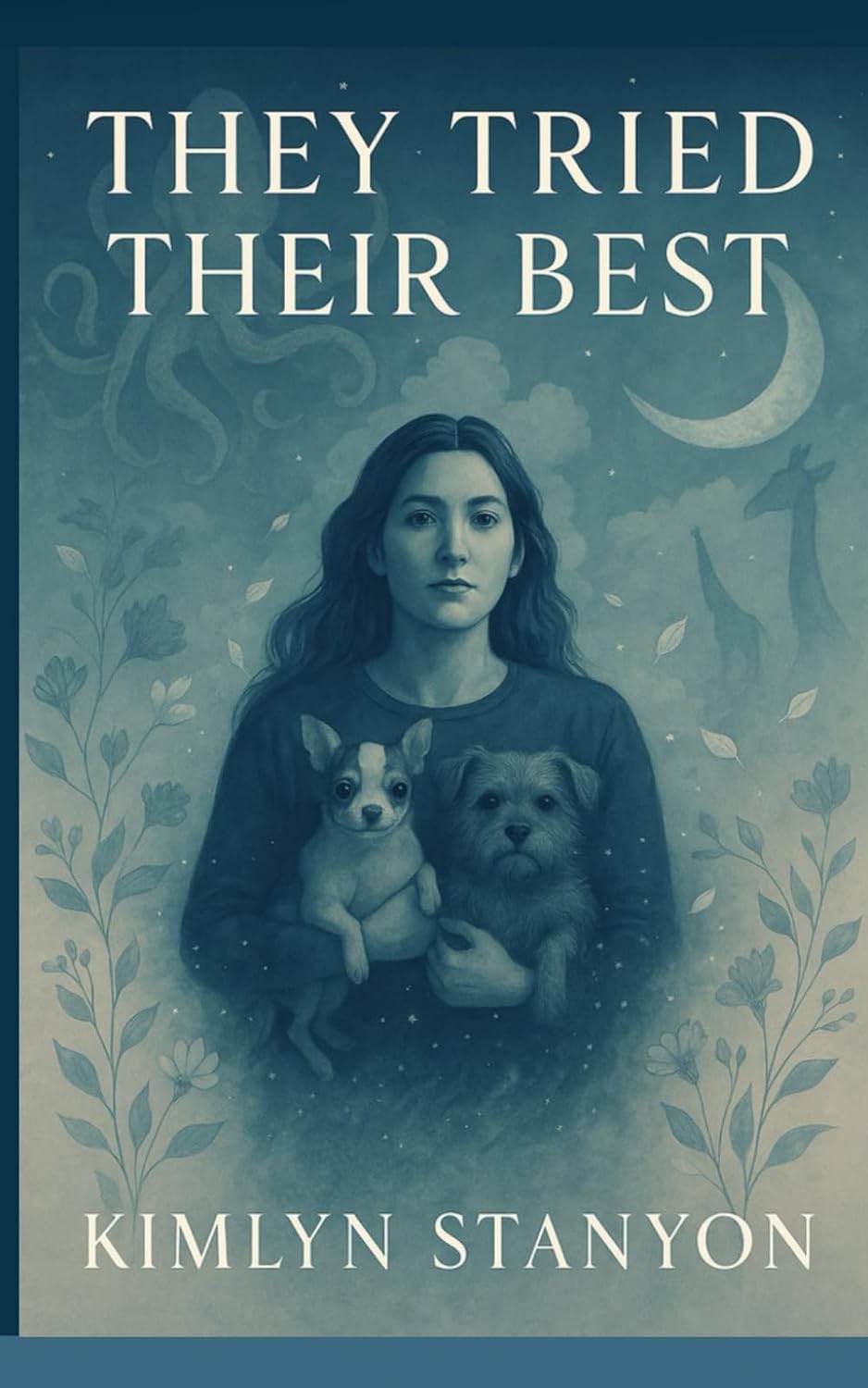
The book follows the inner life of a woman navigating modern loneliness, love, and survival. It begins with quiet domestic scenes that show the strange mix of comfort and despair in everyday routines, then tumbles into awkward dates, toxic men, obsessive scrolling, and a world tilting into chaos. Her dog, Honey, is her anchor, and later, a new puppy joins the mix. As personal heartbreak runs alongside collapsing politics and rising paranoia, she turns toward building a bunker—half symbol of safety, half desperate project. The story blends personal confessions with dark humor, showing both the numbness of screen-soaked nights and the ache of wanting to be loved.
I found the writing raw and often uncomfortable, but that felt intentional. It reads like opening a diary, one full of shame and yearning and sharp observations. The author captures the rhythms of loneliness so well, like the endless scrolling, the forced laughs, the hollow comfort of TV and apps that pretend to connect. At times, I felt impatient with the narrator, but then I realized that was the point. She is flawed, and the honesty of those flaws is what makes her compelling. The style is jagged, almost chaotic, but that messiness mirrors the world she lives in.
Emotionally, the book hit me in waves. Sometimes I laughed at the biting asides, other times I felt a knot in my chest from the self-doubt, the grasping at crumbs of affection. There’s a scene after a disastrous date that made me want to throw the book down in anger at men like that, but then the vulnerability after, the quiet moment of self-love, pulled me back in. The bunker storyline in particular moved me. It’s absurd and practical at the same time, a metaphor for needing safety when the world feels hostile. The writing is simple, sometimes stark, yet it holds these emotional punches that sneak up on you.
I think this book would be powerful for anyone who has felt let down by people and yet still holds onto hope. It’s not for readers who want neat plots or tidy resolutions. It’s messy, alive, and sometimes exhausting, but in a way that feels real. I’d recommend it to those who like character-driven stories, people who aren’t afraid to sit with discomfort, and anyone who has ever curled up with their pet while the world outside seemed to spin out of control.
Pages: 184 | ASIN : B0FC83DT39
Still Waters Run Deep

PEOPLE PERSONnel follows a burnt-out HR manager trudging through her final year at a shrinking charity while juggling caregiving for her declining mother and quietly plotting a radical act of mercy. What was the inspiration for the setup of your story?
I have worked in HR in the not-for-profit sector for over 30 years and I live in Whitstable (UK). I have written before (historical) but thinking of the old adage, ‘write what you know’ I decided to do just that. I wrote something where character and location were key. You’ll notice it is not set in a particular time because I didn’t want it to date. I hope it will be picked up and televised one day so that my antihero can reach a wider audience and I can retire, like Janice.
I found Janice to be a very well-written and in-depth character. What was your inspiration for her and her emotional turmoil throughout the story?
Thank you. No spoilers but I wanted her to be a very ordinary person who ends up in the position of doing extraordinary things. She flies under the radar. She is invisible and for what happens in the story the fact that she is so overlooked gives her a very significant advantage.
What were some themes that were important for you to explore in this book?
Still waters run deep. It’s the quiet ones you want to watch out for. Again, no spoilers, but most fictional killers are larger than life as are the characters who catch them. To me it’s far more disturbing if the killer turns out to be someone just like you. I put, ‘But she always seemed so nice…’ on the back cover because that’s what people always say when their crimes come to light. Janice is a person who keeps herself to herself.
What is the next book that you are working on, and when can your fans expect it to be out?
I wrote this book 8 years ago and only very recently revisited it and got it published. I do have ideas for another book about Janice, perhaps a prequel, and hopefully that will be out in the next 6-12 months rather than in another 8 years.
Author BlueSky
She commutes every day from her home in Whitstable, Kent to London and is soon to retire from her standalone role for a not-for-profit sector organisation, that is facing very difficult financial decisions. She is innocuous, dull, easily overlooked and cut an inconsequential, loveless path through, what appears to have been, a largely non-eventful life.
Everyone knows she wouldn’t lift a finger. Everyone knows she wouldn’t swat a fly. Everyone knows she’ll just sit there and be quiet. No one would think twice about her, but Janice Mead’s savage way of exiting those who are now surplus to her requirements may change all that. See what kind of a person Janice Mead really is.
PEOPLE PERSONnel

PEOPLE PERSONnel follows Janice Mead, a seasoned HR manager trudging through her final year at a shrinking charity while juggling caregiving for her declining mother and quietly plotting a radical act of mercy. Set against the backdrop of a dreary office and the grey sprawl of southeast England, the story slips between sardonic workplace comedy and unsettling introspection before veering into a shocking yet oddly tender act of revenge and redemption. Holup delivers a narrative that simmers slowly, then boils over in a morally complex and relatable way.
Holup’s writing is dry, sharp, and deeply British. The voice of Janice (or Myra, depending on which identity you trust) is both painfully funny and heart-achingly bitter. Her observations cut deep, especially on ageism, bureaucracy, and the way society quietly dismisses older women. I found myself wincing at how real it all felt. There’s no sugar-coating here. It’s the raw, unfiltered truth of late-career burnout and quiet domestic despair, until, suddenly, it’s a murder mystery disguised as an act of grace.
What really surprised me is how effortlessly Holup builds a character who is both forgettable and unforgettable. Janice is invisible in the way that older women often are, and yet she becomes the exact opposite by the end: powerful, decisive, terrifying in her stillness. I couldn’t stop thinking about her. The bees, the gloves, the crispy pancakes, all these odd details add up to something chillingly intimate. The ending, though extreme, felt almost inevitable. It left me with that odd emotional mix of satisfaction and sadness, like watching a long-overdue storm finally break over a parched field.
If you like character-driven fiction with bite, with humour that borders on cruelty but never loses its humanity, then you’ll get a lot out of it. It’s perfect for readers who enjoy Eleanor Oliphant Is Completely Fine, but wish Eleanor had a darker side and a plot to poison someone. PEOPLE PERSONnel is bleak, funny, and full of feeling.
Pages: 307 | ASIN : B0FC462XY8
Do We Really Trust God?

Trust on Trial explores the complexity of human faith, betrayal, and redemption by staging a trial where “Earnest Trust” is accused of fraud, betrayal, and breach of contract. What was the inspiration for the setup of your story?
Honestly, it started with a question that hit me in the gut: We all have trust issues and how often does our trust issues impact our ability to trust God? Do we really trust God…or just say we do? From there, the courtroom idea took shape. I imagined Trust not as a concept, but as a character. Tired, beat up, misunderstood; and then put him on the trial of his life. Because let’s face it: we all have trust issues. Not just with people. With God. And until we drag those doubts into the light and interrogate them, we’re stuck spiraling and repeating the same cycle of misplaced trust.
The legal drama was the perfect lens. It’s structured, intense, and emotionally charged; almost like spiritual wrestling. It gave me the space to let readers become jurors in their own faith journey. And it gave Trust a voice we rarely give him.
What were some themes that were important for you to explore in this book?
Oh, we’re going deep. This book is about more than just faith; it’s about what happens when faith fractures. Themes like betrayal, disappointment with God, spiritual deconstruction, and church hurt are front and center. But more than that, I wanted to explore redemption. Not the clean, polished kind, but the messy, bloody, uncomfortable kind where people have to face their own reflections in the courtroom mirror. I also wanted to tear into the myth that doubt means failure. Because sometimes, doubt is just the doorway to deeper trust.
I find that, while writing, you sometimes ask questions and have the characters answer them. Do you find that to be true? What questions did you ask yourself while writing this story?
Absolutely. The entire book is one giant interrogation—of Trust, of faith, of myself. Every character is either asking or answering hard questions we usually avoid and lock away in the recesses of our minds.
Questions like:
What does it mean to trust when nothing makes sense?
Is God still good when the world isn’t?
Can I forgive the people who shattered my trust; and still trust again?
Am I holding onto control instead of trusting in the God I say I believe in?
So yes, the characters were answering questions I didn’t always have the courage to say out loud. That’s what made the courtroom setting so powerful. It gave me permission to go there.
What were some goals you set for yourself as a writer in this book?
I had two goals, and neither involved playing it safe.
Tell the truth, even if it’s ugly. I didn’t want to sanitize doubt or pain. I wanted readers to feel seen in their mess, not shamed by it. I wanted them to be confronted head on with the various ways they have had their trust broken in their lifetimes and examine if they have been misplacing their trust.
Start a conversation that keeps echoing after the last page.
I wanted readers to walk away wrestling with their own verdict. This isn’t a book that gives you answers on a silver platter. It asks you to decide. To confront your trust issues and look at broken trust, trust itself, and faith through a fresh, unfiltered lens.
My mission has always been to blend chaos with meaning, comedy with conviction, and absurdity with truth. Trust on Trial is all of that…and then some.
Author Website
What if Trust were dragged into court, charged with fraud, betrayal, and breach of contract? What if your own experiences with broken promises, lost faith, and second chances became the evidence? Trust on Trial isn’t just a book. It’s a courtroom battle for the ages, where Trust himself is on trial and readers hold the power to decide his fate. Through witness testimonies from history, the Bible, and real life, this gripping narrative challenges everything you believe about Trust, faith, and redemption. Can Trust be restored, or is he beyond saving?
As the prosecution and defense build their cases, readers will wrestle with questions like:
•Can Trust ever be fully rebuilt after betrayal?
•Is Trust dangerous, or is he necessary?
•What does it mean to put Trust in something greater than yourself?
The evidence is presented. The testimonies are compelling. Your verdict will define what Trust means in your life. Step into the courtroom, examine the evidence, and render your verdict. The stakes have never been higher.
Trust on Trial
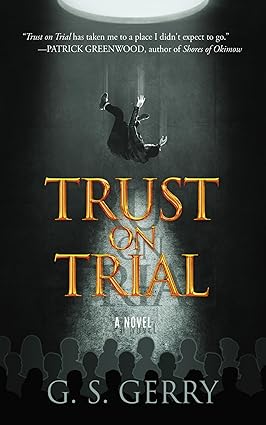
In Trust on Trial, G.S. Gerry delivers a genre-defying courtroom drama that puts the very concept of trust in the defendant’s chair. Through a bold and imaginative framework, Gerry explores the complexity of human faith, betrayal, and redemption by staging a trial where “Earnest Trust” is accused of fraud and breach of contract. The book moves through opening arguments, witness testimonies, and mounting evidence, both secular and sacred, asking the reader to consider the fragility and power of trust in their own lives. As jurors, readers are dragged into the emotional and philosophical firestorm surrounding every broken promise, every heartfelt risk, and every soul-deep disappointment.
Reading this book felt like watching a courtroom thriller crash headfirst into a TED Talk with a pastor and a stand-up comic on the bench. And somehow, it works. The writing style is punchy, dramatic, and often hilarious, with a rhythm that sways between poetic intensity and playful banter. Gerry plays with metaphor and theatrical tension in a way that makes each chapter feel like a scene in a well-directed play. His characters, Earnest Trust, the peacock-like prosecutor Curtis Reed, and the soulful defender Harvey Shield, are vivid, layered, and unforgettable. But underneath the flair and snappy dialogue is a serious meditation on pain, vulnerability, and where we choose to place our trust, people, institutions, or God.
The book leans on allegory and symbolism. At times, I craved more room to sit with the ideas rather than be handed metaphors. And yet, even in those moments, I couldn’t look away. This book struck nerves I didn’t know were still raw. It reminded me of past betrayals, yes, but also of why I continue to trust, despite it all.
If you’ve ever questioned your faith in people, in systems, in God or if you’ve been burned and are afraid to try again, this book is for you. It’s for the skeptical, the hopeful, and the broken-hearted. Trust on Trial isn’t light reading, but it’s real. It’s funny, aching, bold, and brutally honest. It got under my skin and made me think harder about something I too often take for granted.
Pages: 182 | ASIN: B0FBXDVGYZ


