Blog Archives
Depression


Depression by Christian Martin is an inspiring novel that captures the stark realities of life during the Great Depression. Wade and Ruby, siblings who grew up in poverty, seize an opportunity to move to New York City in search of a better future. The story not only follows their challenging journey in the metropolis but also delves into the early lives of their parents, Martha and Wyatt, revealing a history marked by highs and lows.
The novel offers a vivid depiction of the hardships faced by families during the Great Depression. Many, like Wade and Ruby’s family, relied on agriculture for survival, but resources were scarce. Wade’s bold decision to leave everything behind for the uncertainties of New York City is a testament to the human desire for change and betterment. Ruby’s character shines brightly with her determination and unwavering focus as she pursues her acting dreams, contrasting with Wade’s darker path. His experiences serve as a cautionary tale about the dangers of losing sight of one’s core values. Ruby’s journey is particularly inspiring. Her dedication and resilience exemplify how dreams can be realized through hard work and confidence. Wade’s story, on the other hand, highlights the pitfalls of getting caught up in superficial pursuits. Together, their stories remind readers that, regardless of current struggles, hope and the determination to rewrite one’s story can lead to a better future. Depression is enlightening and motivational.
Depression by Christian Martin is a compelling read that underscores the importance of resilience and hope during tough times. The novel provides valuable lessons and inspiration, making it a worthy addition to any reader’s collection.
Pages: 224
Power of Self-Love

Back to Loving My 1st Wife is a deeply personal and emotionally charged memoir that explores the trials and tribulations of caring for your wife who battles severe mental health issues. What were some ideas that were important for you to share in this book?
Great question, thank you for asking.
One of the main ideas I wanted to drive home was the importance of educating oneself when it comes to caring for someone with a serious medical condition. I wanted to stress the significance of proper, extensive research and share the resources I came across. It wasn’t just about understanding the medical jargon; it was about grasping the emotional and psychological impact her illness had on her and our marriage. The more I learned, the better I could empathize with her experiences and anticipate her needs.
Understanding her medications was another critical aspect. I needed to know the purpose of each medication, their side effects, and how they interacted with her mind and body. This knowledge was vital in managing her care and ensured I didn’t endanger her life. It also allowed me to communicate effectively with her doctors, making sure they had all the necessary information to adjust her treatments when needed.
But perhaps most importantly, I wanted to share what I learned with others. I knew there were other husbands and caregivers out there facing similar struggles, feeling overwhelmed and unsure of where to turn. By sharing my journey, I hoped to provide some guidance and reassurance. I wanted to let them know that they weren’t alone. I wanted to be a resource for others in similar situations.
I appreciated the candid nature with which you told your story. What was the hardest thing for you to write about?
Wow. Another great question but a tough one.
Reliving the delicate and frail nature of my wife’s health was an emotional rollercoaster. Every day, I was reminded of her struggles and the immense toll her illness took on her. But what made it even harder was grappling with my own mental health challenges.
As my mental health began to deteriorate, the flashbacks and the visual and auditory hallucinations I experienced were intense and terrifying. These weren’t just fleeting moments; they were vivid and intrusive, making it hard for me to focus on anything else. The constant worry and stress took a toll on my mental well-being, and for a while, every day felt like a battle just to be present for my wife.
There were days when it felt like the weight of it all was too much to bear. I struggled to maintain my composure, feeling overwhelmed by the responsibility and the fear of what could happen next. It was a dark and lonely place, and I often felt like I was fighting an invisible enemy.
But revisiting and sharing my mental health decline became a crucial part of my journey. By sharing my experiences, I began to process my emotions and understand the impact they had on me. It wasn’t easy, but somehow, I knew it was necessary.
Opening up about my mental health struggles also allowed me to seek the support I needed. I started seeing a psychologist, who helped me develop coping strategies and helped me manage my depression and PTSD. I learned the importance of self-care and making time for myself.
Through it all, I discovered that being present for my wife didn’t mean ignoring my own needs. In fact, taking care of myself was essential to being a better caregiver. By acknowledging my struggles and seeking help, I was able to find a balance that allowed me to support my wife while also taking care of my mental health.
What do you hope is one thing readers take away from your story?
This is perhaps, my favorite question of all.
As I reflect on my journey as a husband and caregiver, I hope the main takeaway from my story is the importance and power of self-love and unconditional love. These two forms of love have been my anchors, guiding me through the toughest times and helping me find strength I didn’t know I had.
Self-love is something we often overlook, especially when we’re focused on caring for someone else. But I learned that taking care of myself was crucial. It wasn’t about being selfish; it was about ensuring I had the energy and emotional stability to support my wife. Self-love meant recognizing my limits, seeking help when I needed it, and giving myself permission to rest and recharge. It was about treating myself with the same compassion and kindness that I showed my wife.
Unconditional love, on the other hand, was the driving force behind everything I did. It’s the kind of love that remains steadfast through the highs and lows and doesn’t waver when things get tough. This love was my motivation to keep going, even when it felt like everything was falling apart. It gave me the patience to handle difficult days and the courage to face the unknown.
I think we often underestimate the power of love. It can move mountains, mend broken hearts, and potentially save lives. When my wife was at her most vulnerable, it was love that kept us both going. It was love that made the impossible seem possible, that turned despair into hope.
Through this journey, I’ve come to realize that love isn’t just an emotion—it’s a force of nature. It has the power to heal, to inspire, and to transform. When we embrace self-love and unconditional love, we tap into a strength that can carry us through the darkest times.
If there’s one thing I want readers to take away from my story, it’s this: never underestimate the power of love. Whether it’s love for yourself or love for someone else, it can make all the difference. It can be the light in the darkness, the reason to keep going, and the force that helps you overcome any obstacle. So,
Author Links: GoodReads | Amazon
Continuing the saga from the author’s award-winning autobiography, “In Love with My 5 Wives, A Broken Man’s Journey on How to Love His Broken Wife,” this poignant narrative underscores the transformative power of love and support within a marriage. It powerfully demonstrates how the author’s unwavering commitment became both a beacon of hope and a testament to the power of selfless sacrifice, inspiring men with the potential of these elements in a marriage.
The book vividly portrays the author’s emotional and psychological challenges, taking readers on a rollercoaster of emotions. Through a delicate balance of heartfelt storytelling and agonizing reflections, “Back to Loving My 1st Wife” is an inspiring tribute to the strength and enduring impact of a husband’s love.
Back to Loving My 1st Wife: A Husband’s Unconditional Love & The Aftermath of Caregiver Stress


Back to Loving My 1st Wife is a deeply personal and emotionally charged memoir by James Bass that explores the trials and tribulations of caring for his wife, Crystal, who battles severe mental health issues. The narrative is a heartfelt journey through the complexities of mental illness, the challenges of caregiving, and the enduring power of love and resilience.
From the onset, Bass’s writing captivated me with its raw honesty and vulnerability. The detailed accounts of his struggles, from navigating the intricacies of the DSM-5 to confronting the inadequacies of the healthcare system, paint a vivid picture of a man determined to save his wife. His decision to take Crystal home against medical advice, driven by a profound sense of love and duty, is both compelling and inspiring. This section resonated deeply with me, highlighting the often unseen sacrifices made by caregivers. Bass’s reflections on his own mental health struggles added a rich layer of complexity to the memoir. His candid discussions about experiencing PTSD and the emotional turmoil he faced while supporting his wife were particularly poignant. The moments where he describes his flashbacks and the constant battle to maintain composure in the face of his own inner demons were powerfully evocative. These passages underscored the memoir’s theme of resilience and the personal cost of caregiving. One of the most striking aspects of the book is Bass’s exploration of his past and its impact on his present. The memoir delves into his childhood experiences with a violent stepfather and the lasting effects of trauma. This background provided a deeper understanding of his current struggles and motivations, particularly in the chapter where he wrestles with the desire for revenge against those who wronged him and his wife.
Back to Loving My 1st Wife is a powerful testament to the strength of love and the human spirit. James Bass’s journey is both heart-wrenching and inspiring, offering valuable insights into the challenges faced by caregivers and those living with mental illness. This book is highly recommended for anyone seeking to understand the profound impact of mental health issues on individuals and families, and for caregivers who will find solace and solidarity in Bass’s experiences. It is a must-read for those who believe in the transformative power of love and resilience in the face of adversity.
Pages: 131 | ASIN : B0D5NJX8CJ

Talking About Adolescence: Book 1: Anxiety, Depression, and Adolescent Mental Health

Adolescence is a period of immense change, swirling emotions, and the constant push-pull between independence and dependence. It’s no surprise that teens and the adults who love them often find themselves adrift in a sea of uncertainty. Talking About Adolescence: Book 1: Anxiety, Depression, and Adolescent Mental Health, by Eichin Chang-Lim and Lora L. Erickson, serves as a vital compass for navigating this challenging journey.
Chang-Lim and Erickson offer more than just a theoretical exploration of adolescence. They craft a practical guide that tackles the real issues teens face today. Social media addiction, academic pressures, and the ever-present anxieties of growing up are all dissected with clarity and understanding. The authors don’t shy away from difficult topics either. Self-harm, substance abuse, and the often-stigmatized subject of mental illness are presented with sensitivity, focusing on providing resources and fostering help-seeking behavior. What sets this book apart is its accessibility. Gone are the days of dense, jargon-filled self-help books. Chang-Lim and Erickson use clear headings, bullet points, and engaging storytelling to ensure that teenagers can grasp even the most complex concepts. Personal anecdotes pepper the text, allowing teens to connect with the experiences shared and feel less alone in their struggles. This accessibility extends beyond teenagers themselves.
Talking About Adolescence is a valuable resource for parents, educators, and anyone who interacts with young adults. The book equips readers with the knowledge and tools to navigate the often-turbulent waters of adolescence. Parents will gain valuable insights on fostering open communication and recognizing the signs of mental health struggles. Educators will find guidance on creating supportive learning environments that address the emotional well-being of their students.
Talking About Adolescence empowers teenagers to take charge of their emotional health. The book doesn’t offer empty promises of a smooth ride but rather equips them with the tools to weather the storms of adolescence and build a strong foundation for a fulfilling future. Chang-Lim and Erickson have crafted a must-read for anyone invested in the well-being of today’s youth, providing a comprehensive and compassionate guide to understanding and supporting adolescent mental health.
Pages: 371 | ASIN : B0CTKZ3DGH
The Unvarnished Truth: Purpose in the Pain

In The Unvarnished Truth, Dr. Karla Hylton presents a poignant narrative, delving into her journey through depression and trauma within the confines of a turbulent marriage. The book opens with Karla reflecting on the early days of her relationship, marked by overlooked warning signs, and progresses into the complexities and dangers that later unfolded. Hylton’s candid portrayal of her experiences – from manipulation and hurtful remarks from her ex-husband to her own introspections and regrets as a mother and spouse – paints a vivid picture of her challenging marital life. The narrative intensifies as it explores her struggles with regret, suicidal ideation, the intricacies of divorce, and the pain of estrangement from her children.
Hylton revisits her traumatic past with remarkable courage, aiming to foster open discussions on mental health and provide solace to others facing similar challenges. Her memoir stands out for its frankness and introspection, touching on the anguish of domestic isolation and hostility and the complexities of personal accountability during vulnerable times. This book is an immersive memoir that offers an in-depth look into Hylton’s life. The narrative is enriched with detailed accounts of various challenges, including a harrowing childhood incident and her struggles for financial independence during critical health crises. The memoir encompasses a wide array of themes, such as divorce, trauma, education, writing, therapy, parenting, familial conflicts, loss, childhood experiences, manipulation, psychological treatments, friendships, and extramarital affairs, presenting a multifaceted exploration of Hylton’s life.
This memoir is particularly resonant for those who have endured abuse from narcissistic partners or acquaintances. Dr. Hylton’s forthrightness in sharing her experiences with depression and suicidal thoughts is not only brave but also immensely inspiring for others in similar circumstances. The Unvarnished Truth is a testament to Dr. Hylton’s generosity and commitment to shedding light on challenging yet crucial topics.
Pages: 274 | ASIN : B0CHDP6CXH
Walking Wounded

From Depression to Contentment: A Self-Therapy Guide is a book that provides help for readers who are experiencing depression and desire an alternative to outside therapy. It presents well-researched techniques and methods that are straightforward to implement. Why was this an important book for you to write?
Actually, the book title addresses depression because my publisher is very firm: each book should seem to limit itself to one problem. However, psychotherapy doesn’t actually work like that. With suitable modification, essentially the same tools will provide a path out of chronic anxiety, addictions, anger… basically, human suffering. This is because, as I say in the book, classifications like in the Diagnostic and Statistical Manual are basically science fiction.
Second, the therapy bit is only halfway, from ongoing agony to “normal,” which is the walking wounded. Then the tools of positive psychology and Buddhist psychology allow you to rise WAY above that.
This book is the distillation of decades of my personal experience, study, and therapeutic practice. I wrote it to be of service to as many people as possible, then a few more.
How much research did you undertake for this book and how much time did it take to put it all together?
In a way, no research at all — specifically for this book. When I started university, I decided not to go into Medicine because it was a 6-year course, then at least 4 more years of training. Then, overall I spent 14-and-a-half years as a student. And in my profession, you don’t ever stop learning. A condition of being registered is continuous study. And even though I retired in 2013, I have kept up with new research, just from interest.
So, while this research and study were not for the book, all that information and knowledge is in there. Well, it is, up to the publication date. It’s annoying, but when I sent my time machine in for service, they returned it to an alternative universe. What’s happened since is only marginal, but it doesn’t matter all that much, because therapy, including self-therapy, will work if three conditions are present, as Carl Rogers has described. These are empathy, love of the kind Buddha, Jesus and many other sages have told us to give to everyone, and genuineness. That last one is that it has to be honest.
What were some ideas that were important for you to share in this book?
• Chronic emotional suffering beyond what the situation warrants is always due to the interaction of
several factors. One of them is childhood trauma, as seen through the child’s eyes.
• Depression, chronic anxiety and the like are not due to faulty brain chemistry.
• Using the tools I teach in the last part of the book, you can live a contented life in any situation.
What is one thing that you hope readers take away from From Depression to Contentment?
The more you give, the more you get, and also the more you grow.
Author Links: GoodReads | Twitter | Facebook | Linkedin | Mastodon | Website
Every tool in this book is based on research, but presented in an easy to understand, easy to apply manner.
With homework assignments, you will find your inner strengths, uncover the true source of happiness and develop great resilience.
Learn how to put the philosophies of all great religions to practical use, even if you are an atheist.
This program can help you start a new life – one of meaning, positivity and purpose.
Unlike instructional books, this book is not only useful but also enjoyable.
From Depression to Contentment: A self-therapy guide
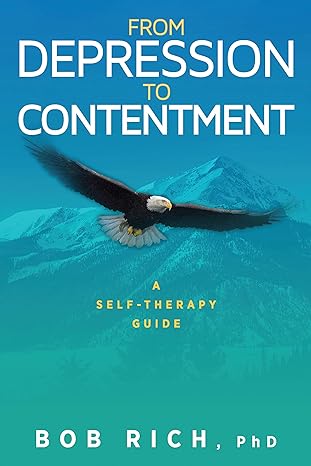
From Depression to Contentment: A Self-Therapy Guide, by Bob Rich, is an enlightening and approachable book that tackles the complex topic of depression. Rich’s book is not just a clinical discourse but a practical guide filled with empathy that draws from the author’s own experiences and psychological expertise.
Rich’s writing style is both engaging and easy to understand, a breath of fresh air in the often technical world of psychological self-help books. His personal anecdotes add a level of authenticity that’s both relatable and inspiring. The book’s approach of viewing depression not just as a medical issue but as a perspective on life is a refreshing angle. It challenges readers to rethink their own views on depression, making it an engaging read for anyone interested in mental health.
The book is skillfully structured, guiding the reader through various strategies, from basic self-care to deep psychological work. Particularly impressive is the chapter on “Controlling Depression,” where Rich introduces practical methods to reframe negative thoughts, encouraging a proactive stance in dealing with depressive thoughts. It is worth noting that some readers may find the chapter on spirituality less applicable, depending on their personal beliefs.
The conclusion of the book underscores a crucial message – the importance of actively applying these strategies in one’s life. This is where Rich’s guide distinguishes itself; it’s not just informative but also motivational.
From Depression to Contentment is a highly recommended read for anyone who is struggling with depression or has an interest in mental health. It’s particularly suited for readers seeking a blend of professional insight and practical, easy-to-implement strategies.
Pages: 157 | ASIN : B07PGQMP4Q

Breaking Down the Barriers

Perceiving Depression is an intellectual journey that prompts readers to consider new perspectives on mental illness and look at a mix of historical, religious, and scientific approaches to understanding human experiences. Why was this an important book for you to write?
To try to know myself, in moments of deep emotional crisis, or in short, to know in depth what is happening to me and the possibility of controlling myself, with the help of people who in my opinion represent the greatest moral authority or the truth of the things that can be applied in my life.
What were some of the goals you set for yourself as a writer in this book?
The exploration of the things that so intensely affect me, but in the realm of self-knowledge, even though such inquiry terrified me, nevertheless at the same time I felt protected by the promise of the truth in which I always believed if I stuck to Socratic philosophy through reading the classical Greek Plato. In order to regain the security of which I felt I had lost in a resounding way; due to the intense and morbid fears to which he suffered daily.
Did you find anything in your research of this story that surprised you?
Yes, because unexpectedly, without really intending to, I discovered the thoughts that violently subjugate me and arouse intense fear, and above all, to be able to see them in their essence or reality, that is, as senseless or merely absurd thoughts.
What do you hope readers take away from Perceiving Depression?
May they allow themselves to know themselves by breaking down the barriers or fears that often prevent us from seeking the truth, that is, that under solid guidance it is possible not to fall into deviations or misdirection for all those who, out of necessity or interest, wish to cross the oceans of thought; which, like a sailboat, is carried by the prevailing winds where we do not want to go. However, this knowledge, of diseases due to psychiatric imbalance, does not promise a cure without specialized medication, but it can contribute powerfully to helping us not to fall into the downward spiral of uncontrollable fears. And I want to add that, for me, it allowed me to conclude my working life, after 32 years of work, of which almost 27 were developed in harsh work environments (as an operations engineer on offshore oil platforms), a period in which, for various reasons, I experienced strong relapses, which I, not without little difficulty, overcame and even more, allowed me to conclude in a normal way with the end of my working life.
Author Links: Goodreads | Amazon
It is not the product of an inspiration or state of mind, nor is it the product of a set of observations only, nor is it yet the product of arriving at reason, nor is it reason itself. It is the product of a method attached to the desire for the search for truth, which makes it a scientific method with unexpected and impersonal conclusions that end with the reality of the path to the stillness of thought.


