Blog Archives
Six Weeks: A Literary Memoir


William Ledbetter’s Six Weeks is an emotionally stirring memoir about caring for his older sister, Nancy, during the final six weeks of her life. The story begins with a promise he made to become her caretaker, then reaches backward through their family history to show how the two siblings developed their different but complementary ways of handling trouble. Ledbetter is the planner and problem-solver, while Nancy brings patience, faith, and an instinctive concern for other people. Their shared humor keeps the book grounded, even as hospice care, cancer, financial strain, and inherited family wounds move to the foreground.
The memoir’s four sections, “The Promise,” “The Dawn,” “The Afternoon,” and “The Night,” give Nancy’s last days the shape of a single life moving toward evening. Within that framework, Ledbetter shifts between the hospice room and earlier generations, tracing how poverty, institutional cruelty, difficult marriages, illness, and family expectations shaped Nancy and him. An old clock, a cup of rice pudding, a crooked coal-town house, a set of keys, and a carefully assembled funeral binder become more than remembered objects. They carry the history of people who learned to survive through work, thrift, routine, and dry humor.
The author is especially effective when he stays close to ordinary physical details. Hospital corridors, unfinished meals, medication syringes, financial paperwork, fast-food breakfasts, and quiet conversations reveal what caregiving actually feels like from hour to hour. The book treats love as something practical: making calls, keeping records, moving furniture, finding money, telling an old joke, or simply staying awake nearby. Its recurring reflections on inheritance and responsibility give the narrative a steady refrain. The directness feels consistent with Ledbetter’s character and with the promise at the heart of the memoir.
I’d recommend Six Weeks most strongly to readers who appreciate family memoirs centered on caregiving, sibling devotion, and the complicated work of making peace with the past. It’ll also speak to anyone who has managed hospice care or watched a family member’s final illness turn love into a long list of necessary tasks. Readers looking for an honest account of grief shaped by humor, faith, duty, and reconciliation will find plenty to sit with here. The closing letter from Nancy gives the book an intimate final note, confirming that all the organizing, remembering, and showing up was understood as the love it had always been.
Pages: 248 | ASIN : B0H2QHTJN4

Our Families and Communities

How to Show Up for the Dying & Their Loved Ones offers practical, compassionate guidance from diagnosis through death and into the long landscape of grief. Was there a particular death or caregiving experience that first made you think, “People need to be taught how to do this”?
Absolutely! For sure, the foundation of how I show up, I learned in my big family and through my work as a midwife, but there was still a lot I needed to learn.
When I first moved to Paonia, a small rural town in Western Colorado, I met three families, each with a young parent dying of cancer. Without giving it much thought, I dove into caring for all three of them, and the nine children between them. Caring for them was excruciating, and also beautiful. The way our community came together reminded me of what we all long for when we say “It takes a village.” Our little town supported them as I imagine a tribal community would. Most of us, myself included, had never been so intimately involved with the dying process. With the support of one of our local death doulas, Carrie Lerner, we were taught about this sacred and ancient rite of passage. As a birth midwife with decades of experience caring for families at the veil, I stepped in and took on a leadership role with all of them. This included: caring for their children, taking the dying partners to appointments, feeding their families, cleaning their houses, and taking care of their partners. When the time came, I participated in cleaning their bodies after death, transporting their bodies in my minivan to their resting places, and facilitating their burial and cremation ceremonies.
These three parents, Freeda, Javier, and Jordan, died 6 months to the day of each other. Two days after Jordan died, I thought to myself, “I’ve just received a download, and I need to share what I’ve learned with others!” Having never written anything substantial before, I began the long and oftentimes unbearable process of writing this book.
As a midwife, who traditionally would have been at the bedsides of the birthing and the dying, I was surprised by how little I knew about the dying process. This led me to assume that most other people in the Western world also know very little about it, and could benefit greatly from what I had learned.
Your framework includes self-care, sacrifice, staying close, bravery, and sitting in the fire. How did those five principles emerge?
Ahh, what’s up with the five principles you ask? Jake Woods, Freeda’s husband, is to thank for this book. He said, “Moriah, there’s something different about the way you show up, and you need to share your ways.” So I got to thinking about what it is that I bring to caring for others, and out of that inner exploration emerged these five principles. Caring for the dying and their loved ones is hard, but it’s not rocket science.
These principles are to be used like road signs to help folks remain on course with their intention to show up. They’re anchors to help us stay grounded so that we don’t unintentionally drift away when people need us most. If at any point during the process of leaning in to offer support, someone feels unsure about what to do or say, I encourage revisiting these five principles. While I wrote the principles and they emerged from somewhere in me, I’m still very much a student of them. I haven’t mastered any of the ideas or tools in this book. What I’ve found is that when I get stuck, if I sit and reflect on these principles, my next best step always emerges. I hope that is the case for others too.
Caregivers often become almost invisible because attention naturally centers on the ill person. What do caregivers most need from their communities?
That’s a really great observation and question. Sad but true in many situations. The absolute best way to care for someone who is dying or facing a terminal illness is to care for their caregivers. Those who are sick can’t fully lean into their caregivers unless their caregivers are well supported. If their caregivers are not well supported, they themselves will try to support them, or lessen the burden of what they have to carry. I see this as an example of what is broken within our “human ecology.” For example, when a primary caregiving parent is under-supported, their child or children will actually try to care for them. Even though this isn’t fair to the child, the support has to come from somewhere for the child to be stable. Similarly, if after a birth everyone’s attention goes to the baby, the mother will struggle if her needs are unseen. The same is true with the dying.
In nature, the actions and reactions that take place in an ecosystem are like a spiderweb. When one strand is broken, the web starts to unravel. One strand does not equal a web. One strand equals: At Risk of Breaking.
Primary caregivers are one strand within the web of life that surrounds them. They need to be held up and supported by many competent layers of support, so that the person facing death can actually lean into them. This is essentially what the whole book is about: Finding our place in the web of our families and communities. It’s not just the primary caregivers who need support. Those who are supporting the primary caregivers need support, and those who are supporting those who are supporting the primary caregivers also need support, and so on…
The book opens with the broader Standing at the Veil initiative. What do you hope that movement becomes?
Thank you for asking. I believe the book has value for readers on its own, and it’s also a doorway into the Standing at the Veil global support initiative. Two and a half years after completing the first draft of this book, my only brother was diagnosed with cancer. There are no words to describe the pain I felt at my inability to help him and his family more, given that we live thousands of miles apart. And in this way, our family isn’t unique. So many of us in the Western world live far away from those we love and have deep ties with, and at the same time we’re surrounded by people who’ve also chosen to live geographically distant from their loved ones.
While my brother was in the hospital, I spoke with his partner about her needs. She said she longed for people she could rely on and lean into within walking distance from their home. Her needs included: food prep, house cleaning, help with errands, help with projects around the house, and childcare so that she could attend to my brother’s needs and her work. And then, of course, there were her needs for self-care and emotional and spiritual support. She said she desperately wanted someone to physically hold her and a shoulder she could cry on.
Instead of allowing myself to become immobilized by my inability to help them, I channeled my energy into the Standing at the Veil project I’d been gestating. My dream is to empower and train people to feel more confident, comfortable, and capable of showing up for their friends, family, neighbors, colleagues, and those in their local communities.
With trainings for lay people and professionals, along with workbooks, social forums, a global interactive map, and limitless local, national, and international resource links, I believe Standing at the Veil has the potential to transform our current death and dying landscape.
Just as viruses and bacteria constantly evolve in order to adapt, survive, and thrive, I believe this vision of a global support network will reawaken dormant seeds of ancient wisdom and reshape how we show up for each other during the dying process. And on a much bigger level, support the transformation, evolution, and adaptation of our species as we re-learn how to cohabitate with each other and all of nature on this beautiful planet we all call home.
Author Links: GoodReads | Facebook | Standing at the Veil | Website | Amazon
Blending tips and tools, personal stories, essential guidance, and reflective exercises, she invites readers to relearn what our ancestors have always known: how to hold each other while Standing at the Veil. From navigating medical decisions, and helping facilitate hard conversations, to caring for the body and supporting grief “from release to forever after,” this book illuminates a path toward rebuilding a healthy human ecosystem—and opens a doorway to the wider Standing at the Veil global support initiative.
Assumption


Assumption, by Mark Stirling, is a warm, faith-centered companion novel that follows Johnny Promise as he reflects on the people and experiences that shaped his understanding of dignity, disability, and human connection. The book opens in a nursing home, where Johnny forms an unlikely friendship with Bobby Ackerman, a resident with autism and Down syndrome who’s frequently dismissed by the people responsible for his care. Their relationship, built through coffee, cartoons, teasing, and patient attention, establishes the book’s central conviction that everyone longs to be recognized as a person.
From there, the novel widens into Johnny’s own story. After suffering a stroke at twenty, he discovers evidence that the twin sister he was told had died at birth may still be alive. His search leads him to Maura, a deaf young woman who was secretly placed in an institution because an older relative considered her defective. The mystery gives the middle of the book momentum, but the reunion and its emotional consequences are what really matter. Johnny and Maura have to build a sibling relationship as adults, introduce her to a family that believed she was dead, and figure out how love can restore something without pretending the lost years never happened.
Stirling’s storytelling feels like listening to someone recount a meaningful life over coffee. Johnny’s voice is plainspoken, funny, sentimental, and openly religious, with plenty of colorful comparisons and conversational detours. At times, he explains the lesson of a scene after the scene has already made it clear, and some antagonistic characters are drawn in broad strokes. Still, the book’s emotional directness suits its narrator. The strongest passages come from small acts of recognition: Bobby being trusted to help with an ambulance siren, Maura preparing to meet her parents, Johnny learning to live with the visible effects of his stroke, and family members adjusting their lives to make room for one another.
This book will appeal most to readers who enjoy inspirational family fiction, stories about disability and caregiving, and novels grounded in Christian faith. Healthcare workers may find Johnny’s observations about compassion, burnout, and patient dignity especially familiar. It’s also a good fit for readers who value an earnest narrator and don’t mind a story wearing its heart openly. Assumption ultimately asks readers to slow down, look beyond the easiest explanation of another person, and remain curious long enough to discover the life that first impressions conceal.
Pages: 163 | ASIN : B0H3G99WMF
Finding Order in Disorder

Finding Order in Disorder is Ishaa Vinod Chopra’s candid account of living with bipolar disorder while moving through fractured family relationships, immigration, an abusive marriage, repeated hospitalizations, divorce, education, and artistic discovery. The memoir follows her from childhood in India through periods in Canada and Germany, showing how instability, rejection, trauma, and mental illness became intertwined. Chopra writes with unusual openness about manic episodes, medication, institutional treatment, domestic violence, and the difficult work of separating a person’s character from symptoms of an illness.
The book’s most compelling quality is its emotional directness. Chopra doesn’t shape her experiences into a tidy recovery story. Instead, she revisits painful decisions, acknowledges her own mistakes, and allows conflicting feelings about her parents, former partners, doctors, and caregivers to remain visible. Interviews, remembered conversations, personal reflections, and drawings created during episodes give the memoir the feeling of a life being examined from several angles. Her voice is earnest and conversational, and even when she moves into advice or philosophy, the ideas remain rooted in experiences she’s actually lived.
Dance provides the book with its strongest unifying thread. Kathak, Latin dance, painting, yoga, teaching, and performance become ways for Chopra to regulate emotion, preserve identity, and reconnect with herself when illness threatens to define her. Her work with children offers another source of meaning, particularly as she considers how early experiences shape adult well-being. The later chapters become increasingly reflective and practical, addressing sleep, medication, counselling, self-respect, relationships, stigma, and patient autonomy. This shift gives the memoir the character of both a personal testimony and a compassionate conversation with readers facing similar challenges.
This book will resonate most with people living with bipolar disorder, survivors of domestic abuse, and families trying to understand the complicated realities of caregiving. It should also appeal to mental health professionals, educators, and readers interested in how art can support recovery and self-expression. Chopra’s story asks readers to look beyond a diagnosis and see a whole person who can be vulnerable, impulsive, loving, creative, difficult, hopeful, and resilient at the same time. It’s a deeply personal invitation to approach mental illness with greater patience, curiosity, and humanity.
Pages: 190 | ASIN : B0BYZJDZ68
Descent into Dementialand-A True Life Love Story

Descent Into Dementialand is a memoir, and at its core, it is a love story told under pressure. Sherry Hobbs writes about her husband Mike’s decline through Logopenic Progressive Aphasia, a form of dementia, and about the long emotional work of loving someone as the person you know begins to slip beyond reach. The book follows their shared life, the first warning signs, the diagnosis, and the stages that follow, all framed through Hobbs’s extended metaphor of “Dementialand,” with its shifting parks of FrontierWorld, AdventureWorld, FantasyWorld, and the lonely TomorrowWorld reserved for those left behind. It is personal, structured, and painfully clear about where this road leads.
The writing feels direct. Hobbs does not dress this experience up as something noble and tidy. She lets it be hard, repetitive, frightening, absurd, and sometimes even funny. I appreciated that. In a memoir, honesty is everything, and this book earns its emotional weight because it does not pretend caregiving turns a person into a saint. She makes room for devotion and irritation, tenderness and exhaustion, grief and stubborn loyalty, often in the same breath. That mix gave the book a lived-in feel. It felt less like being handed a lesson and more like sitting across from someone who has decided to tell the truth.
I also thought the author’s biggest gamble, the whole Disneyland and black hole framework, worked more often than not. It gives shape to an experience that is otherwise shapeless and cruel. The image of crossing from “Normaland” into a place with no exit is simple, but it works. So does her sense that the person with dementia and the caregiver are traveling through the same crisis in very different ways. At times, the metaphor is theatrical, even a little overbright, but I think that is part of the point. Hobbs is trying to map confusion with the tools she has, and the result makes the book more memorable. Beneath that structure, what I kept hearing was a wife refusing to let clinical language be the only language available to describe what is happening to her husband.
I would most strongly recommend this book to readers of memoir, especially those drawn to family stories, illness narratives, and caregiving books that do not shy away from the mess of real life. I think it would also mean a lot to spouses, adult children, and friends trying to understand what dementia does not just to memory, but to a shared world. It’s a candid memoir shaped by love, fear, humor, and endurance. For readers who want something polished but human, painful but generous, this one is worth their time.
Pages: 334 | ASIN : B0F6RK1VND
Learning and Adventure

Glimpses of Grace is a collection of personal essays that traces your journey through motherhood, caregiving, and vision loss, revealing the quiet moments of grace that give life meaning even as your sight begins to fade. Why did you choose essays instead of a traditional memoir format?
I had long been interested in the essay form and in fact took several online courses in essay construction, but then began writing my first memoir, then the second, then a more spiritual book. Glimpses of Grace grew out of my experience with failing vision. It became a little harder to manage the technology of writing, and it seemed short essays might be the most useful form. I wanted to capture the daily joys and gifts that appeared for me in this journey.
What role does spirituality play in how you understand aging?
I believe we are all spiritual beings, simply living on this planet in our “earth suit.” In looking back over my life, I see that I have always been led to follow a particular path, always connected to the intuitive and spiritual self. There is new learning in every breath of life.
What has aging taught you that younger readers might not expect?
Aging is not a “season of loss” as someone once said. It is a season of letting go of what is no longer needed and looking forward to the learning and adventure that continues to invite us.
How do you recognize grace in your life today?
Oh my. Grace is part of every day. It is in the riches of nature, the small kindnesses shown to us, a smile, the laughter of children, and the new challenges that bring us to new understandings of those around us.
Author Links: GoodReads | Website | Amazon
Most beautifully, Bowen illuminates the sacred connections that bind 1s—fleeting exchanges with strangers that change everything, the trust between patient and caregiver, the revelations that pass between teacher and student, and the deep roots of family love. Each encounter becomes a meditation on how we truly see one another, how we honor the precious gift of being alive together on this earth.
Losing Mom


Losing Mom, by Peggy Ottman, is a memoir about a daughter walking with her mother through the last stretch of her life. The story moves through medical crises, small moments of grace, old family rhythms, and the shifting power dynamic between parent and child. It opens with years of near misses, each one convincing Ottman that maybe her mother would never actually die, and then follows the final days with an honesty that feels both intimate and strangely universal. At its heart, it is about love, caretaking, and the long letting go that comes when a parent fades.
The writing is simple, direct, sometimes almost breathless in the way it tumbles forward. That works for this kind of memoir. The scenes of crisis feel sharp because they are told the way we remember trauma, in fragments and quick flashes. I appreciated how she didn’t try to polish herself into some perfect caretaker. She shows the guilt, the second-guessing, the resentment, the deep tenderness. Her relationship with her sisters adds texture, too. They each carry different responsibilities, and you can feel the family history in every conversation.
What struck me most was the author’s honesty about fear. The fear of losing her mom, yes, but also the fear of doing the wrong thing, of missing a sign, of not being strong enough. Those moments felt very emotional. Some scenes hit hard, like when she speaks nonsense during what might be a stroke. Other moments are quiet, almost gentle, like the nurse patiently washing her mother’s hair. The memoir doesn’t try to turn grief into something tidy. It lets it stay messy and human, which makes it more powerful.
By the end, Losing Mom feels like a long exhale. It doesn’t offer big lessons. Instead, it gives you the feeling of having walked alongside someone through something real. I’d recommend Peggy Ottman‘s story to anyone who gravitates toward memoirs that deal with caregiving, aging parents, and the complicated love that sits underneath family stories. Readers who value emotional honesty over dramatic storytelling will appreciate it most. This is a memoir that keeps you thinking, especially if you’ve ever watched someone you love slowly slip away.
Pages: 300
Protecting Mama: Surviving the Legal Guardianship Swamp
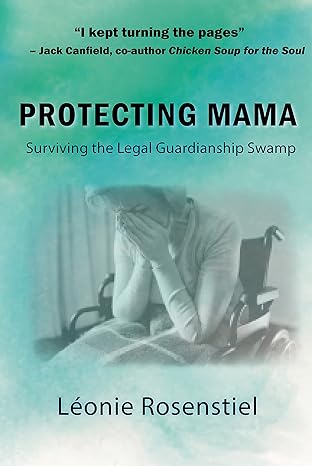
Protecting Mama is an intense, deeply personal, and often shocking memoir that dives into the murky, bureaucratic, and, at times, sinister world of legal guardianship in the United States. Author Léonie Rosenstiel shares the painful saga of her mother’s entanglement in a guardianship system that seems more interested in control and profit than care or dignity. Backed by over 40,000 pages of legal documentation and her own relentless determination, Rosenstiel walks us through years of institutional deception, family secrets, courtroom manipulation, and the emotional toll of fighting a system that feels rigged from the start.
What really gripped me was the raw, unfiltered way Rosenstiel lays out her story. This isn’t some detached legal analysis. It’s deeply human, almost unbearably so at times. The moment she describes how her mother’s guardian removed her beloved Egyptian bark paintings replacing them with photos of her abusers, that broke me. It wasn’t just a decorating choice; it was a cruel erasure of identity and comfort. Rosenstiel doesn’t just tell us what happened, she makes us feel the outrage, the helplessness, the absurdity of a system that hands so much unchecked power to total strangers. Her writing isn’t flashy or polished to a high literary shine. It’s straightforward, emotional, and piercingly honest. I wouldn’t want it any other way.
Rosenstiel also has a sharp, sarcastic edge that I really appreciated. When she fact-checks a New Mexico bureaucrat who claimed almost no one complains about the guardianship system, Rosenstiel does a quick Google search and finds millions of hits for “guardianship abuse.” That’s the kind of mic-drop moment that makes this book more than a personal story; it becomes a wake-up call. She’s done her homework, and she’s not afraid to take aim at judges, attorneys, and “professional guardians” who profit off of the vulnerable. I admired her restraint, too she never veers into conspiracy theory territory. She sticks to what she can prove, and she can prove a lot.
At the same time, this book isn’t just about a broken system, it’s about a family and all the messy, unresolved history that comes with it. I was struck by the honesty with which Rosenstiel reflects on her mother’s past and her own role in trying to untangle decades of secrecy and trauma. You can feel how desperate she was to find any way to help. That level of emotional vulnerability, combined with the bureaucratic horror show she was navigating, made this a uniquely powerful read.
Protecting Mama is a gut punch of a book. It’s not light reading, but it’s important. If you have aging parents, or if you work in law, healthcare, or elder care, this book should be required. It’s a warning, a protest, and a love letter all rolled into one. Rosenstiel pulls back the curtain on a system that thrives in secrecy and shows us why silence is not an option. For those willing to face the uncomfortable truth, Protecting Mama delivers it with fierce honesty and heartbreaking clarity.
Pages: 481 | ASIN : B09MV3XMMB


