Blog Archives
The Crones’ Tales


The Crones’ Tales gathers five women from different eras of the feminist movement in a single stormy evening, as they converge on Florence’s cottage to drink mulled wine, argue, and trade re-imagined fairy tales. Beatrice, a Mary Wollstonecraft stand-in from the Enlightenment, sits beside suffragist Margret, suburban housewife Ginger, second-wave firebrand Verna and their younger host Flo, whose politics stretch toward intersectional, eco-minded justice. Between courses of food and history, each woman tells a tale, Rumpelstiltskin from the miller’s daughter’s point of view, a reworked royal romance, a twist on the maiden-in-the-tower myth, and more, each story refracting the struggles and contradictions of her own generation, until their shared night edges toward both reckoning and renewal.
Reading it, I felt as if I’d been invited into a book-club in a liminal cottage at the edge of a wood: cosy, candlelit, but with the wind of social change rattling the windows. The frame narrative is warm and talky, yet undercut by real unease, about backlash, about violence, about Chloe, Verna’s absent daughter. I especially loved “What’s In A Name?”, the miller’s daughter’s first-person retelling of Rumpelstiltskin, where questions of naming, contracts, and ownership of labour get teased apart with sly humour and mounting rage. The way the narrator realises she’s been letting everyone else do the thinking for her, and then literally walks herself out of the castle to reclaim her life, landed for me as both a fairytale catharsis and a contemporary wake-up call.
I also enjoyed how unabashedly the book nerds out about language and history: the etymology of “spinster”, the politics baked into fashion, the colour codes of suffragist sashes, the quiet sabotage of knitting. Those passages risk feeling like mini-lectures, but the characters’ squabbling keeps them alive, Verna’s sharp, sometimes defensive quips bouncing against Margret’s earnestness and Beatrice’s reflective gravitas. Every so often, I felt that the moral is stated a touch too plainly, and I wished for a bit more narrative subtlety or ambiguity. Still, the overall effect is a kind of polyphonic tapestry: stories within stories, threaded with grief, missteps, and stubborn hope that the sisterhood, however frayed, can re-stitch itself.
I’d hand The Crones’ Tales to readers who love feminist fairytales, mythic retellings, historical fantasy, and speculative fiction that talks back to tradition. If Angela Carter’s The Bloody Chamber had a gentler but no less incisive cousin who wanted to sit you down and argue through several waves of feminism, it might look a lot like this book. For anyone who has ever felt both indebted to earlier feminists and exasperated with them, these crones offer a generous, sometimes prickly, but always human conversation. I think, in the end, The Crones’ Tales reminds us that the stories we inherit are only the beginning of the stories we’re allowed to tell.
Pages: 132 | ASIN : B0GH57ZXM2

Little Creatures: Rise of the Thrangrim
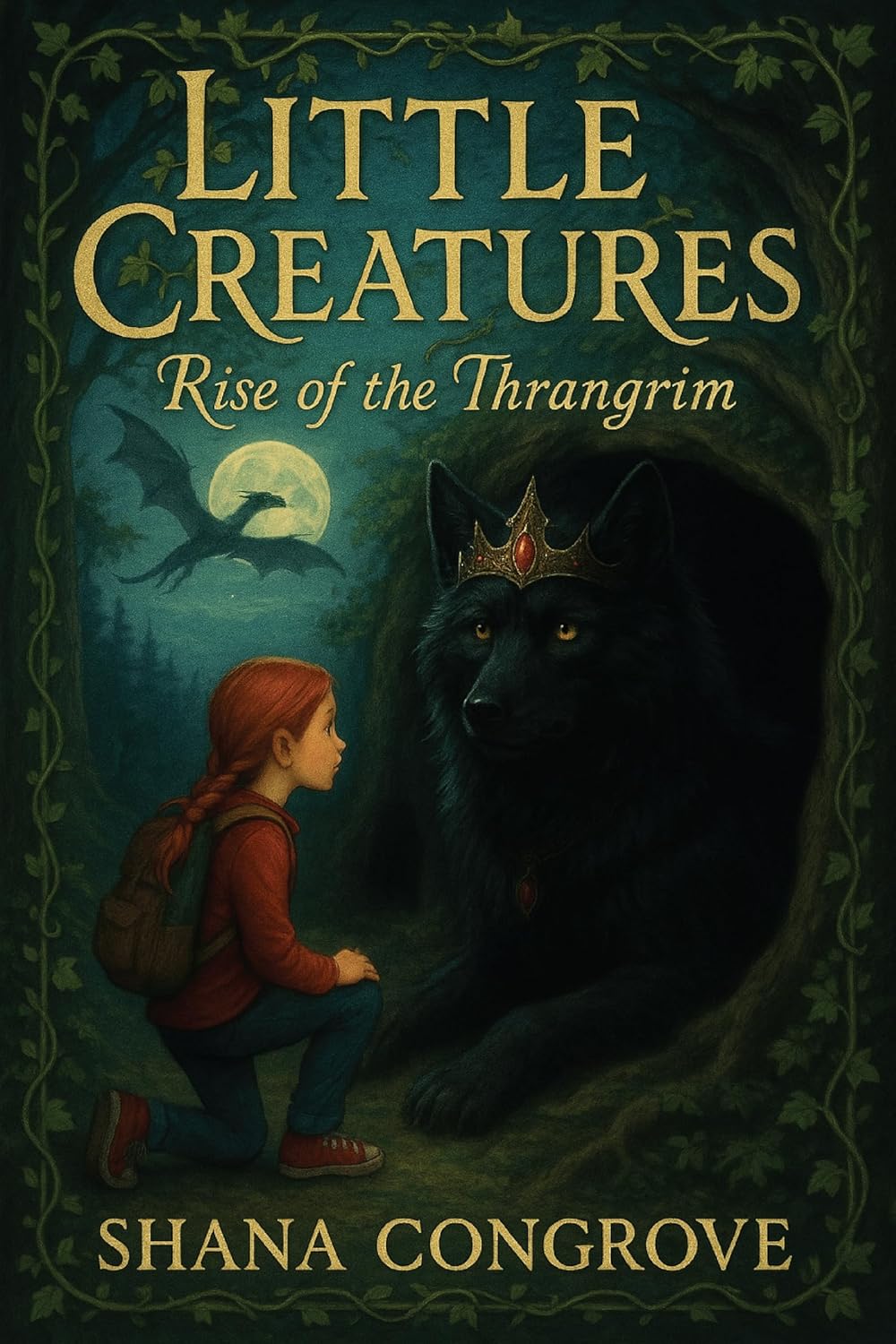

In Little Creatures: Book Two — Rise of the Thrangrim, Zowie’s “normal life” barely gets a foothold before two Little Forest Elves show up at her window with bad news: the Sky Fairies have been captured by the Thrangrim—stone-and-shadow brutes led by Grallok, who broke an ancient dream-binding spell by poisoning the fairies’ dreams with nightmares. Zowie and her dad, Daniel, slip into the supernatural realm through a tree-portal, meet the last free Sky Fairy (Aurora), and follow a living map across strange territories to gather allies and, ultimately, awaken Vortharion the Flamebound—an old, sleeping dragon whose return might be the only real answer to a threat this big.
My favorite emotional connection in this book is the father-daughter pairing. Daniel isn’t window dressing; he’s a presence, protective, a little sarcastic, and deeply tender in that “I’ll be brave because you’re watching me” way. When the quest yanks them apart (and it does, sharply), the story suddenly feels riskier, like the training wheels came off and Zowie has to discover what courage feels like in her own body, not just in her intentions. I also appreciated the book’s straightforward and earnest spirituality. Zowie begins in prayer, and the story keeps that sense of reverence without turning every page into a sermon; it’s more like a soft lantern the characters carry.
Stylistically, this reads like an episodic fantasy road trip: meet a new species, learn their rules, earn their help, move on. That structure is comforting, almost bedtime-story adjacent, even when the stakes are “everyone gets conquered by nightmare trolls.” The tradeoff is that the book sometimes pauses to explain lore in big, neat blocks (Grallok’s dream-corruption backstory, the rules of realms, the prophecy weight of the Golden Oraya). Still, the creature design has a gleeful weirdness, Glowtails, Scuttle Bugs, dire wolves with royal gravitas, and the wonderful illustrations reinforce that tactile, penciled-in fairytale mood. And when the finale hits, it delivers a clean, kid-thrilling payoff.
Kids who like middle-grade fantasy, portal fantasy, quest adventure, mythic creatures, and clean, faith-leaning fairytales will really enjoy this story, as well as parents who enjoy reading aloud without bracing for cynicism. If your shelf has The Chronicles of Narnia (or you grew up on C. S. Lewis’s blend of wonder and moral clarity), this will feel like a gentler, more creature-catalog-forward cousin. It’s a story that believes that bravery can be small and still be seismic.
Pages: 112 | ASIN : B0GGJCZPQR
The Wizard’s Apprentice
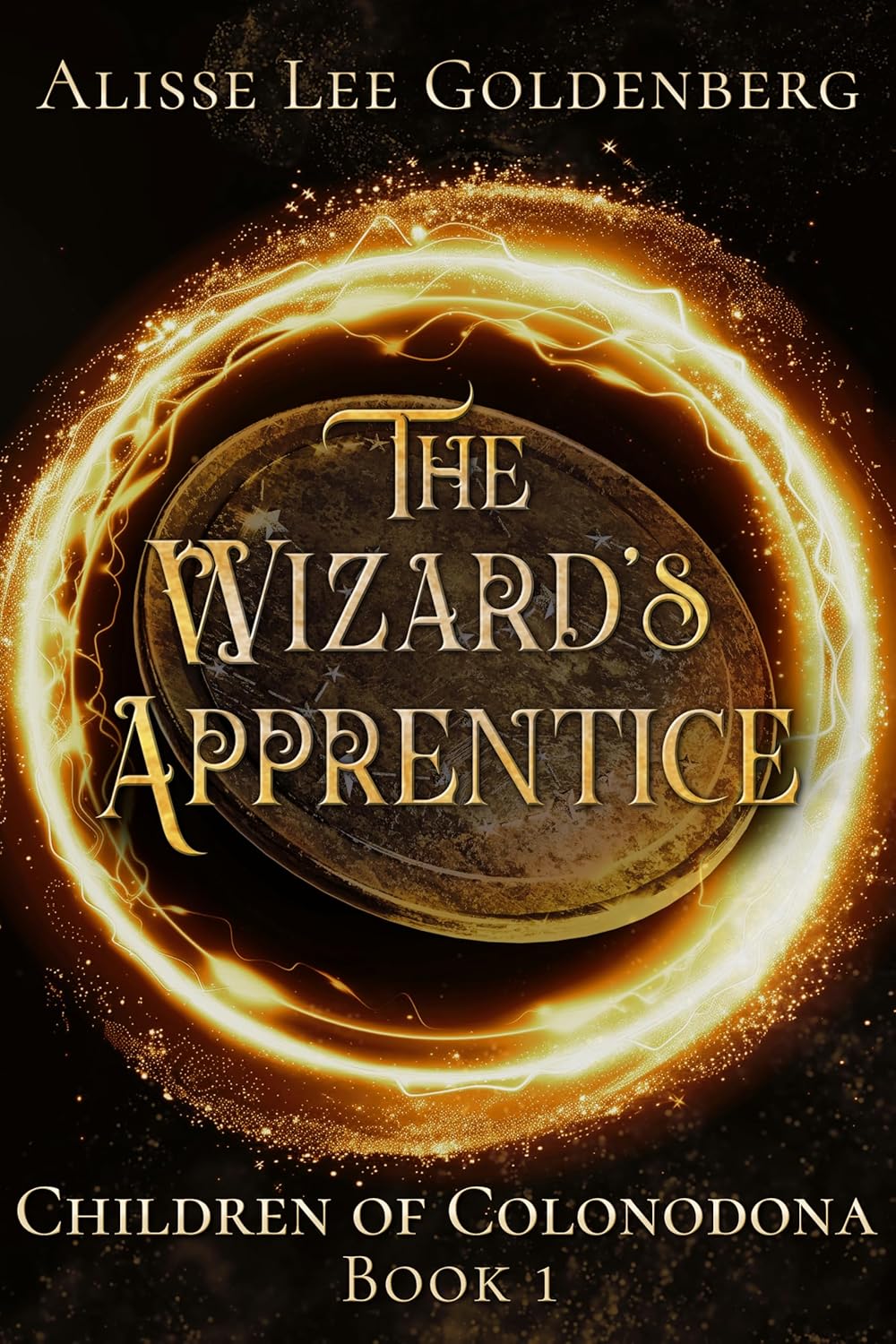
The Wizard’s Apprentice follows sixteen-year-old Prince Lucas of Colonodona as he studies magic with the sharp-tongued wizard Kralc and tries to live up to a heavy family legacy. Night after night, he relives a vision of his kingdom burning, a dream that feels far too real, while a mysterious girl named Lettie walks into the royal orchard claiming to search for her missing father and quickly wins the trust of Princess Audrina and Lucas himself. As the bond between this royal family and their guest deepens, secrets from past generations come to the surface, Kralc’s own hidden history matters more than anyone expected, and Lucas has to face the question that sits under every lesson and every nightmare. Is he the cause of the disaster he sees, or the one person who can stop it.
As a reading experience, I had a good time with this book. I liked the way the story keeps circling back to small, domestic moments in the castle, like breakfasts, walks in the orchard, and quiet scenes in Sitnalta’s salon, then lets those moments crack open into bigger tensions. The character work is the biggest strength for me. Lucas reads like a very believable teen boy, hungry for praise, prickly about being treated like a child, heart first and brain later. Kralc is gruff and very funny in that “I hate feelings, now drink this potion” way, and I enjoyed every scene where his care slips through his bad attitude. Audrina’s mix of entitlement, kindness, and cluelessness feels honest, and her attraction to Lettie has a real spark to it without ever being turned into a joke. The writing itself is clean and very readable. The author likes straightforward descriptions and clear dialogue, and that kept the pages moving. I felt the middle of the book slow a little because Lucas repeats the same pattern of doubt and defensiveness, and Lettie’s coyness about the truth goes on a bit long, yet I still turned the pages because I wanted to see this family finally sit down and tell each other everything.
The nightmare that opens the book is not just a spooky hook, it turns into a question about fate and choice, about what it means to see a terrible future and then decide how you will live with that knowledge. Lucas’ fear that he will be the one who burns his own home felt very raw to me, especially in a world where he has real power and no full control over it. The book also plays with class in a simple, clear way. Lettie carries the anger and shame of growing up poor and illegitimate, and when she walks into this kind, shining royal family it’s easy to see why she wants both love and payback. The story is also about legacy. Kralc’s bond with the dead Learsi and the magic coin that holds pieces of all three of them gives the ending a quiet, emotional punch. Their little conversation in the green field, and her message to Sitnalta, gave me that warm ache you get when a fantasy story lets its ghosts speak with love instead of just horror.
I would recommend The Wizard’s Apprentice to readers who enjoy classic, character-driven fantasy with a strong family focus and a light, hopeful tone. It feels right for teen readers who are ready for themes of grief, guilt, and complicated loyalty, and also for adults who grew up on older school series and want something familiar yet emotionally honest. The Wizard’s Apprentice reads a bit like Harry Potter and the Sorcerer’s Stone, with a young hero learning magic and facing a dark destiny, but it trades the bustling school setting for a more intimate focus on royal family drama and personal legacy. If you like training sequences, prickly mentors, messy siblings, and magic that always has a cost, this is a solid pick.
Pages: 290 | ASIN : B0GMK611PR

Goldie and the Three Kind Bears

Goldie and the Three Kind Bears is a sweet twist on the classic Goldilocks story with a cozy baking vibe mixed in. Goldie stumbles into the home of three kind bears who do not scold her or chase her away. Instead, they welcome her in with open arms and full hearts. Goldie bakes a Gingerbread Man as a thank you. He then comes to life, panics about being eaten, and asks for freedom. In the end kindness wins, the Gingerbread Man goes off on adventures, and the bears and Goldie share blueberry biscuits and a real sense of home.
The tone of this children’s book feels warm from the very first page. The writing is simple but not dull. It flows like a bedtime story that wants you to relax. I liked how the bears are gentle and thoughtful. That choice made the whole book feel safe and comforting. It honestly made me smile more than once.
The ideas in this story really worked for me. Kindness is the big one, but it never feels preachy. It just shows up again and again in small ways. Letting someone stay. Sharing food. Letting someone go even when you want to hold on. I also loved the baking scenes. They feel homey and relatable. The Gingerbread Man storyline adds a fun bit of tension, and I genuinely felt bad for the little guy hiding under the bed.
The artwork on every page is adorable. It is bright, colorful, and soft in a way that feels cozy. Each scene feels full of little details that make kids want to look around. The Gingerbread Man is especially cute and very expressive. His big eyes and tiny face make his fear, excitement, and hope easy to feel, even without the words.
Goldie and the Three Kind Bears would be great for young kids who like fairy tales with gentle lessons. It also feels perfect for families who enjoy reading together at bedtime. If you want a picture book that leans into warmth, generosity, and cozy feelings, this one is a solid pick.
Pages: 26 | ASIN : B0DQ4YBG5C
The Song of War

The Song of War brings the Dybbuk Scrolls Trilogy to a breathless finale. The story opens with Asmodeus rallying his monstrous army and stepping out of the shadows to wage open war. Carrie, Mikhail, Lindsay, Rebecca, Emilia, and Ferne are pulled straight into danger as the conflict breaks across their worlds like a storm tide. Weddings, dreams of the Angel of Death, burning theatres, massed armies at the palace gates, and the chaos of a full-scale magical invasion all collide in a story that moves fast and hits hard. The book pushes every character to their breaking point, and it never stops reminding you that the cost of this war will be steep.
Reading this one felt different from the first two. I felt that there was a heaviness hanging over everything, and it’s hard not to feel that weight with Carrie. Her fear, her guilt, her frantic hope that she can keep the people she loves alive made me tense in a way I didn’t expect. The writing leans into emotion without getting flowery. Scenes swing from warm and funny to terrifying in a heartbeat. The wedding was especially emotional for me. It was sweet and soft and full of love. Then the dread crept in. Then the drums started. Then the world fell apart. I felt that shift in my gut.
The battles are messy and personal and frightening. Characters panic, stumble, run, freeze, and sometimes find a burst of courage they didn’t know they had. The story doesn’t pretend everyone suddenly becomes a warrior. It shows fear for what it is. It also shows love and loyalty in a raw way. Emilia’s struggle to reconcile her lineage with her future, Mikhail’s desperation to save his father, Lindsay’s reckless bravery, and Carrie’s mix of fear, anger, and determination gave the whole book a steady emotional heartbeat.
By the time I reached the end, I felt wrung out but satisfied. This book doesn’t hold back. It gives the trilogy a strong, emotional finish that feels earned. If you like fantasy stories where magic mixes with real-world problems, or if you enjoy character-driven adventures filled with danger, heartbreak, and stubborn hope, this is a series worth picking up. The Song of War is especially fitting for readers who love finales that swing big and don’t shy away from loss or triumph.
Pages: 217 | ASIN : B0FR2RBDDS
Riddles of the Ancestors

Riddles of the Ancestors is a mythic fantasy novel rooted in Arthurian legend and spiritual fiction. The story follows Merlin and his sister Ganieda across timelines, from a magical Foretime to modern-day London, as they protect the secrets of the Round Table and work to activate an ancient star-coded template called Logres. Along the way, druids, goddesses, healers, and everyday people are drawn into a larger unfolding meant to heal the Earth and usher in a new age of balance.
This book felt less like racing through a plot and more like being invited into a long, winding conversation with myth itself. Sullivan’s writing moves gently, often lingering on gardens, sacred landscapes, and quiet moments of recognition between characters. I found myself slowing down as I read. The author seems less interested in suspense than in atmosphere and meaning. At times, the story reads like a modern-day fairy tale layered with Celtic lore, astrology, and goddess wisdom. If you enjoy mythic fantasy that feels devotional rather than dramatic, this book leans into that space.
What stood out most to me was Sullivan’s choice to center Ganieda and other feminine figures alongside Merlin. The emphasis on healing, collaboration, and remembrance gives the book a softer pulse than traditional Arthurian retellings. Some scenes feel almost ceremonial, like stepping into a candlelit room where symbols matter as much as actions. Occasionally, I wished for sharper tension or more restraint with exposition, especially when spiritual concepts were explained directly rather than shown. Still, there is sincerity here. The book believes deeply in what it is saying, and that conviction carries it forward.
Riddles of the Ancestors will resonate most with readers who enjoy mythic fantasy, spiritual fiction, and reimagined Arthurian legends infused with goddess traditions and New Age themes. It is for readers who like to wander, reflect, and sit with big ideas about time, memory, and the living Earth. If you enjoy stories that feel like modern myths meant to be felt as much as understood, this book is worth your time.
Pages: 375 | ASIN : B0FW9G2ZVN
Blurred Lines Between Reality & Nightmare

The Dreaming at the Drowned Town follows a haunted Filipino translator whose nightmare-plagued diary unravels a deadly expedition to a newly risen island where history, paranoia, and ancient horrors collide. What was the inspiration for the setup of your story?
We’ve always been drawn to overlooked corners of Philippine history, especially the transitional period of the 1920s, when cities like Cebu were rapidly modernizing under American rule while remaining at the cultural crossroads that decided the modern Filipino identity–between the legacy of three centuries of Spanish-style hacienda communalism and the enduring influence of the Church, the new American nation envisioned by the suit-wearing, English-nicknamed Sajonistas, and the vision of a country free from both that endured in places like Eastern Visayas. We’ve wanted to write a story in that setting for the longest time, portraying the interaction between people trapped between any of or perhaps none of the paths the Philippines was on the verge of walking, and the conflict that would arise from the clash between their different values and cultural contexts.
The core of the novel, however, came from two major sparks. The first was a love for early 20th-century cosmic horror, particularly the works of H.P. Lovecraft. Kyle has been a devoted fan for years before we ever started writing professionally, and he always wanted to craft a proper homage grounded in our own cultural landscape. The second—and more unexpected—inspiration came from real life. Around the time of the 2024 Manila International Book Fair (MIBF), when we launched our debut novel, Answering the Human Question, Kyle had come up with the concept of a protagonist troubled by vivid and terrible dreams, inspired partly by his own string of nightmares that he had been dealing with at the time through journaling. This entered the story as the main character and narrator of Enrique, who would write about his dreams as Kyle did. It also shaped in some aspects the book’s dream logic–its many false awakenings and the often blurred lines between reality and nightmare.
We also pulled from real historical curiosities like the desolate, sunken town of Pantabangan, the very real Drowned Town that exists here in the Philippines. It’s located in Luzon and in the province of Nueva Ecija, and it resurfaced during the El Niño droughts of both 2020 and 2024. We also combined the aesthetic of that place with Dawahon Islet, which, like the titular Drowned Town, is found near Leyte. Dawahon is a tiny yet densely packed community built on a reef that Kevin often flew over during pilot training. The distant glances and later images of empty, almost liminal spaces in both locations created an uncanny timelessness. It immediately planted in our minds the place where the book’s central mystery would unfold: a drowned town rising again after centuries beneath the sea.
The atmosphere is incredibly vivid. What research or techniques did you use to capture the sensory overload of the island and Enrique’s nightmares?
Much came from layering real-world observation with psychological insight. Research and a little bit of Kevin’s background in biology gave us a foundation for sensory detail—how bodies react to exhaustion, how coastal environments smell, sound, and move. Our travels to parts of the Visayas gave us firsthand experience of environments that feel both crowded and isolated, which helped shape the island’s suffocating atmosphere.
On Kyle’s end, his study of psychology—as well as a few readings of old court decisions for Philippine Law—taught him how perception breaks down under stress. Around the time of MIBF 2024, he was having recurring nightmares, and journaling them became the seed for Enrique’s dream sequences. Those dreams were chaotic, absurd yet vivid, and he translated that rawness into the book’s “dream logic.”
In addition to being partly inspired by Kyle’s own journaling, we employed Enrique’s diary as a framing device. In doing so, we hoped to keep the nightmares disorienting but maintain that they were narratively coherent. The diary form lets us narrow the focus to Enrique’s senses: the heat sticking to his skin, the sulfur that burns the throat, the texture of the drowned town rising from the sea. When those sensory details begin to distort or repeat, the reader feels Enrique’s unraveling in real time.
How did you approach blending real historical tensions of the American-occupied Philippines with cosmic or supernatural horror elements?
We began by grounding the story firmly in Philippine history. The 1920s was a pivotal transitional period in our hometown and province—Cebu was rapidly modernizing under American rule, yet memories of the Philippine-American War and the Revolution before it still lingered. A younger generation of Sajonistas emerged, eager to embrace American culture and modernity, and they often clashed with their elders, who had been shaped by centuries of Spanish influences and even hateful opposition to the betraying, conquering Americans themselves. Naturally, we wanted readers to feel that political and cultural tension in every scene, long before the supernatural appeared.
From there, the horror grew from two sources: Lovecraftian atmosphere and Filipino folklore. Lovecraft shaped the tone and structure—the slow unraveling of sanity, the tension between logic and the unknowable. But we never wanted to imitate Western cosmic horror wholesale. Filipino folklore, possessing tales of otherworldly spirit realms and the phantasms of the restless dead in spades, also played an important role in shaping the story’s identity. In our culture across its history, dreams have often held great power and importance, heralding either auspices of fortune or warnings of a coming malevolence. The sea has long been the place of both the dead as well as the living, and so it seemed natural as well as Filipino for us to portray the water with that same mystic aura.
When these folkloric themes collide with the real political tensions of the American occupation, they amplify each other. The characters themselves reflect this clash–to name a few, the American who believes he brings enlightenment and progress, the Western-educated Filipino guide plagued both by nightmares and generational trauma brought on by war, the old revolutionary who compromises his morals by relying on the wealth of his oppressors, and a corrupt constable armed by the law of a distant empire to fulfill his personal depravities. All of them come together in a chaotic misalliance of pathologies and dysfunctions beneath the cross of a condemned Spanish village, in the caves where the ancestors before told their stories, and above the depths of what came before them all.
Lita’s character goes through some of the most surprising twists. What was your process for constructing her arc?
When we were constructing the original skeleton of the story for Drowned Town, we wanted to explore imperialism—not just as the domination of one country over another, but on a smaller, interpersonal scale through the abuse and conflict that occurs between people. Every character written in this story speaks to or personifies that concept in some way, and Lita began as no different. The age gap between wife and husband, the bursts of passion punctuated by periods of ignorance from one side and betrayal from the other—she represents the country in her own way, a young and beautiful person being taken advantage of by a much older figure. We wanted another victim of imperialism, and in her case, we told the story of a kind of sex tourism and all the sordid perceptions that come with being someone in that world. However, we also wanted her to be aware of that dynamic, so she could play that game and defeat those who would take advantage of her or hold her in low regard. She needed to bear an innate refusal to be victimized, so that by the end she could be the true writer of the story—the architect of her own fate—rather than simply a supporting role in someone else’s narrative. That’s where her most surprising twists come from: the realization that she was never the object of the story, but its author all along.
Author Links: GoodReads | Facebook | Website
When an ancient town mysteriously emerges off the coast of Leyte, Enrique has no choice but to follow his employer to investigate. But as the expedition unravels, so too does the boundary between dreams and reality. With the island’s dark secrets coming to light, Enrique must face the horrors of its past before he too is claimed by the Drowned Town.
Bringing Magical Worlds to Life

Little Creatures follows a science-loving twelve-year-old girl who recently moved from the city to a quiet town and discovers that her backyard and bedroom wall are hiding a magical mystery. What was the inspiration for the setup of your story?
“From an early age, I was captivated by tales of fairies and elves—”Peter Pan” was my favorite. Alongside my love for stories, I had a deep passion for art, often spending hours sketching in my room. Around the age of twelve, I dreamed of writing a story about tiny elves hidden within the walls of a house. Life moved on, and that idea remained just a dream.
Today, as an author of adult fantasy, I decided to challenge myself by creating a children’s book. Instantly, my imagination returned to that twelve-year-old version of me—the one who longed to bring magical worlds to life. Now, I’ve finally fulfilled that dream and proudly checked it off my bucket list.”
In fantasy novels, it’s easy to get carried away with the magical powers characters have. How did you balance the use of supernatural powers?
“Because “Little Creatures” is a children’s story, I aimed to keep the supernatural powers simple and the narrative easy to follow—engaging young readers without overwhelming them with excessive detail.”
What were some themes that were important for you to explore in this book?
“The central theme of “Little Creatures” is that good always triumphs over evil. In a world often filled with chaos and destruction, I believe it’s important for children to experience stories with hopeful, fairytale endings—nurturing their imagination and reinforcing the power of positivity.”
Will this novel be the start of a series or are you working on a different story?
“Absolutely! I’ve already completed the sequel, “Rise of the Thramgrim,” and I’m excited to share that a third installment, “Curse of the Sandman,” is also in the works. This series is just beginning to unfold, and I can’t wait for readers to experience the journey ahead.”
Author Links: GoodReads | X | Facebook | Instagram | Website
Can a science-loving girl save a place where magic rules?
When twelve-year-old Zowie Lillian Saintclair moves from bustling Houston, Texas, to the quiet town of Greenwood, Arkansas, with her family, everything seems normal until she begins to spot little creatures that only she can see hiding in the shadows of her backyard.
And just as she thought things couldn’t get any more bizarre, she discovers something otherworldly living within her bedroom walls. That’s when she realizes her life is about to change in ways she never imagined.
Perfect for readers of all ages who love fantasy, adventure, and a smart heroine who isn’t afraid to explore the unknown.


