Blog Archives
Meaningful Improvement

One Percent 365 lays out a simple but powerful idea: small daily efforts, as little as one percent, can add up to huge changes over time without feeling overwhelming. Why was this an important book for you to write?
To share what I have found to be useful in improving outcomes and personal perspectives in my life. TO break it down to be manageable, no matter the stress endured, real or perceived.
What were some ideas that were important for you to share in this book?
To show the possibilities and value of applying this to many aspects of our day-to-day living.
What is one thing that people point out after reading your book that surprises you?
That I have revoiced a known one percept concept and shown how applicable it can be to many aspects of our lives besides weight loss and work metrics. Kindness and forgiveness, as applied, appear to impact my readers.
What is one thing that you hope readers take away from One Percent 365?
This concept can be tailored to each of us in a way that is palatable and shows a meaningful improvement over time.
Author Links: GoodReads | Facebook | Website
The author takes the reader on a journey to illustrate the possibilities of change that we can examine, address, and begin to make progress one percent at a time, each day. The simplest truth will become evident that each of us can tackle any aspect of our lives and work toward a desired goal with small incremental efforts while making steady, daily gains.
One Percent 365


One Percent 365 lays out a simple but powerful idea: small daily efforts, as little as one percent, can add up to huge changes over time. Joyner walks through how this principle can be applied across life, like health, habits, relationships, work, athletics, and even random acts of kindness. He mixes straightforward math with personal reflection, showing how incremental progress compounds in surprising ways. The tone is approachable, with stories and examples that make the concept easy to connect with.
I’ll be honest, at first I was skeptical. A whole book about one percent? It sounded like it could get repetitive fast. But Joyner’s style is conversational and, at times, playful. I liked how he broke things down into bite-sized chunks. His sections on “Spousal Approval Units” made me laugh, and they gave a very real reminder of how little things add up in relationships, too. I found myself nodding along, thinking of my own routines, and realizing how often I expect big leaps instead of small wins. That realization made me pause, and I felt a mix of relief and guilt. Relief because the book reminded me that I don’t have to overhaul everything all at once. Guilt because I know I’ve ignored those small steps too many times.
The math examples were clear, and some parts leaned into motivational talk. I found myself craving more stories from real people who had applied the one percent rule. Still, the honesty of Joyner’s voice carried it. He doesn’t come across as a guru preaching from a mountaintop, but more like a guy who has tried things, stumbled, and wants to share what’s worked for him.
This book doesn’t promise instant success, and that’s refreshing. It’s a steady nudge, not a shove. I’d recommend One Percent 365 to anyone who feels overwhelmed by self-improvement books that demand too much too fast. It’s especially good for readers who like practical, no-frills advice with a human touch. If you’ve ever felt stuck, this book might be the gentle push you need to start moving forward, one small step at a time.
Pages: 92 | ASIN : B0DZYV1QZY

We Can Do This Better

The Adoption Paradox weaves together your story, historical records, and interviews with nearly a hundred people from across the “adoption constellation” into an unflinching look at the industry’s ethical and emotional complexities. Why was this an important book for you to write?
I started out wanting to write a deep exploration of adoption’s emotional complexities from all sides. I’m very new to this internal awakening in my life’s journey. As an adoptee from a standard closed adoption from 1965, I had an overall good experience. As my parent’s only child, I felt loved and accepted for the most part within my family and our larger culture.
Then in 2020 with both of my adopted parents gone, I finally started to search for my birth family, which fueled the emotional curiosity that led to this work. I read books written by adoptees about their search. Then others about the birth mothers who relinquished us back in the era I was born in. What I learned shocked and saddened me. I felt this deep inner shift, and started questioning the typical storyline I’d always been fed. It was one thing to know that in ’65 my mother didn’t have the same choices I did growing up in the 1980s. It was another thing to come face to face with how badly many of these young women were treated.
There was more to tell in all of this I was sure, but I didn’t see any other books out there that had the voices and the deep research and thru lines for everyone in the adoption triad: adoptees, along with birth and adoptive parents. So, I decided to audaciously tackle that niche myself. That’s what started it all. This book is for me, in part, but my hope is that in reconciling the stories within, others find it helpful too.
What were some ideas that were important for you to share in this book?
There is no one adoption story. Ever. There are many sides, and all have this vastly diverse lived experience, even within one family. You can have an adoptee who feels completely seen and understood by the people who raise them, and another who feels isolated, lost and alone and their parents have no idea they are struggling. That’s heartbreaking. Adoption always begins with a loss, and our society completely forgets that narrative in popular culture. It’s just assumed we are lucky as adoptees, and that our families are fantastic! The truth is it’s often a mix.
There are misconceptions and oversimplifications about adoption and foster care among the general public. Adoption can heal, save lives and fulfill its potential to create a loving home for a child who needs one. But in modern times that is not generally what’s driving a relinquishment. Infant adoptions usually occur due to a lack of resources experienced by the natural parent(s). Then, understand we have allowed commercialism and an unchecked profit motive to proliferate within an industry that is responsible for the placement of children into homes. How can that possibly be beneficial for those affected or our society at large? Most people are complexly unaware of these realities. What gets lost in the shuffle of that are the needs of the adopted person. Not just as a youngster, but for their entire lives.
When we make assumptions about people, we flatten out their stories and miss the depth and nuances that are part of each and every family. I can have a good adoption story, and there is always some sadness behind it. We need to live in places of truth, both fiercely and gently with each other, and how we build or defend our families.
What was the most challenging part of writing your book, and what was the most rewarding?
Definitely stories of abuse were the hardest to hear, and it was also I think essential for those folks to feel seen and heard. Listening and sitting with them through their pain was validating for both them and me. Receiving the trust from all of those interviewed was by far the most rewarding experience.
The other bonuses have come from adoptees, adoptive parents and birth parents who unknown to me have already shared how the book has helped them feel affirmed, taught them something, or caused a shift in their mindset. They are the reason – because we can do this better.
What is one thing that you hope readers take away from The Adoption Paradox?
If parents are more informed before they adopt, their kids do better and are less likely to struggle. If natural parents and treated with dignity and fairness by our statutes then their rights are protected, because they deserve nothing less than that. My hope is the general public will understand our laws need revising and modernizing beyond the way we currently practice adoption.
In most states, we still overwrite adoptees birth certificates as part of this legal process and seal them away – inaccessible without a court order. Why can’t we create a “certificate of parentage” that doesn’t overwrite a person’s truth of who they are, where they came from, and deny them access to their medical history? Everyone in this story deserves better than these archaic systems we currently have.
I am not anti-adoption, but I am interested in our culture evolving to embrace a better future for how we practice adoption and answer the real needs of families interacting with the child welfare system. The most important thing is that we talk honestly with each other and listen. I hope my book begins and stirs that conversation. Thank you!
Author Links: GoodReads | Facebook | Website
Adoption impacts countless families worldwide, yet the voices of those directly involved—especially adoptees, the central focus of the process—are rarely highlighted. In The Adoption Paradox, nearly one hundred individuals are interviewed, from domestic, international, and transracial adoptions, as well as foster care, along with adoptive and birth parents, therapists, experts, and allies. These narratives reveal both the love and the emotional costs borne by everyone affected, exposing adoption as a complex and challenging experience. Healing is possible with the right support, but addressing adoption’s hidden issues requires activism to confront unethical practices that lack oversight. These moving stories shed light on unaddressed pain and systemic flaws, calling for a more transparent and compassionate approach to adoption.
The Adoption Paradox: Putting Adoption in Perspective

Jean Kelly Widner’s The Adoption Paradox is both a sweeping history and a deeply personal exploration of adoption in America. It weaves together her own adoptee story, historical records, interviews with nearly a hundred people from across the “adoption constellation,” and an unflinching look at the industry’s ethical and emotional complexities. From the history of orphan trains and the Baby Scoop Era to the modern foster system and open adoptions, Widner covers the many ways adoption has shaped and sometimes wounded those involved. The book moves between heart-wrenching firsthand accounts, legal and cultural context, and thoughtful calls for reform, all while acknowledging the strange dualities at the heart of adoption: love and loss, gratitude and grief, hope and harm.
I was struck by the sheer variety of voices in this book, from adoptees, birth parents, and adoptive parents. Each is speaking in their own words, often with raw vulnerability. Widner doesn’t sanitize their stories, and she doesn’t steer the reader toward easy conclusions. I appreciated her willingness to admit there’s no single truth here, no one-size-fits-all narrative. There’s a tenderness in her approach, but also a certain steel; she makes it clear that the industry needs scrutiny, and that the myths we’ve been fed, especially the “all adoption is beautiful” trope, do real harm. At times, the weight of the stories struck me deeply, but that’s part of what made the reading experience so powerful.
I also found myself impressed by the way Widner balances the historical with the personal. She’ll pull you deep into archival laws or social movements, then drop you right into a living room or hospital hallway where someone’s telling the story of the day their child was taken, found, or lost forever. The shift between head and heart kept me engaged, even when the subject matter was painful.
I’d recommend The Adoption Paradox to anyone touched by adoption, whether you’re an adoptee, a birth parent, an adoptive parent, or simply someone who wants to better understand what adoption really means beyond the Hallmark version. It’s not light reading, but it’s the kind that stays with you. This is a book for people who can hold complexity, who aren’t afraid to see the cracks alongside the light. It’s a brave and necessary book.
Pages: 487 | ASIN : B0F6X136JN

Hope For Moms
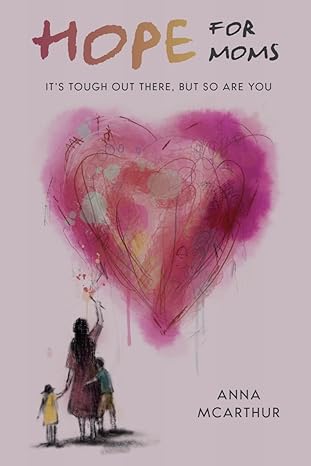
Anna McArthur’s Hope for Moms is a raw, heartfelt guide for moms navigating the unpredictable joys and struggles of parenting. The book offers a mix of personal stories, practical advice, and emotional validation, making it feel less like a manual and more like a conversation with a wise and understanding friend. McArthur divides her insights into three categories: Yes, No, and Maybe. She helps moms determine what’s essential, what can be let go, and what is worth reconsidering as they move forward. She covers everything from the exhaustion of early motherhood to the deeper challenges of raising kids with learning disabilities, LGBTQ+ identities, and racial complexities within an adoptive family. The book reassures moms that they are not alone and provides a roadmap for embracing imperfection while finding strength.
McArthur doesn’t sugarcoat motherhood. In Chapter 1, she recalls an overwhelming moment when her two-year-old staged a sit-in at preschool while her infant screamed in his carrier. A stranger offered to help, but McArthur reflexively refused until the woman ignored her resistance and just stepped in. This moment perfectly illustrates the lesson of the chapter: “Remember to keep accepting help.” I found this so relatable. How many times have we moms insisted, “I’ve got it,” when in reality, we’re drowning? The book is filled with these little reminders that strength isn’t about doing it all alone; it’s about knowing when to lean on others.
Another powerful moment comes in Chapter 3 when McArthur describes her son Caleb coming out as gay in a rural Georgia high school. She admits that despite being a progressive Christian and vocal about LGBTQ+ rights, she didn’t handle it as well as she wished. Fear clouded her initial response. But instead of dwelling on guilt, she took steps to grow and support her son, from reading parenting guides to treating his relationship with the same warmth she would any of her other children’s. This chapter hit home. We all want to believe we’ll react perfectly in big parenting moments, but often, we stumble before finding our footing. McArthur’s transparency in these moments makes her advice feel accessible rather than idealistic.
One of the most eye-opening sections is Chapter 10, where McArthur realizes she has been disappearing into her children’s lives. It took her therapist bluntly asking, “How are you?” for her to recognize she had no answer outside of updates on her kids. That was a gut punch for me. As parents, it’s so easy to wrap our entire identities around our children’s needs, but this chapter gently nudges moms to reclaim space for themselves. She takes horseback riding lessons just for her, no kids involved. This kind of intentional self-care isn’t about spa days or bubble baths but about rediscovering who we are beyond motherhood.
I’d recommend Hope for Moms to any mother who has ever felt overwhelmed, inadequate, or just plain exhausted, which, let’s be real, is every mom at some point. It’s especially relevant for moms facing unexpected challenges, whether it’s special needs, adoption complexities, or simply the relentless pressure of parenting. McArthur writes with humor, warmth, and just the right amount of tough love. Reading this book felt like sitting across from a friend who has been through it all and is offering me a hand to hold. If you need a reminder that you’re not alone and that you don’t have to get it all right, this book is for you.
Pages: 168 | ISBN : 1643435604
BLINDSIGHTED: A Journey of Identity, Faith, and Healing
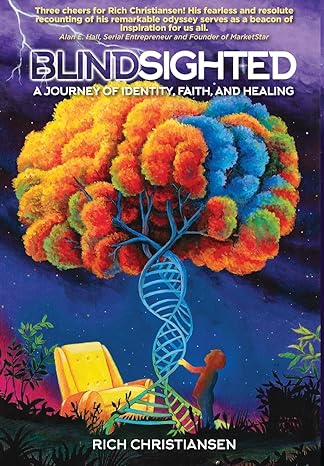
Blindsighted, by Rich Christiansen, transforms the simple curiosity of DNA testing into a profound exploration of lineage and faith. Christiansen embarks on a deep dive into his family’s history, beginning with his immigrant grandparents, and along the way, he redefines his understanding of what family truly means. The journey he takes readers on is rich with intimate details, tracing his legacy and how it shaped him. What he discovers through his DNA test results, however, is far from what he expected.
This story is masterfully crafted. Christiansen’s writing is precise, with every heartfelt word carefully placed to deliver a deeply engaging reading experience. The book is free from unnecessary details, maintaining a clear and focused narrative that comes together beautifully. It’s an eloquent work that spans multiple generations, weaving together engaging stories that will resonate with many readers. Christiansen’s talent for distilling vast amounts of research into a compelling and comprehensive narrative is particularly impressive. One standout section is the story of his father, John Christiansen, whose life is portrayed with rich and fascinating detail. The author’s passion is evident as he recounts his father’s remarkable journey, overcoming blindness to become Beaver County’s Attorney. This segment of the book is especially inspiring and showcases the depth of Christiansen’s connection to his family’s legacy.
Blindsighted is a remarkable journey through the complexities of family history and identity. Rich Christiansen’s ability to blend personal stories with broader themes of faith and lineage makes this book both deeply personal and universally relatable. It’s a compelling read for anyone interested in the intersections of genealogy, personal discovery, and the enduring impact of family legacies. Whether you’re drawn to stories of overcoming adversity or simply appreciate a well-crafted narrative, Blindsighted is a book that will leave a lasting impression.
Pages: 297 | ASIN : B0D9R7SS9B
Family and Community

Morocco: A Remembrance of Childhood is a nostalgic journey through your early years living in Morocco as the son of a U.S. Navy pilot and the impact the culture had on your outlook on life and beliefs. Why was this an important book for you to write?
For reasons I couldn’t initially explain, I have retained many vivid memories of my formative years, ages 5-7, in Morocco. Although I’d never considered writing a memoir, the more I thought about those years, the more I became convinced that my adult perspectives on life had been determined largely by my experiences in Morocco. From that point forward, writing the book became somewhat of a compulsion, albeit one that took over three years to complete given the research involved as well as a one-year hiatus resulting from the sudden and unexpected death of my wife of 46 years.
What were some ideas that were important for you to share in this book?
On a personal level, I wanted to capture the wonders and joys that we all experience during the process of maturing, as well as the ecstasy and agony of growing up as a military brat. The former resulting from the opportunity to experience many different people and places and the latter resulting from constant need to move on and leave all such people and places behind. With regard to Morocco, I wanted to capture its colorful, fascinating and incredibly long history, as well as the unique religion and culture of its Berber and Arab populations, all of which have combined to produce what is arguably the most open, friendly and egalitarian population of humans on the planet. Finally, given my time in Morocco, during the mid 1950’s, I wanted to track the way in which the country’s Arab/urban population and it’s Berber/rural population became united in their efforts to rid the country of French colonists who had taken over their country as a result of the Treaty of Fez, executed in 1912–an effort that in numerous ways paralleled the struggle of Black Americans to attain their civil rights during the 1950’s.
What is something that you think will surprise readers the most in your book?
Unless you’re well-versed in medieval history, most readers will probably be surprised to learn that for a time Morocco was one of the richest and most powerful nations on earth, financed by camel caravans, transporting a river of wealth from sub-Saharan Africa, and pirates, plundering both European ships and coastal towns. Riding on the crest of such wealth, Berber horsemen captured much of northern Africa, all of modern-day Spain and even a small part of modern-day France. However, with the advent of modern shipping in the 1500’s, the river of wealth from the caravans gradually dried up and Morocco’s focus turned inward.
What do you hope is one thing readers take away from your story?
The Moroccan ethos, which is centered on family and community, provides humanity with a far better path forward than one focused on individual power, prestige and wealth.
Author Website
I hope you enjoy reading this book half as much as I enjoyed writing it. It was a labor of love for me to reach back and re-create my formative years, ages 5 to 7, growing up as the son of a U.S. Navy pilot in Port Lyautey, French Morocco, during the mid-1950’s, at a time when Morocco was the epicenter of the United States’ Cold War efforts to deter and contain the Soviet Union through aerial reconnaissance and nuclear weapons.
During my time in Morocco, the country’s Berber/rural and Arab/urban populations became united in their efforts to rid themselves of the French colonists who had taken over their country as a result of the Treaty of Fez, executed in 1912—an effort that in numerous ways paralleled the struggle of Black Americans to attain their civil rights during the 1950’s.
In addition to relating my personal experiences, both humorous and telling, dealing with the family dynamics of a Navy brat, I describe the many ways in which my life intersected the cross-currents emanating from the Cold War and colonialism.
To explore the unique relationship between the country’s Berber and Arab populations, I delve into Morocco’s incredibly long, colorful and interesting history, as well as the religious and cultural beliefs that have combined to produce what is, arguably, the most open, friendly and egalitarian human population on the planet.
Finally, I make the case that the Moroccan ethos, which is centered on family and community, provides humanity with a far better path forward than one focused on the attainment of individual power, prestige and wealth.
Morocco, A Remembrance of Childhood


Morocco: A Remembrance of Childhood is a nostalgic journey through the author’s early years spent in various locales, with a significant portion dedicated to his time in Morocco. This memoir captures the essence of a childhood filled with adventure, discovery, and the bittersweet transitions that come with growing up in a military family. The narrative begins with James Farmer’s vivid recollections from as early as three years old, setting the stage for a life marked by constant movement and rich, diverse experiences.
Farmer’s writing is imbued with a sense of warmth and authenticity, making the reader feel as though they are sitting across from an old friend, listening to stories of bygone days. One of the strengths of this book is its ability to transport the reader to various settings, from the mundane routines in small-town America to the exotic landscapes of mid-20th century Morocco.
The book excels in painting a vivid picture of the time and places it covers. Farmer’s portrayal of Hutchinson, Kansas, as a quintessentially American town of the 1950s is rich with details that evoke a strong sense of place and time. His reflections on the cultural and social norms of the era provide a valuable historical context that enriches the narrative. Similarly, the descriptions of Morocco, with its contrasting landscapes and unique cultural milieu, offer a fascinating glimpse into a world that many readers may find unfamiliar yet captivating.
While I thoroughly enjoyed this heartfelt and engaging memoir, I feel that some of the author’s reflections may not resonate with all readers. Farmer’s ability to recall his early years with such clarity and emotion is truly commendable, and his stories are likely to strike a chord with anyone who has experienced the joys and challenges of a roaming lifestyle. The book is particularly well-suited for readers who enjoy memoirs and historical narratives, as well as readers interested in the cultural contrasts between mid-century America and North Africa.
James B. Farmer’s memoir is a poignant and evocative exploration of a unique childhood. I would recommend this book to anyone looking for an intimate, personal account of growing up in a time of great change, both at home and abroad.
Pages: 573 | ASIN : B0D2B21Y5V


