Blog Archives
Learning and Adventure

Glimpses of Grace is a collection of personal essays that traces your journey through motherhood, caregiving, and vision loss, revealing the quiet moments of grace that give life meaning even as your sight begins to fade. Why did you choose essays instead of a traditional memoir format?
I had long been interested in the essay form and in fact took several online courses in essay construction, but then began writing my first memoir, then the second, then a more spiritual book. Glimpses of Grace grew out of my experience with failing vision. It became a little harder to manage the technology of writing, and it seemed short essays might be the most useful form. I wanted to capture the daily joys and gifts that appeared for me in this journey.
What role does spirituality play in how you understand aging?
I believe we are all spiritual beings, simply living on this planet in our “earth suit.” In looking back over my life, I see that I have always been led to follow a particular path, always connected to the intuitive and spiritual self. There is new learning in every breath of life.
What has aging taught you that younger readers might not expect?
Aging is not a “season of loss” as someone once said. It is a season of letting go of what is no longer needed and looking forward to the learning and adventure that continues to invite us.
How do you recognize grace in your life today?
Oh my. Grace is part of every day. It is in the riches of nature, the small kindnesses shown to us, a smile, the laughter of children, and the new challenges that bring us to new understandings of those around us.
Author Links: GoodReads | Website | Amazon
Most beautifully, Bowen illuminates the sacred connections that bind 1s—fleeting exchanges with strangers that change everything, the trust between patient and caregiver, the revelations that pass between teacher and student, and the deep roots of family love. Each encounter becomes a meditation on how we truly see one another, how we honor the precious gift of being alive together on this earth.
Leila: The Unheard Woman


Leila: The Unheard Woman drops readers into a locked psychiatric ward and asks them to sit with Leila, a mother who has been turned into a “case.” The book moves back and forth between the hospital present and the life that led her there. Readers watch her give birth, hurt, ask for help, get brushed off, and slowly disappear behind labels like “unstable” and overly emotional. They see her marriage, the quiet grind of duty, the pressure to be a good wife and a happy mother, and then the breaking point, when fear for her child and the cruelty of her in-laws collide with a system that would rather sedate her than listen. Out of this, the novel builds a tight, painful portrait of a woman who is always seen and never truly heard, and of a society that calls itself safe while pushing her out of sight.
The prose is stripped down, almost bare, and the repetition works like a slow drumbeat. Short lines. Simple images. Iron doors. Cold floors. Keys that jangle at the edge of every scene. The hospital chapters in particular have this numb, almost hypnotic rhythm that made me feel stuck there with her, counting footsteps and pills. The way the book loops phrases and images made the whole thing feel like memories. It can be heavy, yet that weight fits the subject. I also liked how the author refuses big speeches or neat explanations. The worst moments often happen in small exchanges, in tired phrases like “everyone has their own cross,” or in the silence after a question that no one bothers to answer. That restraint gives the book a peculiar power and lets the ache build.
I appreciated the way the author represents women’s bodies and voices. Leila is in real pain after childbirth, and the people around her treat it as moodiness, as nerves, as something she should push through for the sake of the baby and the family. Her “no” does not count, in the bedroom or in the doctor’s office, and that slow erasing of her choices felt almost more violent than the scenes that are clearly abusive.
The psychiatry on display is chilling because it is so ordinary. The doctors use polite words. They note down facts. They talk about stability and safety. Yet no one asks what she feels, or what she wants, or what would actually help her live with her son. The system treats her like a problem to be managed, not a person to be met. That hit me hard, especially in the scenes where she tries to hold on to Gega’s name in her mind, almost like a last thread tying her to the world. The book turned abstract ideas like patriarchy and medical power into something intimate and raw, and I found myself thinking deeply.
By the end, I felt moved and more awake to a certain kind of quiet cruelty that can hide inside “care.” I would recommend Leila to fans of literary fiction who are willing to sit with hard topics, to people interested in women’s mental health, postpartum experiences, and the history of psychiatric institutions, and to book clubs that like to debate and dig into ethics and power. Readers who prefer narratives that hit like a punch and want a story that lingers beyond the last page will want to delve into Leila’s world.
Pages: 81 | ASIN : B0GHPWHJWX

Motion Dazzle: A Memoir of Motherhood, Loss, and Skating on Thin Ice
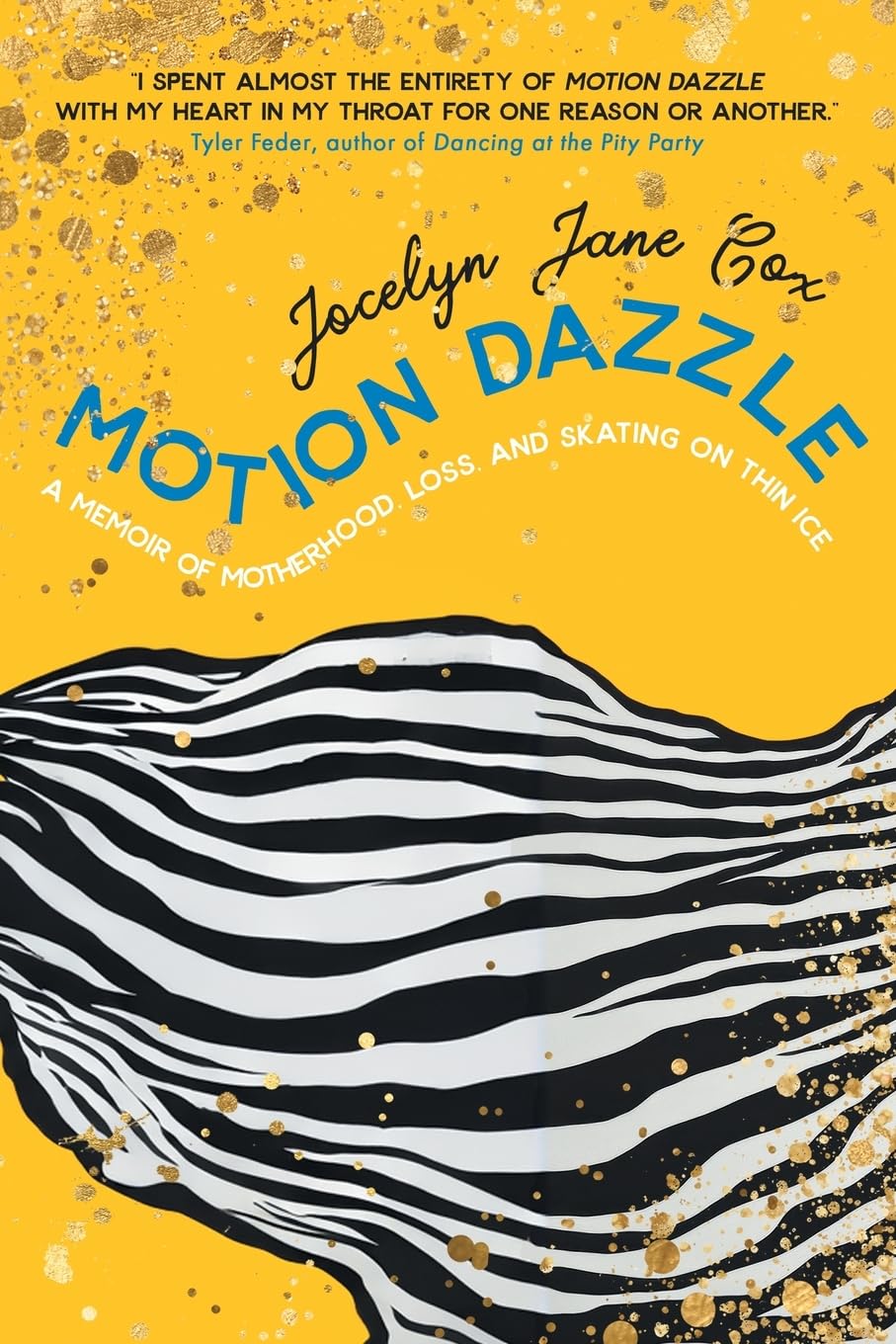
Motion Dazzle is a memoir about a daughter trying to keep her life steady while everything around her seems to slide in unpredictable directions. The book shifts between her years as a competitive figure skater and the present day as she juggles early motherhood, a marriage, and the slow, heartbreaking decline of her own mother. The chapters move in short, vivid pieces that echo the idea of dazzle camouflage and the incomplete way memory works. What unfolds is a layered story of love, loss, identity, and grit. The author’s voice is warm and sharp at the same time, and the result feels honest in a way that hits straight in the chest.
I was pulled into her world. The skating scenes are full of pressure and sparkle and fear, and Jocelyn Jane Cox writes them with such clarity that I felt like I was watching from the rink boards. The early chapters show her constant push to perform, to smile when she is hurting, to carry herself with poise even when she feels anything but composed. Later, watching her try to shape a first birthday party while her mother is in the hospital had me tensing up in real time. The tiny details of the zebra books, the blue painter’s tape, the quiches cooling on the counter caught me off guard because they were so tender and so fraught at once. I could feel her heart splitting open as she tried to make something lovely for her son while her grief pressed in from the edges.
The portraits of her mother are what stayed with me the most. The way she describes their twenty-year daily phone call, the quiet jokes, the listening, the stories from childhood that finally spill out in fragments. Grief shows up in the book like a tide that rises slowly, then all at once, and I found myself rooting for her to catch her breath. The writing feels bright, then raw, then bright again, and I loved that. It felt real. Not polished grief, but grief that stumbles and snaps and softens. I could feel her longing for more time and her guilt and her fierce love drowning each other out in waves. It made me think about my own family more than I expected.
Motion Dazzle would be a powerful read for anyone who has cared for an aging parent or anyone who has tried to grow a new life at the same time another one is fading. It would also resonate with former athletes or anyone who knows what it means to chase perfection even when it costs more than it gives.
Pages: 273 | ASIN : B0FHF95RKB

Birth, Death, and Survival

Melanie Whyte’s Birth, Death & Survival is a raw and intimate poetry collection that traces a lifetime of pain, growth, and resilience. It unfolds like a memoir in verse, starting from the innocence of childhood and winding through heartbreak, abuse, motherhood, healing, and eventual renewal. The poems feel deeply lived-in, each chapter marking a phase of her life, from the trembling echoes of a broken home to the quiet triumphs of rediscovered love and strength. There’s a narrative thread that ties every piece together: the human instinct to keep breathing, to keep going, even when the air feels too heavy to bear.
Whyte doesn’t hold back, and I admired that honesty. Her words are simple but sharp, and she lets emotion take the lead. At times, the poems read like confessions whispered in the dark. Others feel like letters written to her past self, forgiving, reflecting, reclaiming. What struck me most was the rhythm of her healing. It’s not neat or linear, and she doesn’t pretend it is. Some verses gutted me with their quiet truth, like “The Room With No Windows,” while others, like “Still I Rise From Shadows,” filled me with soft and steady hope.
As I read, I found myself pausing often, not because the writing was difficult, but because it felt too close. There’s beauty in the way Whyte turns trauma into art without glamorizing it. The collection pulses with empathy, and even in the darkest corners, there’s light breaking through. I liked how she weaves motherhood, love, and survival together; it reminded me that rebuilding isn’t just about leaving the pain behind, it’s about learning to live alongside it.
Birth, Death & Survival is for readers who crave truth, who’ve walked through something hard and come out changed. It’s a book for survivors, for mothers, for anyone who’s ever had to rebuild themselves piece by piece. I’d recommend it to anyone who wants to feel seen, or to those who want to understand what resilience looks like when it’s written in poetry and inked with life itself.
Pages: 181 | ASIN : B0FPXNQFMP
Deserving of Grace

Should Have Told You Sooner follows a museum professional navigating the complexities of motherhood, the aftermath of divorce, and a career opportunity that leads her abroad. Where did the idea for this novel come from?
The idea for Should Have Told You Sooner came to me while I was immersed in a book of Welsh folk tales. One story in particular, “The Lady of Llyn Y Fan Fach,” captivated me and set my imagination racing. In it, a young farmer named Gwyn visits the lake named in the title, and while he is there, a most beautiful fairy rises from the water and speaks to him. She is Nelferch, and in an instant, Gwyn is in love. Nelferch agrees to marry him, sacrificing the watery world she knows for a life with him on dry land, but their union ends in disappointment and pain. Long after finishing the story, I kept thinking about Nelferch and Gwyn and all the ways we might harm those we profess to love. It wasn’t long before I stopped thinking about the folk tale characters and began imagining a more contemporary pair.
What is one pivotal moment in the story that you think best defines Noel?
After Noel leaves a heart-to-heart talk with Henry, the young artist she’s been working with, she makes a side trip to an art museum instead of returning right back to work. Their conversation has shaken her – and I won’t say why because spoilers! – and as she’s walking through all the London neighborhoods that were her haunts while she was a student, both Henry’s words and her memories are running through her head, and she’s letting them. Until this moment, she’s been the person who put her memories in a box and closed the lid tight on them because the idea of revisiting that part of her life was too painful. I think it becomes clear here how hard it’s been for her to live with the memories and also how hard it’s been to live without acknowledging them, and not only for herself. She realizes something has to change.
Is there any moral or idea that you hope readers take away from the story?
I always hope my stories make readers think about how complex and flawed and yet deserving of grace we all are. That living is all about change and growth and doing the work that helps us heal both ourselves and our relationships with others.
What is the next book you are working on, and when will it be available?
I’m currently working on the sequel to Should Have Told You Sooner, and I have two other novel projects that are in early planning stages. If the sequel is finished within the year, it could be out as early as 2027.
Author Links: GoodReads | Facebook | Instagram | Website | Amazon
While studying art history at a London university, Noel Enfield falls passionately in love with aspiring artist and art school student Bryn Jones. Shortly after Bryn leaves for a five-month painting trip through Italy, Noel discovers she is pregnant. She is ecstatic and believes Bryn will be too—they have plans to marry, after all. But mishaps part the two lovers, and a desperate Noel makes a split-second choice to move forward in a way that will change not only her life but also the lives of everyone she loves.
Three decades later, when she is offered a six-month secondment to a London museum, Noel decides it’s time to prove she really has moved on from that difficult period by returning to the city where she met and lost Bryn. But rather than proving she has persevered, the move lands Noel in the thick of London’s insular art world, with only one or two degrees of separation from her past and the people she once loved. After she reconnects with an old, dear friend and learns finally what kept Bryn from returning to her all those years ago, the very underpinnings of her life are rocked to their core. Some decisions made in the past can never be put behind her, she realizes, and armed with this new understanding, she sets out on a journey to reclaim what—and who—she left behind.
Space to Heal

That Kind of Girl follows an anxious and overwhelmed physician who meets a stripper-slash-therapist whose fearless confidence leaves her to question if having it all is worth the price of losing herself in the process. What was the inspiration for the setup of your story?
The inspiration for That Kind of Girl came from seeing the women around me trying to balance the chaos of demanding careers and motherhood. I started writing the book when I was a new mother trying to weave parenting into my life as a physician. I wanted to explore what it truly means to “have it all” and the toll it can take on a woman’s sense of self. The dynamic between the anxious physician and the fearless stripper-therapist is a way to highlight different approaches to confidence and self-acceptance. Ultimately, my hope is to inspire women to find something they love—something that grounds them and brings joy—amidst the overwhelming demands of their lives. It’s about rediscovering yourself when the world expects you to be everything to everyone.
Opal’s struggles with balancing a career, marriage, and family are relatable to many women today. Are there any emotions or memories from your own life that you put into your character’s life?
Absolutely. I often pull emotions from real life into my writing. I want the reader to experience the wide range of emotions they find on the page, often messy, but most of all the joy and levity that comes with not having to do this alone. One memory from my own life that made it into the book was writing a text message filled with four-letter words about my boss and accidentally sending it to my boss instead of my husband.
What were some themes that were important for you to explore in this book?
One of the core themes I wanted to explore in That Kind of Girl is that a person is never just the sum of their past mistakes. We all carry regrets and moments we wish we could change, but those don’t define us. Redemption, I believe, truly begins with forgiving yourself—allowing space to heal and grow beyond what’s happened. Through the characters’ journeys, I wanted to highlight that self-forgiveness isn’t easy, but it’s essential for reclaiming your sense of worth and moving forward with courage and hope.
What is the next book that you are working on, and when can your fans expect it to be out?
Turbulent Skies is about a woman days away from her wedding when her fiancé has an accident that leaves him on life support. Things go from bad to worse when his ex shows up and reveals they never legally divorced, she has medical decision-making power, and she wants to pull the plug. The book is expected to hit shelves in 2026.
Author Links: GoodReads | X (Twitter) | Facebook | Instagram | Website | Amazon
Will she sacrifice herself to keep everyone she loves happy?
Doctor Opal Collins is anxious and overwhelmed. So when her husband threatens to leave her
unless she finds the time to add a baby to the chaos, she digs deep to impress her boss and earn a
sanity-saving promotion. And though she’s excited by the spark between them, she knows she
should be offended when her boss suggests she trade her body for the job.
Thrilled when she earns the coveted position after setting boundaries in their scandalous affair,
Opal’s complicated dual relationships have her humming with tension. But with the tangled web
of deceit and affection already woven, she fears there’s no way out without betraying her vow to
do no harm.
Has her people-pleasing persona destroyed her dreams, or can she cling to a vestige of self?
That Kind of Girl is a wickedly witty work of women’s fiction. If you like emotional tension,
laugh-out-loud humor, and beautifully crafted prose, then you’ll adore Jacey Bici’s unexpectedly
sweet journey.
Changing Eyes
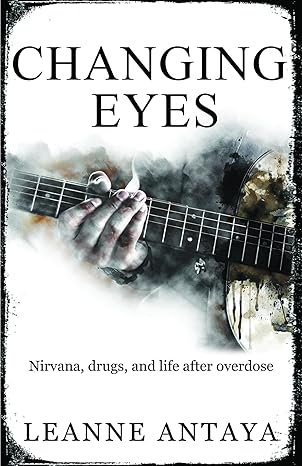
Changing Eyes is a raw and wrenching memoir written by Leanne Antaya about her family’s harrowing battle with addiction, particularly her son Trey’s descent into drug use and the long, painful road to his recovery. Spanning decades, the book moves from Leanne’s early romance and marriage to Marco, through raising four children, to navigating the chaos of addiction, near-death experiences, strained relationships, and personal trauma. Told through Leanne’s eyes as a mother, it’s an honest account of love, loss, resilience, and the aching hope that somehow, amid all the wreckage, healing is possible.
This book tore me up and stitched me back together, sometimes in the same chapter. Antaya’s writing isn’t polished in a literary sense, but that’s what makes it work. It’s messy, emotional, and real. She doesn’t whitewash the shame, the guilt, or the unbearable powerlessness that addiction brings into a family. Her style jumps between memories and moments with a kind of breathless honesty, as if she’s spilling it all out before she loses her nerve. There were parts where I had to pause and sit with it, where her pain leapt off the page and made me feel like I was in that hospital room or standing at that phone, dreading the worst.
The book is more like a collection of moments and memories than a tightly woven narrative. But maybe that’s the point. Addiction isn’t tidy. Grief doesn’t follow a three-act structure. What stands out most to me is Leanne’s sheer determination to hold her family together. Her voice carries this sharp mix of exhaustion and fire that made me root for her, even when things kept falling apart. And Trey’s story is both heartbreaking and infuriating, but Antaya never lets you forget that he’s human, even when he’s at his lowest.
I’d recommend Changing Eyes to anyone who wants to understand what addiction does to families, not in theory, but in the day-to-day heartbreak. This is for the parents who are living in quiet fear, for the friends who don’t know what to say, and for anyone who thinks addiction is just a personal failing. It’s not a light read, and it doesn’t offer easy answers. But it’s full of gut-level truth, and in the end, it clings to hope.
Pages: 356 | ASIN : B0B6QDP6C4
Empowered Postpartum Wellness: A Practical Guide to Recover After Birth, Build Mental Resilience, and Redefine Self-Care for a Thriving Mom Life

Empowered Postpartum Wellness is a heartfelt guide designed to help new mothers navigate the murky and often unspoken waters of postpartum recovery. Jade Padlan, a registered nurse and mother herself, takes readers on a compassionate journey through the physical, emotional, and psychological transformations that accompany the transition to motherhood. The book is divided into clear sections covering everything from healing after birth and nutrition to the mental load of parenting and relationship dynamics post-baby. It offers both science-backed insight and tender, lived wisdom, all wrapped in a conversational, no-nonsense tone. Padlan’s central message is clear: caring for yourself is not selfish—it’s essential.
Reading this book felt like being lovingly shaken awake. Padlan ditches the glossy Instagram version of new motherhood and speaks to the version of you who is leaking milk, emotionally overloaded, and wondering who she’s become. Her voice is steady, reassuring, and—most importantly—real. What struck me most was how often I found myself nodding along, thinking, “Why hasn’t anyone said this before?” From explaining why the first two weeks are pure survival mode, to helping redefine what self-care really means when you’re a mom, Padlan manages to educate without lecturing and support without smothering.
There were parts where I teared up, not because the book was sad, but because it made me feel seen. That’s rare in parenting books. The chapters on building a “mom village” and setting boundaries with visitors post-birth hit home in a big way. They reminded me of my own lonely early days after delivery—how isolating it felt, even when I wasn’t technically “alone.” Padlan’s tips aren’t just practical; they’re empowering. She teaches you how to be the advocate for the version of yourself that’s still emerging, even when you don’t feel particularly strong. Her anecdotes are vulnerable and brave, which makes her advice all the more trustworthy.
This book is a gem, especially for expectant mothers and those in the thick of the postpartum haze. I’d also recommend it to partners and support people—anyone who wants to truly show up for a new mom. If you want a guide that speaks your language, acknowledges the hard stuff, and helps you come out the other side more whole, then Empowered Postpartum Wellness is absolutely worth your time.
Pages: 254 | ASIN : B0F6NY53D4


