Blog Archives
Hard Evidence
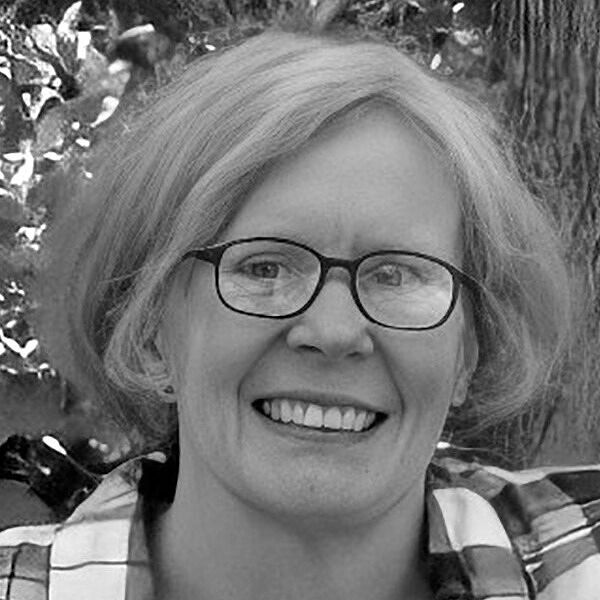
Red Anemones follows a woman’s search for her buried Jewish heritage, unfolding into a multi-generational story of love, resilience, and moral awakening across 20th-century Germany and America. What inspired you to explore your genealogy, and how did that journey shape Red Anemones?
Since I come from a small family, I’ve never been particularly interested in genealogy. There aren’t that many of us that I know about, especially on my mother’s side. Both my parents were the youngest in their families by nearly a generation, so I never met my grandparents or very many extended family members personally on either side, and in most cases, have never seen pictures of them, so I’ve never given any of them much thought.
Then, one cold and rainy Sunday afternoon in late winter of the second year of the COVID crisis, for reasons that involve boredom but otherwise remain a mystery to me, I decided to search my maternal grandmother’s name on a genealogy site, and one thing led to another. I learned that her mother, Bertha Michael, immigrated from Germany, passing through Ellis Island late in the 19th century. Finding that her surname was of Jewish origin, I learned that 446 records containing that surname end in Holocaust death records. Further investigation suggested that 49 of these individuals were likely either directly or indirectly related to my great-grandmother and, by extension, to me. I sat with the emotional chaos and horrifying realization that I had family members who died in Nazi death camps, induced for more than a month, allowing it free rein to sort itself out.
Discovering I was a matrilineal Jew confirmed something I’d long suspected, had hard evidence to support, and was thrilled to know is true. But this was all I knew, because throughout her life, each time I tried to talk to my mother about it, she was struck deaf and refused to acknowledge this reality in her life – and in mine.
Meanwhile, Bertha has taken up rent-free residence in my head and refuses to leave. Ultimately, I determined I had no choice except to write her story as best I could imagine it, given I knew almost nothing about her.
The novel balances historical scope with intimate emotional depth. How did you find that balance in your writing process?
Once I decided to write Bertha’s story, it took on a life of its own, and I just followed the characters wherever they wanted to go, letting them do what they wanted to do and say what they wanted to say. I was merely the vehicle through which they expressed themselves, and I encouraged them to write their own story with the least amount of interference possible from me. They were all very articulate, which made my job much easier.
Nathalie’s internal struggle between duty and freedom feels personal. Was she drawn from your own experiences or someone in your family’s history?
Good question! My best guess is that on some level, nearly every woman of Nathalie’s generation struggled with the conflict between what they wanted for themselves and what society, culture, family, and religion demanded of them. It seems to me this struggle is historical, universal across generations, and endemic to the female experience, and in that sense, there is a personal component to Nathalie’s struggle. However, I made different choices than she felt she could make.
While women today have more freedom, choices, and opportunities than Nathalie did, many continue to face the challenge of balancing what they want for their lives with what others expect of them. What’s very interesting to me on a personal level is that my mother, her sister, and her brother all graduated from major colleges/universities, which was almost unheard of for women, and for many men, in early 20th-century America, and was an expectation that was passed down to me.
The prose feels deliberate and lyrical. Which writers or works most influenced your style and storytelling voice?
This is a hard question to answer because my characters define the style and voice of the story themselves. I focus my efforts on character development, then put the characters in charge of the story, get out of their way, and let them tell it however they want to. If I disagree with where they’re going, I invite them to take a walk so we can discuss it, with a view toward finding common ground we can both live with. My intention always is to create characters who, one way or another, are good storytellers, then let them do what they do best.
In terms of non-fiction, David Marraniss is one of the most beautiful writers I’ve ever read in terms of both style and storytelling ability. His descriptions bring a story to life in ways most non-fiction writers don’t.
Fiction, however, is a little different in that there is much more room for creativity and imagination, and no two authors are alike in terms of how much control over the story and their characters they exert, how much they surrender to their characters, and how much they retain for themselves.
Author Links: GoodReads | Facebook | Website | Amazon
Natalie Barlow’s journey of self-discovery begins when her estranged mother’s sudden death releases a storm of unrevealed family secrets reaching back to pre-WWI Germany.
As Natalie navigates the complexities of her newly discovered Jewish identity and her ancestral heritage, she comes face-to-face with the early 20th-century German immigrant experience, which included strong anti-German sentiment and deep antisemitism that prevailed across America.
Through diaries and letters her mother saved, Natalie learns of the personal costs this ugly reality extracted from generations of her own family. Ultimately, she must confront the question of her own identity.
Like Israel’s red anemones carpeting the western Negev and Dvira Forest of the Judean foothills year after year, Natalie is determined, no matter the personal costs, to find the courage, resiliency, and passion to embrace the changes that bring new beginnings. Inspired by a true story.
Leaving a Legacy

Diamonds in Auschwitz follows a Jewish woman struggling to survive the brutal realities of Auschwitz who finds a hidden diamond engagement ring in the mud, it brings her a glimmer of hope and a reason to survive. What was the inspiration for the setup of your story?
The idea for this story came to me while reading Wendy Holden’s Born Survivors. In this nonfiction book, she briefly mentions that a woman was able to hold onto her engagement ring during the Nazi occupation and living in the Jewish ghetto. As she entered Auschwitz, she refused to let the Nazis get her ring, so she dropped it outside the gates of the concentration camp. I loved the idea of someone finding the ring while a prisoner there. How could something so beautiful change her life, even though it had no value while living in Auschwitz? The story developed from that image.
It seemed like you took your time in building the characters and the story to great emotional effect. How did you manage the pacing of the story while keeping readers engaged?
I actually wrote all of Samual and Hanna’s story in full first. Then I went back and wrote the second timeline — Rachael and Chaya’s story. I made sure to line up their plotline with Samual and Hanna’s – like having climatic events happen next to each other. It took a little bit of shuffling and organizing!
What were some themes that were important for you to explore in this book?
I really wanted to dig into the idea of living after death — not necessarily in a spiritual-afterlife kind of way, but as a legacy. My characters are all very concerned with this question: If no one knows I lived, did I even exist? I wanted to show how leaving a part of you behind after death — whether a ring, memories, artwork — can give your life purpose. I also wanted to explore the idea of hope. At first, it’s seen as a poison to Rachael. She believes that hope kills faster than the Germans can. But as she finds a reason to live, even after losing everything, she sees that hope survives through even the worst of times. The ring is the physical embodiment of that hope for her and Hanna.
What is the next book that you are writing and when will that be published?
I’m in the editing stages of my second book. It’s set in Charleston after the Revolutionary War. It’s part a retelling of a Shakespeare tragedy, part murder mystery, and part origin story of a real Charleston haunted legend.
Author Links: GoodReads | Facebook | Instagram | Website
Rachael is a resilient Jewish woman imprisoned in Auschwitz during World War II, clinging to the memories of her lost family while enduring the harrowing reality of the concentration camp. Amidst the brutality, she uncovers a hidden diamond engagement ring in the mud—its brilliance offering a glimmer of hope and a reason to survive. As she navigates the perils of camp life, Rachael forms a profound bond with Chaya, a young girl also yearning for connection and comfort in their shared despair.Interwoven with Rachael’s tale are the lives of Samual and Hanna, a young Jewish couple planning for their future while navigating the hardships of Nazi-occupied Prague. Distracted by his life in Prague, Samual initially dismisses the growing threats against their community, focusing instead on the engagement ring he dreams of giving to Hanna. As the grip of the Nazis tightens, their plans unravel, yet their love becomes a beacon of resilience amid escalating fear and loss.Diamonds in Auschwitz illustrates how, when everything seems lost, even the smallest treasures can illuminate the path to freedom and connection. Through Rachael and Chaya’s friendship, and Samual and Hanna’s unwavering love, the story reminds us that even in the bleakest times, humanity can shine brightly.
Diamonds in Auschwitz
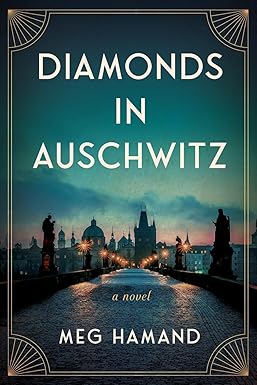

Diamonds in Auschwitz by Meg Hamand is a gut-wrenching novel set during World War II, centered on Rachael, a Jewish woman struggling to survive the brutal realities of Auschwitz, and Samual, a man trying to build a future in a Prague crumbling under Nazi occupation. Their stories orbit a ring, an engagement ring found buried in the mud, a small glittering symbol of hope, memory, and devastating loss. Through vivid, often painful prose, Hamand paints a picture of resilience, shattered dreams, and the stubborn pulse of humanity in the darkest places.
The writing in this book just grabbed me by the heart right from the first page. Hamand’s descriptions of Rachael clawing through mud, finding what she thinks is just a rock, only to later discover it’s a diamond ring, hit me like a punch to the chest. It’s not just the horror of her surroundings; it’s the tiny spark of something beautiful refusing to be snuffed out. Hamand’s style is sharp but full of heart. No flowery nonsense, no wasted words. I found myself rereading sentences like, “Grief had replaced the marrow of her bones,” because they felt true. You can almost feel the mud in your hands, the cold in your bones, the ache that never quite goes away.
One aspect that particularly struck me was Hamand’s ability to use small, carefully chosen details to convey a much larger emotional impact. Like when Rachael keeps the ring dirty on purpose, leaving a bit of mud on it because it reminds her of her daughter Catarina’s brown eyes. That killed me. It’s such a small thing, but it shows how survival isn’t always about food and shelter; it’s about finding reasons to still feel something when everything around you tells you not to. Samual’s chapters brought a different kind of heartbreak. Watching him risk everything to buy that ring for Hanna, then seeing the city he loved crumble into silence and hatred, felt like watching someone lose their home inch by inch, day by day. I was rooting for him, even knowing full well how history tends to end for characters like him.
There were moments when the book was honestly hard to read. Not because the writing dragged, but because Hamand doesn’t flinch away from showing what Auschwitz really was: a machine for killing hope just as much as it killed people. Scenes like Rachael debating whether to throw herself into the electrified fence, or the eerie way she describes the fog she imagines to block out her surroundings, hit me harder than any graphic violence could have. This book hurts, but it’s the kind of hurt that feels important. Like you’re being trusted to sit with someone else’s pain instead of being shielded from it.
Diamonds in Auschwitz isn’t just a story about survival; it’s a story about memory. About the tiny, stubborn things people hold onto when everything else has been taken from them. I would absolutely recommend this book to anyone who loves deeply emotional historical fiction, or who wants a story that punches you in the gut but leaves you grateful for having felt it. Fans of Kristin Hannah’s The Nightingale or Anthony Doerr’s All the Light We Cannot See will feel right at home, though “home” might not be the right word when you’re sobbing into a crumpled tissue at midnight.
Pages: 340 | ASIN : B0DXH3GMWW

Watching, A Different Type of Time Travel, Volume 2: Portrait of an Innocent Girl
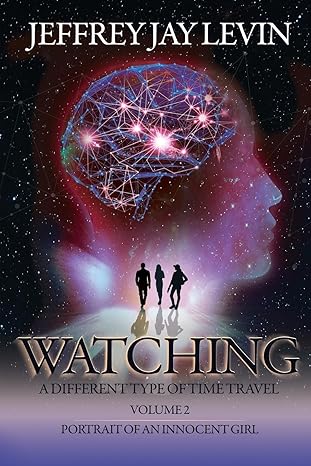
Jeffrey Jay Levin’s Watching Volume 2 is a mesmerizing journey that marries time travel with emotional resonance. This sequel builds on the intriguing concept of “Watchings” introduced in the first volume, where the protagonist, Josh, undertakes non-corporeal journeys through space and time. This time, he is drawn into the haunting world of Nazi-era Vienna, compelled by a painting and the mysteries surrounding it. The narrative effortlessly balances historical drama with speculative fiction, making it an engaging read from start to finish.
What struck me first about this book was the vivid detail. Levin paints historical settings with such precision that you can almost feel the tension of occupied Vienna or the eerie stillness surrounding stolen art. The prologue, describing the chilling parade of Nazi tanks and soldiers, is visceral. This immersive style carried me through the story, though at times, I wished the pace didn’t lag in Josh’s modern-day contemplations. However, the descriptions of the titular painting and its impact on Josh more than made up for these slower moments.
I also appreciated the emotional depth Levin brought to his characters, especially Josh. His reluctance to revisit his Watching abilities, juxtaposed with his unrelenting curiosity, feels relatable. One standout scene was his interaction with Adrian after his museum experience. Their dynamic captures the perfect mix of love, worry, and exasperation that comes with sharing an extraordinary burden. Similarly, Agent Starling Hebert’s frustration with bureaucracy and sexism within the FBI grounds her character, making her investigative journey all the more satisfying. Levin’s ability to weave personal struggles into the grander narrative of historical intrigue is a triumph.
The pseudo-scientific explanations of Watchings add a fascinating layer to the story, showcasing Levin’s creative imagination and his ability to blend science with fiction. The idea of heightened enzymes and hippocampal activity is unique, giving the concept of time travel a fresh twist. While these sections delve deeply into detail, they provide a thoughtful backdrop for the fantastical elements, enriching the reader’s understanding of the phenomenon.
The exploration of Nazi art theft and the mystery surrounding Gustav Scheiner’s Portrait of an Innocent Girl was fascinating and tied beautifully to themes of loss, memory, and justice. Levin’s extensive research shines here, offering a thought-provoking look at the devastating cultural impact of war.
Watching Volume 2: Portrait of an Innocent Girl is a compelling read for fans of historical fiction, mystery, and time travel. It’s perfect for those who savor rich character development and thought-provoking themes. I’d recommend it to anyone intrigued by history’s shadows and the mysteries they hold.
Pages: 288 | ISBN : 978-1685135935

An Act of Goodness
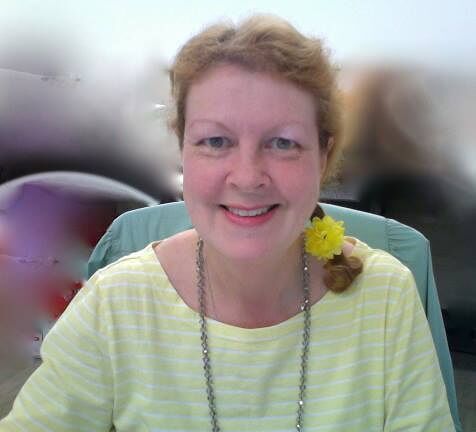
Until The Stars Align is the story of three young Jewish girls, their daring escape from the horrors of Nazi Germany, and their lives with foster families in England. What was the inspiration for the setup of your story?
I had been aware of the Kindertransport for years. I’ve always thought it was phenomenal that the British rescued 10,000 mostly Jewish children and started the program right after Kristallnacht, realizing what was coming. They let these kids into their country to live there safely, with foster families, away from the impending war. It knocks my socks off every time I think about it. What an act of goodness! Bravo, Britain!
So I came up with the idea of writing about a family impacted by the parents’ decision to send three children, cousins, to safety in England. Once there, the three are split up, and sent to live with different foster families, but they stay in touch and begin to adjust to their new lives. I also wanted to show what the biological parents were going through in Germany as they tried to arrange to emigrate. From all accounts, getting out of the Third Reich before the war started wasn’t easy.
How much research did you undertake for this book, and how much time did it take to put it all together?
I did quite a bit of research for it, as you can imagine! I’ve always been fascinated by the time period, so over the years I’d already read a massive amount of books about it, just out of curiosity. For this story, I read, and in one case re-read, true accounts of children who had been on the Kindertransport. I also consistently fact-checked every little detail that I could get my hands on regarding the time period in both England and Germany. I found out what train stations the transports left from, where they ultimately arrived, the way the children also had to ride ferry boats from Holland to England, how long the ferry took to get there in 1939 – everything like that. I also researched as many details as I could uncover about London during the Blitz, such as what it was like to take shelter from the bombs in the underground stations, how accidents increased during the blackout, or that sandbags lined a lot of the streets. I even found a website listing exactly when and where every bomb attack fell on London and referred to that before writing the part of the story where one of the foster families gets bombed out. I wanted to make this book as accurate a historical novel as possible.
But keep in mind, I’ve adored doing research since all the way back when I was a grammar school girl. For me, it becomes like a treasure hunt of sorts, looking for those elusive bits of information, and then, voila, finding them!
What were some challenges you felt were important to defining your characters in this story?
I created a whole lot of characters for this book in order to show as many different sides of their various experiences as possible.
The three girls have suffered discrimination in Berlin and it’s taken a toll on them, suddenly they’re being sent away from there, but to live with whole new families. It starts off from there, and there’s also the situations happening with the parents left behind in Berlin, the kind foster parents, the English homefront, the Battle of Britain, and more. Above and beyond all else, there’s no mail service between England and Germany once the two countries go to war with one another, so the big pervasive question for these three resettled children in England is what’s going on with their relatives back home?
What is the next book you are working on, and when will it be available?
I’ve worked on a cozy mystery that will be available soon. It’s called There’s No Cure for Impossible. How’s that for a title? It’s about a young gal who learns the toxic friend she wrote off just kidnapped a baby. It was another fun one to write!
Author Links: GoodReads | X (Twitter) | Facebook | Website | Blog | YouTube | Amazon
It’s June 1939. Three young Jewish girls, Rosi, her sister Anni, and their cousin Emilie, wait to board the Kindertransport train that will take them away from Nazi Germany, and a life of discrimination, to kind foster families in England. The parents hate to let them go, but realize it’s for their own good, and that it may just be their only chance of survival. When guarded Rosi arrives in London, she’s placed in the East End with a welcoming family of “Pearlies,” and begins to blossom into the happy young girl she was originally born to be, before the Nazis disrupted her world. Anni goes to live with upper-crust foster parents and their shy daughter, and Emilie with a newsagent and his wife. They like their new country and adore their “new parents,” but what has happened back home in Berlin to their “old” parents? By 1945, when there are still no answers, Rosi is determined to find out. Will the stars align to bring about a reunion or is it already too late?
Until the Stars Align

Carolyn Summer Quinn’s Until The Stars Align is a captivating and heartwrenching novel that transports readers to the turbulent era of June 1939. The story follows three young Jewish girls—Rosi, her sister Anni, and their cousin Emilie—on their courageous journey aboard the Kindertransport to England, escaping the looming horrors of Nazi Germany.
Quinn’s storytelling prowess shines through as she delves into the emotional depth and resilience of her youthful protagonists. Rosi’s transformation from a guarded child into a joyous young girl, thanks to the warmth and kindness of her foster family in London’s East End, is particularly moving. Anni and Emilie’s contrasting experiences with their respective foster families further enrich the narrative, illustrating the diverse and complex lives of refugees during this dark period in history. The author excels in bringing her characters to life through vivid and realistic imagery. Each character’s portrayal is intricately detailed, making their journeys both relatable and profoundly moving.
Quinn’s depiction of Nazi Germany’s oppressive atmosphere, with its haunting images of deserted streets and ominous shadows, contrasts sharply with the sense of refuge and renewal in England, enveloping readers in the historical context and making the characters’ experiences deeply tangible. The narrative’s emotional resonance is heightened by Quinn’s sensitive and nuanced approach to the characters’ struggles and triumphs. The pacing, though occasionally deliberate, adds to the depth and authenticity of the storytelling, maintaining a gripping and emotionally charged momentum throughout.
Until The Stars Align is a testament to Quinn’s remarkable ability to craft a story that is both compelling and uplifting. The book offers a powerful and touching tribute to the resilience of the human spirit in the face of unimaginable adversity, capturing the essence of hope and survival amidst despair. Quinn’s masterful storytelling and rich, immersive world-building make this novel an unforgettable reading experience, leaving readers both moved and inspired.
Pages: 205 | ASIN : B0D62DRJZS
The Spy from Palestine


Steve Haberman’s The Spy from Palestine introduces readers to Miss Charly Lawrence, a distinguished journalist, and her partner and bodyguard, Mr. Shaw. Set against the backdrop of British-controlled Palestine, the duo’s mission is to interview Leah, a survivor of the Warsaw Ghetto Uprising, now residing in Tel Aviv. Amidst scorching heat, kidnappings, and intimidation, their inquiry uncovers a significant conspiracy implicating British interests, Jewish factions, and Nazi war criminals. As they delve deeper, Charly and Shaw find themselves entwined in a perilous tug-of-war over this explosive information, raising questions about their ability to preserve their integrity and safety.
The narrative explores the theme of resilience, highlighting humanity’s remarkable capacity to adapt, evolve, and overcome adversity. Characters like Hans Peters, who relentlessly pursues freedom; Rivka, who faces daunting challenges with perseverance; and Charly, who is committed to shedding light on the Jews’ plight, exemplify resilience. Through these characters, the novel vividly portrays the myriad ways individuals confront and surmount obstacles, emerging stronger.
While I feel The Spy from Palestine may not boast extraordinary highs or lows, it presents a well-crafted story that captivates and educates. The plot progresses fluidly, with well-developed characters and a consistent pace that ensures a more-than-gratifying read. The novel bridges historical events with contemporary relevance, offering fresh insights into past incidents and their ongoing impact today. I recommend Steve Haberman’s The Spy from Palestine for fans of historical fiction and those seeking a compelling narrative that educates as it entertains.
Pages: 249 | ASIN : B0D1GJ41KJ
Exile Music

Orly’s youth is deeply entwined with music, from the serene opera tales of her famous mother to the impassioned strains of her father’s viola. Despite the mounting political unrest in Germany, she finds solace and adventure in the company of her best friend and upstairs neighbor, Annalise, as they create fantastical, eccentric worlds to escape the encroaching challenges of their reality. However, 1938 brings a devastating upheaval when Germany invades, severing Orly from her cherished friend. Fleeing with her parents, they find asylum in the distant mountains of Bolivia. There, Orly faces a dilemma: should she forge a new existence in this unfamiliar land or dare to return to Europe and reunite with Annalise?
Jennifer Steil’s Exile Music: A Novel, set against the backdrop of Vienna during Hitler’s rise, depicts the life of a young Jewish girl. Steil employs historical references effectively, providing readers with a chronological compass through Orly’s journey, and delivering an emotional resonance for those familiar with the Jewish plight during WWII. The novel also weaves in musical motifs, particularly through the tragic operas relayed by Orly’s mother. These references, alongside vivid depictions of the opera house and Orly’s Viennese village, enrich the narrative with a vibrant cultural tapestry, inviting readers into the heart of the characters’ world. The specialized nature of the musical and historical references offers a rewarding opportunity for readers. A deep understanding isn’t essential, but those familiar with these elements will find that their knowledge significantly enriches the emotional depth of the story. The novel’s appeal might vary among readers based on their historical and musical knowledge. The family’s profound connection to music offers a universal touchstone of passion and resilience.
Jennifer Steil has crafted a descriptive and evocative tale that encapsulates the tragedies and perseverance of a Jewish family during WWII. Exile Music is both captivating and eloquent, inviting readers to immerse themselves in a poignant period of history through the eyes of a deeply relatable protagonist.
Pages: 432 | ISBN : 978-0525561835



 LITERARY TITAN