Blog Archives
Seeking Closure: Someday, You Will Understand


Seeking Closure dives deep into the interconnected lives of its diverse cast of characters, blending personal growth, financial intrigue, and societal upheaval. Spanning decades from the 1990s to the pandemic-stricken 2020s, the book intertwines major historical events like 9/11 and the Great Recession with the intimate struggles of love, ambition, and self-discovery. The story’s heart lies in its exploration of universal questions: What defines love? How do we balance personal desires with societal expectations? It’s as much about financial investments as it is about emotional ones.
One thing that struck me immediately was the writing’s layered texture. The author breathes life into characters with rich, nuanced backstories. For instance, Adam, the protagonist, steps into the financial world with all the polished nerves of a freshly minted MBA, yet his journey is anything but linear. His first encounter with the enigmatic Charlie had me grinning and wincing in equal measure, reflecting on how chance meetings often define our paths. The way Adam’s nervousness on his first day mirrors his internal growth later in the book is rewarding. This character progression feels real and heartfelt.
I enjoyed the story but felt the prose occasionally reaches for more than it needs to, with some scenes feeling a bit overexplored. For instance, the meeting between Adam and Charlie in the early chapters, while engaging, sometimes lingers on details that could have been tightened. Even so, these moments also highlight the author’s enthusiasm for crafting vivid and immersive storytelling.
What I loved most, though, was how the book delves into its philosophical undertones. Each character seeks closure, whether through love, career, or family. The chapter on Jane’s sacrifices for her family versus her career ambitions resonated deeply. Her quiet strength is a sharp contrast to Charlie’s brash assertiveness and Adam’s introverted resilience. I found myself rooting for all of them, even when their flaws were painfully evident.
By the time I reached the closing chapters, I felt like I had lived decades alongside these characters. The final moments are bittersweet, leaving you pondering the very meaning of closure. Is it truly an end or just another beginning?
If you enjoy stories that weave personal dilemmas with historical contexts and explore themes of love, identity, and ambition, Seeking Closure is a must-read. It’s perfect for anyone who loves drama with a philosophical twist or wants to lose themselves in a tale that feels both sprawling and deeply personal.
Pages: 345 | ASIN : B0CW1BSJC5

Silas on Sundays
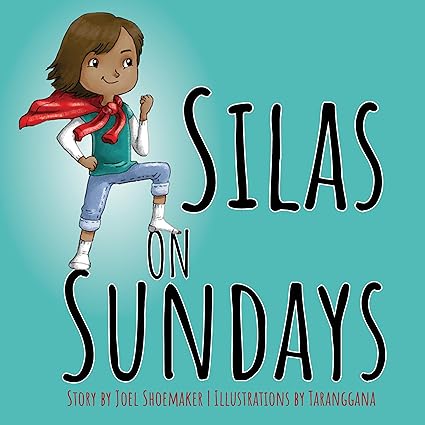

Silas on Sundays tells the story of a young child, Silas, who explores a world of possibilities each day of the week, except on Sundays. At home, Silas is free to imagine and embody different roles as a quarterback, a dancer, an astronaut, and more! But when Sunday comes around, Silas feels limited, especially by church expectations. After several humorous attempts to avoid church, Silas’s parents finally understand, leading them to a new and inclusive church that celebrates Silas’s true self. This heartfelt children’s book brings themes of acceptance, identity, and the joy of finding a supportive community.
Each weekday, Silas has a new dream or passion. Tuesday is for cheerleading, Thursday is all about karate. These imaginative scenes are alive and remind me of how my own kids play, switching roles in a snap. I loved the vibrant illustration of Silas “karate-chopping through six solid blocks of wood” on Friday, it’s over-the-top but perfect for a child’s world where anything feels possible. The story embraces Silas’s playfulness and curiosity, which feels so true to how children are experimenting with who they are or want to be.
The scenes on Sundays took me right back to childhood. Silas’s reluctance and even the inventive ways of “accidentally” skipping church were funny and heartfelt. When Silas “makes a HUGE breakfast” to delay going, it’s clever and relatable. But beneath the humor, there’s an undertone of discomfort with the structured setting of church, where Silas can’t fully express themself. As a mom, this hit home. Seeing that Silas doesn’t feel quite right in a space where expression is restricted was eye-opening and a good reminder of the need for flexibility and empathy in how we introduce traditions.
The turning point, when Silas’s parents took them to a new church, was my favorite. Silas meets Matt, who’s volunteering, and Silas finds acceptance in a church that’s open and affirming. When the new church welcomes Silas with “rainbows and toyboxes and music,” it feels liberating. And the fact that Silas finally finds joy on Sundays was moving. The illustrations here are beautiful and full of color, showing Silas’s happiness in a way words couldn’t alone.
I’d highly recommend Silas on Sundays for parents who want to discuss identity, acceptance, or finding inclusive spaces. It’s an uplifting picture book that tackles big ideas in a way that’s easy for kids to grasp. It’s heartfelt, real, and, in many ways, just the kind of story I wish I’d had growing up.
Pages: 32 | ASIN : B0D7TZ9WM5
Love and Tolerance

In The Artifact, a young man acquires a technologically advanced artifact that allows him to glimpse the future and finds himself fighting to keep it out of the hands of forces seeking to control the world. What was the inspiration for the setup of your story?
The story was born when it occurred to me how two ideas I’ve long been fascinated with–the artifact that foretells the future, and the disrespect shown to the dead and Egyptian heritage by Westerners raiding the Pyramids–could be related. What if an artifact that had never been publicized offered its possessor powers of prophecy? I knew the main character should be a young adult because people in that age range are interested in the future in such a unique way–first realizing how so many possibilities exist, and how choices affect their futures, but in ways that can be difficult to predict.
What was your favorite character to write for and why?
The main character, Linc, was the most fun to write–and the most challenging because he is not like me–my mother was not an attorney, my father was not killed in Afghanistan (and was not a soldier), and I never wanted to be an architect. So I had to let Linc teach me what it was like to live that life–and I had to remember what, in general, it was like to be 17 years old. But the adventure Linc lives–and the challenges he survives–these were the thrill of a lifetime, for him and for me and, I hope, for the reader.
What were some themes that were important for you to explore in this book?
In addition to themes of wondering about the future and having respect for other cultures, the need to respect other people and the differences we encounter every day was paramount. So as a young person with friends who are just figuring out who they are and coming to terms with questions of gender roles and orientation, Linc knows an attitude of tolerance is essential. When he asks his mother why she married a soldier even though she hates war, she tells him things are not always simple: “You love who you love.” Love and tolerance are easy virtues to lose, but we must have them to survive.
Another theme was how history creates the present. From the turbulence of the Watergate years in the US and the realities of Project MKUltra Delta to the terror of September 11, 2001, Linc learns the history that made the world he has to live in. Everything in the present has roots in the past.
Can readers look forward to seeing more work from you soon?
Yes! My new novel, The Delphi, has just hit the shelves (both real and virtual ones). It’s about politics, money, mythology, the need for safe elections, and–you guessed it–history! How did we get to wherever this strange place called the present is? Who is this Cleo person who has so much mystery and power surrounding her? It all started a long time ago . . .
Author Links: Bluesky | Facebook | The Artifact | Website | Amazon
fiction story set in the mostly real world of Louisville, Kentucky, and
surrounding areas. Seventeen-year-old Linc is a fan of old movies,
Egyptology, and pyramids. Raised by a single mom who works as an
environmental lawyer, he spends a lot of time watching old movies with
his very close friends Lonnie and Julie. Linc is unwittingly drafted to take
possession of a mysterious artifact, a high-tech electronic device
with connections to ancient Egypt. The artifact allows the possessor
to have visions of the future, but, Linc and his friends soon discover, at a
high cost.
The main character, Linc, and his friends are young people dealing with
issues that speak to readers of diverse ages and backgrounds. Books
with similarities include Jennifer Egan’s The Keep, Jodi Picoult’s
Where There’s Smoke, Harry Potter and the Sorceror’s Stone, Mindwalker
by A. J. Steiger, and Stephen King’s Later.
David Rogers was a reader before he became a writer, so he
learned to appreciate Elmore Leonard’s rule to leave out the parts
readers skip anyway. The Artifact is all story, all the time, and is
intended to accomplish two tasks above all else–allow the reader to
identify with the characters, and keep the reader curious about what
happens next.
The Artifact

David Rogers’ The Artifact is a captivating young adult novel brimming with unexpected twists and turns. This fast-paced, mysterious thriller offers ominous settings and intricate plots, all while weaving an inclusive love story between teenagers discovering themselves amidst life’s challenges. The writing is enigmatic and enchanting, drawing readers into the rapidly unfolding events. The protagonist’s direct engagement with the reader makes readers feel like a part of the story, experiencing his ordeals firsthand. This book is not just a thrilling read but also a catalyst for important discussions about identity, acceptance, and the power of love.
The story centers on Linc, a seventeen-year-old with a passion for Egyptology and classic movies. Through a mysterious series of events, he acquires an unknown artifact that grants him the ability to see the future—but at a significant cost. Linc soon realizes he is entangled in a much larger conflict, with powerful individuals and agencies vying for control of the artifact. As the plot thickens, Linc is kidnapped and subjected to experiments designed to exploit his newfound abilities. These powerful forces aim to control not only him but the future of the world.
The Artifact stands out for its exceptional inclusivity and LGBTQ+ friendliness, sparking meaningful discussions about sexuality and acceptance among young people and their families. Rogers skillfully initiates deep, thought-provoking conversations about the philosophy of life through his young characters. The author balances the mystery and thrill with a generous dose of humor, often eliciting laughter through Linc’s witty puns.
The Artifact‘s tone perfectly suits its teenage audience, blending humor, mystery, and engagement. Whether you’re fascinated by Egyptology or simply looking for a gripping narrative, David Rogers’ novel offers something for everyone to enjoy.
Pages: 193 | ASIN : B0C7DR1WQX
Queering My Religion
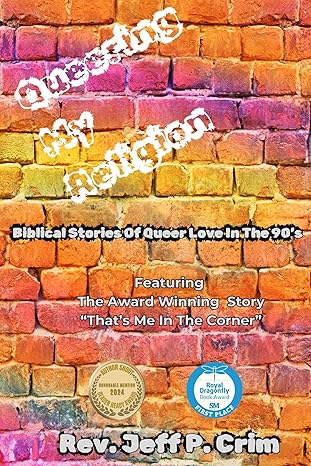
Queering My Religion by Rev. P. Crim presents a thought-provoking collection of short stories that reimagine biblical narratives through a queer perspective. This collection stands out for its modern twist on familiar tales such as “Joseph and his Coat of Many Colors,” “David and Jonathan,” and “The Centurion and his Servant,” among others. Set against the vibrant era of the 1990s, these stories delve into the intricacies of identity, love, and belonging, offering a unique window into the queer experience within the context of well-known biblical stories.
The book’s strength lies in its ability to breathe new life into these traditional narratives. Each story is carefully crafted to establish a connection with the queer community, challenging readers to embrace ambiguity and celebrate the diversity of human experiences. By urging readers to question their preconceptions, the book facilitates a rediscovery of history through an inclusive and fresh perspective. Drawing inspiration from works like Clarence Jordan’s Cotton Patch Gospels and P.K. McCarey’s Black Bible Chronicles, Queering My Religion adds to the rich tradition of reinterpreting religious texts.
The collection’s standout feature is its bold reinterpretation of biblical stories, providing insight into the lives of characters as they grapple with their identities and relationships. From the journey of self-discovery in “Joseph and his Coat of Many Colors” to the exploration of deep connections in “David and Jonathan,” each narrative resonates with contemporary audiences, bringing a new layer of understanding to these age-old tales. At its core, the collection challenges traditional heteronormative interpretations, highlighting the diverse spectrum of human experiences. Themes of love, acceptance, and resilience are woven throughout, reflecting not just the struggles and triumphs of the 90s but also presenting a timeless message of inclusivity.
Queering My Religion distinguishes itself by sparking discussions about inclusivity, representation, and the transformative power of storytelling. Appealing to fans of biblical narratives, queer literature, or immersive storytelling, this collection invites readers into a world of exploration and reflection, leaving a profound and lasting impact.
Pages: 97 | ASIN : B0CV9K3D61

Conflicting Pull of Our Inner Emotions
The Varieties of Religious Experience follows a crow trying to eat some Vienna sausages who gets his head stuck in the can and hits it on the concrete causing him to realize he has lived before. What was the inspiration for the setup of your story?
As you can imagine, this one pretty much came from real life. I was sitting in traffic, waiting for the bridge to come down, and saw this crow masterfully opening an aluminum can. Seattle is pretty much ground zero for crow behavior research (U of Wa), so there’s a lot of interest in these birds. As always in fiction, you try to take a situation to its extreme. Who would be most shocked at discovering they were reincarnated? A Catholic priest. Couple that with the never-ending sexual abuse scandal and; Voila.
What are some things that you find interesting about the human condition that you think make for great fiction?
No matter which paradigm you use; Old Testament, New Testament, Freud, Jung, and my current jag-Robert Sapolosky, on the neurobiology of behavior; The conflicting pull of our inner emotions (and demons) with our moral compass and our desire to “do the right thing.” The one thing I’ve learned over the years is that it is entirely possible for a human being to believe two entirely opposite things at the same time.
What were some themes that were important for you to explore in this book?
The persistence of deep inner faith is often coupled with ambivalence.
The irremediable power of shame, as opposed to “guilt.”
Does any notion of our after-death make any consistent sense?
What is the next book that you are working on, and when can your fans expect it to be out?
Satan’s Vermeer. The devil has amassed one of the world’s greatest art collections. All the ‘whereabouts unknown’ are in his private museum. When news of an undiscovered Vermeer looted in WWII reaches him, he sends one of his minions, the reluctant soul of 15th-century artist, Pietro Tocca, to buy it before the Mossad reclaims it for the Jewish family that owned it before the war. Hilarity ensues…
If Varieties generates a fan base I’ll push it though.
Author Links: Amazon
Bring Peace and Love

Make the Dark Night Shine follows a gay Japanese ambassador who has a relationship with another man and a woman he meets in Constantinople, creating a chosen family. What was the inspiration for the setup of your story?
One of the blessings of writing this novel is that every day it gave me a reason to reflect on my Aunt Nina Friedberg Uchida, who died in 2016. Nina was with me from the moment I was born and there was not a world without her love, her smile, her restless energy, and her optimism that we shall overcome some day. She engaged with everyone wherever they were and sought out those that were alone, needed help, or wanted to change this world. With all our current uncertainty, I feel strengthened by her guidance, commitment to the movement and struggle and her ever ready activism.
Nina never knew her Japanese father, but during a visit when she was 91-years-old, she told me that her children had discovered that in the 1930s her father had traveled from Japan to NY where she had been living with her mother. With a gleam in her eyes, she said, “I know he was looking for me.” Instantly, I had a vision of his story and why despite this journey, he did not find his daughter. I told Nina that I wanted to write this story and she unsurprisingly replied, “Alan, men are always appropriating women’s stories. I have tried to write my own story for many years. But it’s too late now, and I know I will never do it. You are a good writer, and so please do it.”
Little did she or I know the journey this story would take me on. And unfortunately, she died later that year before I had a chance to begin writing. Inspired by the little I or other family members knew about Nina’s parents’ life, I threw myself into research and the history of the times in such disparate places as Constantinople, Paris, Japan, New York, and London (Clapham) between the two world wars.
Kenzo undergoes many changes in the novel, both in his career and in what he values. Was there anything from your own life that you put into the characters in your novel?
I think all characters in my novels reflect my experience in some way; certainly, my values are reflected throughout. In terms of Kenzo, I had a career working overseas for the US government, and although I did not become a Zen priest, I have been a Zen student for over a decade now. We often want to believe that spiritual leaders, like Kenzo, live impossibly perfect lives and are other than human. I wanted to show a spiritual character is continually searching, continually confronting the issues that arise for them, and is very human in their suffering, reactions, and trauma. My understanding from my Zen practice is that we all are enlightened but generally are not aware of that. For me, that means the problems of life do not stop, but my response and ability to see clearly through them brings me a peace that I did not have earlier.
The settings of the novel are places that I have visited, including Eiheiji Monastery where I participated in a meditation retreat and got a glimpse of a monk´s life.
What were some themes that were important for you to explore in this book?
The heart of Make the Dark Night Shine is a search for family and connectedness. In my book tour, many people, straight and queer, tell me stories of their families of choice—the people with special bonds that they can count on, with whom they celebrate and grieve. I learned this from Nina, who created her own inter-connected family when she had virtually no blood relatives.
Another important theme is how do we face the ever-present existence of wars and violence in our lives. Despite their persistence, I wanted to explore what each of us can do to bring peace and love into the world. Right now in Ukraine, a Zen priest is planting trees each day, then going back to Odesa, he tends to the direct consequences of the war. He does not know if the trees will live and what the country will be like in the future, only that trees will heal the earth and give comfort to other beings.
A final important theme is queer life that is not encumbered by shame. I want to visualize a world where queer people can live out their lives without questioning their queerness.
What is the next book you are working on, and when will it be available?
My next book will be about a gay Ukrainian bootmaker from the last century, with the boots themselves giving voice to their own version of the story.
Author Links: GoodReads | Instagram | Facebook | Website | Amazon
Returning to the growing militarism in Japan, Kenzo finds an unexpected path in Zen Buddhism. Yet no teachings prepare him for the revelations to come — about his life, his loves, and the events around him. On the eve of WWII, he discovers that he has a daughter living with Elisa in New York. He leaves the monastery on a perilous mission to promote peace with a secret plan to reunite with his daughter Nina.
Cinematic in scope, this novel lyrically captures the world on the brink of war. As Kenzo builds — and fights for — his chosen family, larger forces threaten all. Sweeping, meditative, and achingly beautiful, Make the Dark Night Shine explores the many worlds a life can inhabit, and the hidden worlds we find in ourselves.


