Blog Archives
Fairness and Equality
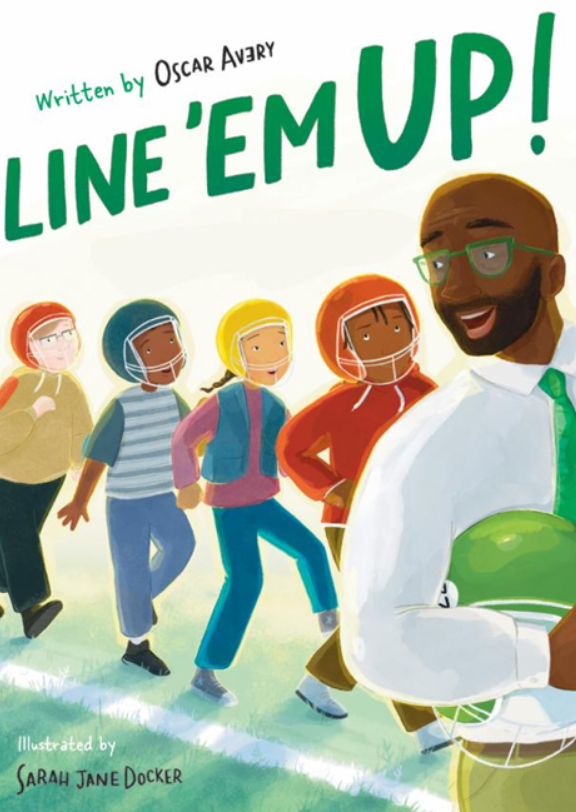
Line ‘Em Up! follows a group of students whose world is changed by a new teacher who shows them how to find the greatness inside themselves. What was the inspiration for the setup of your story?
I was incredibly fortunate to have one of my early stories critiqued by the late James Alan McPherson. He once told me that the most powerful stories are often about ordinary people placed in extraordinary situations. That idea stayed with me, but as a special education teacher, I found myself drawn to the reverse: extraordinary individuals navigating what the world considers ordinary.
My students—many of whom have disabilities—work every day to master skills that others take for granted. Something as simple as forming a straight line can be an enormous triumph. That contrast fascinated me. I wanted to explore the dignity, determination, and quiet heroism embedded in those moments.
So I paired these extraordinary children with a teacher who is extraordinary in a very different way—a former professional football player who once seemed invincible, now facing the realities of chronic traumatic encephalopathy. Placing these two worlds side by side allowed me to explore resilience, vulnerability, and the ways people lift one another up.
Ultimately, I hoped to create a story that resonates because we all know someone who appears larger than life, and we all know someone who faces daily challenges due to disability or illness. Line ’Em Up! brings those experiences together in a way that I hope feels both heartfelt and universal.
Is there anything from your own childhood included in the characters in Line ‘Em Up?
Growing up in Massachusetts in the 1970s, I saw how students in special education were often separated from the rest of the school. I didn’t understand it then, but as I grew older and became a special education teacher, I learned that those classrooms held a wide range of students. Some were there because of genuine cognitive disabilities, while others were placed there due to emotional trauma, unstable home lives, or circumstances far beyond their control.
That understanding shaped the way I think about fairness and equality—two ideas I consider very different. Equality means everyone gets the same thing; fairness means everyone gets what they need. That distinction has guided my teaching and deeply influenced Line ’Em Up!
While none of the characters are based on specific individuals, the emotional truth of the story comes from witnessing how children grow when they’re understood, supported, and included.
The artwork in your book is wonderful. Can you share with us a little about your collaboration with illustrator Sarah Jane Docker?
One of the main reasons I reached out to Sarah Jane Docker is simply because she’s an exceptionally talented illustrator. When I looked through her portfolio, I immediately felt she was the right fit for this story. Her characters didn’t look like the typical, polished industry illustrations you see everywhere—there was warmth, honesty, and a lived‑in quality to her work that felt real.
Representation was also incredibly important to me. According to a 2019 study by the Cooperative Children’s Book Center, only about 3.4% of children’s books feature a main character with a disability. When I saw that Sarah naturally included Black, white, Asian, and disabled characters in her illustrations—not as statements, but as part of the world she creates—I knew she understood the heart of this book. That says a lot about an illustrator.
I also want to highlight the tremendous contribution of our layout artist, Anna Lubecka (and her husband Greg), founder of Banana Bear Books. The collaboration between Sarah and Anna elevated the entire visual experience. Without their combined talents—the illustrations and the thoughtful layout—the artwork wouldn’t resonate with readers in the memorable way it does now.
What were some ideas that were important for you to share in this book?
Several ideas were especially important for me to explore in Line ’Em Up! One is the distinction between fairness and equality—a theme that runs through both my teaching and my writing. Equality means everyone gets the same thing; fairness means everyone gets what they need. That difference matters deeply in classrooms and in life.
I also wanted to play with the contrast between the extraordinary and the ordinary—how children who are often overlooked can show remarkable strength in everyday moments, and how something as simple as forming a straight line can become a powerful act of growth and pride.
And finally, the idea of “Champions” versus “Champeons” is woven into the heart of the story. Readers will understand the meaning once they experience the book, but it speaks to the difference between looking like a champion and truly becoming one.
These themes guided me as I wrote, and I hope they resonate with readers of all ages.
Author Links: Instagram | Email
Navigating New Ideas
Surprising Max follows a soccer-loving boy who reluctantly practices piano and discovers, alongside a blooming amaryllis, that patience and care can unlock unexpected confidence and talent. What was the inspiration for the setup of your story?
A retired music professor and piano teacher, I made up Max’s story for Sunday School children, as an introduction to Advent, a season of waiting and preparation that precedes Christmas. A piano teacher enjoys a unique influence in a child’s education, guiding year-by-year growth. And, since music is a performance art, the recitals become the show and tell for performers and parents. Max GETS surprised, at his performance, at the appearance of the high school soccer star, who dazzles at the piano, and by the beauty of the red amaryllis. But, even more than that, Max IS the surprise. He has amazed the audience, his mom, and, of course, himself.
How did you approach writing a story about perseverance without making it feel instructional for young readers?
Max’s thoughts are expressed through his “italicized” questions. We are privy only to what he’s feeling: self pity, bewilderment, amazement, worry, and finally, a proclamation. For most children, navigating new ideas requires an emotional safety net that permits questions that may not have answers.
What role did the illustrations play in shaping Max’s emotional journey as you envisioned it?
Our sons’ favorite book was the great Alexander and the Terrible, Horrible, No Good, Very Bad Day. While my illustrator couldn’t copy that little boy, she came very close to capturing that disheveled awkwardness. Max’s smiles bookend his experiences; he was happy playing soccer AND, eventually, playing the piano.
What do you hope children feel or reflect on after finishing Surprising Max?
A friend told me that, after receiving Surprising Max for Christmas, her grandchildren decided to take piano lessons. Obviously, that was a wonderful reflection on Max! Not every child will become a musician. However, the pursuit of music making is filled with life-enriching and life-enduring lessons. My hope would be that every child feels welcomed in that world.
Author Links: GoodReads | Amazon
The Warmest Memories

Saturdays With Gramps centers around a little boy who learns that love never truly dies after losing his grandfather. Where did the idea for this story come from?
Saturdays With Gramps was inspired by my own experiences with loss. I lost my dad when I was 27, and years later I navigated the loss of my mom—first ambiguously, as dementia slowly changed who she was, and then physically when she passed away. During that time, I was also helping my children grieve their Grammy and find ways to keep both her memory and their grandfather’s memory alive. Writing this story became a way to honor those relationships and the love we shared. My hope is that the book helps children and families feel less alone in their grief, and gently reminds them that love doesn’t disappear—it continues in memories, traditions, and the bonds we carry forward.
Is there anything from your own childhood included in Sam’s story?
Yes! My dad, Henry, co-founded a restaurant named Embers, and they served the most delicious pancakes. When I was growing up, we would go to Embers every weekend for brunch, and I couldn’t wait to devour a syrup-drizzled stack of pancakes! I have the warmest memories from those days. In the story, I named them “Grampscakes” because my dad, who went by Papa to his grandkids, always called himself PapaBurger, as his restaurant also served yummy burgers (namely, the Emberger Royal!). Grampscakes are a way to honor that silly nickname of his, and those awesome pancakes!
The artwork in Saturdays With Gramps is wonderful. Can you share with us a little about your collaboration with illustrator Ellie Beykzadeh?
Ellie is truly the most amazing illustrator. Her work is so stunning and always highlights every emotion beautifully. Her illustrations bring the book to life. I love working with Ellie because she is so talented, collaborative, and has the most creative ideas. She’s such a kind human, to boot!
What is one thing you hope young readers and their families take away from your book?
My greatest hope is that young readers and their families find comfort in knowing that love never truly dies. Even when the people we love are no longer with us, their love continues to live on — in memories, traditions, and the quiet ways they remain part of our lives.
Author Links: GoodReads | Facebook | Website | Amazon
Saturdays were Sam’s favorite—Grampscakes dripping with syrup, lively chess matches, quiet moments spent birdwatching. Just Sam and Gramps, soaking up their special day together.
But when Gramps passes away, Sam is heartbroken—and Saturdays feel empty.
With his mom’s gentle guidance, Sam begins to understand a powerful truth: even though Gramps is gone, the love they shared—and their cherished traditions—will always remain. Because like syrup on pancakes, love sticks around.
Saturdays with Gramps is a tender, heartfelt picture book that helps children process grief and loss with warmth, comfort, and hope. Through gentle storytelling and beautiful illustrations, it reminds readers that the bonds we build with those we love remain long after they’re gone.
✅ Ideal for ages 7+
✅ Introduces loss in an age-appropriate, relatable way
✅ Encourages open conversations about big feelings
✅ Validates kids’ emotions and experiences
✅ Offers healthy, hopeful coping strategies
✅ A supportive resource for parents, educators, and therapists navigating bereavement
Whether a child is grieving a grandparent, parent, pet, or any kind of loved one, Saturdays with Gramps reminds them they’re not alone—and that love lasts forever.
Line ‘Em Up!
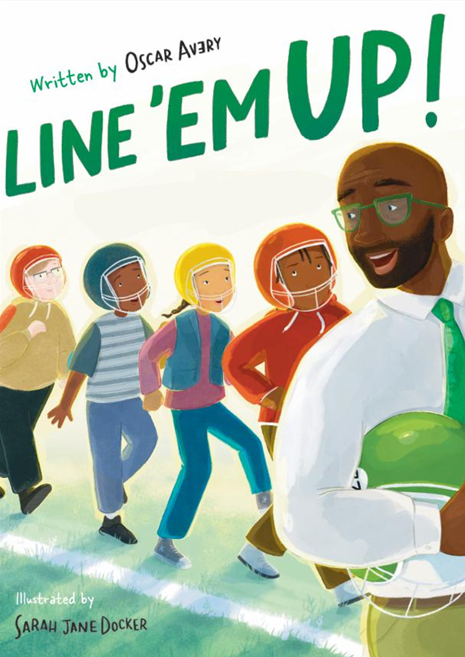

Line ’Em Up!, by Oscar Avery, follows a class of kids who feel written off by everyone until a new teacher, Mr. Murant, walks in and completely changes their world. He teaches them pride and discipline and shows them how greatness starts inside. The class learns about science, math, football, and life, all while building confidence through something as simple as forming a straight line. Then the story shifts as the group discovers their beloved Mr. Murant has been struggling with CTE.
Reading this children’s book honestly resonated with me more than I expected. I went in thinking it would be a light little school story, and instead found myself caught up in the way Mr. Murant pushes his students to believe in themselves. The writing feels warm and punchy and a little chaotic in a fun way. It mirrors a real classroom where jokes fly, and kids interrupt, and learning happens sideways. I kept smiling at the little back-and-forth moments, especially when Savannah had something sharp to say. The pacing jumps fast from day to day, and that gives the whole thing a breathless energy that makes you want to keep reading.
The author doesn’t shy away from the hard stuff, and I really appreciated that. I felt the kids’ confusion and frustration, and that slow sinking feeling when they wonder whether they were truly cared for. The story handles disability and illness in a way that feels simple but sincere. It made me think about how much one adult can change a child’s whole view of themselves. The illustrations have such a warm, authentic classroom vibe that really draws you in. I love the soft, painterly texture. It gives each scene a gentle feel. Mr. Murant’s expressions are clear, and small details add a fun touch to the scenes.
I’d recommend Line ‘Em Up! to kids who enjoy stories about school life and friendship and to adults who love picture books with heart and a message that sticks. It’s great for classrooms, families, and anyone who wants a story that lifts you up while lovingly addressing coping with loss.
Saturdays With Gramps

Saturday With Gramps follows Sam, a boy who spends every Saturday wrapped in the cozy routines he shares with his grandfather. They eat Grampscakes, play chess, watch for cardinals, and just enjoy being together. Then Gramps grows tired, and Sam learns he has died. With his mom’s help, Sam starts to understand how love sticks around even when someone is gone, and he finds small ways to keep Gramps close.
This is a very emotional children’s book. The writing feels gentle, simple, and totally honest. I liked how nothing was rushed. Gramps grows tired slowly, and Sam notices it in those tiny everyday ways that feel so real. The moment his mom explains what happened is soft but clear, and I appreciated that. It does not sugarcoat the truth, and it also does not overwhelm. The whole thing felt like being spoken to kindly. I also loved the little details. The root beer, the petunias, the cardinal. They made the story feel warm and lived-in.
This whole picture of grief as something you move through by remembering what you shared felt calming. I found myself smiling at the thought of those Grampscakes and the way love turns into traditions you carry forward. It reminded me of how small rituals can feel huge when someone is gone. The message that love never dies felt simple in the best way. It stayed with me after I finished the last page.
I’d totally recommend Saturdays With Gramps for kids who are dealing with loss, and for the grown-ups trying to help them through it. The story is gentle, the pictures are bright and comforting, and the message feels steady and warm. It is a great read for families, counselors, teachers, or anyone who wants to help a child understand grief without making it scary.
Pages: 31 | ASIN : B0FFNC6BDF

New Dreams and Career Possibilities

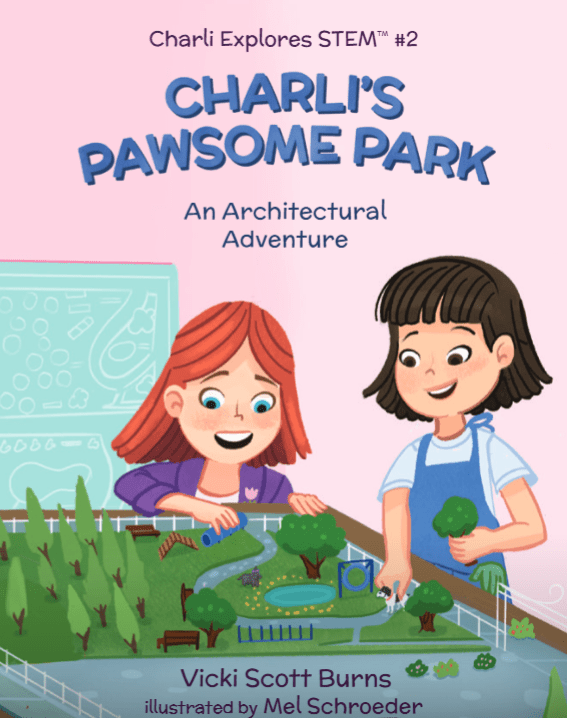
Charli’s Pawsome Park follows a curious girl who meets a landscape architect and wonders if she could design her own dog park, so with the help of her friends, she does, but not without some challenges. What was the inspiration for the setup of your story?
I taught 2nd and 3rd Grade, and I well remember the perpetual question of “WHY do we need to learn this?” With this series, I’m showing kids the why behind STEM activities and education. I want them to see that STEM can be fun and practically applied. Hopefully, this will open their eyes to new dreams and career possibilities.
Is there anything about Charli that came from yourself or your life experiences?
Like Charli, I’ve always loved school and learning new things. But when I was a child, girls were not really encouraged to pursue STEM fields. I want to help change that narrative so that my own granddaughters and their peers know that they can choose any educational and career paths they desire.
What was one scene in the novel that you felt captured the morals and message you were trying to deliver to readers?
Chapter 3 shows Charli and Molly brainstorming ideas for the dorsal device. This scene introduces the themes that are more deeply explored in the rest of the book: leadership, teamwork, overcoming adversity, empathy, and female empowerment.
Can you tell us more about what’s in store for Charli and the direction of the next book?
Charli’s Dorsal Device: An Engineering Adventure is Book #3 in this series. In it, Charli owns her engineering company and designs a GPS tracking device for a dolphin.
Author Links: GoodReads | Facebook | Website
How Not to Behave

How to Host a Unicorn: A Tale of Hospitality and Manners follows a unicorn that enjoys structure and quiet, who visits his bear friend that has a drastically different idea of fun and has to learn how to be a good host. What was the inspiration for your story?
There’s a funny and quirky backstory. I was working on a scene for one of my nonfiction projects. In the late 1950s, Soviet Premier Nikita Khrushchev invited UN Secretary-General Dag Hammarskjöld to his villa at Sochi. Khrushchev behaved rather boorishly, and I thought to myself, “In a different context, this could actually be a good teaching moment. How not to behave with a guest. How not to host a unicorn.” And so, Nick the Bear and Dag the Unicorn have an experience with manners and hospitality that neither will soon forget.
What were some educational aspects that were important for you to include in this children’s book?
I think in Western society, extroversion is still seen as the “norm,” as the “desirable way of being.” Introverts and HSPs, particularly children, can feel left out or ostracized if they don’t wish to yell, stomp, get loud, perform sociability, etc. So one thing I wanted to do with Dag the Unicorn is to show that it’s perfectly fine to enjoy solitude, tidiness, a quiet afternoon with a book, and so forth.
From the hospitality perspective, I also wanted to show that when you host a guest, you must consider their feelings, too. Hosting doesn’t mean bringing someone into your space and forcing them to do all the things you want to do. You must be conscientious of the other person. For instance, Nick thinks a boisterous, wild surprise party is a lot of fun. Dag doesn’t. As a host, you can ask the guest, “Do you enjoy parties? Would you like a large group of people to talk to, or would you prefer a quieter night to watch a movie?” As an introvert myself, the quiet night of movie-watching would always be my top pick!
What scene in the book did you have the most fun writing?
The scene where Dag is in the bathtub. He discovers all of the water is cold, the soap is basically unusable, and the towel is the size of a handkerchief. I had a similar experience once when I stayed with a friend who told me I needed to buy my own towels and washcloths (and a bathmat, too). Then we have Nick jiggling the knob impatiently and lurking in the hallway. It’s a reminder that even though someone is a guest in your home, they still need a modicum of privacy—and basic necessity items.
Is this the first book in the series? If so, when is the next book coming out, and what can your fans expect in the next story?
Yes, it’s the beginning of the How to… with a Unicorn series. The next book, How to Christmas with a Unicorn, will release in November 2026, in time for the gift-giving season. Dag goes home to visit his parents for Christmas. His brother and sister-in-law arrive with their three wild children, who proceed to go nuts in the house: pulling the cat’s tail, trying to tear down the Christmas tree, yelling, and banging the piano keys while Dag tries to play. It’s highly relatable for any introvert or HSP who’s gone home for the holidays and found the experience chaotic and entirely too noisy.
Author Links: GoodReads | Facebook | Website | Amazon
Nick is a bear who… doesn’t.
When Nick invites Dag for a visit, he means well—but his idea of hospitality includes stomach-churning boat rides, chaotic surprise parties, and a bath towel the size of a handkerchief.
Dag does his best to stay gracious. Nick tries to show a good time. Somewhere between the fish feasts and the chandelier-spinning owl, Nick discovers what it really means to be a good host—and a good friend.
How to Host a Unicorn is a cozy, gently funny picture book about mismatched personalities, mutual respect, and the quiet strength of thoughtful souls. Within these pages, you’re invited inside a world with wit, wry humor, and plenty of fun.
Rendered in hand-drawn, imperfect illustrations that celebrate character over mechanical polish, the art honors the heart of the story itself: that real beauty lies in sincerity, not perfection.
Ideal for sensitive kids, introverts, and the adults who were once that kind of child, this story celebrates kindness and friendship without noise, unicorns without glitter, and emotional intelligence without preaching.
Litter Lady Leads: in a Litter-Filled Land


Litter Lady Leads, written by Martha Goldner, is a sweet and simple story about an older woman who cannot stop tidying the world around her. Page after page, she strolls through beaches, parks, trains, ballparks, grocery stores, even windstorms, always scooping up trash with her pointy-tipped cane. Kids adore her. She feeds them cookies, picks up after everyone, donates useful things to people in need, and somehow keeps going even when she is tired. By the end, the kids learn to help her clean, and the whole picture book wraps up with a cheerful idea that we can all make the world a brighter place.
I found the whole book very charming. The writing is short and punchy, which fits a children’s book, but it still gave me little bursts of feeling. I kept smiling because Litter Lady is drawn with this stern face that kind of hides how soft-hearted she is. The pictures on the pages add a funny mood, too. They are colorful, a bit messy, and that rough style works because the story is about mess itself. It made me feel like the book was hand-colored with real love.
I also caught myself thinking about the book’s message more than I expected. It is simple. It is repetitive. Yet it got to me because I know people like her–people who clean up without asking for thanks and who make small corners of the world better just because they care. When the kids finally asked if they could help, I felt a tiny lump in my throat. Her not having cookies for them at the bus stop made me worry about her as if she were my own neighbor. This book surprised me with how much heart it carries in so few words.
I would recommend Litter Lady Leads in a Litter-filled Land to young kids, early readers, teachers, and anyone who wants a gentle story about kindness and caring for your community. It is simple in the best way. It is warm and sweet and gives a little nudge to be helpful. If you like picture books that mix humor with a feel-good lesson, this one will certainly make you smile.
Pages: 32 | ASIN : B0CZ6SRBTZ



 LITERARY TITAN