Blog Archives
Embrace Those With Differences

Still Black follows a seventeen-year-old Black boy with albinism who has his peaceful life destroyed by racism. This is an intriguing setup for a novel that is high in social commentary. What was your moral goal when writing this novel, and do you feel you’ve achieved it?
Morally, I aimed to remain respectful, honest, and it was also important for me to show multiple forms of perseverance. As someone who doesn’t have albinism, it was important for me to create a story that doesn’t make living as an albino a tragedy. Like Malachi (early in the story), many born with albinism have loving families, friends, social lives, etc. However, their lack of pigment doesn’t save them from racism, and I thought it was important to reflect that as well.
Additionally, while there are heavy themes throughout the book and unspeakable tragedies, showing how differently perseverance can look was important to this project. Moving on with one’s life following tragedy doesn’t always look strong to onlookers, but the ability to complete basic tasks following the unthinkable takes strength, and it was important to highlight that. I do believe I was able to achieve my moral goals.
Could you please elaborate on some of the themes you aimed to explore in your book? I’m curious to learn more about your perspective and the insights you gained through the writing process.
Like most of our lives, filled with complexities, I wanted this piece to be theme-heavy and unpredictable. A few major book themes include racism, injustice, survival, love, family, racial identity, and loss. As a woman and mother of color, unfortunately I have experienced racial discrimination, and sadly, so have my children. Because of our pigment, it’s not surprising to most when we share our Black experiences. That said, there are many African Americans living with albinism, and through a lot of research, I was able to learn just how difficult it can be to live amongst pigmented African Americans and Caucasians. That massive physical difference can feel isolating, and the research step of my writing process really highlighted how strong and beautiful these individuals are. I wanted to share their strengths, some daily struggles, but also reflect a reality I feel is often ignored. No person of color is exempt from racism, including those who lack pigment.
What is one thing that you hope readers take away from Still Black?
I hope readers take away truth. While Malachi and his family are fictional characters, and his story has unique differences, injustices like this happen all the time. I hope people feel like these things happen much too often and become encouraged to embrace those with differences, speak out against injustices, practice acceptance, and put an end to racial thoughts because they never lead anywhere positive.
What is the next book that you are working on and when will it be available?
While I always have a book or five started, I’m mostly focused on learning the art of screenwriting. At this time, I’m determined to learn, so I have no projected release dates to share.
Author Links: Twitter | Facebook | Website | Instagram
Seventeen-year-old Malachi takes nothing for granted. Although his albinism makes him stand out in any crowd, he lives a blessed life with loving, supportive parents and an accepting peer group. Life is grand and he’s thankful for it all—until Bennett Dickson moves into his neighborhood.
Bennett Dickson, a blatant racist, robs the idyllic community of its warmth. His constant provoking sets the neighborhood on edge, but his hateful taunting pales in comparison to the carnage he unleashes, forever changing Malachi’s world.
In search of solace and an escape from the destructive media, Malachi and his mother flee to a small town, but what they find only adds to their turmoil. Malachi finds himself on the receiving end of vicious slurs and isolation due to his lack of melanin. Worst of all, he is rumored to have survived the tragedy that shattered his family because of his complexion. Desperate to escape once again, he turns to his lifelong passion—film production. But no matter where he lives or places his attention, Malachi realizes the only way to heal is to face the injustice served to his family.
Trigger Warnings: Racial violence, social injustice, some profanity, mentions of suicide,
and teen gun violence. (Recommended for ages 17 and up.)
Still Black


Tammy Ferebee’s Still Black engagingly delves into the story of Malachi, a young Black man with albinism, as he navigates the challenging aftermath of racial violence that tragically impacts his family. Ferebee skillfully crafts a narrative around Malachi’s experience, effectively drawing readers into a world marked by both racial challenges and personal struggles. Malachi, as a character, stands out remarkably. He navigates through chaos with a sense of tolerance, presenting a compelling blend of strength and vulnerability. His unique position in a world all too familiar yet unsettlingly real makes his story resonate deeply.
The strength of Ferebee’s writing lies in her ability to reflect the complex layers of our society in her storytelling. The character of Malachi, with his distinct albinism, stutter, and insightful wisdom, brings a refreshing and enlightening perspective to the narrative. His journey, marked by self-discovery and activism in the face of systemic racism and personal loss, offers a powerful reflection on the world and encourages readers to broaden their viewpoints. The book’s brisk pacing sometimes adds to the urgency of the narrative, enhancing the story’s overall impact without detracting from its depth and emotional resonance. Ferebee’s command of language and her skill in interweaving complex themes into her story are noteworthy.
Still Black presents a poignant and insightful exploration of identity, perseverance, and the ongoing struggle against injustice. Through her compelling storytelling, Ferebee invites readers to engage with and understand the realities of a world affected by hatred. This book not only provides a significant narrative experience but also stirs a keen interest in exploring similar themes further. The book’s impactful characters and its emotional journey make it a notable read in contemporary fiction.
Pages: 182 | ASIN : B09SP9N3S5

Intergenerational Trauma

The Fragility of Light: A Young Woman’s Descent into Madness and Fight for Recovery follows a young woman who, after a series of personal losses, suffers a psychotic break and searches for a path of recovery. What was the inspiration for the setup of your story?
My primary inspiration was to entertain and inform readers in a way that conveys empathy and compassion for those who suffer from serious mental illness. I also wanted to shed light on an underrepresented psychiatric disorder while illustrating a realistic clinical presentation and treatment process. In doing so, my hope was to illustrate that, with the right psychosocial treatment and medication, individuals who suffer from serious psychiatric disorders can still live meaningful, productive lives. Sunny struggles with feelings of shame because of her illness and because the people around her don’t fully understand the impacts of her condition.
What is a common misconception you feel people have about mental illness?
I believe there is a tendency to perceive mental and “physical” illness as somehow distinct and disconnected. In doing so, physical/medical illnesses are more generally regarded as beyond a person’s control—such as a diagnosis of cancer or diabetes. Mental illnesses, in contrast, are often seen more as a sign of weakness, rather than diseases with interacting environmental and biochemical causes. Viewing mental disorders in this way provides individuals with a sense of invulnerability (i.e., the “It can’t happen to me” mentality), while also imposing blame on those who suffer. This conceptualization, along with the belief that mentally ill people are dangerous (another misconception), intensifies associated stigma and deters treatment-seeking. For Sunny, accepting and not blaming herself for her disorder were formidable challenges in her recovery.
What were some themes that were important for you to explore in this book?
Stigma is a prevalent theme in the book, as Sunny initially associates schizophrenia with the severely destitute. She is deeply despondent about being branded with such a diagnosis, believing it signifies the end of her career and marriage. We also see how stigma affects Joshua in the workplace, Debbie’s beliefs about mental illness, and some of Elizabeth’s concerns for her best friend.
Intergenerational trauma takes two forms in the story: that which is experienced by descendants of Holocaust victims and that which is experienced by families with a lineage of mental illness. Grappling with both sources of trauma leaves Sunny vulnerable to various psychological difficulties. Peter also experiences intergenerational trauma as he conveys the embarrassment, confusion, and anxiety associated with being raised by two Holocaust survivors.
Consistent with the title, there is an overarching theme regarding the fragility of that which we often take for granted. Light is a metaphor for psychological well-being, contentment, and serenity. It also symbolizes peace and goodness. Those struggling with serious mental disorders, or those who have been robbed of their freedom, understand the pervasiveness of darkness. They understand the fragility of those things held most dear.
What is the next book you are working on, and when will it be available?
A writer doesn’t always divulge such details 🙂 But, in keeping with my interests and expertise, I believe it will entail another realistic depiction of serious mental illness (not a psychotic disorder this time), delving into the complicated interaction of genes, personality, and environmental/family factors and their impact on adult symptomatology and functioning.
Author Links: GoodReads | Facebook | Website | Amazon
Sunny Zielinski is a beautiful and talented young woman with a promising future. A recent college graduate, Sunny has landed her dream job as a book editor and is soon to be married. Her close-knit family is her strength, particularly her fiercely loving grandparents-Holocaust survivors who helped to raise her.
Following two major losses, Sunny finds herself becoming unhinged. When she experiences her first psychotic break, she is plunged into a place of profound fear and confusion. As her delusions, hallucinations, and mood symptoms take over, Sunny traverses a harrowing journey into the depths of madness. Underlying her despair is the devastating delusion that she is being hunted by the Nazis.
As Sunny attempts to navigate her symptoms, she vacillates between understanding that she has a mental illness and being convinced that the doctors are conspiring against her. Adding to the narrative are Sunny’s relationships with her devoted family, her nebulous history with her mother, and the colorful and often tragic patients she meets along the way. Ultimately, love, determination, and hope emerge as salient aspects of Sunny’s recovery as she struggles to find her way out of the darkness.
PROFANE FEASTS: New American Edition

Profane Feasts by Tom Tolnay is a compelling narrative that traces the journey of a male protagonist from childhood to adulthood. Set against the backdrop of his dynamic Greek family in the United States, the story is a tapestry of humor and drama. Tolnay deftly captures the essence of familial bonds and cultural nuances, portraying characters like Aunt Harriet with her unconventional lifestyle, Cousin Peter’s unexpected coming out, the enigmatic Christos, and the frequently present Stavros with his erratic work life. Despite struggling with financial challenges, the family strives to uphold their dignity and cultural heritage. The narrative weaves through a series of unique events and trials, including a lost infant, bustling funerals, moments of tension, and a poignant tale of interracial love, among others.
One of the book’s standout features is its exquisite use of language. Tolnay’s prose is not just a vehicle for storytelling but an artistic element in itself. The lyrical quality and imaginative metaphors enrich the narrative, adding depth and vibrancy to the story. Another remarkable aspect is the authentic portrayal of Greek culture. Tolnay skillfully intersperses cultural insights with the plot, enlightening readers about Greek traditions and history, such as the Thesmophoria festival in Athens. This blend of Greek heritage with the setting of the 1970s provides a unique cultural perspective. The book brims with unexpected twists and humorous moments. The protagonist, Alexandros, with his first-person narration, brings a lively and engaging voice to the story. His observations on various aspects of life, from cultural disparities and romantic entanglements to family dynamics and societal issues, are both insightful and entertaining.
Profane Feasts stands out for its rich cultural portrayal, humor, and educational value. It is a testament to Tolnay’s ability to craft a story that is both informative and engaging. The character of Alexandros Dropolous, Jr. is particularly memorable for his candor and wit. This book not only entertains but also provides a window into the Greek-American experience, making it a notable addition to contemporary literature. The anticipation for future works by Tolnay, hopefully featuring characters as vivid and relatable as Alexandros, is certainly high.
Pages: 219 | ASIN : B0CNZKM515
All Lies Begin with Truth

In All Lies Begin with Truth, Anthony J. Viola crafts a poignant narrative set in the fictional town of West York, Kentucky, circa 2014. The story centers around Eris Carrol, a young activist grappling with the aftermath of a personal breakup and embarking on a journey to a town unknown to her until recently. Her path crosses with Lionel Boone, a middle-aged survivor of a mining disaster, and Cass Taylor, a 41-year-old woman facing the simultaneous disintegration of her hometown and marriage. Their lives intertwine in a tale that delves into the complexities of natural resource exploitation and its profound impact on small-town dynamics.
Viola’s narrative style is engaging and evocative, painting vivid pictures that immerse readers in the setting and experiences of the characters. The novel is remarkable for its clear and descriptive prose, managing to be both straightforward and richly detailed, drawing readers into the emotional and physical landscapes of the story. The character development is a standout feature of Viola’s writing. Readers witness significant growth, healing, and change in the protagonists, presented with a depth that adds to the novel’s resonance. The narrative deftly shifts between the perspectives of Eris, Lionel, and Cass, allowing a comprehensive view of their inner worlds and their interconnected stories. Viola’s decision to keep chapters concise adds to the book’s appeal, making it a compelling read. The well-paced narrative and the intriguing endings of each chapter skillfully maintain reader engagement, making the book hard to put down.
All Lies Begin with Truth is more than just a story about a small town’s struggles; it reflects human nature and the societal constructs that either support or undermine our well-being. This novel is highly recommended for those who appreciate character-driven stories and narratives that explore deeper societal themes. Anthony J. Viola has delivered a thought-provoking and emotionally resonant work that speaks to the heart of what it means to be human in a rapidly changing world.
Pages: 252 | ASIN : B09PVQFLWC
Independence, Autonomy, and Self-sufficiency

In Henry’s Chapel, narrator and author become intertwined with the characters and director of a film described by the book’s narrator in this uniquely presented tale of a Texas family. Where did the idea for this novel come from?
There were a number of main sources for Henry’s Chapel. First, I am originally from southeast Texas, and my dad’s family is from South Carolina and Georgia, so I got full exposure to the South growing up, and I guess I got the sense, or suspected, that there were some seriously depraved shenanigans – a particularly southern sort of depraved shenanigans – going on just beyond the surface scene. Second, I read Faulkner (may favorite is As I Lay Dying), which corroborated my suspicion about those depraved southern shenanigans. Third, I saw Billy Bob Thornton’s film Slingblade, which brought those depraved southern shenanigans to visual and cinematic life. Fourth, I read Robbe-Grillet’s Jealousy, whose simple, reportage-like narratological approach inspired me to write “Grass,” a short southern gothic tale about an autistic boy and his love affair with his lawnmower. I tried unsuccessfully to turn “Grass” into a movie script, and then I dropped it until…Fifth, I read David Foster Wallace (I read all of Wallace, but I really liked Infinite Jest (novel) and Oblivion (a collection of stories – his last before his suicide)). The Wallaceian narrator really resonated with me, and it occurred to me that I might try to mix a Wallaceian narratorial style – which is very casual-conversational and philosophical at the same time – with the Faulknerian southern gothic vision, or content, of “Grass.”
These five sources came before I started writing Henry’s Chapel, but there is a sixth source, which came as I actually wrote the book: that this book could be a serious hybrid of a lot of things: philosophy, creative non-fiction, fiction, film, tragedy, comedy…And narratologically speaking, a really big formal idea I had was to try to include everybody in it: fictional characters (he, her, they), a non-fictional narrator (I, me), and a reader-audience, who watches the film with me (we) and to whom I can turn and ask questions (you). Having the Wallaceian narrator watch, report, and comment on the Faulknerian film is what made this hyper-inclusion, this radical heterogeneity, possible.
Did you plan the tone and direction of the novel before writing, or did it come out organically as you were writing?
The tone or mood of the film of the novel, Lawnmower of a Jealous God, was set by Faulkner before I started writing; and the Wallaceian casual-philosophical narratorial tone was also set before I got to writing in earnest. But the direction was very organic. I did not know from day to day where the novel was going. Each scene set up the next, and that’s all I knew. Occasionally, this scene-by-scene organic approach would run me into trouble because I would realize that a scene that followed naturally from its immediate predecessor contradicted a scene or story element or plot element much earlier in the novel. The advantage, I think, of the organic approach is its spontaneity; the disadvantage is this occasional house-of-cards problem, where you have to go back and revise previous scenes to be consistent with new, organic scenes that you really want to keep. So, with the organic approach, there’s a lot of painstaking going back-and-forth between writing ahead in the novel and tweaking in earlier parts of the novel that otherwise would be inconsistent.
What were some themes that were important for you to explore in this book?
Generally speaking, I think I wanted to explore boundaries in Henry’s Chapel – and to show where they break down, e.g., between philosophy and fiction, fiction and non-fiction, fiction and film, religion and fiction, brother and sister, the taboo and the acceptable, parents and children, sisters and brothers, hope and despair, comedy and tragedy, director and directed, real and unreal, false and true authority, male and female, humans and non-human animals, humans and inanimate objects, love and hate, legal and illegal…This list goes on.
Independence, autonomy, and self-sufficiency were really important to me as well. It may not seem like it at first blush, but I think Henry’s Chapel is ultimately an optimistic novel: Henry burns down the old, obsolete paradigm and walks free into the unknown. Although, he is sure of his love for his sister, whether she is alive or dead. So, love is a central theme as well – true love, which may be something more like friendship, in the Aristotelian sense.
I find a problem in well-written stories, in that I always want there to be another book to keep the story going. Is there a second book planned?
After setting fire to his old home, it was very natural for me to want Henry to keep on walking, over the bridge, and back to the other side; it was natural for me to want to keep on dreaming his and Emily’s lives. But as he walked down toward the bridge, and I heard the chorus of cicadas singing (for him), and I saw them catch fire, like a million little candles (in tribute or in vigil), I knew that was it, that it was over, that there was no way for Henry to come back or keep on going. I have considered, however, a related novel entirely dedicated to Emily, but in so many ways, she is the most powerful force in Henry’s Chapel because she exists somewhere between life and death, and if I were to write further about her, I might destroy that precarious balance.
Author Links: GoodReads | Facebook | Website | Sagging Meniscus | Amazon
Victims Tell Their Story

The Buffalo Butcher: Jack the Ripper in the Electric City, follows a group of five prostitutes who band together to stop a murder who is praying on working girls in a city that turns a blind eye to their deaths. What was the inspiration for the setup of your story?
When I began to imagine a scenario in which Jack the Ripper—whose 1888 murders in London were never solved—came to Buffalo in 1901 and picked up again where he’d left off, I began to do my usual background research. And I read a lot of books about the Ripper and about other serial killers, in hopes, I suppose, of figuring out what made them tick. I quickly gave up on that, and decided that I would never understand the mind of a serial killer—nor really did I care to. But the thing that gave me the critical idea for my book—and what makes it different from other ‘slasher’ books—is that I found that in so many of these serial killer biographies, the authors (intentionally or not) seemed to adopt a kind of ‘hero-worshipful’ tone about the killers, going on in lurid detail about their exploits, criminal genius, ability to evade the law, and so on. And all this while the actual victims of their crimes were treated as so much stage-dressing, their entire lives reduced to the single moment of a terrible death at the hands of a madman. And frankly that made me sad. So I resolved to write my book differently—from the victims’ perspective. I wanted to let them tell their stories, and give them an opportunity to reclaim—and proclaim—their full humanity, which had been stolen from them, first by the procurers and pimps who lured them into vice, and then by a killer stalking them as so much prey. I’m proud of the result.
I love that the protagonists are women who are typically ignored, scorned, and blamed for their own troubles. What were some driving ideals behind their characters’ development?
Thank you for saying so! I love them, too, for that very reason. In The Buffalo Butcher, all of ‘decent society’, from the cops to the common citizens, considers these young prostitutes (my protagonists) as disposable, unworthy, morally defective creatures. Yet in truth these “working girls” are some of the most decent, genuine people you would ever like to meet. They’ve known poverty and exploitation, and have endured aconstant drip of scorn from their so-called betters. All their illusions about what life ‘ought to be’ have been stripped away—and yet through it all, they have maintained a full measure of human kindness, decency, and willingness to put it all on the line—even to the cost of their lives—for a friend. I like to tell stories about real people—and these young ladies are about as real as they come. As such, The Buffalo Butcher is no ‘cozy mystery’: it’s a gritty, unflinching look at a part of life that perhaps we’d all like to pretend doesn’t exist—but for the sake of my characters—and my love and respect for them—I could not in good conscience turn away from depicting the sometimes horrifying reality of their circumstances.
I find the world you created in this novel brimming with possibilities. Where did the inspiration for the setting come from, and how did it change as you were writing?
Being from Buffalo, New York, I’m fascinated with the history of the place, and its former centrality—once a kind of early Silicon Valley—in the economic and social history of the United States. And in 1901, the biggest world’s fair of all time, the Pan-American Exposition, took place in Buffalo, bringing eight million people to the city. No author could ask for a better setting! But here’s the more interesting part, the metaphor: the great Exposition ran for only one brief season, May through November 1901, and then all but a single building was torn down, and the glittering pleasure city reduced to rubble. Knowing that fate lends The Buffalo Butcher a slightly elegiac quality, which mirrors the lives, loves, and losses of the main characters. And, if I may add, this arc of rise and fall serves as a larger metaphor: as a young person, I witnessed my beloved hometown go through a similar decline and collapse—from boom to bust. But what is beautiful and triumphant, both in real life and I hope in the book—both for cities and with people—is that hope is never lost. Today Buffalo—a city that people once dismissed as a relic of the past—is once again on the rise, re-emerging refreshed and vibrant, and learning both to embrace its rich history and, at the same time, welcome a new and different future.
What is the next book that you are working on, and when can your fans expect it to be out?
Current of Darkness, the next installment of my Avenging Angel Detective Agency™ Mysteries, is to appear in April of 2024, and in it society sleuth Sarah Payne returns to confront a case of industrial espionage in early Niagara Falls . . . then, in October, my next off-series book, The Phantom of Forest Lawn, will be out. I’m pretty excited about both stories, and I hope readers will share my enthusiasm!
Author Links: Goodreads | Website | Instagram
Summer 1901, and the great Pan-American Exposition welcomes the world to Buffalo, New York—Queen of the Lakes . . . the Electric City. Eight million visitors throng the bustling boomtown—all of them looking for a good time.
While the Pan-American blazes bright, in its shadow lies a zone of darker pleasures: the Tenderloin District, a rabbit’s warren of saloons, brothels, and ask-no-questions hotels. In this sprawling vice quarter, fully as large as the Exposition itself, fairgoers can indulge their less innocent appetites.
As heat and swarming crowds choke the city, the bodies of prostitutes begin turning up, slashed and mutilated by a pitiless hand—their flesh carved with strange symbols. Their gruesome murders are a final indignity worked on once-hopeful young women.
Some say the killings are the work of the Devil himself. Others hint that the Whitechapel Murderer, Jack the Ripper, has crossed the Atlantic to resume his bloody career. Yet the city’s power brokers—afraid of any publicity that would harm the Exposition—turn a blind eye to the victims.
As the bloody summer wears on, only one thing is clear: it’ll be up to the working girls themselves to stop the carnage. And in The Buffalo Butcher, five of them will stand together to confront the killer . . . and to reclaim their humanity.
An important new novel by Robert Brighton, acclaimed author of the Avenging Angel Detective Agency™ Mysteries.
Only The Dead (Know the End of War)
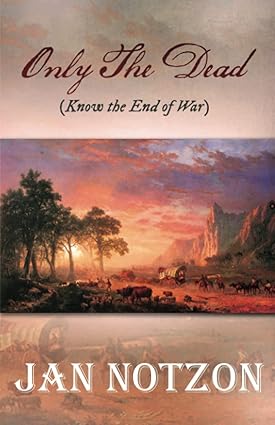
Only the Dead, authored by Jan Notzon, presents a compelling narrative set amidst the tumult of a revolutionary movement, exploring the intricate ethical dilemmas faced by individuals caught in the throes of societal upheaval. The story orbits around José Necahuatl, a character whose allegiance to Father Hidalgo is juxtaposed against his apprehensions about the uprising’s violent nature. This central conflict serves as a lens to examine the broader implications of war on personal ethics and societal norms.
Through characters such as José Nicolás de Cos de la Portilla, the novel delves into the psychological impact of conflict, showcasing the internal strife and emotional complexity inherent in times of war. The narrative is further enriched by the experiences of Miss Luz and Mr. Macalister, who confront the stark realities of life during such turbulent times. Particularly moving is Miss Luz’s ordeal of captivity and torture at the hands of the Comanches, a storyline that poignantly captures the dehumanizing effects of prolonged warfare. Notzon skillfully weaves these personal stories into the broader tapestry of a community in reconstruction. The struggles faced by José Necahuatl in the Bajío region post-rebellion mirror the broader challenges encountered by a community in the throes of rebuilding. Alongside Señor Tomás and other characters, the narrative navigates a path marked by uncertainty, shared histories, and the collective effort to overcome the aftermath of conflict. Incorporating elements of threat, tragedy, and a perilous journey to escape persecution, the novel embeds these experiences within the fabric of the characters’ lives. As the plot unfolds, the characters face moral dilemmas, unexpected acts of kindness, and the harsh realities of life post-war, drawing the reader deeper into their personal journeys.
Only the Dead paints a vivid portrait of a community undergoing significant change. By balancing the personal struggles of its characters against the historical backdrop, the novel offers an intimate glimpse into the impact of war and revolution on individual lives and moral decisions. This interplay between historical events and personal narratives renders the story engaging and thought-provoking, providing a unique perspective on a pivotal historical period.
Page 298 | ASIN : B09SLZV429



 LITERARY TITAN