Blog Archives
Deserving of Grace
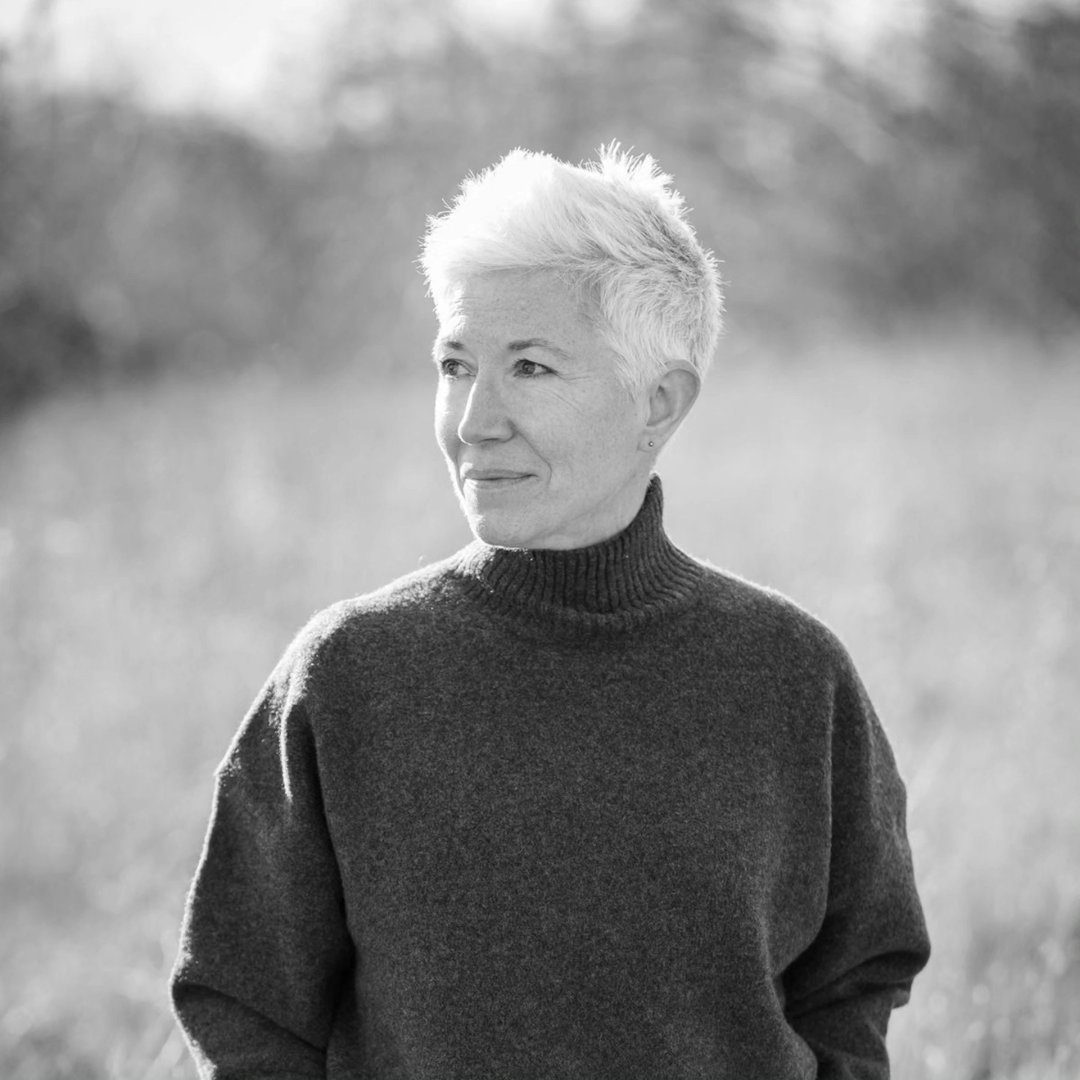
Should Have Told You Sooner follows a museum professional navigating the complexities of motherhood, the aftermath of divorce, and a career opportunity that leads her abroad. Where did the idea for this novel come from?
The idea for Should Have Told You Sooner came to me while I was immersed in a book of Welsh folk tales. One story in particular, “The Lady of Llyn Y Fan Fach,” captivated me and set my imagination racing. In it, a young farmer named Gwyn visits the lake named in the title, and while he is there, a most beautiful fairy rises from the water and speaks to him. She is Nelferch, and in an instant, Gwyn is in love. Nelferch agrees to marry him, sacrificing the watery world she knows for a life with him on dry land, but their union ends in disappointment and pain. Long after finishing the story, I kept thinking about Nelferch and Gwyn and all the ways we might harm those we profess to love. It wasn’t long before I stopped thinking about the folk tale characters and began imagining a more contemporary pair.
What is one pivotal moment in the story that you think best defines Noel?
After Noel leaves a heart-to-heart talk with Henry, the young artist she’s been working with, she makes a side trip to an art museum instead of returning right back to work. Their conversation has shaken her – and I won’t say why because spoilers! – and as she’s walking through all the London neighborhoods that were her haunts while she was a student, both Henry’s words and her memories are running through her head, and she’s letting them. Until this moment, she’s been the person who put her memories in a box and closed the lid tight on them because the idea of revisiting that part of her life was too painful. I think it becomes clear here how hard it’s been for her to live with the memories and also how hard it’s been to live without acknowledging them, and not only for herself. She realizes something has to change.
Is there any moral or idea that you hope readers take away from the story?
I always hope my stories make readers think about how complex and flawed and yet deserving of grace we all are. That living is all about change and growth and doing the work that helps us heal both ourselves and our relationships with others.
What is the next book you are working on, and when will it be available?
I’m currently working on the sequel to Should Have Told You Sooner, and I have two other novel projects that are in early planning stages. If the sequel is finished within the year, it could be out as early as 2027.
Author Links: GoodReads | Facebook | Instagram | Website | Amazon
While studying art history at a London university, Noel Enfield falls passionately in love with aspiring artist and art school student Bryn Jones. Shortly after Bryn leaves for a five-month painting trip through Italy, Noel discovers she is pregnant. She is ecstatic and believes Bryn will be too—they have plans to marry, after all. But mishaps part the two lovers, and a desperate Noel makes a split-second choice to move forward in a way that will change not only her life but also the lives of everyone she loves.
Three decades later, when she is offered a six-month secondment to a London museum, Noel decides it’s time to prove she really has moved on from that difficult period by returning to the city where she met and lost Bryn. But rather than proving she has persevered, the move lands Noel in the thick of London’s insular art world, with only one or two degrees of separation from her past and the people she once loved. After she reconnects with an old, dear friend and learns finally what kept Bryn from returning to her all those years ago, the very underpinnings of her life are rocked to their core. Some decisions made in the past can never be put behind her, she realizes, and armed with this new understanding, she sets out on a journey to reclaim what—and who—she left behind.
Break From Our Mental Pain

In Finley’s Song, readers meet a pianist who is battling grief and despair after her husband’s sudden death and struggling to raise her son through it all. What was the inspiration for the setup of your story?
Finley’s Song was inspired by observing how grief can affect us in ways other than just making us sad or lonely. Guilt can often be an emotion we are grappling with in addition to grief. What could I have done to cause a different outcome or to have had a better relationship with this partner, parent, or child? This can be heightened by a sudden and premature death of that loved one. We always think time is on our side, until it isn’t. I also found it inspiring that Finley and Max never stop trying to find their way back to a healthy relationship while working through their grief in very different ways.
What are some things you find interesting about the human condition that make for great fiction?
Regarding Finley’s Song, I find it interesting how grief, coupled with guilt, can damage our ability to think in a rational or responsible manner. Why is this? I believe we can become overwhelmed with the starkness of reality. I can’t change or fix this outcome. I must live with the finality of it and decisions I made leading up to the end of my relationship with this partner, parent, or child. It can cause us to search for ways to escape… alcohol, drugs, sex…. and other distractions to give our mind the tiniest break from our mental pain. How this plays out in my characters’ lives becomes intriguing and insightful.
Was Finley’s backstory something you always had, or did it develop as you were writing?
Finley’s backstory was something that developed as I wrote. I always know the main plot and themes of the story before I begin. I acquaint myself with the major characters, and I know approximately how the story will end. The middle is a bit of a blur that constantly develops as I write. It is true that at some point the story begins to write itself as characters, settings, and behaviors fall into a pattern. Eventually, I clearly see how to resolve their issues.
Can we look forward to more work from you soon? What are you currently working on?
I am halfway through my next novel, called The Writer. It is a story about a woman who discovers she is pregnant and has terminal cancer at the same time. She decides to give her baby girl up for adoption, but then fate, as per usual, has its way with her. She must maneuver through the unforeseen twists and turns of what she had once thought was a well-planned resolution for herself and her daughter.
Author Links: GoodReads | Facebook | Winter Goose Publishing | Website | Amazon
Should Have Told You Sooner
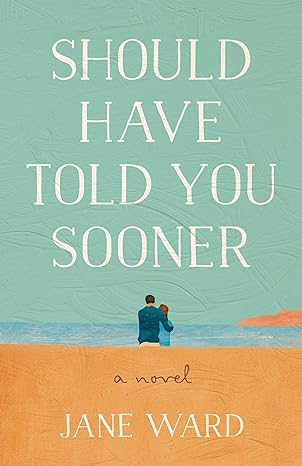

Should Have Told You Sooner is a layered story about family secrets, fractured love, and the tug-of-war between past choices and present consequences. At its heart is Noel, a museum professional navigating divorce, motherhood, and a career-defining opportunity abroad. Interwoven with her journey are letters from a boy in Leeds who slowly learns the truth about his adoption. The alternating voices expose the pain of what is spoken too late and what is left unsaid altogether. It’s a book that ties personal identity to memory, regret, and the relentless need for truth, while reminding us that silence in families can echo across decades.
I found myself swept up in Noel’s storyline most of all. She is flawed and frustrating, yet deeply human. Her desire to claim her career while holding onto her stepdaughter felt messy and real. The scenes with Alice carried such emotional weight that I felt the sting of rejection right alongside Noel. At the same time, I felt anger at her evasiveness. The title fits perfectly, so much of the pain in the book comes from words that were never said out loud until far too late. Ward’s writing style is sharp but also tender, with a knack for making small domestic details shimmer with meaning. Sometimes the prose slowed down with repetition, yet I rarely minded because it mirrored the weight of memory and hesitation.
What lingered with me most, though, was the emotional thread of the boy’s letters. His innocent hope and later confusion as he uncovered his past had a rawness that pulled at me. Those chapters broke up Noel’s present-day turmoil in a way that heightened both storylines. I found myself wanting to protect him, while also feeling frustrated at the adults around him who thought hiding the truth would shield him from pain. That mix of sadness and frustration stayed with me even after I finished the book.
Should Have Told You Sooner is a moving exploration of the cost of silence and the bravery it takes to speak truths we’ve buried. I would recommend this book to readers who enjoy contemporary fiction about family, adoption, and second chances. It will especially resonate with anyone who has felt the weight of secrets in their own family or who has struggled to balance personal ambition with love and responsibility.
Pages: 256 | ASIN : B0FDBLX3BD

Finley’s Song

From the first page, Finley’s Song drew me into a story that mixes music, grief, and the stubborn hope that follows loss. At its heart, the book tells the story of Finley, a pianist whose husband dies in a sudden accident, leaving her to raise their son, Max, while stumbling through her own guilt and despair. The novel moves between their shared silence at home, their escape to Paris, and the healing they cautiously piece together through new connections, old memories, and the enduring pull of music. I liked how much this is not just Finley’s story but Max’s too, a portrait of a mother and son mourning in parallel yet trying to keep each other afloat.
The writing had me hooked and sometimes unsettled in the best way. Kathryn Mattingly paints grief with raw strokes, never dressing it up, never trying to make it neat. Some passages felt like a gut punch, especially when Finley blames herself for Simon’s death. The guilt is heavy, almost suffocating, and I could feel the weight of it. But then there are these glimmers, moments with Max by the river, or Finley staring at the Eiffel Tower, that break through like sunlight. I found myself both aching and rooting for them, wanting them to reach those fragile pockets of beauty again. The language isn’t flowery for the sake of it. It’s direct yet tender, and it left me pausing more than once just to sit with the feeling it stirred.
Sometimes Finley’s voice frustrated me. Her self-blame circles back so often that I caught myself whispering “let yourself breathe.” Yet, that honesty made her real. People stuck in grief do repeat themselves, and the author didn’t shy away from that truth. I also found Max’s perspective refreshing and painfully accurate. His teenage awkwardness, his longing for his father, his quiet way of observing the world, they rang true. If anything, his sections gave the book a balance it needed, grounding Finley’s spiraling thoughts with the bluntness of youth. That duality is what made the story so enjoyable for me.
Finley’s Song is filled with small, luminous moments that feel earned. I’d recommend it to anyone who wants to read about loss in a way that doesn’t smooth the edges but instead embraces the messiness of it. Fans of books like Little Fires Everywhere or Where the Crawdads Sing will find a similar mix of emotional depth and vivid sense of place, but Finley’s Song feels more personal and raw, like a private journal you’ve been allowed to read.
Pages: 226 | ISBN : 978-1952909344
Childhood’s Hour: The Lost Desert
Childhood’s Hour: The Lost Desert by E.E. Glass unfolds in a dark and unnerving world where memory, identity, and survival constantly collide. At its heart is Loste, a man who emerges from the mysterious Fray with no clear past, only fear and a desperate drive forward. He stumbles into a land of sapphire sands, uncanny creatures, and strange sentient companions like Nadhez, whose furred presence and bound loyalty blur the line between guide and hallucination. The novel draws heavily on the clash between what is real and what is illusion, blending cosmic dread with intimate moments of connection. Every page balances wonder against horror, and every encounter threatens to dissolve into the static haze of madness.
The prose is lush, almost dreamlike, yet it never lingers too long on beauty without reminding me of the lurking terror beneath. I felt caught in the same paranoia as Loste, scanning every moment for the telltale crackle of the Fray. That immersion was brilliant, though it sometimes left me exhausted, like I had trudged through the dunes alongside him. The rhythm of fear and relief, tension and stillness, worked on me in waves, and I admired how the author never let comfort last for long.
What I liked most was how human the book felt despite its alien setting. Loste’s fractured identity, his mistrust of others, and his fragile hope for connection all hit me in the gut. Nadhez, with his easy laughter and sharp teeth, became a figure I wanted to trust, even when I doubted his reality. The dynamic between them gave me flashes of warmth, then snatched it away with reminders of cruelty and despair. That tension felt real, and it left me questioning my own instinct to trust. I also appreciated the playful absurdity woven through, the honking seal pup, the comic relief of bodily mishaps, which gave the darkness a sharper contrast.
Childhood’s Hour is not a book for the faint of heart. For readers who enjoy strange, surreal fantasy that bends toward horror while still offering moments of raw human tenderness, it is unforgettable. I’d recommend it to readers who like their fiction unsettling and immersive, who don’t mind being disoriented, and who find beauty in the uncanny.
Pages: 550
“Finding Your Roots” One Man’s Journey to Discover His Ukrainian, Greek, And Bulgarian Roots

When I picked up Finding Your Roots: One Man’s Journey to Discover His Ukrainian, Greek, and Bulgarian Roots by Kiril Kristoff, I didn’t expect the ride I was about to take. The story follows Alexander Kakhovskiy, an American born into privilege, raised on excess and status, with little sense of who he really is. In one devastating night, he loses it all. After a near-fatal car accident, Alex wakes not in modern Chicago but in 19th-century Imperial Russia, stripped of his wealth and freedom, forced into the life of a serf. What begins as punishment unfolds into a profound journey of survival, faith, and love, where saints and ancestors shape his path and the brutal world of serfdom teaches him humility, responsibility, and sacrifice.
This book surprised me with its depth and scope. At first, I bristled at Alex’s arrogance, but as he stumbled through hardship, I found myself rooting for him, even protective of him. His encounters with Elizabeth, his soulmate in another lifetime, added tenderness that balanced the weight of war, betrayal, and spiritual reckoning. The way Kristoff shifts between past and present, dream and reality, sometimes left me dizzy, yet it mirrored Alex’s inner chaos. The novel also stretches beyond Alex, weaving in the stories of forefathers like Georgiy and Vasiliy, who stood on opposite sides of faith and revolution, and reminding us how much of who we are is inherited through blood and history.
Some passages hit me hard. The spiritual visions, the crushing trials, the echoes of immigrant struggles across borders and generations all resonated. At times, the prose felt heavy, yet it often swung back with vivid, aching beauty that lingered. What stayed with me most was its insistence that freedom, identity, and redemption are never free, that every generation pays its price. It is a bold, multifaceted story that dares to mix history, myth, and spiritual allegory in a way that feels rare.
Finding Your Roots isn’t a light read, but it digs deep and stays with you. I’d recommend it to anyone drawn to stories about faith, heritage, and the resilience of families across generations. If you like novels that wrestle with identity and legacy, or if you’ve ever wondered how the past continues to shape us, then this book is worth your time.
Recipient of the Literary Titan Book Award.

A Line In The Sand


A Line In The Sand follows the life of Nilima, a young woman whose dreams and determination clash with the crushing weight of poverty, political unrest, and the merciless grip of microfinance debt in rural Bangladesh. It begins with her small but ingenious act of saving rice for chickens, showing her resourcefulness and grit, then moves into her family’s struggle to rise above hardship, their hopeful venture into poultry farming, and the devastating consequences that follow. At its heart, it is both an intimate story of love and loss and a wider indictment of a system that fails the very people it claims to uplift. Nilima’s journey is heartbreaking and raw, a story where triumphs are fragile and tragedy feels inevitable.
The writing pulled me deep into the everyday textures of life. Rain drumming on tin roofs, muddy fields, mothers whispering blessings, bank agents pounding at doors. These scenes felt so alive that I could almost smell the damp soil and hear the clamor of village life. The author lingers on details that many might skip, and while sometimes this slows the pace, it also creates a sense of intimacy. I felt like I was sitting in the room as Nilima set aside that handful of rice each day, sharing her quiet hope. The language is unpolished in places, almost raw, yet that very rawness gave the story its soul. It felt honest, like something carved out of lived pain rather than polished for prettiness.
The narrative can be heavy, and the sorrow almost relentless. Some passages leaned into exposition, especially when diving into the politics of Grameen Bank and corruption. Yet even then, the fury behind the words was undeniable, and I couldn’t help but respect the conviction driving them. What stayed with me wasn’t the banking jargon, but the sense of injustice, the deep unfairness that weighed on Nilima and countless others like her.
This is not a book you close and forget. It made me think about the hidden costs of “progress” on people who are barely noticed by the world. I would recommend it to anyone who wants to feel, not just read, to anyone who can handle being unsettled and wants to see the human cost of economic experiments and systemic neglect.
Pages: 210 | ASIN: B0FL99N2FZ
Hard-Won Epiphanies

Secret Seeds follows a young girl and her mother who are trapped in an abusive home as they break free and wind up in an uncertain world of strangers in a cult-like community. Were you able to achieve everything you wanted with the characters in the novel?
My five novels center on redemption through courage and perseverance, which bring hard-won epiphanies. In Secret Seeds, I was satisfied with the character development, which also brought me personal insights on the plight of the undocumented.
What were some themes that were important for you to explore in this book?
When I began the novel, the headlines were filled with stories of aliens – both human and otherwise. Illegal immigration is an emotional topic, and I wanted to craft a heartfelt portrayal to cast the issue in human terms. We also took a trip to Alaska, and the lifecycle of sockeye salmon and how they fight to make the journey home to spawn resonated with me. Only a small percentage make it home, but none get lost due to their perseverance, and I incorporated this theme in the story.
What is the next book that you are working on, and when can your fans expect it to be out?
I am currently working on a medical thriller and hope to have it scheduled for release in the next year or so.
Author Links: GoodReads | Amazon
Gabrielle Ruiz, an undocumented migrant farm worker, follows the harvest until she and Luis leave the fields to give their unborn child a better life. But after tragedy strikes, Gabrielle finds herself alone and renounced by her father. Adrift, she meets Dale, a beacon of hope who offers her and her infant daughter, Olivia, a chance at a new beginning. After following him to Maine, they welcome a son. But over the years, Dale’s abuse traps Gabrielle and Olivia. Salvation appears in the enigmatic Rezi, who proposes a daring escape — a plan shrouded in secrecy, promising sanctuary for Olivia within a hidden community. As Gabrielle places her trust in Rezi, she ignites a tempest with Dale and has Olivia questioning whether her protectors are from a twisted cult or messengers from another realm.
In a world where freedom is fragile, Gabrielle’s tenacity and her children’s coming-of-age journeys lead them to question what truly defines “home.”



 LITERARY TITAN