Blog Archives
A Pleasant Fiction: A Novelistic Memoir


In A Pleasant Fiction, Javier De Lucia delivers the emotionally resonant second act to his two-part coming-of-age story, continuing the story of Calvin McShane where The Wake of Expectations left off. If the first book chronicles adolescence in all its messy, comic glory—equal parts coming-of-age tale and Gen X time capsule—A Pleasant Fiction is its older, wiser, and more painful counterpart. Together, the two novels form a sweeping narrative arc that spans the giddy freedom of youth through the disillusionment and hard-earned wisdom of middle age.
De Lucia’s central theme in A Pleasant Fiction is grief, but not grief as an isolated event. This is grief as a condition of life, one that shapes identity and outlook. The book becomes a study in how people carry grief, how they adapt to it, and what they do with the space it leaves behind. But grief here is never cheapened into sentimentality. Calvin’s decisions are morally murky, especially as they pertain to his disabled brother Jared. That’s what makes De Lucia’s work so affecting: the absence of clear heroes or villains. Just people, burdened with love and trying not to collapse under it.
Jared is more than a side character; he is the axis around which the McShane family orbits. His needs shape their routines, his presence defines their household, and his vulnerability tests the limits of their resilience. De Lucia treats Jared not as a symbol, but as a person. For Calvin, Jared represents both the weight of responsibility and the purity of unconditional love. Their relationship is rendered with tenderness and brutal honesty. In one unforgettable line, Calvin reflects: “Loving him was hard. Not loving him was even harder.” That one sentence captures the emotional complexity of being a sibling to someone whose suffering is constant and visible. Jared’s life, and ultimately his death, transform Calvin’s understanding of love, sacrifice, and meaning.
A Pleasant Fiction elevates the series from charming autobiographical fiction to something far more profound. In its patient, unsparing look at illness, family, and the work of grief, the novel finds meaning not in plot twists or dramatic revelations, but in the simple, difficult act of enduring. As Calvin muses in the closing pages, maybe the idea of reunion, of eternal peace, is just “a pleasant fiction.” This is a novel about what it means to grow up and grow older. And for those who have loved and lost, it rings painfully and beautifully true.
Pages: 203 | ASIN : B0F4L1R9K5

The Pale Flesh of Wood

Elizabeth A. Tucker’s The Pale Flesh of Wood is a beautifully tangled family saga rooted in grief, memory, and the slow bend of time. Set across multiple generations, the novel follows the Hawkins family through snapshots of their lives spanning from the 1930s to the 1980s. Centered around a California oak tree, literal and metaphorical, it’s a story about growing up under heavy legacies, about love that wounds and heals in equal measure, and about the things we inherit even when no one speaks them aloud.
The writing is lush and poetic without being precious. Tucker knows how to set a mood and trap you in it. Her dad’s joking charm cracks in places, revealing a man stitched together by war, trauma, and ego. This isn’t just a story about a family. It’s about what’s left unsaid between parents and kids and how silence grows teeth.
The structure threw me at first, it jumps through decades and voices, but once I leaned into it, I was hooked. I liked that Tucker didn’t feel the need to hold my hand. In Chapter Two, young Charles, Lyla’s father as a boy, lies under that same tree, imagining himself fossilized after being slapped by his own mother. He watches a roly-poly bug curl up tight and wishes he could do the same. That image wrecked me. It’s a subtle but gutting way to show how generational pain rolls downhill, gaining speed like that tire Lyla’s dad sends her down in later chapters. And when she crashes, he just lights a cigarette and says, “Whoopsie poopsie.” I wanted to throw the book across the room.
Still, what surprised me most was how much tenderness lives in these characters. Even the broken ones. Especially the broken ones. Pops, the quiet grandfather, reads baseball stats to baby Daniel. Lyla’s grandmother, fierce and frigid at first, softens in fragments. And Lyla herself, oh man, I rooted for that girl with everything I had.
I’d recommend this book to readers who loved The Sound and the Fury or Marilynne Robinson’s Housekeeping, folks who appreciate moody, intimate stories that don’t rush their reveals. It’s not a quick read. It’s not meant to be. This is a sit-on-the-porch-and-let-it-sink-in kind of novel. One that lingers. One that matters.
Pages: 320 | ASIN : B0D6V72BL7

SOULFUL RETURN

Fidelis O. Mkparu’s Soulful Return is a poignant and deeply introspective novel that traces the journey of Dr. Afamefuna Nwaku, a Nigerian immigrant and successful physician in Boston, as he confronts the sacrifices he’s made—his family, his culture, his identity—for the promise of success in America. Through powerful narration, the story explores Afam’s growing disconnect from his homeland and loved ones, all culminating in a difficult decision between career ambition and cultural belonging. Woven through with the haunting presence of ancestral voices and dreams of Nigeria, this novel isn’t just about going home, it’s about reckoning with what it means to truly belong.
From the very first chapter, I felt this book hit close to home. That opening scene, Afam sitting on the banks of the Charles River, haunted by invisible drums calling him back to Nigeria, was more than poetic. It was spiritual. That deep ache of being split between two worlds, trying to find comfort in a place that doesn’t fully embrace you, is something I know well. Mkparu captures it all—the rhythm of longing, the quiet pain of assimilation, and the guilt of forgetting where you come from. And when Afam loosens his tie and lets the water lap over his bare feet, it felt like a baptism, like he was trying to wash off decades of silence.
But what really tore me up was the tension in Afam’s marriage. The scenes between him and Elisha hit like a gut punch. When she said, “I feel lonely lying next to you,” I had to put the book down for a minute. That kind of emotional neglect is too real. You can love someone and still be absent from them. Elisha was grieving the life she thought they were building together. And Afam, caught between trying to be a provider and losing sight of being a partner, is a complex portrait of a man who’s been chasing success so long he forgot what he left behind. Mkparu didn’t sugarcoat the cracks in that relationship. He let it bleed on the page.
Then there’s the whole weight of duty—both to his American life and his family back in Nigeria. It reminded me how often we, as Black men, carry burdens we didn’t ask for. We become bridges between two worlds. Expected to be everything to everyone—patriarchs, professionals, saviors. It’s exhausting. And when Afam stands in front of the hospital wall looking at the executive photo lineup, wondering if his face will be up there or lost in a place that never truly felt like his—man, I felt that.
Mkparu’s writing style is rich but never pretentious. He doesn’t dress his emotions up in fancy words. He lets them spill out. The way he uses flashbacks, dreams, and internal voices keeps the reader grounded in Afam’s inner world without feeling lost. I appreciated how he didn’t resolve things neatly. Life, especially for people caught between cultures, isn’t neat.
I’d recommend Soulful Return to anyone who’s ever felt the pull of two homes, two identities, or two versions of themselves. African Americans, especially, will feel the layers here—the echoes of diaspora, the questioning of what “home” even means. It’s a book for immigrants, yes, but also for anyone who’s chased a dream and then looked around and wondered what they left behind.
Pages: 322 | ASIN : B0F1DWCFT8
Story of Renewal

Crossing Lake Pontchartrain follows a forty-year-old unemployed man with a collapsing marriage who moves to New Orleans, where he winds up on a journey to discover who he is and who he is not. What was the inspiration for the setup of your story?
Middle age supposedly is where life finds full flower with marriage and family, career, and a deepened sense of self, but reality often disappoints. Larry rekindles old creative dreams and discovers transformative personal relationships in New Orleans after the failures of his life remind him he hasn’t yet lived up to his potential. The creative throb of New Orleans renewing after Hurricane Katrina was the perfect place for this story of renewal, and after the isolation of COVID-19, it seemed to me the world was ready to shake off its stalled ways and move ahead. Finding the right people and an inspiring right place to build the second half of his life, Larry accepts that people can help him become the person he’s always wanted to be.
What things do you find interesting about the human condition that make for great fiction?
Great fiction for me is literary fiction, an approach examining broad human emotional experience through the narrow lens of character, setting, and language. By focusing on particular circumstances viewed through the inner theater of individual characters, the panorama of all humanity can be glimpsed in all its nuance of pain, love, treachery, and growth. Great fiction is at one time an awareness of what it is to be human and alone and yet to be one with all humanity threaded together by the common emotions and challenges we each know to be the human experience.
What themes were important for you to explore in this book?
Pontchartrain is a story of renewal, the shaking of a stagnant emotional collection of relationships, careers, expectations, and creative dreams. In this novel, the protagonist’s mid-life crisis of belief in himself and even in possibility itself catalyzes into growth under the influence of potent new friendships awakening him from his 40-year-old malaise. Each new person releases within him fresh thinking about his future (and past) in slightly nuanced ways. With time and work, Larry learns to assess who he is and who he isn’t. Set in post-Katrina New Orleans itself renewing after hardship, Larry Winstead models the theme of continuous renewal fueled by the social energy of human contact. Here, the inner character experience and the interplay of characters in action indulge the conversation to paint a picture of the artist as a good old boy receiving life and not trying to force it. Chop Wood Carry Water proves to be a lesson all people can benefit from when taught by people who care.
What is the next book that you are working on, and when can your fans expect it to be out?
My next book will be, Arlie: Leaf River Days. I’ve written about half the novel and expect publication in 2026. I began writing Southern literary fiction after I retired from my technology career in 2006 and Arlie will complete my envisioned trilogy of the Deep South where three separate families experience the panoply of human experience each in a different stage of life. The first novel published in 2017, What the River Wants, explored a multi-generational family confronting the vagaries of time and focuses on old age, coming of age, and middle age. An old man retreats into isolation on the river before his teenage grandson journeys to rescue him from his drift into desperation. The grandfather, his forty-year-old daughter, and two teenage grandchildren each reveal their separate challenges of doubt, dreams, and treachery. The grandfather’s family story about his mom draws out from each character a fresh understanding of who they are and helps reset who they want to become. The end is a bit shocking but revelatory, and even today 8 years later it leaves me with a sensation of freshly tilled life where old becomes new and the past both returns underground and feeds the future. These character remain friends of mine I miss every day.
My second novel, Crossing Lake Pontchartrain, told in first person, traces the journey of a 40-year-old through his mid-life mess. Through the loyalty of a devoted mother and the impetus of artsy worldly new friends, this protagonist explores how time has left him emptied in modern life until inspired to revive his creative dream of writing a novel. In discovering a mutually creative relationship with a single-mother yoga instructor and resolving an old mystery of a father’s disappearance, the old life is sloughed off and replaced with loving, creative relationships.
My current writing project, Arlie, is a child in the South who has a tough time fitting in but at last discovers the inner person he might like. This novel completes the trilogy of life stages. Beginning when Arlie is six-years-old with a birthmark that undermines his confidence and development, the book follows his growth year by year and in the process examines the disturbing Southern themes of segregation in the light of Arlie’s lifelong feelings of not belonging. This trilogy avoids many of the tropes of Southern stereotypes so this novel can examine its inevitable presence through the lens of youth. For 40 years I’ve lived in New Jersey and consider myself a Southern Yankee, someone committed to decomposing the bias of both my Northern and Southern homes where oversimplified impressions fuel cultural bias rather than insight. I’ve tried to show all these characters as human rather than labeled types.
Author Links: GoodReads | Facebook | Linkedin | Amazon
A father’s mysterious disappearance and a tossed writing dream still trouble Larry even after twenty years. But in the creative renewal of a big city pulse, a hobbyist clairvoyant and an iron sculpture expose his uncertainties while a philosophical maintenance worker teaches him to Chop Wood, Carry Water. Yet, Emma, an inspiring clear-eyed yoga instructor grasps what Larry has overlooked in his search for the fulfilled life he yearns for yet has denied himself.
A serendipitous discovery will scramble the fates of Larry’s new web of friends. But sometimes when things fall apart, they fall together again.
Fulfilment City

Fulfillment City is about collapse—the slow, sticky unraveling of a woman, a city, an industry, and, in a broader sense, American identity. The story kicks off with Lydia Calligan, once a powerhouse in San Francisco’s boutique advertising world, and follows her as her crown jewel campaign. A wholesome berry ad featuring a lisping Black child implodes spectacularly in a culture-shifting scandal. What follows is a ghost story, but not the kind with cobwebs and creaky doors. Lydia becomes a living specter, wandering the city in a trench coat, haunted by both personal and public failure, as her former colleague Paul, sharp-tongued, prickly, and strangely endearing, tries to drag her back from oblivion. From its hip urban core to a strangely eerie prefab town in rural Colorado, the novel explores guilt, reinvention, and the absurdities of a country selling itself one delivery box at a time.
What I really loved was how quietly funny the book is, even when it’s steeped in grief and disappointment. The writing is whip-smart but never showy. The scene where Lydia, now adrift, sits in silence at a café while Paul performs his one-man comedy routine, trying to draw a single flicker of recognition from her, is painfully hilarious. I could practically hear the espresso machine hissing in the background as he babbled nonsense, and she stared through him like he was just another ghost. The comedy sneaks up on you, poking at the tragic bits without letting you sink. And Lydia’s fall from grace was Brutal, but also believable. The way the berry campaign spirals into controversy, starting with a lisp and ending in a death, is satire so sharp it practically bleeds.
Paul, for me, stole the show. He’s this oddball mix of charming, petty, broken, and brilliant. I didn’t expect to feel for him so much, but watching him scramble for relevance while his world shrinks to the size of a secondhand teacup was quietly devastating. His dry midwestern sass and resentment give the novel its bite and his weird antique obsession is oddly grounding.
The section set in the artificial town of Saltair Springs was deliciously eerie. The contrast between Lydia’s haunted sophistication and the soulless sheen of a fulfillment-center utopia gave me chills. You can feel Lydia’s unease seep through the page and yet, the town isn’t just a prop. There’s real life and love there, like with Cherise and Darnell, a couple that somehow blooms in the middle of all this engineered happiness. That sweetness tucked between cynicism and corporate doom felt like a little glimmer of hope.
Fulfillment City doesn’t wrap itself up in neat bows. But its honest about loss, about compromise, about how easily people and institutions get swallowed whole. I’d recommend this book to anyone who likes their fiction with bite and wit, who’s curious about what happens when the culture machine eats itself alive. If you liked Mad Men, White Noise, or just want to read something that feels both current and weirdly timeless, this one’s for you.
Pages: 245 | ASIN : B0DZ3RWF83
Zooming With The Past

Marlene Zaedyan’s Zooming with the Past unfolds as a moving biography that explores the entangled lives of four friends—Mariam, Anna, Fadia, and the narrator. At its heart, this book is a testament to resilience, the enduring strength of friendship, and the power of reinvention in the wake of life’s most crushing trials. Each narrative within the book shines uniquely while weaving into a cohesive tapestry of shared struggles. Mariam’s journey is haunting and brave, recounting her survival of her father’s abuse and the betrayal that left her vulnerable. Despite the darkness, her unwavering determination to protect her daughters and reshape her future is inspiring. Anna’s story, both tender and painful, charts her shift from the idealism of young love to the sting of betrayal and judgment, showcasing her inner strength as she rebuilds from the wreckage. Fadia’s tale adds a cultural richness, revealing the heartbreak of forbidden love and the silent ache of roads not taken when life forces her in another direction. Together, their experiences create a profound mosaic of human endurance and transformation.
Zaedyan beautifully captures the women’s friendship as the lifeline that binds them. Through life’s chaos and heartbreak, this unbreakable bond offers them solace, strength, and hope. The camaraderie between these women becomes the anchor of the narrative, reminding readers of the healing power of connection. What sets Zooming with the Past apart is Zaedyan’s artistry with language. Her prose flows with poetic rhythm, striking a balance between raw, emotional honesty and lyrical beauty. At times, the descriptions border on indulgent, but they rarely feel out of place. Instead, these flourishes elevate the intensity of the stories, emphasizing the emotional gravity and universal lessons that lie within.
This book offers more than a collection of personal histories—it’s a reflection of the human condition. Loss, love, betrayal, and resilience are all laid bare. Zaedyan invites readers to confront the pain of their own pasts, learn from its lessons, and find strength in its aftermath. Through her storytelling, she reveals the quiet beauty that exists even amid life’s storms, urging readers to hold on to the fleeting moments of grace and connection.
Zooming with the Past, by Marlene Zaedyan, is a powerful and evocative read that will linger long after the last page. It speaks to anyone who has faced life’s darkest corners, offering a light of hope and the reassurance that renewal is always possible. For those who cherish stories of perseverance, friendship, and transformation, this book is an unforgettable journey.
Pages: 166 | ASIN : B0DNQXDYYC
The Hatbox Letter: Based on a True Tale of a Lost Love
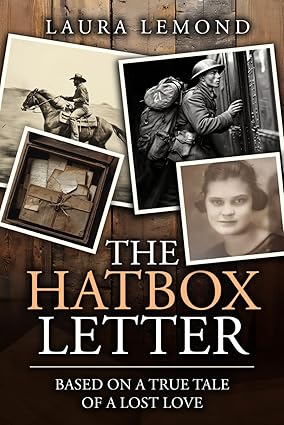
Laura LeMond’s The Hatbox Letter is a nostalgic, heartfelt journey through love, loss, and the echoes of history. Based on true events, the novel revolves around Gladys Charlesworth, a young woman in early 20th-century America, and her unexpected romance with Johnny Fry, a man with a deep, complicated heritage and ties to the legendary Pony Express. As their story unfolds, we are taken through moments of youthful passion, family expectations, and the weight of historical circumstances. The book explores themes of tradition, self-discovery, and societal change, making it both an intimate romance and a reflection on an era in transition.
LeMond crafts a world that feels lived-in and rich with the details of early 1900s Missouri. The opening scene, where Gladys is exhausted from a long, sweltering Sunday, sets the tone beautifully, painting a picture of a time when family rituals and social propriety dictated much of daily life. The descriptions of the Charlesworth family’s English traditions, especially the Sunday meal with its Yorkshire pudding and Victorian sponge cake, gave the story an authentic, tangible feel. LeMond has a way of making you feel like you’re sitting right at the table with them.
One of my favorite aspects of the book is Johnny Fry’s character. His backstory and his connection to the Pony Express, his Cree heritage, and his struggle to navigate both white and Native American cultures adds so much depth to the novel. His moments of introspection, such as when he rides home cataloging the flora around him, give him a quiet strength that is incredibly compelling. And yet, he’s also a young man in love, stumbling through the excitement and uncertainty of his feelings for Gladys. The scene where he is startled and hurt after Gladys brushes him off in favor of her sewing project is particularly well done because it captures that universal feeling of unexpected heartbreak, and I genuinely felt for him.
Gladys, on the other hand, is a wonderfully stubborn and ambitious protagonist. Her obsession with Coco Chanel and fashion gives her a modern, forward-thinking edge that contrasts with the traditional expectations of her family and small-town life. Her excitement over new fabric shipments and her dreams of moving to Chicago make her feel real and relatable. I loved how she and Johnny challenged each other. Their romance isn’t just about sweet words and longing glances, it’s built on conversations, moments of tension, and the push and pull of two people figuring out what they want. The fig-picking scene, where Johnny playfully teases her on a ladder, is such a perfect example of their chemistry, lighthearted, flirtatious, but layered with deeper emotion.
By the time the novel reaches its later chapters, the stakes feel real. War is looming, societal changes are creeping in, and the carefree days of courtship start to give way to difficult decisions. The historical context of the book is subtly woven in, never feeling like a history lesson but always present enough to remind us that these characters are living in a time of great upheaval. The final moments, where love and fate collide, leave a bittersweet impression that lingers long after the book is closed.
I’d highly recommend The Hatbox Letter to readers who enjoy historical fiction with a strong emotional core. If you love books about family secrets, passionate yet complex love stories, and the beauty of everyday moments, this novel is for you. It has the charm of The Notebook, the historical richness of Atonement, and the heartfelt authenticity of a story passed down through generations. LeMond has written something special, a love letter to the past, wrapped in the tender mystery of a forgotten romance.
Pages: 122 | ASIN : B0DTLFFNTR
Through the Elements

Fire Pearl follows a woman who must face her utmost fears on the path to rekindling a lost love. What was the inspiration for the setup of your story?
It is the fourth installment of a series that arrived like the others at night, in that liminal space when you’re neither awake nor asleep yet both, and that we call, for short, dreaming. Having travelled with/as Kate through the elements of earth, air, and water now it is time to test her with fire. The other drive/parable/ inspiration was an African tale that I recorded many years ago in Sierra Leone.
Do you have a favorite scene in Fire Pearl? One that was especially enjoyable to craft?
I can’t remember “crafting” it, it was just there, but the first scene that comes to mind is when she/I am on a solid strong wooden boat, knowing that it’s a sure firm steadfast way to get away on the sea from the fire, forever reliable, and then I begin to feel the solid wood of the boat below me warm and I realise that that, too, is the fire (a parable for sure of one aspect of our lives)
Was there anything from your own life that you put into the characters in your novel?
YES – the agonising regret while still chained ( not unhappily) to where I was, the realisation that I was other than I had had always thought I was, and then the failure to recognise him when I had found him.
Can fans look forward to a fifth installment in this series? Where will it take readers?
YES, the next volume in the Kate-Pearl epic series: always the same story / myth of Kate rejecting her offered love and realising her mistake, searching for him through all the elements of the universe; next, having gone through fire for him she faces the fifth element (in Chinese philosophy), wood – in Kate’s experience it is trees (“Pearl in the deep wood”) – I’ll leave you to find the scintillating swaying swerving details.
Author Links: GoodReads | Facebook | Website | Amazon



 LITERARY TITAN