Blog Archives
Run-Away Interior Thoughts

Scraps of Grace follows a single father who is grappling with losing his self-identity in the wake of multiple traumas, and longs to find a spiritual connection. What was the inspiration for the setup of your story?
The protagonist, Tyler Manion, is an ordinary young man, dealing with several issues causing him distress and sadness. He puts up a brave front of someone who is keeping it all together. One of his coping mechanisms is to not allow himself to think about memories that might cause him pain, such as thoughts of his wife, who recently died just five years after they were married. There wasn’t any specific person or situation that inspired me to tell Tyler’s story. I wrote the opening paragraph pretty much out of the blue, then set off to see where it would take me. I wanted to learn more about this man and how he would deal with loss. Only later did I develop the unlikely cast of supporting characters who would help him reclaim his sense of identity and help move him along on his rather reluctant spiritual journey.
Here’s the first paragraph in its final form:
The pity he imagines in her downcast eyes as she waits to be paid irritates him. Tyler fights the urge to explain to the babysitter that his wife’s death hasn’t crippled him, that he is still whole. Really.
What are some things that you find interesting about the human condition that you think make for great fiction?
Here are three: People who are hurting often don’t know how to ask for help.… People often are in denial about their troubles, not only to close friends, but to themselves.… And, over the course of a lifetime, we grow and change so much inside as to be almost unrecognizable to our past selves, as well as to the selves we are yet to become.
What were some themes that were important for you to explore in this book?
The spiritual journey we each are on, even if we don’t knowingly seek it out.
The sanctity of life and the specter of war as competing motifs.
The run-away interior thoughts of someone who is somewhat attention deficit, including in his prayer life. I think many people will be able to relate to this, as after all, don’t we all suffer from spiritual attention deficit disorder?
All this might sound rather heavy, but the story is told with considerable humor by a narrator with a wry sense of irony.
What is the next book that you are working on, and when can your fans expect it to be out?
The sequel novel: Grace Rediscovered. It places some of the same characters in new conflicts more than thirty years after the point we left them at the end of Scraps of Grace (which is set in Michigan in 1990-91). Tyler is still trying to make sense of life’s confusion, afraid of missing out on something important.
Grace Rediscovered will be available later this year, probably in the fall.
Author Links: Goodreads | X (Twitter) | Facebook | Website | Amazon
Twenty-six-year-old Tyler Manion is overwhelmed by the loss in his life. Six months ago, his wife died suddenly, and tomorrow will be his last day at General Motors. Raising his nearly two-year-old son alone, he puts up a brave front, pretending to have it all together. But he can’t seem to focus, and his spiritual attention deficit disorder is keeping him from any meaningful connection with the one who could help him most in his hour of need.
A high school girl basketball phenom, a gruff World War II veteran, a hippie nun and a beguilingly brainy graduate student will each help him rediscover his sense of identity, and perhaps find his spiritual bearings.
Scraps of Grace opens in Michigan in the summer of 1990, a time of turmoil and of hopefulness, across the world and at home.
Often irreverent in tone and detail, Scraps of Grace resides in the conflicted present moment but abides in the eternal.
At the end of the book, there is a page of discussion questions for book clubs, designed to deepen readers’ literary exploration of the themes of identity loss and spiritual renewal.
Scraps of Grace


Jon F. Harmon’s Scraps of Grace is a heartfelt and deeply introspective novel that follows Tyler, a single father navigating the wreckage of his past while trying to carve out a better future. Set against the backdrop of late 20th-century Detroit, the book explores themes of faith, loss, and redemption through the lens of an ordinary man struggling with extraordinary challenges. Tyler’s world is one of missed opportunities, lingering grief, and a wavering faith that he can’t quite let go of, no matter how much life tempts him to abandon it. Through his relationships—with his young son, an old flame, and a cast of unlikely mentors—Tyler stumbles toward grace in ways that are raw, imperfect, and utterly human.
Harmon’s writing is both fluid and poetic, with moments of unexpected beauty that catch you off guard. There’s an easy rhythm to the prose, occasionally punctuated by sharp, vivid descriptions that pull you into Tyler’s world. It’s a hilarious yet oddly fitting metaphor, the kind of offbeat observation that makes Tyler feel real, like someone you’ve met before. At the same time, the novel has a way of sneaking in deep, introspective moments, like Tyler’s reluctant nighttime prayers, whispered even when he feels unworthy because not praying would feel worse. These contrasts humor and weight, skepticism and faith are what make Scraps of Grace compelling.
Tyler himself is not an easy protagonist to love, but he is an easy one to understand. He’s flawed, distracted, sometimes maddeningly passive, and yet undeniably sympathetic. His relationship with his mother, for instance, is a fascinating study in quiet resentment and unexpected tenderness. At one point, he realizes he’s spent years seeing her as weak, only to question whether he ever really knew her at all. Harmon doesn’t serve up neat resolutions; instead, he lets his characters wrestle with their own blind spots, often without clear answers.
The book also leans heavily into its themes of faith and moral reckoning, sometimes subtly, other times more explicitly. One particularly moving thread follows Nicki, a young girl facing an unplanned pregnancy, as she struggles with the weight of her decision. Her inner monologue filled with raw uncertainty and quiet desperation feels heartbreakingly real. Harmon doesn’t preach; instead, he lets his characters stumble through their own moral mazes, allowing the reader to engage with the story on their own terms. That said, there are moments when the religious undertones become more overt, which might not appeal to all readers. But whether you share the novel’s spiritual perspective or not, its reflections on grace, suffering, and redemption feel universal.
Scraps of Grace is the kind of novel that lingers. It’s not a fast-paced, action-packed story, but rather a quiet, contemplative journey, one that rewards readers who appreciate character-driven narratives. If you enjoy books that dig deep into the complexities of faith, family, and second chances, this one is worth your time. Fans of contemporary fiction with a spiritual undertone will likely find much to appreciate here. Harmon has crafted a story that feels both deeply personal and widely relatable, an honest exploration of how even the most broken among us can still find a way forward, one scrap of grace at a time.
Pages: 490 | ASIN : B0DNGS1R4R

Fire Pearl

The Fire Pearl: Tale of the Burning Way is a fever dream of myth, fire, and longing. Ruth Finnegan crafts a poetic journey in the fourth installment of the Kate-Pearl epic-romance series, where the titular character, Kate, confronts a blazing, symbolic world to rekindle a lost love. Drawing from classical myths, African storytelling, and literary echoes of Shakespeare, Homer, and Rumi, the story blurs the line between dream and reality. This is not a conventional narrative. It’s a burning exploration of love, identity, and the courage to face oneself in a world aflame with metaphorical meaning.
Finnegan leans heavily on a lyrical, stream-of-consciousness style that mirrors the mythic grandeur of ancient epics. At times, I found myself awestruck by the sheer musicality of the prose—phrases like “the flames frisked and flickered and flared” or Kate’s encounters with the dragon-like “pterodactyl flames” are breathtaking. Moments of clarity are sometimes buried beneath layers of riddling, dreamlike language. For instance, Kate’s journey through the forest of flames sometimes feels less like a narrative and more like an abstract meditation on fire as a symbol for love, passion, and destruction.
The ideas behind the book are fascinating. Finnegan doesn’t just tell a story; she interrogates myths and our human relationship with the elements. Fire, as explored here, isn’t just an element but a force of creation, destruction, and transformation. Through Kate’s trials, from enduring firestorms to her symbolic rebirth, we see reflections of Prometheus, Shakespeare’s “muse of fire,” and even Blake’s “Tyger.” One standout section involves Kate’s dialogue with the Flames themselves, who challenge her with riddles about fire’s dual nature. These moments shine, even as they require patience to untangle their meaning.
What I appreciated most about The Fire Pearl was its unrelenting emotional core. Kate’s struggle to face her fears of fire and of love resonated with me. Her moments of doubt and courage felt authentic, even amidst the surreal landscape she traverses. The scene where she saves a bird trapped in flames, despite her own terror, was particularly moving.
For readers who thrive on poetry, myth, and deeply layered storytelling, The Fire Pearl is a challenging yet rewarding journey. It’s a book that requires you to surrender to its flames, just as Kate does. And who knows? You might emerge from its pages changed, illuminated by the fire within.
Pages: 172 | ISBN : 978-1365739439
When the Fall is All There Is

Joe Pace’s When the Fall Is All There Is hit me like a punch to the gut. It’s a novel about failure, but not the kind that comes from a lack of effort. It’s the kind that creeps in despite talent, intelligence, and hard work—the kind that haunts a person. Ted Gray was once the pride of Stockbridge, New Hampshire. Quarterback. Valedictorian. Class president. A golden boy destined for greatness. But instead of conquering the world, he ends up right back where he started, a man with a past too big for his present. The novel follows Ted as he wrestles with his own shortcomings, navigating the expectations of a town that once saw him as its shining star.
Pace’s writing is razor-sharp, full of sentences that cut deep. The opening lines set the tone perfectly: “Stockbridge tasted like failure, merciless and bitter.” That bitterness bleeds into every scene as Ted moves through the town that once worshiped him. The details about Stockbridge itself, the war memorial, the rundown train station, the high school that still holds ghosts of his past make the setting feel alive. Pace has a way of making small-town nostalgia feel both comforting and suffocating at the same time.
What makes the novel really hit home is its brutal honesty about success and expectations. Ted isn’t a washed-up loser, but he’s not a winner either; he’s something in between, stuck in a limbo that’s painfully relatable. There’s a scene where he walks past his old high school, seeing his former self in every brick and blade of grass, and it’s heartbreaking. He’s not just mourning lost potential; he’s trying to figure out if he was ever that great to begin with. And then there’s Jill Ward, a woman from his past with a quiet grudge against him. Their interactions crackle with unspoken resentment and regret, adding another layer to Ted’s unraveling identity.
The sports element especially the football flashbacks is handled masterfully. The game commentary interwoven with Ted’s memories of the championship he lost is a gut-wrenching device. The repeated countdown of the final seconds, mirroring his fall from grace, builds a tension that lingers long after the scene ends. But it’s not really about football. It’s about the weight of expectations, about how a single moment can define a person even years later. Pace makes it clear: Stockbridge hasn’t forgotten Ted Gray’s fall, and neither has he.
I’d recommend When the Fall Is All There Is to anyone who’s ever felt the sting of falling short whether in sports, school, or life itself. It’s for people who know what it’s like to return home and feel like a stranger. It’s for readers who appreciate introspective, character-driven stories with a sharp emotional edge. Pace doesn’t offer easy answers, but he does offer a raw, powerful story about finding meaning when everything you thought you’d be is out of reach. This book lingers. It makes you think. And, like all great stories, it hurts in the best way possible.
Pages: 238 | ASIN : B0DQDY2X9J
A Little Something To Hide

A Little Something to Hide, by Craig Brown, masterfully intertwines a series of short stories centered on the passengers of the Briscola Coach Service, traveling from San Francisco to Albuquerque. Each traveler carries not just their physical baggage but also an array of personal struggles, aspirations, and closely guarded secrets. Through their intertwined journeys, Brown delves deeply into the complexities of the human psyche, weaving a narrative where trust, deception, and self-discovery converge. The themes he explores feel at once deeply personal and strikingly universal, offering an insightful commentary on the human condition.
The characters are diverse, each grappling with challenges that shape their lives in unique ways. Robert, or Bobbie, rejects the expectations of his conservative upbringing, finding liberation and self-expression within San Francisco’s vibrant drag and LGBTQ+ community. Sandra, once settled in a seemingly stable life, is thrust into upheaval as a single mother, dedicating two years to the search for her son’s father. Toby, burdened by his mother’s unfulfilled Hollywood dreams, struggles to reconcile borrowed ambitions with his own sense of self.
Brown’s storytelling shines in its ability to capture the delicate balance between hope and despair, trust and betrayal. His characters are vividly drawn, their emotional journeys so intricately rendered that they feel achingly real. Every page resonates with authenticity, thanks to his keen insight into emotions and the connections that bind us.
A standout feature of Brown’s writing is his gift for articulating emotions that many experience but few can put into words. This relatability, coupled with a deft balance of weighty themes like racism and violence alongside moments of intelligent humor, makes the dialogues sparkle. Every interaction feels natural, reinforcing the immersive realism.
For readers seeking literary fiction that provokes thought and stirs the soul, A Little Something to Hide is a triumph. Brown provides an exploration of the human experience, wrapped inside engaging tales that captivate and linger long after the final page.
Pages: 360 | ASIN : B0D7TJ1NFC
Donovan’s Revolution
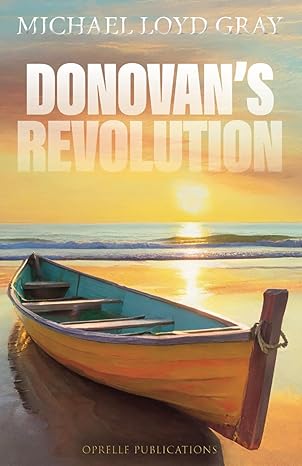
Michael Loyd Gray’s Donovan’s Revolution is a captivating work of historical fiction that plunges readers into the heart of Haiti during the turbulent Duvalier regime. The novel chronicles Donovan, a former seminary student turned itinerant Catholic worker, as he navigates the political and social unrest that defines this era. Immersed in the vibrant yet volatile life of Haiti, Donovan finds himself entwined in the people’s uprising against the infamous Baby Doc Duvalier.
Gray’s prose seamlessly intertwines vivid imagery of Haiti’s lush landscapes and vibrant culture with the raw emotional intensity of its political struggles. The contrast between the country’s breathtaking beauty and its stark poverty and violence reflects Donovan’s own internal conflicts, creating a narrative as rich in depth as it is in detail. Through Gray’s masterful storytelling, readers are transported into the heart of the revolution, experiencing the turmoil and uncertainty that define both the characters’ lives and the historical moment itself. At its core, Donovan’s Revolution is a story of self-discovery and transformation. Donovan confronts his doubts and searches for faith, identity, and purpose. Along the way, he forges meaningful connections: with Gilles, a mysterious guide to the rebels; Michel, the resolute leader of the resistance; and Emmanuella, who helps Donovan explore his gentler, more vulnerable side. Most compelling, however, is the sense of hope Gray imbues throughout the narrative, a hope that fuels the Haitian people’s unwavering fight against oppression. The novel is an emotional journey, blending despair and inspiration. Gray does not shy away from the harrowing realities of violence and suffering. Yet, he balances these darker moments with the resilience and courage of ordinary individuals rising to reclaim their futures. The life-threatening challenges and existential dilemmas faced by the characters linger in the reader’s mind long after the final page.
I recommend Donovan’s Revolution to historical fiction enthusiasts who will appreciate the novel’s insightful portrayal of Haiti’s modern history, an often overlooked subject. Political observers may draw parallels between the Duvalier regime and Haiti’s ongoing struggles, while those who enjoy thought-provoking stories will find much to reflect on. Themes of faith, hope, friendship, and identity ensure this gripping tale will captivate readers from start to finish.
Pages: 163 | ASIN : B0D9L6PB4L

AIDENN: Crossing to Eternity
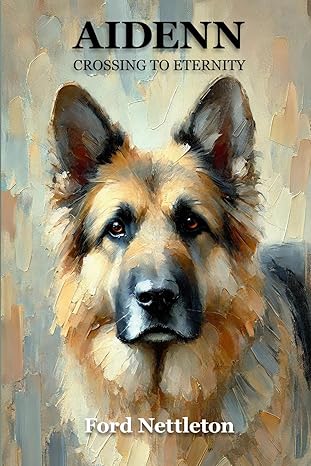
Ford Nettleton’s AIDENN: Crossing to Eternity is a masterful blend of Christian historical fantasy and mystery, offering an inspirational exploration of morality and redemption. This unique narrative follows four souls—Adolf Hitler, Pontius Pilate, Abraham Lincoln, and an elderly man named Tom—as they are guided by divine messengers disguised as dogs. These angelic beings, appearing as Blondi, Banga, Fido, and Chief, lead the characters through pivotal moments of their lives. Along the way, the souls encounter the seven deadly sins and witness a spiritual realm where every action is meticulously recorded. Their transformative journeys culminate in an audience with Creator Elshaddai, where they must confront the weight of their choices and face eternal judgment.
Nettleton’s novel is nothing short of a triumph. The vivid imagery and imaginative storytelling breathe life into history, reimagining renowned figures with a fresh, spiritual lens. The concept of angels taking canine form to guide souls is both ingenious and deeply thought-provoking. Each chapter feels like stepping into a finely detailed painting, rich with symbolism and layers of meaning. The author’s portrayal of historical figures is particularly compelling. Adolf Hitler, Pontius Pilate, and Abraham Lincoln are not mere caricatures of history; instead, they are rendered with depth, complexity, and spiritual resonance. Their interactions with the seven deadly sins and the sinister energy-binding human deeds imbue the story with a haunting gravity. These elements elevate the narrative, blending history and theology in a way that feels both seamless and profound.
The novel’s spiritual journey is as moving as it is thought-provoking. The themes of accountability, redemption, and the ripple effects of human actions resonate deeply. Nettleton’s ability to intertwine historical fantasy with Christian allegory is unparalleled, crafting a story that is both accessible and profound.
Every aspect of this novel captivates—from the intricate pacing to the nuanced character development and the philosophical undercurrents running through the narrative. AIDENN: Crossing to Eternity is more than a novel; it is an experience that lingers long after the final page. For anyone seeking a book that challenges the mind while touching the soul, this is a must-read. Nettleton has created a rare and unforgettable masterpiece, one that I cannot recommend highly enough.
Pages: 325 | ASIN : B0DKV7NXK7
Montjoy
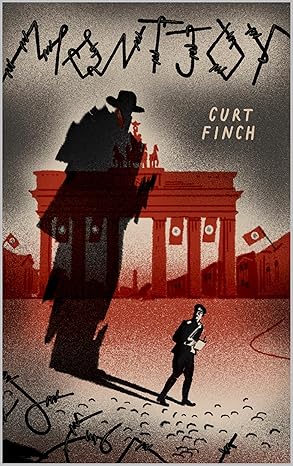

Curt Finch’s Montjoy is a narrative shaped by loss, memory, and the weight of history. Told through the reflective lens of its protagonist, Owen Schoenberg, a historian grappling with personal and professional crises, the novel traverses Europe, exploring Manchester, Vienna, Berlin, Linz, and finally a return home. Finch weaves together themes of grief, identity, and the search for meaning against the backdrop of Holocaust history and contemporary existential malaise.
One of the most striking aspects of the book is Finch’s writing style. It’s intricate, even meandering at times, with sentences that seem to mirror the protagonist’s restless and pensive state of mind. There’s an early scene in Manchester where Owen receives a phone call from Ella Grunebaum that sets the story in motion. Finch writes with a blend of dry humor and melancholy that hooked me immediately. Owen’s ruminations—on the collapse of his marriage, the death of his son, and his Baillie Gifford Prize for a book that feels hollow in hindsight—strike a deeply human chord. Finch captures the emotional weight of these experiences without tipping into melodrama. The balance between Owen’s sharp wit and his palpable sorrow made him a compelling, if occasionally infuriating, narrator.
Vienna—the second “verge”—is where the novel truly shines. Here, Owen immerses himself in the archives of the Mauthausen Memorial, unearthing both historical and personal truths. The city becomes a character in itself, with its wintry streets and grand cafés reflecting Owen’s internal isolation. Finch excels in painting Vienna as a place of contradictions: cultured yet haunted, vibrant yet subdued. A particularly vivid moment is a dinner with Ella and her husband Noah, where the conversation spirals into philosophical debates about memory, history, and the ethics of storytelling. This scene epitomizes the book’s intellectual richness, though at times, the dialogue can feel academic. Still, it’s these dense exchanges that give the narrative its weight and texture.
One aspect I found challenging was the novel’s pacing, especially in Berlin and Linz. While Finch’s prose remains evocative, the plot occasionally feels bogged down by Owen’s introspection and the historical detail. For instance, Owen’s discovery of the mysterious “merkbuch” in Linz—a journal buried at the Mauthausen site—is a fascinating thread, yet its unraveling is slow and laden with tangents. That said, the merkbuch’s contents—recounting acts of defiance and despair during the Nazi era—are haunting and memorable, raising questions about the interplay of fact and fiction, morality and survival.
By the time Owen returns “home” in the final verge, the novel feels like it’s circling back on itself, much like its protagonist. The ending is understated yet poignant, leaving more questions than answers. I found it fitting for a story so concerned with the elusive nature of truth and reconciliation. Finch doesn’t offer easy resolutions, and that’s precisely what makes the book linger in your mind.
Montjoy is a novel for readers who enjoy thought-provoking literature steeped in history and philosophy. Fans of W.G. Sebald or John Banville will likely find much to admire here. For me, it was a moving and intellectually rewarding read, though one that demanded patience and reflection. Finch has crafted a novel that’s as much about the stories we tell ourselves as it is about the ones we uncover in the world around us.
Pages: 147 | ASIN : B0DLLHSTY7



 LITERARY TITAN