Blog Archives
Pompeii: Death Comes Calling


In Pompeii: Death Comes Calling, Lorraine Blundell immerses readers into the vibrant yet volatile world of Pompeii, capturing the intricacies of the resort town’s diverse social fabric. From the opulent lives of the senatorial elite to the struggles of gladiators auctioned for pleasure, the novel paints a rich, multifaceted portrait of a society teetering on the edge of disaster. Readers will walk the bustling streets alongside pimps, dine in villas adorned with stunning frescos, and marvel at exotic treasures brought from distant lands. The beauty of Blundell’s writing lies in how she makes this ancient world feel alive and tangible. Central to the story are characters like Flavia, who yearns for more than the confines of her arranged marriage, and Aelianus, a gladiator whose dreams stretch beyond the brutal arena. Aurelia, an artist whose magnificent frescos push the boundaries of female creativity in a male-dominated world, adds depth and texture to the narrative.
These figures introduce us to the intimate lives of slaves, Freedmen, and Freeborn Roman citizens, illustrating the stark divides and shared experiences that shaped their existence. Pompeii’s social spectrum, from the privileged to the marginalized, is explored with both nuance and authenticity. Blundell expertly sets the stage in the days leading up to the catastrophic eruption of Mount Vesuvius in A.D. 79. The lives of her characters, their ambitions, and desires intertwine as they prepare to face the cataclysmic events that will alter the course of history. The eruption decimates the town, scattering survivors across the empire, yet the novel follows their journey as they rebuild lives from Pompeii’s ashes. Blundell’s mastery of her craft shines throughout the novel. Her descriptions vividly evoke ancient Pompeii’s sights, sounds, and emotions, transporting readers to a world long buried. While the cast of characters is vast and, at times, overwhelming, each is carefully developed, complex, and compelling. The descriptive passages offer a wealth of detail, much like a resort brimming with sensory experiences, inviting readers to immerse themselves fully in the rich world, where there’s always something new to discover at every turn.
For history enthusiasts and historical fiction lovers, Pompeii: Death Comes Calling offers a deeply engaging, thought-provoking read. The novel captures the essence of life in Pompeii before the eruption and traces the emotional aftermath for those who survived. Blundell’s meticulous attention to historical detail, coupled with her imaginative storytelling, will likely spark further interest in the art and architecture of this iconic city. Pompeii: Death Comes Calling serves as a poignant reminder that while life is fragile, the human spirit has an extraordinary capacity to endure.
Pages: 286 | ASIN : B0DCSBH7Q2

Moses and Akhenaten: A Child’s Tale
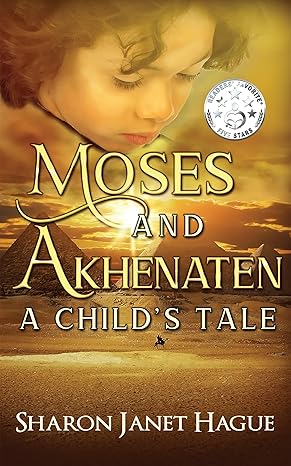

Moses and Akhenaten by Sharon Janet Hague takes on the ambitious theory that the biblical Moses and the Egyptian Pharaoh Akhenaten were the same person. The book weaves historical analysis and imaginative storytelling, proposing that the famous biblical exodus and Akhenaten’s religious revolution are intertwined stories of the same man. Through a blend of fictional dialogue, historical narrative, and philosophical musings, Hague presents a compelling story for this theory.
The book is a unique mix of informal conversation and deep historical exploration. At times, it feels like sitting in on a heated debate among scholars as characters such as Walter, Tom, and Ernest discuss the possible connections between Moses and Akhenaten. For instance, Tom’s logical statement, “If Theodore Davis’ discovery in cache number fifty-five was Akhenaten’s body, then Akhenaten cannot be Moses,” drives home the tension between hard evidence and speculative theory. This dynamic made the book engaging and made me feel like I was part of an intellectual journey, though I feel that sometimes the debates veered into detailed and repetitive territory.
One of the things I loved about the book was its willingness to tackle big ideas with an unapologetic mix of history and conjecture. The idea that Akhenaten’s monotheism predates and even influences the Jewish faith is thought-provoking, and Hague doesn’t shy away from pushing that theory. She writes, “Nobody can convince me that billions of people worshipping one god, thirty-one centuries later is anything but a success”, showcasing Akhenaten’s monumental impact, whether or not he was Moses. While the story borders on speculative fiction, Hague’s presentation of Akhenaten as a revolutionary and somewhat tragic figure is heartfelt, bringing life to what could otherwise have been a dry historical argument. At one point, Akhenaten himself complains about modern perceptions of him: “I can’t tell you how heartily sick I am of being labeled everything from a weak king to a Nazi.” Moments like this add a humorous, almost anachronistic flavor that, while entertaining, sometimes undermines the gravitas of the subject. Still, the book’s casual conversations helped break down the dense historical material, making it more digestible and approachable for readers less familiar with ancient Egypt’s intricacies.
Moses and Akhenaten is a fascinating blend of historical theory and speculative storytelling. It’s ideal for readers who enjoy mixing history with a splash of imaginative fiction. If you’re a fan of ancient history, religious studies, or philosophical debates on the origins of faith, this book will keep you thinking long after you’ve finished it.
Pages: 301 | ASIN : B0BQCT1G1Q
Paradise Undone: A Novel of Jonestown

In Paradise Undone, Annie Dawid takes readers on a haunting journey back to the 1950s, where Marceline, the daughter of a pastor, encounters a man who seems to embody all the characteristics she values. Charismatic, godly, and fiercely intelligent, Jim Jones attracts people like a flame in the darkness. However, the world would soon know his name for reasons far darker than Marceline could have ever imagined. The creation of Jonestown and the horrific massacre that ensued became global news, but no documentary could fully capture the human tragedy of what happened there. This novel does, and it does so with unflinching honesty.
Paradise Undone serves almost as a companion piece to the recent TV miniseries Cult Massacre: One Day in Jonestown. While the series provides archival footage and survivor interviews, Dawid’s novel delves deeper into the events that transpired in the Guyanese jungle and the years that led up to it. The Jonestown tragedy can be explored on many levels, each more disturbing than the last. It wasn’t just the loss of life that was so horrifying, but also the manipulation and perversion of the very idea of paradise on Earth that Jones preached. This novel focuses intensely on that perversion. Dawid’s vivid descriptions evoke a visceral reaction as we witness the transformation of Jones from a seemingly benevolent leader to a figure of pure malevolence, like the devil himself given human form. From the outset, Dawid expertly reveals the cracks in Jones’ Eden. As the story unfolds, readers become as captive as the residents of Jonestown, drawn into a web of tension that escalates to a fever pitch. Even for those familiar with the outcome, the inevitability of the violent crescendo does nothing to lessen its devastating impact. This is a harrowing tale, and Dawid leads us through it with the precision and skill of a seasoned storyteller, ensuring that every moment is as gripping as it is heartbreaking.
Paradise Undone is a powerful and deeply unsettling exploration of one of the most tragic events in modern history. Annie Dawid’s masterful storytelling brings the human aspect of the Jonestown massacre into sharp focus, revealing the psychological manipulation and the dark descent of a man who led so many to their doom. This novel not only provides a chilling reminder of the dangers of blind devotion but also serves as a poignant testament to the lives lost.
Pages: 304 | ASIN : B0CKHSZX7X
Pinch Hitting

Morris Hoffman’s Pinch Hitting is a heartfelt tribute to baseball, woven into a narrative that explores the profound struggles of disability, grief, trauma, and loss. The novel artfully blends the emotional weight of these themes with the exhilarating intensity of baseball, creating a compelling and multi-layered story. The structure of Pinch Hitting is particularly intriguing, as it features a story within a story. The novel’s central character, Joe Skelton, becomes an unlikely narrator when he is diagnosed with a life-threatening brain tumor. This tumor manifests in an unexpected way—Joe begins narrating a vivid and original story in his sleep, surprising both himself and his wife, Katherine. They start documenting this tale, which evolves into Tales of Harold. As Joe races against time to finish Harold’s story before his own life ends, an invisible clock ticks away, adding tension and urgency to the narrative.
At the heart of Joe’s tale is Harold Fungo, affectionately known as the “Joltin’ Janitor.” Harold is a disabled janitor who unexpectedly finds himself thrust into the national spotlight as a professional baseball player, thanks to his remarkable pinch-hitting abilities discovered by a minor league team. The reader is taken on an emotional journey through Harold’s life, from his challenging childhood with a loving, deaf mother to the discrimination and betrayal he faces as an adult in the world of professional sports.
Hoffman enhances the storytelling with each chapter, beginning with a newspaper clipping that updates the reader on the latest happenings in Harold’s baseball world. This clever device adds authenticity to Harold’s rise in the sports world, while the alternating narratives of Joe and Harold create a rich, layered experience. The emotional journey of Joe and Katherine as they confront his illness is paralleled by Harold’s tumultuous path in baseball, where themes of racism, discrimination, and the deep bonds of teamwork come to the fore.
Pinch Hitting, by Morris Hoffman, offers something for everyone, whether you’re drawn to its deeply touching emotional core or the gripping excitement of baseball. Even those with little interest in the sport will find themselves captivated by the novel’s powerful storytelling and complex characters. This is a book that will resonate with readers, winning hearts regardless of their familiarity with the game.
Pages: 349 | ISBN : 978-1685134389
I Needed To Continue the Story

All Lies Begin with Truth follows the people in a small Kentucky town dealing with a natural gas extraction project that is impacting all areas of their town and lives. What was the inspiration for the setup of your story?
I’m a college professor, and I had taught a class in Contemporary Literature. The texts I chose had the theme of “region and place,” one being Appalachia since I live in that area. One of the books I assigned (and reread) was Lost Mountain by Erik Reece, a creative nonfiction work about strip mining and mountaintop removal in Kentucky. This book affected me in a way that I felt that I needed to continue with this story—or at least, tell another similar story. I originally set out to write about strip mining but became aware that coal was in the process of being de-emphasized through newer energy extraction initiatives such as hydraulic fracturing. Once that idea got into my mind, I began scouring maps and discovered the New Albany Shale Basin resting beneath a small town in western Kentucky where strip mining and gas extraction had already occurred. And that got the ball rolling.
How did the idea for the characters’ motives come to fruition for you?
When I began writing this novel, I was a year or two younger than Lionel Boone, who at first was the main character of the novel before my radical revision which included the addition of two new main characters. Boone was easy to write since I was aging as he was and noticing certain things about the process: more body aches and pains, going to bed and rising earlier, less appeal and impact as an older college professor, the feeling I was losing my relevancy, etc. With Eris, I based her on a few former students and colleagues who are advocates for women’s rights. She was a lot of fun to write because she is able to verbally defend herself to a lot of offensive male characters and get away with it. And with Cass, my favorite character, I harnessed the theme that Joyce Carol Oates likes to use in her fiction about small town scandals and I blended that with a sense of nihilism that had affected her over the years due to the dynamics of living in a small town.
What kind of research did you do for this novel to ensure you captured the essence of the story’s theme?
I completed a lot of research. First, the characters came naturally to me after having lived in Appalachia for over 15 years. A lot of the mannerisms, the good will, and heartwarming aspects of my characters can be found where I have lived. In addition to visiting the location where the town is based off of, I also included the names of all 120 counties in Kentucky as character names, street names, the names of businesses, etc. I studied the hydraulic fracturing process thoroughly and compiled notes on the region of where the novel takes place. I corresponded with an activist who was very helpful in providing periodicals to examine as well as informing me about the business side of things. He also verified and refuted some of my ideas or scenarios that I had planned. Of course, there were other works of fiction that I read that informed me, such as Strange as this Weather Has Been by Ann Pancake and Heat and Light by Jennifer Haigh.
What is the next book that you are working on, and when can your fans expect it to be out?
My next novel is already out (September 2023), and it is titled The Law of Devil’s Land. It is a young adult, post-apocalyptic, dystopian work that is the first of a trilogy. I am currently awaiting notification of the publication of the sequel. This novel focuses on a main character (Ghonna Gyle) who is nonbinary and is often singled out and persecuted for this. The societal structure is an extrapolation of current US culture with 3 distinct groups: The Lower Ranks (laborers/impoverished), Civil Servants (rule enforcers who are akin to the upper class), and Overlords (rule makers and elite). In this novel, I create a history and culture that eerily resembles current times while using a competition as the impetus for plot. In this novel, Ghonna must compete and survive in the Imperial Events, a cross between the Olympics, X-Games, and Roman Gladiator Combat to rise from the Lower Ranks into the role of a Civil Servant. I first had this idea in the early 1990s and it has taken nearly 30 years for me to write this novel. So, the fact that this was completed and published is very exciting for me. It is also available through Black Rose Writing.
Author links: GoodReads | X | Facebook | Website
Find the Courage to Keep Going

Big Love and War Horse follows a family in North Carolina at the start of WWII who struggle to heal from the death of their wife and mother and the secrets that have been kept hidden. What was the inspiration for the setup of your story?
We all have family stories we hear growing up. When we share them with others we gain new understandings and form new connections. I began writing Big Love and War Horse in 2015. Life has a way of happening though, and I could not work on my manuscript consistently. This delay benefited me greatly. As time went on I found more and more inspiration from hearing new family histories, and from the historical research I did for my book. With each bit I learned, the story naturally grew.
Although Big Love and War Horse is a work of fiction, many of the characters and stories within the book are loosely based on my family’s history. I will say the original inspiration for the novel was the death of my grandmother. She sadly took her own life when I was very young. All of us have experienced loss and grief during tumultuous times. I wanted to share the emotions of a broken family surviving the same adversities many of us face today. No matter where a person is from, or who they are, there will be moments in life where they need to find the courage to keep going.
What inspired and guided your thinking in telling this family’s story through the eyes of their beloved dogs, and how did you get into the mindset to do this?
Sometimes I think no one knows you like your pets do. Anyone who has a dog can tell you about the unconditional love their furry friend has for them. For a lot of us, our dogs are with us during some of our most vulnerable moments. They witness us in private when no one else is around. I truly believe they share our joy and empathize with our pain. Although she has passed now, my Great Pyrenees, Big Love, was always a comfort to me. My Doberman, War Horse, is still always at my side. I have often wondered what my dogs are thinking as they experience life with me. I think a lot of people wonder about that. It seemed only fitting to add the dogs’ perspectives. I felt telling parts of the story through the eyes of Big Love and War Horse added a level of intimacy and understanding that we would not otherwise have.
As for getting into the mindset to write from the dogs’ perspectives, it wasn’t much different than developing my other characters. That may sound funny, but I had to imagine what it would be like if I were a dog. I live on a small farm, so I spend much of my time surrounded by animals. I actually have six dogs. All of them have very different personalities. I spent time observing each of them and learning to understand their behaviors.
Writing from Big Love and War Horse’s perspective was one of my favorite parts of writing this novel. Even during the heaviest moments in the book, I found writing from the dogs’ perspectives refreshing. A dog’s actions are based solely on survival, loyalty, and love. They have the freedom to be who they are with an unbridled spirit.
What were some themes that were important for you to explore in this book?
All of us in some way have felt the impact of war, financial crisis, racial injustice, or the loss of a loved one, just as the Deacon family does in the novel. I wanted to write a story reminding us of the strength of family bonds and the unwavering friendships that lift us up in our darkest moments. There were many themes I explored and touched upon as I wrote. Jonas and Kay coming of age through tragedy, Luke questioning his self-worth and morals, Linnie weighing what is good versus evil as she tries to find her place in the world, and of course, the unconditional love and loyalty of Big Love and War Horse were just a few themes I felt were important. Most of all, I hoped my novel would be a story of love, courage, and resilience in the face of adversity, where justice and redemption give the readers hope.
What is the next book that you are working on, and when will it be available?
I spend a lot of my time writing. I love to explore new genres, and I always let my creativity take me where it wants to. I have several children’s picture books written that I am hoping to publish. I have three novel ideas I am outlining and researching for future projects. Currently, I am working on two different manuscripts. The first is a children’s chapter book that tells the fictitious life story of a crow. However, my main focus is on a novel I am co-authoring with my husband. The genre is contemporary literary fiction. This next book will be a comedy. Be prepared to laugh as much as you probably cried while reading Big Love and War Horse. I am uncertain when my next book will be available, but be on the lookout for The Summer Beard.
Author Links: GoodReads | X | Facebook | Website
Abandoned by their father, Luke, after the sudden death of their mother, fifteen-year-old Jonas and his younger sister Kay are coming of age in a world shrouded in secrecy and uncertainty. Luke’s sister Linnie steps in to help mend the broken family, but haunted by her own hidden truths, her life is shattered by the past.
Through the intimate perspectives of the Deacon family and their dogs, this intricately woven tale of tragedy and love reminds us of the power of the human spirit to rise above seemingly impossible circumstances.
Big Love and War Horse: a novel
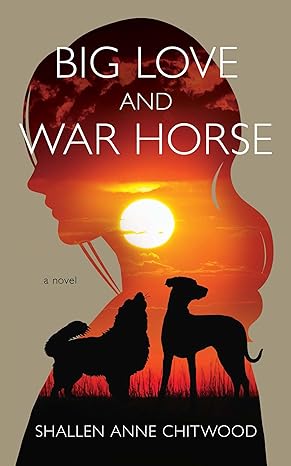
Big Love and War Horse, by Shallen Anne Chitwood, is a compelling novel that captivates readers with its fast-paced, thrilling plot. Uniquely narrated by the family’s two dogs—Big Love and War Horse—the story delves deeply into their thoughts and emotions, weaving together a fascinating and intricate narrative. Set in 1942 against the backdrop of the Second World War, the novel centers on the Deacon family in North Carolina. After the sudden death of their mother, Jonas and his younger sister Kay must shoulder new responsibilities as their father succumbs to alcohol to cope with his grief. Their dogs become a source of strength and unity for the family, guiding them through their adversities. As the Deacon family leans on one another for support, long-held secrets threaten to unravel their fragile peace.
Big Love and War Horse is a poignant exploration of love, loss, and the gut-wrenching aftermath of grief, ultimately leading to acceptance and healing. The narrative also addresses the pervasive racism and segregation of the era, portraying a powerful message of breaking barriers and hope for a future where love knows no boundaries. The novel’s twists and turns will keep readers on the edge of their seats, piecing together the past and anticipating the story’s resolution.
One of the standout aspects of this novel is the way Chitwood intricately weaves the dogs’ perspectives into the narrative. This unique storytelling approach not only adds depth to the narrative but also evokes a strong emotional response from the reader. The author’s ability to convey the dogs’ feelings and thoughts in such a relatable manner is truly commendable.
The depiction of the Deacon family’s struggles is both heart-wrenching and inspiring. Jonas, at just fifteen, and his younger sister Kay are forced to grow up quickly in the absence of their parents. The portrayal of their bond, especially highlighted in scenes like Jonas’s harsh but ultimately loving reprimand of Kay after a hunting trip, showcases Chitwood’s talent in developing complex, realistic characters. Their journey of coping with loss and finding solace in each other and their loyal dogs is poignantly written, making it easy for readers to empathize with their plight.
Big Love and War Horse is a beautifully written novel that combines a unique narrative style with powerful themes of love, loss, and resilience. Chitwood’s ability to draw readers into the emotional world of the Deacon family through the eyes of their dogs is both innovative and deeply moving. I highly recommend this book to anyone who enjoys historical fiction, animal narratives, and stories that tug at the heartstrings.
Pages: 208 | ASIN : B0D6RR9Z77
Love and Tolerance
In The Artifact, a young man acquires a technologically advanced artifact that allows him to glimpse the future and finds himself fighting to keep it out of the hands of forces seeking to control the world. What was the inspiration for the setup of your story?
The story was born when it occurred to me how two ideas I’ve long been fascinated with–the artifact that foretells the future, and the disrespect shown to the dead and Egyptian heritage by Westerners raiding the Pyramids–could be related. What if an artifact that had never been publicized offered its possessor powers of prophecy? I knew the main character should be a young adult because people in that age range are interested in the future in such a unique way–first realizing how so many possibilities exist, and how choices affect their futures, but in ways that can be difficult to predict.
What was your favorite character to write for and why?
The main character, Linc, was the most fun to write–and the most challenging because he is not like me–my mother was not an attorney, my father was not killed in Afghanistan (and was not a soldier), and I never wanted to be an architect. So I had to let Linc teach me what it was like to live that life–and I had to remember what, in general, it was like to be 17 years old. But the adventure Linc lives–and the challenges he survives–these were the thrill of a lifetime, for him and for me and, I hope, for the reader.
What were some themes that were important for you to explore in this book?
In addition to themes of wondering about the future and having respect for other cultures, the need to respect other people and the differences we encounter every day was paramount. So as a young person with friends who are just figuring out who they are and coming to terms with questions of gender roles and orientation, Linc knows an attitude of tolerance is essential. When he asks his mother why she married a soldier even though she hates war, she tells him things are not always simple: “You love who you love.” Love and tolerance are easy virtues to lose, but we must have them to survive.
Another theme was how history creates the present. From the turbulence of the Watergate years in the US and the realities of Project MKUltra Delta to the terror of September 11, 2001, Linc learns the history that made the world he has to live in. Everything in the present has roots in the past.
Can readers look forward to seeing more work from you soon?
Yes! My new novel, The Delphi, has just hit the shelves (both real and virtual ones). It’s about politics, money, mythology, the need for safe elections, and–you guessed it–history! How did we get to wherever this strange place called the present is? Who is this Cleo person who has so much mystery and power surrounding her? It all started a long time ago . . .
Author Links: Bluesky | Facebook | The Artifact | Website | Amazon
fiction story set in the mostly real world of Louisville, Kentucky, and
surrounding areas. Seventeen-year-old Linc is a fan of old movies,
Egyptology, and pyramids. Raised by a single mom who works as an
environmental lawyer, he spends a lot of time watching old movies with
his very close friends Lonnie and Julie. Linc is unwittingly drafted to take
possession of a mysterious artifact, a high-tech electronic device
with connections to ancient Egypt. The artifact allows the possessor
to have visions of the future, but, Linc and his friends soon discover, at a
high cost.
The main character, Linc, and his friends are young people dealing with
issues that speak to readers of diverse ages and backgrounds. Books
with similarities include Jennifer Egan’s The Keep, Jodi Picoult’s
Where There’s Smoke, Harry Potter and the Sorceror’s Stone, Mindwalker
by A. J. Steiger, and Stephen King’s Later.
David Rogers was a reader before he became a writer, so he
learned to appreciate Elmore Leonard’s rule to leave out the parts
readers skip anyway. The Artifact is all story, all the time, and is
intended to accomplish two tasks above all else–allow the reader to
identify with the characters, and keep the reader curious about what
happens next.



 LITERARY TITAN