Blog Archives
Temptation


Temptation, by Pablo Zaragoza, is a work of religious fiction with strong elements of psychological drama and suspense. The novel follows Father Alex Sanchez, a Jesuit priest, psychologist, and lawyer who is sent to a Pittsburgh seminary to evaluate clergy and seminarians for moral, psychological, and legal risks. What begins as an institutional assignment soon becomes something far more personal. Alex is forced to confront corruption inside the Church, the damage caused by secrecy, and his own growing love for Millie, a woman who makes him question whether his calling was ever truly his path.
Zaragoza doesn’t write around temptation. He puts it on the page in raw, uncomfortable terms, and that choice gives the novel its restless energy. Alex’s inner life is messy, repetitive, guilty, and often painfully human. At times, I felt like I was sitting across from someone who was confessing more than he meant to. The prose can be blunt, but that also fits the character’s struggle. This isn’t a polished saint looking back on weakness from a safe distance. This is a man in the middle of it, trying to pray while his body, memory, doubt, and anger all pull in different directions.
I also appreciated how the book widens its focus beyond one priest’s private battle. Zaragoza uses Alex’s assignment to ask hard questions about accountability, hypocrisy, mercy, and institutional self-protection. The novel is candid about the Church’s failures, but it’s not simply anti-religious. The story keeps returning to faith, not as a tidy answer, but as something people use to justify themselves, punish themselves, comfort themselves, and sometimes find courage. I was especially drawn to the tension between rules and love. Alex’s relationship with Millie could have been written as a simple scandal, but instead it becomes part of a larger question: what does a life of faith look like when it is stripped of fear?
Temptation will appeal most to readers who like morally charged stories about faith, guilt, desire, and institutional secrets. It’s not a subtle book. But readers who appreciate candid spiritual drama, flawed narrators, and stories that wrestle openly with the cost of vows will find plenty to think about here. I would recommend it to those who want a provocative, character-driven novel that treats temptation not as an abstract sin, but as a daily, bodily, emotional test of who a person really is.
Pages: 296 | ASIN : B0FV2YQM6N

Self-Discovery Path

The 7th Dimension follows a plastic surgeon with mysterious tattoos he believes are connected to larger events unfolding around him, who embarks on a journey that leads him down a path toward the divine. I found Derek Hollinger to be an intriguing and well-developed character. What was your inspiration for this character?
I didn’t realize it until a few years later. Me. I had been diagnosed with stage three breast cancer and didn’t know if I would survive. This pulls the rug out from under your world. How you handle it is with the tools you have in your tool box. Some people don’t even have a tool box. That was Dr. Derek Hollinger.
What themes were particularly important for you to explore in this book?
Self-discovery path. Why we end up where we are and what to do about it.
When will the next book be available? Can you give us an idea of where that book will take readers?
The 6th Heaven September 17th, 2025. The Amazon jungle is captivating. Venturing into its depths is like exploring the hidden corners of the mind. The jungle hosts an array of remarkable creatures, including the mighty jaguar, the massive green anaconda, shocking electric eels, and flesh-eating piranhas. Just as travelers must remain vigilant and highly aware of their surroundings, we ourselves must be alert when exploring the concealed areas of our minds, where our deep personal thoughts and emotions reside. Like the jungle, it will reveal its secrets.
Author Links: GoodReads | X (Twitter) | Facebook | Website | Amazon
Derek Hollinger isn’t sure, but he knows they’re all connected to the mysterious tattoos that suddenly appeared across his body.
Determined to untangle the web spun by the vicious thug known as “Spider,” Derek embarks on a journey of redemption that leads from his lavish Los Angeles penthouse to the seedy world of underground fighting and human trafficking. But as he ventures deeper down the rabbit hole, the self-exiled plastic surgeon realizes that the answer lies within his heart and mind … and soul.
Faith is the key to reclaiming his life, but choosing God may be difficult for Derek, who has spent his entire career valuing material success over spiritual growth.
In this thrilling sequel to 21Tattoos, Derek must face the hard truth about where his tattoos came from and an even harder truth about what it will take to be free of them once and for all.
The 7th Dimension (The 21 Tattoos Series Book 2)
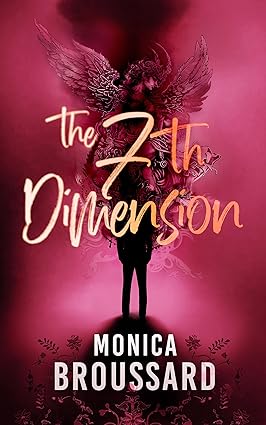
Derek Hollinger, a plastic surgeon, finds himself at a crossroads. Life weighs heavily on him, and when inexplicable tattoos begin to spread across his body, he takes them as a sign of cosmic upheaval. Suddenly, his world feels orchestrated by hidden forces. A teenager’s brutal assault, a cryptic old woman, and a dying gang member capture his attention, each thread tugging at a larger mystery he cannot ignore. Convinced these events intertwine, Derek embarks on a perilous journey to reclaim control of his life. Along the way, he must outwit Spider, a ruthless criminal bent on destruction, and uncover a path toward the divine.
The 7th Dimension by Monica Broussard is a taut thriller, reminiscent of The 9th Gate and infused with echoes of Dan Brown’s bestsellers. Though it is the second installment in a series, Broussard skillfully provides context, allowing new readers to immerse themselves without confusion. The novel is an eclectic fusion of genres, melding the grit of Elmore Leonard’s crime tales, the intrigue of religious thrillers, and the structure of a police procedural.
At the center stands Derek, a layered and compelling protagonist. The tattoos mark more than his skin; they symbolize a reckoning with the very core of his existence. To shed them, Derek must confront his misplaced values and the moral rot threatening his soul. Yet the danger is not solely internal. The malevolent Spider stalks him with equal menace, ensuring that Derek is besieged both from within and without. This dual conflict heightens the suspense, drawing readers deeper into his desperate struggle. The more we discover about Derek, the more his plight elicits pity, and the more we long for his release from the curse he bears.
Broussard demonstrates remarkable control over atmosphere and tension, driving the narrative toward a searing climax in the book’s final act. Her dialogue rings true, her pacing sharp, her tone deliberate and assured. The 7th Dimension delivers a chilling, thought-provoking tale that cements Broussard as an author capable of balancing imaginative concepts with gripping execution.
Pages: 230 | ASIN : B0DC1R9XTV

Joint Salvation

Judging Athena follows a humble and kindhearted research assistant who meets a curator at an art gallery, and what begins as a chance encounter over a necklace for a young girl’s birthday unfurls into a deep and poetic romance. What was the inspiration for the setup of your story?
The idea came to me while I was walking one evening last October. There is a real art gallery gift shop in a charming New England town. Many years ago, I purchased some custom nickel jewelry from the shop manager, a lovely woman with an accent (the nationality of which I cannot recall). On my walk, I suddenly suspected a story was lurking in the memory. As I strolled along, it all began to coalesce in my mind, blending with a few other ideas. I decided to go home, start typing, and see how far it went. Three and a half weeks later, I had a rough draft.
I enjoyed the romantic relationship between Josh and Athena. How did their relationship develop while you were writing it? Did you have an idea of where you wanted to take it or was it organic?
I’m glad you enjoyed it! I had a notion about both characters and their interaction. While they eventually presented themselves well in the first draft, initially, both were somewhat difficult for me to conceptualize. Josh was a challenge because of his humility and piety, and because I wasn’t sure how he would relate to Athena. She was very challenging due to her rarified nature and utterly unique circumstances. And her essence changed quickly in my mind, from a mere legend into something higher and in keeping with her arc of redemption. Fortunately, all my quandaries were resolved as I wrote. Once I was used to the sincerity and kindness in both characters, writing them became a nearly effortless pleasure.
Because of my marital deliverance theme, and partly in defiance of postmodern trends, I knew I wanted the relationship to progress from meeting to matrimony as quickly as possible. Yet in getting there, I decided to dwell on the details of dates, thoughts, emotions, and so forth. And many, many roses! That is why the betrothal period, less than two months long, essentially occupies half the book. I felt the emphasis on clean and honest dating and development, along with genuine understanding behind the marriage, was that important. As an aside, part of me almost wishes I could have dedicated the same level of attention to the rest of the story. However, that would have resulted in a book of 95,000 pages, not words, and I was pleased with the second half anyway.
I did have an idea of where I wanted Athena and Josh to go, though the idea evolved a bit. Most unusual for me, the ideas pretty much landed in the word processor in an organic fashion. Ordinarily, I erratically plot, fill in via scattershot, overthink, and stall manuscript development for months or even years. I practically wrote Judging Athena straight through from page one to “The End.”
What were some themes that were important for you to explore in this book?
Perhaps the most important element is the Christian concept of joint salvation, manifested through the three primary reasons for marriage, as explained by Father Josias in Chapter Four. This is a core tenant of the Church, however, too much of its veracity has been lost or diluted in our era. The tale I tell is, sadly, not my own. Rather, it is an idealistic expression of the ideal romance. My plot device or hook regarding Athena’s true nature is an admittedly extreme use of speculative theology. However, given the extreme state of the real world around us, I thought it was important to provide a strong counterbalance.
Another important concept, for me and, hopefully, for readers, is the complete deference to God offered by two imperfect people who, by dispensing with solipsism, offer anathema to the postmodern concept of the individual über alles. Fiction provides a forum for letting be what should be, even if the imagined vehicle approaches the fantastical.
Many of the themes and subthemes in Judging Athena stem from First Corinthians. I really enjoyed working various metaphors into the characters’ perceptions, their relationship, and their interaction with God, others, and the world. In addition to all else, the titular matter of judgment requires a real apophatic leap of faith. While hinting all around, I do not expressly explain how it happens. I don’t know technically how these matters unfold. No one does. Hence, a degree of trust is warranted. Had I delivered a detailed verdict, I doubt anyone would have liked it—least of all the author.
Also, I really like writing “innocent” fiction. All too often, my work veers into the polemical and the expositive. I may have finally discovered it is better to suggest than to force certain matters. Beyond telling what I hope is a sweet and entertaining story, I ultimately hope to encourage young men and women to defy the world, unite, be fruitful, and help each other redeem themselves through and into the glory of the Almighty.
What is the next book that you’re working on, and when can your fans expect it out?
Next up, Tom Ironsides returns in AURELIUS, a hard-charging action novella wherein the CIA’s former best blasts through the ranks of assorted international criminals. It’s another book that’s been simmering for a while, since around 2020. With any luck, it should be out late this year or in the winter of 2026. As with Judging Athena and The Substitute, it will come to market via Green Altar Books, the growing and outstanding literary imprint of Shotwell Publishing.
I generally have four or five manuscripts in development at any given time, and now is no exception. My “save the world” inclinations are slowly giving way to something more genteel and with more genuine literary quality. I have a few more romances in the works, including an outline for something of the levels of apologetics in Judging Athena. And there’s always more coming along—in due time.
Author Links: GoodReads | Telegram | Website | Amazon
JUDGING ATHENA is an exciting foray into innocent, pure, and productive love. It is also a clarion call to return to the traditions of marriage, large families, and genteel society.
More Than Luck Required: A Journey of Healing, Hope, and Love

More Than Luck Required is a heartfelt journey through grief, redemption, and rediscovery, wrapped up in a slow-burning romance that sneaks up on you just like real love sometimes does. The story follows Lora Hamilton, a woman burdened by the traumatic loss of her daughter and the emotional wreckage left behind by an abusive marriage. When her father dies, she reluctantly returns to Orca Park in Washington—a place filled with both painful and peaceful memories—to fulfill a final promise to him: start living again. What begins as a soul-searching trip with her mother soon unravels into something far more transformative when she gets lost and is rescued by Cooper Martin and his spirited teenage daughter, Emma.
I wasn’t prepared for how deeply this book would hit. Right out of the gate, Morgan doesn’t ease us in—she drops us into Lora’s storm of guilt, pain, and emotional paralysis. The writing is raw in a way that doesn’t try too hard. It just lands. That moment when Lora finds a single daisy in a flower bed and smiles for the first time in what feels like years? That hit me. It was so subtle and beautiful—a soft nudge from life, saying, Hey, I’m still here if you want me. That tiny moment carried so much weight, and I found myself hoping she’d hang onto it.
Morgan’s dialogue is refreshingly authentic. The conversations between Lora and her mom felt like eavesdropping on something private. Their exchanges are laced with grief, unsaid things, love, and all the awkward clumsiness that comes with trying to help someone heal when you’re broken too. And the way Morgan peels back Lora’s layers through little things—hesitations, tiny smiles, anxious inner monologues—she doesn’t rush her. The healing feels earned, not handed over with a bow.
The love story between Lora and Cooper doesn’t try to be slick. And thank God for that. It’s hesitant. Awkward. Kind. Full of missteps and warmth. Cooper’s gruff charm and Emma’s playful sass ground the story in a way that makes their household feel like a soft place to land. When Lora wears Emma’s too-small sweatshirt, covered in a faded boy band, and feels ridiculous but cared for? I loved that scene. It was such a gentle, honest glimpse at a woman remembering how to let people in. And while some romantic tropes are here—single dad, handsome rescuer, cozy dinners—they never feel cheap. They feel earned, like everything in Lora’s journey.
The book sometimes leans into its symbolism. The sea glass, the daisy, the storm—at times, I felt like I was being nudged too obviously. But even then, I couldn’t help but appreciate how consistent Morgan is in weaving these elements throughout Lora’s evolution. It’s clear they mean something to her as a writer, and by the end, they meant something to me, too.
More Than Luck Required is for anyone who’s had their heart broken and wondered if it was possible to piece it back together. It’s for people stuck in their grief, who’ve forgotten what warmth feels like. It’s not flashy or overly clever, and that’s exactly why it works. If you’re into books that make you cry a little, smile a lot, and maybe call your mom afterward, then you’ll enjoy this book.
Pages: 349 | ASIN : B0F5QKMHLQ
The Deaths at Jonestown

Paradise Undone is a powerful and deeply unsettling exploration of one of the most tragic events in modern history, the Jonestown massacre. Where did the idea for this novel come from?
In 2004, I gave a reading at the U. of N. Dakota Writers Conference to a crowd of 600, where I was a master teacher in residence. In the story, about the intersection of 9/11 and a Jewish family I knew back in New York, the parents go to a deprogrammer in an attempt to rescue their daughters (based on two friends) from a nameless cult in the Southwest. The programmer tells them he lost his daughter in Jonestown four years earlier. That was the sole mention of Jonestown in the story excerpt, which went on to win some prizes and be published in Sequestrum and Glimmer Train .
Afterward, a friend came up to me in tears, telling me of his colleagues who had lost family — siblings and nephew — in Jonestown. A powerful and unexpected response to my story. A month later, preparing for my sabbatical, in which I planned to write Hippie Ruins, a novel about the communes in Southern Colorado where I would spend the year ahead, I perused the shelves at Powell’s City of Books in Portland, OR, passing from COMMUNES to CULTS, where I discovered dozens of books about Jonestown. Thus, my bookstore aisle epiphany: remembering my friend in tears, I decided to write my book about Jonestown instead. The hippies could wait, while the story of an unscrupulous charismatic man leading altruistic souls to their demise felt urgent. Twenty years later, in this election year, my book just published, that urgency pulses with even greater danger.
Did you find anything in your research of this story that surprised you?
When I began researching, the most basic facts concerning the deaths at Jonestown — about which I knew little, like most Americans alive in 1978, when I was 18 — stunned me. The dead were 2/3 female, 80% African American, and 1/3 of those 900+ bodies were children. The media of the day, and even now, present those dead human beings as brainless, drugged-out zombies, led by a crazy man to “drink the Kool-Aid,” a salacious and sensationalized portrait so misleading. The dead of Peoples Temple were families, a third of them elderly, and the group as a whole comprising idiosyncratic individuals. It was not a mass suicide; it was murder, an example of coercive control gone ballistic.
What was one of the hardest parts of Paradise Undone for you to write?
I chose to narrate Nov. 18, 1978, from the first-person perspective of Marceline Baldwin Jones, Jim Jones’s wife of nearly 30 years, a founding member of the altruistic work of Peoples Temple in 1950s Indianapolis, who witnessed its decline in Jonestown’s final years, as her husband became an addict and monomaniac. The only fact we know about her demise that day is that she was one of the 900+ who died from poison. Two people died of gunshot wounds: Jim Jones and his nurse, Annie Moore. I wanted to give her a voice, a will, and a longing to stand up to her husband. However, she is human and weak and does not prevail. Living inside her consciousness for hours while the poison is dished out by others in cups and syringes in varying doses measured for infants, toddlers and adults, resonated with pain. She loves these hundreds of people who call her Mother. But there are armed guards surrounding her, guarding the vat of Flavor-Aid (not, in fact, Kool-Aid), and the crowd rises up against the one woman, Christine Miller, who argues with Jones not to go forward with his plan of so-called “Revolutionary Suicide.” Paralyzed with fear, Marceline does not act.
What is the next book that you are working on, and when will it be available?
My next book will be linking short stories about other members of Peoples Temple, including characters I wanted to write about in my novel but could not include due to narrative constraints. I plan to have it published on the 50th anniversary of the massacre in 2028. However, PARADISE UNDONE was ready for the 30th anniversary in 2008, with a NY agent who tried his best but, despite two close calls, returned it to me. Fifteen years later, despite hundreds and hundreds of rejections, in addition to being a finalist 17 times in various contests, I finally found a UK publisher, by chance, who eagerly snapped it up. Am hoping for a pub date closer to my goal this time around, with fewer years on my biological clock remaining!
Author Links: GoodReads | X (Twitter) | Facebook | Website | Instagram | Threads | Amazon
Imagine a community full of rainbow families where everyone comes together in the spirit of equality and fraternal love.
Shy pastor’s daughter Marceline and her new husband Jim Jones found Peoples Temple in the face of rampant hostility and aggression in 1950s segregated AmeriKKKa.
They give hope to the poor, the miserable, the alienated and disenfranchised of all colors, and build a commune in the jungle of British Guyana.
But this Eden too has its serpent. One who is also jealous of God, and where he goes, everyone must follow, even to the grave.
The Search for God

In Death of a Blue Jay, a man is forced to face his inner demons as he learns to embrace life’s nuances and rediscovers his own faith. What was the inspiration for the setup of your story?
The inspiration for my story was based on a trip to Bar Harbor, Maine. My friend and I were not cognizant of the time on one hike and we found ourselves trying to hike back after sunset in the darkness. This experience helped me understand how life is hard and we all have a “dark path” to follow to reconcile past traumas or mistakes. The issue is it is hard to face this reality so most people tend to mask their obligations and distract themselves with comfort. Along the process, there is humility involved and a reliance on a higher power above ourselves.
Did you plan the tone and direction of the novel before writing, or did it come out organically as you were writing?
I planned the very beginning and ending of the novel before writing and also established the main themes throughout the novel. I started writing the book with the scene from the very middle of the novel and organically the tone and direction developed as I was writing from the beginning to the end.
What were some themes that were important for you to explore in this book?
Some themes that were important for me to explore in this book were mortality, morality, and the search for God.
What is one thing you hope readers take away from Jeremy’s story?
Charity is an essential call for all of us in life and we must be realistic with our mental health and reconcile any past traumas before giving joy to others because otherwise we are left confused, stuck, and selfish!
Author Links: GoodReads | Facebook | Amazon
This book has received recognition from:
International Impact Book Awards (May 2024) under Christian Fantasy.
2nd Quarter 2024 Firebird Book Award Winner- Christian Fiction (1st Place) and Religious Fiction (2nd place)
In D’Souza’s “Death of a Blue Jay“, Jeremy Martin goes through a supernatural experience of ups and downs and understands that there is value even when we fall because there will be new lessons gained for future use of wisdom.
In the fictional world of ROB-RAH-RATS, Jeremy is forced to face his unconscious mind, where his deepest secrets are revealed; and where he must face his inner demons and build virtue to ultimately return to the real world and fulfill a final act of charity. D’Souza shares contemplation and the allegory of certain objects to give the reader a new perspective on the value of living by eyes of faith rather than simply by eyes of sight.
Paradise Undone: A Novel of Jonestown

In Paradise Undone, Annie Dawid takes readers on a haunting journey back to the 1950s, where Marceline, the daughter of a pastor, encounters a man who seems to embody all the characteristics she values. Charismatic, godly, and fiercely intelligent, Jim Jones attracts people like a flame in the darkness. However, the world would soon know his name for reasons far darker than Marceline could have ever imagined. The creation of Jonestown and the horrific massacre that ensued became global news, but no documentary could fully capture the human tragedy of what happened there. This novel does, and it does so with unflinching honesty.
Paradise Undone serves almost as a companion piece to the recent TV miniseries Cult Massacre: One Day in Jonestown. While the series provides archival footage and survivor interviews, Dawid’s novel delves deeper into the events that transpired in the Guyanese jungle and the years that led up to it. The Jonestown tragedy can be explored on many levels, each more disturbing than the last. It wasn’t just the loss of life that was so horrifying, but also the manipulation and perversion of the very idea of paradise on Earth that Jones preached. This novel focuses intensely on that perversion. Dawid’s vivid descriptions evoke a visceral reaction as we witness the transformation of Jones from a seemingly benevolent leader to a figure of pure malevolence, like the devil himself given human form. From the outset, Dawid expertly reveals the cracks in Jones’ Eden. As the story unfolds, readers become as captive as the residents of Jonestown, drawn into a web of tension that escalates to a fever pitch. Even for those familiar with the outcome, the inevitability of the violent crescendo does nothing to lessen its devastating impact. This is a harrowing tale, and Dawid leads us through it with the precision and skill of a seasoned storyteller, ensuring that every moment is as gripping as it is heartbreaking.
Paradise Undone is a powerful and deeply unsettling exploration of one of the most tragic events in modern history. Annie Dawid’s masterful storytelling brings the human aspect of the Jonestown massacre into sharp focus, revealing the psychological manipulation and the dark descent of a man who led so many to their doom. This novel not only provides a chilling reminder of the dangers of blind devotion but also serves as a poignant testament to the lives lost.
Pages: 304 | ASIN : B0CKHSZX7X


