Blog Archives
Identity Crisis: Who Am I, Really?
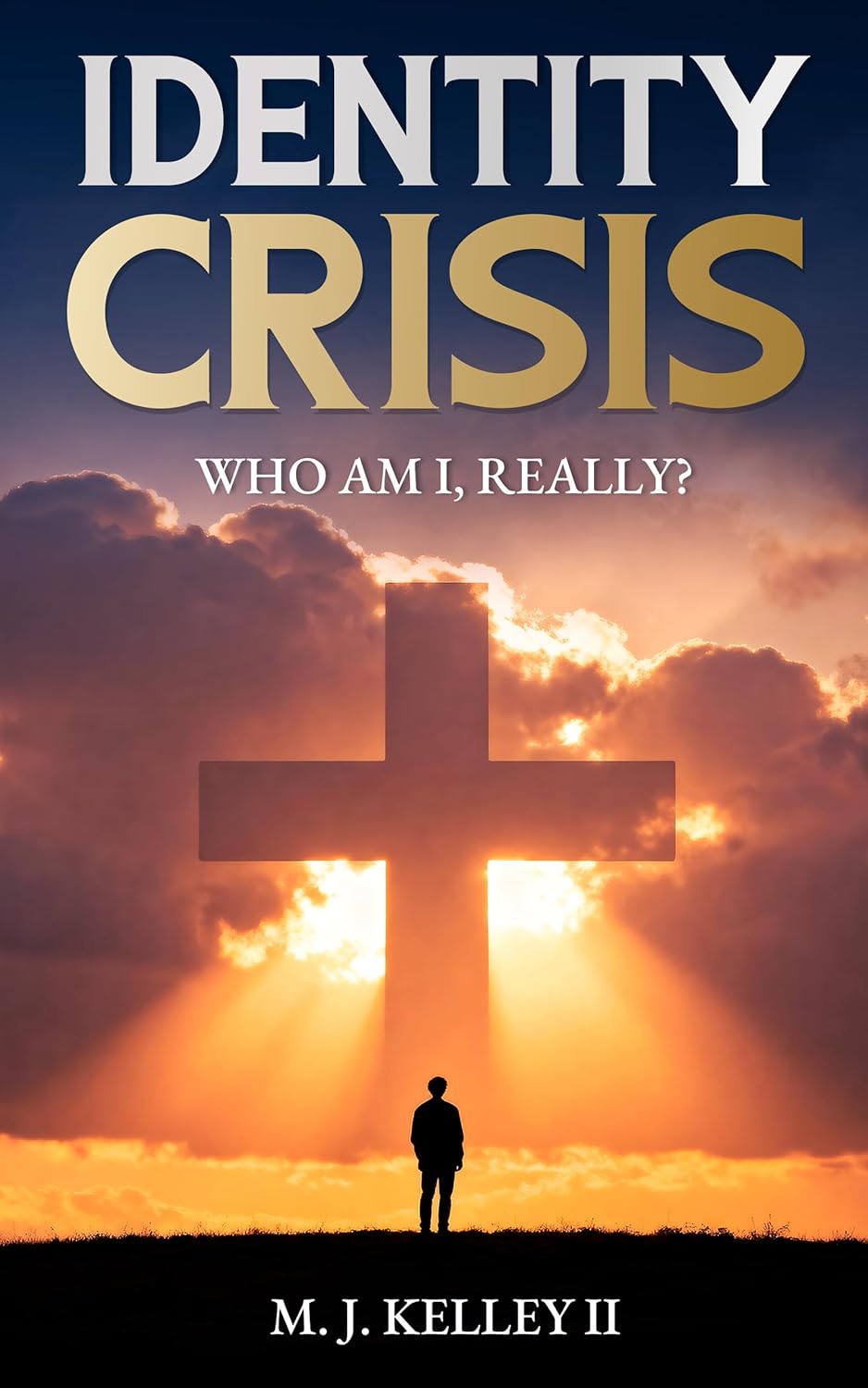

Identity Crisis blends memoir and spiritual teaching to explore what it means to find your true identity in God. Kelley opens with the raw story of his childhood in foster care, marked by neglect, abandonment, and the hurtful names that shaped how he saw himself. He then walks through his journey as a police officer, a husband, a new believer, and eventually a student of theology, all while learning to trade the labels of his past for the identity Scripture offers. From the early chapters on cultural confusion about identity to later ones on adoption, community, and endurance, the book reads like both a testimony and a guide for anyone asking who they really are.
Kelley’s reflections on trauma, performance, and the old names he carried hit with an honesty that doesn’t try to dress anything up. When he describes sitting in church week after week, slowly realizing God was dismantling the identity he had built on strength and achievement, it feels both vulnerable and relatable. The mix of personal story and teaching creates a rhythm that kept me leaning in rather than feeling preached at. Even when he steps into theological territory, the tone stays grounded in real experience, which helps the ideas land with more weight.
What stood out most to me was the way he keeps circling back to the tension between the world’s noise and God’s steady voice. His chapters on misplaced significance, false labels, and the limitations of self-discovery felt especially timely. The way he writes about social media, comparison, and the cultural pressure to self-construct shows he’s paying attention to the world we actually live in, not just the one inside church walls. His explanation of spiritual adoption later in the book adds depth, giving the reader something solid to hold on to. I appreciated how he acknowledged the slow, sometimes clumsy process of renewing the mind rather than offering a quick fix.
By the end, I felt the book had given me both a mirror and a map. A mirror, because so many of the fears and questions he names are ones most of us carry quietly. And a map because he lays out what it looks like to move from old identities into a new one shaped by faith, community, and Scripture. If you’re drawn to Christian nonfiction that blends story with teaching, or if you’ve ever felt weighed down by the labels life has handed you, this book will likely speak to you.
Pages: 241 | ASIN : B0G1NK5V76

Self-Worth in God’s Love

Identity Crisis: Who Am I, Really? shares my journey from abandonment and anger to spiritual renewal, offering readers a thoughtful, faith-centered examination of identity. Why was this an important book for me to write?
Writing Identity Crisis: Who Am I, Really? was profoundly important because my personal journey from confusion about who I truly was to clarity about my ultimate identity mirrors a struggle that I believe is universal. The book is the story of how God took me—a man defined by the lies of his past, which was marked by abandonment, neglect, and abuse—and taught me who I truly was.
My motivation stemmed from my understanding that the “spiritual chains” that bound my heart were from society’s definition of who I was, and the deepest help I could offer to others was to show them the path away from this cobweb trap. I wanted to give my readers the euphoria of their own enlightened journey from a life of angry entitlement to one of humble gratitude, from anxious performance to restful security. By surrendering my story to the “divine Author,” I found that my entire path from early childhood, including my former orphanhood, abuse, and anger, could be transformed into the very tools of faith that could help others discover their own freedom. In short, the book was necessary for me to share – I felt a deep obligation to offer a roadmap that others might use on their quests for their own true identities.
What were some ideas that were important for me to share in this book?
I emphasized several foundational, Christ-centered ideas designed to dismantle a performance-based identity in favor of establishing true self-worth in God’s love. Key ideas that are important for me to share include:
- Identity is Found in Divine Design, Not Self-Creation: The central truth is that everyone’s identity must begin with the Creator, rooted in the Bible telling us we were created in the Imago Dei (Image of God). This inherent value is endowed, intrinsic, and immutable, and it cannot be increased by success or diminished by failure. True self-discovery comes not from looking inward, but from looking up to the Creator.
- The Radical Nature of Divine Adoption: A paramount idea is that as a believer, I am not merely forgiven, but am legally and lovingly adopted as a child of God. This concept, drawn from the irreversible Greco-Roman legal practice of huiothesia, means my old debts and legal ties have been erased, and I gain all the rights of a natural-born heir. This status is permanent, unbreakable, and the ultimate antidote to spiritual orphanhood and shame.
- The Freedom of Resting in Christ’s Finished Work: Crucially, the book aims to show that the only remedy for the soul-crushing performance trap is the reader learning how their identity is obtained by stripping away old facades with the freedom obtained through grace. Their righteousness is not earned but imputed (credited) to their accounts through the substitutionary work of Christ on the cross. Because Christ bore the divine wrath, each and every one of us is given the credit of having rendered perfect obedience to the law and thus is declared righteous by God. No earthly accomplishment can achieve that! Our standing is secured by Christ’s perfection, not our own, and certainly not by how we are evaluated or judged by others.
- The Battle for the Mind: It is essential for readers to understand that the enemy’s primary tactic is deception, accusation, and distortion of truth. This will never go away, and so our ongoing work is to continuously renew our minds by demolishing all the strongholds of lies and replacing them with the truth of God’s Word. My book shows how we can do this through Scripture, prayer, and community.
What was the most challenging part of writing your memoir, and what was the most rewarding?
- Most Challenging: The most difficult aspect involved confronting, and then allowing myself the vulnerability of exposing, the raw experiences of my childhood—the horrible feelings of abandonment and being neglected by those who were supposed to love andcare for me, the “searing, silent language” of being branded with negative names, and myabsolute, deep-seated anger toward God for all of it. It was very difficult going back to reveal this journey, all the way from being an unwanted foster child to my role, striving to become a respected police officer who was trying to earn his own sense of worth, all the while finding a way to silence those “old, familiar names” with all their various earthbound identities. This process required immense spiritual meditation and emotional honesty.
- Most Rewarding: The most rewarding element was clearly the process of discovering and then presenting to others the glorious truth of my new identity in Christ. This “new journey” transformed my path from a life of anxious performance to one of a restful and secure identity. The reward turned out to be knowing that my most painful chapters—my orphanhood and abuse—were used by God to give others a “roadmap” to their own God-given identity and the freedom which comes from their true name as a child of the King.
What do you hope is one thing readers take away from your story?
The single most important takeaway I hope for my readers is that they will understand they are created in God’s image and must stop searching for any identity in worldly evaluations, that by stripping away secular manifestations of identity, they can immediately reveal the truth of their own perfect identity already given to them through God’s love and sovereign design.
I am praying that my readers will:
- Hear God’s quiet and still voice, which cuts through every one of the competing voices.
- See themselves as God sees them: not as an orphan, but as a legal heir and child of the King.
- Understand at their core that their identity is not bound to anything from their past or anything related to achievement or performance, but that they are seen as righteous and deserving in God’s sight, forgiven and freed through the actions of His Son.
My final call to action is for readers to reject the exhausting slavery of performance and step into the joyful freedom of grace, living fully in the light of their true identity in His name, and now theirs, as well.
Author Links: GoodReads | X (Twitter) | Facebook | Website | Amazon
Why I Wrote This Book
My childhood was a chaotic collage of broken places and broken people, defined by the searing, silent language of abandonment. I learned the cold linoleum hallways of foster homes, where I tried to survive by becoming invisible, believing the cruel labels hurled at me: “stupid,” “worthless,” and “trouble.” For years, my identity was forged in a furnace of neglect, and I was utterly alone, desperately fighting for a sense of worth. I tried to seize control, to write a new story for myself through performance and success, even choosing to become a police officer as the ultimate expression of control and strength. But beneath the uniform, the armor was heavy and hollow—my self-made identity was a painkiller, not a cure.
I spent years looking around and inside me for the answer to the fundamental question, “Who am I?” It wasn’t until I stopped trying to write my own story and started looking up that I found the truth. Through His relentless grace, God took a man who was defined by the lies of his past and taught him who he truly was. The Bible became a mirror that shattered my self-made identity and revealed a glorious, God-given identity I never knew was possible.
This book, Identity Crisis: Who Am I, Really?, is a roadmap born from that journey. My prayer is that my story of moving from an angry, anxious life of performance to one of restful, humble security will help you, no matter your past failures or struggles. It is an invitation to every person asking to fill an inner void to discover that the struggle for identity ends in the heart of the God who made you. He sees you not as an orphan or a failure, but as a child of the King, beloved and secure. It’s time to stop striving, surrender your story to the divine Author, and finally come home to your true name.
Identity Crisis: Who Am I, Really?
Identity Crisis: Who Am I, Really? offers a striking blend of memoir and theology, tracing one man’s journey from abandonment and anger to spiritual renewal. The author begins with a vivid recollection of his upbringing in foster care, marked by instability, neglect, and emotional wounds. His story unfolds through a lens of deep honesty, moving from survival and self-reliance to the gradual recognition of divine purpose. What begins as a personal account of loss transforms into a broader reflection on how individuals construct their identities in an age of distraction, performance, and comparison.
The opening chapter establishes both the emotional and philosophical weight of the work. When the author describes “the names I had been called were weapons,” the reader is immediately drawn into his internal conflict between strength and brokenness. His career as a police officer becomes a metaphor for control, an outward display of stability masking an inward fragility. This contrast anchors the book’s central theme: that human worth cannot be secured through achievement, image, or reputation. The author’s eventual encounter with faith reframes identity not as something earned, but as something received.
Beyond the personal narrative, the book engages thoughtfully with cultural issues. In “The Crisis of Identity,” the author critiques the social and psychological consequences of the digital age, arguing that social media’s obsession with validation has eroded authentic self-worth. His discussion of the “comparison trap” is particularly compelling, weaving together research on narcissism and mental health with theological reflection. The prose maintains clarity even when exploring complex ideas, inviting readers to think critically about how technology shapes the self.
One of the most powerful sections, “When Labels Become Limiting,” exposes the damage caused by societal categorization and contrasts it with the Christian understanding of identity as being “created in the image of God.” The author’s exploration of spiritual adoption, our becoming children of God with a new name and inheritance, provides the emotional and theological resolution of the narrative. This theme of restoration lends the book both its moral force and its hope.
Identity Crisis is deeply personal yet widely relevant. It speaks to anyone wrestling with self-worth, purpose, or belonging in a world that prizes performance over authenticity. The author’s courage in revisiting his past, combined with his grounded biblical insight, makes the work both reflective and redemptive. Readers seeking a thoughtful, faith-centered examination of identity will find this book profoundly moving and intellectually satisfying.
Pages: 241 | ASIN : B0G1NK5V76



