Blog Archives
Vulnerability Is Strength

The Work In Between is a memoir sharing your experiences of losing over 100 pounds, surviving cancer multiple times, and going through a period of self-reinvention. Why was this an important book for you to write?
I kept getting asked where my book was. People assumed I had written one given my experiences. After a lot of self-reflection, therapy, and conversations, I felt I was ready to tackle a book. To be honest, I wasn’t convinced I had that interesting of a story. I wasn’t sure anyone would care. However, some conversations made it clear that it might be helpful to others, if only to show you can go through some pretty tough stuff and still be a compassionate, successful, and joyful person. So, I wrote it. The response has been overwhelmingly positive.
I appreciated the candid nature with which you told your story. What was the hardest thing for you to write about?
It’s the only way I know how to be. I’m not very good at sugar coating things or only telling one side of the story (i.e., where I only look good). The hardest part was writing about when my brother Eric died. I cried when I was writing about losing all of my family, but Eric’s death was particularly difficult. Still is. I laughed a lot, too, though. I ended up remembering things I had forgotten. Good memories. Happy memories.
How has writing your memoir impacted or changed your life?
I’m happy that it’s resonated with so many people. Writing the book has made me realize I have a lot more work to do. I wrote a chapter in The Backyard Peace Project anthology and got a fantastic response to my chapter about loving ourselves harder when we stumble and fall. I think it’s a really important message to get out there, especially with all of the negativity and skewed reality from social media.
I’ve learned through my book that vulnerability is strength. Most people are tired of branded packages of unrealistic life. I think they are hungry for real, honest conversations about hard things. That’s how we grow. I was once told that I talk about things people usually keep in the shadows. That’s true. I do that because if I try to carry it all alone, it makes me sick: physically, emotionally, spiritually, and mentally unhealthy. We aren’t supposed to walk around with shame and guilt. Talking about it is healing, and it helps others process their experiences. Everyone has experienced hard things; sharing them helps us heal and grow.
What do you hope is one thing readers take away from your story?
That they are worthy just as they are and worthy of love and a good life. It doesn’t matter what the scale says, what other people tell you, or where you started in life. If you want to improve your physical, mental, emotional, or spiritual health, great. Do that. However, you are worthy of love and an amazing life no matter what.
Author Links: GoodReads | Website | Amazon
Witty, frank, and richly thoughtful, The Work In Between is peppered with wisdom from the author’s expertise in the field of Health Communication. Holmes brings an astute eye to the relationship between outward appearances and medical experiences as she draws from her doctoral education and years of service as a hospital executive. And yet, the complex web of stories that characterize The Work In Between extend far beyond Holmes’s own experiences. As this memoir makes clear, we carry family trauma in our bones. Until we do the inside work of facing our demons and declaring our worthiness, we cannot live the full, happy lives we were meant to live.
Severed Sacredness: The Miraculous Journey of Jessie Boone
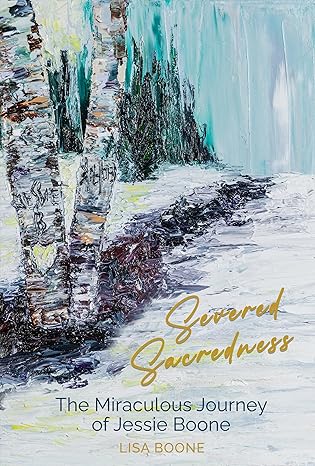

Some books touch your heart. Others grip it so tightly you feel like you’re living inside their pages. Severed Sacredness is the second kind. This is Lisa Boone’s raw, heart-wrenching, and faith-driven account of her daughter Jessie’s near-fatal skiing accident and the long, grueling journey through survival and recovery. Told through the lens of a mother’s unshakable love and relentless determination, the book walks us through Jessie’s trauma, the desperate prayers, the countless medical interventions, and the hope that stubbornly refused to die. Lisa lays bare the terror, the grief, the anger, and the tiny glimmers of grace that kept her moving forward. It’s not just a medical journey; it’s a spiritual one, an emotional one, and a testament to the power of faith and community.
Lisa’s writing is something special. It’s not polished in a way that feels distant—it’s raw, honest, and deeply personal. As a mom myself, I felt her pain in my bones. The moment she gets that phone call—“Mom, there’s been an accident. It’s Jessie. She’s hurt. She’s hurt real bad.”—it’s every mother’s nightmare coming to life. The way she describes the chaotic rush to get to her daughter, the helplessness of watching Jessie’s broken body in the ICU, and the sheer will it took to keep breathing through it all—it’s gut-wrenching. Lisa lets us sit in the darkest moments with her, but she also leads us toward the light, reminding us that even in the worst pain, there is hope.
One of the most powerful themes in the book is Lisa’s unwavering advocacy for Jessie. There’s a moment when a young neurosurgeon insists on an emergency craniectomy, and Lisa and her husband are forced to make a life-or-death decision within minutes. The older doctor had dismissed the nurse’s concerns, but this new doctor listened, pushed forward, and ultimately saved Jessie’s life. Lisa shows what it means to be a mother in the trenches, fighting for her child when no one else seems to see the full picture. It made me think about how important it is to trust our instincts when it comes to our kids.
Another part of the book that really stayed with me was the recurring imagery of trees. Lisa ties Jessie’s accident to the tree she hit, then expands on that symbolism throughout the book. Each tree marking a stage in Jessie’s recovery and Lisa’s own transformation. I loved this thread of nature woven into the story, the idea that life, even when it’s cut down to a stump, can grow back in unexpected ways. It reminded me that healing isn’t always linear. Sometimes it looks like a broken branch growing in a new direction, and that’s okay.
Severed Sacredness is a book about hope, faith, and resilience. It’s for any parent who has ever prayed over their child’s hospital bed, for anyone who has walked through trauma and wondered if they’d ever come out on the other side. It’s a heavy read, no doubt. There were parts that made me cry, parts that made me angry, and parts that filled me with gratitude for the strength of a mother’s love. If you’ve ever faced an impossible situation and needed a reminder that miracles do happen, this book is for you.
Pages:492 | ASIN : B0D41LWLGG

The Big C² – stories from the chronic side of cancer

Cancer is a pervasive reality in society, a shadow that has accompanied humanity throughout its history. It evokes profound fear, yet not all forms of cancer carry the inevitability they once did. Many types can now be treated or managed, offering paths to survival. Nevertheless, the moment a doctor utters the word “cancer,” it marks a turning point. Life as you know it shifts, often irrevocably. Ruth Fein’s The Big C²: Stories from the Chronic Side of Cancer delves into this pivotal experience, offering a powerful anthology of essays, interviews, and reflections.
This collection presents the voices of individuals living with cancer, weaving their personal journeys into a poignant tapestry of resilience, fear, and transformation. Contributions come not only from patients but also from family members and medical professionals, creating a multifaceted exploration of the disease’s impact. Together, these narratives form a living diary, documenting the raw, unfiltered emotions and insights of those touched by cancer.
The book does not shy away from the harsh realities of a cancer diagnosis. Many entries confront the darkest corners of human experience, capturing moments of despair and uncertainty. Yet, within these pages also lies a deep sense of hope. Contributors reveal an indomitable strength of spirit, their voices resonating with vitality even as their bodies endure relentless challenges.
What stands out most to me in Fein’s compilation is its testament to the necessity of unwavering support for those facing cancer. These stories emphasize that battling this illness often becomes a defining struggle, reshaping identities and lives. Even for those who survive, the journey still leaves a mark, a truth this collection conveys with stark clarity.
The Big C² celebrates courage and underscores the importance of community, compassion, and connection in confronting life’s most formidable adversities. Fein’s work is a moving reminder of the strength that endures even in the face of the unimaginable.
Pages: 136 | ASIN : B0DLPG63B9

Every Diagnosis is Different

In Welcome To The Bright, you share with readers the challenges you faced as you readjusted to life after surviving a stage 4C colon cancer diagnosis and subsequent treatments. What inspired you to share your story?
As I was recovering, I was looking for resources online on how to cope with not only the physical changes that had happened to my body and the emotional troubles I was having but also for how to reintegrate into my former life. I wasn’t finding any help, so I turned to my fellow cancer survivors for advice. It turned out we all struggled with getting back to our previous careers and lifestyles. It became clear that I was not alone in feeling adrift, and it would be important to write about this phase of the cancer journey to help other people navigate this difficult and unexpected time.
I appreciated the candid nature with which you told your story. What was the hardest thing for you to write about?
For sure the hardest was sexual dysfunction. The doctors had a hard time talking to me about it, my survivor friends weren’t talking about it, and again I just couldn’t find solid resources out there to help me. It was another thing where I thought, “I’m not alone, so if I don’t talk about it, other women will never know it happens.” It was hard to think that my family and friends would read about this very private situation, but on the other hand, there were bound to be plenty of women out there who had survived cancer to find themselves in the same position as me, and they needed to hear my story. That chapter was written for them so that they knew this wasn’t something shameful to hide and ignore, and that they absolutely are not alone.
What is one piece of advice you wish you had been given when you were diagnosed with cancer?
“Don’t compare yourself to anyone else.” Everyone’s story is different, every diagnosis is different, and even the same kinds of cancers are different. It was difficult in my support group to listen to other people’s experiences and then worry that the same thing would happen to me. I had to accept and believe that I am unique, and none of us have an exact same reaction to the drugs so we shouldn’t all expect the same outcome. Just because one person had terrible pain with a surgery didn’t mean that I would. It took me a while to understand this and just keep my eyes on my own path and not get distracted or frightened by other people’s stories.
What is a common misconception you believe most people may have about cancer survivors?
Many people just expected me to jump straight back into my previous life as if nothing had ever happened. As a musician, suddenly everyone was inviting me to rehearsals, and friends wanted to take me out to lunch. There’s a lot of PTSD involved in having cancer, how it manifests is different for everyone. I was nowhere near ready to get back on stage or sit in a restaurant. The life I lived before cancer was foreign to me, and I was on a path to discovering who I was now, post-cancer. I think people (thankfully!) don’t understand what a profound effect cancer has on us, it literally changes our lives in unimaginable ways, and I was trying to discover who I was now, in the aftermath of cancer. I know people were excited to get me back, but I was a changed person and I felt as if I needed them to acknowledge that and learn about the new person standing before them.
Author Links: GoodReads | Facebook | Website | Amazon
She never expected how difficult it would be to transition from colon cancer patient to colon cancer survivor.
Beginning a new regimen of treatments meant to prevent a recurrence, she faced the daunting task of returning to her former life. Plagued with debilitating panic attacks, she turns to nature to find the strength and inspiration she needs to navigate her rocky post-cancer recovery.
Welcome to the Bright chronicles the year after Lisa’s first clear scan and her discovery that the path through the second half of her life is going to be a long and winding road. Becoming a survivor is just the beginning.
Welcome to the Bright: The Winding Path from Survivor to Thrivor

Welcome To The Bright, The Winding Path From Survivor To Thrivor, by Lisa Febre, is a candidly written memoir that chronicles the journey of 48-year-old Lisa as she learns she has overcome stage 4C colon cancer. After a grueling year-long battle involving chemotherapy and radiation treatments, Lisa faces the daunting task of readjusting her life as a cancer survivor. This memoir delves into her struggles with anxiety, panic attacks, and the challenge of rediscovering the life she fought so hard to regain. Febre answers these and other pressing questions that anyone affected by cancer would seek to understand.
Febre’s writing is emotionally charged and compelling. She masterfully conveys her remarkable stability and commendable stamina. The memoir provides not only factual insights into the process of overcoming cancer but also intimate details of her battle with the disease. Readers are taken through her tumultuous journey of rediscovery, highlighting the highs and lows that come with adjusting to a new, cancer-free life after her first clear scan.
The depth and insight in Febre’s testimony make it an immersive read. Her narrative is filled with determination, hope, anxiety, and fear of the unknown, allowing readers to feel as though they are experiencing the journey alongside her. The book is a testament to her resilience and the profound transformation she undergoes.
Welcome To The Bright, The Winding Path From Survivor To Thrivor, by Lisa Febre, is a powerful memoir written by a gifted author. I highly recommend it to anyone, whether they are dealing with cancer themselves or supporting a loved one through the disease. Febre’s ability to turn fear and pain into a story of survival and light, even in the bleakest circumstances, is truly inspiring.
Pages: 280 | ISBN : 978-1685134891
Life After Death: Surviving Suicide

Imagine, at just 7 years old, grappling with the abrupt and traumatic loss of a parent. In Life After Death: Surviving Suicide, Richard Brockman provides heart-wrenching insight into a life-altering event he endured as a young boy: the suicide of his mother. Through the pages, readers journey alongside Richard, gaining an intimate view of his mother Ruth’s emotional turmoil and the aftermath her family had to navigate.
What makes this narrative compelling is Richard’s perspective as a Clinical Professor of Psychiatry at Columbia University. Not only does he offer a deeply personal recounting, but he weaves in a nuanced understanding of the neurological processes that underpin such profound experiences. This isn’t just a raw recounting; it’s a masterful blend of personal pain and professional expertise that sets it apart as a potentially influential academic resource.
Grief, healing, and the complexity of the human psyche are themes explored with depth and sensitivity. As Richard paints a vivid picture of his mother’s battles – from her mental health struggles to her intimate feelings of unworthiness – readers are reminded of the very real and often silenced dimensions of mental health.
Richard goes beyond a linear tale, circling back to his own birth, shedding light on the powerful bond between mother and child, and the ripple effects that pivotal events can have on such a relationship. This book isn’t just Richard’s story; it’s a testament to resilience, the complexities of the human mind, and the indomitable spirit of those affected by such tragedies.
This is a tribute to a boy’s journey to heal the wounds of his past. Richard Brockman’s courage to share these deeply personal moments, all while delivering an educational perspective, is commendable. If you’re seeking a touching and enlightening read, especially those in the mental health and medical sectors, Life After Death: Surviving Suicide is an essential addition to your reading list. Trust me, its impact will resonate long after the final page.
Pages: 408 | ISBN : 978-1680998054



 LITERARY TITAN