Blog Archives
Changing the Narrative

Stairwell to Silence follows a former Navy SEAL turned PI who is investigating the death of a brilliant law student who, while ruled an unfortunate accident, quickly turns into a conspiracy and murder case. How did you decide what to reveal, and when, to keep that shifting tension alive?
I did every reveal strategically. I attempted to write in a way that each chapter ended almost with a cliffhanger, which encourages the reader to want to “see what comes next.” I had some pivotal plot twists, and I made sure not to divulge too early as they may compromise the ending. Even the ending was a twist, not to give anything away, but it makes the reader ask himself, “What really happened to Bella?” This was my first trial of a neo noir thriller, so the ending needed to be that way – essentially ambiguous. The reveals were placed strategically to keep the reader engaged, changing the narrative to keep the reader guessing what comes next.
Klade’s investigation feels like a descent rather than a straight path. What does each layer of the investigation reveal—not just about the case, but about Klade himself?
Each layer revealed how thorough Klade is in his work. It tells the reader how dedicated he is not only to taking on a challenge, but indeed to getting to the truth. That the investigation felt like a descent rather than a straightforward path, well, that was an attempt to make the stairwell a metaphor for what may have happened to Bella, with her going “downwards,” and also that the deeper down that stairwell that Klade went, the more he discovered that what happened was not exactly a cut and dry accidental death as the powers that be would have them believe.
The novel explores how wealth and influence shape outcomes. What interested you about that intersection of class and justice?
I see that scenario every day. Money and connections often times dictate what the narrative is, whether this is right or wrong. Interesting fact is that this is not my first novel with that concept, as my very first novel, Sovereign Deception, explored something similar.
What do you hope lingers with readers after the final page—the mystery, the mood, or the moral questions?
The moral questions would be the main thing I would hope to linger on. I also would realize that a picture might not necessarily tell the whole truth.
Author Links: GoodReads | X (Twitter) | Facebook | Website | Amazon
Bella Gaines was brilliant, driven, and hiding more than anyone knew. When she’s found dead at the bottom of her townhouse stairwell, the police call it an accident—a drunken misstep with tragic consequences. The case is closed.
John Klade knows better.
A former Navy SEAL turned private investigator, Klade is no stranger to official lies. Reluctantly hired by Bella’s estranged mother, he begins pulling at loose threads—and discovers a life split cleanly in two. Law student by day. Exotic dancer by night. Somewhere between the shadows, Bella uncovered something powerful men were willing to kill to protect.
As Klade descends into a labyrinth of corruption involving an upscale strip club, a prestigious law firm, and whispers of classified military contracts, the line between justice and survival blurs. Evidence vanishes. Allies lie. And the deeper Klade digs, the more his own past begins to echo back at him.
In a city where truth is bought, sold, and buried, the stairwell where Bella died may not be the end—but the entrance.
Because some falls aren’t accidents.
And some silences are earned in blood.
Excellent for fans of gritty, atmospheric crime thrillers.
The Trident Code
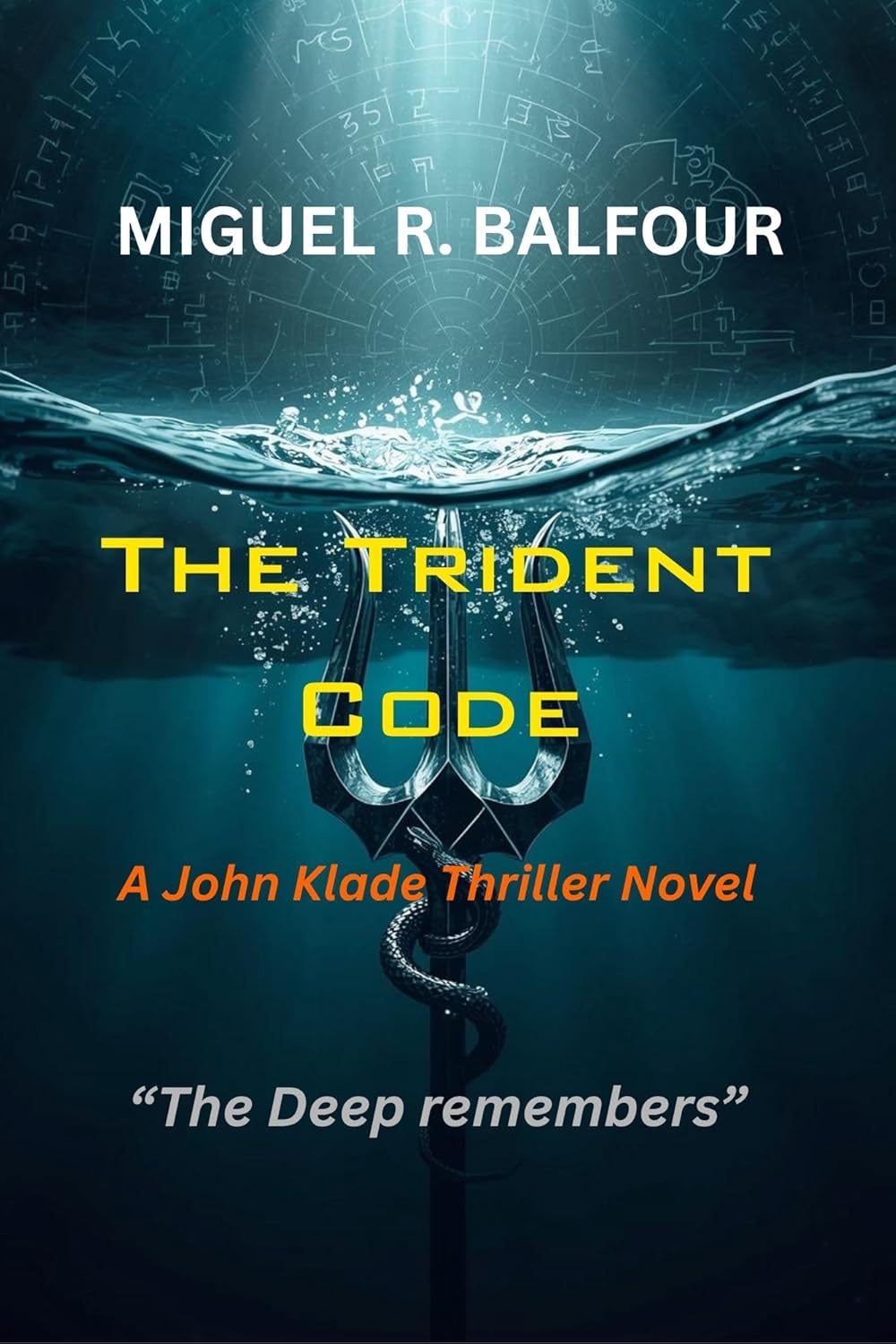

Miguel R. Balfour’s The Trident Code is a military conspiracy thriller (with a definite dark, myth-tinged edge) that kicks off the SEAL Cypher Series. It follows John Klade, a former SEAL turned private investigator, whose routine surveillance work in Los Angeles gets interrupted by a strange trident-and-serpent symbol that keeps showing up like a fingerprint you cannot wash off. When a former teammate is murdered and the same mark appears at the scene, Klade is pulled into a widening hunt that stretches from the streets to old operations, coded messages, and finally toward a looming offshore threat tied to something called “Leviathan.”
The opening chapters have that noir-ish, boots-on-asphalt feel, with details that land in a very physical way, like the city is sticky on your skin and every alley has a memory. Klade reads as competent without being invincible, and I liked that he’s not written as a walking slogan. He’s wary, tired, methodical. The story also knows how to escalate without rushing: a chalk mark becomes a pattern, the pattern becomes a warning, then suddenly it is personal in the worst possible way.
Balfour also makes an interesting author choice by blending modern special-ops paranoia with something older and stranger. Once Annabelle Johansson enters the story and the symbol starts pointing to maritime myths and long-buried operations, the book widens from “who’s stalking the team?” to “what did they wake up?” I was going back and forth on that shift, in a good way. Part of me wanted the clean logic of a pure spy thriller. Another part of me enjoyed the unease, because it fits the book’s central idea: some secrets are not just classified, they feel hungry. And when the plot pushes out onto the water and toward the Brotherhood’s ship, the Leviathan, the tension turns claustrophobic in a new setting. Steel decks, ritual vibes, and the sense that the ocean itself is keeping score.
By the end, I felt like I’d read the opening movement of a larger series story rather than a neatly tied bow, and I mean that as a heads-up more than a complaint. The last stretch leans into momentum and dread, and the closing image of heading into open water, with hope showing up like a fragile, stubborn light, really worked for me. I’d recommend The Trident Code most to readers who like fast, cinematic thrillers with military DNA, team history, and a conspiracy that turns almost mythic at the edges. If you’re happiest when a book feels like a cross between a covert-ops chase and a shadowy cult mystery, this one is written for you.
Pages: 386 | ASIN : B0G1L3JDYN



