Blog Archives
Most Talented and Most Misunderstood

Thriving in the Modern Workplace is an empowering guide that helps young professionals, particularly Gen Z, navigate real-world challenges with practical tools, relatable stories, and updated career strategies designed for today’s changing world. Why was this an important book for you to write?
Gen Z is one of the most talented and most misunderstood generations we’ve ever seen. Every generation comes with its own style and challenges, but theirs have been amplified by everything they’ve had to face: a pandemic that disrupted their lives and education, a mental health crisis that few were prepared for, and the pressure to adapt to AI and constant change before even finding their footing.
As both a parent and a professional, I saw this disconnect up close. Many parents, educators, and employers want to support Gen Z but simply don’t know how to meet them where they are. The communication gap between generations is real, and it’s costing us trust, connection, and opportunity.
That’s why I wrote Thriving in the Modern Workplace. It’s a guide to help Gen Z navigate the realities of today’s world with confidence and clarity, and just as importantly, it gives the adults who teach, hire, and lead them the insight they need to truly understand and empower this generation.
As the parent of two Gen Z young adults, I found this a refreshing take on how to help them navigate this changing world. What are some key ideas you felt were important to cover to grab this generation’s attention and make your book stand out from other career guides on the market?
I am also a parent of two Gen Z young adults, and this book came straight from the heart. I wasn’t writing from a distance. I was writing as someone who’s watched this generation struggle, grow, push boundaries, and ask for things many of us were never taught to ask for. I wanted this book to feel like real guidance, not another lecture.
At the core of Thriving in the Modern Workplace are three foundational ideas: mindset, confidence, and purpose.
Those three themes shape almost every challenge Gen Z faces.
- Mindset, because the world they’re entering moves fast, and how they think determines how they adapt.
- Confidence, because they’re talented but often second-guess themselves in environments that don’t always see or understand them.
- Purpose, because this generation won’t stay anywhere they can’t find meaning and I believe that’s a strength, not a flaw.
By grounding the book in these essentials, I wanted to give Gen Z something relatable, practical, and empowering… and give the adults around them a clearer window into who they are and what they need to thrive.
What is one piece of advice you wish someone had given you when you were younger?
I wish someone had told me to believe in myself first before waiting for anyone else to validate me. Confidence isn’t something you earn from the world; it’s something you choose to build from within. When you don’t trust your own voice, you dim your potential before it even has a chance to grow.
Self-belief shapes how you lead, how you show up, and how boldly you go after the things you want. When you genuinely believe in who you are and what you bring to the table, you don’t just participate in your life, you own it.
What is one thing that you hope readers take away from Thriving In The Modern Workplace: A Gen Z Guide to Success?
I want every reader whether they’re Gen Z or from another generation to understand that success is personal. It’s not defined by a job title, a milestone, or someone else’s expectations. It’s something you get to shape on your own terms.
And for Gen Z specifically, I hope they walk away knowing this: you don’t need a title to lead. You already have the talent, the perspective, and the potential. What truly matters is your intention: choosing to grow, choosing to show up fully, and choosing to become the best version of yourself every single day.
If you can do that, you’re already winning.
Author Links: GoodReads | X | Facebook | Instagram | Website
Just Another Statistic


Just Another Statistic follows Axel Reid’s long, confusing, and often frightening medical journey as he battles invisible autoimmune disease while navigating a healthcare system that keeps misreading the clues. It starts in his high-pressure life in the City before he’s suddenly pulled into years of fever, cognitive fog, misdiagnosis, and hospital stays. The memoir shifts between past and present, stitching together childhood medical mysteries, African fevers, and the slow, unnerving onset of systemic lupus and related disorders. It’s both a medical story and a deeply personal one, told from inside a mind that is under attack.
I found myself drawn into the rawness of the author’s voice. There’s no polish, no tidy narrative arcs, and that’s what makes it hit harder. The repetition and spiraling thoughts, especially in the sections where the illness affects his cognition, gave me a weird cocktail of sympathy and discomfort. I could almost feel his frustration as doctors dismissed his symptoms or poked at him without really listening. At times, I caught myself getting angry on his behalf. The medical failures he describes aren’t wrapped in fancy language, which makes them feel even more real.
The author writes the way someone thinks when they’re scared and exhausted. The tone flips from calm recollection to sharp irritation to quiet humour and then back again. It’s messy in a way that feels honest. Some chapters had me sitting back, just letting the weight of it settle, especially when he describes moments where his mind simply stops working. These parts aren’t dramatic. They’re just unsettling, and that simplicity made them powerful. I also felt a kind of quiet admiration for the stubbornness that carries him through the worst of it. Even when the story wanders, the emotional truth stays clear.
By the time I reached the end, the book left me thinking about how invisible illnesses can shape every part of a person’s life, including how they think, remember, and tell their own story. I’d recommend this memoir to anyone who wants to understand autoimmune disease beyond medical definitions, and to readers who appreciate raw, unfiltered life narratives. It’s especially valuable for caregivers and medical professionals who want to see what illness looks like from the inside.
Pages: 374 | ISBN: 1919274154

Grow, Evolve, and Blossom

Garden Quartz and Paper Flowers is a collection of stories and poems centered around a girl navigating the trauma of abuse and the healing process. Why was this an important book for you to write?
It was important for me to write, Garden Quartz and Paper Flowers as a way to finally close a chapter of my own life. I’ve been writing for as long as I can remember: poetry, music, and short stories but I lost all my original works in a very traumatic incident. That use to haunt me, endlessly.
I don’t know of many stories that tell the tale of resilience, that transcends through time with authentic but healthy coping mechanisms. In this story, the main character Calla recognizes that self-work was required to set her free. For you never have to be your childhood or adulthood circumstances. Those moments will shape you but you should not allow them to break you.
My fondness for precious gemstones and flowers with inspirational meaning were the metaphorical tools necessary to breathe life into this piece. Stones are shaped by their environment. Flowers can weather the storm. Both survive under tough pressure.
What was the biggest challenge you faced in putting together this collection?
My biggest challenge was simply starting. For years, I dwelled on it subconsciously, should I pick up my pen again and recreate what was destroyed. Eventually, I got to a place where I said this is going to be therapeutic for you and it’s time to get it done. My second challenge was struggling with remembering much of what I originally wrote, but once I started to complete the individual pieces one by one, I was able to weave them together into one fluid story. You can delay the inevitable but it’s still has to get done, even when it’s overdue. I also needed to live a little bit longer, to complete this work of art in full circle.
Have you received any feedback from readers that surprised or moved you?
I’ve received a lot of positive feedback on this piece of art. I’m honestly VERY surprised. I didn’t think it would move so many people to connect with it so deeply, especially since it’s a fiction. I know Art imitates life, and I know that some of the things I wrote could align as a lived experience rather than a collection of different occurrences. I just didn’t know it would resonate with some many people.
“Not for the faint of heart,” was the common themed remark. Which to me, shows I planted a seed and I hope it grows. Uncomfort as it relates to knowledge, has always been a sign that I’m headed in the proper direction. I remind myself every day, learn something new, try something different and feel something real.
What is one thing you hope readers take away from Garden Quartz and Paper Flowers?
I want readers to know that it’s okay to feel every emotion in the moment—but it’s not okay to live in the negative ones. We have to find the strength to rise, overcome pain, and to keep pushing forward. It’s not easy, but NOTHING in life is simple. After the all hard work, aches and pains, I promise greatness is waiting on the other side, ready to greet you.
You’re not your past. You’re not even your present. And you’re not even alone. Continue to actively grow, evolve, and blossom into who you’re meant to be. It’s time to do your due diligence. It’s time to rediscover your resilience. It’s time to heal. Let’s do this!
Pain has Transformed me. . .
Step into this immersive garden of ruin and bloom— a memoir told in fragments of memory, poetry, and survival.
This is the story of a girl named Calla, rooted in silence, shaped by shadow, and determined to rise.
Because not all wounds bleed. Not all truths are spoken.
And you never have to become what tried to break you.
Re-Crafting the Relationship

Beneficial Economics examines history, political theory, and constitutional design to equip readers with the critical information they need to combat the growing ideological divide in America and rebuild a stable and moral society. Why was this an important book to publish at this time?
We provide red state citizens with the constitutional framework of 4 essential functions of the national government:
1. The protective state, which protects citizen liberty and freedoms from coercion and exploitation.
2. The productive state, which creates the fair rules for citizen freedom to produce and obtain the future value of their production.
3. The entrepreneurial state, which decentralizes economic activity to the most local regional metro level to allow citizens maximum ability to innovate.
4. The sovereign state, which protects the sovereignty of citizens and the nation from outside threats from other nations and from inside threats from anti-national forces.
At this time in the nation’s history, the government has strayed from its initial purpose, and is untethered to Madison’s constitution.
The government has failed the citizens, and the citizens have a natural right to abolish this government and start over, with the principles of 1776, which is what the book’s four functions are designed to create.
In your book, you sketch a new political architecture —a “Democratic Republic of American States” — built on state sovereignty, fair economic rules, and resistance to “predatory state capitalism.” Can you give a high-level explanation of what this would look like?
The new architecture of the national government offers two forms of decentralization, intended to overcome the flaws of centralization in Madison’s constitution.
First, the new constitution aims at geographic political decentralization, intended to return authority and government power to citizens at the most local levels of government.
We cite Jefferson’s phrase,
“That which governs the best, governs the least, and closest to the people.”
The book proposes re-crafting the relationship between states and the national government by limiting the national government powers to those “expressly delegated” to the national government, by the states, in the constitution.
Second, the book describes the economic relationship between decentralized entrepreneurial innovation, in metro regions, to the freedom and liberty of citizens to obtain the future prosperity that they are imagining for themselves.
This economic future would look very much like what Adam Smith described for British society in his 1776 book, The Wealth of Nations.
This future economy, in the Democratic Republic of American States, would look like free citizens making free financial and economic decisions which leads society to beneficial outcomes for all citizens.
After reading your book, what steps can the average citizen take to start making meaningful change in their own communities?
In the current two-party, first-past-the post political system, red state citizens do not have a political party or political movement that aims to champion their liberty and financial interests.
The book is designed to promote a red state citizen consciousness of their own class interests, which depends on the creation of a coherent ideology of freedom.
As the political polarization intensifies, and as the Democrat Marxist seek to impose a communist solution, red state citizens will use their state legislatures to implement citizen-led study commissions to recommend changes to the state-national relationship.
Those citizen study commissions become the launching pad for a new constitution.
What is one thing that people point out after reading your book that surprises you?
I am surprised at how alien the notion of citizen liberty and economic freedom has become for red state citizens.
Part of the intent of the book is to use the notion of quantitative physics to explain to red state citizens that nothing bad will happen if citizens are free to make their own decisions.
We extend the notion of Adam Smith to describe that something good will emerge in society when citizens have the greatest ability to obtain the future that their brains are imagining, for themselves, and their families.
Author Links: X | Website | Rumble | YouTube | Substack | Gettr
At this point in American history, middle and working class citizens in red states are confronted with two paths.
Red state citizens could do nothing, and accept the path of blue state Democrat Marxism, that increases the power of the central government over the lives of citizens.
That path leads to a global police state of citizen surveillance and a social credit system controlled by central banks, private corporations, and tech companies.
Alternatively, citizens in red states could restore the original 1776 principles of liberty that animated the first American Revolution, by implementing a decentralized political system, based upon a metro-decentralized entrepreneurial capitalist economic system.
We wrote about the irreconcilable cultural and moral differences between citizens in red and blues states, leading up to a political civil dissolution, at this point in history. (Laurie Thomas Vass, A Civil Dissolution: The Best Solution to America’s Irreconcilable Ideological Conflict, 2023).
In this book, we extend our analysis, that after a political civil dissolution, what comes next for citizens in the red states is creating a new, better constitution.
Our book explores how red state citizens might craft a more fair constitution that puts political power back in the hands of ordinary people, at the state and local levels of government.
We combine a political dissolution with a constitutional dissolution that aims at creating fair economic rules.
Political geographical dissolution – the cultural/geographic separation along red/blue state lines that is inevitable.
Constitutional dissolution – the fundamental redesign of economic rules and institutional structures, moving away from Madison’s system that enabled the original ruling class aristocracy, that eventually turned into a global predatory state capitalism.
Straight Outta Skokie
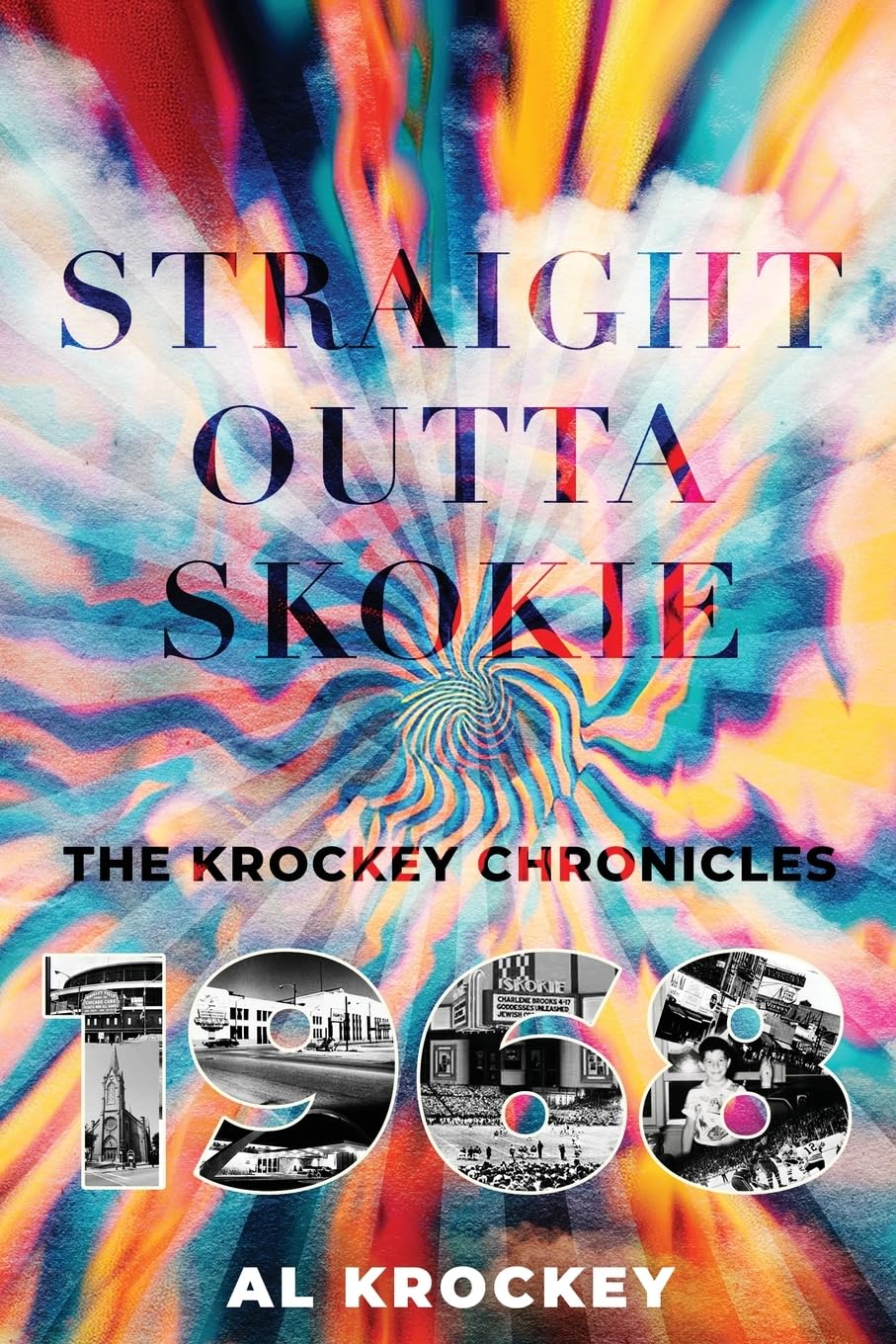

Straight Outta Skokie is a memoir that follows Al Krockey through a pivotal year in his life, starting in 1968 and echoing backward to the Chicago and Skokie of his youth. The book moves from his pandemic-era reflections to vivid scenes of adolescence and early adulthood filled with deli counters, bowling alleys, pool halls, protests, street hustles, and the ever-present soundtrack of soul and rock. It captures a moment in American history when neighborhoods felt small and the world around them shook from events far bigger than anyone could see coming. The pages drift through family struggles, the thrill of hustling souvenirs at Wrigley Field, the chaos after Dr. King’s assassination, and the budding counterculture that tugged him into adulthood.
The writing has a loose, conversational rhythm that made me feel like he was talking right to me. Sometimes the stories rushed forward, squeezing decades into a few pages, and sometimes they slowed into tiny moments that were emotionally resonant. I enjoyed how grounded it all felt. The details about Skokie diners, late-night runs to Jack’s, Maxwell Street blues drifting in the air near the hot dog stands, and the characters he knew from the ballpark made the world feel lived in and real. The way he told stories about scraping together money, wandering from job to job, and learning from the people around him made me root for him without even noticing I was doing it.
I also felt a weight in the way the book handled the darker turns. The shock of Dr. King’s assassination, the violence on the West and South Sides, and the way Krockey realized how insulated his own community was hit me right in the gut. There was a raw honesty there that surprised me. He didn’t try to wrap those moments in pretty language. He just let them sit. And that directness made me trust him as a narrator. There were times when the book meandered, or when the slang and side stories spun around a bit, but I didn’t mind. It felt like hanging out with someone who has lived a lot and is eager to tell you everything because each story still means something to him.
If you like memoirs that feel like a long, winding conversation full of humor, grit, music, and heart, then this book will hit the spot. It is especially fitting for readers who enjoy stories about Chicago history, coming-of-age in the late sixties, or simply digging into a life shaped by both ordinary moments and historic upheavals. It would also resonate with anyone who finds comfort in nostalgia or who grew up in a neighborhood that felt like its own little planet.
Pages: 281 | ASIN : B0FTTLJ6L3
It’s Always Been About Purpose

Mental Health Sounds Like This is a heartfelt and deeply personal guide blending science, storytelling, and soul, to explore how music can be used not just as an outlet for emotion but as a structured process for healing and transformation. Why was this an important book for you to write?
As I mention in the book, I began teaching vocals when I was just 17, and in 2019, I expanded my work into what’s now known as Empowerment Through Songwriting Coaching. What’s always fascinated me is that my clients rarely come to me just for music; they come seeking confidence, personal development, and healing. All the while: I was writing and singing my own music of self-actualization, expression and growth. So it made sense that for a long time, people struggled to understand why I chose to both sing and coach. “Why not just focus on becoming famous and using your gift for yourself?” they’d ask. But for me, it’s never been about fame: it’s always been about purpose. From early on, I knew I wanted my music to mean something – to do something. And that’s exactly what this book represents: a reintroduction to who I am, what I do, and why I do it. It’s an invitation for the world to truly understand what Emma G Music is all about.
What were some ideas that were important for you to share in this book?
Good question! I think it goes back to the principles behind my work: The importance of providing safe space for my clients to truly show up, the importance of leading by example, the scientific, cultural, spiritual, and practical reasons behind why music [especially singing and songwriting] are so powerful, and how imperative it is that we seek out proactive approaches for mental, emotional, spiritual, social and even physical well-being.
I appreciated the candid nature with which you told your story. What was the hardest thing for you to write about?
It wasn’t necessarily “hard”, but I found myself waking up from dreams about different situations that occurred as a teenager that I’d definitely buried over the years. Writing this forced me to open that can of worms back up, and really analyze some of my experiences, and responses… and the what if’s. I have several catalogs of music documenting those parts of my life, but I hadn’t really looked at those songs in depth for a long time… it was cathartic. Painful at times, but healing.
What is one thing that you hope readers take away from Mental Health Sounds Like This?
That their voices matter. Their experiences matter. Their truth matters. In fact, that’s where their power lies. By ignoring or suppressing the difficult parts of ourselves; we cut ourselves off from growth, and strength building. I want people to understand that they can sing their pain away, and come out the other side: a whole, healed person. But they need to first lean in, and learn to express themselves authentically.
Author Links: GoodReads | X | Facebook | Website
Written by singer-songwriter, TEDx speaker, and vocal empowerment coach Emma G, this book is a creative blueprint for anyone who’s ever struggled to make sense of their emotions, find their voice, or feel seen in a chaotic world.
Blending storytelling, science, and soulful strategy, Emma introduces a revolutionary 5-step framework that uses music and songwriting as tools for healing, resilience, and self-discovery.
Whether you’re navigating grief, burnout, anxiety, or identity challenges, this book invites you to do more than survive—it helps you create your way through it.
Drawing from personal experience, somatic healing, and her work with Gen X, Millennials, Gen Z, and Gen Alpha, Emma shows how singing and songwriting can turn pain into power and help you reclaim your voice—literally and metaphorically.
Inside, you’ll discover:
How emotions live in the body—and how singing can release them
Why songwriting is a form of prayer, reflection, and personal growth
A step-by-step guide to turn your experiences into empowering anthems
Real stories of healing and breakthroughs through music
Prompts, practices, and tools to help you start writing your own story
Whether you’re a seasoned musician or just someone searching for clarity and healing, Mental Health Sounds Like This will meet you where you are—and show you how to sing your way forward.
You are not broken. You are becoming. And your voice has always been the key.
Demystify Wealth Building

Beginner’s Guide to Growing Wealth and Investing is a metaphor-rich roadmap that teaches readers to cultivate long-term financial habits by becoming the intentional “CIO” of their own money. Why was this an important book for you to write?
Beginner’s Guide to Growing Wealth and Investing is important to me because of who inspired it. I wanted to leave an instructional manual for my little sister, my son, and my daughter, the kind of manual I wish I had at their age. My family, like most families, don’t have real conversations about money, investing, or wealth. They definitely don’t talk about the mindset, identity, and emotional strength it takes to build wealth consistently.
I wanted to demystify wealth building and pull back the curtain. People think the process is complicated or reserved for the rich, when the truth is that wealth is simple. It’s not always easy, but it is simple when you understand how money works and, more importantly, how you work. So I wrote a book that speaks to the whole person: their thoughts, emotions, habits, fears, and dreams. Those internal drivers matter just as much as the practical steps of investing.
Too often, financial books focus on what you have to do, while completely ignoring who you have to be. You can’t build wealth as a passive participant in your own life. You have to accept responsibility, step into leadership, and design your financial future with intention. That’s where the CIO metaphor comes in. Becoming the Chief Investment Officer of your life means recognizing that your decisions – not your income – build wealth, and that you need to run your financial life with the same intention and structure as a business.
And the gardening metaphor reminds readers that wealth is a process. It starts with small seeds, tiny decisions with huge potential, and when nurtured over time, those seeds grow and produce fruit season after season. I want people to stop believing that wealth is impossible and start believing “I’m possible.” Building wealth is ultimately about choosing yourself and choosing the life you want to design.
That’s why this book exists. It’s the manual I needed. And it’s the manual I want to leave behind for my loved ones and others.
How do you balance encouraging mindset shifts with giving readers practical, step-by-step financial tools?
When people talk about “balancing” mindset and financial tools, they’re already thinking about it the wrong way. Mindset and tools don’t sit on two sides of a scale, they depend on each other. You can’t build habits without the right beliefs, and you can’t direct your beliefs without the right structure. That’s the key, and honestly, that’s the difference between information that inspires people and information that transforms them. This is why I don’t separate them; I integrate them into one system.
That’s the real differentiator of my book. I’m not giving readers scattered tips, I’m giving them a system that reinforces the behavior change they need. I teach through metaphors and simple frameworks because they help readers understand complex shifts without feeling overwhelmed. Those frameworks create structure and when your financial life has structure, your decisions get clearer, your emotions settle, and consistency becomes easier. Most beginners don’t fail because they’re incapable; they fail because they don’t have a system protecting them from old habits while they grow into new ones.
That’s why the Stackers Wealth Cycle matters. Mindset shifts and tools don’t have to be balanced, they need to be woven into a system. When those are woven into one process, transformation becomes inevitable.
Were there any specific emotional hurdles you noticed beginners facing that shaped how you wrote the more supportive sections?
The biggest barriers for beginners start in the mind, and they come down to three forces: beliefs, desires, and expectations. To be successful, all three have to work together, so let’s use a heating and cooling system to explain it.
Beliefs are your heating and cooling equipment. If you don’t believe you can grow wealth, it’s like having a completely broken HVAC unit. You can want the room warmer or cooler all day, but equipment that doesn’t work can’t respond. A broken belief system blocks every financial upgrade.
Desire is your thermostat in that it allows you to set the temperature you want for your life. If you desire freedom, your behavior moves one way. If you desire approval or status, it moves another. But a thermostat only shows what you want, it doesn’t make the change by itself.
Expectations are the electricity powering the whole system. If you expect success, the system turns on. If you expect failure, nothing runs. That’s why two people with the same desires get completely different results, their expectations either activate the system or shut it down.
When belief (system), desire (thermostat), and expectation (power) line up, the system will reach the temperature you set. In people, that’s when behavior starts aligning almost automatically and wealth-building becomes possible instead of frustrating.
That’s why people tell me this book feels different and more supportive, it’s more than an investing manual. It’s a “how you work” manual. We aren’t born understanding our beliefs, desires, and expectations, and most of us are never taught how they connect. That’s why my approach leans so heavily into mindset and internal wiring. If you don’t understand the system on the inside, nothing you try on the outside will stick.
If readers could adopt only one habit from the book to start their financial journey, which would you choose and why?
If readers could adopt only one habit, I’d actually split it into two: one financial and one mindset, because they work together.
The financial habit is automating the process of paying yourself 10% first. And I’ll cheat a little by adding the monthly clean sweep into that. Most people spend whatever they see in their bank account. Automation protects you from yourself. It guarantees you’re saving for the future whether you feel disciplined or not. Think about it this way: the government takes their taxes first for a reason, you should too. And the clean sweep at the end of the month keeps your checking account from becoming a slush fund, subject to unconscious spending. The moment your next paycheck hits, you move the leftover dollars into savings so they can’t be spent. This one habit alone is life-changing.
The mindset habit is your beliefs. Beliefs determine everything, what you think is possible, what risks you take, and how consistently you follow through. You can’t blow an uncertain trumpet, and beliefs are what give your decisions clarity and conviction. Weak beliefs lead to weak behaviors. Strong beliefs lead to strong habits, actions, and results. Most people are held back by the belief that they can’t succeed. You have to replace that little voice inside you that tries to convince you that you can’t succeed. Change the belief, and everything else follows.
Author Links: Youtube | Facebook | Amazon | Instagram | GoodReads | Website
Unlike books that overwhelm you with jargon or push “get-rich-quick” schemes, this guide focuses on clarity, mindset, and simple systems that actually work.
You’ll learn through two powerful frameworks:
The CIO Mindset — step into the role of Chief Investment Officer of your life and start making decisions like a leader, not a follower.
The Gardener’s Path — discover how wealth grows like seeds planted with patience, intention, and care over time.
Together, these frameworks show you how to balance the psychology of money with the practical strategies of investing—without fear, confusion, or hype.
Inside, you’ll discover how to move from the Working Poor Cycle into the Stackers Wealth Cycle™, a simple system for growing your money automatically, aligned with your values and life goals.
Written with the voice of a coach, professor, and wise uncle rolled into one, Dr. Stacker breaks down complex ideas into clear, actionable steps that anyone can follow. Whether you’re just starting out or refining your strategy, this guide will help you:
Build confidence as an investor
Create systems that grow your wealth automatically
Align your money with your mission, vision, and values
Plant the seeds that grow into lifelong financial freedom
If you’ve ever thought, “I wish someone would just explain this in plain English,” this is that book.
Plant your seeds. Grow your riches. Build your legacy.


 LITERARY TITAN