Blog Archives
The Relentless Lure of Greed and Power

Polar Deception follows a man living in a time of environmental collapse and geopolitical fractures who steals rare crystals from a remote research center and murders his colleagues to secure himself a lucrative deal. What was the inspiration for the setup of your story?
It’s interesting that you characterize the story as following Carlos, the antagonist. Carlos represents all that is wrong with the world—the relentless lure of greed and power. While he doesn’t steal the crystals, he hides them to double‑cross his prospective buyer, China. That act underscores his manipulative nature and the destructive choices people in power often make. History and current events remind us that unchecked ambition and exploitation lead to suffering for the many and lasting damage to our only home in the universe. Diana’s struggle against Carlos is symbolic of humanity’s broader fight to resist those forces.
For me, the heart of Polar Deception is Diana’s story—a smart, adventurous woman who has endured profound personal tragedy, from a difficult childhood to the loss of both her mother and husband within just a few years. Her journey is about resilience and finding the courage to stand up to someone like Carlos.
My novel was inspired by my own visit to Antarctica aboard a ship with a Russian captain. One night was set aside for camping on the shores of Paradise Bay. After digging my “grave” in the snow and arranging my bivy bag, I watched the Zodiac head back to the ship and wondered: What if they don’t come back for us? There are no trees or plants, we were told to bring no food, and going inland only meant the danger of crevasses. My concern for the environment and awareness of rare‑earth issues grew around that moment, eventually forming the foundation of a story I knew I had to tell.
What character did you enjoy writing for? Was there one that was more challenging to write for?
I especially enjoyed writing Angie. She’s a lively, fun companion for Diana, yet she carries her own inner demons that I hope to explore more fully in the next book.
Carlos, on the other hand, was the most difficult. I envisioned him as a narcissistic sociopath, but early (and even recent) feedback suggested he came across as cartoonishly evil. To balance that, I gave him a more nuanced background shaped by personal tragedies, and even a faint conscience—he avoids harming those he believes “don’t deserve it.” Writing such characters is tricky: while narcissistic sociopaths exist in real life, their behavior can feel unbelievable in fiction. Still, if we are to understand and deal with such sociopaths in reality, at the very least we must be able to acknowledge that they have a role to play in fiction.
I felt there was a clear warning in these pages about the direction Earth is headed. What were some themes that were important for you to explore in this book?
The central theme is the butterfly effect—how a single action, whether natural or human, can ripple across the globe for good or ill. The Russian earthquake is one example, echoing the real-life 2011 Japanese earthquake and tsunami that impacted Antarctica. It’s a reminder that it only takes one event in one corner of the world to reverberate thousands of miles away in mere hours
Another theme is the outsized influence of individuals. History shows us how one person—Hitler being a stark example—can alter humanity’s course through threats or promises of power. Carlos embodies this danger, justifying his actions as serving the “greater good.” But Diana ultimately strips that power from him, at least for now, preserving the fragile balance.
What will your next novel be about, and what will the whole series encompass?
Without giving too much away, the next book begins with a global event that sends Diana and Angie to Greenland, where a crisis is brewing. Book 2 is set in 2053 and will explore sustainable alternatives to today’s technology—solutions that are based on existing innovations that are not yet considered economically feasible. The series as a whole will continue to examine how humanity’s choices, both large and small, shape our shared future.
Author Links: Amazon | GoodReads | Website
And Thwaites—the infamous Doomsday Glacier in Antarctica—has collapsed. Submerged coastlines and yesterday’s technologies are the new normal. But deep within Antarctica’s mountains, revolutionary magnetic crystals hold the key to resurrecting the modern era. There’s just one problem—with Thwaites gone, mining will unleash a catastrophic chain reaction, shattering Antarctica’s ice, and reshaping Earth’s future forever.
Dr. Carlos Perez doesn’t care. Prestige and profit are all that matter. After collecting crystal samples at a Chilean research station, he murders three colleagues under orders from his Chinese buyer—then hides the samples until he can cut a new deal. To avoid detection, he returns to the facility aboard a pleasure cruise.
Also aboard is Diana Harris, a recently widowed sustainability advocate with a background in geology, traveling with her spirited best friend, Angie. Diana hopes for healing—but after she stumbles upon a mysterious red crystal and a trail of hidden agendas, she’s pulled into a deadly conspiracy. The CIA is watching. China is listening. And Carlos is ready to kill again.
When Diana and the other campers are left stranded in the icy wilderness, the countdown begins. A rare cyclone is closing in. The truth is cracking through the ice. And Diana must summon her strength to stop a man-made disaster that could redefine civilization.
The truth lies beneath the fracturing ice.
And if it surfaces—nations will kill to control it.
Leann and the Lost Planet Chronicles


Leann, Noctis, and their star-pirate crew sweep across the galaxy aboard an enchanted vessel, charting courses few dare to imagine. Their mission: track down a whispered, almost mythic planet said to shimmer just beyond the edge of known space. The search proves anything but simple. Secrets drift in their path, riddles tighten like knots, and a string of troublesome hurdles slows every advance. Yet the narrative isn’t driven by adventure alone. It doubles as a gentle instructional guide for young readers, and it excels on both fronts. With each light-year gained, Leann and her companions discover as much about their resilience and wit as they do about the strange cosmic neighborhoods they traverse.
Leann and the Lost Planet Chronicles, by Elizabeth Earnst, marks the second entry in a series delightfully preoccupied with unconventional space exploration. The book balances education with high-spirited piracy, offering children a lively escapade wrapped around meaningful lessons.
The illustrations elevate the experience even further. Rich in detail and scale, they echo the author’s reverence for the vastness of space and the ragtag charm of a good-hearted pirate crew. Every character, misfit though each may be, contributes a distinct spark, and the narrative makes room to explore their motivations, quirks, and personal stakes.
Earnst presents space as a realm of ceaseless wonder, and she proves her point through bite-size insights on stars, asteroids, telescopes, and the pioneers who first illuminated humanity’s understanding of the cosmos, including Galileo himself. Most impressive, though, are the clever riddles and side quests she threads throughout the journey, each one crafted to draw readers deeper into the adventure.
Parents hoping to blend entertainment with educational value will find a strong ally in this book. The fusion of pirates and cosmic travel captures the imagination with ease, and Leann’s crew feels right at home in a sweeping, multi-volume saga. Their enchanted ship has room for many more voyages, should Earnst choose to expand the trilogy into further tales among the stars.
Pages: 88 | ASIN : B0FXXW37G3

The Kindred Chronicles: Shifting Sands

Shifting Sands follows the survivors of Sol Thalen in the immediate aftermath of its fall. The story opens on a city crushed into ruins and a people clinging to hope by the thinnest threads. Chris, Grace, Elline, Raham, Camille, and the thalenar struggle through endless hours of digging through collapsed halls, pulling survivors from the rubble, mourning the dead, and trying to understand what comes next. Their grief shapes every choice. Their loyalty holds them upright. And the central tension of the book becomes clear early on. How do you rebuild a culture when the ground beneath it has literally vanished? The novel is driven by emotion and community and a sense that every character must decide who they are now that their world has been unmade.
I found myself slipping into the atmosphere without effort. The author leans into sensory details, and the rubble and smoke and sand build a world that is both beautiful and bruised. What struck me most was how the story rarely lets the characters breathe. Grief becomes a kind of weather. it’s constant, pressing, and shaping them in ways they cannot fully articulate. I enjoyed that the book doesn’t rush healing or transformation. It lets emotions sit heavy and raw, and that made the characters’ quieter victories hit harder. At times, the prose felt a little lofty for the scenes it described, but even then, it carried an emotional punch that kept me invested.
I kept thinking about what it means to lose not just people, but culture. identity. the songs and rituals that tie a community together. The thalenar blade lore and the meaning of song within their traditions stood out as some of the most compelling worldbuilding in the book. And I found Raham’s arc especially moving. the quiet strength, the slow cracking, the way he tries to hold others together while he’s barely holding himself. Grace’s exhaustion and determination also pulled me in. Her efforts to see the essence of life while losing pieces of herself felt intimate and aching. If anything, I wish the story had paused more often to let certain emotional beats land, but the constant urgency also felt true to the setting.
This book would resonate with readers who enjoy character-driven fantasy, stories about surviving loss, and worlds built through culture as much as magic. I’d recommend it to anyone who likes tales that sit with hard emotions and still reach for light. Fans of the series will find this entry in The Kindred Chronicles especially satisfying, since it deepens the world and the characters in ways that feel rewarding.
Pages: 488 | ASIN : B0G64WJHFQ
Janice Everet: A Southern Gothic Jane Eyre Retelling
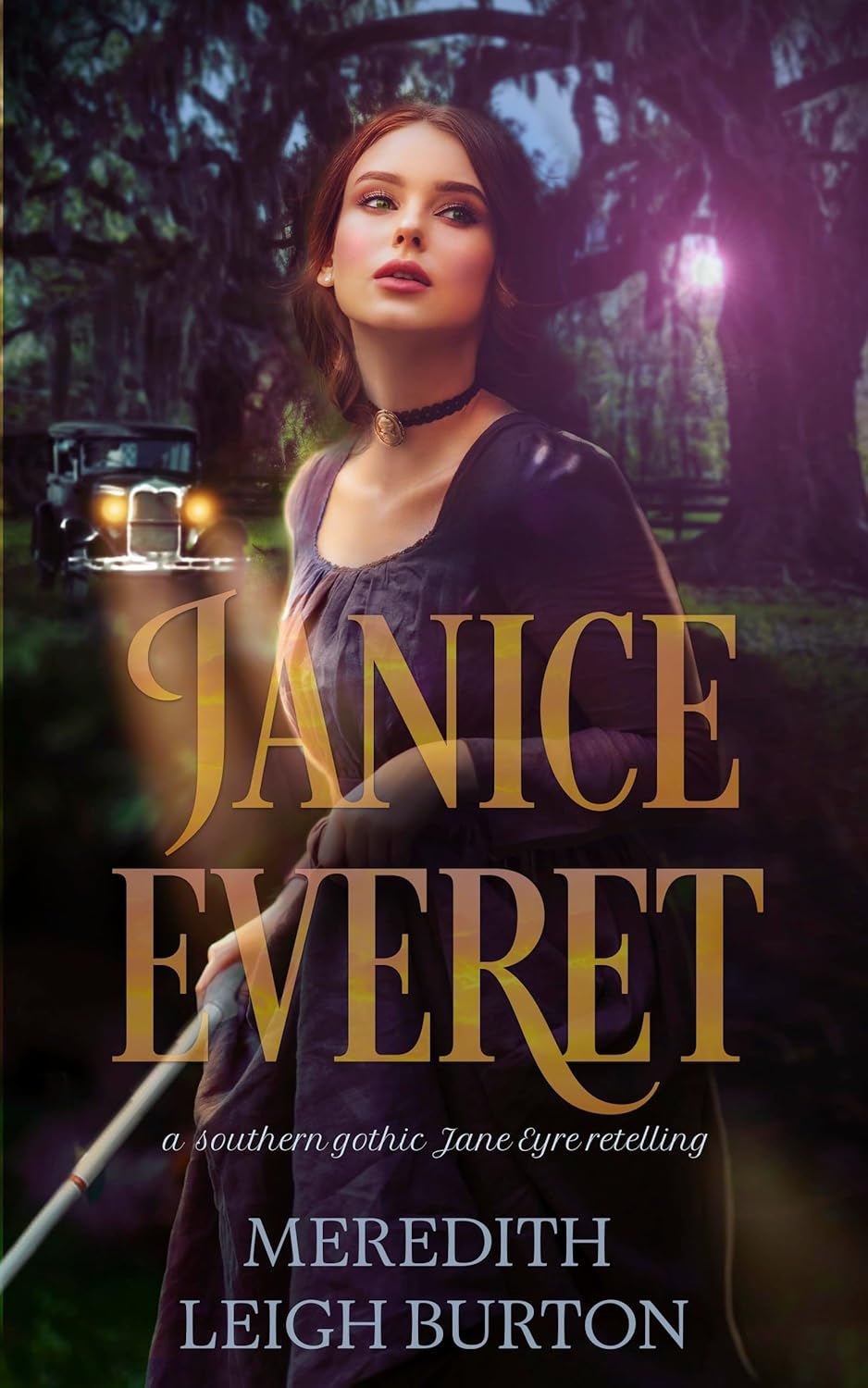
Janice Everet is a Southern gothic historical romance that retells Jane Eyre through the perspective of a blind heroine growing up in the 1930s American South. We follow Janice from a childhood shaped by cruelty and neglect, through her years at a school for the blind, and into adulthood as she becomes a teacher and finds both purpose and love. The book mirrors the familiar arc of Jane Eyre but transforms it, rooting the story in disability representation, trauma survival, and the complicated social dynamics of its time.
As I read, I kept returning to how intimate Janice’s voice feels. Burton writes her with a sensitivity that made me slow down, especially during the painful early chapters. The scenes with Arnold, in particular, are hard to take. They’re written with an unflinching honesty that makes Janice’s fear almost tactile, and moments like the doctor noticing the bruising around her eyes and gently explaining her retinal damage hit me right in the chest. The book doesn’t sensationalize the abuse; instead, it sits with the emotional fallout and lets Janice carry both her pain and her stubborn resilience. I liked that the writing never turns her blindness into a metaphor or punishment. Burton even says in her author’s note that she wanted to challenge that trope directly, presenting blindness not as a tragedy but simply as part of Janice’s life and identity. That intention really comes through.
What surprised me most was how naturally the story shifts from gothic tension to warm, character-driven romance. The scenes with Edwin feel like stepping into sunlight after a long walk in the dark. Their relationship grows slowly, with a gentleness that contrasts with everything Janice has survived. I found myself appreciating the quieter moments: shared meals, woodworking, guiding each other through unfamiliar emotional terrain. Even the small exchanges with side characters, like Janice reading a story to a child on the bus or meeting friends at Pembrook, widen the world and keep the novel from sinking into despair. Burton’s choices here make the story less about escaping the past and more about claiming a future. And because the book is a romance, the emotional payoff lands in a satisfying, comforting way.
By the time I reached the end, I felt like I’d traveled with Janice rather than just observed her. The blend of Southern gothic atmosphere, historical detail, and classic romance gives the book a distinct flavor. It’s not a light read; some chapters sit heavily, especially for readers sensitive to themes of assault, trauma, and systemic prejudice. But the heart of the story is hopeful. It’s a journey toward dignity, connection, and the quiet courage of choosing joy after years of being told you don’t deserve it.
If you enjoy character-centered stories, historical romance with emotional depth, or retellings that genuinely reimagine their source material, this book will speak to you. Fans of Jane Eyre who have wondered what that story might look like with a heroine whose challenges aren’t tied to beauty or sight but to agency and survival might find this version even more resonant. I’d recommend Janice Everet to readers who appreciate Southern gothic atmosphere, nuanced disability representation, and a romance that feels earned and tender.
Pages: 238 | ASIN : B0FYK3JCKG
Handsome Dark Stranger


Handsome Dark Stranger tells the story of Beth, a young woman living with her grandfather in a quiet coastal village, where grief, devotion, and the supernatural wrap themselves around the rhythms of daily life. The book follows her encounters with a mysterious figure who moves between light and shadow, showing himself in dreams, graveyards, and even burned fields. The line between the ordinary and the otherworldly blurs as Beth navigates her family’s past, her grandfather’s fading strength, and the strange force that seems to answer her unspoken longing. The story folds together gothic atmosphere, spiritual imagery, and the steady beat of village life to build a world where presence and absence feel almost the same.
The descriptions pulled me in with their quiet intensity. Some scenes made me pause just to take in the mood. I found myself caught between wonder and unease, which I loved because it made the world feel alive, even when nothing dramatic was happening on the surface. The pacing moved gently, almost deliberately, and at times I wished it would hurry, but the slow burn worked for me. It let the emotions simmer. The supernatural figure felt both beautiful and unnerving, and I liked how the author never rushed to explain him.
There were moments when the emotional weight of the story was surprisingly deep. Beth’s memories of her parents and grandparents felt tender and raw. I could feel the love in them. I could also feel the exhaustion that comes from carrying someone else’s grief while trying not to lose yourself. The gothic elements added another layer. The dreams, the howling, the flicker of stained glass coming alive, all of it made the story feel thick with something hidden just under the surface. At times, I wanted clearer answers, but part of me enjoyed the uncertainty. It kept me reaching forward, curious and slightly on edge.
I think that this book would speak most deeply to readers who like stories filled with atmosphere and emotion rather than fast action. It suits anyone who enjoys quiet supernatural tales, introspective characters, and a slow, thoughtful unraveling of mystery. If you like your fiction moody, poetic, and touched with both comfort and fear, you’ll enjoy this book.
Pages: 104 | ASIN : B0FTGFVZBB
Dirty South Haiku

Dirty South Haiku sketches a childhood and young life shaped by family legends, Southern landscapes, and the mix of sweetness and grit that sits in so many memories. The book moves through tiny scenes. Grandmas with sharp edges, gumbo secrets, cousins who grow strange, drums and guitars, pageants, honeysuckles, hot sauce, hoodoo, moonshine, and music that hums through it all. Each haiku captures one quick flash. Together, they paint a loose but vivid portrait of a Southern girl growing up around beauty, chaos, and deep roots.
While reading, I found myself smiling at the warmth tucked into these short lines. The poems feel plainspoken and familiar. I liked how the author keeps the tone light, even when hinting at hard things. Nothing gets weighed down. The rhythm stays airy. A poem might nod toward heartbreak or trouble, then slip into a memory of food or song. That contrast felt honest. Life in these pages is messy, yet the speaker holds it with affection. I felt that softness, and I enjoyed it.
Some scenes passed so fast that I wanted a fuller picture, but that is part of the charm. The book plays with nostalgia in a way that feels almost slippery. One moment, we are with a machete-wielding grandmother. Next, we are at a pageant. Then, suddenly, moonshine under a night sky. The jumpiness gave the book a dreamy, scrapbook vibe. I loved that loose flow.
I would recommend Dirty South Haiku for readers who enjoy poetry that is easy to slip into and full of mood and memory. It fits anyone who likes Southern culture, family stories, or short poems that carry a lot of heart.
Pages: 39 | ASIN : B0DXQG5C42
Olympus or Oblivion
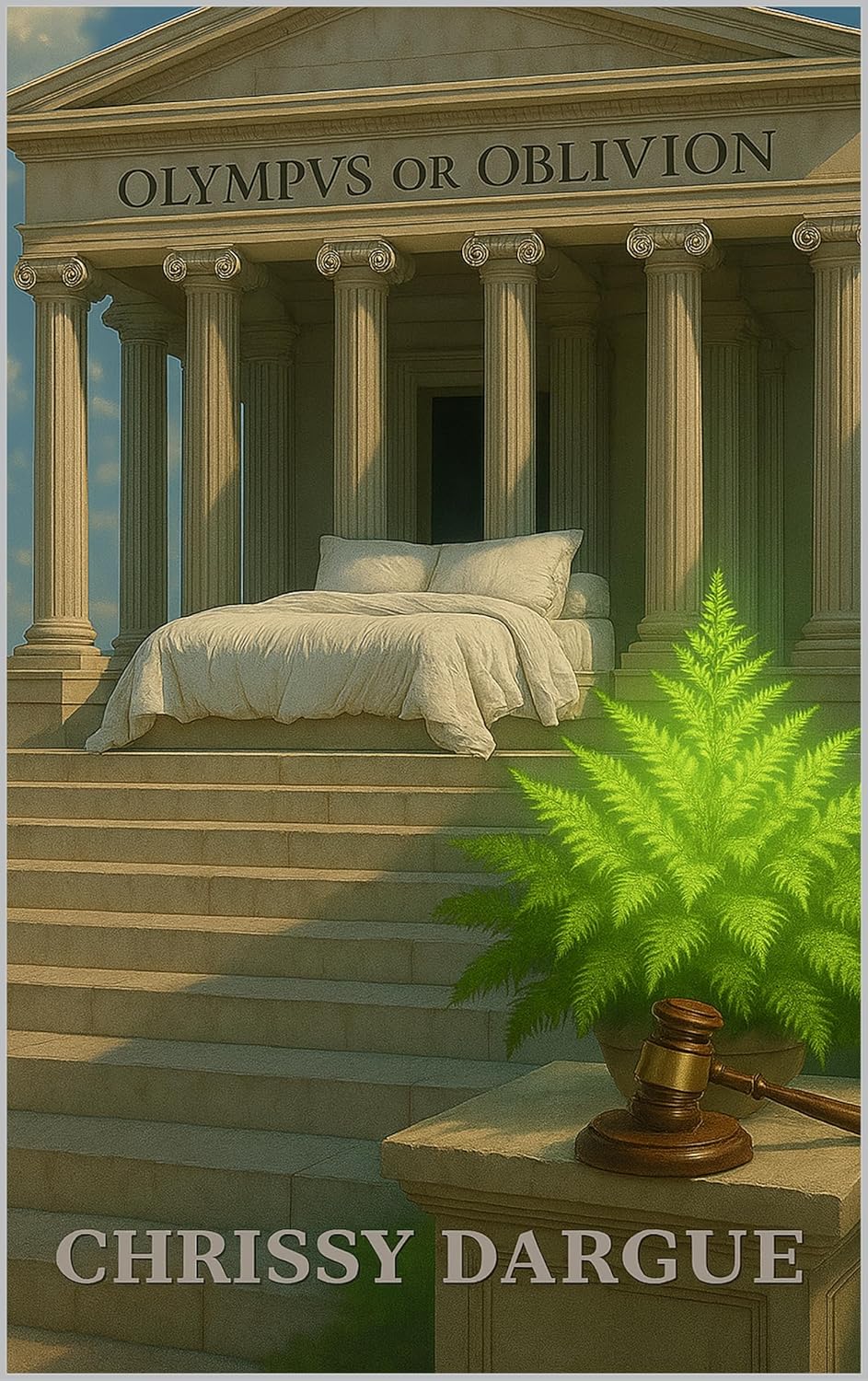
Reading Chrissy Dargue’s Olympus or Oblivion feels like being dropped into a wild, bawdy, self-aware pantheon where celebrity fantasy, personal philosophy, and unapologetic filth collide in the most chaotic way possible. The book introduces itself as an erotic satirical anthology, then immediately proves it can deliver on all three fronts. Each chapter follows a fictional sexual encounter with a different Hollywood icon, framed as both myth and judgment, and the voice that guides it is loud, human, furious, sentimental, and very funny. It moves fast, plays hard, and somehow manages to build a whole moral framework while describing sexually explicit escapades. The tone is intimate and irreverent and completely in control of its own madness.
As I read, I kept feeling a blend of admiration and “what the hell just happened” amazement. The writing is quick, chatty, and sharply observant. It has that feeling of sitting with a friend who tells a story so confidently that you follow, even when it plunges off a cliff into a disaster of sex toys, tree frog cigarettes, emotional vulnerability, or misplaced anatomy lessons. I loved the honesty here. The narrator is flawed and hilarious and often furious at the world, yet there is so much heart behind the jokes. The Henry Cavill chapter swings between worship, frustration, and affection with an almost musical rhythm. Depp’s chapter, on the other hand, crashes into surreal farce, tenderness, and genuine madness, and the contrast really shows off what the author can do. I laughed a lot. I winced a lot. More than once, I was slightly horrified, then impressed by how quickly the story made that horror feel warm. There is something bold about how the book refuses to hide the narrator’s desires or insecurities. It made the comedy sharper and the emotional punches landed harder.
What surprised me most was the philosophical streak running under the chaos. For all the sex and satire, the book is also a meditation on power, desire, loneliness, and the strange ways we try to judge the people we want. The Olympian framing is funny but also revealing. Every encounter becomes a test, not for the celebrity but for the narrator’s own values, boundaries, and hunger for connection. Even the absurd moments, like fainting from frog toxins or sketching a diagram of a vulva to keep a confused man on track, carry a sort of emotional grit. The narrator wants to understand people. She wants to be understood in return. I found myself weirdly moved between the jokes. Sometimes the writing gets messy on purpose. Sometimes it hits a poetic rhythm that blindsided me. The mix works because the voice stays genuine.
I’d recommend Olympus or Oblivion to readers who enjoy sharp humour, chaotic storytelling, sex-positive honesty, and big, unstoppable personality. If you like fearless writing, emotional whiplash, and stories that show both the ridiculous and the tender parts of being human, this book will hit the spot. It’s funny and vivid and unexpectedly sincere, and it left me feeling like I had just witnessed someone telling the truth in the most unhinged and heartfelt way possible.
Pages: 401 | ASIN : B0FLQL7VHN
Tiger and My Eye Patch

A young girl begins her summer burdened by an eyepatch meant to correct her lazy eye, and the weight of it grows heavier each time her classmates sneer. Branded “Pee Wee the Pirate,” she endures a name flung at her by children blind to the harm it causes. Relief arrives only when she escapes to Johnson City, where her grandparents wait with open arms, and with Tiger, their towering, gentle Great Dane. Tiger adores her. He offers no judgment, no mockery. Just warmth. Yet Tiger’s size and enthusiasm often land him in trouble, and before long, the girl’s courage and ingenuity are put to the test as she tries to save the companion who has quietly saved her.
Tiger and My Eye Patch, written by Colleen Lent, is a children’s story best suited for readers around ages 3 to 8. Its spirit echoes classic series like The Berenstain Bears, delivering an abundance of life lessons without losing its sense of play.
Lent draws from her own childhood, and that honesty radiates through the narrative. The sharper emotions, the confusion, and the vulnerability surface in the protagonist’s perspective and give the story a lived-in quality. Her world feels colored by past hurts, yet not dominated by them.
Joy still rises. It unfolds through tender moments with her grandparents and through the undeniable bond she forms with Tiger. The giant dog, good-natured yet misunderstood, mirrors her own struggle. His size invites assumptions, and he, too, carries the burden of being judged before being known. Their connection emerges naturally from shared experience, and it becomes the emotional heart of the tale.
Tiger and My Eye Patch maintains a light tone, but beneath it runs a clear thread of catharsis. Lent writes toward healing her own and that of any child who has ever been singled out for being different. The lesson she imparts, treat others with kindness, especially when they stand apart, is delivered with grace rather than force. Paired with lively, colorful illustrations, the story becomes both a comforting read and a meaningful one, offering young audiences a narrative they can enjoy again and again while absorbing its gentle wisdom.
Pages: 32 | ASIN : B0FV9W4242


 LITERARY TITAN