Blog Archives
Sunrise Over Casablanca


Sunrise Over Casablanca by Pablo Zaragoza is a captivating sequel to “Brazzaville,” continuing the enthralling saga set in the aftermath of World War II. The story follows Rick, a resilient and resourceful character, navigating the complex political landscape of post-war Casablanca. As Rick attempts to rebuild his life and protect his family amidst the turmoil of Moroccan independence, the novel weaves a rich tapestry of historical events, personal struggles, and enduring love.
Zaragoza’s writing is both vivid and engaging, transporting readers to the bustling streets and intimate cafes of Casablanca. One of the standout aspects of the book is its detailed and immersive setting. The descriptions of the shanty towns, the Blue Parrot Cafe, and the intricate political machinations create a palpable sense of place that draws you into the world of the characters. For instance, the portrayal of Carrières Central, with its rundown wooden huts and open sewers, starkly highlights the harsh realities faced by the urban poor.
The characters are well-developed and multifaceted, particularly Rick and Ilsa. Their relationship, tested by the pressures of war and political upheaval, forms the emotional core of the novel. Rick’s internal conflict and unwavering dedication to his family are portrayed with depth and nuance. While the historical context adds a rich layer to the narrative, there are moments when the political intrigue can feel overwhelming. The numerous references to real historical events and figures, such as the involvement of French and American intelligence, add a layer of depth that history enthusiasts will particularly appreciate, enriching the plot with authentic historical context.
Sunrise Over Casablanca is a compelling read that blends historical fiction with personal drama. Zaragoza’s meticulous research and evocative prose make this a standout novel for those interested in post-war history and intricate character studies. Readers who enjoy historical novels with a strong emotional core and a richly detailed setting will find this to be an excellent novel. Whether you’re a history buff or a lover of poignant narratives, this book is sure to captivate and inspire.
Pages: 251 | ASIN : B0D3FMNZXF

Brazzaville – A Sequel to Casablanca

Brazzaville – A Sequel to Casablanca offers a compelling expansion of the narrative universe established by the iconic film “Casablanca.” Set against the backdrop of World War II, this novel delves into the continued adventures of familiar characters like Rick, Ilsa, and Sam. Engaging in espionage and resistance against the Nazis, the book captures the essence of underground struggle, threading a narrative rich in historical authenticity and personal drama.
The story adeptly intertwines scenes of sabotage, from blowing up tunnels and railroads to disseminating misinformation, against the dire circumstances of Nazi occupation. The characters’ efforts contribute significantly to the liberation of Paris, culminating in a vividly described march down the Champs-Élysées, symbolizing a hard-fought victory. What elevates this novel is its exploration of deeper themes such as loyalty, sacrifice, and freedom. These themes are personified through the complex personal and moral dilemmas faced by the characters, adding layers to the conventional wartime narrative. The author doesn’t shy away from showcasing the personal toll of war, focusing on emotional and relational aspects amidst chaos and uncertainty. The book’s concluding segment, set in the post-war era of 1953, offers thoughtful reflection on the long-term impacts of conflict and the quest for normalcy in the aftermath of turmoil. It touches upon the broader historical context, including the struggle for independence in North Africa.
Brazzaville—A Sequel to Casablanca skillfully blends fact with fiction, providing a nuanced portrayal of resistance during one of history’s most challenging periods. Its narrative not only pays homage to the original film but also noteworthy explores wartime resilience and the human spirit.
Pages: 498 | ASIN : B07Z45XX7Y

We Walk On Ash


We Walk on Ash by Pablo Zaragoza intricately weaves a tapestry of folklore and fantasy within the somber backdrop of post-Hiroshima Japan. This Historical fantasy novel delves into the poignant journey of a grief-stricken father, transformed into a samurai by the deity Suijin, as he navigates through the remnants of a world engulfed in flames. His quest is one of redemption, driven by the need to save Japan from the wrath of Kagutsuchi, the fire deity, and to protect what remains of his family.
The narrative elegantly explores themes of grief, redemption, and faith, as Akimitsu, the protagonist, seeks solace and meaning amid the devastation. His resilience and determination shine as beacons of hope in a landscape marred by loss. His relationship with his daughter, a central pillar of the story, evolves into a deeper bond as they collectively confront and overcome their grief. Akimitsu’s journey is symbolic of a larger quest for redemption, not only for himself but for his nation. The novel deftly handles the themes of sacrifice and rebuilding, painting a vivid picture of the struggles and fortitude required to piece together a life—and a country—from the ashes of destruction. While the book offers an enlightening glimpse into Japanese history and culture, some readers might find the narrative’s structure and the use of Japanese terminology challenging. This aspect, however, does not detract from the book’s overall impact. Instead, it adds a layer of authenticity to the story, immersing the reader in the complexities of its setting. The recurring motif of resilience, a cornerstone of the narrative, is a powerful reminder of the human spirit’s capacity to endure and overcome even the most harrowing circumstances.
Pablo Zaragoza masterfully combines elements of folklore, fantasy, and historical drama to create a narrative that is as educational as it is emotionally resonant. While it presents challenges in its complexity and cultural specificity, the novel ultimately succeeds in drawing the reader into a deeply immersive world. It serves as a testament to the enduring themes of resilience, hope, and the unbreakable bonds of family. For those seeking a meaningful and thought-provoking read, We Walk on Ash offers a unique perspective on overcoming adversity and finding redemption amidst chaos.
Pages: 177 | ASIN : B0CN5TGL2X
Waiting for the Second Coming

The Apocryphal of Lazarus follows Lazarus, who, after rising from the dead, travels the world, plies different trades, and falls in love over and over again while trying to find purpose in life as he awaits the return of Christ. What was the inspiration for the setup of your story?
There are many legends indicating where Lazarus of Bethany was buried, including Cyprus or Kilton. In Jewish tradition and in the writings of Maimonides in his Mishneh, Torah spoke of the resurrection at the end of times where the souls of those who had died inhabit other bodies, a Jewish acceptance of reincarnation. Reform Judaism rejected the idea of the resurrection in the Pittsburg Platform of 1885. I believe that resurrection means that you, like Christ, cannot die and that Lazarus is walking the earth, waiting for the second coming. What does this affect a human being? How do you cope with seeing loved ones grow old and die? How do you deal with changing your looks to disguise perpetual youthful looks? Is this a blessing or a curse? The Apocryphal of Lazarus involved my exploration into this character and how circumstances molded him and helped him to cope with the grief of loss. To see a wife, a son, a daughter, and grandchildren grow and change, then finally wither and die must have been overwhelmingly sad, yet his faith kept him moving forward.
When you sit down to write a book, what comes first for you — the plot or the characters — and why?
The plot stems from the characters involved in the story. Once I know who is speaking to me, the plot writes itself. Once I know who my protagonist is, how he deals with the bumps in the road and how he struggles and overcomes difficulties in life, where he goes next is easy.
What is a significant way your book has changed since the first draft?
After I put a manuscript down for a while and then go back and reread it, I find the need to add more description of what I see in my mind’s eye. How do the desert, the ocean, and other places smell and look? The background music of the time helps me to feel that I am actually there. I want the readers to feel that they are there, walking with the characters and seeing what they see, think, smell, and desire.
What do the words “literary success” mean to you? How do you picture it?
Literary success, to some, means how many copies they sell, but for me, it’s more about how many people have read the book and enjoyed it. Many of the world’s great writers realized no significant book sales in their lifetime, but we remember them as great authors because their words still resonate and inspire us. They teach us that we are not alone and that others have gone through similar struggles. There is always hope.
Author Links: Goodreads | Amazon
Over his long life, Lazarus marries, has children, watches them grow to adulthood and give him his first grandchildren. They age and die, leaving Lazarus alone, traveling and plying his trades, until he marries again and the story repeats—children, grandchildren, and the deaths of more loved ones.
He travels with Cortez, fights in the conquest of the Aztecs, and struggles to protect native peoples against the Spaniards in California and New Mexico. He journeys east to New Orleans where he works to establish the first healthcare system. In the midst of the Battle of New Orleans, he tends to the wounded. He moves to New England and participates in building the hospital system in Boston.
Compounded with personal tragedies, Lazarus faces another dilemma because he does not age. He is forced to devise disguises to protect his ageless state or leave and start life anew where no one knows him.
Between the lines, Lazarus never loses his true mission, spreading the good word about Jesus and His life as Lazarus knew him in childhood.
The Apocryphal of Lazarus

In The Apocryphal of Lazarus, the protagonist, Lazarus, presents a compelling journey through pivotal moments in human history. His unique perspective, being both a witness and participant in these events due to his ageless nature, adds a fascinating layer to the narrative. Lazarus’ dual roles as a pastor and physician enable him to intertwine spiritual guidance with a healer’s compassion, enriching the story with depth and complexity.
The book effectively explores the emotional and psychological toll of Lazarus’ immortality, particularly the challenges of perpetually restarting his life in new places. This aspect resonated deeply with me as a reader, bringing a poignant understanding of the hardship and weariness that accompanies an endless existence. Lazarus’ character development is a standout feature, evolving from his experiences and interactions. His journey is marked by compassion and a caring presence, making him a memorable and relatable character. The book’s thematic exploration of life, rebirth, and the human condition is thought-provoking and consistently engaging. The story’s length is amply justified by its rich narrative and historical depth, offering an expansive scope that enriches the reader’s understanding of Lazarus’ journey. This detail allows for a comprehensive exploration of the character’s experiences, enhancing the overall depth and enjoyment of the book.
The Apocryphal of Lazarus is a commendable addition to the historical fiction genre. Its unique blend of historical context with a timeless character study makes it a recommendable read for those who appreciate nuanced storytelling within this genre.
Pages: 599 | ASIN : B09GGCSXGW
Unlikely Friends
Brazzaville: A Sequel to Casablanca picks up where the iconic film ends with the memorable main characters fighting for their lives in the midst of Nazi-occupied Europe. What was the inspiration that drove you to share your vision of this sequel with readers?
First of all, I have loved Casablanca ever since I first saw it, and I never tire seeing it again and again. My curiosity finally got the better of me, and I decided to explore what happens after the movie ends with Rick Blaine saying to Louis Renault, as they walk into the fog, “I think this is the beginning of a beautiful friendship.” Where does such an unlikely friendship lead these two men? I wanted to see what the war might do to them and how they face life and death challenges.
Sure, Ilsa and her husband escape to Portugal, but Lisbon is an open city where English and Nazi spies work the streets. A big catch like Victor Laszlo might escape spies in Morocco but not so in Lisbon. Rick’s obligation to the people who helped him in Casablanca drives him to forge alliances with the French Resistance and free his friend Sam, Mister Ferrari, and others. Through their efforts in North Africa, we witness as this dedicated group of fighters keeps the Straits of Hercules open and helps to turn the tide of the war in North Africa and beyond. The concerted efforts of this close-knit family of friends help to thwart the advance of the Third Reich.
I imagine the research for this novel was extensive. Can you share with us a little about your process?
I research as I write, wherever the story takes me. I can do this primarily through many historical sites online which corroborate facts and offer insights into war, geography, and war-time situations that further my story. Writing a historical fiction novel gives me the opportunity at times to adjust facts that don’t exactly fit the dynamics of my story, but I try to be as historically accurate as possible.
Were you able to achieve everything you wanted with the characters in the novel?
Yes. I think so. We see how the lives of two ordinary people make a tremendous difference in the conduct and the prosecution of the war. We begin to see how a few individuals in a concerted effort make sacrifices that matter and step up to the challenges that confront them.
Will there be a third installment?
We could continue with the Algerian push for independence from France after the war. The idea that intrigues me is how Rick, Lisa, and Louis deal with this revolutionary movement and if they do or do not support the will of the Algerian people.
Right now, I’m working on a dystopian novel with themes that are more current and poignant.
If not, what can readers expect to see from you next?
We have several books already published that might interest readers:
Animal Court allows animals to put an African prince on trial for his crimes against nature. The judges, jurors, and attorneys are all animals. Even the news reporter for ANN (Animal News Network) is an animal. This modern fable reads like trial proceedings in a courtroom, and it is both educational and amusing. A story for all ages.
The Lilium is about the children of Lilith, the mother of demons, and how a few of her offspring reject their demonic impulses to try to find redemption and attain their humanity.
Also, The Apocryphal of Lazarus. Lazarus, the brother of Mary and Martha, is raised from the dead, but he cannot die. What happens to him as he never ages and outlives one family after another? Where does he go? What does he do? We follow him until he finally starts seeing signs of aging in himself.
Author Links: Goodreads | Amazon | Website
Brazzaville – A Sequel to Casablanca
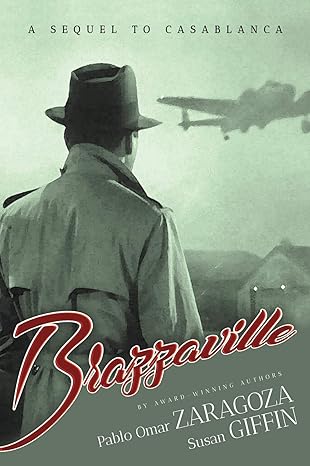
Following the cinematic triumph of Casablanca, whispers of a potential sequel titled Brazzaville buzzed through Hollywood, yet it never graced the silver screen. In a masterstroke of imagination, authors Pablo Omar Zaragoza and Susan Giffin unveil their vision of this elusive sequel in a riveting novel. Picking up immediately after Casablanca’s poignant finale, we are thrust into a world with Rick, Louis, and Ilsa, battling the encroaching shadows of Nazi terror. As Ilsa and Lazslo make their desperate escape to Lisbon, they find themselves not out of danger, but rather delving deeper into its grip. Concurrently, Rick and Louis ally with the resistance, embarking on daring missions to free innocent souls from Nazi clutches.
One of the book’s most captivating elements is its expansion on the theme of “found family.” The narrative showcases the resilience of relationships forged in adversity, emanating warmth even in the darkest of times. The unwavering affection Fletcher harbors for Amalia serves as a bittersweet backdrop amidst the tumultuous events. Rick’s assertion, “Besides, my greatest asset isn’t money; it’s family and friends, and of those, I have plenty,” captures this sentiment beautifully.
Zaragoza and Giffin’s writing style deserves commendation for its incredible realism. The palpable tension as characters hang onto every word from the radio and the meticulously detailed battle scenes make the reader feel ensconced within the narrative. Brazzaville: A Casablanca Sequel interweaves adrenaline-pumping action with heart-tugging emotion, a balance that is all too rare. The introduction of fresh faces to the narrative feels organic, enriching the plot without overshadowing established characters. For fans of the classic film, as well as enthusiasts of action tales, this novel promises an exhilarating journey.
Pages: 498 | ASIN : B07Z45XX7Y
Misguided Quest For Redemption

Armageddon: An Apache Story follows a demon who possesses humans and starts a reign of terror and destruction. What was the inspiration for the setup of your story?
Bal’am, the demon, wants to redeem himself through a process by which he takes over the well of the soul of an innocent. I found the idea intriguing that a physical space in the human body houses the soul. Some believe the soul rests in the subject’s pole, the source of consciousness; others feel the soul is held in the interior body; while others place it in the heart chakra. The presence of the soul makes man a unique being. This is why man is a privileged creature who can seek forgiveness; all others of God’s creation cannot. Angels and demons cannot ask or seek forgiveness for actions that they have committed. Therefore, Armageddon is about a soulless creature’s misguided quest for redemption. It is a false quest because Bal’am does not regret his offenses. He wants revenge and not forgiveness.
The other part of my journey with this book is the cast of characters – Native American and not. The cultures of the Hopi and their religious beliefs and the reality of their Kachina spirits become true for our other protagonist Luis, a half-breed, the most dangerous of all creatures because his feet are in both worlds. That is why the Catholic faith and Southwestern Indian traditions collide. This collision of faiths, the dedication of the members of the Apache Medicine Society, and their Catholic counterparts helped me see that we can all work together to fight evil in whatever form it may take. True evil maintains a presence in our world, and we must constantly do battle with it.
Was it important for you to deliver a moral to readers, or was it circumstantial to delivering an effective novel?
Yes, one faith, one perspective does not monopolize the truth. We all hold truth in the way we look at the world. When we first meet Luis, he is a boy who has lived on a farm or really a plantation. When his stepfather dies, he has no reason to stay there. His arc from orphan to possessed televangelist to priest, and to warrior is much like the arcs of many of us. We start in one place, and by the end of our story, we are somewhere else, with many stops along the way. The same goes for Cecilia, a rough street-wise woman searching for her people, becoming a mother, serving as a slave to Bal’am, and escaping those chains to fight for her daughter and grandson. It was important for me to develop each character fully and to show how they manage under harsh, unforgiving circumstances. I wanted them to be real people, and that is why I projected each character through different life experiences.
With the rich history surrounding Apache and Hopi traditions, did you find anything in your research of this story that surprised you?
Yes, the diversity in the Hopi pantheon and how it mirrored the pantheon of angels and saints of the Catholic Church surprised me. Another one was how we place the label Apache on a people who are diverse in their makeup: Apache of Oklahoma, Fort Sill Apache, Oklahoma Jicarilla Apache, New Mexico Mescalero, New Mexico San Carlos Apache, Arizona Tonto Apache, Arizona White Mountain Apache of the Fort Apache Reservation, Arizona Yavapai-Apache, with each group have different traditions stories and beliefs. All of the different sects have similar yet different oral traditions. I wanted to paint the canvas not with just one tradition but with all of the oral traditions of this diverse group.
Where do you see your characters after the book ends?
The struggle against evil is never-ending. Not only the evil that men do but the invisible hand that pushes us to do things that otherwise we’d never consider doing. I believe Luis, Cecilia, Ed Crow, and Marian will encounter pure evil again because Bal’am isn’t dead but waiting for his opportunity to lash out against the world. I believe that Bal’am will find allies in the underworld to help him break his chains and seek vengeance against Luis, his family, and his friends. Return to Armageddon has been written but is still in the pre-publishing stage, a work in progress, so I do not want to scoop the continuing story.
Author Links: Goodreads | Amazon | Website
Apache and Hopi traditions are woven artfully throughout this novel. Bal’am finally enters Luis and begins his reign of terror and destruction. Luis is incarcerated, and through Bal’am’s deceptions and brutality, he takes over the HAND (La Mano Negra), the Mexican Mafia. He also becomes Rev. Bronco, a televangelist who uses his position to give demons the opportunity to possess the innocent. Luis’s young daughter, Raven, becomes the object of Bal’am’s design. By impregnating her, he can dwell in the well of the soul. The possessed Luis thwarts that plan, however. The demon takes over Raven, finds a mate, conceives, and incarnates as Emmanuel, who leads a life of destruction as a child and young adult. With unwavering determination, a small band of believers use Apache and Christian traditions to hunt for the incarnation of evil. Time is running out. Will they defeat the Prince of Hell?


