Blog Archives
A Sobering View

In Walk a Mile in My Shoes, you share your childhood trauma and give readers an open and honest account of your own regrettable choices and how those decisions have impacted your life. Why was it important for you to share your story?
Individuals are often motivated when they read about erratic and unconventional paths that others take. I shared parts of my life (ages 8 to 77) so readers could become aware of the pieces of my life that made me into the man I am today. I wanted readers to explore my life’s assorted happenings before placing their final judgment on my character. (I believe a man should be judged by ALL the pieces of his life — not just one event.) Writing about my lifelong journey was rewarding for me because I was able to look more closely at WHY I am…WHO I am! My narrative was an avenue to finally reveal both positive and negative feelings and emotions I had hidden from myself and others my entire life.
I appreciated the candid nature with which you told your story. What was the hardest thing for you to write about?
I cried a thousand tears as I shared unique stories and events in each chapter — but the most gut-wrenching testimony was telling about the immeasurable pain and agony I caused my wife and children. Criminal activity always affects more than just the offender and the victim … many individuals are often negatively impacted. Losing my family has been an overwhelming experience!
Is there anything you learned about yourself while putting your story on paper?
When I began writing about my past, my original intent was to tell some short stories about my youth that I planned to share with my adult son and daughter. I wanted them to be more ‘aware’ of their father’s past! (I had never told my children about many of the happenings I wrote about.) After allowing my friends to review my stories, they coaxed me into writing more. I added stories about Vietnam, my divorce, my crime, prison and my sexual orientation ambiguity. I felt compelled to share events that occurred while I was on probation. My writing allowed me to release emotions and feelings pent up inside me…like a cleansing of my soul. I was able to look backward and reveal the pieces that transformed me into the man I am today. My writing also allowed me to look forward and yield a sobering view of the few days I have before I die. Friends who read my manuscript often complimented me because I NEVER GAVE UP despite the dysfunctional events that seemed to be part of my arduous journey. I learned that a person could keep going – even when he thinks he has given all he has!
What is one thing you hope readers take away from your experience?
I hope three messages resonate from my narrative. 1) Life is hard…but no matter what occurs in our lives, a person can find the strength and courage to overcome adversity. 2) Judge a person ONLY after you ‘walk a mile’ in his footsteps. (Seek first to understand…then to be understood.) 3) I readily acknowledge my heinous crime. Prison and probation were justified. But it’s vital that Americans closely monitor our judicial and criminal justice systems so overzealous and manipulative members don’t exceed their authority. Surveillance groups finally recognize the importance of holding police officers accountable for their actions. I shared details about the probation department that supervised me — to invite readers to decide if restorative justice was appropriately applied in my case.

Walk a Mile in My Shoes: Surviving Life’s Challenges


Paul Bradford’s Walk a Mile in My Shoes delves into the life of a man scarred by childhood trauma, exposing a harrowing journey from victim to perpetrator. Bradford recounts his life with unflinching honesty, refusing to excuse his actions as an adult while tracing their origins to the extreme hardships he endured as a child. The narrative begins with Bradford’s recollections of an abusive, alcoholic father whom he blames for his mother’s death. A pivotal moment in his life unfolds during a hitchhiking trip to his grandparents’ home, where he endured molestation, a secret he reveals for the first time in this book. The story continues through his unstable upbringing, bouncing between foster families, and the damaging influences that shaped his understanding of sexuality. Both the church and manipulative older boys contributed to a distorted, exploitative perception of intimacy and boundaries. Bradford’s use of vivid, colloquial language, what he describes as “hillbilly” expressions, paints a raw, authentic picture of his early years. His descriptions evoke the atmosphere of a bygone rural society, adding texture to the narrative.
As a piece of writing, the book is well-crafted. Bradford’s grammar is precise, and his articulation is engaging. Despite the deeply unsettling themes of abuse, violence, and exploitation, the narrative holds the reader’s attention through its clarity and flow. However, the focus of the book tilts heavily toward the darker chapters of his life. Positive memories, though present, sometimes feel rushed and underdeveloped. These moments, when they appear, offer glimpses of light but I feel lack the depth and exploration given to his tragedies. A more balanced portrayal, with a fuller depiction of happier times, could enrich the narrative and serve as a reminder that not all of his childhood was consumed by pain.
While the book is well-written, the content may not appeal to everyone. Bradford’s candid acknowledgment of his past wrongdoings and his struggle with trauma elicits some sympathy, but it does not mitigate the gravity of his actions as an adult. His experiences underscore how a lack of education and societal attitudes like “boys will be boys” can perpetuate cycles of harm. Yet, as someone who endured similar trauma, Bradford’s choices remain difficult to reconcile. Walk a Mile in My Shoes is a raw, unsettling account of a life shaped by adversity and mistakes. While it may resonate with readers drawn to unfiltered stories of human frailty and resilience, the graphic and disturbing subject matter makes it a challenging read.
The Sum of All the Pieces
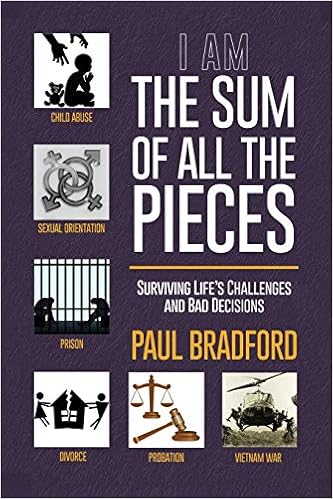
Paul Bradford’s life is nothing short of tragic. From his abusive upbringing and life of poverty in Arkansas and Missouri to his life of imprisonment for sexual abuse, Bradford has seen more than his fair share of hardship and sacrifice. A military man and father, Bradford gives readers a detailed look at life as a soldier during the Vietnam War and his own challenges as husband and father who faced questions about his own sexuality. Bradford is open, honest, and clear as to the nature and severity of his crimes and the price he has paid for them.
The Sum of All the Pieces: Surviving Life’s Challenges and Bad Decisions, a memoir by Paul Bradford, reveals the author’s life one painful event at a time. Bradford begins his tale by describing the hardships his family endured at the hands of his alcoholic father and goes on to describe his life in multiple foster homes following the untimely death of his mother. Bradford’s childhood was fraught with trauma that has continued to haunt his adult life.
Nowhere else will readers find a more honest and forthright account of the poor choices that have led to a life of incarceration. Bradford admits to his crime and to the lies that estranged him from his own family. His life story is told with a clarity readers will not find in many other memoirs of this kind. He minces no words and never downplays his offenses. It’s his openness readers will appreciate as they read about his life paying the consequences.
I have to say that I was, at times, taken aback at the point-blank commentary Bradford gives regarding his crime. He puts forth his offenses as easily as he describes his days picking cotton as a child. Bradford may have, at one time, preferred to hide the truth, but his written account is as raw and gripping as it is honest. (I would like to include a trigger warning for readers who may not wish to read of sexual abuse of a child.)
The better part of Bradford’s memoir describes life in the prison system. From his first days as an inmate to his long-term sentence, he details for his readers every injustice endured as an inmate. With a focus on the need for rehabilitation, Bradford outlines what he believes to be the gross lack of concern for reducing the rate of recidivism.
Readers who are interested in real-life stories of inmates and the prison system will find Bradford’s life story enthralling. Anyone researching prison reform will appreciate Bradford’s meticulously outlined account of his experiences. I highly recommend The Sum of All the Pieces: Surviving Life’s Challenges and Bad Decisions by Paul Bradford.
Pages: 349 | ASIN: B08N1BCNPK

The Sum of All the Pieces – Book Trailer
In The Sum of All the Pieces, Paul Bradford tells about several life-altering events and how he reckons with them. Starting with his early youth in the cotton fields in Arkansas, he details his true-life adventures about his abusive childhood, his divorce after a forty-three year marriage, his sexual orientation confusion, his heinous crime, his five years in prison, and his twelve months in the Vietnam War. The Sum of All the Pieces is an often difficult but always honest portrayal of one man’s challenges.



 LITERARY TITAN