Blog Archives
Shadows, Roads, & Redemption: A Memoir


In Shadows, Roads, & Redemption, Jac Winters opens the long-locked rooms of memory and traces a life shaped by childhood trauma, silence, trucking, emotional exile, and the difficult grace of survival. The memoir moves from early images of safety, like the jingle of a stepfather’s keys and the strange wonder of being lifted by Johnny Cash, into the devastating shadow cast by Jane, then onward through years on the road and the eventual healing presence of Joanna. It’s a book about harm, yes, but more deeply it’s about naming what happened, reclaiming the child who was silenced, and finding a way to keep driving toward the open air.
Winters doesn’t write about trauma as something tidy or easily converted into wisdom. He lets it remain jagged. The recurring images of roads, engines, perfume, hay, silence, and weathered memory give the memoir a visceral pull, and at its strongest, the prose has the rumbling cadence of a rig moving through the dark. I found the early scenes especially affecting because they understand how childhood can hold wonder and danger in the same hand. Dougie, the neighborhood outcast, becomes a gentle counterpoint to Jane, whose warmth slowly curdles into control. That contrast gives the book its ache. It reminded me that safety is not always where the world tells us to look for it, and danger is sometimes dressed in familiarity.
I also appreciated the book’s insistence that ideas matter as much as confession. Winters is not only recounting pain; he is trying to understand the machinery of it. His reflections on grooming, complicity, trauma bonding, and silence are blunt, sometimes raw, and often deeply clarifying. The meteor and asteroid metaphor lingers because it captures the cruel mismatch between what others may see and what the survivor is left to live with. The writing can become emphatic, especially when it circles the same language of fire, poison, and redemption, but even that repetition feels emotionally true to the subject. The mind returns to the site of impact until it can finally name the crater. The chapters about trucking bring needed breath and texture, giving the memoir muscle, grit, and a broader sense of identity beyond injury.
The book’s conclusion, with Joanna as an anchor and the final poem “Firestorm” as a kind of earned ascent, doesn’t erase the darkness, but it does offer a hard-won tenderness that feels sincere. Shadows, Roads, & Redemption is best suited for readers drawn to survivor memoirs, trauma recovery narratives, and personal stories rooted in working-class life, especially those who appreciate candid reflection, emotional intensity, and writing that wears its scars without apology.
Pages: 94 | ASIN : B0H31LPCHT

Life After Fall

Life After Fall, by B. Dozier Singletary, is a reflective, faith-centered story about Eli, a man who spends much of his life mistaking control for peace. The book follows him from a childhood shaped by volatility and fear into adulthood, where success, marriage, discipline, and outdoor escape all become ways of holding himself together. What makes the story engaging is how personal it feels without feeling rushed. It’s not just about one fall from stability. It’s about the slow recognition that survival skills can become emotional walls.
Eli’s inner life is the heart of the book. His childhood with an abusive, addicted father gives him a deep need to be competent, admired, and untouchable, and the book does a strong job of showing how those instincts follow him into his marriage with Rachel. Their relationship is written with sadness and complexity, especially as both of them carry pain in ways that hurt the other. The line “Tragedy hadn’t ruined him. It had stopped him.” captures the book’s central movement well. Eli’s loss doesn’t simply break him; it forces him to finally sit still long enough to see himself clearly.
The book is also very much an outdoor story. Rivers, hunting, golf, motorcycles, and eventually Alaska all give Eli places where he can wrestle with fear, humility, and faith without turning the story into a sermon. The Denali section widens the book in a satisfying way, not because the mountain magically fixes him, but because the journey north lets him meet people who model truth, kindness, courage, and presence in practical ways. Those encounters give the later chapters a grounded warmth.
Faith runs through Life After Fall in a quiet but steady way. Eli’s name, his prayers, the Eucharist, and his search for God all matter, but the book’s spiritual insight feels most convincing when it’s simple. “God had never been hiding” is one of the clearest expressions of what Eli comes to understand. The story suggests that healing isn’t found in dramatic revelation as much as in honesty, patience, forgiveness, and the willingness to stop performing.
What Life After Fall offers is a thoughtful portrait of a man learning how to live after the life he built comes apart. It’s part redemption story, part travel narrative, part meditation on masculinity, grief, and grace. The tone is earnest and introspective, and readers who connect with stories about rebuilding after divorce, confronting childhood wounds, and finding faith in ordinary moments will find a lot to sit with here. It’s a book about losing the version of yourself you thought you needed, then discovering that the quieter version may be the truer one.
Pages: 176 | ASIN : B0GZLJMB82
From Innocence to Wisdom


In From Innocence to Wisdom, Marty Lynch traces a life shaped by childhood trauma, inherited anger, marital loss, hard-won self-recognition, and the slow, deliberate work of becoming gentler. The book begins in the charged atmosphere of family inheritance, with a beloved but volatile father and a Catholic upbringing that left deep marks, then moves into the author’s devastating recollection of childhood sexual abuse at summer camp. From there, Lynch follows the consequences of pain carried in silence: his temper, the collapse of his marriage to Kathleen, the loneliness of starting over at fifty-four, and the surprising inner shift that comes through therapy, reflection, accountability, and something as deceptively simple as learning to truly smile.
What moved me most was the book’s refusal to keep suffering abstract. Lynch doesn’t write about pain as a polished concept. He writes about the tiny loft above the barn after Kathleen asks for a divorce, the dark train rushing through a tunnel in his imagination, the airport beer no one is waiting to hear about, and Brendan’s hand resting quietly over his on the U-Haul’s shifter as they leave the family home. Those moments have a plainspoken force. I found the strongest passages to be the ones where he stops explaining and simply lets memory breathe. The writing sometimes revisits things, especially when circling the ideas of brokenness, resilience, and “the best version of ourselves,” but I also felt that repetition belonged to the emotional reality of the book. Trauma often thinks in loops. Regret returns. Self-forgiveness doesn’t arrive in one clean sentence.
The ideas in the book are earnest, practical, and sometimes unexpectedly luminous. I admired Lynch’s insistence that change is possible, not as a slogan, but as a daily discipline rooted in awareness. His chapter on anger as a nuclear weapon felt especially honest because he doesn’t excuse himself, even when he gives the reader the history that wounded him. I also appreciated the way his “smile” revelation, which could have sounded slight in a less sincere book, becomes something larger here: a theory of reciprocity, of how the face we offer the world changes what the world offers back. Lynch’s wisdom is most persuasive when it emerges from the grain of his own life, from the therapy session where his father still can’t listen, from the letter returning pain to its source, from the tenderness of remarriage after ruin.
I finished From Innocence to Wisdom feeling that I had spent time with a man determined to tell the truth as best he can, even when the truth embarrasses him, grieves him, or forces him to stand uncovered before the reader. It’s a sincere and often affecting book that’s carried by humility, remorse, and an almost stubborn faith in personal repair. Its power lies in the belief that innocence may be shattered, but wisdom can still be chosen, practiced, and shared. I’d recommend this book to readers drawn to reflective memoirs about trauma, emotional growth, marriage, fatherhood, accountability, and the difficult beauty of becoming softer without becoming less strong.
Pages: 122 | ASIN : B0H461M6W7
Crazy Has A Name
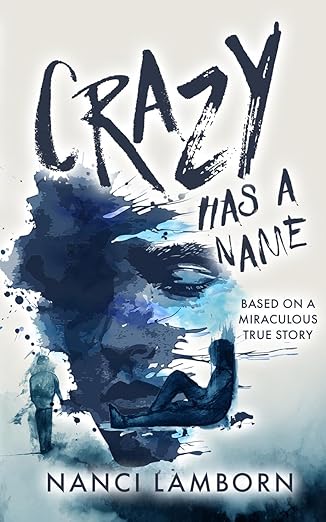
Crazy Has a Name is a raw, Christian contemporary novel that dives deep into the harrowing journey of Danny, a man haunted by his traumatic past and literal inner demons. From being born into unspeakable circumstances to navigating the voices (or “Others”) that live in his mind, Danny’s story is an emotional rollercoaster. At its heart, this book is about hope, redemption, and the powerful intersection of faith and healing. It’s a blend of brutal realism and miraculous transformations, making it both heavy and uplifting.
Author Nanci Lamborn’s voice is gritty and honest. I appreciated the candidness in Danny’s therapy sessions with Marti, especially when he recounts his childhood in “The Pit” or the horrifying truths about his foster family. One part that shook me was his reflection on being bought for $200 and how casually the adults treated it. That kind of detail sticks with you. I loved the depth of Danny’s character, but I would have loved to have seen some of the secondary characters, like his wife Grace, more fleshed out.
What I found most powerful—and frustrating—were Danny’s interactions with the “Others.” Garrison, Kendra, and the Bossman felt like fully realized characters, almost like spiritual manifestations of his fractured psyche. The scenes where Kendra scolds Danny or Garrison protects him are fascinating. However, I wanted more clarity about what these figures represented. Lamborn dances between psychological and spiritual explanations, which is intriguing.
Lamborn doesn’t shy away from portraying the darker side of life, but she pairs it with intense moments of faith-based healing. When Danny begins to unpack his trauma and face the memories he’s suppressed, you can feel his desperation and yearning for peace. The moment where he confronts his adoptive father’s cruelty while holding onto his belief in Jesus felt both heart-wrenching and hopeful.
This book is not for the faint of heart. It’s for readers who can handle heavy topics like abuse, neglect, and the complexities of mental health, all through the lens of faith. If you’re into Christian contemporary fiction with a raw edge and don’t mind grappling with some tough truths, Crazy Has a Name will grip you from start to finish.
Pages: 246 | ASIN : B0DTC2LS4W
A Sobering View

In Walk a Mile in My Shoes, you share your childhood trauma and give readers an open and honest account of your own regrettable choices and how those decisions have impacted your life. Why was it important for you to share your story?
Individuals are often motivated when they read about erratic and unconventional paths that others take. I shared parts of my life (ages 8 to 77) so readers could become aware of the pieces of my life that made me into the man I am today. I wanted readers to explore my life’s assorted happenings before placing their final judgment on my character. (I believe a man should be judged by ALL the pieces of his life — not just one event.) Writing about my lifelong journey was rewarding for me because I was able to look more closely at WHY I am…WHO I am! My narrative was an avenue to finally reveal both positive and negative feelings and emotions I had hidden from myself and others my entire life.
I appreciated the candid nature with which you told your story. What was the hardest thing for you to write about?
I cried a thousand tears as I shared unique stories and events in each chapter — but the most gut-wrenching testimony was telling about the immeasurable pain and agony I caused my wife and children. Criminal activity always affects more than just the offender and the victim … many individuals are often negatively impacted. Losing my family has been an overwhelming experience!
Is there anything you learned about yourself while putting your story on paper?
When I began writing about my past, my original intent was to tell some short stories about my youth that I planned to share with my adult son and daughter. I wanted them to be more ‘aware’ of their father’s past! (I had never told my children about many of the happenings I wrote about.) After allowing my friends to review my stories, they coaxed me into writing more. I added stories about Vietnam, my divorce, my crime, prison and my sexual orientation ambiguity. I felt compelled to share events that occurred while I was on probation. My writing allowed me to release emotions and feelings pent up inside me…like a cleansing of my soul. I was able to look backward and reveal the pieces that transformed me into the man I am today. My writing also allowed me to look forward and yield a sobering view of the few days I have before I die. Friends who read my manuscript often complimented me because I NEVER GAVE UP despite the dysfunctional events that seemed to be part of my arduous journey. I learned that a person could keep going – even when he thinks he has given all he has!
What is one thing you hope readers take away from your experience?
I hope three messages resonate from my narrative. 1) Life is hard…but no matter what occurs in our lives, a person can find the strength and courage to overcome adversity. 2) Judge a person ONLY after you ‘walk a mile’ in his footsteps. (Seek first to understand…then to be understood.) 3) I readily acknowledge my heinous crime. Prison and probation were justified. But it’s vital that Americans closely monitor our judicial and criminal justice systems so overzealous and manipulative members don’t exceed their authority. Surveillance groups finally recognize the importance of holding police officers accountable for their actions. I shared details about the probation department that supervised me — to invite readers to decide if restorative justice was appropriately applied in my case.

When to Run, Born Scared

When to Run, Born Scared by Stephanie King is a book about a young Canadian girl who suffers through an abusive childhood. She struggles to find a way to survive her horrific home life and tries to escape several times. But she ends up back in the same terrible place again and again. In a bid to finally be free from her father’s control, she finds herself in a situation that is just as bad as the one she was so desperate to leave behind. Will she ever be able to put the past behind her and make a good life for herself at last?
The theme of this story was finding a way to survive somehow. Reading about the things Stephanie had to endure in her life, like childhood abuse, rape, drug and alcohol addiction, eating disorders, anxiety, depression, domestic assault, and medical issues that required multiple surgeries and a long recovery, it was amazing that she was able to survive. In addition, she had the strength to persevere after going through so many terrible things. I was surprised that she continued to put her trust in people after her own family had shown her the true evil that could be found in the hearts of people. Sometimes she had to trust other people because she had no other choice. However, Stephanie proved that she was a survivor. No matter how many times she stumbled along the way, she never gave up and kept fighting to survive. Stephanie’s story continues in Book Two, Among the Guilty, Under Attack.
The first chapter of the story jumps around, talking about Stephanie’s father’s childhood and mentioning him fighting in the war, then relaying experiences that happened during Stephanie’s own childhood, then going back to before her father left to fight in the war. This is how memories work sometimes. They don’t always follow a logical path but are connected in one way or another.
I felt that it wasn’t always clear how old Stephanie was during certain incidents that happened throughout the book, and I would have liked a clearer picture of the timeline. The inclusion of the graphic descriptions of sexual abuse of a child was hard to read through, but it also allowed me to connect with Stephanie and understand the depth of suffering she endured.
When to Run, Born Scared is a deeply personal memoir of what one woman had to do to survive the life she was dealt. Readers looking for a personal account of hope and survival will appreciate Stephanie’s story.
Pages: 245 | ASIN : B08TH74KR9


