Blog Archives
Intention and Action
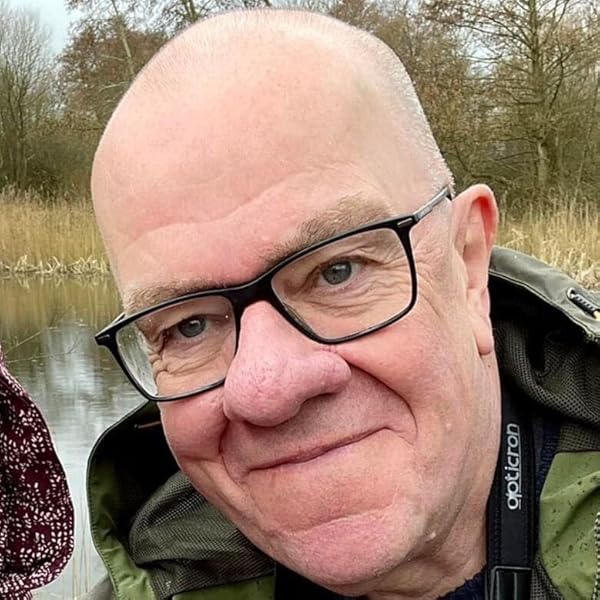
Where The Winds Blow follows the rise of Path Finder, a grassroots movement born from grief and idealism, while powerful governments, criminal networks, and ordinary people collide around it. What was the inspiration for the original and fascinating idea at the center of the book?
The inspiration for Path Finder came during the COVID crisis, while I was cleaning out my garage for the third time in a week. I suddenly imagined finding the UK’s prime minister hiding in there – someone who’d simply decided he couldn’t cope any more. That image stuck, and I started writing, using it as a focal point.
It led to a simple but unsettling thought: for all their bombast and posturing, governments have only limited control over what actually happens within their own borders. The responses to the 2008 crash, COVID, and countless regional crises revealed not grand strategists, but leaders who were overwhelmed, reactive, and often out of their depth.
Lies, distraction, and obfuscation disguise their weakness and uncertainty – skills that modern power structures have perfected. Meanwhile, real influence increasingly sits with billionaires, technocrats, and the vague, unaccountable entity we call “the markets,” all of whom operate with little responsibility to the societies they shape.
Across much of the world, there’s a simmering resentment paired with helplessness – a frustration that’s often misdirected toward convenient scapegoats rather than those truly responsible. What feels missing is a spark: something that turns anger and despair into constructive action rooted in honesty, humanity, and hope.
I don’t pretend to know how that spark might happen in real life, although I believe it will. In the Path Finder series, I’ve created a world only inches removed from our own, where readers can enjoy the humour and drama in the story, recognise familiar institutions and personalities, and perhaps imagine a different future – for themselves as much as for society as a whole.
History is full of ordinary people doing extraordinary things, often accidentally or without understanding where their choices might lead. This series begins with one man deciding he’s had enough of pretending to be something he isn’t and disappearing. Three books in, even I’m not entirely sure where that decision will ultimately take him or Path Finder. I just know it’ll be fun finding out!
What are some things that you find interesting about the human condition that you think make for great fiction?
What fascinates me most about the human condition is the gap between who we think we are and how we actually behave when things stop going to plan. We like to believe we’re rational, principled, and in control, but pressure, fear, love, grief, and ambition have a habit of knocking those ideas sideways. That gap – between intention and action, certainty and doubt – is where great fiction lives.
I’m also interested in how ordinary people respond when they’re swept up in events far bigger than themselves. Most of us don’t set out to change the world, break systems, or become symbols of anything. We’re just trying to get through the day, protect the people we care about, and make sense of the noise. Yet history shows that it’s often these accidental participants – people acting from love, stubbornness, guilt, or hope – who trigger the biggest consequences. That tension between small, human decisions and vast, unpredictable outcomes runs through the Path Finder series.
Finally, there’s the absurdity of it all. Humans are capable of extraordinary kindness, bravery, and resilience, but we’re also unwittingly brilliant at self-delusion, tribalism, and panic. Put those traits under stress – mix them with power, money, ideology, or blind faith – and you get situations that are by turns terrifying, ridiculous, and darkly funny. Satire lets me explore those contradictions honestly, without pretending we’re either heroes or villains. We’re usually just flawed, emotional creatures doing our best… sometimes making an almighty mess of it… occasionally doing something amazing.
What is one thing that you hope readers take away from Where The Winds Blow?
More than anything, I hope readers come away feeling that the time they spent with Where The Winds Blow was time well spent. I want them to have been entertained – laughing at the absurdity, caught up in the momentum, and maybe a little breathless at times – but also quietly validated in the way they see the world.
If there’s a deeper takeaway, it’s the reassurance that confusion, doubt, and frustration aren’t personal failings; they’re rational responses to a chaotic system. The characters in the book don’t have grand plans or neat answers – most of them are muddling through, reacting, improvising, and occasionally getting things spectacularly wrong. And yet, meaning still emerges from those imperfect choices.
I also hope the book leaves readers with a sense that individual actions matter, even when they seem small, accidental, or misdirected. Change doesn’t always come from heroes or leaders; it often starts with ordinary people deciding to stop pretending, to care a little more honestly, or to take one step they didn’t think they were capable of taking.
If readers finish the book feeling entertained, understood, and perhaps a little more open to the idea that hope can exist without certainty, then I’ve done my job.
I hope the series continues in other books. If so, where will the story take readers?
The series will continue. As for where the story will take the reader, who knows?! I’m currently writing shorter pieces for my Path Finder newsletter subscribers that fill in some of the character back stories. One of those pieces became a major plot line in Where The Winds Blow, and I have no doubt that one or two of my current works in progress will do the same in the fourth novel.
Author Links: GoodReads | Threads | Facebook | Website | Amazon
The Path Finder movement has gone global. Millions of followers. Endless headlines. Oceans of cash.
Only one tiny snag: the founders still have no idea what the movement actually is. Now the powerful want answers – and they’ll do anything to keep control.
Meanwhile, an ex-soldier from Afghanistan crosses continents and the Mexico-US border, desperate to reach his family before the authorities catch him or local vigilantes do even worse.
Elsewhere, Simon and Pippa Pope are chasing storms, blissfully unaware that their late wedding gift could unleash consequences for humanity, the planet, and a whisky-soaked Scotsman on a collision course with destiny.
Fast, funny, and ferociously sharp, Where The Winds Blow skewers the powerful and the absurd in equal measure.
It’s the third and wildest instalment in The Path Finder Series, following Paths Not Yet Taken and Good for the Soul. Each offers satire with bite, stories with heart, and storms of every kind.
Where The Winds Blow


Where The Winds Blow blends political satire, global intrigue, and adrenaline-soaked storm chasing into a single, fast-moving narrative. The book follows the rise of Path Finder, a grassroots movement born from grief and idealism, while powerful governments, criminal networks, and ordinary people collide around it. At the same time, the story weaves in a parallel thread of storm chasers barreling across Texas, where tempests both real and emotional hit with little warning. The plot swings from Irish funerals to boathouse diplomacy to desert border tensions, always nudged forward by colorful characters who often stumble into history by accident.
Reading it, I found myself laughing at moments I didn’t expect to laugh at and bracing during scenes that came out of nowhere, like the chaotic barbecue rescue early on or the tense debates inside the gilded halls of Peace Castle. The writing has a kind of cheeky confidence. The author slips from humor to sincerity in seconds, and somehow it works. I liked how the “science guides” at the castle go from bickering like rivals to forming a unified plan after being nudged by drinks, blunt truth, and a locked door. Those small human quirks make the big themes feel grounded. And the storm chasing chapters surprised me. The imagery of dirt clouds swallowing the vans and lightning cracking overhead felt alive. Moments like Simon dragging a stubborn tourist away from his dramatic self-sacrifice scene stuck with me because they were messy and relatable and oddly sweet.
The book plays with many threads. I enjoyed each storyline on its own, but sometimes the pace jumped so fast that I had to remind myself where we were and who was scheming or storm chasing or hiding from cartel lookouts. The Path Finder political satire is sharp and funny, especially scenes in Washington where we watch powerful people try to bend the movement to their will. The storm chasing plot, though, has this raw emotional pulse that could carry a book by itself. When the two worlds finally echo each other thematically, it lands.
I closed the book feeling satisfied. Where The Winds Blow is a good pick for readers who like stories with heart and humor mixed into real-world chaos, who enjoy political send-ups, or who don’t mind a chase through a thunderstorm or a bureaucratic maze. It’s lively. It’s warm. It’s playful. And it’s perfect for anyone who wants a story that reminds them that even the biggest changes in the world often start with a handful of imperfect people trying to do the right thing.
Pages: 313 | ASIN : B0G1KKJLYR

The Departure Point
Good for the Soul follows a former prime minister forced out of seclusion and back into the spotlight and a troubled priest facing off against a criminal overlord. What was the inspiration for the setup of your story?
My first novel – Paths Not Yet Taken – was written as a standalone story, but the overwhelmingly positive response from my readers invariably included requests (and occasionally demands!) to learn more about the future of the main characters. Having decided to turn one book into a series, it made sense to develop the established plot and themes and to pick up on world events that has occurred in the intervening period.
No matter how much madness dominates our news channels and affects our daily lives, I am always hopeful that humanity’s ability to respond and to overcome trials and tribulations will eventually prevail. Good For The Soul gave me the opportunity to visualise how that might look, whilst having a laugh at the expense of politicians and the oligarchy at the same time.
Did you plan the tone and direction of the novel before writing, or did it come out organically as you were writing?
I had a very good idea of the tone of the novel. Life is a mix of the heart-rending, the heartwarming, tragedy, and humour and I hope I’ve reflected that throughout the book. In terms of direction? Well, I knew the departure point and where I wanted to arrive. Let’s just say the journey was as much an adventure for me as it is for the reader – and I loved every second of it!
What were some of the emotional and moral guidelines you followed when developing your characters?
Community and family are very important to many people. I remember vividly how the townsfolk of Warrington came together after the bombing in March 1993, which killed two young boys and injured 56 others who were just out shopping. People in other parts of the UK and Ireland no doubt had similar experiences and felt the same kind of togetherness in that period of violence. I wanted to show how divisive acts can bring people closer together. I also wanted to explore how far people would go in order to protect those they love; what they would sacrifice and what lines they would cross in order to achieve their goal.
What is the next book that you are working on, and when will it be available?
The next book should be published towards the end of this year. It covers the growth and development of the Path Finder movement, which starts to find its feet in Good For The Soul, and the threat it poses to the current world order. As with the first two books, there will be a significant amount of satirical humour, but this time it will be accompanied by illegal border crossings, half-crazy presidents, and the occasional tornado.
Author Links: GoodReads | Facebook | Website | Threads | Amazon
Six months after assisting the UK’s missing prime minister and avoiding two assassination attempts on the same day, Simon Pope is on holiday with friends, trying to cheer up a man who finds retirement depressing. But Pope also has a secret mission, which requires him to remain unobtrusive. He must assess whether specific individuals in the small Irish town of Clonbrinny are in mortal danger from a criminal overlord.
Failing miserably to maintain the desired low profile, Pope and his group become embroiled in events outside their control and discover all is not as it seems.
Perceptions dissolve, revealing a far more dangerous reality.
Meanwhile, former prime minister Andrew Blackwell’s self-imposed media silence has made him more popular than ever. His Path Finder philosophy generates global intrigue and excitement, despite nobody knowing what it is – including him.
When a secret conference on Ireland’s west coast goes badly wrong, Blackwell must evade a media manhunt and return to London, relying on old friends and new acquaintances for help.
Subsequent events and a meeting of minds raise the tantalising prospect of an unlikely collaboration, creating the foundation of a movement that could transform the world.
Good For The Soul is the second book in the Path Finder series and follows on from the award-winning Paths Not Yet Taken.
Good For The Soul

Philip Rennett’s Good For The Soul is an ambitious, genre-blending novel that tosses political satire, spiritual conflict, and small-town Irish charm into a single, messy but compelling stew. At its core, the book follows Andrew Blackwell, a former UK prime minister, now a reluctant recluse, as he’s dragged back into the world of global influence through a secretive “Global Conclave.” Meanwhile, in the quiet Irish town of Clonbrinny, a troubled priest is caught in the moral chokehold of a criminal syndicate. It’s a story about power, guilt, reinvention, and the weird, awkward humanity that binds it all together.
What grabbed me first was how effortlessly Rennett shifts tone. One moment, you’re in a confessional booth listening to Margaret Doyle deliver an outrageously inappropriate dream confession about cassocks and spanking. Next, you’re in the thick of Blackwell’s emotional unraveling or sitting in a church watching Declan Kelly, a violent gangster, toy with religion like it’s a game of poker. These tonal shifts shouldn’t work. But they do, mainly because Rennett has a wicked sense of humor and a sharp ear for dialogue. Margaret’s appearances, especially in the “Confession” chapter, had me laughing out loud, while Father Aidan’s slow disintegration genuinely broke my heart.
What surprised me most was how Good For The Soul uses the setting almost like a character. Clonbrinny feels lived in, grimy, rain-soaked, and steeped in secrets. Peace Castle, where the elite gather to decide the world’s fate, is jaw-dropping in its opulence, but it feels hollow, too. There’s a beautiful contrast between those two worlds, and Rennett plays them against each other masterfully. When Blackwell stands before the Conclave in “The Opening Statement,” what he says feels honest, even raw, not just because of what he reveals, but because we’ve seen him wrestle with it. I didn’t expect to feel sympathy for a politician on the brink of a second act, but here I am.
The writing itself is tight and conversational, but it’s never dumbed down. I loved how Rennett injects intelligence without arrogance. He keeps the language accessible, even when the stakes are philosophical. There’s also a lot of heart under all the satire. One of my favorite moments was in “Help Me,” when Father Aidan, drunk and broken, finally whispers, “Help me.” That wrecked me.
Good For The Soul feels like a modern-day parable, soaked in Guinness, lit by lightning over crumbling churches, and filtered through the lens of people just trying to figure out what the hell matters anymore. I’d recommend it to anyone who likes their fiction smart, funny, and a little unhinged. Especially if you’re into layered plots, Irish settings, and characters that make you feel something, even when they’re being completely ridiculous.
Pages: 369 | ASIN : B0F44DQKCK

Paths Not Yet Taken

Paths Not Yet Taken, by Philip Rennett, is an exhilarating and witty novel that captivates readers from the first page to the last. Set over five tumultuous days in late summer, the story masterfully intertwines crises, action, and emotional drama with a dry, observational wit that makes for an incredibly enjoyable read.
The narrative centers on Simon Pope, a middle-aged Midlands warehouse worker who discovers someone very unexpected in his garage. During a press visit to the warehouse where Pope works, the Prime Minister suddenly vanishes, throwing the entire UK into chaos. As the security services and police launch a frantic search for the missing PM, the government scrambles to maintain its composure and manage the situation. Simon Pope harbors a secret life, spending his evenings on the dark web platform @TheTrth, where he voices his disdain for the political establishment, particularly the now-missing Prime Minister.
Paths Not Yet Taken is a thoroughly entertaining read. Rennett skillfully makes both the Prime Minister, who confides in Pope his desire to return to a normal life, and Pope, who has a surprisingly dark past, immensely likable characters. The author reserves his critique for the bureaucrats running the government, extracting comedy gold from their antics. This is especially evident when these bureaucrats attempt to scapegoat Pope, adding a realistic and humorous twist to the story.
The novel is a true page-turner with tight pacing, witty writing, and a perfect balance of action and drama. It is genuinely funny without being mean-spirited, offering a refreshing change of pace in today’s often cynical political landscape. Paths Not Yet Taken has real heart and comes highly recommended for anyone looking for a smart, engaging, and humorous read.
Pages: 335 | ASIN : B0D1GMJZ4M



 LITERARY TITAN