Blog Archives
Creation Unfolding

Nothing and Blank Save the World and Other Tiny Works follows a constellation of poems and stories that intertwine cosmic creation, human vulnerability, and the beauty of connection into a single, awe-filled tapestry. How do you balance scientific wonder with emotional truth in your writing process?
As the second-to-last poem, “A Scientist with an Arts Degree” hints—or, rather, outright states—I have both a science (Biology) and arts (English and Creative Writing) degree, obtained in that order. I think the order matters. For as long as I can remember, I have always been fascinated in the sciences; the theories and explanations of the unknown, and the possible answers to impossibilities. That curiosity, and perhaps a tiny bit of staring at and learning about the night sky, is what fueled many of the works in the collection. The physical world can be explained in complex terms that people read in textbooks or academic journals. Elements of the human experience, much like atoms, chemical compounds, and even space dust, are also tangible, universal (no pun intended), and can be explicated.
But what if, I thought, it was more than that?
As a person of faith, one of my favorite things in the world is things that are unseen. Faith is the evidence of it. Evidence of the unknown, the not yet, the maybe. How can we as humans answer unknown questions or give unknown answers? That, I believe, is the vehicle of this collection that the fuel powers. There is what we know, there is what we don’t know, and then there’s us, smack in the middle of the two. I wanted to write about both together—to form that ever-so-peculiar balance. I pick an idea or concept or person and just… think, and write down my thoughts. Take, for example, a star. We know it’s there. We know what it’s made of, we think. But… how did it get there? What is it, really? Can it think like we can? What if it could? How does it spend its life? What if, what if, what if? The exact same thing goes for people. Everything is a wonder, and, with the right words, they can be explained further or explored from different angles. I’ve, as someone I talked with recently put it, “allowed myself to feel” this sense of wonder and curiosity, and the very human emotions behind them. Writing them down was the next logical step. Somehow, it all fits into two hundred thirty-six pages. And curiosity fuels the cat.
The title story feels allegorical and foundational. What inspired the beings who created the world out of light and darkness?
The characters Nothing and Blank are probably the earliest concepts that have come from this book. Over a decade before the publishing of the book, I wrote a little bit about the two in a smaller version of the final poem. In the early stages of my fixation on space, I fashioned small beings in my brain made of stardust, just floating somewhere in the universe with nothing to do but play around. I came to the conclusion that the two were children, curious about the world around them. So curious, in fact, that they would want to participate in their surroundings after watching it all happen for some time. Nothing and Blank simply watched creation unfolding. At some points in life, that’s all we as humans can do. Watch beauty form. Watch things change and grow. And, when given the opportunity to make something of our own, we use what we have and what we know to mold something else. Nothing and Blank are the embodiment of cosmic inquisitiveness—in many ways, my cosmic inquisitiveness, and my own quest for creation from childhood to adulthood.
It’s not easy for me to describe what exactly the light and darkness are in the poem, and what connotations are connected to them. They are both powerful forces coexisting. But I think it was important that the two characters were not one-hundred percent light or dark, and that there was a little bit of each other within. Balance. Equilibrium. Order. A more neutral version of yin and yang. I think writing “the balance thereof is life” was the moment I reached an epiphany concerning the ideas of the poem. The two beings, with their light and darkness, worked together to make a world, to save a world.
The balance of light and darkness as a concept is present in many beliefs and symbols on Earth. Neither can exist without the other, so to speak. There is good in bad; there is bad in good. The balance thereof is life. Everything that was created, I think, is a result of that concept. In my own life, I’ve had to sort of come to terms with this, more especially the good in the bad. Maybe I longed for the balance when creating the poem, or I wanted to know where the balance came from, or what it felt like. Both light and darkness were used to create in the poem. It gives me assurance in a weird sort of way.
Your imagery is vivid and recurring. Are there particular symbols you return to intentionally, or do they emerge organically as you write?
Sometimes I look back at my own work and, while laughing, I notice quite a few recurring ideas: life, death, space, and the unknown human experience. All things I love writing and learning about. All things I have never fully understood or participated in myself, save for a few decades on Earth. I look at my surroundings, again with laughter, and find that I am bombarded by these ideas every single day. I know of life. I know of death. I read about space all the time. I hear stories from people I could never be doing things I could never do.
Sometimes, I come up with thoughts and scenarios about these ideas in hopes that I am close to an answer for them, or at least something that makes sense to me. I’ve never died or stepped outside of our galaxy. I’ve never gotten married (yet?) or been to Washington state. I’ve never seen a constellation up close or run away from home.
What would it be like?
It’s really convenient that these ideas are, in many ways, both constant and changing continually. I think they’ll stick with me for a very long time.
What part of this collection challenged you the most to share with the world?
Though most of the poems and short stories are fictional, there is a little piece of me laced in some of the letters. I was most afraid of… doing that. A good writer will place themselves somewhere in their work to make it more relatable, either through characters, plot, or other story elements. But me? The hardest thing to write about is myself. If I were to place myself in this book, what would happen? Would people understand? Would people get it? Would they paint a picture of me and pass some sort of judgment? I was afraid of writing about my experiences and thoughts in their raw form. I was afraid of revealing so much about me, even in subtle ways. I didn’t want people to know (the real) me. For months, I struggled with pouring out my heart into the pages as I typed and being honest and open about myself. But I realized that it was the only way to breathe life into the poetry and stories and make the language authentic. Short stories like “Coffee Stains” and poems like “6/8” or “Sussan’s Sonnet” became much easier to craft.
The review of my book called me “brave.” I think that’s the word for it. It took a lot for me to be as vulnerable as I was, allowing myself to be myself. Allowing myself to be. It was okay to be honest and expressive. I didn’t have to limit my emotions or interweave my diction with superficial statements or imaginary sentiments. I could be genuine. It sometimes feels, in real life, that I can’t. But on paper, I can.
Now that this book is out, readers can catch a glimpse of my mind, of me as a person. And, ultimately, it was a great decision to make.
Author Links: GoodReads | Website | Amazon
Invisible Strings: 113 Poets Respond to the Songs of Taylor Swift
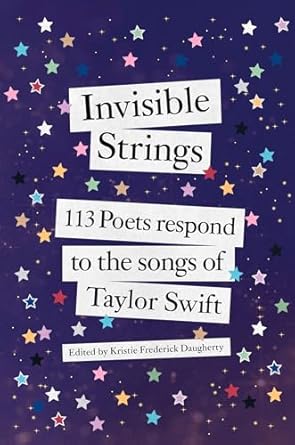

Taylor Swift’s music has always been full of poetry sharp, confessional, sometimes wistful, sometimes vengeful, always deeply felt. Invisible Strings, edited by Kristie Frederick Daugherty, takes that connection and runs with it, bringing together 113 poets who respond to Swift’s lyrics not with direct references but with their own poetic interpretations. The result is a deeply layered, often moving collection of poetry that feels like an artistic conversation. It’s a book that blends fandom with literary appreciation, proving just how much Swift’s songwriting has shaped modern culture.
What really struck me about this anthology was how it captures the emotional landscape of Swift’s music without ever quoting it outright. Some poems are straightforward responses to a song’s themes, like Bianca Stone’s Love’s Cure, which plays with the idea of love’s fleeting and sometimes dangerous nature much like Swift’s The Archer or You’re Losing Me. Others, like Maggie Smith’s Pull, echo the isolation and longing found in exile and tolerate it, using stark natural imagery to convey deep personal truths. I loved the puzzle-like aspect of this book, trying to match poems to the Swift songs that inspired them, but also appreciating how each poet makes the subject their own.
Some pieces stood out immediately. Andrea Cohen’s Duet has that quiet ache of unspoken heartbreak, much like Swift’s most devastating ballads. Then there’s Jessica Laser’s Concessions, which nails the feeling of post-breakup ghost sightings, the way someone lingers in the background of your life long after they’re gone. These poems aren’t just responses to Taylor Swift; they’re extensions of the emotions she puts into her music, proving that heartbreak, nostalgia, and reinvention are universal themes that cross from pop songs into poetry.
The book is also incredibly well-curated. Daugherty’s introduction captures the spirit of a true Swiftie and literary enthusiast, explaining how the anthology came together and why Swift’s work matters in a poetic sense. The order of the poems feels intentional, creating an emotional arc much like a Swift album does. There are moments of joy and lightness (Glitter Gel Pen energy), then deeper reflections (Fountain Pen introspection), then gut-punch endings that stay with you. This is a genuinely moving collection that any poetry lover could appreciate, whether they’re a Swift fan or not.
Invisible Strings? is perfect for Swifties who love poetry, writers who appreciate the lyrical quality of songwriting, and anyone who enjoys exploring emotions through multiple artistic lenses. If you’ve ever cried to All Too Well or screamed along to The Lakes, you’ll find something here that resonates. It’s proof that great lyrics don’t just live in songs; they spark ideas, stories, and emotions that keep echoing long after the music fades.
Pages: 282 | ASIN : B0D8CDBJP1

The Intricacies of Life

The Edges is a collection of poems spanning the human experience, addressing topics such as growth, loss, and wonder. What inspired you to write this particular collection of poems?
I found inspiration for The Edges in our lives’ delicate balance of light and shadow. I tried to grasp the universal truths common to everyone, regardless of their origins or situations.
This collection draws heavily from my personal experiences. Composing these poems turned into a voyage of self-exploration, a method to navigate my emotions and present them to encourage others to contemplate their own experiences—those instances of change, sorrow, and happiness that shape our lives.
At its core, The Edges is an homage to the complexities of life and what we all share.
Did you write these poems with a specific audience in mind, or was it a more personal endeavor?
Writing The Edges was a personal endeavor rooted in my reflections and experiences. Initially, the poems served as a means for me to process my thoughts and emotions, allowing me to explore the intricacies of life from a deeply personal perspective. I found solace in writing, using it as a tool to make sense of moments that felt chaotic or overwhelming.
However, as the collection began to take shape, I became increasingly aware of the potential audience. I started to envision readers who might resonate with the themes of growth, loss, and wonder—individuals navigating their edges. This awareness guided me to balance personal narrative and universal experience. I wanted the poems to feel relatable, inviting readers to see themselves within the lines and reflect on their journeys.
Ultimately, while the collection began as an intimate exploration of my feelings, it evolved into a shared conversation with readers. I hoped to create a space where others could find comfort, connection, and understanding, allowing them to reflect on their own experiences while feeling less alone in their struggles and triumphs. In this way, the poems bridge my journey and the collective human experience.
What was the biggest challenge you faced in putting together this poetry collection?
My biggest challenge in assembling The Edges was navigating the delicate balance between vulnerability and authenticity. I grappled with the fear of revealing too much and of making myself too vulnerable on the page while also understanding that a genuine connection with readers comes from that very honesty.
Additionally, organizing the poems to create a seamless flow was challenging. I wanted each piece to stand alone while contributing to the larger tapestry of human experience. It was a process of trial and error, moving poems around, listening to their voices, and ultimately finding an organic structure.
Can we expect to see more poetry from you soon? What are you currently working on?
Yes, you can expect more poetry from me shortly! I am currently immersed in a new collection of 33 poems titled Immigrant Dreams, which will be published on January 17. This project is particularly close to my heart, as it explores the complex tapestry of experiences surrounding immigration—capturing the hopes, struggles, and dreams of those who leave their homelands in search of a better life.
In Immigrant Dreams, I delve into the myriad emotions of this journey: the longing for home, the challenges of adaptation, and the resilience that emerges in the face of adversity. Each poem seeks to honor the stories of individuals who have navigated the often tumultuous waters of migration, reflecting both the beauty and the hardships inherent in their experiences.
In this collection, I found inspiration from personal narratives, interviews, and historical accounts, weaving them into poetic forms that resonate with the shared human experience. I hope this work amplifies marginalized voices and fosters empathy and understanding among readers.
I’m excited to share this journey with you and look forward to unveiling Immigrant Dreams in the coming weeks. Thank you for your continued support, and I hope my upcoming work resonates with you just as deeply!
Author Links: GoodReads | Website | Amazon
Love & War: A celebration of love in all its forms and complexities and an exploration of human suffering in the raw and brutal realities of war.
Nature & Cosmos: A journey through the untamed wilderness and boundless expanse of the universe, where the mysteries of existence unravel in whispers of wind and starlight.
Time & Memories: Threads of reminiscence woven into time’s fabric, where nostalgia and reflection entwine.
Seasons & Liminal Spaces: Capturing time’s ebb and flow in seasons and liminal spaces, between what was, what is, and what will be.
Observations & Views: Perspectives painted with the strokes of keen observation and introspection, offering glimpses into the diverse landscapes of the human mind.
Wounds & Contemplations: A canvas of healing and introspection, where individuals wear scars as badges of resilience and contemplations resound in the chambers of the soul.
Together, these sections create a multifaceted exploration of the human experience, inviting readers to engage deeply with the themes of love, nature, time, and the complexities of existence.
The Edges
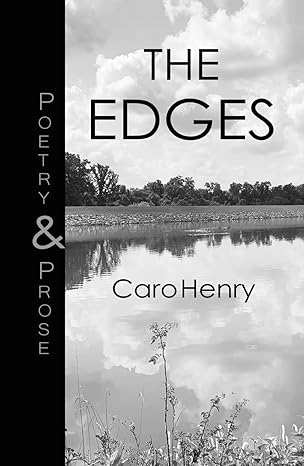
Caro Henry’s The Edges is a beautifully layered anthology that feels like a delicate weaving of the human experience into poetic and prose expressions. Divided into themed sections—Love & War, Nature & Cosmos, Time & Memories, and more—it captures both the universal and the intensely personal. Henry’s voice is tender yet unyielding, as she navigates life’s edges—those transitional spaces of growth, loss, and wonder.
The writing feels both intimate and expansive. The vivid imagery of war’s aftermath lingers in my mind. It reminded me of how trauma etches itself not only onto landscapes but also onto the souls of people. Similarly, the piece “Crows Descending” speaks to the resilience and command of nature, describing birds with such reverence that I felt I was right there watching them feast. The author’s knack for detail makes each piece resonate like a shared memory. Henry’s exploration of time and memory is particularly touching. There’s a universality in these depictions of loss and connection, and it made me pause to reflect on the fleeting nature of my own memories. Meanwhile, the cosmic awe in “Cassiopeia A” made me marvel at humanity’s smallness in the universe while also celebrating our drive to understand it. I was especially moved by Henry’s lyrical voice in pieces like “Sensual,” where intimacy is painted with unflinching honesty. The shifts between gentle and raw made me feel like a voyeur in the best possible way—witnessing something intensely human yet grand in its simplicity. Her ability to balance such deeply personal emotions with profound, almost philosophical reflections is a triumph.
The Edges, by Caro Henry, is not a casual read; it demands attention and reflection. But that’s its beauty—it’s perfect for anyone who loves poetry that challenges the mind and stirs the soul. Whether you’re a fan of poignant meditations on love, reflections on war, or simply lyrical odes to nature and existence, this book will leave a mark. It certainly left one on me.
Pages: 237 | ASIN : B0DH7SNSGP
The Indian Farmers Protest

Sir-Inder Deol’s inspirational book of poetry, The Indian Farmers Protest: The Resistance Collection, is a beautifully-penned collection honoring the brave individuals who dared to try to change the course of events in their country. Cover to cover, Deol conveys their struggle, the intense opposition they encountered, and their resolute determination and perseverance. As they stood on the precipice of what has quickly been recognized as the largest ever organized protest in history, the participants made an impact that will last a lifetime.
Deol’s poems cover every aspect of the process, from the protesters’ own hesitations to their eagerness to institute change. While a narrative would have been sufficient to tell this story, it could never have delivered the same force as Deol’s verse. The imagery he creates in each and every poem is stunningly beautiful while at the same time heart-wrenching. The common man is not forgotten in Deol’s work; from the first poem to the last, the farmers and supporters are given center stage.
There is a certain kind of healing rather than comfort that comes from reading Deol’s work. In addition, his poetry stirs within readers a desire to make a difference, stand up for themselves, and unite as one for the common good. In the beginning, under note from the author, Deol states, “You would be misplaced in thinking I have written this work as a source of comfort; on the contrary, this literature aims to invoke and inspire the hidden inner rebel that lies within us all.” Deol has not only delivered a masterpiece, but he has also documented and shared a phenomenally significant piece of history.
The Indian Farmers Protest: The Resistance Collection is a powerful collection of poetry that will captivate those looking for a unique account of the history of Farmers Protest, lovers of all poetry, and those that honor the warriors that fight for humanity.
Pages: 81 | ASIN : B09PKK62YP



 LITERARY TITAN