Blog Archives
God’s Saving Grace

Bethesda is a collection of poems that moves through faith, pain, identity, womanhood, and longing with a voice that is raw and unguarded. What inspired you to write this particular collection of poems?
I would have to say that my inspiration came from Christ and the state of the Church. I remember watching someone preach online and the topic of the sermon was John 5: 1-12 in the Bible. As I watched, the name “Bethesda” came to me, and it was in these moments that I knew the title/subject matter of a new collection would be Bethesda. This was back in 2021, and the work was about 4 years in the making. At the time before seeing the sermon, I had been experiencing a dry season and hit a bit of a writer’s block. When the concept for the new work came, the inspiration to write set in, and the drought lifted. Along the way, life happened, and the writing stopped for a little while. There was, however, a time in 2024 when revisiting the work that I had done, and this is when I decided to follow through on compiling the pieces, writing two-thirds of the work to completion. Looking back, I understand that it took me that long to live through the questions I had been carrying. It took time to build the resolve to have the confidence to be honest and forthcoming in the pieces.
I was also inspired by my heroes – those that I know in real life, like my mother, my father, my siblings, my elder cousin, and members of my church community. I was inspired by how they handled pain, discouragement, stagnation, and defeat. Using my own observations about how these folks managed life’s struggles, I was able to paint the picture of a speaker who was a conglomerate of these figures, including myself. This force moved through the pieces on a journey of redemption to liberation. Dr. Maya Angelou’s work, life, and testimonies were also places I frequented during this excavation of soul. I am truly standing on her shoulders as I work to become a better writer and person in this existence. If I can dare to be so unguarded in my work, it is because she paved the way and showed first that there was nothing to fear – that if anything, it was the world that should fear the storm within me.
How did you decide on the themes that run throughout your poetry book?
It was twofold, really. For the most part, in the first drafts of the collection, I just wrote about what was important to me and what I saw being issues in mankind. I turned to sermons that I had attended, in person and online, over the years, as well as to topics/issues that were socially and culturally relevant. I wanted the work to be encompassing, inclusive, and reflective of the journey a person takes when contemplating a walk with Christ in this modern day.
As the narrative builds through the pieces of the work, different themes become apparent in the topics the speaker decides to pursue: themes of wrestling with God, despair, redemption, heartbreak, self-loathing, longing, faith, belief, the dismal state of the world, and God’s saving grace. The middle of the work is dedicated to exposing and fleshing out issues with which the speaker must face a confrontation, like heartbreak and longing. The ending of the work is dedicated to the resolve that comes with the acceptance of God’s saving grace and confrontation.
The messages transferred on a Sunday morning inspired me to be reflective about the current soul condition of mankind, and the urgency communicated, instilled, and awakened within me, inspired the stark honesty in the lines. I wanted the collection to be a gathering place for those who did not quite have it right yet but were still unrelentingly trying. The themes came together on their own, really, as I set out with the intention to have the reader confront themselves in the lines. I knew a transformative collection meant that I had to be vulnerable if I wanted the Lord to shine through my testimonies.
Did you write these poems with a specific audience in mind, or was it a more personal endeavor?
My intention with these poems was to be as inclusive as possible. I wanted to appeal to the heart, soul, and conscience of the reader. The journey was simultaneously a personal endeavor and one that ambitioned the collective, universal heart.
I found that the transformation that I had experienced through confrontation and deconstruction for the
sake of these pieces (and for my own sake, if I’m honest) would be made available to the reader as they
journeyed from the beginning of the work to its end. This made it even more imperative to be honest and
unrelenting because there is a lot at stake: being an example of the power of the Grace of God and
exemplifying the transformative power of faith. I strongly believe that the audience will reveal themselves to be those who are open to letting the Lord into their problem areas and those who are searching for and
genuinely seeking a relationship with the Most High.
Bethesda, this house of Grace built by words, was constructed to be a gathering place for those who find
themselves ill at ease in today’s world order. Under its covering, one may find the opportunity to secure their redemption and begin the process of true liberation. At the crux of Bethesda is a journey to the increased intimacy with God that results from a genuinely contrite heart looking for God. Walking through the shadow of doubt, the reader is a witness to the perils of the world and the bravery of faith that comes as a result of persisting through the questions.
How has this poetry book changed you as a writer, or what did you learn about yourself through writing it?
I really had to fight with myself to believe that the reader would care about the issues I was bringing to light. I had to push myself to be what I requested of the reader: vulnerable. And then came the question of impact: how would the audience be affected?
These battles forced me to come to terms with the power of testimony. Using the example of testimonies I experienced in the Church, I saw firsthand that people may or may not see themselves in my story. The power comes in that somewhere in existence, my act of daring to be true and sharing would take our collective soul to another level of liberation in the current scheme of universal oppression gripping the heart of mankind. I walked so that someone else can run, even if that is just one person, and even if they have never heard of my book(s). It is a testament, testimony, and witness to the Grace of God on a whole other level, and I realized that these are things that matter most to me.
Though I abstracted and amplified certain things in the pieces, I had to evolve to a place where my own journey and past and present and all the things don’t shame me anymore. In full transparency, it’s a journey that I am still on, but I was obedient to the call to model what I saw to have transformative power in the world/Church. Bravery really does look different in the eyes of the brave.
Author Links: GoodReads | Amazon
Rendered from the Biblical porch where the sick, blind, deaf, and ailing were said to have lived and found reprieve, Bethesda frees the reader to a celebration of life, even in the places where it hurts the most. It explores what it means to be whole and moving as well as broken and stuck. Stuck in helplessness. Stuck in mercy. Stuck in hopelessness. It is a journey of the wondering of how one can give birth to the sometimes elusive tongue of healing. Bethesda is the victory of small steps away from the porch of heartbreak, longing, confusion and suffering.
In this barren womb of world order, we the lost, losing, finding and found, are a nation – an army. Take this journey through a fractured mind on the proverbial porch – that gathering place we now call Bethesda.
Bethesda


Bethesda is a collection of poems that moves through faith, pain, identity, womanhood, and longing with a voice that is raw and unguarded. The book feels like a spiritual and emotional journey, one that circles back to God again and again while navigating the heaviness of lived experience. Each poem stands on its own, but together they read like a layered confession. Grief, hope, Blackness, gender, memory, and divine yearning all braid together. The writing pulls from moments of despair and moments of revelation. The themes feel deeply personal yet still universal.
Reading this book stirred something in me. I kept feeling the author’s honesty press against me. Her words feel unfiltered in a way that made me stop more than once just to sit with the weight of what she had said. Sometimes the writing felt soft and vulnerable, then suddenly sharp, almost like a cry I wasn’t prepared for. There is a rhythm in these pages that made me sway between empathy and awe. The way she writes about faith hit me hardest. It felt like I was watching someone reach for God through fog. I felt the hunger in the lines about doubt. I felt the exhaustion in the moments she confessed her confusion.
I also found myself loving the poems that center on Black identity, womanhood, and generational ache. There’s courage in the writing and also a kind of weariness that comes from living too much too early. Sometimes the poems wander. Sometimes they dig straight down. But the variation gave the book its shape. I enjoyed how the language feels both poetic and conversational. There’s an unpolished beauty here. Some lines left me feeling protective of the speaker, and other lines felt like a rallying cry. I especially appreciated how the writer handles inner conflict. It isn’t neat. It isn’t solved. It just lives on the page.
I walked away feeling like this book is for anyone who has ever fought with themselves and still tried to choose hope. It’s for readers who want poetry that feels lived in and not curated. It’s for people who are navigating faith or identity or heartbreak and need a voice that says I’ve been there too. I would recommend Bethesda to those who enjoy emotional, spiritual, and introspective poetry that doesn’t shy away from the hard parts of life.
Pages: 109 | ASIN : B0F7HZJX6D

Write Fully and Freely
Purple Summer, Gray Fall is an eclectic blend of poems ranging from themes of warmth, youth, and desire to introspection, loss, and renewal. What inspired you to write this particular collection of poems?
Thank you! This book began as 1-2 poems and random thoughts I wrote during and after a particularly impactful romance. I didn’t plan for Purple Summer, Gray Fall to become a book, let alone a book that I would publish. Not long after this romance, I went through a huge emotional journey, including and most notably, the start of my writing career. I began writing and unpacking things, which led to more writing. Then, synchronistically, the title Purple Summer, Gray Fall came to me one day. That’s when I knew I had to create a book. This book allowed me to understand and process that time period, learn more about myself, and explore and expand creatively. I realized I had to publish this book because, as an artist, there is nothing more urgent than to share what moves you.
Were there any poets or other writers who influenced your work on this collection?
Absolutely. The late Nikki Giovanni is my favorite poet of all time. The late Toni Morrison is my favorite author, and I’m also a huge fan of poet Marie Howe. Collectively, they have inspired this book as their work is frank and sharp, full of imagery, emotion, connection, and courage. They are a source of strength and commitment for me to write fully and freely. I honestly can’t do justice to describe how influential these three women are to my work as a writer, but I’m glad I can pay homage to them here.
How do you approach writing about deeply personal or emotional topics?
It wasn’t easy initially, but it was much harder for me not to go deep with this book. Purple Summer, Gray Fall could have had a vastly different tone. I scrapped almost half of the original poems because they were ok and fit, but they didn’t feel authentic, and they didn’t make me proud. I made a choice and decided to write free of external pressure, and once I did, the rest of the book came together pretty quickly. It was very exciting. I knew the excitement and pride I felt from writing from a place of authenticity was and is the reason why I am a writer. I’m not aiming to be controversial or deeply personal, but I’m sticking to my decision to write for me and no one else, letting whatever needs to come out be free to do so.
Can we look forward to more work from you soon? What are you currently working on?
Absolutely. Poetry is my favorite genre, and I’m working on my 2nd book now, no title available! I’ll share that the collection will explore my past relationships. But I also plan to write fiction, plays, and screenplays as I have started drafting quite a few projects. Stay tuned for updates by following me on Instagram @writeaway_selena.
Author Links: GoodReads | Instagram | Amazon
Purple Summer, Gray Fall
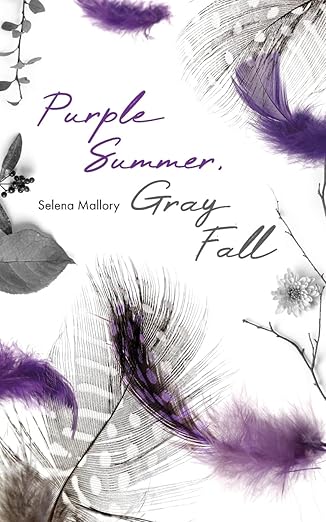
Selena Mallory’s Purple Summer, Gray Fall is a tender, raw, and often startling collection of poems that drifts between sunlight and shadow. The book is divided into two sections: “Purple Summer,” which hums with warmth, youth, and desire, and “Gray Fall,” which cools into introspection, loss, and renewal. Across both halves, Mallory writes with a confessional edge that feels both intimate and unguarded. Her voice slips easily between humor and ache, sensuality and solitude, all while painting vivid slices of womanhood, memory, and self-discovery. The poems read like diary entries whispered aloud on quiet evenings, revealing a life lived in color and reflection.
What I liked most about Mallory’s writing is its honesty. She doesn’t shy away from the awkward, the lustful, or the mundane. In one breath, she’s talking about shaving her legs for a Tinder date, and in the next, she’s describing grief, faith, or mental fatigue. That range feels human in a way poetry often forgets to be. Her language is unpretentious, even conversational at times, and that makes the emotional moments hit harder. The transitions from lighthearted pieces like “Shiny Hiney” to weightier ones such as “Sweat(H)er” are seamless, showing how closely joy and despair live beside each other. The humor never undercuts the pain; it just reminds you that both belong.
The collection’s imagery also carries a quiet rhythm. I loved how the “Purple Summer” poems glow with heat and motion, fields, sun, and laughter, while “Gray Fall” settles into stillness and introspection. There’s an arc of growing up here, or maybe just growing deeper into oneself. Mallory has a knack for turning everyday details into metaphors that linger, like the simple act of baking brownies or watching a storm. Her poems invite you to slow down and notice small, beautiful things, even when they hurt. Sometimes the structure feels loose, even meandering, but that looseness matches the emotional truth of the work. It’s messy, alive, and personal.
I’d recommend Purple Summer, Gray Fall to readers who love poetry that feels like conversation rather than performance. It’s perfect for anyone who’s ever laughed through heartbreak or found comfort in small, domestic rituals.
Pages: 56 | ISBN: 978-16629604444
Reflections: Earth, Heart, Light, Dark
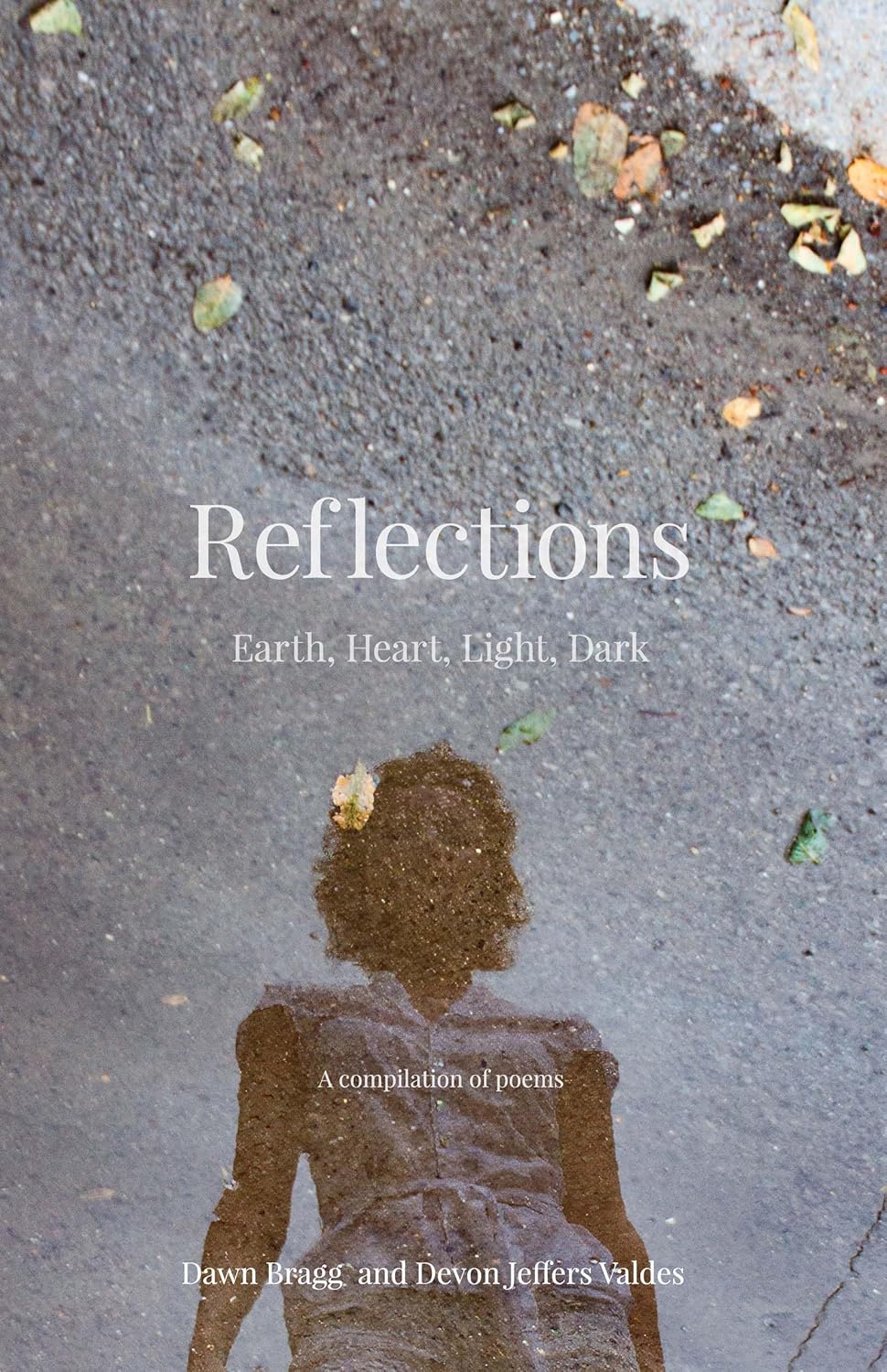
Reflections: Earth, Heart, Light, Dark is a mother-daughter collaboration that explores the intertwined themes of Earth, Heart, Light, and Dark through poetry. The book flows like a seasonal cycle, beginning with poems rooted in nature, moving through love and memory, then toward hope and illumination, and finally into grief, loss, and shadows. Each section feels distinct, yet they all circle back to a shared sense of searching for meaning in both beauty and pain.
Poems like Transition pulled me in with their intimacy, especially the image of a mother’s hands rebuilding a new world after a storm. It felt deeply personal but also universal, the kind of moment that made me stop and think about my own family. I’ll admit, Grandmama caught me off guard with its questions, “What thoughts did you have? Did you think them deserving?” and left me feeling both unsettled and comforted at the same time. That’s what I liked most, the poems didn’t tie everything up neatly. They lingered.
From Ash to Light carried a strong sense of resilience, and I couldn’t help but feel buoyed by its journey from despair to joy. It had this rhythm of stumbling and rising that felt human and raw. On the other hand, Dawn of Forty-Nine leaned more toward classic imagery, almost old-fashioned in its rhymes, which at first jarred me but eventually worked because it added texture to the collection. I found myself rereading those lines about waterfalls and winds, almost like I was letting the words wash over me instead of trying to decode them.
Then there’s the “Dark” section. This is where the book hit hardest for me. You Left Me was plainspoken, almost brutally so, and that stripped-down honesty made it sting. The Waves had this hypnotic pull with its repetition, “Rising above, wave after wave,” that felt like drowning in grief and memory. I could feel the authors letting themselves go to heavier places, and I appreciated that they didn’t shy away. It made the hopeful poems earlier in the book feel more earned, less naïve.
Reflections: Earth, Heart, Light, Dark is for readers who like their poetry to sit somewhere between personal diary and universal myth. It’s not heavy with academic wordplay, but it’s not fluff either. If you enjoy quiet evenings with a book that makes you pause, maybe even tear up, this one is a must-read. Personally, I closed it feeling like I had sat down with two voices who weren’t afraid to be vulnerable, and that’s something I’ll always admire in poetry.
Pages: 38 | ASIN : B0FFNGQ15P

Pause For a Moment
Navigation is a poetry collection that serves as a compass through personal memory, cultural history, and collective grief. What inspired you to write this particular collection of poems?
Navigation is truly a collection, a gathering of poems that I have written over a number of years about a variety of topics. When I realized that there were certain themes connecting various poems, I decided I could organize them into a cohesive collection. The topics range from exploring childhood/teenage memories to bridging nature and the human experience. The power of home and the importance of place also play a large part in this book, as does connecting to my Indigenous roots.
Were there any poems that were particularly difficult to write? If so, why?
The most difficult poems for me to write were the ones about my late father. He was such a talented, intelligent man who never had the opportunity to achieve his dreams, so I find myself returning again and again to the idea of an unfulfilled life. It is always painful to lose a parent, but I think the grief is magnified when that parent’s life was never completely realized.
How has this poetry book changed you as a writer, or what did you learn about yourself through writing it?
My first full-length book, unlike the two that followed, was also a collection of personal poems. When it was published, I felt some trepidation about exposing myself, laying bare some very private aspects of my life. Navigation also contains some extremely personal poems, but I think over the last few years, I have learned to feel less self-conscious about my poems. It is my hope that readers will be able to connect with the honesty and perhaps see themselves and their own lives in my experiences.
What do you hope is one thing readers take away from your poetry?
I hope my readers can find a thought, a phrase, or even a word that will make them pause for just a moment and reflect. I wish for my readers to find in my work something that they can relate to in their own lives, even if we come from totally different regions or backgrounds. I truly believe that one of the main purposes of poetry is to help us connect as human beings.
Author Links: GoodReads | X | Facebook | Website
—Annie Woodford, author of Where You Come From Is Gone
I have read much poetry. I know many poets. I believe the job of good poetry and good poets is to move their readers, and oh Lord, has Linda Neal Reising’s new book, Navigation, moved me. What can I possibly say to prepare a reader for what lies ahead as they navigate through the four parts that make up this book? The opening poem of Part I, “After Learning That a Woman and Her Baby Were Killed in the Bombing of a Ukrainian Maternity Hospital” seizes you in its grasp and propels you page after page. The Americana, the well-chosen epigraphs, the Native understanding of the land and the trials of poor families during hard times are masterful. This is a book not to be missed.
—Ron Wallace, author of Life Is a Disappearing Act
If one were sailing the sea of life “in a little paper boat,” the waypoints leading to some proverbial safe harbor would be easily recognized along the course so capably charted in Reising’s Navigation. With her distinctive imagination…the cardinal“slipped off her wings, and chose to walk all the way back to heaven,” and her exceptional percipience of real life experiences, Reising reveals the mastery of her poetic skills. And in spite of life’s obstacles, Reising suggests a safe harbor is within sight…a place where “sparrows sky-write lovelorn letters, where cedars keep sentry…” where “the apricot tree grows tiny moons.”
—Karen Kay Knauss, poet, Oklahoma Book Award winner for SAND, At the Mercy of Wind
Navigation

Linda Neal Reising’s Navigation is a poetry collection that serves as a compass through personal memory, cultural history, and collective grief. Split into four parts, the book traverses everything from Native American identity to coming-of-age nostalgia to haunting reckonings with war and environmental collapse. At its core, this is a book about mapping trauma, tenderness, and survival in lyric form.
What really struck me was the way Reising’s poems blend elegance with grit. In “After Learning That a Woman and Her Baby Were Killed in the Bombing of a Ukrainian Maternity Hospital,” Reising writes of a cardinal’s remains as “feathers so pale a red they verge on pink,” a line that knocked the wind out of me. It’s delicate, yes, but brutal in its imagery. There’s no hiding from sorrow here. She doesn’t preach, she mourns. And in doing so, she lets you mourn too. That balance of beauty and ache shows up again in “Earth Day Lockdown,” where goats and jackals reclaim cities during COVID, as if nature’s revenge is not violent but theatrical. It’s weirdly funny and deeply sad.
I also loved the nostalgic, rough-edged sweetness of her childhood and youth recollections. “Dolly’s Debut” is a standout, so vivid, I felt like I was there in front of that new Zenith TV set, eating popcorn and watching Dolly Parton sparkle onto the screen for the first time. The mix of admiration and longing is infectious. Similarly, “Partial Eclipse” captures the awkward magic of being a seventh-grader with a shoebox solar viewer and a million questions you’re too young to answer. Her ability to make the small moments feel cosmic and vice versa is what gives the book so much punch.
Then there’s the raw nerve of her poems about generational trauma, especially those tied to her Cherokee heritage. “Education of a Sixth-Generation Cherokee Refugee” gutted me. Her grandmother didn’t pass down traditions, only superstitions and fear. That sense of loss, of something beautiful never even getting the chance to take root, hangs heavy. And in “Disappeared” and “The Poetry of Their Names,” Reising doesn’t flinch from the horrors of Native boarding schools and the epidemic of missing Indigenous women. These poems are like open wounds, necessary, unforgettable, hard to read, and harder to ignore.
Navigation is a powerful, heartfelt book for readers who love poetry that tells stories and stirs things up. It’s not airy or academic, but it’s grounded, lyrical, and bold. If you’ve ever felt lost, Reising might not hand you a map, but she’ll sit with you in the wilderness.
Pages: 90 | ISBN : 1639806903
The Intricacies of Life

The Edges is a collection of poems spanning the human experience, addressing topics such as growth, loss, and wonder. What inspired you to write this particular collection of poems?
I found inspiration for The Edges in our lives’ delicate balance of light and shadow. I tried to grasp the universal truths common to everyone, regardless of their origins or situations.
This collection draws heavily from my personal experiences. Composing these poems turned into a voyage of self-exploration, a method to navigate my emotions and present them to encourage others to contemplate their own experiences—those instances of change, sorrow, and happiness that shape our lives.
At its core, The Edges is an homage to the complexities of life and what we all share.
Did you write these poems with a specific audience in mind, or was it a more personal endeavor?
Writing The Edges was a personal endeavor rooted in my reflections and experiences. Initially, the poems served as a means for me to process my thoughts and emotions, allowing me to explore the intricacies of life from a deeply personal perspective. I found solace in writing, using it as a tool to make sense of moments that felt chaotic or overwhelming.
However, as the collection began to take shape, I became increasingly aware of the potential audience. I started to envision readers who might resonate with the themes of growth, loss, and wonder—individuals navigating their edges. This awareness guided me to balance personal narrative and universal experience. I wanted the poems to feel relatable, inviting readers to see themselves within the lines and reflect on their journeys.
Ultimately, while the collection began as an intimate exploration of my feelings, it evolved into a shared conversation with readers. I hoped to create a space where others could find comfort, connection, and understanding, allowing them to reflect on their own experiences while feeling less alone in their struggles and triumphs. In this way, the poems bridge my journey and the collective human experience.
What was the biggest challenge you faced in putting together this poetry collection?
My biggest challenge in assembling The Edges was navigating the delicate balance between vulnerability and authenticity. I grappled with the fear of revealing too much and of making myself too vulnerable on the page while also understanding that a genuine connection with readers comes from that very honesty.
Additionally, organizing the poems to create a seamless flow was challenging. I wanted each piece to stand alone while contributing to the larger tapestry of human experience. It was a process of trial and error, moving poems around, listening to their voices, and ultimately finding an organic structure.
Can we expect to see more poetry from you soon? What are you currently working on?
Yes, you can expect more poetry from me shortly! I am currently immersed in a new collection of 33 poems titled Immigrant Dreams, which will be published on January 17. This project is particularly close to my heart, as it explores the complex tapestry of experiences surrounding immigration—capturing the hopes, struggles, and dreams of those who leave their homelands in search of a better life.
In Immigrant Dreams, I delve into the myriad emotions of this journey: the longing for home, the challenges of adaptation, and the resilience that emerges in the face of adversity. Each poem seeks to honor the stories of individuals who have navigated the often tumultuous waters of migration, reflecting both the beauty and the hardships inherent in their experiences.
In this collection, I found inspiration from personal narratives, interviews, and historical accounts, weaving them into poetic forms that resonate with the shared human experience. I hope this work amplifies marginalized voices and fosters empathy and understanding among readers.
I’m excited to share this journey with you and look forward to unveiling Immigrant Dreams in the coming weeks. Thank you for your continued support, and I hope my upcoming work resonates with you just as deeply!
Author Links: GoodReads | Website | Amazon
Love & War: A celebration of love in all its forms and complexities and an exploration of human suffering in the raw and brutal realities of war.
Nature & Cosmos: A journey through the untamed wilderness and boundless expanse of the universe, where the mysteries of existence unravel in whispers of wind and starlight.
Time & Memories: Threads of reminiscence woven into time’s fabric, where nostalgia and reflection entwine.
Seasons & Liminal Spaces: Capturing time’s ebb and flow in seasons and liminal spaces, between what was, what is, and what will be.
Observations & Views: Perspectives painted with the strokes of keen observation and introspection, offering glimpses into the diverse landscapes of the human mind.
Wounds & Contemplations: A canvas of healing and introspection, where individuals wear scars as badges of resilience and contemplations resound in the chambers of the soul.
Together, these sections create a multifaceted exploration of the human experience, inviting readers to engage deeply with the themes of love, nature, time, and the complexities of existence.



 LITERARY TITAN