Blog Archives
The Next Generation of Disaster Management


Dr. Todd D. Brauckmiller’s The Next Generation of Disaster Management is a bold and sweeping overview of how emergency response has evolved, from Cold War-era civil defense to cutting-edge, AI-driven systems. Drawing heavily from the author’s own military and academic experience, the book is both a technical deep dive and a passionate argument for more compassionate, inclusive, and forward-thinking disaster preparedness. It covers everything from nuclear fallout shelter engineering to ethical AI applications in emergency scenarios, while weaving in historical case studies, policy critiques, and future-facing solutions to modern crises like pandemics and climate disasters.
What struck me most about this book is its sharp blend of gritty realism and visionary optimism. Brauckmiller doesn’t sugarcoat the brutal realities of past disasters or the bureaucratic shortcomings that plagued them. He breaks down historical events with a soldier’s precision and a teacher’s clarity. The sections on bioterrorism and the fallout from 9/11 are particularly gripping—grounded in historical fact, but animated with moral urgency. Yet, amid all the analysis, there’s a human warmth that runs through the text. His personal journey from foster youth to Bronze Star-decorated leader is compelling and gives weight to his emphasis on servant leadership. It’s not just about drones and data; it’s about people, especially the most vulnerable.
While the content is rich and thoughtful, the delivery sometimes has a formal academic tone. The technical sections on AI and logistics are impressive but can be dense if you’re not well-versed in emergency management jargon. Still, the author’s sincerity, depth of knowledge, and drive to make the world more resilient shine through, even when the prose gets heavy.
This is a book that delivers more than it promises. It’s a call to rethink how we serve each other in crisis. I’d recommend it to emergency planners, public policy leaders, educators, and anyone curious about the intersection of tech, humanity, and crisis response. If you’re looking for hope grounded in hard-earned wisdom, this book delivers.
Pages: 230 | ASIN : B0DW7ZR2NC

The Joys and Troubles of a Missionary Life
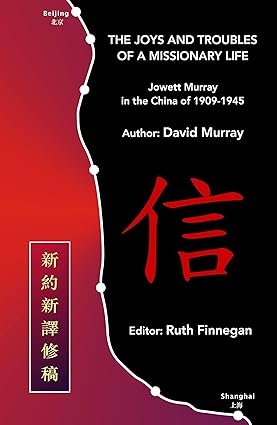
This book is a detailed and deeply personal account of Jowett Murray’s life as a missionary in early 20th-century China, written by his son, David J. Murray. Spanning nearly four decades, the narrative traces Jowett’s journey from his Oxford days to his complex, sometimes conflicted, tenure with the London Missionary Society (LMS) in Tientsin and beyond. With rich use of primary sources, including letters, reports, and institutional records, the book explores not just the man but the cultural, political, and theological tides he swam through. From his educational mission at the Tientsin Anglo Chinese College to his theological work and relationships with local Chinese intellectuals, the story is part biography, part history, and part heartfelt meditation on legacy.
What struck me most was the sheer honesty of the writing. David Murray didn’t sugarcoat his father’s struggles—physical illnesses, internal conflicts with LMS authorities, and the broader colonial tensions that hovered over missionary work. You really feel the weight Jowett carried—not just books and sermons, but moral questions and cultural clashes. Murray’s writing is layered but sharp. You can tell this was a labor of love and also a work of rigorous scholarship. I appreciated how the book never lets you sit comfortably. Just when you start to admire Jowett’s resolve, you’re reminded of the imperialist structures he was tangled in, even while resisting them. That kind of complexity is rare and refreshing.
But the book doesn’t just stay in the realm of politics or theology. There are tender, often funny, sometimes painful moments. A failed sermon here, a sickbed reflection there, an awkward conversation in Mandarin. These are the parts that stayed with me. They’re not grand or historical, but they make Jowett feel real. And David’s personal reflections—especially his shifting understanding of his father—gave the book a soul. There’s grief in these pages, but also reconciliation. You get the sense that the writing process was cathartic, maybe even redemptive. That intimacy, though sometimes quietly delivered, packs an emotional punch.
I would recommend The Joys and Troubles of a Missionary Life to anyone interested in missionary history, Sino-Western relations, or just a good, thoughtful biography. But more than that, this is for readers who like stories that don’t offer easy answers. It’s for those willing to sit with contradictions, to hear a voice from the past filtered through the eyes of a son still trying to make sense of it all. There’s joy here. And trouble. But mostly, there’s truth.
Pages: 214 | ASIN : B0F9VG9ZYY
A Society Divided By Technology
Christine Z. Miller Author Interview
Tools, Totems, and Totalities is a striking and expansive critique of modern technology and its pervasive role in shaping culture, institutions, and identities. Why was this an important book for you to write?
To bring together a society that has been divided by technology.
What is a common misconception you feel people have about how technologies impact culture and individuals’ identities?
We feel that we are the masters of the technology, when in fact we are enslaved by it.
What were some ideas that were important for you to share in this book?
First, that “technology” is not a human universal, but rather is a specific creation of the industrial revolution, and second that “technology,” like industrialization generally, has its pluses and minuses.
What is one thing that you hope readers take away from Tools, Totems, and Totalities?
That we collectively should be thinking about a world beyond technology, a world in which human connections and conviviality are more important than the tools we use.
Author links: GoodReads | Website
Tools, Totems, and Totalities: The Modern Construction of Hegemonic Technology, the 2024th Edition

Tools, Totems, and Totalities is a striking and expansive critique of modern technology and its pervasive role in shaping culture, institutions, and identities. Allen Batteau and Christine Z. Miller craft an ethnographic and philosophical journey through the social ecosystems technology inhabits, evolves within, and often dominates. Rather than viewing technology as a neutral tool, the authors challenge us to see it as a deeply embedded hegemonic force—one that organizes power, redefines human interaction, and reshapes meaning in the modern world. The book blends anthropology, design theory, engineering insight, and cultural criticism to show how tools become totems, and how both can culminate in totalizing systems of control.
What grabbed me right away was the authors’ raw honesty in grappling with our blind trust in “progress.” The opening chapter sets the tone, arguing that our imagination of technology—our deep faith in it—is more fantasy than fact. We treat smartphones, space probes, and electric grids as if they magically better our lives, when in truth, many of these devices mask deeper social problems or even create them. The idea that technology acts as a form of modern magic, filling the spiritual and communal voids of contemporary life really resonated with me. We reach for the newest device like it’s a talisman against chaos, and in doing so, we lose sight of the human behind the machine. That sense of disillusionment is something I’ve felt before, but the book gave me the language and history to make sense of it.
But it’s not all doom and gloom. I found myself surprisingly moved by Chapter 6, where the authors introduce “convivial technology.” Here, they offer a hopeful, even beautiful vision of tools designed to enhance human relationships and community life, not just productivity. It was a breath of fresh air. They celebrate thinkers like Ivan Illich and Victor Papanek, who envisioned technology that’s adaptable, human-centered, and a little slower. Their critique of modern design culture—its obsession with speed, efficiency, and control—felt deeply personal. As someone who’s worked in tech, it made me pause. Maybe the point of innovation isn’t always to push forward, but to step back and ask, “Who is this really serving?”
Tools, Totems, and Totalities is a mirror held up to our techno-utopian fantasies. It doesn’t offer easy answers, but it does offer clarity. The writing is at times dense but always thoughtful, weaving scholarly insight with a conversational rhythm that kept me engaged. The authors don’t pretend to speak with a single voice—they embrace their differences, and it works. The book doesn’t preach. It pokes, it nudges, and sometimes it throws cold water on our comfort zones. But I appreciated that. I finished the final chapter with a weird mix of dread and inspiration. I wanted to change something. Or at least think differently.
This book is for people who aren’t satisfied with buzzwords. If you’re curious about the social and cultural consequences of technology—and especially if you’ve ever felt unsettled by your own reliance on it—this book will challenge and reward you. Scholars, designers, engineers, sociologists, and everyday readers who are just plain tired of the hype will find something meaningful here.
Pages: 231 | ISBN : 9819787076

Unwavering Dedication

In When The Bell Rings – A Firefighters Journey, you share with readers your experiences as a firefighter and the mental and emotional challenges you faced throughout your career. Why was this an important book for you to write?
Writing When The Bell Rings – A Firefighter’s Journey was a deeply personal and essential endeavor for me. As a firefighter, I witnessed and experienced firsthand the intense mental and emotional challenges that come with the profession. Firefighting isn’t just about battling flames; it’s about confronting fear, grief, and the relentless pressure to perform under life-and-death circumstances.
This book allowed me to share the human side of firefighting, providing a window into the inner struggles and triumphs that are often hidden behind the brave exterior. It was important for me to give a voice to the emotional and psychological toll this career can take on some individuals. I hoped to foster greater empathy and awareness among the public, while also providing a source of support and validation for my peers.
What was the hardest thing for you to write about?
The hardest part of writing When The Bell Rings – A Firefighter’s Journey was revisiting and recounting the moments of profound loss and tragedy. As firefighters, we are often the first to witness the aftermath of accidents, fires, and disasters. Writing about the lives that were lost and the families that were forever changed was incredibly challenging.
I knew that sharing these experiences was crucial to painting an honest picture of what it means to be a firefighter. It was through this candor that I hoped to honor those who have sacrificed so much and to shed light on the profound impact these experiences can have on our mental and emotional well-being.
What is a common misconception you feel people have about the life of a firefighter?
A common misconception about the life of a firefighter is that our job primarily revolves around fighting fires. While responding to fires is indeed a significant and highly visible part of what we do, it represents only a fraction of our daily responsibilities. Many people are unaware of the extensive training, preparation, and variety of emergency responses that fill our days.
Firefighters are often first responders to a wide range of emergencies, including medical crises, car accidents, hazardous material incidents, and natural disasters. We also engage in community education, fire prevention, and safety inspections.
Additionally, the camaraderie and the sense of family within the fire department are crucial elements of our lives that are often overlooked. The bond we share with our fellow firefighters is built on trust, shared experiences, and a deep understanding of the unique challenges we face. This aspect of our lives is just as important as the heroics often associated with our profession.
What is one thing you hope readers take away from When The Bell Rings?
One thing I hope readers take away from When The Bell Rings – A Firefighter’s Journey is a deeper appreciation and understanding of the resilience required to be a firefighter. Beyond the physical bravery and technical skills, our journey involves confronting and managing intense emotional challenges, from the trauma of witnessing loss to the constant pressure of making life-or-death decisions.
I want readers to see the human side of firefighting—the vulnerability, the camaraderie, and the unwavering dedication to serving the community despite the personal sacrifices involved. By sharing my experiences candidly, I hope to inspire a greater sense of empathy and respect for those who put their lives on the line every day.
Ultimately, I hope my story serves as a testament to the strength and resilience of firefighters everywhere.
Author Links: GoodReads | X (Twitter) | Facebook | Website | Amazon
Forget Hollywood. This isn’t a story about glory. It’s a raw, unfiltered look at life as an NYC firefighter.
More than just burning buildings. Join a veteran firefighter with 27 years under his gear. Witness the adrenaline rush of the unknown, the camaraderie that sustains you through the firestorm, and the quiet toll it takes on the men and women who answer the call.
This book isn’t just for firefighters. It’s for the spouses who hold down the fort, the adult kids who wait by the window, and anyone who wants to understand the invisible scars left by heroism. This is a collection of stories of courage, of family, and the unspoken battles fought after the flames are out.
When the Bell Rings takes you inside the firehouse, onto the frontlines, and into the hearts of those who risk it all.
Are you ready to step into the heat?
A 2024 FIREBIRD BOOK AWARD FIRST PLACE WINNER
When The Bell Rings – A Firefighters Journey

When the Bell Rings, by Robert Gass, is a thoughtful memoir that delves into the life of a firefighter. Gass shares his real-life experiences and stories, giving readers an intimate look at the emotional and mental battles attached to the profession. This book transcends the job itself, highlighting the emotional and mental challenges that come with it. Gass vividly recounts tales of bravery, hard work, and resilience, honoring the men and women in his profession who face danger daily. His ability to capture the essence of firefighting makes this memoir a compelling read.
The title immediately caught my attention, evoking a sense of personal connection and curiosity. The chapter names, carefully chosen and beautifully crafted, set the tone for the descriptive, poetic writing that follows. Gass intended to provide an uncensored peek into a firefighter’s life, and he succeeds admirably. The memoir is filled with personal anecdotes that illustrate the intensity and danger of the job, balanced by moments of reflection and appreciation. The writing is undoubtedly the highlight of this memoir. Gass’s vivid descriptions transport readers into the heart of the action, making them feel as though they are right there with him, whether fighting a blaze or enjoying a moment of peace.
Short chapters make this an easy, engrossing read that is hard to put down. A prominent theme throughout the book is resilience. Gass highlights moments of sheer bravery and hope amidst circumstances that could easily lead to despair. He doesn’t shy away from discussing the impact of firefighting on mental health, addressing PTSD, the toll on family life, and coping mechanisms. This honesty adds depth to the book, elevating it beyond a series of action-packed episodes. When the Bell Rings is a remarkable read and Gass successfully honors his colleagues while showcasing the heroism of firefighters.
When the Bell Rings is a must-read for anyone interested in the real-life experiences of firefighters or those curious about the behind-the-scenes of this critical profession. It is touching, honest, and deeply respectful of those who face these dangers daily.
Pages: 399 | ASIN : B0D6RLH36H
The Broken Whistle: A Deep State Run Amok

The Broken Whistle by Pedro Israel Orta offers an insightful and intense exploration of the intricate world of intelligence and political dynamics. Orta, casting himself as the central figure, stands out as a significant personality in the realm of American intelligence and politics. The narrative insightfully addresses the corruption of the whistleblowing process within the Intelligence Community, a central theme that echoes throughout the book.
Orta’s unfiltered and honest portrayal of events makes the book compelling and difficult to set aside. His narrative is robust and steadfast, providing readers with a clear, informative, and intimately personal journey through his experiences. The bravery displayed by Orta in revealing the more ominous aspects of the intelligence community and political landscape is commendable. He infuses each page with an intense realism, plunging the reader into a critical period of American history. The author exercises prudence and discretion in handling sensitive material, particularly regarding the identities and confidential information of others. Orta adeptly navigates through a tangled network of allegations, political maneuvering, and ensuing impeachment processes, illuminating the larger implications for American democracy and the principle of the rule of law, which can, at times, be unsettling to the reader.
The Broken Whistle is more than an exposé; it is a discerning examination of the mechanisms of power, corruption, and the pursuit of truth and justice. Orta’s work is a significant contribution to literature for those intrigued by the inner workings of the intelligence community, the complexities of political power, and the audacity required to confront a system that often suppresses dissent. His story serves as a potent reminder of the continual struggle for transparency and accountability at the highest levels of authority.
Pages: 606 | ASIN : B0CFC6ZS7M
Communication is More Than Verbal Language

Communicating: The Multiple Modes of Human Communication 3rd Edition is a thorough and insightful examination of human communication, transcending the conventional focus on verbal language. Why was this an important book for you to write?
I’ve been interested in, and writing about, communication in its various senses from my early days: storytelling for example, the beautiful wit and words of Ulster communicating, linguistic anthropology, body language, music (that’s communication too). Through this I’d been becoming more and more convinced that communication did not consist only, or even predominantly, of verbal language, spoken or written, but a whole wealth of other things as well. That isn’t at all a widely accepted view among communication experts, so I felt that I HAD to write a book to show the evidence and argument for my position – almost a duty.
It turned out a bigger journey of investigation than I’d expected (and I loved it – hope you’ll come along it with me and enjoy it too: about these amazing, clever, enterprising animals, and I don’t mean just the human ones).
What changes did you make in this edition of your book from prior editions? Was there any area where your research has led you to a new or different conclusion from prior published results?
A lot. Besides some updating throughout and more and better illustrations, there’s a new introduction linking to recent perspectives in social science (much has changed in the 20 years since the first edition); reordering of the five chapters on the senses to make the argument run more smoothly; a rewritten chapter on extrasensory communication in the light of recent developments and of the revolutionary findings of “new science”; and a totally new concluding chapter.
That final chapter: I found to my consternation that what I had found During my investigations almost totally reversed the usual assumptions about communication in early human history (cave paintings are in too), INCLUDING KEY ASSUMPTIONS IN MY OWN BOOKS, earlier editions of this book among them.
It was startling. But I had to be honest and tell it as I’d found it.
And that was – ? Ah, complicated! You’ll have to read it.
Did you find anything in your research of this story that surprised you?
Yes very much so, not just in research for that final chapter, but also the fascinating range of ways humans and other animals use their differing but overlapping resources to interact (WHAT a lot is now known). I was particularly surprised and impressed by the explosion of radically new research about the gesticulation systems of the great apes: amazing and surprisingly relevant for human communicating.
What is the next book that you are writing, and when will that be published?
Am I allowed two? The thing is that now that I’m retired and have more time I find it relaxing to have several contrasting books on the go and don’t always know which is going to come out first.
Two books that I’ve been tinkering with for some time are, first, an updated version of a collection of prose, verse and images from many cultures, now to be called “The Search for Peace: Voices of Despair and Hope through the Centuries”. That’s only too heartbreakingly topical just now, isn’t it, but inspiring too – what insights there have been through the world and the ages. With luck it’ll very soon be chuntering its way onto Amazon.
And, second, a small book now nearing completion: a fun – but perhaps also a bit useful – silly little book with cartoon pics, to be called something like “Kate’s Bad Cook Guide for morons”. I’m enjoying that immensely. Maybe in time for Christmas, no promises.
After that? Back to a couple academic ones, and maybe a new Kate-Pearl novel…, let’s see.
Author Links: LinkedIn | Twitter | Facebook | Website
In an authoritative and readable account, Ruth Finnegan brings together research from linguistic and sensory anthropology, material culture, non-verbal communication, computer-mediated communication, and, strikingly, research on animal communication, such as the remarkable gesture systems of great apes. She draws on her background in classical studies and her long anthropological experience to present illuminating examples from throughout the world, past and present.
The result is to uncover an amazing array of sounds, sights, smells, gestures, looks, movements, touches, and material objects used by humans and other animals to interconnect both nearby and across space and time
She goes on to first explore the extra-sensory modes of communication now being revealed in the extraordinary “new science” research and then, in an incendiary conclusion, to deny the long-prevailing story of human history by questioning whether orality really came before literacy; whether it was really through “the acquisition of language” that our prehistoric cave painting ancestors made a sudden leap into being “true humans”; and finally, astonishingly, to ask whether human communicating had its first roots not, after all, in verbal language but something else.
Not to be missed, this highly original book brings a fresh perspective on, among other things, that central topic of interest today – the dawn of human history – and on what being homo sapiens really means. This revised and updated edition has additional illustrations, updated chapters, and a new concluding chapter.
A provocative and controversial account that will stir worldwide debate, this book is an essential transdisciplinary overview for researchers and advanced students in language and communication, anthropology, and cultural studies.



 LITERARY TITAN